
Gaza peace deal: Netanyahu hails ‘critical turning point’ as Hamas agrees to release hostages

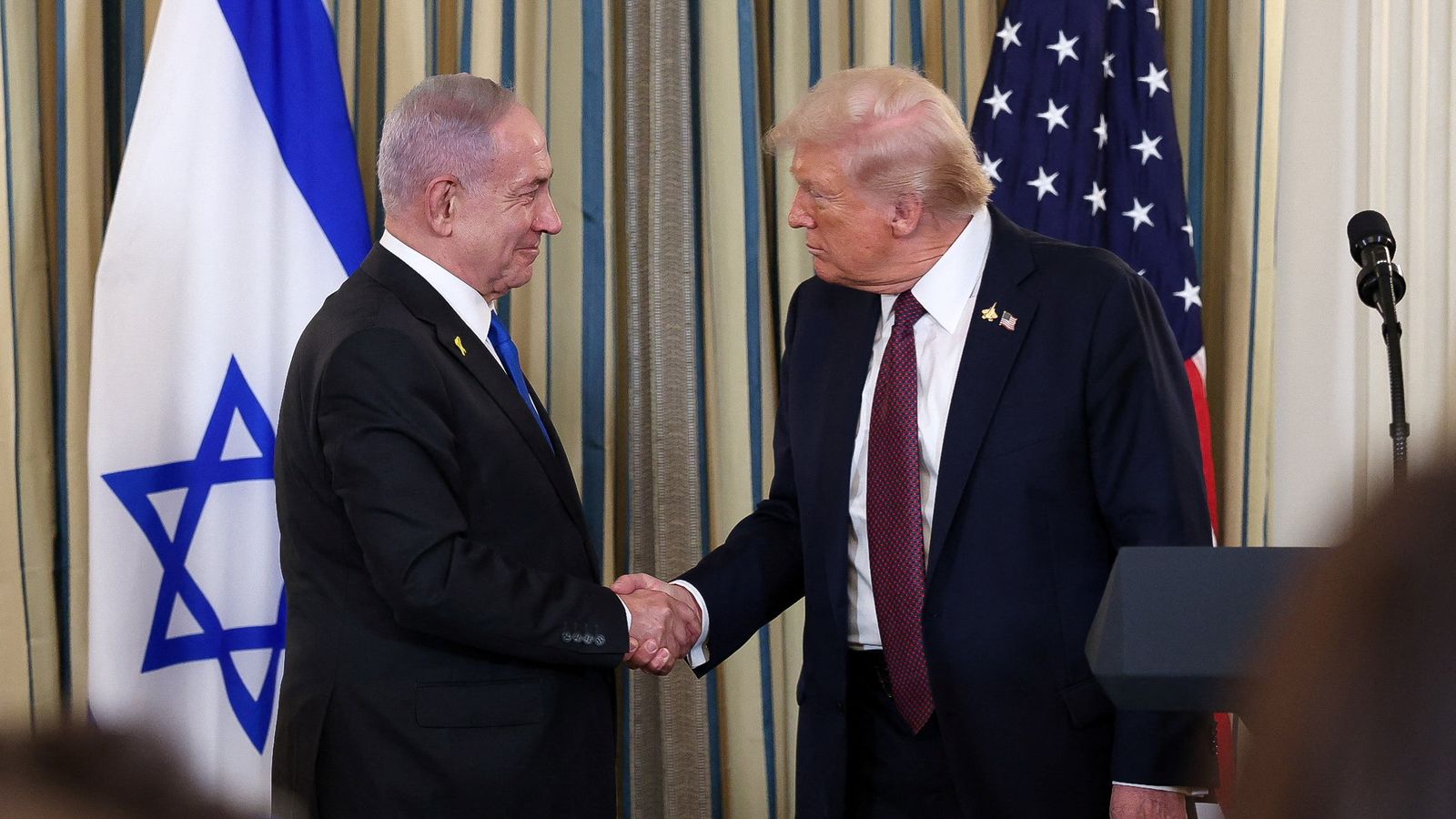
Benjamin Netanyahu has hailed “a critical turning point” in the Gaza war after Israel and Hamas signed off the first phase of Donald Trump’s peace plan.
The Israeli prime minister said Wednesday night’s breakthrough meant all remaining 48 hostages held by the militant group, 20 of whom are thought to still be alive, would be returned.
Gaza war latest: Celebrations as Trump announces peace deal
“Through steadfast resolve, powerful military action, and the great efforts of our great friend and ally President Trump, we’ve reached this critical turning point,” he added.
The White House said it was down to the Israeli security cabinet to sign off the deal today, which will bring a ceasefire into force and allow for an exchange of hostages and Palestinian prisoners.
Hamas urged Mr Trump not to let Israel “evade or delay” the deal, as it said it hoped it would lead to the “complete withdrawal” of the Israeli military from the Gaza Strip.
The Israeli Defence Forces said it was “ready for any scenario” and any movement “will be carried out in accordance with the directives” of its government. In a statement, it added it is prepared to “lead the operation” for the hostages’ return.
It comes after the US president announced the two sides had agreed to the first phase of his plan.
‘A great day for the world’
In a Truth Social post just before midnight UK time, he said: “I am very proud to announce that Israel and Hamas have both signed off on the first Phase of our Peace Plan.”
It means all the hostages will be released, he said, and Israel will withdraw its troops “to an agreed upon line”.
He thanked mediators for their part in negotiations in Egypt this week, including those from Qatar and Turkey. The delegates were pictured hugging and celebrating as the deal was announced.
He later told Reuters it was a “great day for the world”, and told Fox News the hostages could be released on Monday.
Mr Trump had teased an imminent announcement earlier on Wednesday evening – and revealed he may travel to the Middle East, and perhaps even Gaza, as soon as this weekend.
Moment Rubio hands Trump note on Gaza
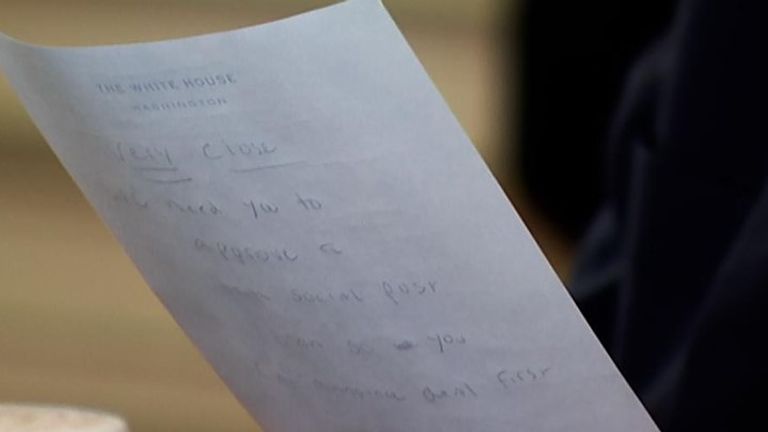
During an event at the White House, the US secretary of state Marco Rubio handed Mr Trump a note, which the US president read and then said: “I was just given a note by the secretary of state saying that we’re very close to a deal in the Middle East, and they’re going to need me pretty quickly.”
The note had the two words “very close” underlined and asked the US president to approve a post on his Truth Social website “soon so you can announce deal first”.
Analysis: For the moment, at least, a beacon of optimism

Rumours had been spreading over the course of the day, anticipation grew.
A source told me that a deal would be done by Friday, another said perhaps by Thursday evening.
They were both wrong. Instead, it came much sooner, announced by Donald Trump on his own social media channel.
Without being anywhere near the talks in Egypt, the president was the dominant figure.
Few will argue that he deserves the credit for driving this agreement. We can probably see the origins of all this in Israel’s decision to try to kill the Hamas leadership in Doha.
The attack failed, and the White House was annoyed.
Arab states started to express themselves to Trump more successfully, arguing that it was time for him to rein in Benjamin Netanyahu and bring an end to the war.
Read more from Adam here
Sources familiar with the talks had told Sky News lead world news presenter Yalda Hakim a deal could be signed within 24 to 36 hours.
Mr Trump’s plan called for an immediate ceasefire and the release of the 48 hostages still held in Gaza from the 7 October 2023 attack that sparked the beginning of the war.
Hamas was seeking guarantees from mediators Israel will not resume its military campaign in Gaza after the militant group releases all the remaining Israeli hostages.
Other elements of the deal include a requirement that Hamas disarm, and the creation of an international body to run the enclave once Hamas steps down – led by Mr Trump, with a role for Sir Tony Blair.
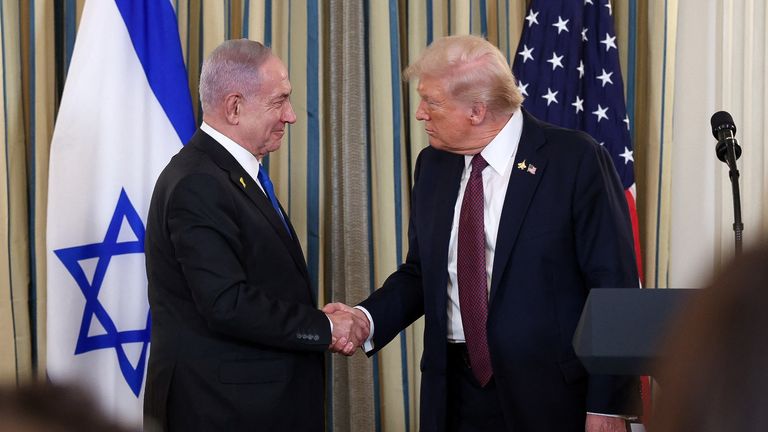
Trump and Netanyahu announced the 20-point peace plan last month. Pic: Reuters
Ahead of Mr Trump’s announcement, Israel had reduced its military campaign in Gaza at his request, but had not stopped conducting strikes altogether.
Medical authorities in Gaza reported eight people had been killed by Israeli strikes in the last 24 hours – the lowest number for weeks.
Over 67,000 Palestinians have been killed during the war, according to Gaza’s Hamas-run health ministry, which does not differentiate between civilians and combatants, but says around half were women and children.

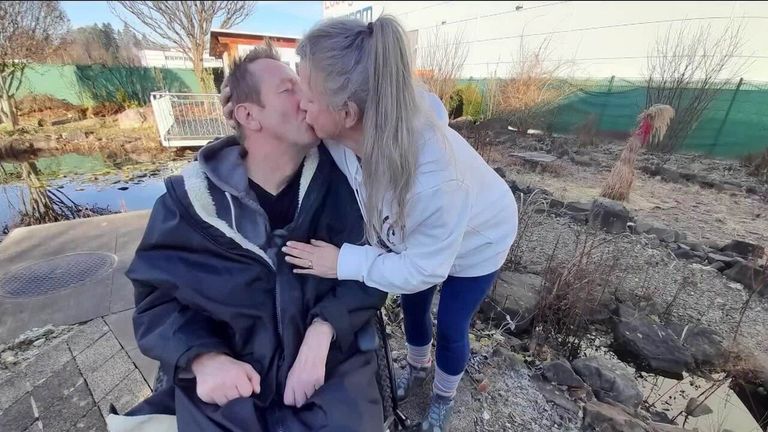
The founder of Dignitas, the Switzerland-based assisted suicide clinic, has died aged 92, according to the organisation.
Ludwig Minelli, lawyer and former journalist, died on 29 November shortly before his 93rd birthday.
Mr Minelli lived a life “for freedom of choice, self-determination, and human rights”, said Dignitas in a tribute.
He founded the organisation in 1998 with “a group of like-minded people”.
“At that time, he and his fellow compatriots would never have thought that this association was about to become an internationally active organisation,” said the tribute.
‘He died like he lived, with dignity’
It described Mr Minelli’s belief that trying to “talk someone out of suicide is not a suitable prevention method”.
“Rather, the approach should be taking a person in a seemingly hopeless situation seriously, meeting them at eye level, and showing them all possible options to alleviate their suffering.”
Those options should include “the possibility of ending their own life with professional support, safely and in a self-determined way in a setting that he or she personally deems dignified”, it said, adding that a very small number of people who approach Dignitas end up choosing assisted suicide.
“It is up to the individual to decide which option to choose,” said the tribute.
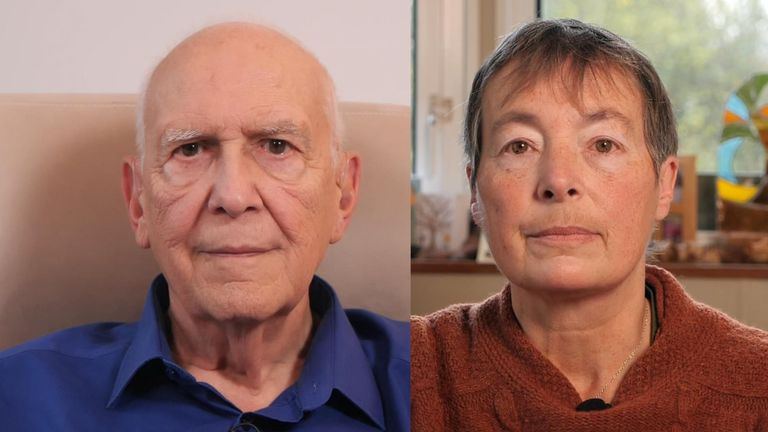
For and against assisted dying
The Dignitas team said Mr Minelli had “planned succession for a seamless transition” and the organisation would continue its “professional and combative” work.
Read more:
What does assisted dying look like?
Assisted dying poses ‘substantial task’ for NHS
Although Switzerland has allowed assisted dying since 1942 – provided the motive is not “selfish” – Dignitas became well-known as it allows non-Swiss people to use its clinics.
Despite assisted suicide still being illegal in the UK, people from Great Britain make up the second largest group of Dignitas members, according to the group’s statistics.
Last year, 37 people travelled from Great Britain to die at a Swiss Dignitas clinic.
Those who accompany their loved ones to the clinics can be charged with assisted suicide, although earlier this year, police said a widow who accompanied her husband wouldn’t face charges.
“Whilst [the CPS] concluded the evidential test had been met regarding assisted suicide, it was decided not to be in the public interest to prosecute,” said North Yorkshire Police in a statement at the time.
Anyone feeling emotionally distressed or suicidal can call Samaritans for help on 116 123 or email jo@samaritans.org in the UK. In the US, call the Samaritans branch in your area or 1 (800) 273-TALK.
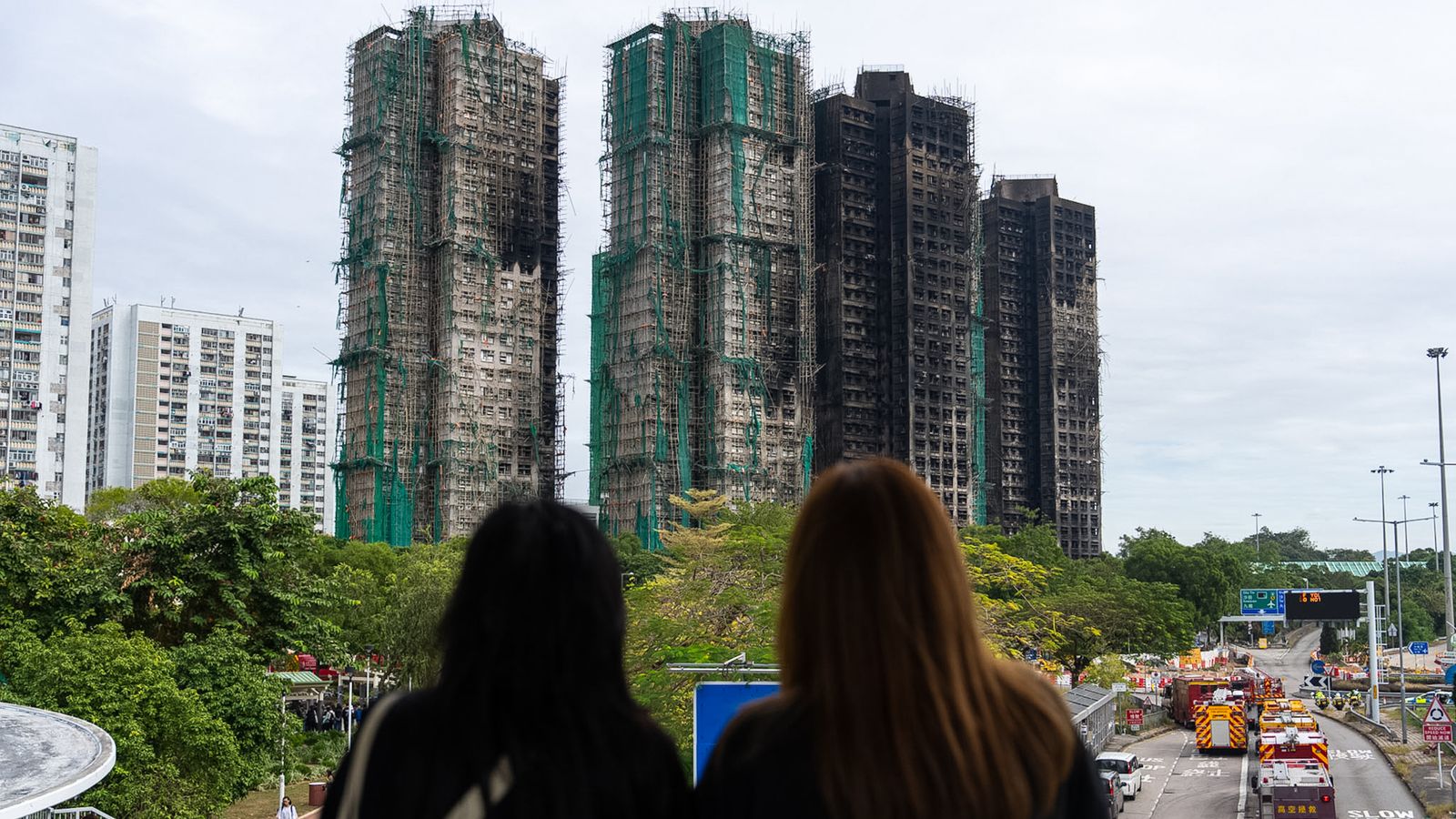
Thirteen people have been arrested for suspected manslaughter after Hong Kong’s deadliest fire in decades, officials have said.
At a press conference about the tragedy at Wang Fuk Court, police said 151 people had now died as a result of the blaze – Hong Kong’s worst since 1948 – and that more than 40 are still missing.
An emotional Tsung Shuk Yin, a police official, told reporters on Monday: “Some of the bodies have turned into ash, therefore, we might not be able to locate all missing individuals.”
The fire last week engulfed multiple high rise blocks of flats. Officials overseeing investigations said that tests on several samples of a green mesh that was wrapped around bamboo scaffolding on the buildings at the time of the blaze did not match fire-retardant standards.
Officers have said mesh around Wang Fuk Court did not meet safety standards. Pic: AP
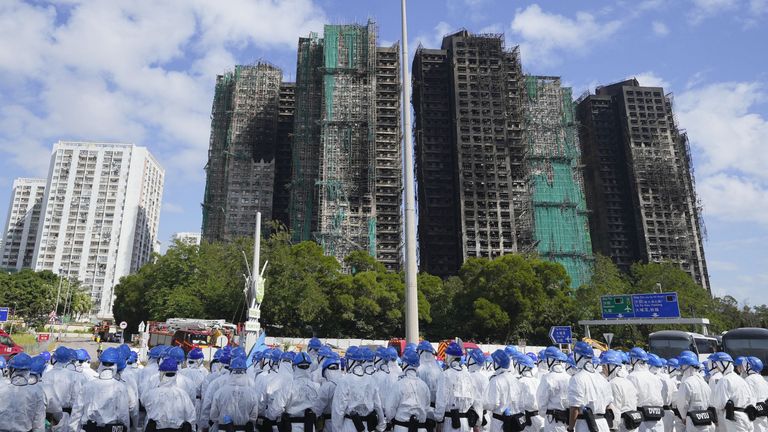
Pic: Kyodo/AP
Chief secretary Eric Chan told reporters that contractors working on the renovations used substandard materials in hard-to-reach areas, effectively hiding them from inspectors.
The officials said that foam insulation used by contractors also fanned the flames, and fire alarms at the complex were not working properly.
Sky News had previously learnt that residents raised their fears over fire safety connected to extensive renovations on Wang Fuk Court as early as September 2024.
Read more: Hong Kong mourns those lost to fire
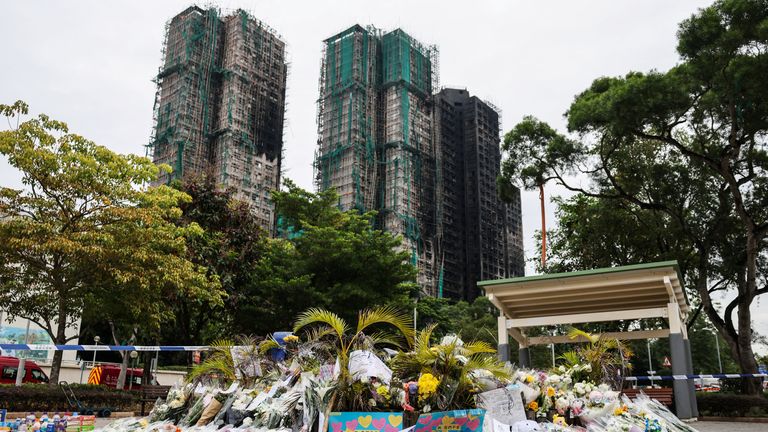
Pic: Reuters
Labour Department acknowledges reply ‘was unclear’
In a statement to Sky News, Hong Kong’s Labour Department acknowledged that, in reply to these complaints, it told residents the mesh was designed to limit objects falling from the scaffolding and that “current safety regulations applied to construction sites by the Labour Department do not cover flame-retardant standards for scaffolding netting or any materials”.
They now acknowledge this reply to residents “was unclear and caused misunderstanding”.
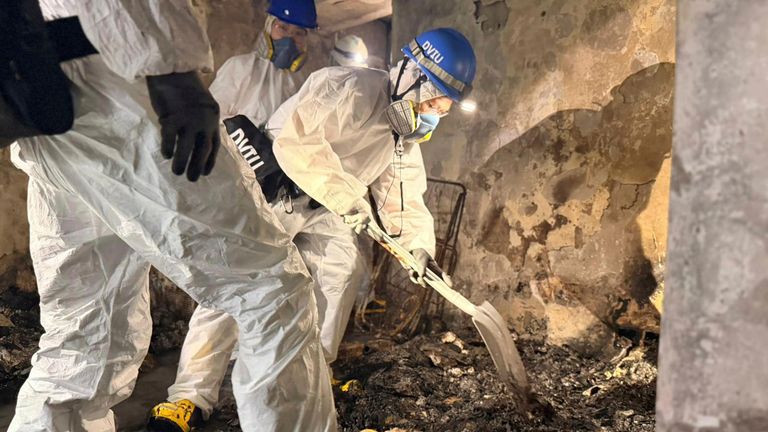
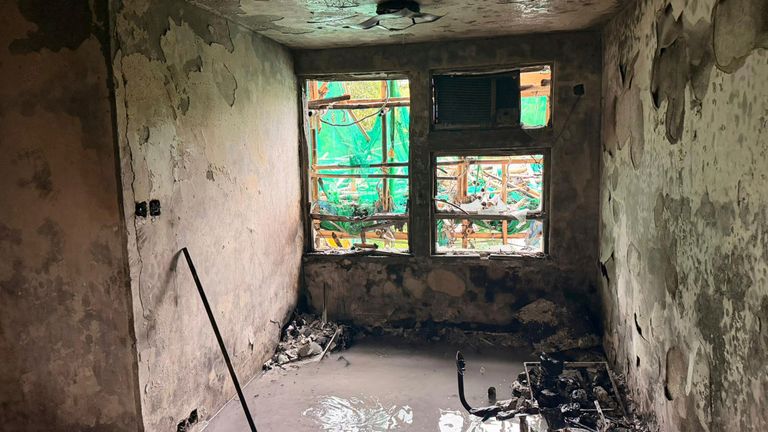
Pics: Hong Kong Police Public Relations Branch/AP
The Labour Department also told residents they judged the risk of a fire on the scaffolding was “relatively low”, because the works did not include activities such as welding.
In its statement to Sky News, the Labour Department says this did not mean the risk was negligible, and also noted contractors had been reminded to “implement fire prevention measures.”
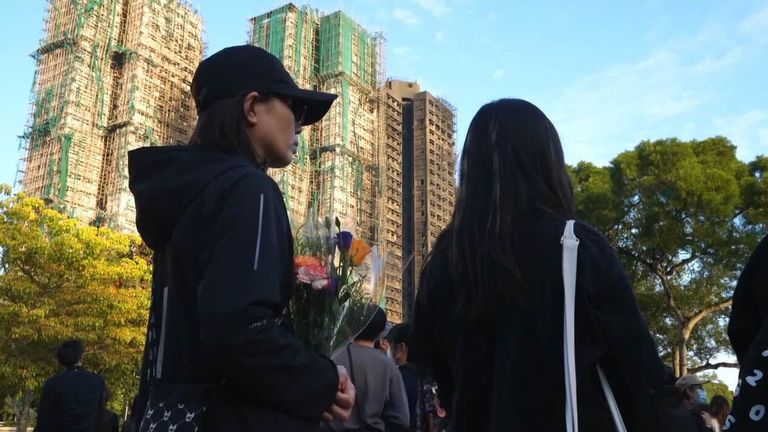
‘It could have been avoided’
The blaze broke out at the Wang Fuk Court housing complex in the city’s Tai Po district on Wednesday.
Records show the site consists of eight blocks, with almost 2,000 apartments housing around 4,800 residents, including many elderly people.
It was built in the 1980s and has recently been undergoing a major renovation.
On Sunday, more than 1,000 people turned out to pay tribute to the victims of the fire, queuing for more than a kilometre to lay flowers, some with sticky notes attached addressed to the victims.
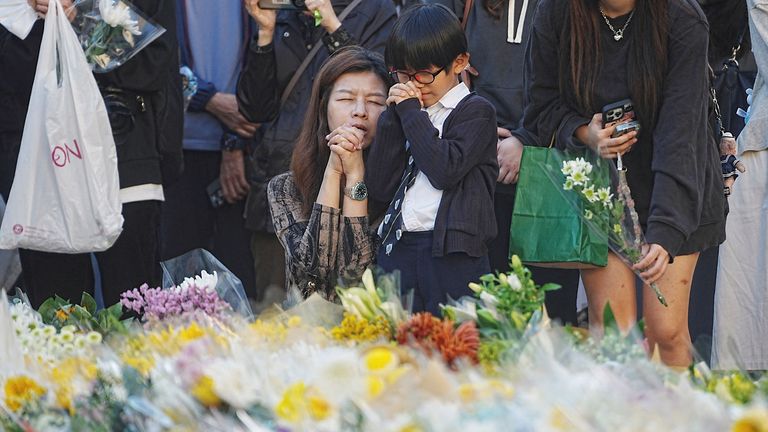
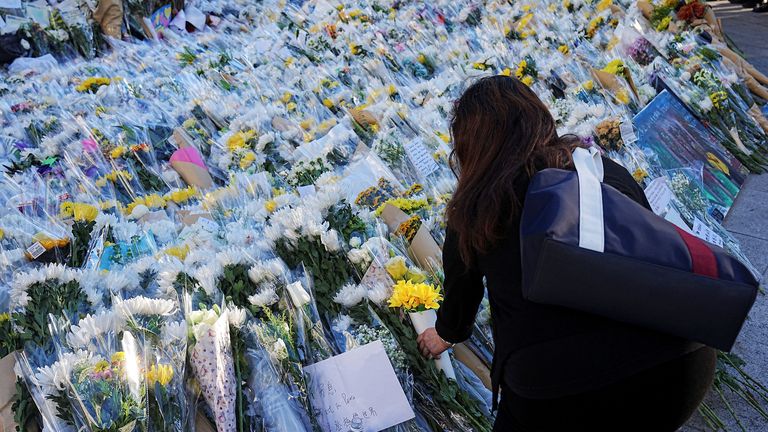
Pics: Reuters
Man calling for probe detained
Meanwhile, it emerged that police detained Miles Kwan, 24, who was part of a group that launched a petition demanding an independent probe into possible corruption and a review of construction oversight.
An online petition demanding an independent probe into possible corruption and a review of construction oversight drew over 10,000 signatures before it was closed.
Another petition with similar demands attracted more than 2,700 signatures with its plea for “explicit accountability” from the government.
Read more from Sky News:
Dignitas founder dies by assisted suicide aged 92
Death toll climbs from floods across south of Asia
Venezuela hits out at US ‘colonial threat’
Two people familiar with the matter told Reuters that Kwan was detained on Saturday. The news outlet could not establish whether he had been arrested.
He was pictured leaving a police station in a taxi on Monday afternoon.

Miles Kwan leaves a police station following his detention.
Pic: Reuters
Police did not comment on the case, and Hong Kong Security Chief Chris Tang also declined to comment on specific operations at a press conference on Monday.
He added: “I’ve noticed that some people with malicious intent, aiming to harm Hong Kong and national security, have taken advantage of this painful moment for society.
“Therefore, we must take appropriate action, including enforcement measures.”
In a statement about the arrest, Luk Chi-man, executive director of Amnesty International Hong Kong Overseas, said: “We urge the Hong Kong authorities to establish the full facts of last week’s tragedy through a thorough, independent, impartial and open investigation, and to publicly clarify the cause of the fire, hold relevant persons accountable and release all findings without delay.
“It is both a right and a duty for people in Hong Kong to demand this kind of accountability; but rather than recognise this, the Hong Kong authorities have instead chosen to silence those who raise their concerns and demands.
“A healthy society should not have only one voice.”
Rescue and recovery and efforts are underway in parts of South and Southeast Asia where the number of those killed in devastating flooding continues to rise.
The extreme weather last week has killed at least 334 people in Sri Lanka, 502 in Indonesia, and 170 in Thailand, according to authorities.
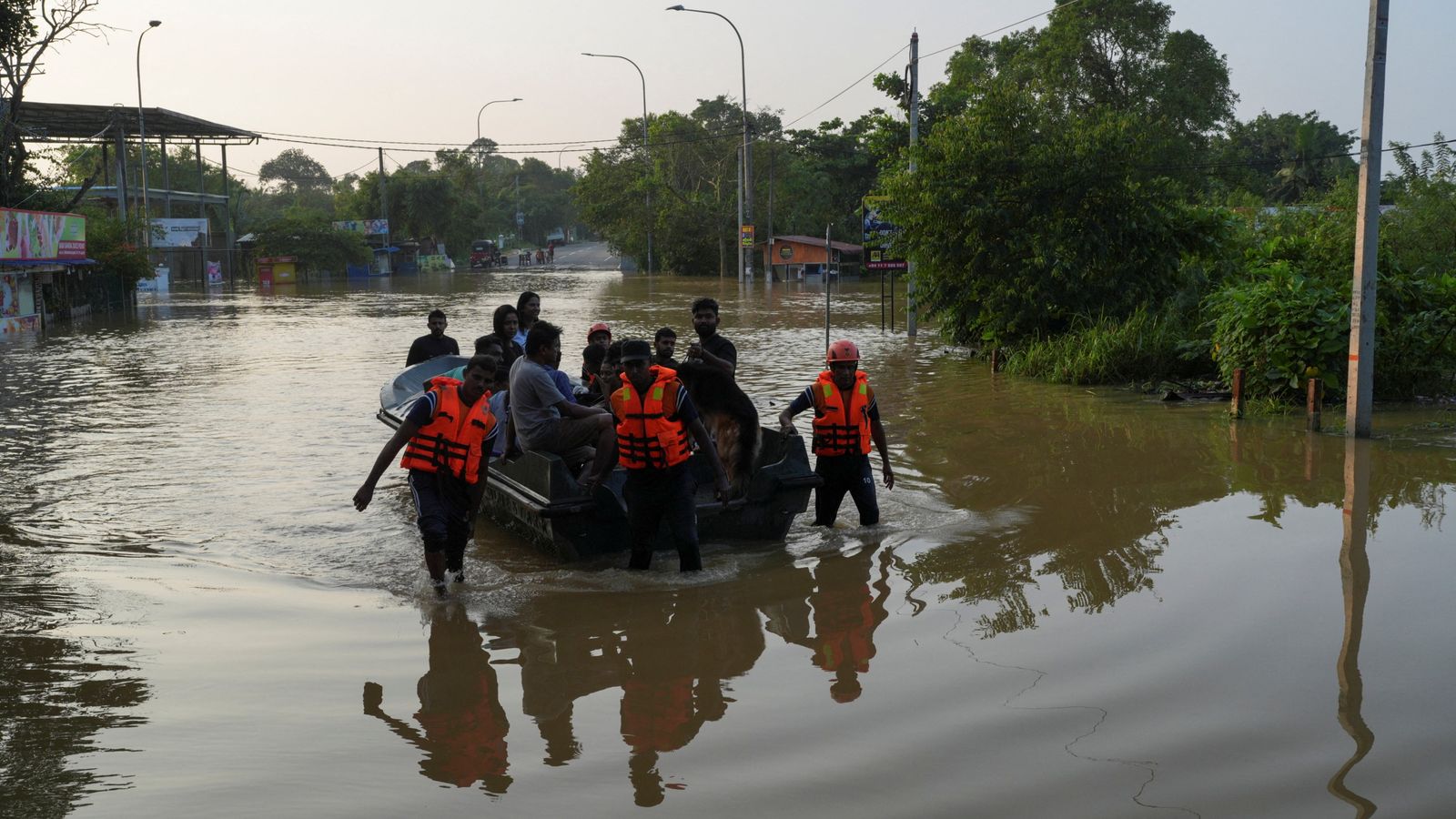
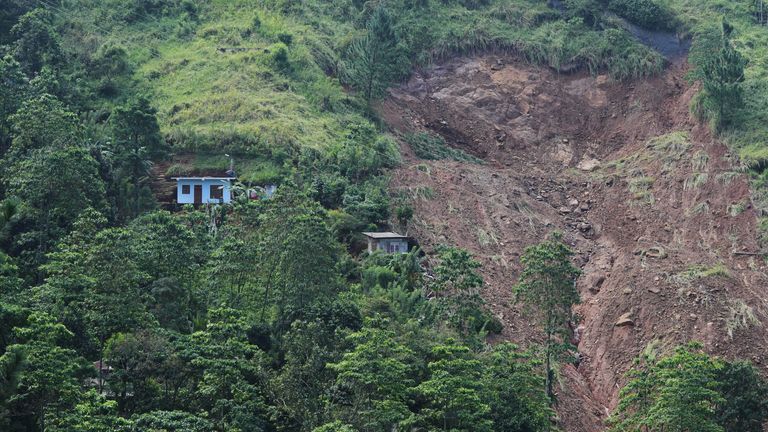
Rescuers in Sri Lanka are still searching for 370 people after a cyclone hit the island nation, with downpours flooding homes, fields and roads and triggering landslides in the hilly central region.
Landslides in Sarasavigama village near Kandy, Sri Lanka. Pic: AP
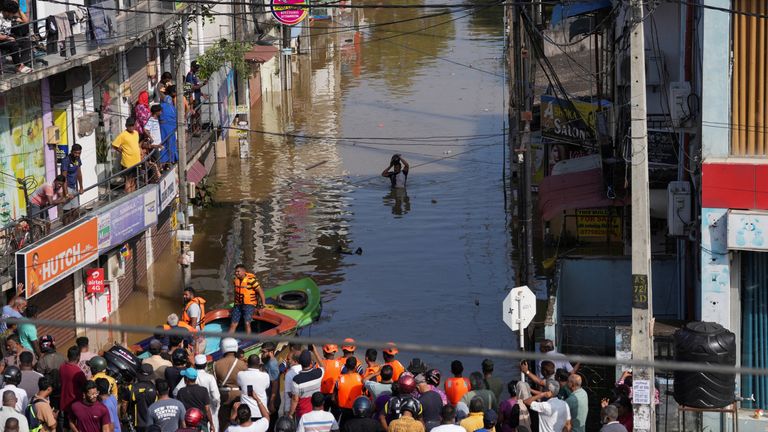
A man wades through the flooded street, following heavy rainfall in Wellampitiya, Sri Lanka. Pic: Reuters
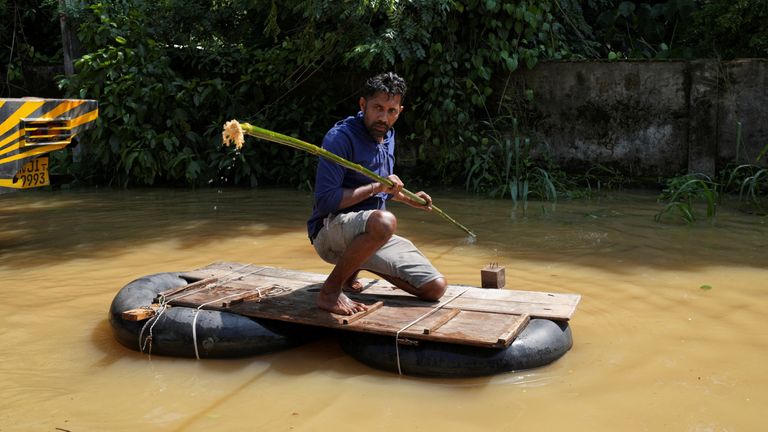
A man uses a makeshift raft at a flooded area, following Cyclone Ditwah in Kelaniya, Sri Lanka. Pic: Reuters
Nearly a million people have been impacted by the heavy rains and floods, which forced nearly 200,000 into shelters, the country’s disaster management centre said.
People were seen salvaging belongings from flooded homes along the banks of the Kelani river near capital Colombo on Monday.
Meanwhile, train and flight services have resumed after being disrupted last week, but schools stayed closed, officials said.
Cyclone Ditwah was the “largest and most challenging” natural disaster in Sri Lanka’s history, President Anura Kumara Dissanayake said.
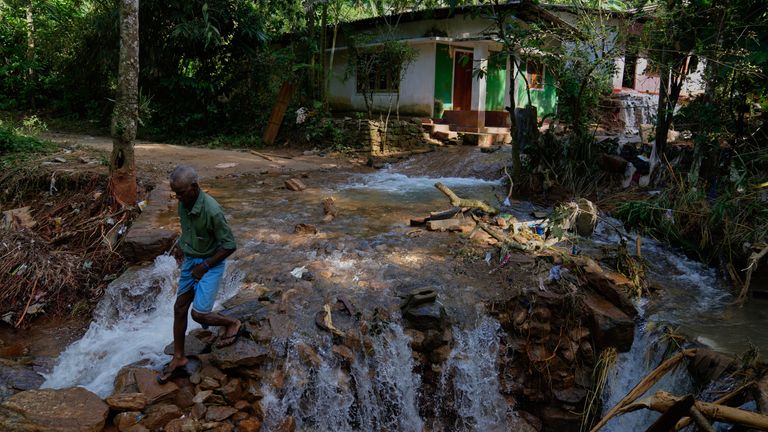
A landslide survivor crosses a section of a damaged road in Sarasavigama village near Kandy, Sri Lanka. Pic: AP
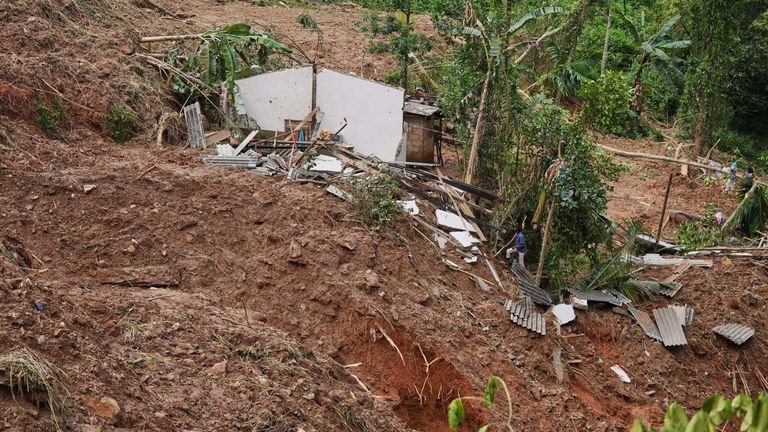
Landslide survivors salvage belongings at the site of a landslide in Sarasavigama village near Kandy, Sri Lanka. Pic: AP
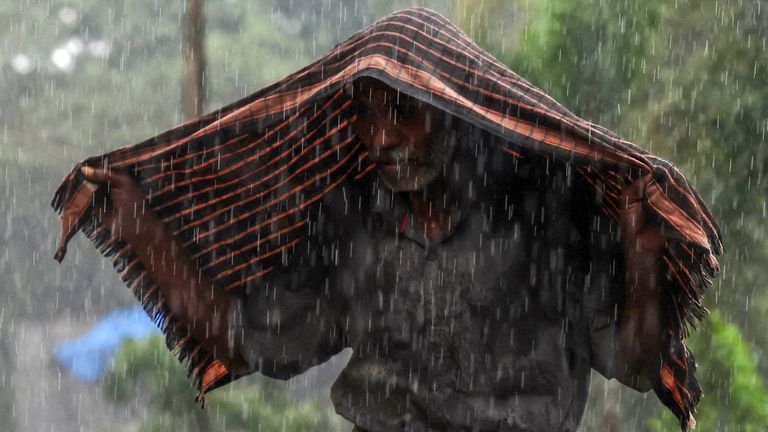
A man uses his scarf to protect himself from the rain in the aftermath of Cyclone Ditwah, in Chennai, India. Pic: Reuters
The cyclone also brought heavy rain to India’s southern state of Tamil Nadu over the weekend, with authorities saying three people were killed in rain-related incidents.
The storm, which is currently 50km (30 miles) off the coast of the state capital Chennai, has already weakened into a “deep depression” and is expected to weaken further in the next 12 hours, weather officials said on Monday.
Hundreds still missing in Indonesia
In Southeast Asia, close to 700 people were killed as two different cyclones hit the region. Rescuers in Indonesia are still searching for at least 508 people missing, according to official figures.
People have started clearing mud, trees and wreckage from roads on the weekend as recovery operations continued.
More than 28,000 homes have been damaged, with 1.4 million people affected by the rare tropical storm.
The country’s president, Prabowo Subianto, called it a catastrophe and pledged to rebuild infrastructure as he visited the three affected provinces on Monday, where nearly 300,000 people have been displaced by the flooding.
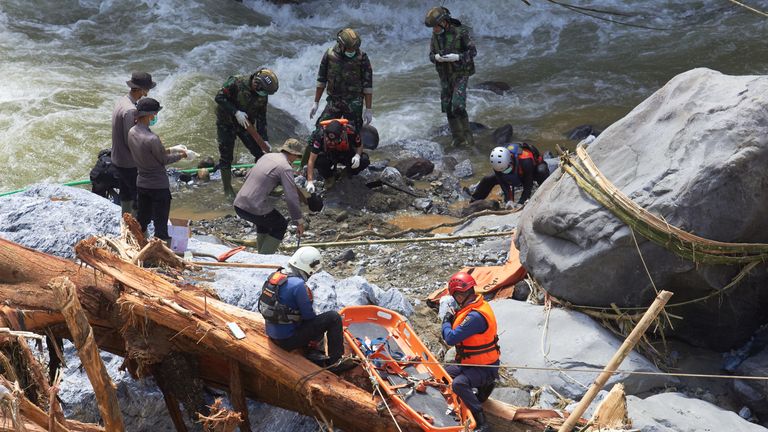
Rescuers search for flood victims in Tanah Datar, West Sumatra, Indonesia. Pic: AP
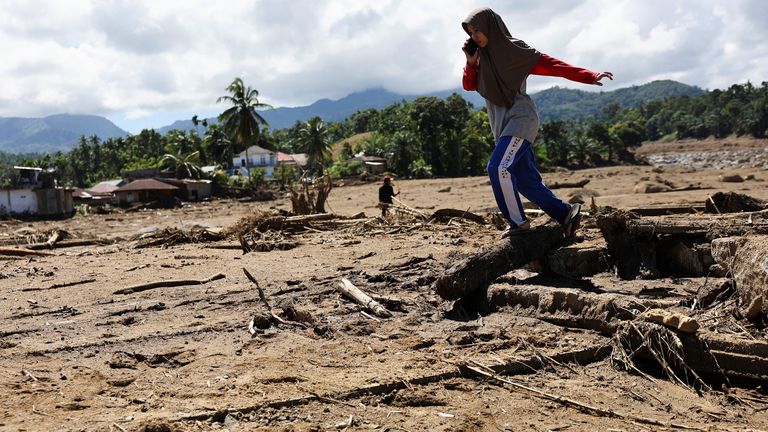
A flooded field in Indonesia’s West Sumatra province. Pic: Reuters
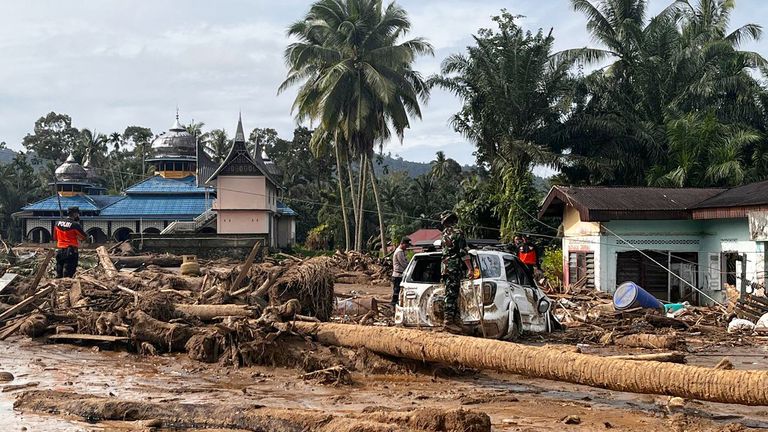
Rescuers search for victims at a village affected by flash flooding, in Agam, West Sumatra, Indonesia. Pic: AP
In Thailand, flooding in eight southern provinces affected about three million people and led to a major mobilisation of its military to evacuate critical patients from hospitals and reach people stuck in floodwaters for days.
In the worst-affected city of Hat Yai, a southern trading hub, 335 mm (13 inches) of rain fell on 21 November, its highest single-day tally in 300 years, followed by days of unrelenting downpours.
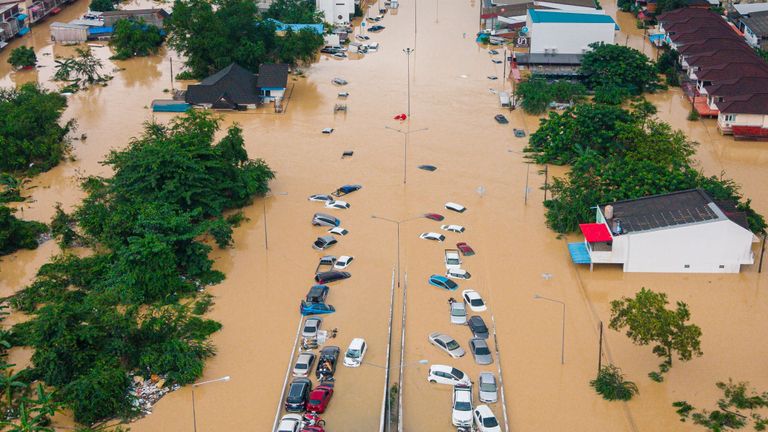
At least 82 people have died and more than 3 million people have been impacted by floods in 12 southern Thai provinces.
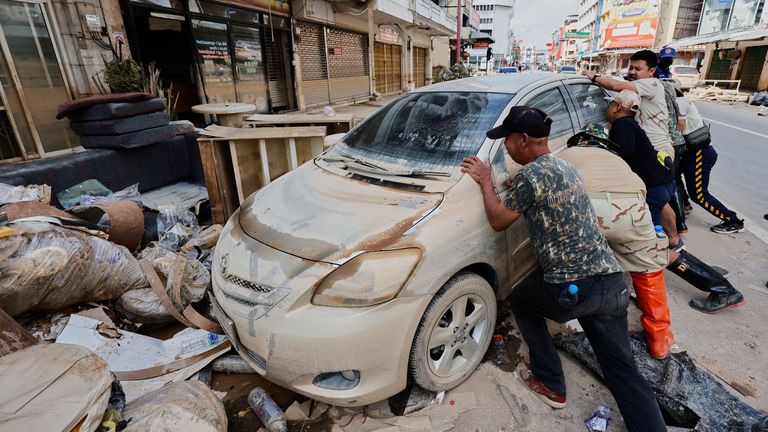
People move a car damaged by floods in Songkhla province, southern Thailand. Pic: AP
Prime Minister Anutin Charnivirakul expects residents to be able to return home within seven days, a government spokesperson said on Monday.
Read more from Sky News:
Zelenskyy to make first official visit to Ireland
Dignitas founder dies by assisted suicide aged 92
The first batch of compensation payments is set to be distributed on Monday, starting with 239m baht (£5.6m) for 26,000 people, the spokesperson added.
In Malaysia there have been at least three deaths and authorities are still on alert for a second and third wave of flooding as 11,600 remain in evacuation centres.
-
 Sports2 years ago
Story injured on diving stop, exits Red Sox game
-
 Sports3 years ago
‘Storybook stuff’: Inside the night Bryce Harper sent the Phillies to the World Series
-
 Sports2 years ago
Game 1 of WS least-watched in recorded history
-
 Sports3 years ago
Button battles heat exhaustion in NASCAR debut
-
 Sports3 years ago
MLB Rank 2023: Ranking baseball’s top 100 players
-
Sports4 years ago
Team Europe easily wins 4th straight Laver Cup
-
 Environment3 years ago
Japan and South Korea have a lot at stake in a free and open South China Sea
-
 Environment1 year ago
Here are the best electric bikes you can buy at every price level in October 2024