

£5bn Bitcoin fraud mastermind had device containing £67m in secret pocket


The mastermind of a £5bn Chinese investment fraud was found with a device containing £67m of cryptocurrency in a secret pocket of her jogging bottoms when she was arrested after years on the run, a court has heard.
Prosecutors are setting up a compensation scheme after Yadi Zhang, 47, conned around 128,000 Chinese investors into fraudulent wealth schemes between 2014 and 2017.
Zhang, who is also known as Zhimin Qian, admitted money laundering charges after police discovered more than 61,000 Bitcoin, now worth more than £5bn, in digital wallets, in the UK’s biggest ever cryptocurrency seizure.
She arrived in the UK on a false St Kitts and Nevis passport in September 2017 before coming to the attention of police after trying to buy some of London’s most expensive properties.
Zhang rented a £17,000-a-month house in Hampstead, north London. Pic: CPS
Zhang vanished after police raided her £5m six-bedroom rented house near Hampstead Heath in north London in 2018, but was finally arrested in York last year.
In written legal arguments, Martin Evans KC representing the Director of Public Prosecutions Stephen Parkinson, said a ledger and passwords were found in a purpose-made concealed pocket in the jogging bottoms she was wearing.
She revealed the access code for two wallets during interviews in prison, leading investigators to cryptocurrency worth around £67m.
The stash has been added to the £5bn Bitcoin hoard, which has reportedly been earmarked by Chancellor Rachel Reeves to help plug the hole in the public finances.
The fortune is at the centre of a High Court battle between the UK government and thousands of Chinese victims, who want to recover their investment and say it should reflect the huge rise in the value of Bitcoin.
Law firm Fieldfisher, which is representing around 1,000 victims, said some have lost their life savings and many are old and vulnerable.
The court heard the DPP is also setting up a compensation scheme for the victims not represented in court, although no further details have been given.
The judge, Mr Justice Turner, will make orders on the case at a later date.
Read more from Sky News:
Is Bitcoin’s price sustainable?
Royal Mail fined over late letters
Zhang pleaded guilty to charges of possessing criminal property and transferring criminal property on or before the 23 April 2024 last month and is in custody awaiting sentencing in November.
Jian Wen, 43, was jailed for six years and eight months last year after being found guilty of one count of money laundering between October 2017 and January 2022 relating to 150 Bitcoin, now worth around £12.5m.

Jian Wen. Pic: CPS
Her trial heard that Wen, who previously worked in a Chinese takeaway, was not involved in the alleged fraud but acted as a “front person” to help disguise the source of the money.
The court heard how the two women travelled the world, spending tens of thousands of pounds on designer clothes, jewellery and shoes.
Seng Hok Ling, 47, is said to have replaced Wen as Zhang’s “butler”, organising helpers and booking Airbnbs, including in Scotland, for the fugitive while she was on the run.

Seng Hok Ling. Pic: Met Police
Police found Zhang after carrying out surveillance of Ling and seized assets including encrypted devices, cash, gold and cryptocurrency.
Ling, a Malaysian national from Matlock in Derbyshire, pleaded guilty at Southwark Crown Court to entering into a money laundering arrangement with Zhang on or before 23 April 2024 and will be sentenced alongside her.
Prosecutors said Zhang masterminded a scam in China, before converting the money into cryptocurrency to get it out of the country.



Shares in The Magnum Ice Cream Company (TMICC) have fallen slightly on debut after the completion of its spin-off from Unilever amid a continuing civil war with one of its best-known brands.
Shares in the Netherlands-based company are trading for the first time following the demerger.
It creates the world’s biggest ice cream company, controlling around one fifth of the global market.
Primary Magnum shares, in Amsterdam, opened at €12.20 – down on the €12.80 reference price set by the EuroNext exchange, though they later settled just above that level, implying a market value of €7.9bn – just below £7bn.
The company is also listed in London and New York.
Money latest: The cheapest days to travel by plane
Unilever stock was down 3.1% on the FTSE 100 in the wake of the spin off.
The demerger allows London-headquartered Unilever to concentrate on its wider stable of consumer brands, including Marmite, Dove soap and Domestos.
The decision to hive off the ice cream division, made in early 2024, gives a greater focus on a market that is tipped to grow by up to 4% each year until 2029.
Ben & Jerry’s accounts for a greater volume of group revenue now under TMICC. Pic: Reuters
But it has been dogged by a long-running spat with the co-founders of Ben & Jerry’s, which now falls under the TMICC umbrella and accounts for 14% of group revenue.
Unilever bought the US brand in 2000, but the relationship has been sour since, despite the creation of an independent board at that time aimed at protecting the brand’s social mission.
The most high-profile spat came in 2021 when Ben & Jerry’s took the decision not to sell ice cream in Israeli-occupied Palestinian territories on the grounds that sales would be “inconsistent” with its values.
Unilever responded by selling the business to its licensee in Israel.
A series of rows have followed akin to a tug of war, with Magnum refusing repeated demands by the co-founders of Ben & Jerry’s to sell the brand back.
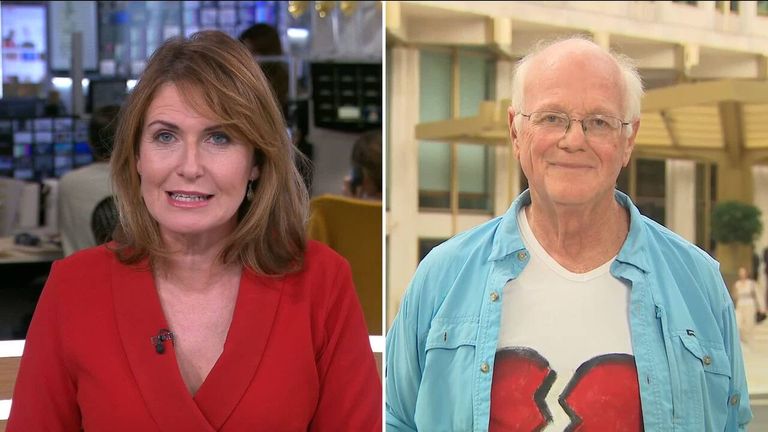
Sept: ‘Free Ben & Jerry’s’
Magnum and Unilever argue its mission has strayed beyond what was acceptable back in 2000, with the brand evolving into one-sided advocacy on polarising topics that risk reputational and business damage.
TMICC is currently trying to remove the chair of Ben & Jerry’s independent board.
It said last month that Anuradha Mittal “no longer meets the criteria” to serve after internal investigations.
An audit of the separate Ben & Jerry’s Foundation, where she is also a trustee, found deficiencies in financial controls and governance. Magnum said the charitable arm risked having funding removed unless the alleged problems were addressed.
The Reuters news agency has since reported that Ms Mittal has no plans to quit her roles, and accused Magnum of attempts to “discredit” her and undermine the authority of the independent board.
Magnum boss Peter ter Kulve said on Monday: “Today is a proud milestone for everyone associated with TMICC. We became the global leader in ice cream as part of the Unilever family. Now, as an independent listed company, we will be more agile, more focused, and more ambitious than ever.”
Commenting on the demerger, Hargreaves Lansdown equity analyst Aarin Chiekrie said: “TMICC is already free cash flow positive, and profitable in its own right. The balance sheet is in decent shape, but dividends are off the cards until 2027 as the group finds its footing as a standalone business.
“That could cause some downward pressure on the share price in the near term, as dividend-focussed investment funds that hold Unilever will be handed TMICC shares, the latter of which they may be forced to sell to abide by their investment mandate.”
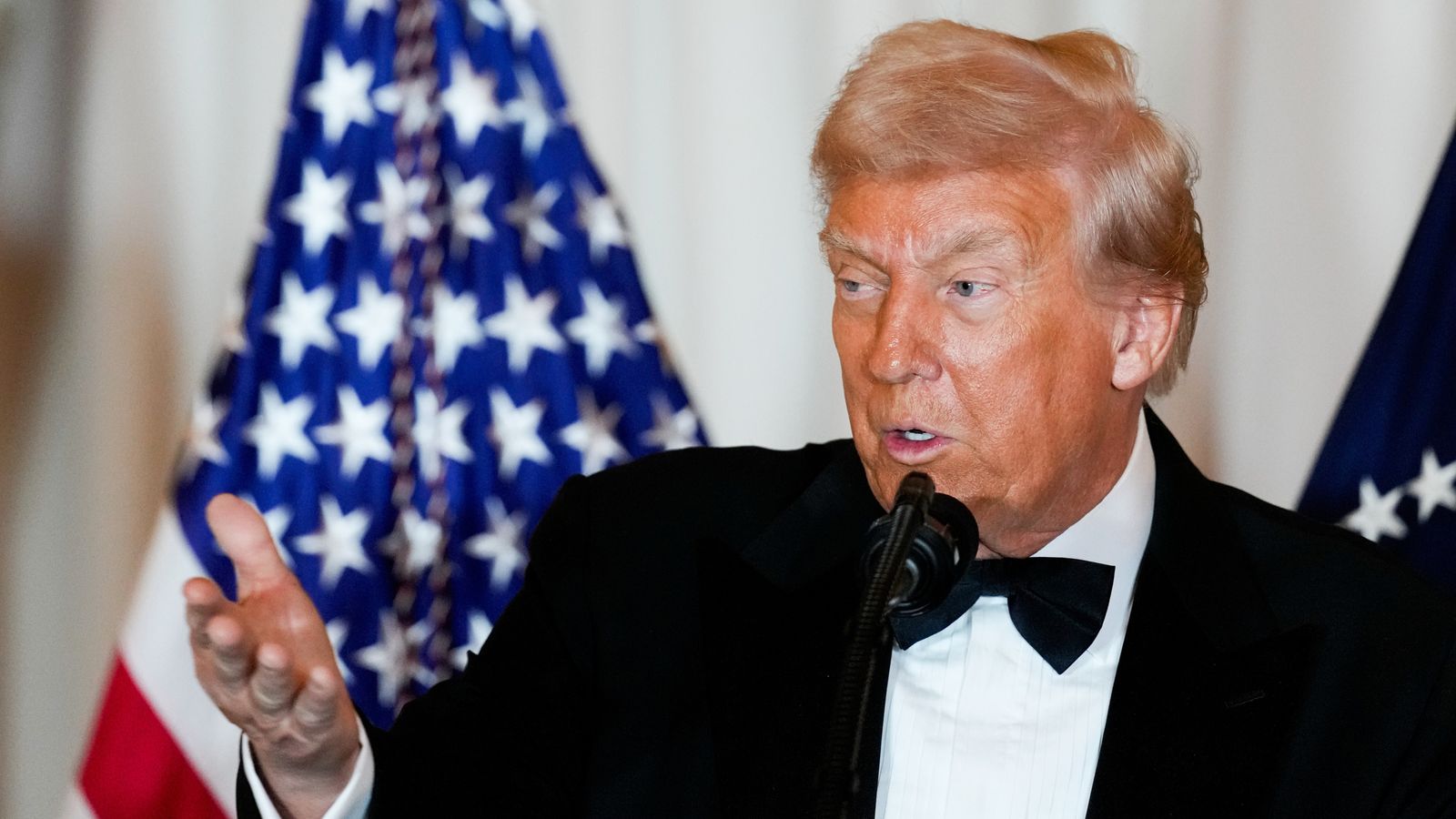

Donald Trump has said he will be “involved” in the decision on whether Netflix should be allowed to buy Warner Bros, as the $72bn (£54bn) deal attracts a media industry backlash.
The US president acknowledged in remarks to reporters there “could be a problem”, acknowledging concerns over the streaming giant’s market dominance.
Crucially, he did not say where he stood on the issue.
Money latest: The cheapest days to travel by plane
It was revealed on Friday that Netflix, already the world’s biggest streaming service by market share, had agreed to buy Warner Bros Discovery’s TV, film studios and HBO Max streaming division.
The deal aims to complete late next year after the Discovery element of the business, mainly legacy TV channels showing cartoons, news and sport, has been spun off.
But the deal has attracted cross-party criticism on competition grounds, and there is also opposition in Hollywood.
Netflix agrees $72bn takeover of Warner Bros
The Writers Guild of America said: “The world’s largest streaming company swallowing one of its biggest competitors is what antitrust laws were designed to prevent.
“The outcome would eliminate jobs, push down wages, worsen conditions for all entertainment workers, raise prices for consumers, and reduce the volume and diversity of content for all viewers.”
File pic: Reuters
Republican Senator, Roger Marshall, said in a statement: “Netflix’s attempt to buy Warner Bros would be the largest media takeover in history – and it raises serious red flags for consumers, creators, movie theaters, and local businesses alike.
“One company should not have full vertical control of the content and the distribution pipeline that delivers it. And combining two of the largest streaming platforms is a textbook horizontal Antitrust problem.
“Prices, choice, and creative freedom are at stake. Regulators need to take a hard look at this deal, and realize how harmful it would be for consumers and Western society.”
Paramount Skydance and Comcast, the parent company of Sky News, were two other bidders in the auction process that preceded the announcement.
The Reuters news agency, citing information from sources, said their bids were rejected in favour of Netflix for different reasons.
Paramount’s was seen as having funding concerns, they said, while Comcast’s was deemed not to offer so many earlier benefits.
Paramount is run by David Ellison, the son of the Oracle tech billionaire Larry Ellison, who is a close ally of Mr Trump.
The president said of the Netflix deal’s path to regulatory clearance: “I’ll be involved in that decision”.
On the likely opposition to the deal. he added: “That’s going to be for some economists to tell. But it is a big market share. There’s no question it could be a problem.”
-
 Sports2 years ago
Story injured on diving stop, exits Red Sox game
-
 Sports3 years ago
‘Storybook stuff’: Inside the night Bryce Harper sent the Phillies to the World Series
-
 Sports2 years ago
Game 1 of WS least-watched in recorded history
-
 Sports3 years ago
Button battles heat exhaustion in NASCAR debut
-
 Sports3 years ago
MLB Rank 2023: Ranking baseball’s top 100 players
-
Sports4 years ago
Team Europe easily wins 4th straight Laver Cup
-
 Environment3 years ago
Japan and South Korea have a lot at stake in a free and open South China Sea
-
 Environment1 year ago
Here are the best electric bikes you can buy at every price level in October 2024