
Police should focus on ‘tackling real crime’, No 10 says, after Met Police halts non-crime hate probes


Officers should focus on “tackling real crime and policing the streets”, Downing Street has said – after the Metropolitan Police announced it is no longer investigating non-crime hate incidents.
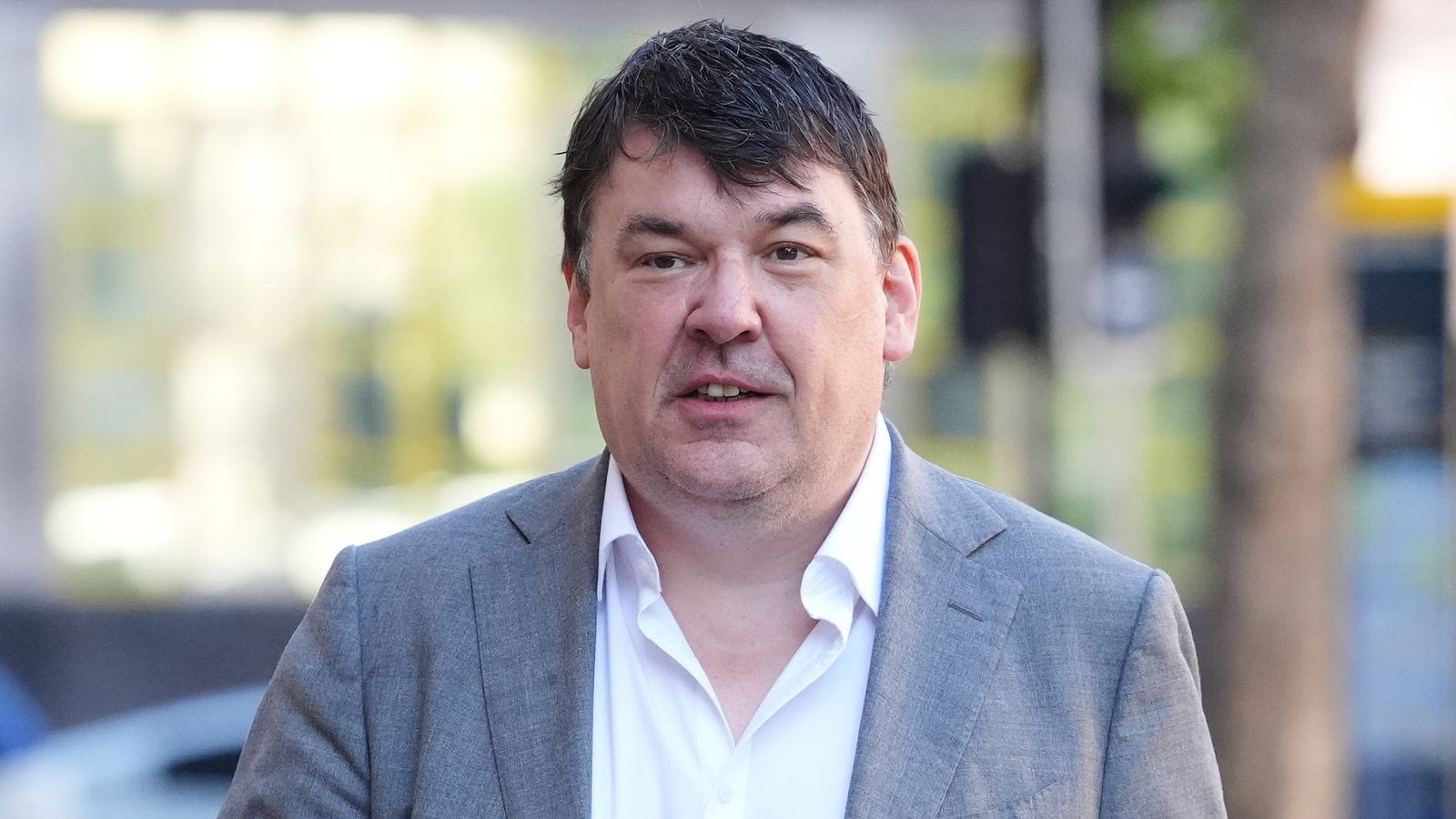
The announcement by Britain’s biggest force on Monday came after it emerged Father Ted creator Graham Linehan will face no further action after he was arrested at Heathrow Airport on suspicion of inciting violence over three posts he made on X about transgender issues.
Politics latest: Boris Johnson left in ‘homicidal mood’ after exam result fiasco
Sir Keir Starmer’s spokesman said police forces will “get the clarity they need to keep our streets safe” when a review of non-crime hate incidents by the National Police Chiefs’ Council and College of Policing is published in December.
“The police should focus on tackling real crime and policing the streets,” he said.
“The home secretary has asked that this review be completed at pace, working with the National Police Chiefs’ Council and the College of Policing.
“We look forward to receiving its findings as soon as possible, so that the other forces get the clarity they need to keep our streets safe.”
He said the government will “always work with police chiefs to make sure criminal law and guidance reflects the common-sense approach we all want to see in policing”.
After Linehan’s September arrest, Met Police Commissioner Sir Mark Rowley said officers were in “an impossible position” when dealing with statements made online.
File pic: iStock
On Monday, a Met spokesperson said the commissioner had been “clear he doesn’t believe officers should be policing toxic culture war debates, with current laws and rules on inciting violence online leaving them in an impossible position”.
The force said the decision to no longer investigate non-crime hate incidents would now “provide clearer direction for officers, reduce ambiguity and enable them to focus on matters that meet the threshold for criminal investigations”.
Justice minister Sarah Sackman said it is “welcome news” the Met will now be focusing on crimes such as phone snatching, mugging, antisocial behaviour and violent crime.
Asked if other forces should follow the Met’s decision, she said: “I think that other forces need to make the decisions that are right for their communities.
“But I’m sure that communities up and down the country would want that renewed focus on violent crime, on antisocial behaviour, and on actual hate crime.”
The Met said it will still record non-crime hate incidents to use as “valuable pieces of intelligence to establish potential patterns of behaviour or criminality”.

The lower house of Poland’s parliament failed to secure the required three-fifths majority to override President Karol Nawrocki’s veto of the Crypto-Asset Market Act, pushing the country further away from regulating its digital-asset sector at a moment when lawmakers argue that oversight is increasingly urgent.
As Bloomberg reported Friday, the legislation — advanced by Prime Minister Donald Tusk’s government — was intended to align Poland with the European Union’s MiCA framework for crypto markets. The bill was introduced in June but did not survive the president’s veto.
Nawrocki blocked the measure last week, arguing it would “threaten the freedoms of Poles, their property, and the stability of the state,” as Cointelegraph previously reported.
With the president’s veto upheld, the bill will not move forward, forcing the government to restart its crypto lawmaking process.

The proposal has sharply divided lawmakers and the crypto industry. Supporters framed the bill as a national security priority, saying that comprehensive rules are necessary to curb fraud and prevent potential misuse of crypto assets by foreign actors, including Russia, according to Bloomberg.
However, several crypto-industry groups opposed the legislation, warning that its requirements were overly burdensome and could drive startups out of the country.
Critics pointed to stringent licensing rules, high compliance costs and criminal-liability provisions for service-provider executives, arguing that the bill risked stifling innovation and creating an uncompetitive business environment.
Related: EU plan would boost ESMA powers over crypto and capital markets
Crypto adoption in Poland ramps up amid regulatory pause
Cryptocurrency use in Poland continues to accelerate even as the country stalls on comprehensive regulation. Chainalysis recently identified Poland as one of Europe’s “large crypto economies,” noting that the country’s onchain activity has expanded significantly over the past year.
According to the company’s 2025 Europe Crypto Adoption report, Poland recorded more than 50% year-over-year growth in overall transaction volume.

Polish investors are also increasing their exposure to Bitcoin (BTC), reflected in a surge in Bitcoin ATM installations in recent years. In January, Cointelegraph reported that Poland had become the world’s fifth-largest Bitcoin ATM hub, surpassing even El Salvador — a country that has made Bitcoin a central element of its monetary and financial system.
Magazine: When privacy and AML laws conflict: Crypto projects’ impossible choice
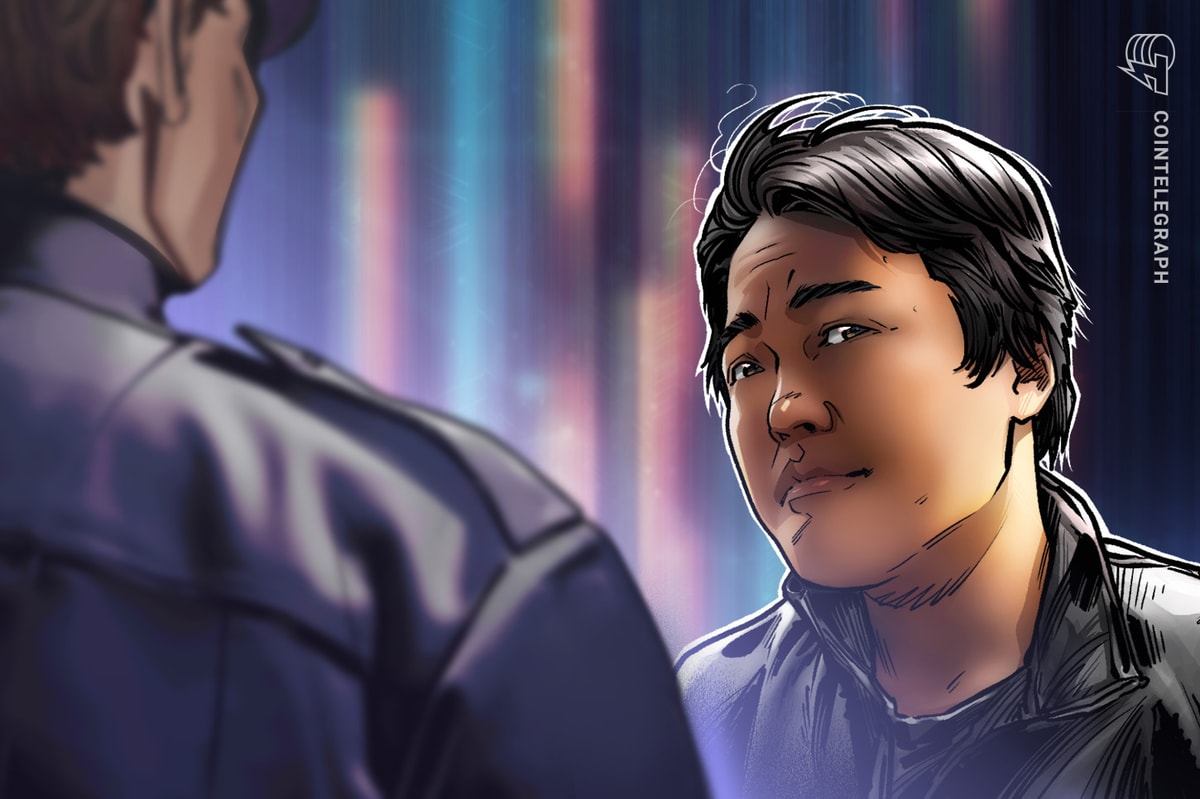
US attorneys representing the federal government have requested that a judge send Terraform Labs co-founder Do Kwon to prison for 12 years at his sentencing hearing next week.
In a Thursday filing in the US District Court for the Southern District of New York, prosecutors asked that a judge sentence Kwon “to a term of twelve years’ imprisonment and finalize the forfeiture of his criminal proceeds.”
The filing came about four months after the Terraform co-founder pleaded guilty to two counts of wire fraud and conspiracy to defraud.
“In just a few years, Kwon caused losses that eclipsed those caused by Samuel Bankman-Fried […] Alexander Mashinsky […] and Karl Sebastian Greenwood [….] combined [emphasis included in filing],” said the Thursday filing. “The Terraform market crash triggered a cascade of crises that swept through cryptocurrency markets and contributed to what has since become known as ‘Crypto Winter.’”

Kwon, who is scheduled to be sentenced on Thursday, was indicted by US authorities in March 2023 for charges including securities fraud, market manipulation, money laundering and wire fraud related to his role at Terraform.
Though his whereabouts were initially unknown after the collapse of Terra in 2022, authorities in Montenegro arrested him on charges unrelated to his role at the company, and he was later extradited to the US.
Related: South Korea targets sub-$680 crypto transfers in sweeping AML crackdown
The price of Terra’s native token, LUNA, surged by more than 40% in the previous 24 hours amid the release of the sentencing recommendation, from about $0.07 to $0.10 at the time of publication. However, the token reached an all-time high price of more than $19.00 before the ecosystem collapsed in May 2022.
Kwon says he could still face prison time in South Korea
In a November court filing, lawyers representing Kwon asked that the Terraform co-founder be given a sentence of no more than five years. His attorneys presented several arguments in favor of a shorter sentence, including that the co-founder could face 40 years in prison in his native South Korea, where prosecutors are also working on a case against him.
“He would not be able to walk out of jail in the United States as a free man for any amount of time: He will be taken from whatever facility in which he serves his sentence directly to an immigration detention center to await a deportation flight to Seoul, where he will immediately reenter pretrial detention pending his criminal charges in South Korea,” said Kwon’s lawyers.
Although Kwon’s and prosecutors’ respective recommendations will remain under consideration, the judge overseeing the sentencing hearing has the authority to sentence the Terraform co-founder to decades in prison, or a significantly shorter time. In contrast, former FTX CEO Sam Bankman-Fried is serving a 25-year sentence after his conviction on seven felony charges, former Celsius CEO Alex Mashinsky was sentenced to 12 years in prison, and a judge sent Karl Sebastian Greenwood to prison for 20 years for his role in the OneCoin scheme.
Magazine: When privacy and AML laws conflict: Crypto projects’ impossible choice
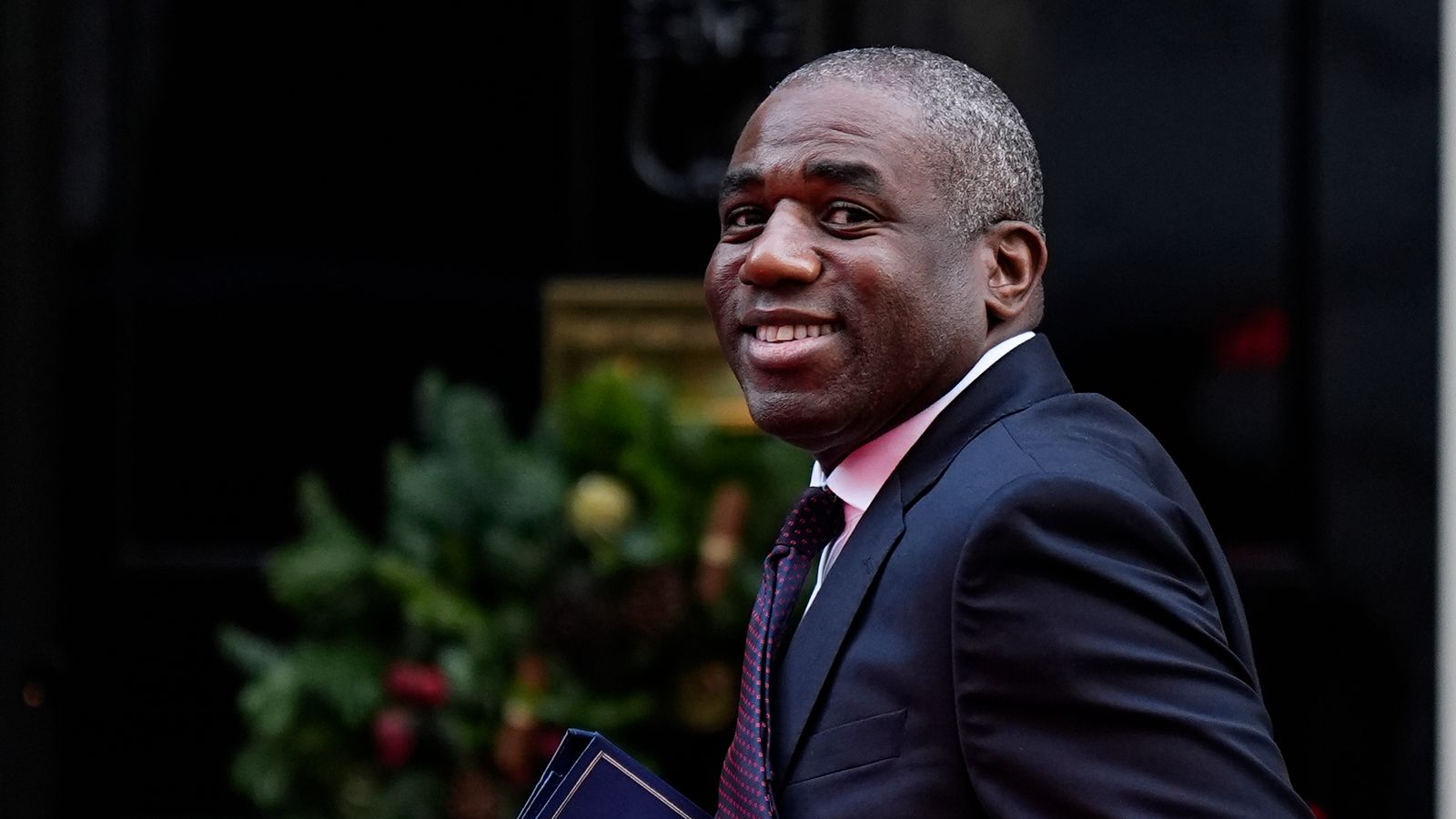
Deputy Prime Minister David Lammy has suggested it could be beneficial for the UK to consider re-entering a customs union with the EU.
He said that although doing so was not the government’s current policy, he could see how other countries outside the EU had benefited from such arrangements.
“It’s self-evident that leaving the European Union badly damaged our economy, took us out of an important marketplace and created serious friction, that untruths were being peddled by those that thought exiting the EU would be a good thing,” Mr Lammy told the News Agents podcast.
“And it’s why every single day that I was foreign secretary, I returned to the subject of our relationship with the European Union.”
Asked repeatedly if he would like to see the UK in a customs union, he said: “That is not currently our policy. That’s not currently where we are.
“But you can see countries like Turkey with a customs union seemingly benefiting and seeing growth in their economy, and again, that’s self-evident.”
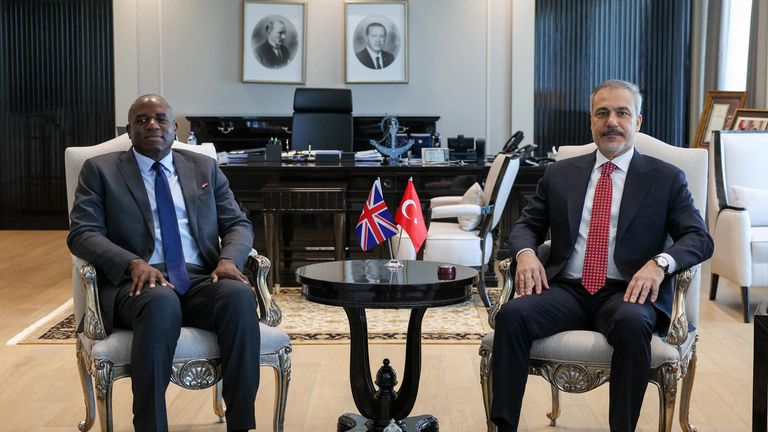
David Lammy meets with Turkish Foreign Minister Hakan Fidan in Ankara earlier this year, when he was foreign secretary. Pic: Turkish Foreign Ministry/Reuters
The Prime Minister’s economic adviser Minouche Shafik has also reportedly advocated behind the scenes for joining a customs union.
Mr Lammy’s comments were being taken as the clearest indication yet that the government is considering bringing the UK further back in line with the European Union.
But when Sir Keir Starmer was asked to respond and say why he was not advocating for membership given that growth is an ongoing priority for his government, he was quick to dampen down the speculation.
The prime minister said Labour would be sticking to its manifesto, which pledged to deepen ties with the EU without returning to the customs union, single market or freedom of movement.
“Well, the position that we are taking has been clearly set out in the manifesto, and then we’ve been following it,” Sir Keir said. “And earlier this year, we had the first UK-EU summit ever, and we had 10 strands for a closer relationship.
“So we’ve totally reset relations with the EU.
“That’s good for our economy, good for defence and security, good for the work that we need to do on energy.
Earlier a spokesperson for Number 10 said: “We are strengthening relations with the EU whilst sticking to our red lines.”
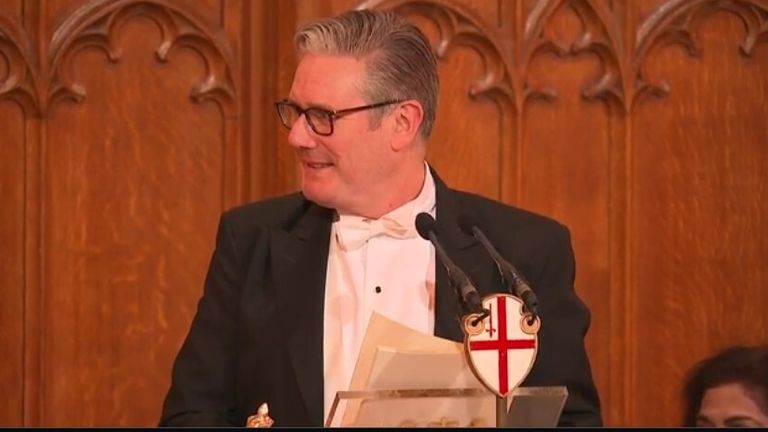
“The prime minister reiterated that on Monday evening at the Lady Mayor’s Banquet.”
Starmer condemns ‘utterly reckless’ Brexit template
Sir Keir set out his foreign policy vision at the banquet, as is tradition.
He said the Brexit vote was a “fair, democratic expression” but the way it was “sold and delivered was wrong”.
“There’s no credible economic vision for Britain not positioning us as an open trading economy,” the Number 10 spokesman said.
“We have to be grown up about trade-offs. We have redefined bonds with EU and stuck to our red lines.”
On Mr Lammy’s comments, the spokesman added: “That is not our current policy or where we are.”
-
 Sports2 years ago
Story injured on diving stop, exits Red Sox game
-
 Sports3 years ago
‘Storybook stuff’: Inside the night Bryce Harper sent the Phillies to the World Series
-
 Sports2 years ago
Game 1 of WS least-watched in recorded history
-
 Sports3 years ago
Button battles heat exhaustion in NASCAR debut
-
 Sports3 years ago
MLB Rank 2023: Ranking baseball’s top 100 players
-
Sports4 years ago
Team Europe easily wins 4th straight Laver Cup
-
 Environment3 years ago
Japan and South Korea have a lot at stake in a free and open South China Sea
-
 Environment1 year ago
Here are the best electric bikes you can buy at every price level in October 2024