

Rivian spinoff ALSO invents the future of e-bikes, but will it sell?


We’ve long known that inside of Rivian, the popular electric pickup and SUV maker, lived a tiny skunkworks of e-bike folks ready to reinvent the micromobility world with their own take on the future of rideables. After the company was spun off and brought to public attention last year, we finally know what they’ve been cooking up today. And it might just be the future of the electric bike.
Before we start, it must be said that Micah’s sleuthing and connections did bring us two pretty amazing sneak previews of what we are seeing today. But I think these views only tell a very small part of the story.
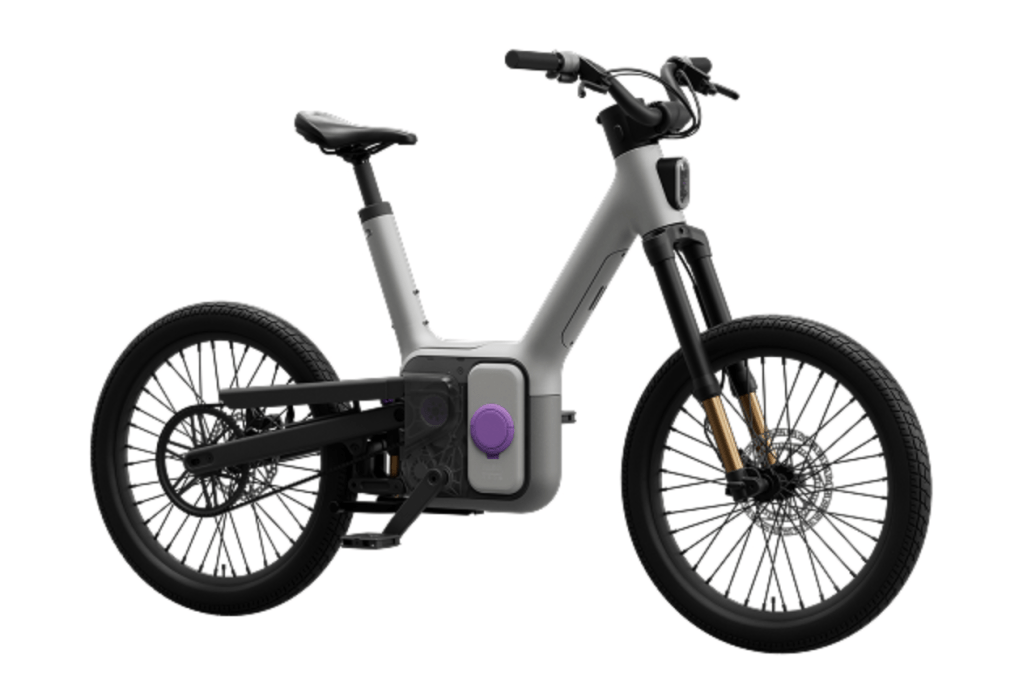
It is an e-bike, but unlike any e-bike we’ve ever seen
ALSO’s TM-B is its ebike platform. I say platform because the bike is extraordinarily modular….and there’s a big ‘one more thing’ here.
The first feature that we were shown was its ability to go from a traditional bike seat to a bench seat to a cargo bike seat in seconds with a quick settings change on the front control module. Each seat can be tied to a profile, so for instance, a family could own a bike and each member has their own seat selection, and their profile would go along with the seat. You can, of course, have just 1 seat and many profiles connected to that seat, and vice versa, with your one profile connected to multiple seats.
Other less fancy modularities include the wheels, fenders, colorways and other items that change the complexion of the bike quite dramatically. So that means that this bike can check the cargo bike, street commuter bike, and off-road bike checkboxes. The look? It is admittedly polarizing but also playful and I think will strike the broad swath of the population in a positive way.
The tire size is 24 inches, and the company uses off-the-shelf tires here. There is an off-road setup and a commuter road setup, and of course, users can go out and buy and ride on any standard 24-inch set of tires.
The TM-B has full suspension that is quite soft with 2+ inches of travel on front and back. I asked about a suspension bike seat, but after riding, I don’t think it is necessary. What the big 24-inch tires didn’t absorb, the adjustable suspension did wonders.

Square at the center of the bike
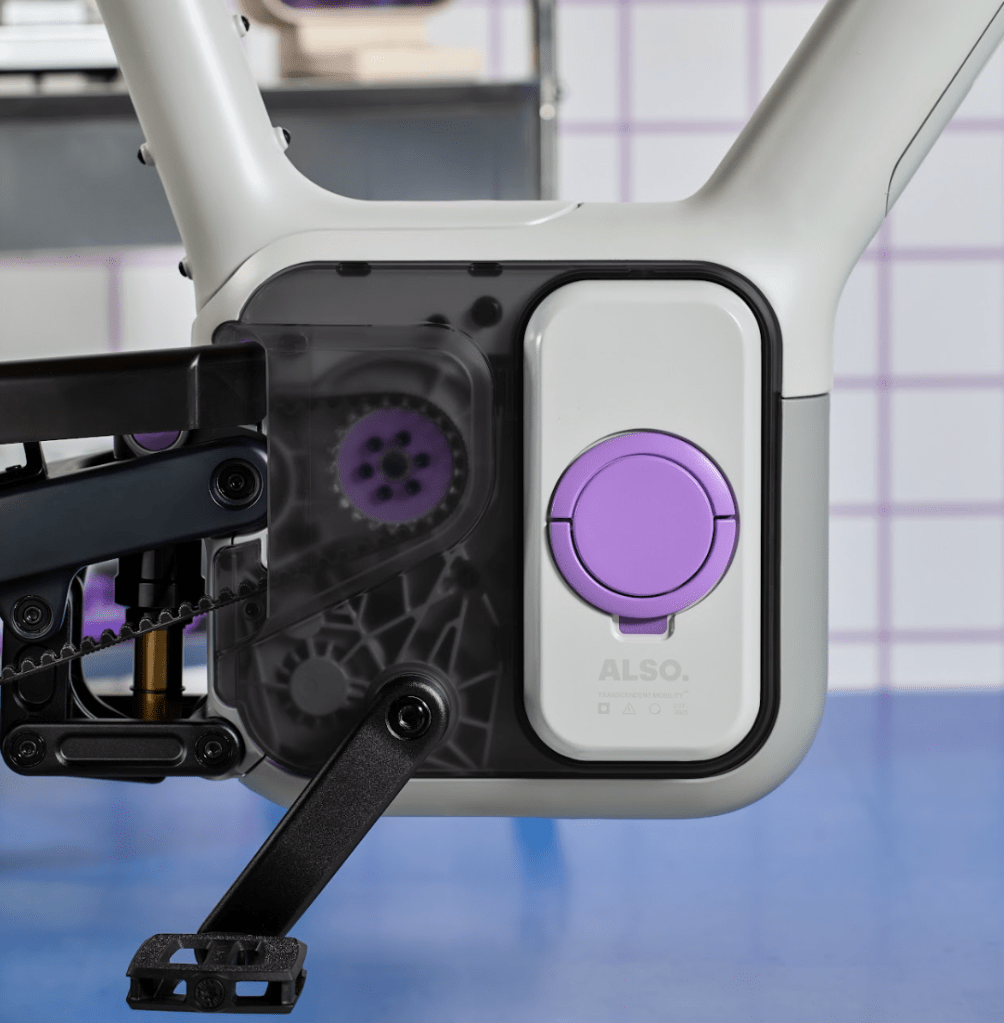
It is hard to ignore the block at the center of the TM-B ebike. This houses the battery, much of the smarts, the motors, and the pedal-by-wire generator.
Battery:
Finally. An e-bike company has embraced USB-C in a big way. Micah and I have been arguing about this for years and it seems like a head-scratcher that no ebike company has embraced this, until now.
The bike charges on a 240W USB-C cable. While that’s not the fastest charging available, I believe that the benefits far outweigh the cons. For instance, you can charge this bike with just about any USB-C charger. Grab that MacBook cable at work. Use that phone charger at your parents’ house. While this won’t quick-charge the TM-B in an hour, it allows it to charge just about anywhere.
The included 240W Power brick will charge the 800Wh battery in just over 3 hours from dead. Not bad.
The battery is also removable and can discharge via USB-C, too, so you have a built-in 800Wh Jackery-type battery to take with you. Or if you live in an apartment, it is easy to take the battery up your steps to charge. This is clearly where the industry is headed. I asked ALSO if they would be doing a 120V AC inverter product and they deferred to a possible 3rd party market of USB-C to AC adapters. These will obviously top out at 240W so don’t expect to use Rivian’s Camp Kitchen here.
https://www.youtube.com/watch?v=Ubvwrzs61x8
But the possibilities don’t stop there. For instance, you could add extra range to this bike with those huge, cheap USB-C batteries. It goes without saying that you can also charge things from your bike as you ride. Most notably your phone in a very quick way though ALSO doesn’t include one of those claw phone holders. The company believes you will use the NEST-like interface to do all of your phone-type stuff. That remains to be seen.
I suggested that ALSO should turn this into a battery-charging Peloton-type stationary bike and the engineers looked at each other and said they could knock this out in a matter of days if they thought the industry wanted this. One of the many benefits of owning the full stack of software on this ebike. I think an excercise to charge the bike and a bunch of other stuff would be a fun little trick so make sure you tell the company if you want something like this.

Pedal-by-wire
Micah and I have also talked about how the advantages of pedal-by-wire on ebikes outweigh the cons –specifically the efficiency loss in conversion from physical energy to electrical and back. ALSO says these losses are minimal and aren’t material to the experience.
Plus, it enables not only a smoother pedalling experience, but it also allows you to pedal at your desired cadence and torque, which allows the rider to optimize the output wattage. The computer controls exactly how much electricity is generated from your pedalling (and regenerated from braking) and how much to send via Gates belt drive to the rear wheel.
In the default mode, the pedalling controls the speed in a way that is intuitive for bike users, so that the harder you pedal, the faster you go. There is an off-road mode that simulates gear shifting, which is a trip since it feels so real, even though my mind knows it is a simulation.
Sur Ron acceleration
One of the most striking things about this bike is the acceleration that is output from this realtively small battery and motor. I’ve ridden on a ton of Sur Rons and Talarias and the acceleration to 20mph is ALMOST comparable, even up significant hils. It is really incredible and speaks to the efficiency of the bespoke battery and the motor.
Why is this important? Well, will also tell you, and I agree, that it is important to beat cars off the line so that riders don’t get side-swiped as easily.
But also kids love that acceleration but parents want safe rides. This hits that Sur Ron type of fun acceleration without having top speeds in the 40-60mph range. The ALSO TM-B is a Class 2-3 ebike, which means you can throttle to 20mph and pedal assist to 28mph. As a 200lb fast ebike enthusiast, I was blown away by the almost immediate 0-20mph acceleration at the highest of the 10 assist and throttle levels. ALSO will respect and adjust the TM-B to have other country-specific outputs like 500W for Canada and 250W for the EU.
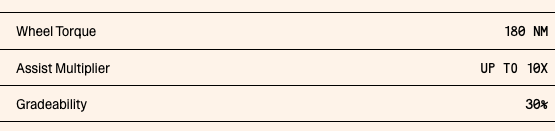
That said, ASLO prefers to list its power in torque and prefers to measure that way. I’m not sure if that’s to skirt laws on output, but I’m in favor of whatever gives me car-beating power. It lists 180nm of torque and up to 10x “assist multiplier,” which is bananas if you consider that I regularly put out 250W of power. As for hills, it lists 30% which should tackle the worst hills around, including San Francisco, which is shown prominently in ALSO’s marketing.
The ALSO TM-B experience
I got on a bike that was off, and the pedals felt like the chain had disconnected on a regular bike. No resistance, just spin. This is how the bike will act if it is stolen. The rear wheel will also lock out, and the electronics will be unusable outside of tracking the location of the bike. This makes the TM-B almost pointless to steal, a huge boon for people who’ve been burned by bike theft in the past.
But once you turn on the bike and click in, it feels a lot like a belt-driven e-bike. The connection to the drivetrain is virtual. After all, you are just generating electricity by pedalling. But the ALSO engineers have done an excellent job of creating a virtual experience that makes it feel like you are pedalling a bike. Remember that you don’t need gears in a pedal-by-wire scenario so it doesn’t require too much clicking over. You do feel some movement as the generator switches the amount of power you are generating.
The power, like I’ve said a few times before, is pretty incredible. But the bike is also incredibly stable, especially for something with so much technology built in.
Electrek’s take
This is just a first look but I can say I’m blown away by this bike more than I’ve ever been blown away by an ebike before. This feels like a step change in the industry. There are so many firsts here that it is hard to even list them all.
That said, the bike is starting out at $4500 for the launch edition and the off-road edition, for which you can make a down payment. That is going to knock 80% of the population off the prospective buyers’ list. Many more people will look at this and look at a $1000 Lectric XP and not see $3500 worth of improvements, and that is fair.
However, we don’t all drive around Corollas. There is room for a premium bike experience in this space. And if you are paying $4500 for an eBike, the TM-B, I believe, is the best $4500 you can currently spend. I can’t wait to get a deeper look at this thing in the coming months.
One more thing
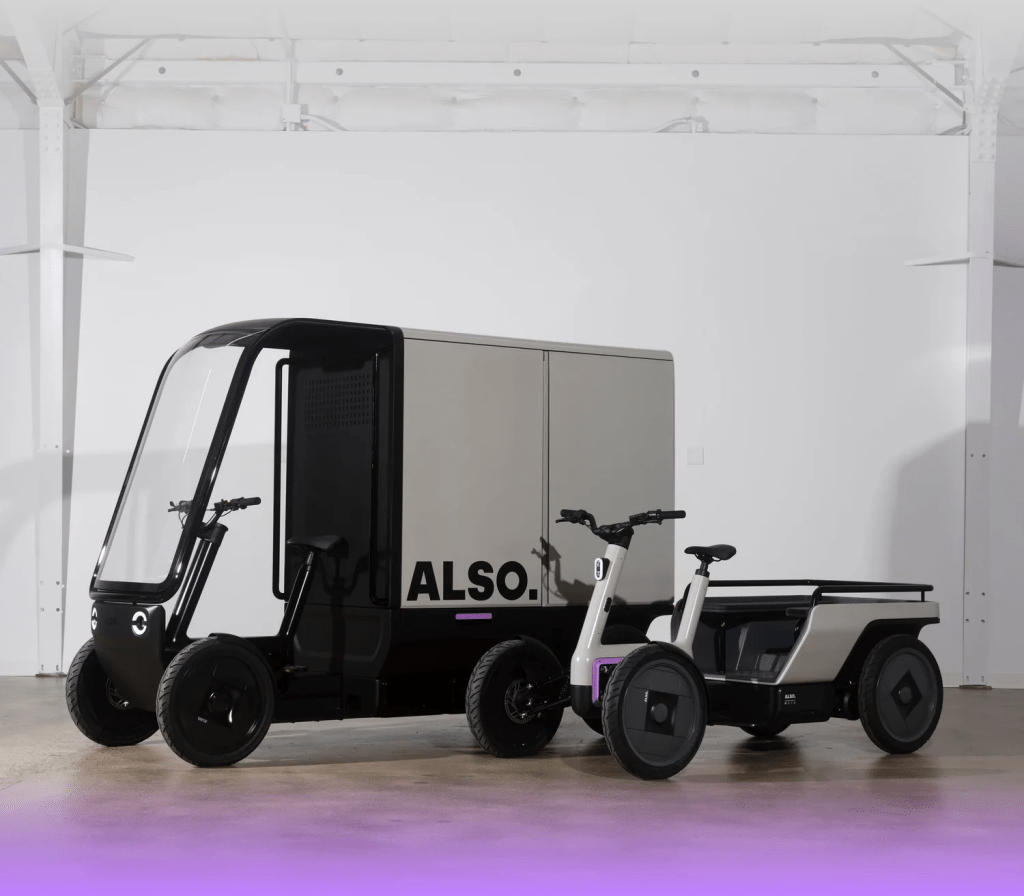
ALSO also showed off 2 bike lane compatible quads that also use its DreamRide technology. While these weren’t ready for demo, the company has already announced a partnership with Amazon to use these in Europe and the US in densely populated areas.


FTC: We use income earning auto affiliate links. More.

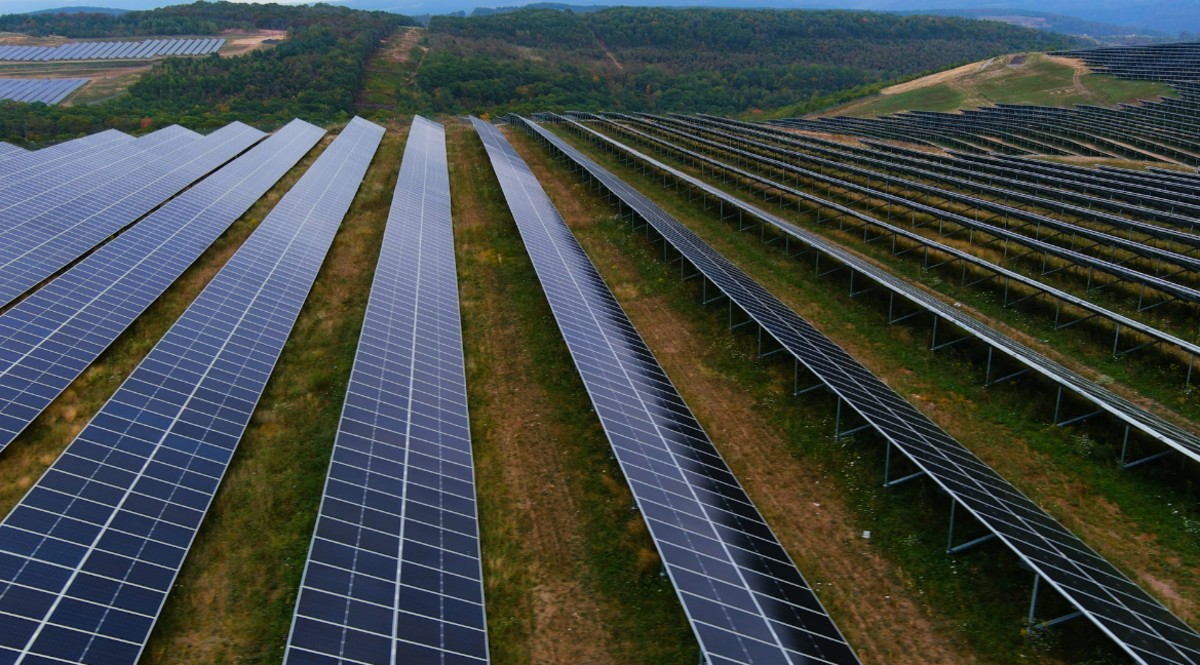
A former coal mine in western Maryland is now generating solar power – and it’s the largest solar farm in the state. Competitive Power Ventures (CPV) has brought Maryland’s largest solar project online in Garrett County, turning reclaimed coal mine land into a source of clean electricity.
CPV Renewable Power, an affiliate of CPV, and investment partner Harrison Street Asset Management have started commercial operations at CPV Backbone Solar, a 160-megawatt solar project in western Maryland. The site sits on a reclaimed, decommissioned coal mine, turning previously disturbed land into a new source of clean power.
Construction of the project was handled by Vanguard Energy Partners, a solar engineering, procurement, and construction firm.
The project comprises approximately 324,000 solar panels and is expected to generate enough electricity to power around 30,000 homes. For Maryland, it adds new in‑state generation while giving former fossil fuel land a second life.
CPV says that the project aims to demonstrate the role of brownfield redevelopment in the energy transition. The company’s CEO, Sherman Knight, said Backbone Solar shows “how brownfield redevelopment, innovative engineering, and strategic partnerships can meet complex project challenges and deliver new power generation in Maryland.”
Local officials have welcomed the project. Garrett County Board Chairman Paul Edwards said bringing the solar facility to the county helps protect the region’s natural landscape while also creating economic value for local residents.
CPV Backbone Solar also includes a community and environmental investment tied to the project. CPV has committed $100,000 over four years to the Deep Creek Watershed Foundation.
Backbone Solar becomes part of CPV’s growing renewable portfolio, which includes four operating wind and solar projects. The company also says it has a 4.8-gigawatt renewable development pipeline.
A second phase of the Backbone Solar project is already under construction. Once completed, it’s expected to increase the site’s total installed capacity from 160 MW to 175 MW.
Read more: Fast charge your EV while grabbing Royal Farms fried chicken

If you’re looking to replace your old HVAC equipment, it’s always a good idea to get quotes from a few installers. To make sure you’re finding a trusted, reliable HVAC installer near you that offers competitive pricing on heat pumps, check out EnergySage. EnergySage is a free service that makes it easy for you to get a heat pump. They have pre-vetted heat pump installers competing for your business, ensuring you get high quality solutions. Plus, it’s free to use!
Your personalized heat pump quotes are easy to compare online and you’ll get access to unbiased Energy Advisors to help you every step of the way. Get started here. – *ad
FTC: We use income earning auto affiliate links. More.


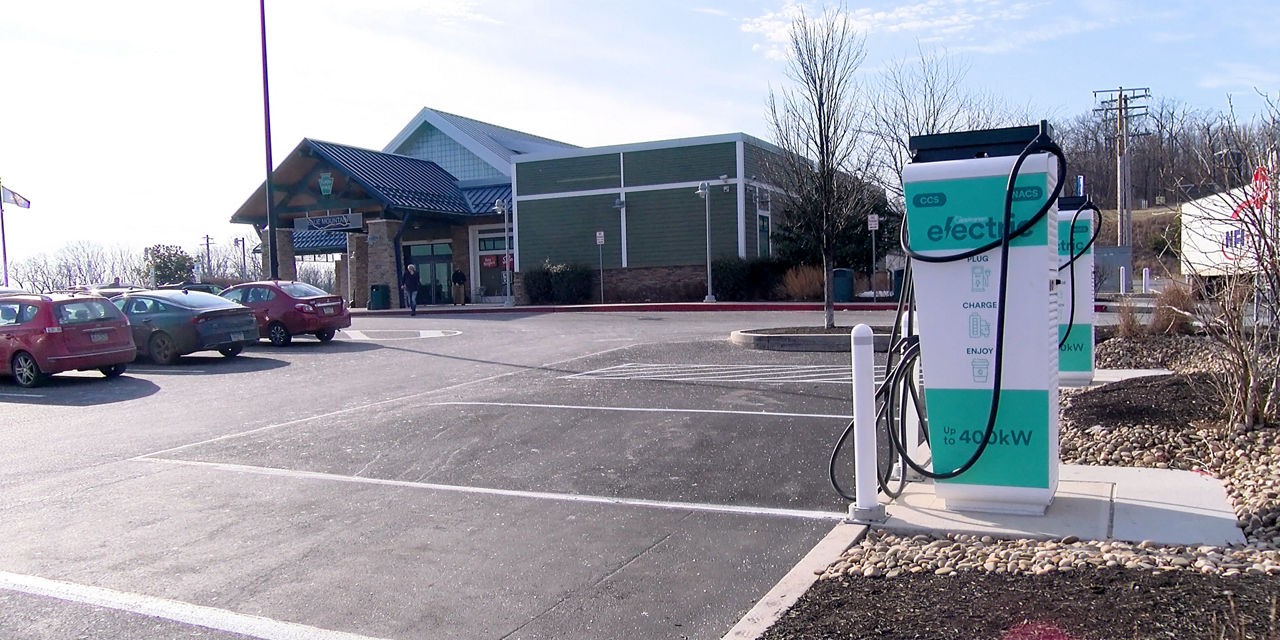
Pennsylvania just opened its first federally funded EV charging station on the Pennsylvania Turnpike — a key step toward making long-distance EV travel easier across the state.
The new station just opened at the Blue Mountain Service Plaza at Exit 202 westbound. Another NEVI-funded site at the New Stanton Service Plaza (Exit 77 westbound) is expected to open next week, according to the Pennsylvania Department of Transportation (PennDOT).
The chargers were built using funds from the federal National Electric Vehicle Infrastructure (NEVI) program, which is designed to install fast, reliable charging stations where drivers already stop — especially along busy highway corridors.
The Pennsylvania Turnpike is one of the state’s most heavily traveled roads, particularly during holiday travel, making service plazas a natural location for en-route EV charging. This first Turnpike site marks the beginning of NEVI-funded charging directly on the state’s toll road.
The Blue Mountain and New Stanton locations are part of the Turnpike’s larger, systemwide EV charging rollout. Working with Applegreen Electric, the Turnpike plans to install 80 new universal EV charging stations across all 17 service plazas by the end of 2027.
In addition to the NEVI-funded sites, the Turnpike has already brought new chargers online at the North Somerset, South Somerset, and Hickory Run service plazas using funding from Pennsylvania’s Driving PA Forward program. Each location offers high-speed charging with four ports per site, and all chargers are designed to work with all EV models without the need for adapters.
The project was awarded under the first round of PennDOT’s NEVI Alternative Fuel Corridor program. The next phase of funding, known as Corridor Connections, is focused on filling in charging gaps along major roadways that fall outside previously designated alternative fuel corridors. The goal is to make longer EV trips across Pennsylvania easier and more predictable.
The announcement also comes as Pennsylvania continues to push back against federal attempts to block EV funding. The US Department of Transportation is currently withholding congressionally approved money that would have supported EV infrastructure projects and jobs in the state. Governor Josh Shapiro (D-PA) sued the Trump administration over the move and, alongside 15 other states, successfully challenged an earlier attempt to derail the NEVI program. That legal fight helped keep projects like these Turnpike charging stations moving forward across the Commonwealth.
Electrek’s Take
This is precisely what the Biden administration’s NEVI program was meant to do: put fast, reliable charging stations where drivers already stop. Service plazas on major turnpikes are prime real estate for EV charging, particularly during holiday and long-distance travel. Pennsylvania’s rollout is still early days, but once chargers are live at all 17 plazas – assuming the federal funding spigot stays open – one of the Northeast’s busiest corridors is going to be a great place to road-trip in an EV.
Read more: PA Turnpike to add 80 new Applegreen DC fast chargers by 2027

FTC: We use income earning auto affiliate links. More.
-
 Sports2 years ago
Story injured on diving stop, exits Red Sox game
-
 Sports3 years ago
‘Storybook stuff’: Inside the night Bryce Harper sent the Phillies to the World Series
-
 Sports2 years ago
Game 1 of WS least-watched in recorded history
-
 Sports3 years ago
Button battles heat exhaustion in NASCAR debut
-
 Sports3 years ago
MLB Rank 2023: Ranking baseball’s top 100 players
-
Sports4 years ago
Team Europe easily wins 4th straight Laver Cup
-
 Environment3 years ago
Japan and South Korea have a lot at stake in a free and open South China Sea
-
 Environment1 year ago
Here are the best electric bikes you can buy at every price level in October 2024