
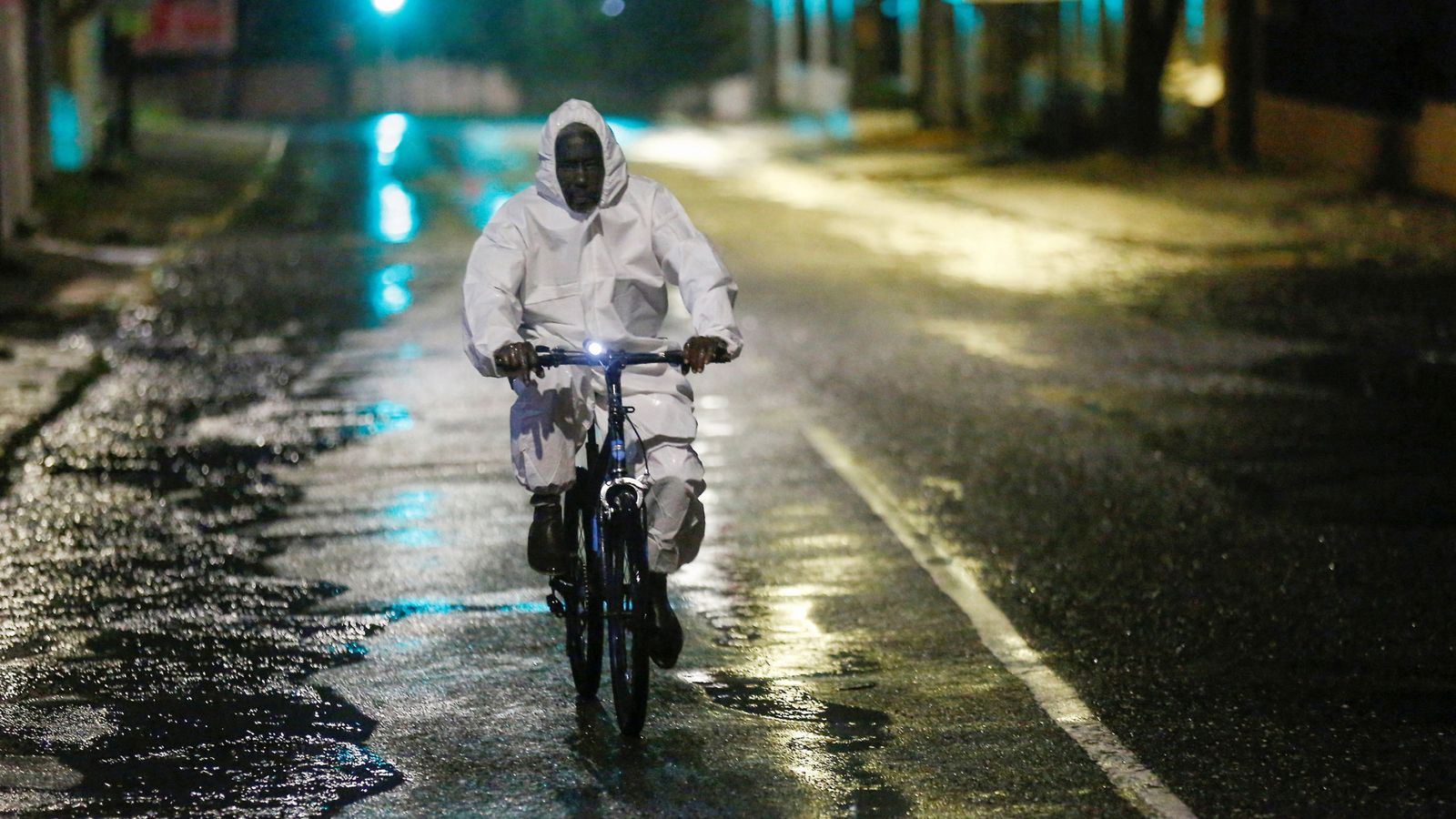
Hurricane Melissa: What we know about the powerful storm approaching Jamaica

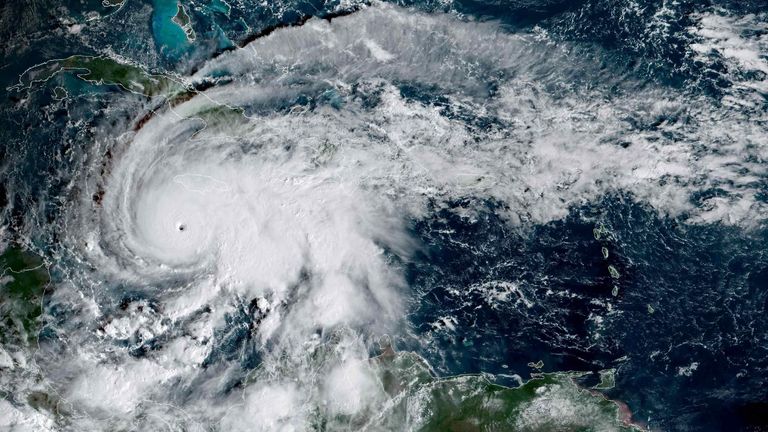
Hurricane Melissa, the world’s most powerful hurricane of the year so far, is closing in on Jamaica, with forecasters warning it could have a “catastrophic” impact.
The Category 5 hurricane has reached speeds of 175mph, already making it one of the strongest ever in the Atlantic basin.
A storm of Category 4 or higher has not hit Jamaica since records began 174 years ago.
It is expected to make landfall in the coming hours, continuing towards eastern Cuba and across the southeastern or central Bahamas.
Here’s what we know so far.
How bad could it be?
“Catastrophic” flash flooding and numerous landslides are likely when the hurricane hits, according to the US National Hurricane Centre, which warned of “total structural failure”.
Parts of the Caribbean island could see rainfall of up to 40 inches and it could cause a “life-threatening” storm surge on Jamaica’s southern coast, peaking around 13ft above ground level, the US centre said.
The storm is expected to be particularly bad along the coast of Kingston, which is home to critical infrastructure, including Jamaica’s main international airport and power plants.
Hurricane Melissa moves towards Jamaica and Cuba. Pic: CIRA/NOAA via Reuters
Live updates as hurricane approaches
Jamaica’s prime minister Andrew Holness said he expected “major damage to our road infrastructure, bridges, drains and possibly some damage to ports and airports” and warned it would take “far more resources than Jamaica has to recover”.
There are 850 shelters across the island, he added, enough for more than 20,000 people. Jamaica has a population of roughly 2.8 million.
All of Jamaica is expected to experience hurricane-force winds, heavy rainfall and flooding.
Has anyone died because of the hurricane?
Officials have said the storm is already responsible for at least seven deaths in the Caribbean, including three in Jamaica, three in Haiti and one in the Dominican Republic, where another person remains missing.
The three deaths in Jamaica happened during preparations for the storm’s arrival as people were cutting trees, health minister Christopher Tufton said. Thirteen people were injured, mostly due to falling off ladders and rooftops.
He urged Jamaicans to be careful during preparations, adding they should ensure all homes are stocked with enough drinking water and non-perishable food.
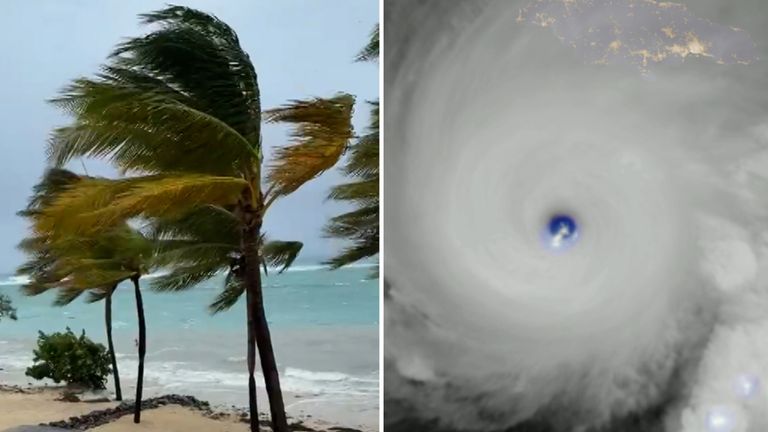
Jamaica braces for Hurricane Melissa
On Monday evening Matthew Samuda, the environment minister, said the time to prepare for the storm was over and that “the time now is to listen to instruction”, advising the public to start using resources sparingly.
Evacuation orders issued as power outages hit
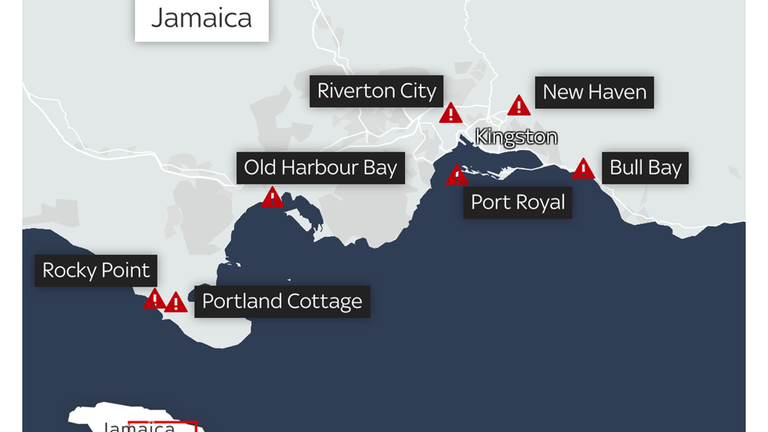
Map showing areas of Jamaica which have evacuation orders
Jamaica’s government has issued mandatory evacuation orders for at least seven areas in the southeast that are designated as high risk.
As of Monday night, many people had remained in their homes, according to Jamaica’s minister for science, energy, transport and telecommunication, Daryl Vaz.
“It’s very difficult, and it has always been a problem because people basically don’t take the event as seriously as they ought to,” Mr Vaz told Sky News.
He added that evacuation numbers were still “way below” the government’s targets.
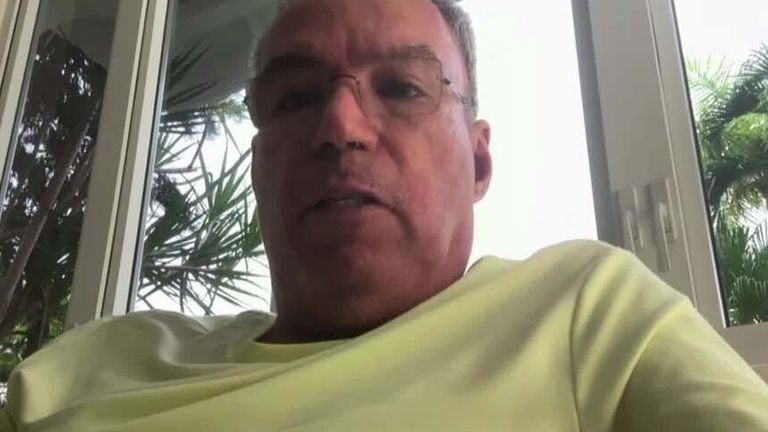
‘Very difficult’ to convince Jamaicans to evacuate
Colin Bogle, a Mercy Corps adviser based near Kingston, suggested many families were sheltering in their homes due to fears rather than complacency.
“Many have never experienced anything like this before, and the uncertainty is frightening,” he said.
“There is profound fear of losing homes and livelihoods, of injury, and of displacement.”
An estimated 52,000 people lost power as the hurricane approached, mostly in the western part of the country, the Jamaica Public Service said.
In the early hours of Tuesday morning, it said crews had managed to restore power for 30,000 of those affected and that they were continuing to work on the issues.
It added heavy rain and difficult terrain were “creating access challenges” and that “the safety of our crews and the public is our top priority”.
British holidaymakers locked down in hotels
Jamaica’s peak holiday season runs from mid-December to mid-April, but its tropical climate brings warmth all year round.
Hurricane season runs from June until November, but the country continues to attract tourists.
One of them is Andrew Tracey, a British holidaymaker who told Sky News he has been locked down in his hotel room until Wednesday at the earliest, having arrived on 20 October.
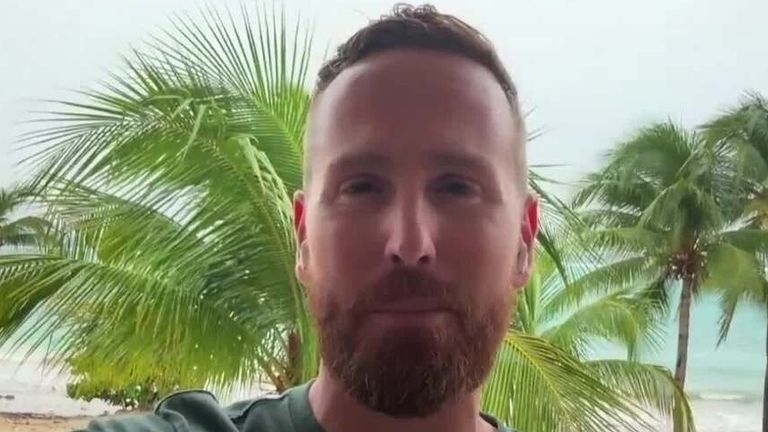
Briton in Jamaica: ‘There is an undercurrent of panic’
He also estimated there were at least 200 people from the UK staying at the same complex.
With all airports in Jamaica closed, his flight was cancelled and there was “nothing really we could do”, he said.
“If I knew that the hurricane would hit while I was out here, I wouldn’t have gone at all,” he said.
“It’s hard to comprehend what we’re about to expect. I’ve never experienced any kind of hurricane, let alone a Category 5.
“The tension in the hotel last night when we went down for dinner was definitely one of nerves, even locals.”
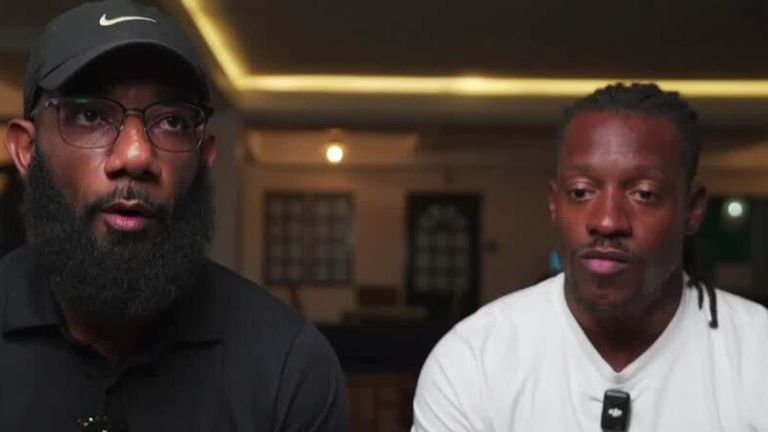
Hotel owner preparing for ‘catastrophic situation’
What route will Hurricane Melissa take?
Eastern Cuba is next in the path of Melissa, with tropical storm conditions expected to hit on Tuesday evening, including rainfall of up to 20 inches.
More than 500,000 people living in coastal and mountainous areas vulnerable to heavy winds and flooding have been evacuated, according to authorities.
Some 250,000 people were also accommodated in shelters around Santiago de Cuba, the second-largest city that lies right in the hurricane’s expected path.
A hurricane watch is in effect across the southeastern and central Bahamas, along with the British Overseas Territory, Turks and Caicos Islands.
They could be affected on Wednesday and the National Hurricane Centre expects flash floods with up to 8 inches of rainfall in tropical storm and hurricane conditions.
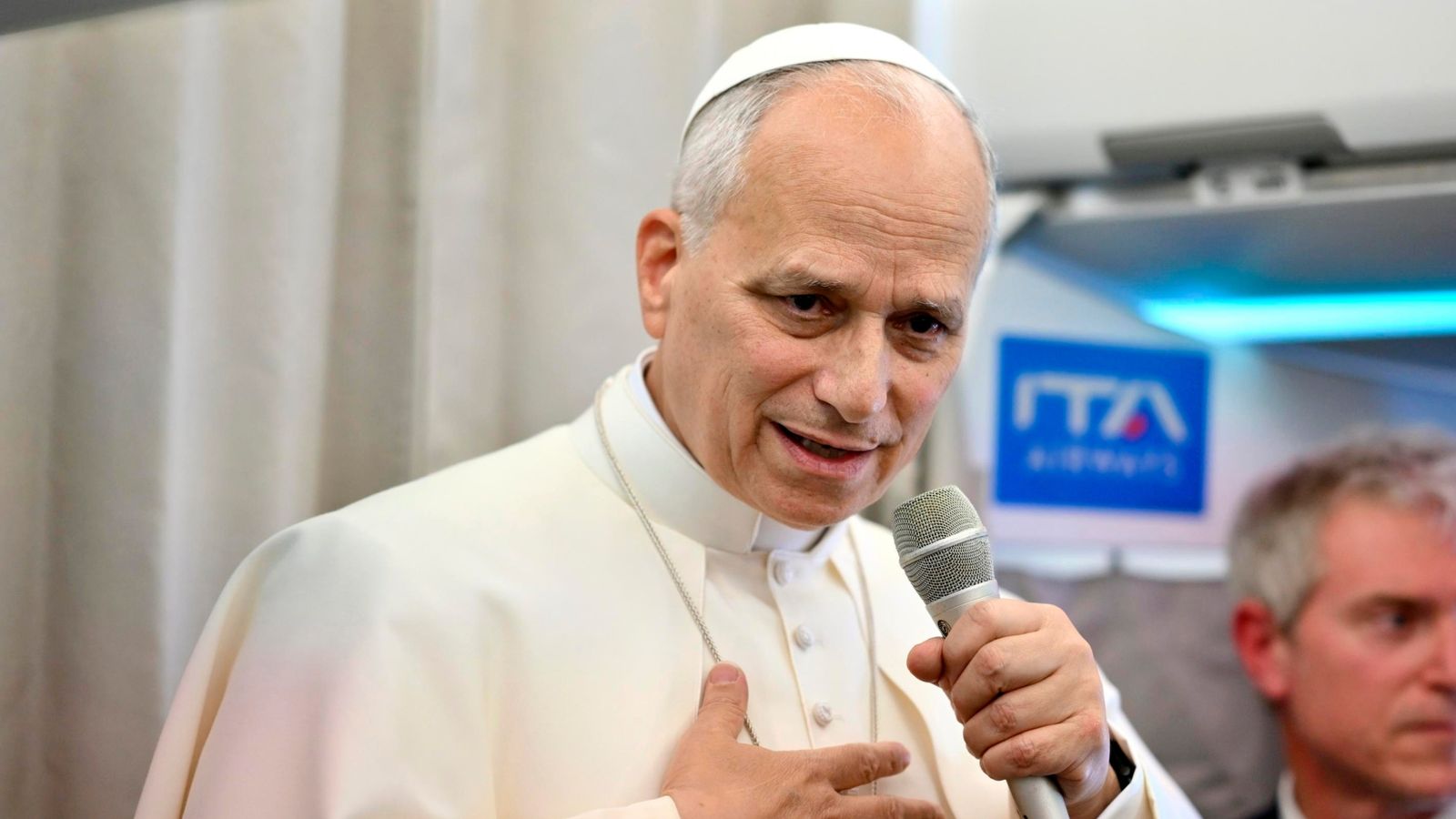
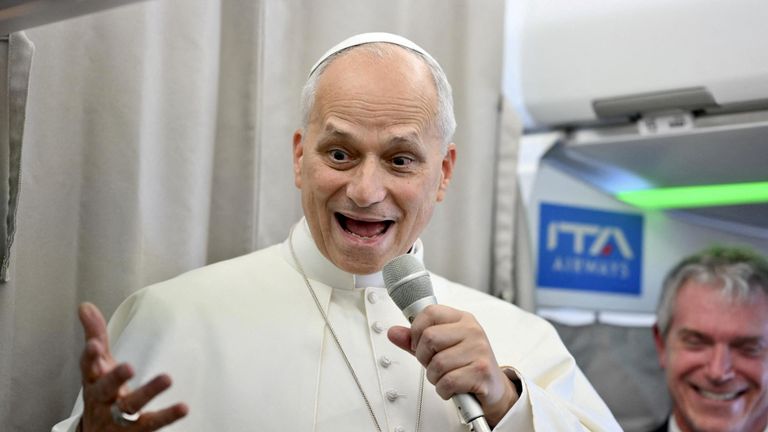
The Pope has urged Donald Trump not to try to oust Venezuelan President Nicolas Maduro using military force.
Leo, the first American pontiff, said it would be better to attempt dialogue or impose economic pressure on Venezuela if Washington wants to pursue change there.
The Trump administration has been weighing options to combat what it has portrayed as Mr Maduro’s role in supplying illegal drugs that have killed Americans.
The socialist Venezuelan president has denied having any links to the illegal drug trade.
Pope Leo XIV aboard a flight to Rome. Pic: Reuters
Asked during a news conference about President Trump’s threats to remove Mr Maduro by force, the Pope said: “It is better to search for ways of dialogue, or perhaps pressure, including economic pressure.”
He added that Washington should search for other ways to achieve change “if that is what they want to do in the United States”.
The Pope was speaking as he flew home from a visit to Turkey and Lebanon – his first overseas trip in the role.
Mr Maduro has said Venezuelans are ready to defend their country as the US considers a land attack.
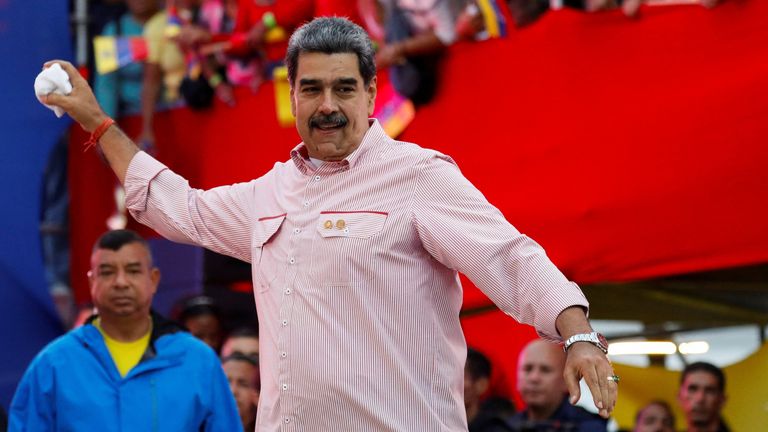
Venezuela’s President Nicolas Maduro in Caracas. Pic: Reuters
The president held a rally in Caracas amid heightened tensions with Mr Trump’s administration, which has been targeting what it says are boats carrying drug smugglers.
Mr Trump met his national security team on Monday evening, having warned last week that land strikes would start “very soon”.
It’s not been confirmed what was discussed at the meeting, but White House press secretary Karoline Leavitt told reporters: “There’s many options at the president’s disposal that are on the table – and I’ll let him speak on those.”
US forces have carried out at least 21 strikes on boats it claims were carrying narcotics to its shores over the last few months.
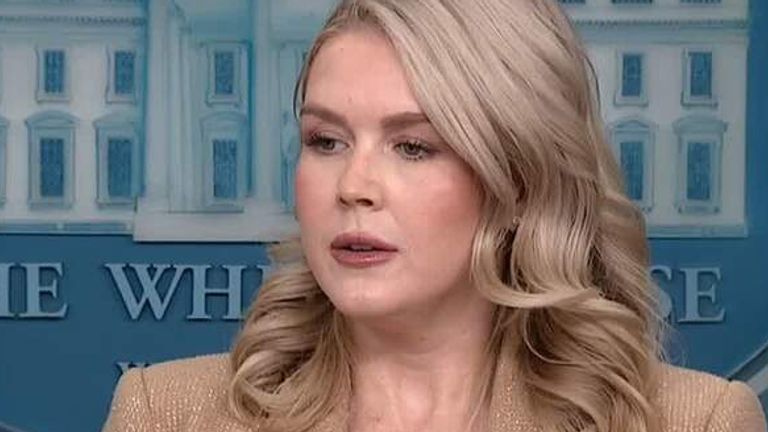
‘The president has a right to take them out’
Mr Maduro – widely considered a dictator by the West – said on Monday that Venezuelans are ready “to defend [the country] and lead it to the path of peace”.
“We have lived through 22 weeks of aggression that can only be described as psychological terrorism,” he said.
Venezuela has said the boat attacks, which have killed more than 80 people, amount to murder – and that Mr Trump’s true motivation is to oust Mr Maduro and access its oil.
This breaking news story is being updated and more details will be published shortly.
Please refresh the page for the latest version.
You can receive breaking news alerts on a smartphone or tablet via the Sky News app. You can also follow us on WhatsApp and subscribe to our YouTube channel to keep up with the latest news.
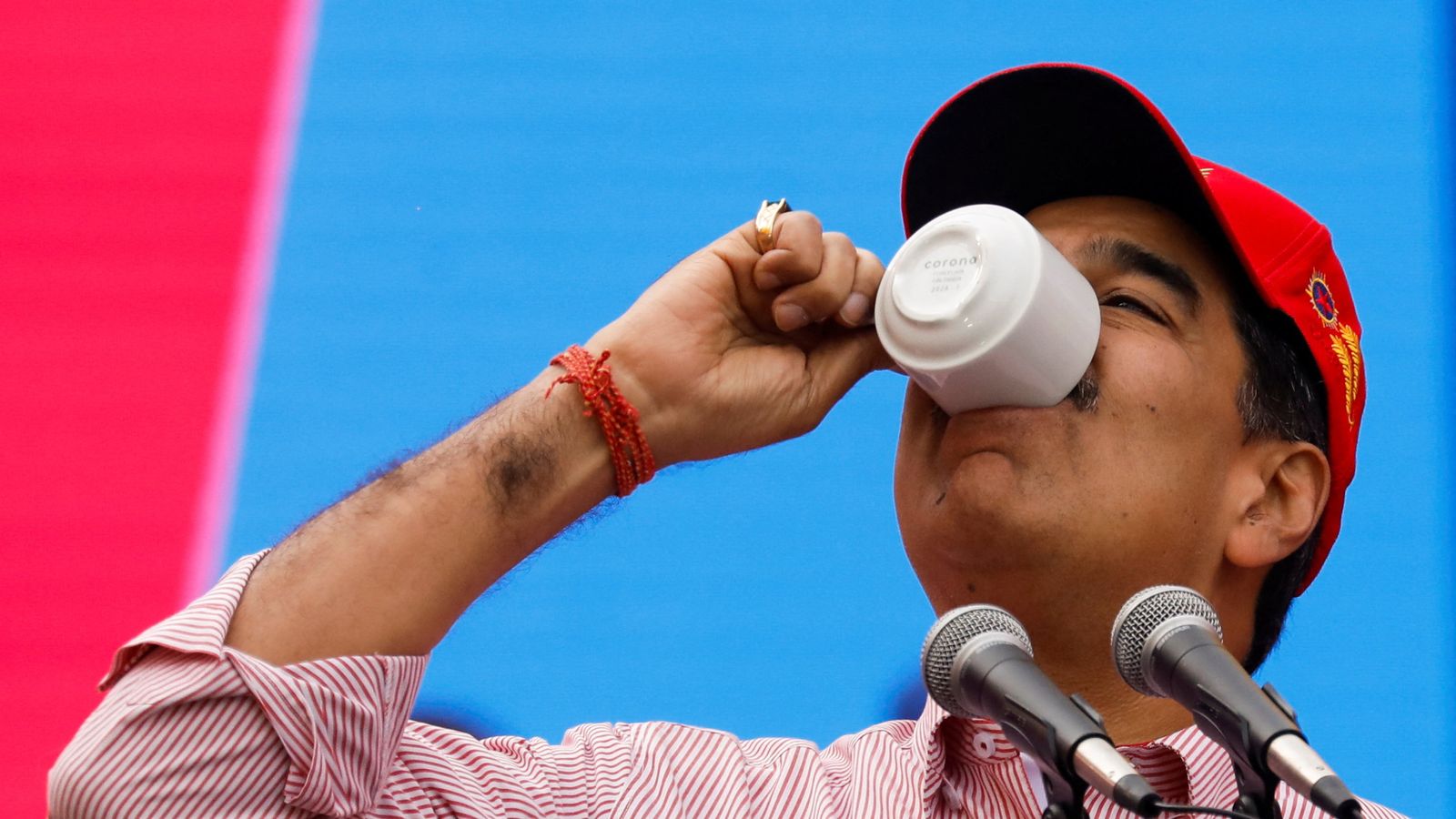
Nicolas Maduro has said Venezuelans are ready to defend their country as the US considers a land attack.
The president held a rally in Caracas amid heightened tensions with Donald Trump’s administration, which has been targeting what it says are boats carrying drug smugglers.
Mr Trump met his national security team on Monday evening, having warned last week that land strikes would start “very soon”.
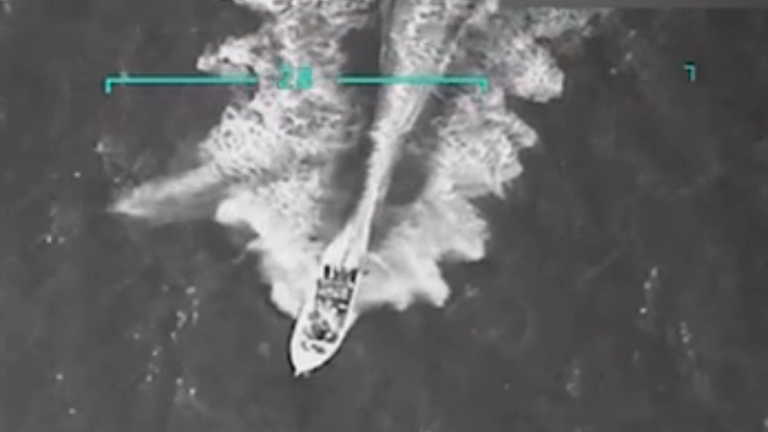
An image of an alleged drug boat being targeted by the US military. Pic: Truth Social
It’s not been confirmed what was discussed at the meeting, but White House press secretary Karoline Leavitt told reporters: “There’s many options at the president’s disposal that are on the table – and I’ll let him speak on those.”
US forces have carried out at least 21 strikes on boats it claims were carrying narcotics to its shores over the last few months, and the White House has accused Mr Maduro of being involved in the drugs trade – a claim he denies.
‘The president has a right to take them out’
‘Psychological terrorism’
Mr Maduro – widely considered a dictator by the West – said on Monday that Venezuelans are ready “to defend [the country] and lead it to the path of peace”.
“We have lived through 22 weeks of aggression that can only be described as psychological terrorism,” he said.
Venezuela has said the boat attacks, which have killed more than 80 people, amount to murder – and that Mr Trump’s true motivation is to oust Mr Maduro and access its oil.
Concerns have been raised over the legality of the US attacks, which the Pentagon has sought to justify by designating the gangs as foreign terror organisations.
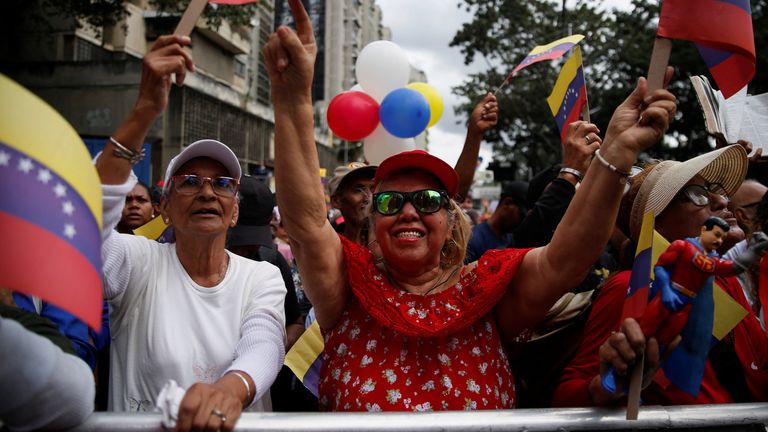
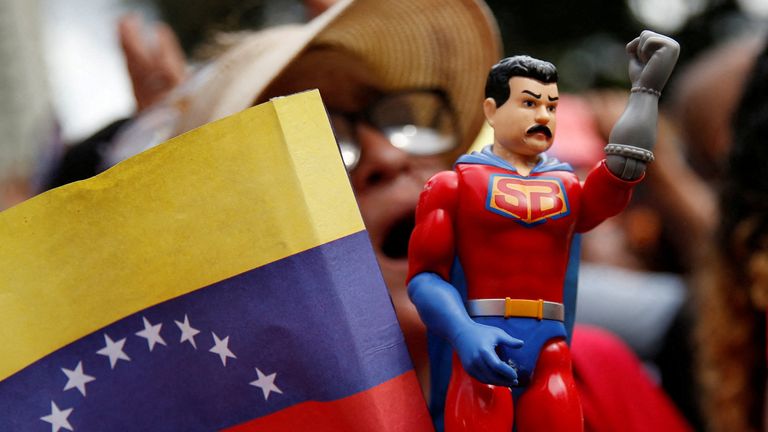
Maduro was championed by supporters as he spoke on Monday. Pics: Reuters
Controversy over US strikes
Tensions remain high over America’s large deployment in the Caribbean Sea and eastern Pacific, which includes its flagship aircraft carrier and thousands of troops.
The US has released videos of boats being blown up but has not provided evidence – such as photos of drugs – to support the smuggling claims.
Controversy also surrounds the first incident, on 2 September, in which 11 people were killed – with a follow-up strike targeting the boat after the first attack left two survivors in the water.
US media reported defence secretary Pete Hegseth gave an order that everyone on board should be killed.
However, there are concerns about the legality of the second strike if the survivors posed no threat.
Mr Hegseth dismissed the reporting as “fake news” and insisted all actions in the region are compliant with US and international law.
“Every trafficker we kill is affiliated with a Designated Terrorist Organization,” he said on X.
Is US about to go to war with Venezuela?
Mr Trump said on Sunday he would not have wanted a second strike and that Mr Hegseth had denied giving such an order.
Ms Leavitt confirmed on Monday that the boat had been hit by a second strike – but denied Mr Hegseth gave the order for the follow-up.
Instead, she said he had authorised US navy vice admiral Frank Bradley to attack, and the admiral acted “well within his authority and the law, directing the engagement to ensure the boat was destroyed and the threat to the US was eliminated”.
Read more from Sky News:
Hong Kong fire: 13 arrested as death toll hits 151
More than 1,100 confirmed dead in Asia floods
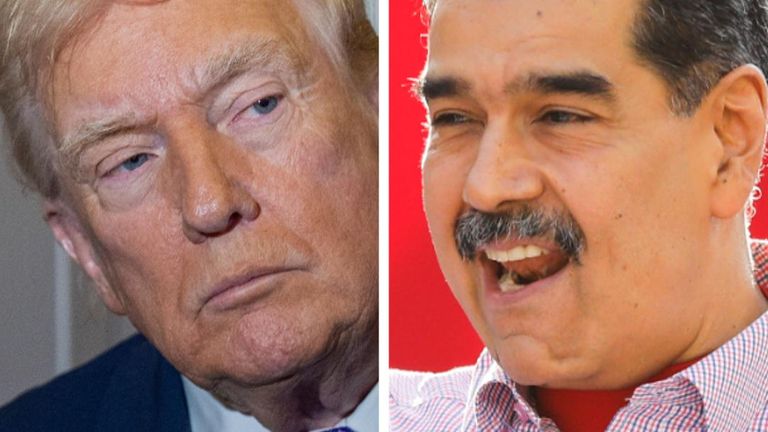
Trump: Maduro call neither ‘went well or badly’
As the US weighs its next steps, Mr Trump said on Sunday he had spoken to Mr Maduro by phone and that the conversation went neither “well or badly”.
In recent days, he also stated that Venezuela’s airspace should be considered closed – with the South American nation calling it a “colonial threat” and “illegal, and unjustified aggression”.
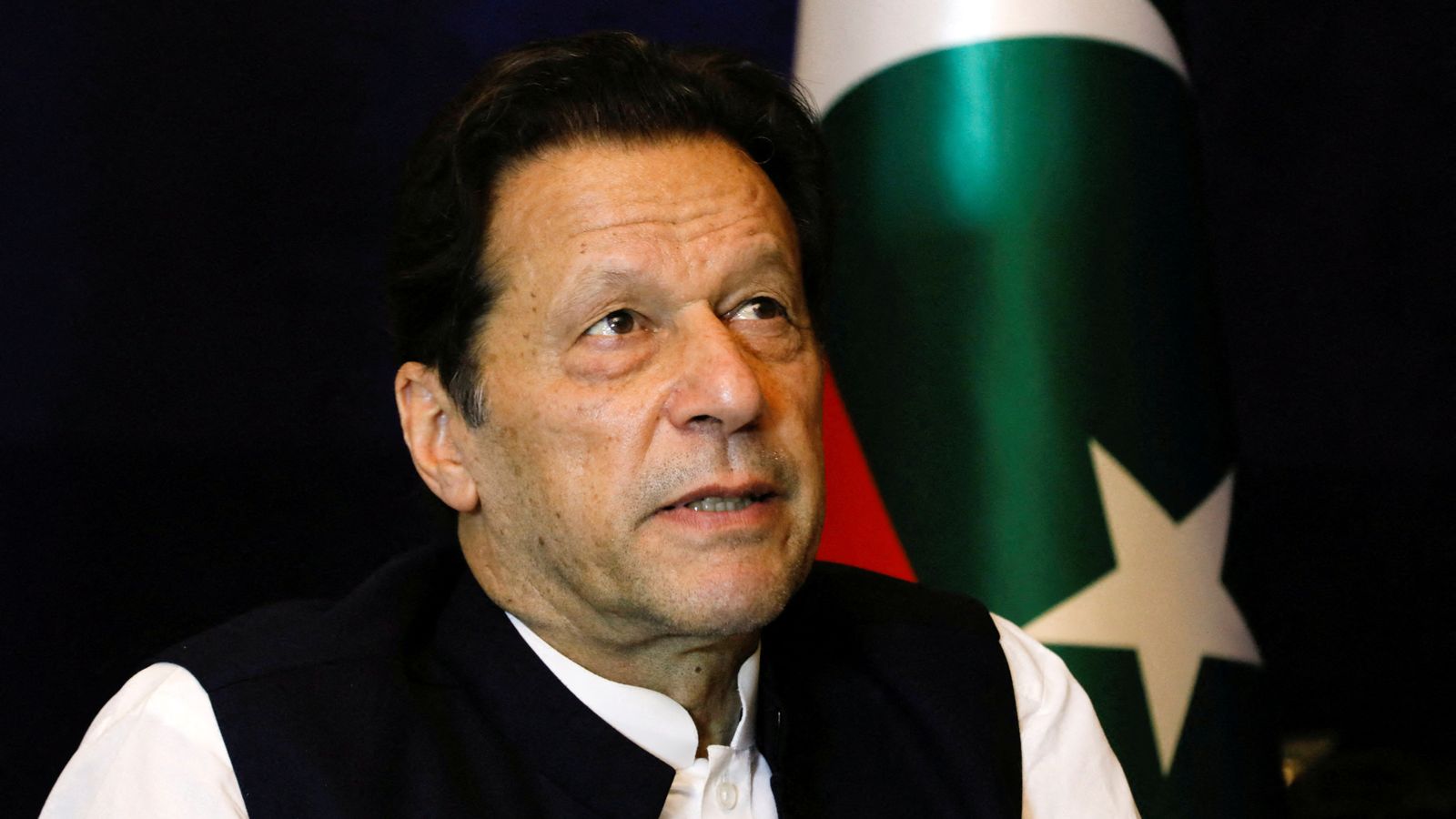
Imran Khan is suffering from isolation, his sister said, after weeks of not being able to see his family.
Khan has been in jail since his August 2023 arrest after he was handed a three-year jail term for illegally selling state gifts.
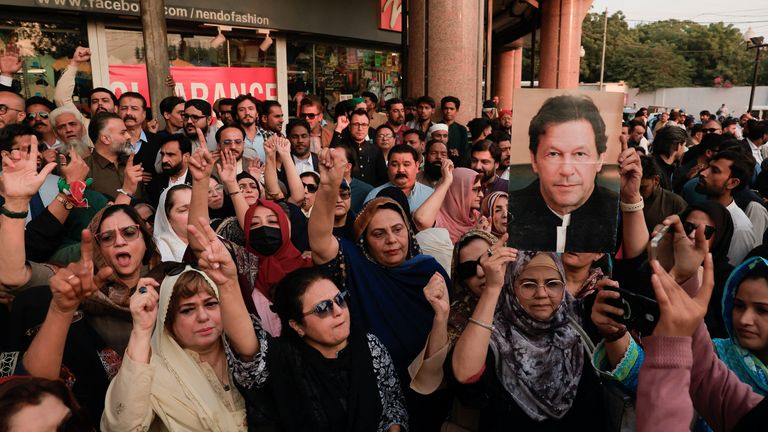
Uzma Khanum was the only family member permitted to meet him in Adiala jail, Rawalpindi, where supporters of his Pakistan Tehreek-e-Insaf (PTI) party had gathered to protest against conditions of the 73-year-old’s detention.
Supporters of jailed Imran Khan protest in Karachi over concerns about the former Parkistan prime minister’s health. Pic: Reuters
Ms Khanum said that Khan, a former cricketer, is facing isolation and psychological strain in prison following weeks in which his family said access had been blocked.
“He’s physically well,” said Ms Khanum, one of Khan’s three sisters. “But he’s kept inside all the time, and only goes out for a short while. There’s no contact with anybody.”
The meeting took place under strict supervision, said Ms Khanum, though she declined to provide further details.
Read more from Sky News:
More than 1,200 confirmed dead in Asia floods
El Chapo’s son pleads guilty to drug charges
PTI says routine prison visits have been blocked for weeks despite court orders, fuelling rumours about his condition and possible prison transfers.
Authorities deny any mistreatment, and say that Khan is receiving all entitlements available to prisoners.
Khan served as prime minister from 2018 to 2022.
He has claimed that the charges against him are politically motivated – and aimed at blocking his political career.
Khan’s wife, Bushra Bibi, is serving time in the same prison over corruption, but they are not allowed to see each other except when they appear in court, his supporters have said.
-
 Sports2 years ago
Story injured on diving stop, exits Red Sox game
-
 Sports3 years ago
‘Storybook stuff’: Inside the night Bryce Harper sent the Phillies to the World Series
-
 Sports2 years ago
Game 1 of WS least-watched in recorded history
-
 Sports3 years ago
Button battles heat exhaustion in NASCAR debut
-
 Sports3 years ago
MLB Rank 2023: Ranking baseball’s top 100 players
-
Sports4 years ago
Team Europe easily wins 4th straight Laver Cup
-
 Environment3 years ago
Japan and South Korea have a lot at stake in a free and open South China Sea
-
 Environment1 year ago
Here are the best electric bikes you can buy at every price level in October 2024