
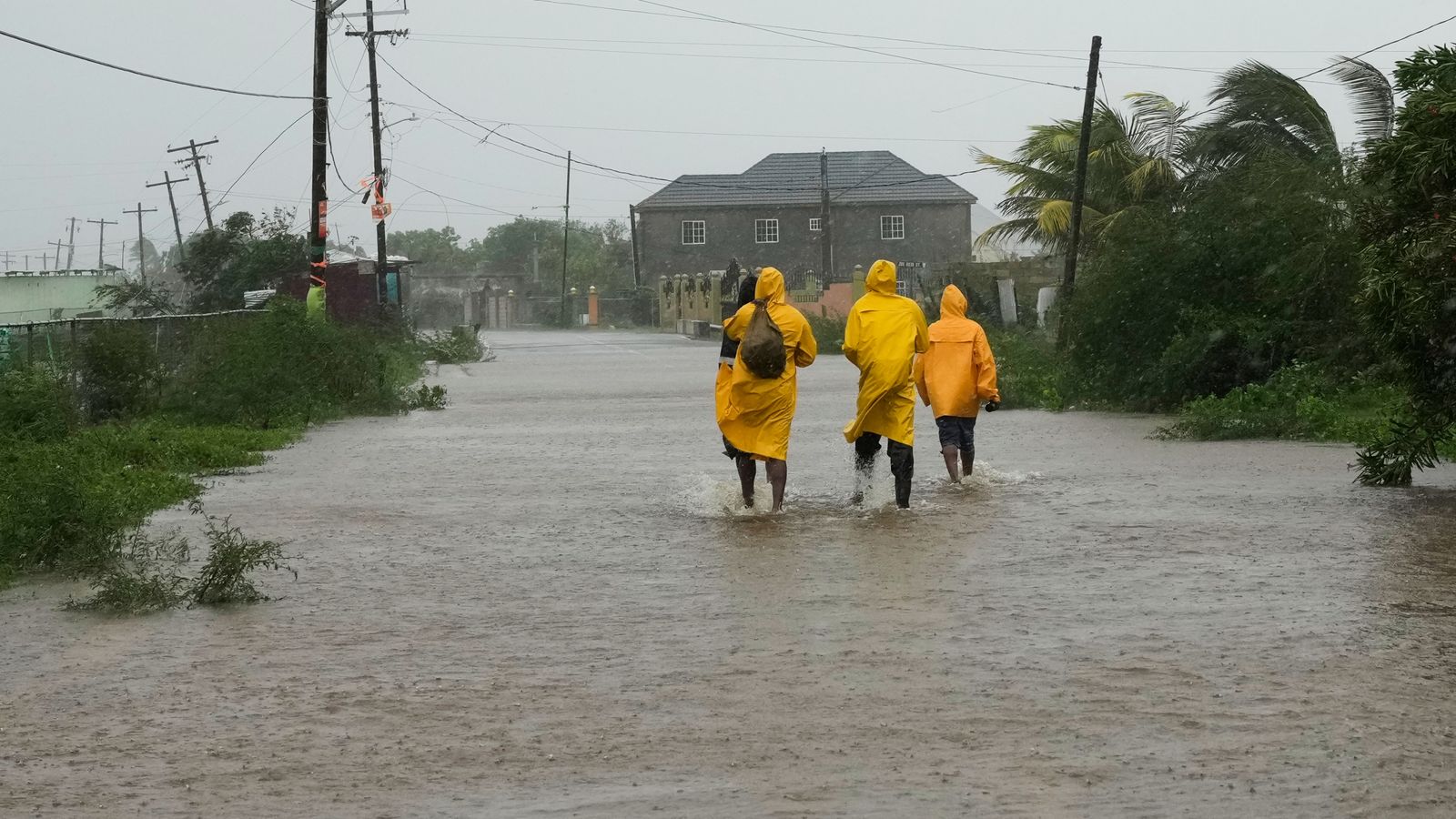
Hurricane Melissa: What we know about the powerful storm in Cuba that ‘ravaged’ Jamaica

Hurricane Melissa, the most powerful hurricane of the year so far, has hit Cuba after ripping through Jamaica.
The Category 5 hurricane, which has now been downgraded, has left a trail of destruction in Jamaica, with prime minister Andrew Holness saying it “ravaged” the country.
It reached wind speeds of 185mph on Tuesday, making it the worst storm to hit the Caribbean country since records began 174 years ago.
At least 25 people have died in the southern Haitian coastal town of Petit-Goâve after the La Digue river burst its banks as a result of the hurricane, according to the town’s mayor Jean Bertrand Subreme.
Officials have said the storm is responsible for at least seven other deaths in the Caribbean, including three in Jamaica, three in Haiti and one in the Dominican Republic, where another person remains missing.
The three deaths in Jamaica happened during preparations for the storm’s arrival as people were cutting trees, health minister Christopher Tufton said.
Desmond McKenzie, Jamaica’s local government minister, says it’s too early to report on fatalities caused after Melissa struck.
Here’s what we know so far.
How badly was Jamaica hit?
The government formally declared Jamaica a disaster area as the storm struck, saying more than 530,000 were without power and almost every parish had reported blocked roads, fallen trees and major flooding.
Floodwaters trapped at least three families in their homes in the community of Black River in western Jamaica, and crews were unable to help them because of dangerous conditions, according to Mr McKenzie.
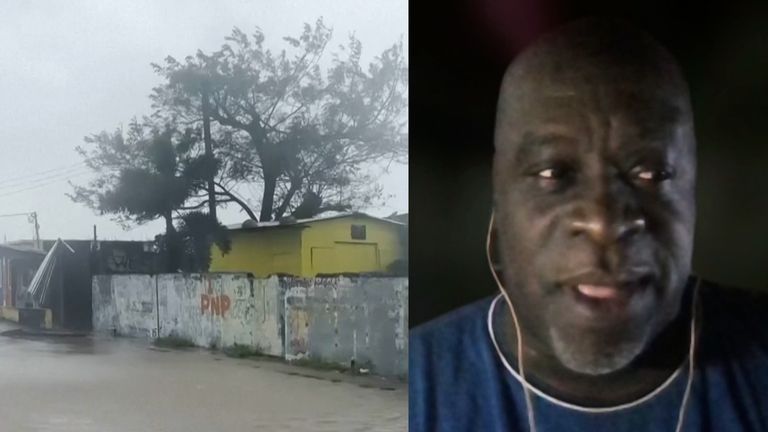
Hurricane Melissa was ‘traumatising’
“Roofs were flying off,” he said. “We are hoping and praying that the situation will ease so that some attempt can be made to get to those persons.”
He said the southwestern parish of St. Elizabeth “is underwater” and had suffered extensive damage.
Four main hospitals along the coast were damaged and one lost power, forcing officials to evacuate 75 patients, he added.
As of Wednesday afternoon, 77% of the country remained without electricity, according to government officials.
The extent of the damage across the country is not fully known, but aid group the Red Cross said early indications are that Hurricane Melissa has been a “disaster of unprecedented catastrophe”.
“News is already coming through that whole communities are underwater and that the damage left by the strong winds has been devastating,” said Alexander Pendry, British Red Cross global response manager.
“Tragically, experience tells us that the impact on communities and individuals will be shattering and long lasting.”
Before the hurricane made landfall, the Red Cross said it was preparing for just over half of Jamaica’s population, about 2.8 million people, to be directly affected.
Live updates as hurricane rips through Cuba
The prime minister had warned there was “no infrastructure in the region that can withstand a Category 5”.
Addressing Jamaicans in a statement on X on Wednesday morning, Mr Holness vowed to rebuild “even better than before”.
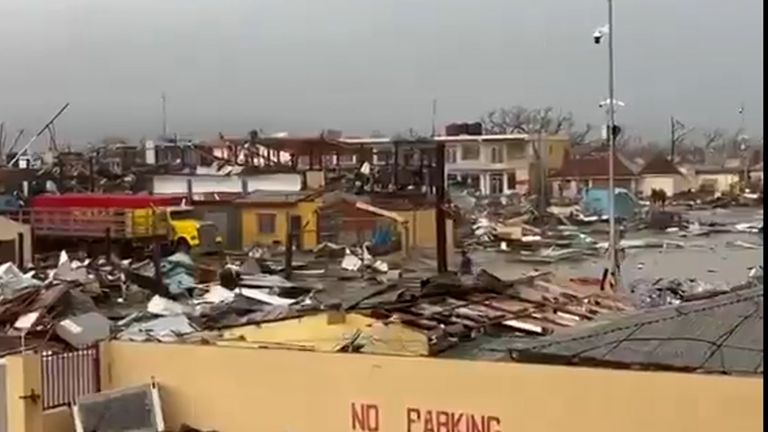
See ‘major impact’ from hurricane
“I know many, especially those in the worst-affected parishes, are feeling disheartened,” he said.
“Your homes may have been damaged or destroyed and your communities and towns no longer look the same.
“I know your pain and I feel your loss. We are mobilising quickly to start the relief and recovery efforts and we will be there with you every step of the way.”
The government hoped to reopen airports as early as Thursday to allow aid into the country from UN agencies and dozens of non-profits.

Hurricane wreaks havoc on Jamaican airport
It had issued mandatory evacuation orders before the storm hit for at least seven areas in the southeast that were designated as high risk, but reported that many residents decided to remain in their homes.
How bad could it get in Cuba?
Life-threatening and potentially catastrophic flash flooding with numerous landslides are possible, according to the US National Hurricane Center.
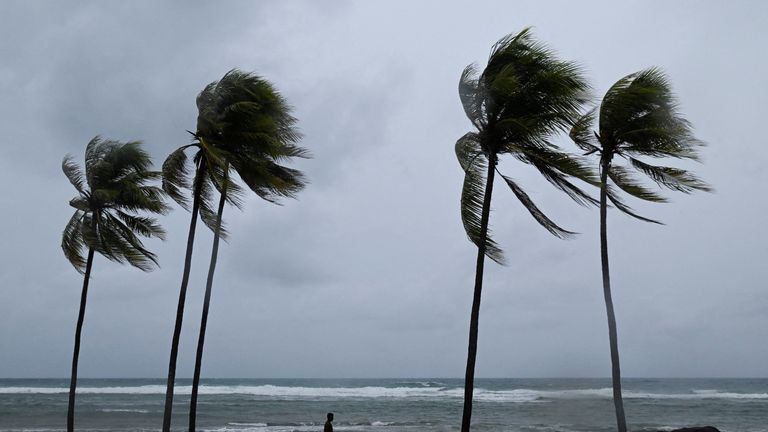
High seas and strong winds batter eastern Cuba ahead of Hurricane Melissa’s landfall. Pic: Reuters
While it was downgraded before reaching Cuba in the early hours of Wednesday, forecasters said it “restrengthened” shortly before landfall, with wind speeds of up to 125mph as it approached.
Read more:
What is the difference between a cyclone, typhoon and hurricane?
Rainfall of up to 50cm (20in) was expected, rising to 63cm (25in) over mountainous terrain, while a storm surge could reach 2.4m to 3.6m (8ft to 12ft) above normal tide levels along the southeast Cuban coast, accompanied by “large and destructive waves,” according to the US centre.
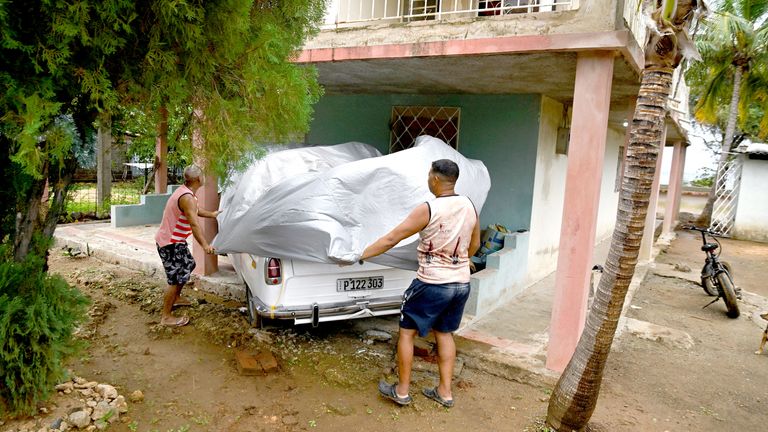
Men cover a car to protect it from Hurricane Melissa in Santiago de Cuba on Tuesday. Pic: Reuters
More than 735,000 people have been evacuated to shelters and a hurricane warning is in effect for the provinces of Granma, Santiago de Cuba, Guantanamo, Holguin and Las Tunas.
“There will be a lot of work to do. We know there will be a lot of damage,” Cuba’s president Miguel Díaz-Canel said in a televised address, pledging that “no one is left behind and no resources are spared to protect the lives of the population”.
He urged the public not to underestimate the power of Melissa, “the strongest ever to hit national territory”.
Why is the storm named Melissa?
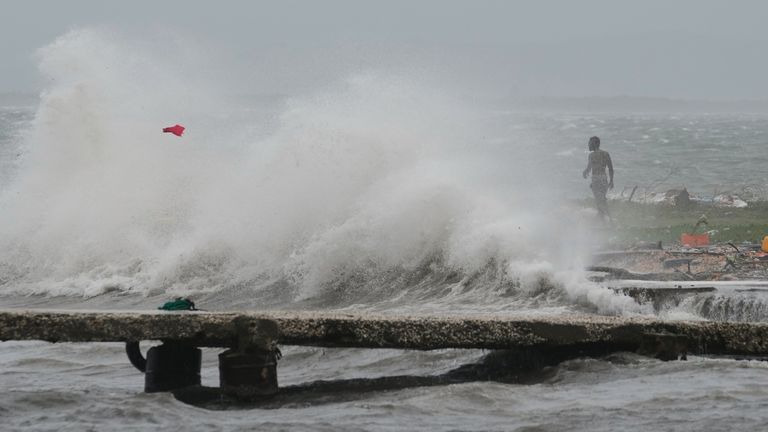
Waves splash in Kingston, Jamaica, as Hurricane Melissa hits. Pic: AP
Since 1953, Atlantic tropical storms have been named by the US National Hurricane Center and then the World Meteorological Organisation.
Six lists of names are used in rotation and recycled every six years.
Should three more storms occur after Melissa, their names will be Nestor, Olga and Pablo.
The only time there is a change to the list is if a storm is so catastrophic that to use its name for another storm would be insensitive.
For example, the name Katrina was retired by the World Meteorological Organisation due to the 2005 storm’s devastating impact – it was replaced with the name Katia.
The use of easily remembered names reduces confusion when two or more tropical storms occur at the same time.


FIFA has backed away from using dynamic pricing for all 2026 World Cup tickets amid concerns about the cost of attending the tournament in North America.
The organisers insisted they always planned to ring-fence tickets at set prices to follow your own team.
But the announcement comes just days ahead of Friday’s tournament draw in Washington DC, which Donald Trump plans to attend.
Fans will have to wait until Saturday to know exactly where and when their teams will be playing in next summer’s tournament.
Scotland will be one of the teams in the tournament, held in North America and Mexico
Variable pricing – fluctuating based on demand – has never been used at a World Cup before, raising concerns about affordability.
England and Scotland fans have been sharing images in recent days of ticket website images highlighting cost worries.
But world football’s governing body said in a statement to Sky News: “FIFA can confirm ringfenced allocations are being set aside for specific fan categories, as has been the case at previous FIFA World Cups. These allocations will be set at a fixed price for the duration of the next ticket sales phase.
“The ringfenced allocations include tickets reserved for supporters of the Participating Member Associations (PMAs), who will be allocated 8% of the tickets for each match in which they take part, including all conditional knockout stage matches.”
FIFA says the cheapest tickets are from $60 (£45) in the group stage. But the most expensive tickets for the final are $6,730 (£5,094).
There will also be a sales window after the draw from 11 December to 13 January when ticket applications will be based on a fixed price for those buying in the random selection draw.
It is the biggest World Cup with 104 matches after the event was expanded from 32 to 48 teams. There are also three host nations for the first time – with Canada and Mexico the junior partners.

The tournament mascots as seen in Mexico in October. Pic: Reuters
Read more from Sky News:
Pope urges Trump not to oust Venezuelan president by force
Government delays Chinese ‘super embassy’ decision
FIFA defended using fluctuating pricing.
“The pricing model adopted for FIFA World Cup 26 reflects the existing market practice for major entertainment and sporting events within our hosts on a daily basis, soccer included,” FIFA’s statement continued.
“This is also a reflection of the treatment of the secondary market for tickets, which has a distinct legal treatment than in many other parts of the world. We are focused on ensuring fair access to our game for existing but also prospective fans.”
The statement addressed the concerns being raised about fans being priced out of attending.
FIFA said: “Stadium category maps do not reflect the number of tickets available in a given category but rather present default seating locations.
“FIFA resale fees are aligned with North American industry trends across various sports and entertainment sectors.”
Ireland, Northern Ireland and Wales could also still qualify.
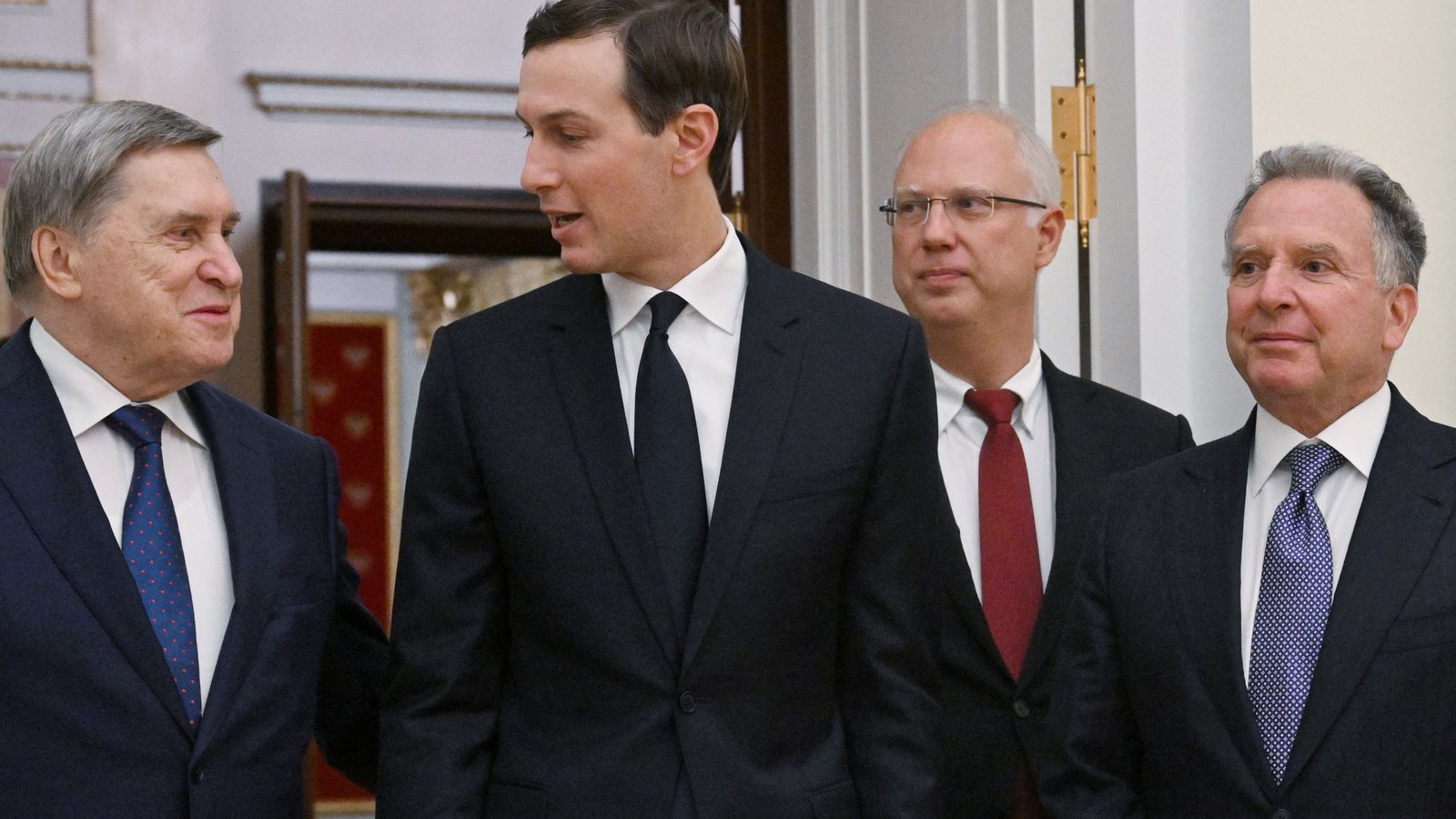
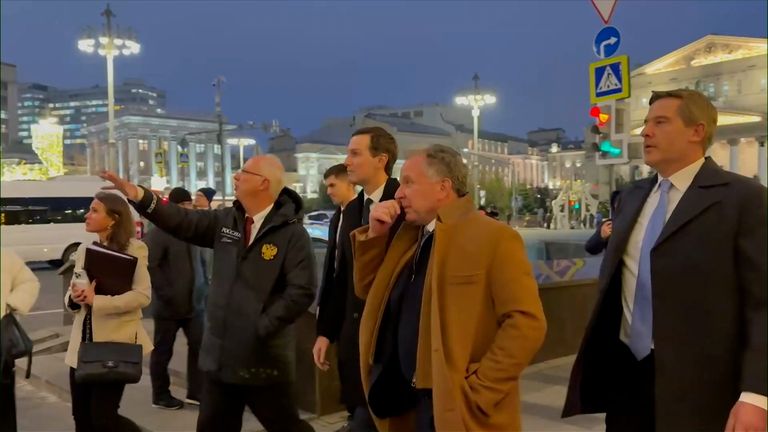
The Americans were given the full VIP treatment on their visit to Moscow.
There was a motorcade from the airport, lunch at a Michelin-starred restaurant, and even a stroll around Red Square.
It felt like Steve Witkoff and Jared Kushner were on more of a tourist trail than the path to peace.
Trump’s envoys walk around Moscow
They finally got down to business in the Kremlin more than six hours after arriving in Russia. And by that point, it was already clear that the one thing they had come to Moscow for wasn’t on offer: Russia’s agreement to their latest peace plan.
According to Vladimir Putin, it’s all Europe’s fault. While his guests were having lunch, he was busy accusing Ukraine’s allies of blocking the peace process by imposing demands that are unacceptable to Russia.
The Europeans, of course, would say it’s the other way round.
But where there was hostility to Europe, only hospitality to the Americans – part of Russia’s strategy to distance the US from its NATO allies, and bring them back to Moscow’s side.
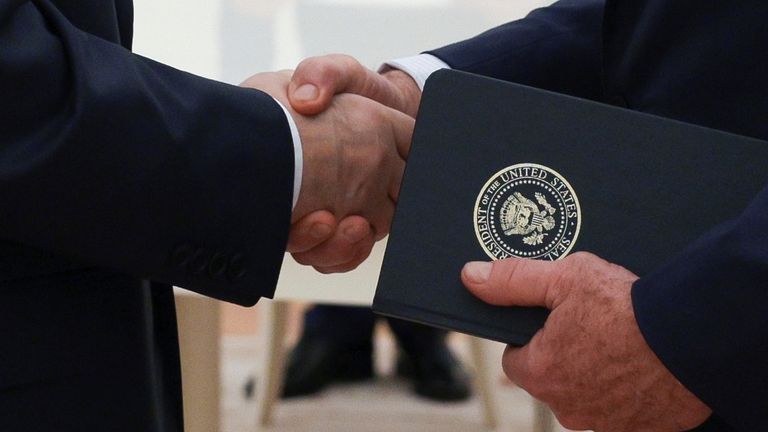
Vladimir Putin and Steve Witkoff shaking hands in August. AP file pic
Putin thinks he’s winning…
Russia wants to return to the 28-point plan that caved in to its demands. And it believes it has the right to because of what’s happening on the battlefield.
It’s no coincidence that on the eve of the US delegation’s visit to Moscow, Russia announced the apparent capture of Pokrovsk, a key strategic target in the Donetsk region.
It was a message designed to assert Russian dominance, and by extension, reinforce its demands rather than dilute them.
Read more:
Michael Clarke answers your Ukraine war questions
‘Thousands’ of Westerners applying to live in Russia

‘Everyone must be on this side of peace’
…and believes US-Russian interests are aligned
The other reason I think Vladimir Putin doesn’t feel the need to compromise is because he believes Moscow and Washington want the same thing: closer US-Russia relations, which can only come after the war is over.
It’s easy to see why. Time and again in this process, the US has defaulted to a position that favours Moscow. The way these negotiations are being conducted is merely the latest example.
With Kyiv, the Americans force the Ukrainians to come to them – first in Geneva, then Florida.
As for Moscow, it’s the other way around. Witkoff is happy to make the long overnight journey, and then endure the long wait ahead of any audience with Putin.
It all gives the impression that when it comes to Russia, the US prefers to placate rather than pressure.
According to the Kremlin, both Russia and the US have agreed not to disclose the details of yesterday’s talks in Moscow.
I doubt Volodymyr Zelenskyy is filled with hope.
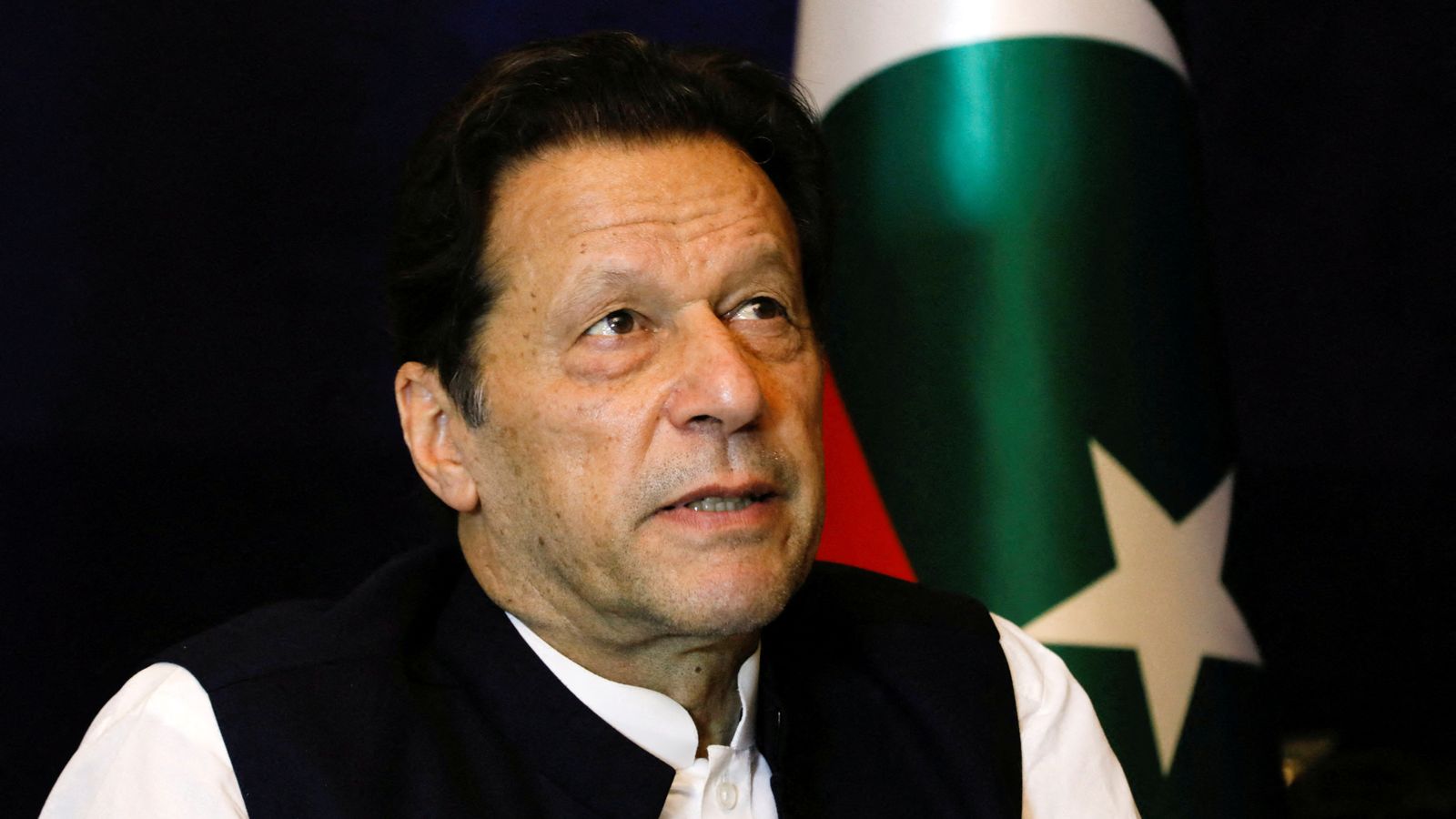
Imran Khan is suffering from isolation after weeks of being denied access to relatives, his family have said.
Khan has been in jail since his August 2023 arrest after he was handed a three-year prison term for illegally selling state gifts.
Now two of his three sisters have spoken out about the former Pakistani prime minister’s plight.
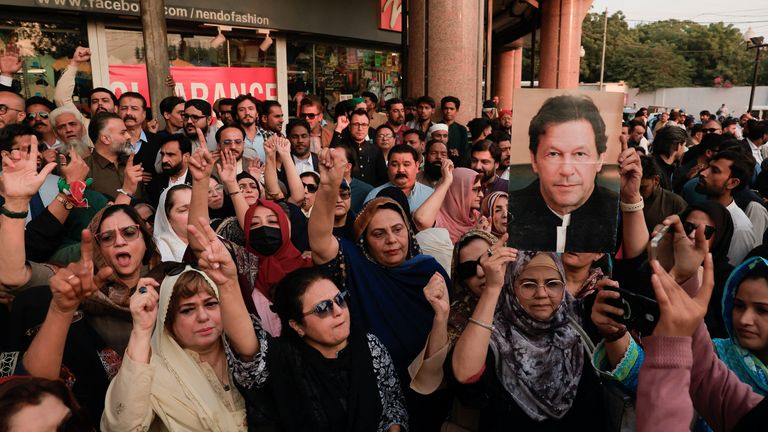
Uzma Khanum was the only family member permitted to meet him in Adiala jail, Rawalpindi, where supporters of his Pakistan Tehreek-e-Insaf (PTI) party had gathered to protest against the conditions of the 73-year-old’s detention.
Supporters of jailed Imran Khan protest in Karachi over concerns about the former Parkistan prime minister’s health. Pic: Reuters
Ms Khanum said that Khan, a former cricketer, is facing isolation and psychological strain in prison following weeks in which his family said access had been blocked.
“He’s physically well,” said Ms Khanum. “But he’s kept inside all the time, and only goes out for a short while. There’s no contact with anybody.”
The meeting took place under strict supervision, said Ms Khanum, though she declined to provide further details.
PTI says routine prison visits have been blocked for weeks despite court orders, fuelling rumours about his condition and possible prison transfers.
‘Suppressing the people’
One of Khan’s other sisters Aleema Khan told The World with Yalda Hakim that she believes Pakistani authorities were isolating him as an attempt to “suppress the people of Pakistan”.
“I think they are operating out of fear. He represents 90% of this country. How can you put a person who represents 90% of the country in jail?
“They basically want to suppress the people of Pakistan. They don’t want their voice to be heard and they are standing behind Imran Khan. They thought if they isolated [him] people will forget him.”
Authorities deny any mistreatment, and say that Khan is receiving all entitlements available to prisoners.
Ahmed Hassan Al-Arabi, an advisor to Pakistan’s Ministry of Information, told Sky News: “The jails are there as a punishment. They are there for the criminals to stop the evil from the criminals emanating into the society.
“If it has to become a political hub, there is no point of jail. Imran Khan’s sisters have been given access [to him].
“There is no distinction between politicians and Imran Khan’s family members, unfortunately“.
Read more from Sky News:
More than 1,200 confirmed dead in Asia floods
El Chapo’s son pleads guilty to drug charges
Khan served as prime minister from 2018 to 2022.
He has claimed that the charges against him are politically motivated – and aimed at blocking his political career.
Khan’s wife, Bushra Bibi, is serving time in the same prison over corruption, but they are not allowed to see each other except when they appear in court, his supporters have said.
-
 Sports2 years ago
Story injured on diving stop, exits Red Sox game
-
 Sports3 years ago
‘Storybook stuff’: Inside the night Bryce Harper sent the Phillies to the World Series
-
 Sports2 years ago
Game 1 of WS least-watched in recorded history
-
 Sports3 years ago
Button battles heat exhaustion in NASCAR debut
-
 Sports3 years ago
MLB Rank 2023: Ranking baseball’s top 100 players
-
Sports4 years ago
Team Europe easily wins 4th straight Laver Cup
-
 Environment3 years ago
Japan and South Korea have a lot at stake in a free and open South China Sea
-
 Environment1 year ago
Here are the best electric bikes you can buy at every price level in October 2024