
Warships, the CIA and potential ‘precision attacks’ – the US-Venezuela crisis explained

US warships in the region, the green light for covert operations, and deadly strikes on what the Trump administration claims are “narco terrorists” – could America’s next move be to strike Venezuela?
President Donald Trump has accused President Nicolas Maduro of leading an organised crime gang (without providing evidence) and declined to answer when questioned if the CIA has the authority to assassinate him.
In return, the Venezuelan leader has accused Mr Trump of seeking regime change and of “fabricating a new eternal war” against his country, as he appealed to the American people for peace.
The rhetoric coming out of the White House, coupled with the presence of military ships in the region, has raised questions about a possible armed conflict between the US and Venezuela.
The question in the air is: Will the US actually attack Venezuela?
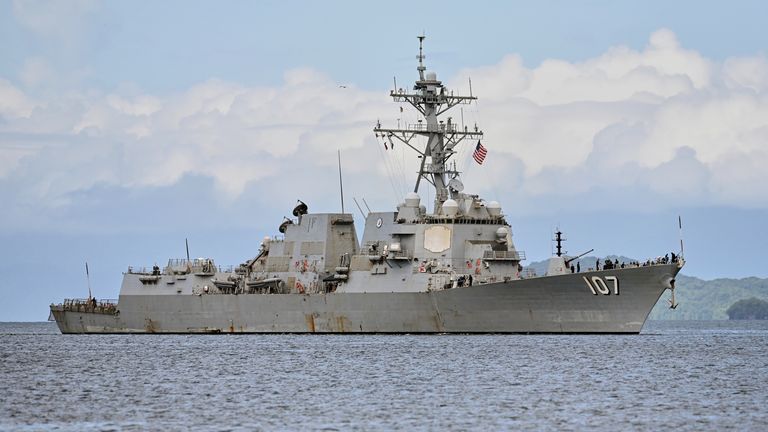
The USS Gravely destroyer arrives in Port-of-Spain, Trinidad and Tobago, on 26 October. Pic: AP
What are US warships doing?
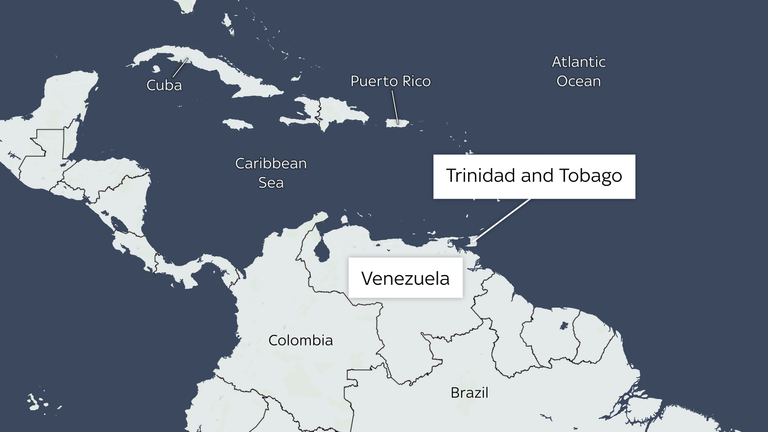
The docking of the USS Gravely guided missile destroyer in the capital of Trinidad and Tobago – just 25 miles from the coast of Venezuela – is the latest incident to escalate tensions.
Venezuela’s government condemned the arrival and called it a provocation by Trinidad and Tobago and the US.
The USS Gerald R Ford aircraft carrier – the largest warship in the world – is also moving closer to Venezuela.
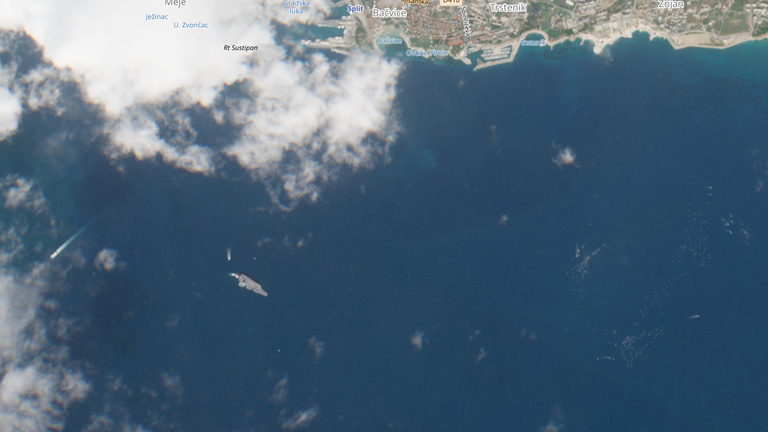
Satellite image shows USS Gerald R Ford on 25 October off the coast of Croatia, a day after the announcement it would be deployed to the Caribbean. Pic: EU Copernicus
It comes as the US has acknowledged carrying out at least seven strikes since September on vessels near Venezuela that it claims were transporting drugs, killing at least 32 people.
Venezuela’s government says the strikes are illegal, amount to murder, and are acts of aggression.
Earlier this month, Trump confirmed he has authorised the CIA to carry out covert operations – including lethal operations – in Venezuela.
The CIA has a long history of operations in Latin America, with actions varying widely from direct paramilitary engagement to intelligence gathering and support roles with little to no physical footprint.
What could happen?
To get an idea of what could happen next, Sky News spoke to Dr Carlos Solar, an expert on Latin American security at the RUSI defence thinktank.
He says the level of military strategy the US is applying around Venezuela seems “unproportionate” for the task of tackling drug trafficking.
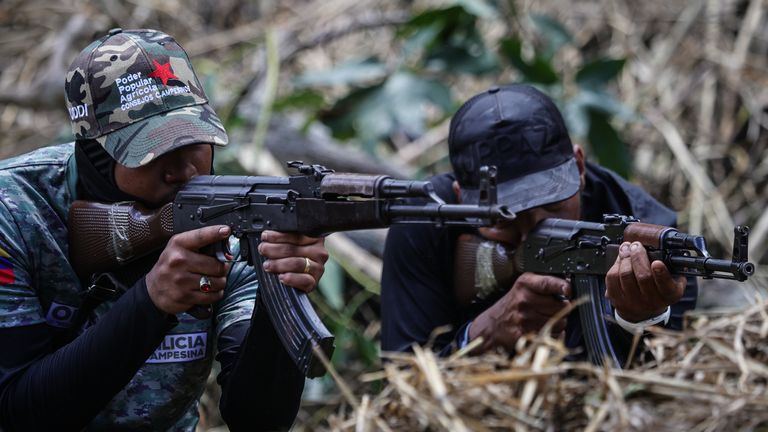
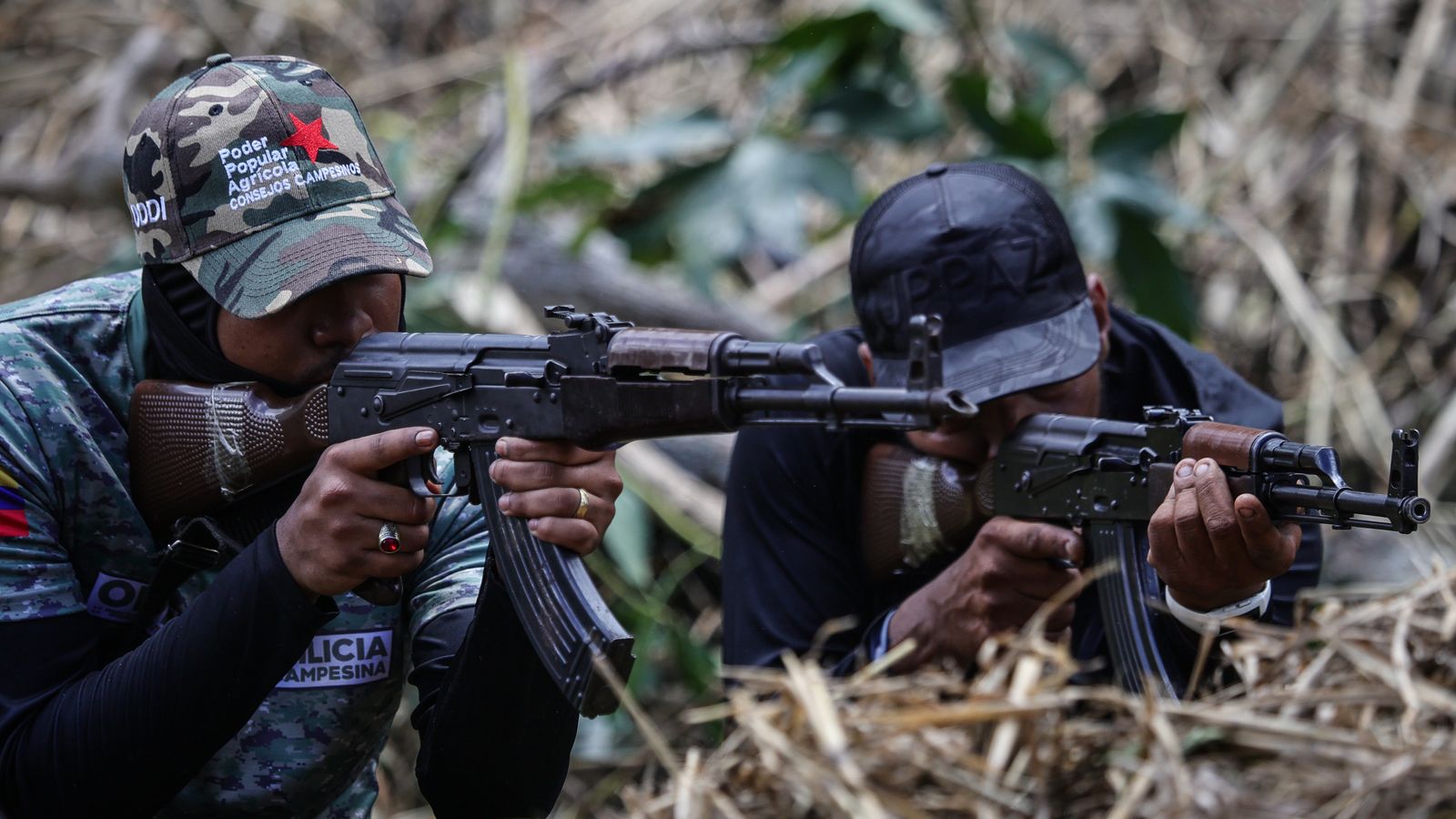
In Venezuela, the government has civilians trained in the use of weapons to defend the country in the event of a US attack. Pic: AP
“A build-up this size can only suggest there’s a strategic military goal,” he added.
Dr Solar says the role of the CIA is “not surprising”, as the US often deploys spying capabilities in countries deemed adversarial.
“With the chances of a military conflict looming, having the most intelligence capable on the ground would be reasonable.”
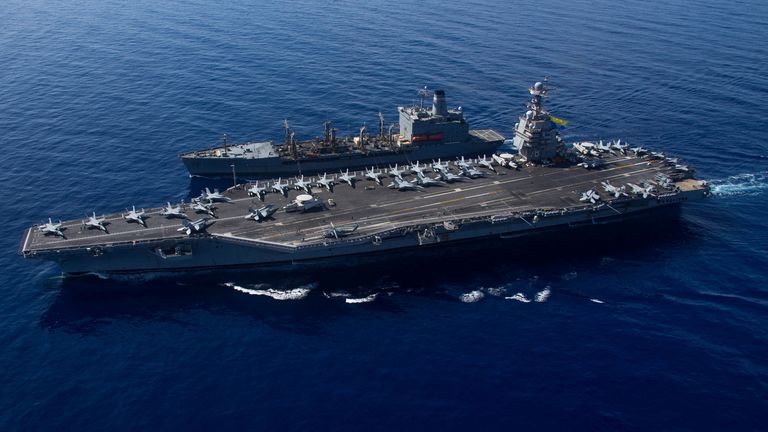
The world’s largest warship, the USS Gerald R Ford, has been tasked to the Caribbean. File pic: Reuters
Asked what could happen next, Dr Solar told Sky News: “One scenario is Trump authorises a round of long-range precision attacks in Venezuela’s territory linked to drug trafficking operations, eventually forcing Maduro to reciprocate later.
“We saw this early in the year when the US attacked Iran’s nuclear facilitates and Tehran returned missiles to US bases in Qatar.
“If the US decides to move more strongly, destroying all critical military targets from the Venezuelan forces, then the US could have Maduro surrender and leave the country immediately.
“This would be the least disruptive without causing greater destabilisation of the country.”
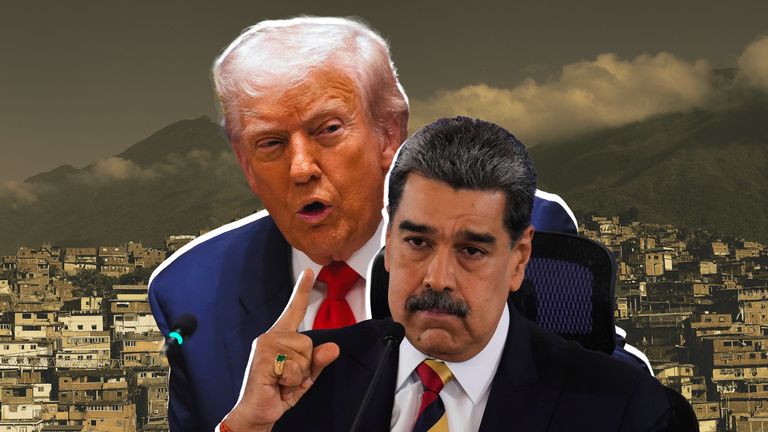
Venezuelan President: ‘We don’t want a war’
What does Trump say about Venezuela?
Trump said his reasons for the strikes on vessels were the migration of Venezuelans, allegedly including former prisoners, to the US – and drug trafficking.
“I authorised for two reasons really,” he said. “Number one, they have emptied their prisons into the United States of America…they came in through the border. They came in because we had an open border,” he told reporters. “And the other thing are drugs.”
He has accused Venezuela of trafficking huge amounts of cocaine into the US, and alleged Mr Maduro is the leader of the Tren de Aragua gang – a claim most of his own intelligence agencies do not support.
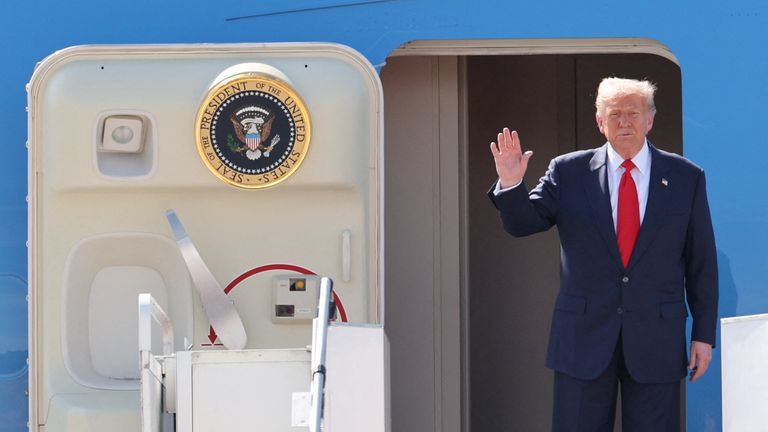
President Donald Trump is currently on a tour of Asia. Pic: Reuters
The US leader has not provided evidence for the claim about prisoners, and Sky News chief correspondent Stuart Ramsay pointed out the fentanyl drug that is causing destruction in America is largely manufactured in Mexico, not Venezuela.
“We are looking at land now, because we’ve got the sea very well under control,” Mr Trump added. It is not clear what actions this could entail.
The Pentagon recently disclosed to US Congress that the president has determined the US is engaged in “a non-international armed conflict” with drug cartels.
When asked if the CIA has the authority to execute Maduro, which would be a massive intervention, Trump declined to answer. Instead, he said: “I think Venezuela is feeling heat.”
Read more:
Venezuela opposition leader wins Nobel Peace Prize
Trump may have another motive in escalation of war on drugs
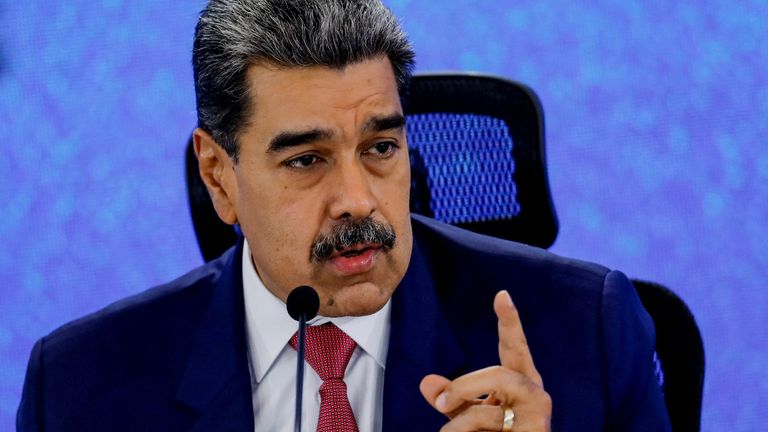
Venezuela’s President Nicolas Maduro. Pic: Reuters
What does Venezuela’s leader say?
Maduro has been in power since 2013, including re-elections in contests marred by accusations of fraud.
The last decade has seen his country gripped by spiralling hyperinflation and a humanitarian crisis that has seen an estimated eight million Venezuelans flee the country.
As the USS Gerald R Ford aircraft carrier moved closer to Venezuela, Maduro accused the US government of “fabricating a new eternal war” against his country.
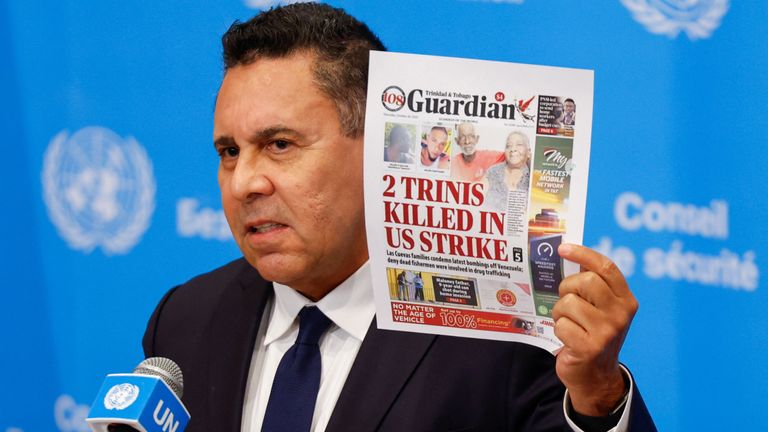
Venezuelan ambassador to the UN, Samuel Moncada, holds a newspaper article about a recent US military strike. Pic: Reuters
“They promised they would never again get involved in a war, and they are fabricating a war that we will avoid,” he said in a national address.
“They are fabricating an extravagant narrative, a vulgar, criminal and totally fake one,” he added, perhaps a reference to Trump’s claim that he is the leader of the Tren de Aragua gang and that his country trafficks cocaine into the US.
“Venezuela is a country that does not produce cocaine leaves.”
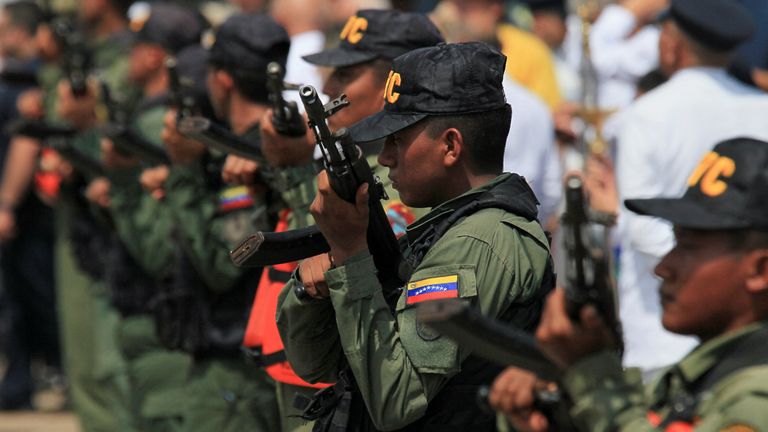
Members of Venezuela’s Bolivarian National Guard. Pic: Reuters
Tren de Aragua, which traces its roots to a Venezuelan prison, is not known for having a big role in global drug trafficking but instead for its involvement in contract killings, extortion, and people smuggling.
Venezuela has raised a complaint to the UN Security Council and demanded accountability from the US.


FIFA has backed away from using dynamic pricing for all 2026 World Cup tickets amid concerns about the cost of attending the tournament in North America.
The organisers insisted they always planned to ring-fence tickets at set prices to follow your own team.
But the announcement comes just days ahead of Friday’s tournament draw in Washington DC, which Donald Trump plans to attend.
Fans will have to wait until Saturday to know exactly where and when their teams will be playing in next summer’s tournament.
Scotland will be one of the teams in the tournament, held in North America and Mexico
Variable pricing – fluctuating based on demand – has never been used at a World Cup before, raising concerns about affordability.
England and Scotland fans have been sharing images in recent days of ticket website images highlighting cost worries.
But world football’s governing body said in a statement to Sky News: “FIFA can confirm ringfenced allocations are being set aside for specific fan categories, as has been the case at previous FIFA World Cups. These allocations will be set at a fixed price for the duration of the next ticket sales phase.
“The ringfenced allocations include tickets reserved for supporters of the Participating Member Associations (PMAs), who will be allocated 8% of the tickets for each match in which they take part, including all conditional knockout stage matches.”
FIFA says the cheapest tickets are from $60 (£45) in the group stage. But the most expensive tickets for the final are $6,730 (£5,094).
There will also be a sales window after the draw from 11 December to 13 January when ticket applications will be based on a fixed price for those buying in the random selection draw.
It is the biggest World Cup with 104 matches after the event was expanded from 32 to 48 teams. There are also three host nations for the first time – with Canada and Mexico the junior partners.

The tournament mascots as seen in Mexico in October. Pic: Reuters
Read more from Sky News:
Pope urges Trump not to oust Venezuelan president by force
Government delays Chinese ‘super embassy’ decision
FIFA defended using fluctuating pricing.
“The pricing model adopted for FIFA World Cup 26 reflects the existing market practice for major entertainment and sporting events within our hosts on a daily basis, soccer included,” FIFA’s statement continued.
“This is also a reflection of the treatment of the secondary market for tickets, which has a distinct legal treatment than in many other parts of the world. We are focused on ensuring fair access to our game for existing but also prospective fans.”
The statement addressed the concerns being raised about fans being priced out of attending.
FIFA said: “Stadium category maps do not reflect the number of tickets available in a given category but rather present default seating locations.
“FIFA resale fees are aligned with North American industry trends across various sports and entertainment sectors.”
Ireland, Northern Ireland and Wales could also still qualify.
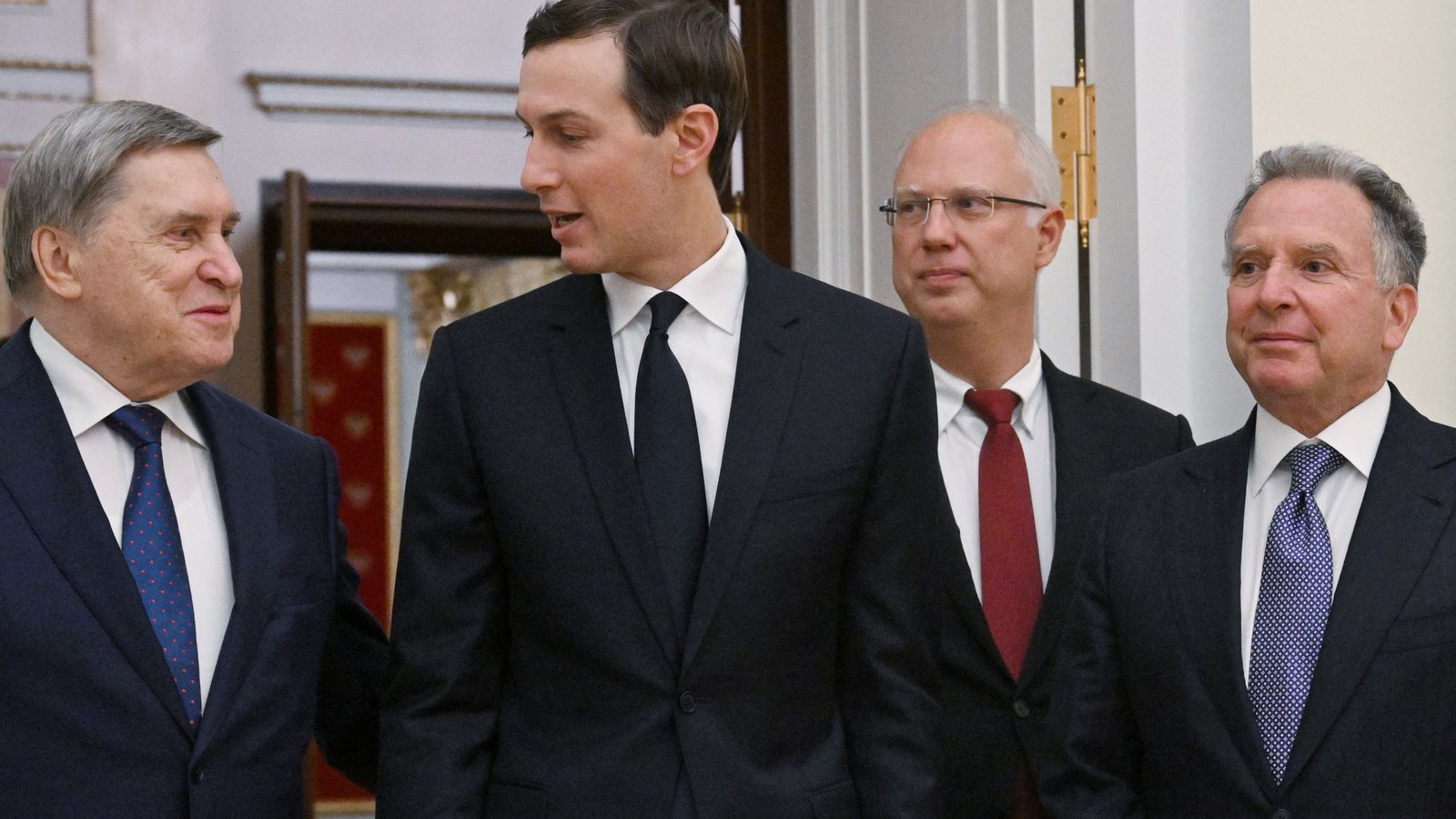
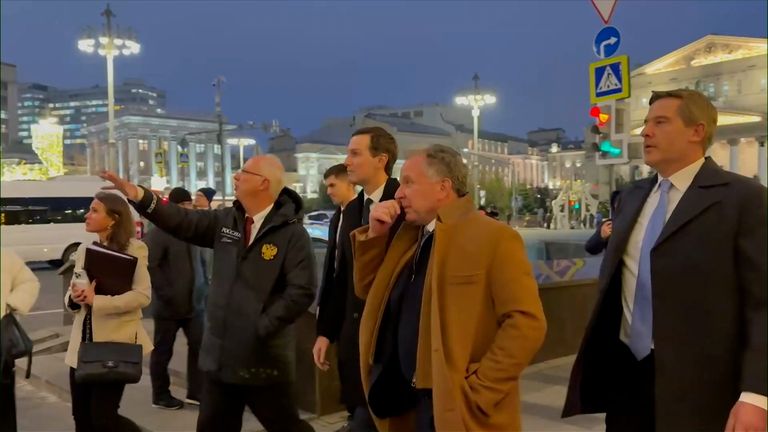
The Americans were given the full VIP treatment on their visit to Moscow.
There was a motorcade from the airport, lunch at a Michelin-starred restaurant, and even a stroll around Red Square.
It felt like Steve Witkoff and Jared Kushner were on more of a tourist trail than the path to peace.
Trump’s envoys walk around Moscow
They finally got down to business in the Kremlin more than six hours after arriving in Russia. And by that point, it was already clear that the one thing they had come to Moscow for wasn’t on offer: Russia’s agreement to their latest peace plan.
According to Vladimir Putin, it’s all Europe’s fault. While his guests were having lunch, he was busy accusing Ukraine’s allies of blocking the peace process by imposing demands that are unacceptable to Russia.
The Europeans, of course, would say it’s the other way round.
But where there was hostility to Europe, only hospitality to the Americans – part of Russia’s strategy to distance the US from its NATO allies, and bring them back to Moscow’s side.
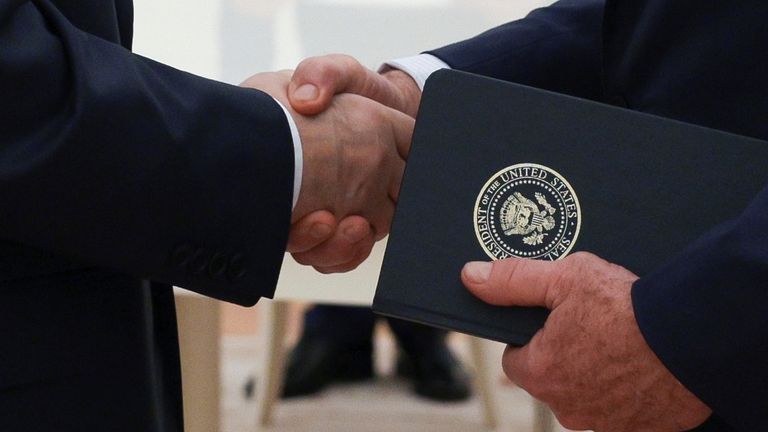
Vladimir Putin and Steve Witkoff shaking hands in August. AP file pic
Putin thinks he’s winning…
Russia wants to return to the 28-point plan that caved in to its demands. And it believes it has the right to because of what’s happening on the battlefield.
It’s no coincidence that on the eve of the US delegation’s visit to Moscow, Russia announced the apparent capture of Pokrovsk, a key strategic target in the Donetsk region.
It was a message designed to assert Russian dominance, and by extension, reinforce its demands rather than dilute them.
Read more:
Michael Clarke answers your Ukraine war questions
‘Thousands’ of Westerners applying to live in Russia

‘Everyone must be on this side of peace’
…and believes US-Russian interests are aligned
The other reason I think Vladimir Putin doesn’t feel the need to compromise is because he believes Moscow and Washington want the same thing: closer US-Russia relations, which can only come after the war is over.
It’s easy to see why. Time and again in this process, the US has defaulted to a position that favours Moscow. The way these negotiations are being conducted is merely the latest example.
With Kyiv, the Americans force the Ukrainians to come to them – first in Geneva, then Florida.
As for Moscow, it’s the other way around. Witkoff is happy to make the long overnight journey, and then endure the long wait ahead of any audience with Putin.
It all gives the impression that when it comes to Russia, the US prefers to placate rather than pressure.
According to the Kremlin, both Russia and the US have agreed not to disclose the details of yesterday’s talks in Moscow.
I doubt Volodymyr Zelenskyy is filled with hope.
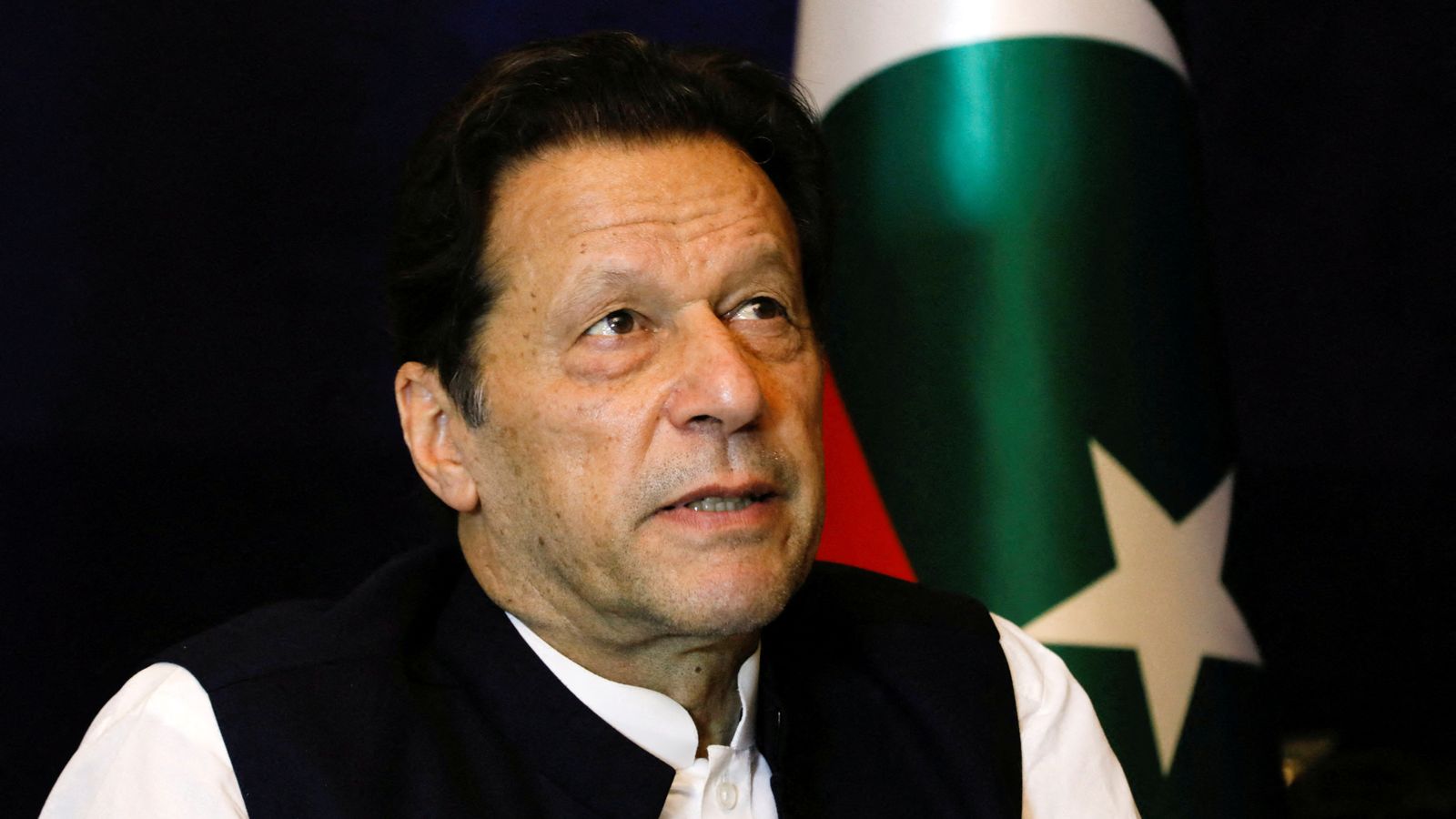
Imran Khan is suffering from isolation after weeks of being denied access to relatives, his family have said.
Khan has been in jail since his August 2023 arrest after he was handed a three-year prison term for illegally selling state gifts.
Now two of his three sisters have spoken out about the former Pakistani prime minister’s plight.
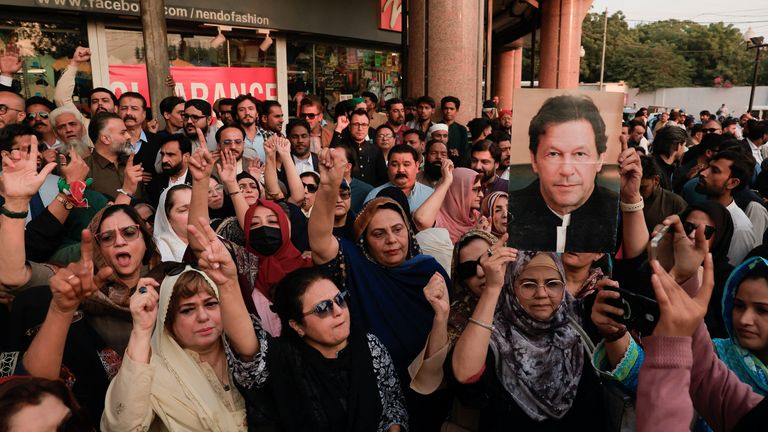
Uzma Khanum was the only family member permitted to meet him in Adiala jail, Rawalpindi, where supporters of his Pakistan Tehreek-e-Insaf (PTI) party had gathered to protest against the conditions of the 73-year-old’s detention.
Supporters of jailed Imran Khan protest in Karachi over concerns about the former Parkistan prime minister’s health. Pic: Reuters
Ms Khanum said that Khan, a former cricketer, is facing isolation and psychological strain in prison following weeks in which his family said access had been blocked.
“He’s physically well,” said Ms Khanum. “But he’s kept inside all the time, and only goes out for a short while. There’s no contact with anybody.”
The meeting took place under strict supervision, said Ms Khanum, though she declined to provide further details.
PTI says routine prison visits have been blocked for weeks despite court orders, fuelling rumours about his condition and possible prison transfers.
‘Suppressing the people’
One of Khan’s other sisters Aleema Khan told The World with Yalda Hakim that she believes Pakistani authorities were isolating him as an attempt to “suppress the people of Pakistan”.
“I think they are operating out of fear. He represents 90% of this country. How can you put a person who represents 90% of the country in jail?
“They basically want to suppress the people of Pakistan. They don’t want their voice to be heard and they are standing behind Imran Khan. They thought if they isolated [him] people will forget him.”
Authorities deny any mistreatment, and say that Khan is receiving all entitlements available to prisoners.
Ahmed Hassan Al-Arabi, an advisor to Pakistan’s Ministry of Information, told Sky News: “The jails are there as a punishment. They are there for the criminals to stop the evil from the criminals emanating into the society.
“If it has to become a political hub, there is no point of jail. Imran Khan’s sisters have been given access [to him].
“There is no distinction between politicians and Imran Khan’s family members, unfortunately“.
Read more from Sky News:
More than 1,200 confirmed dead in Asia floods
El Chapo’s son pleads guilty to drug charges
Khan served as prime minister from 2018 to 2022.
He has claimed that the charges against him are politically motivated – and aimed at blocking his political career.
Khan’s wife, Bushra Bibi, is serving time in the same prison over corruption, but they are not allowed to see each other except when they appear in court, his supporters have said.
-
 Sports2 years ago
Story injured on diving stop, exits Red Sox game
-
 Sports3 years ago
‘Storybook stuff’: Inside the night Bryce Harper sent the Phillies to the World Series
-
 Sports2 years ago
Game 1 of WS least-watched in recorded history
-
 Sports3 years ago
Button battles heat exhaustion in NASCAR debut
-
 Sports3 years ago
MLB Rank 2023: Ranking baseball’s top 100 players
-
Sports4 years ago
Team Europe easily wins 4th straight Laver Cup
-
 Environment3 years ago
Japan and South Korea have a lot at stake in a free and open South China Sea
-
 Environment1 year ago
Here are the best electric bikes you can buy at every price level in October 2024