
Microsoft, Alphabet and Meta results overshadowed by growing fears of AI bubble


Some of the world’s biggest tech giants reported quarterly earnings on Wednesday – with a mixed bag of results as fears grow that a bubble is forming in artificial intelligence.
Microsoft revealed that its spending on AI infrastructure hit almost $35bn (£26.5bn) in the three months to the end of September, a sharp rise compared with the year before.
Despite revenue jumping 18% and net income rising 12%, shares plunged by close to 4% in after-hours trading, with investors concerned about the mounting costs of sustaining the boom.
Microsoft is now a $4trn company thanks to its stake in ChatGPT maker OpenAI. AP file pic
Microsoft’s vice president of investor relations Jonathan Neilson said: “We continue to see demand which exceeds the capacity we have available.
“Our capital expenditure strategy remains unchanged in that we build against the demand signal we’re seeing.”
Big Tech is facing increasing pressure to show returns on the massive AI investments they’re making, against a backdrop of soaring valuations and limited evidence of productivity gains.
Microsoft became the world’s second most valuable company this week thanks to its 27% stake in OpenAI, the creator of ChatGPT.
Its market capitalisation surged beyond $4trn (£3trn) at one point, but that psychologically significant threshold is now in doubt because of recent selloffs.
iStock file pic
Alphabet makes history
Last night’s results weren’t all doom and gloom – with shares in Google’s parent company surging by 6% in after-hours trading.
Alphabet has also set out aggressive spending ambitions, but placated investors thanks to an impressive set of results that surpassed analysts’ expectations.
Total revenue for the quarter stood at a staggering $102.35bn (£77bn), with the search giant’s advertising unit remaining robust despite growing competition.
But concerns linger that Alphabet’s dominance in search could be undermined by AI startups, with OpenAI recently unveiling a browser designed to rival Google Chrome.
Hargreaves Lansdown’s senior equity analyst Matt Britzman shrugged off this threat – and believes the company is “gearing up for long-term AI leadership”.
He said: “Alphabet just delivered its first-ever $100bn quarter, silencing the doubters with standout performances in both Search and Cloud.
“AI Overviews and AI Mode are clearly resonating with users, helping to ease fears that Google’s core search business is under threat from generative AI.
“With ChatGPT’s recent browser demo falling short of a game-changer, Google looks well-placed to put up a strong defence as gatekeeper to the internet.”
Read more from Sky News:
Federal Reserve cuts interest rates
Microsoft Azure outage hits thousands
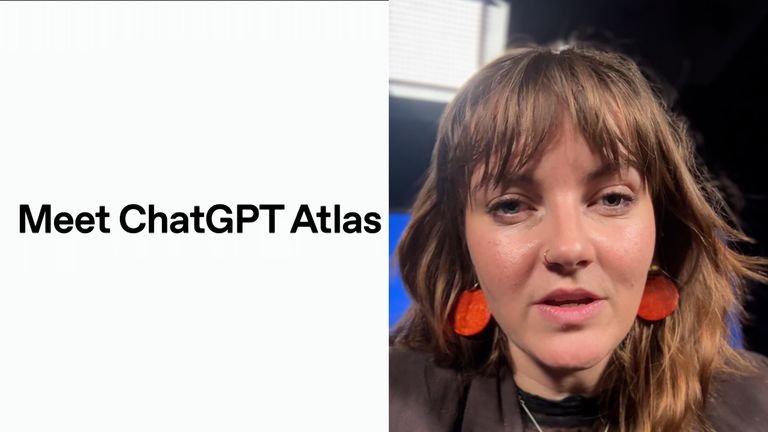
Browser could ‘change the way we use the internet’
Meta faces a mauling
Meta – the parent company of Facebook, Instagram, and WhatsApp – saw its shares tumble by as much as 10% in after-hours trading.
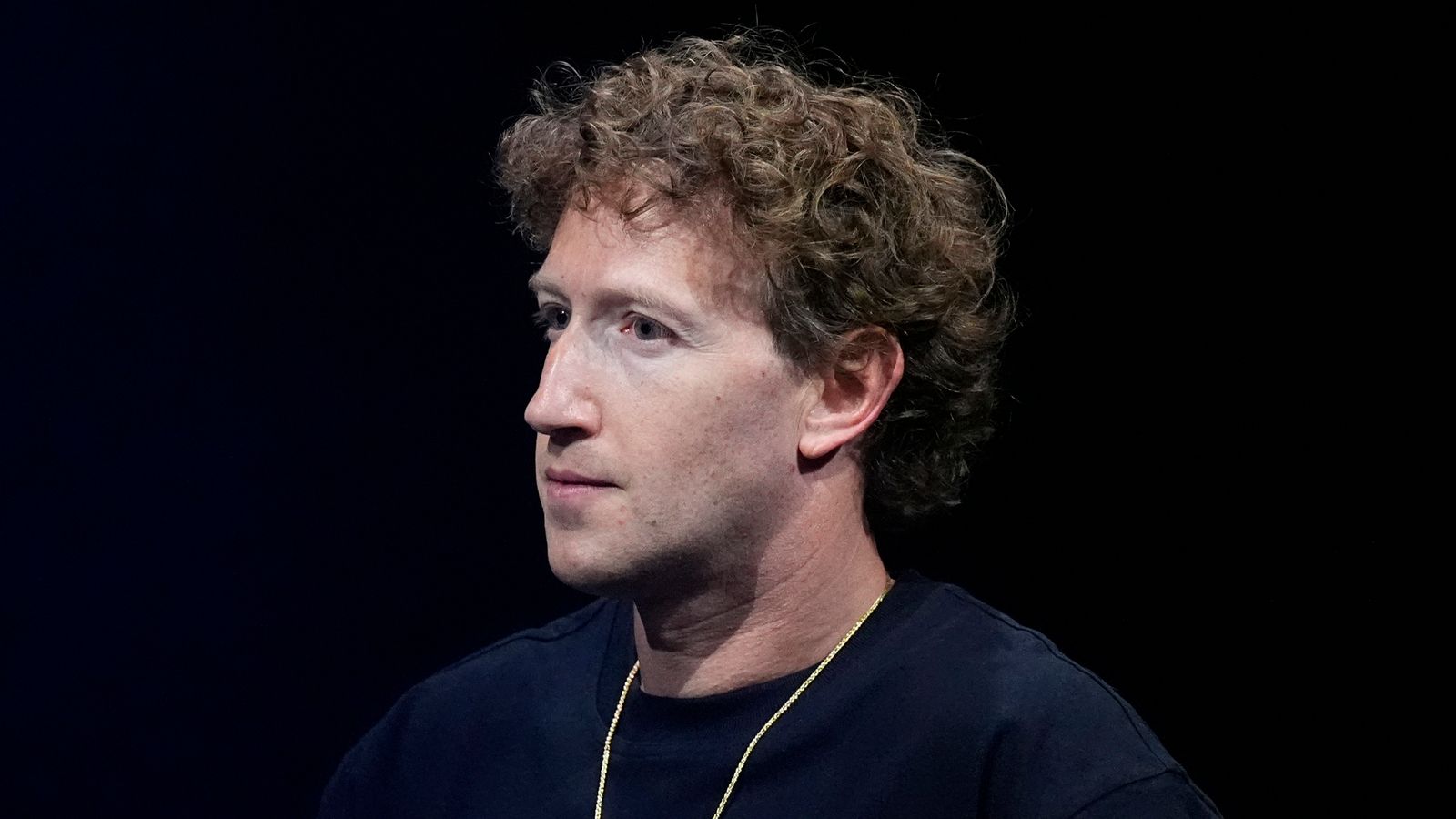
Mark Zuckerberg’s tech empire anticipates “notably larger” capital expenses next year as it ramps up investments in AI and goes on a hiring spree for top talent.
Net income in the third quarter stood at $2.7bn (£2bn) and suffered an eye-watering $16bn (£12bn) hit because of Donald Trump’s “Big Beautiful Bill”.
Meta was late to the party on AI but has now doubled down on this still-nascent technology – setting an ambition to achieve superintelligence, a milestone where machines could theoretically outthink humans.
The social networking giant continues to benefit from its massive user base, and expects fourth-quarter revenues of up to $59bn (£44bn).
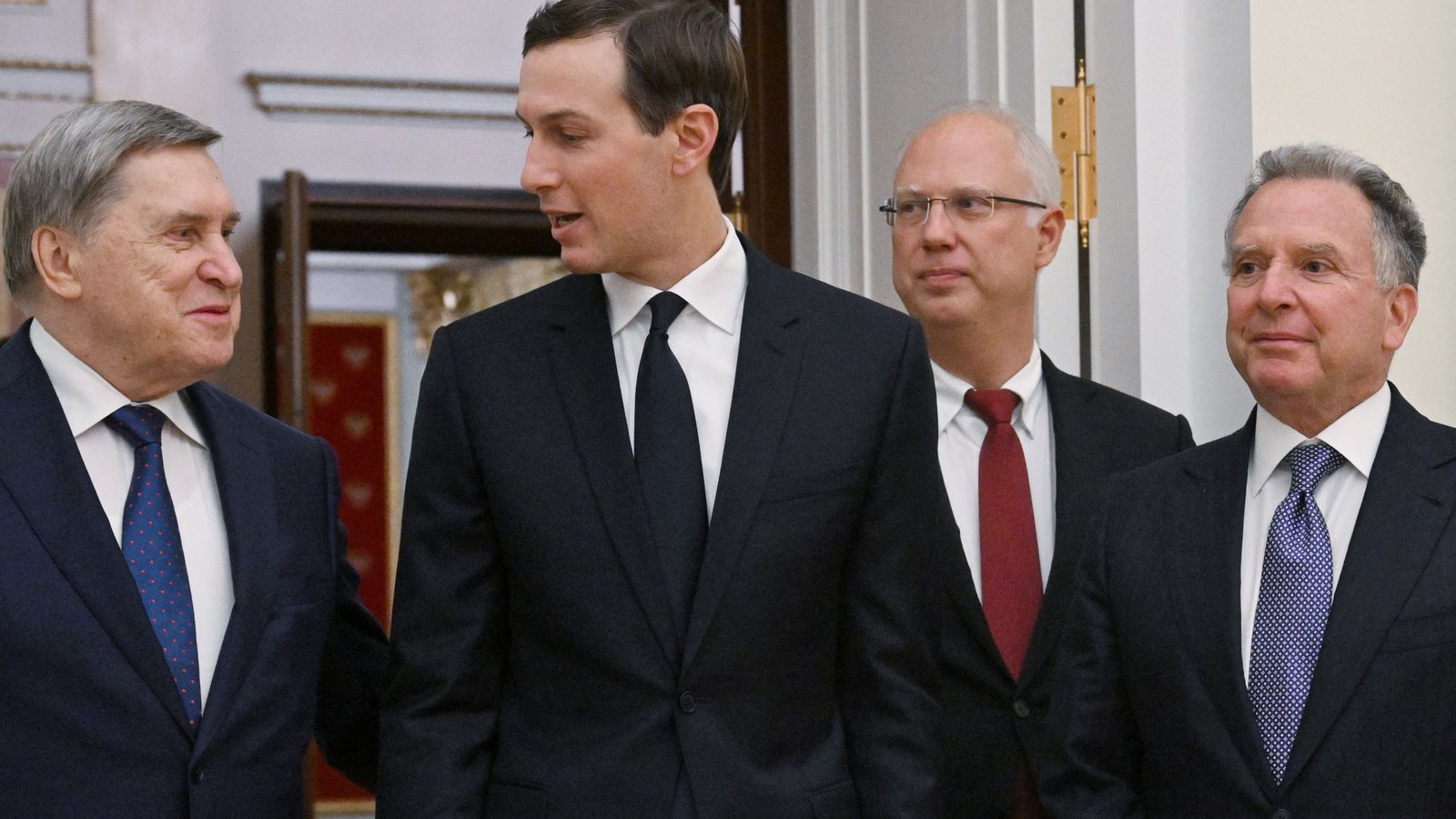
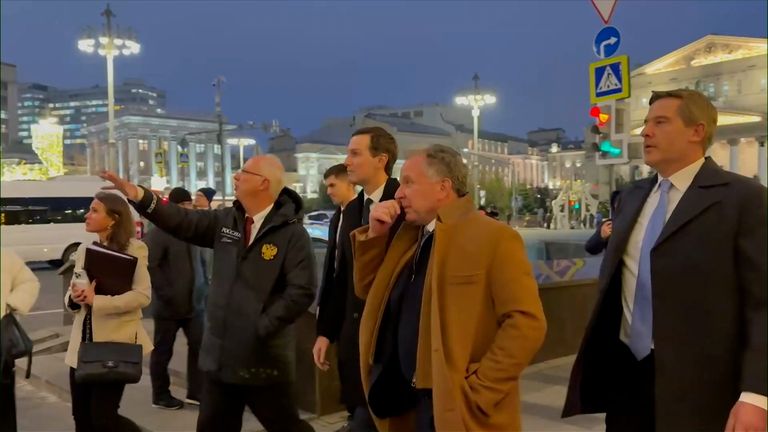
The Americans were given the full VIP treatment on their visit to Moscow.
There was a motorcade from the airport, lunch at a Michelin-starred restaurant, and even a stroll around Red Square.
It felt like Steve Witkoff and Jared Kushner were on more of a tourist trail than the path to peace.
Trump’s envoys walk around Moscow
They finally got down to business in the Kremlin more than six hours after arriving in Russia. And by that point, it was already clear that the one thing they had come to Moscow for wasn’t on offer: Russia’s agreement to their latest peace plan.
According to Vladimir Putin, it’s all Europe’s fault. While his guests were having lunch, he was busy accusing Ukraine’s allies of blocking the peace process by imposing demands that are unacceptable to Russia.
The Europeans, of course, would say it’s the other way round.
But where there was hostility to Europe, only hospitality to the Americans – part of Russia’s strategy to distance the US from its NATO allies, and bring them back to Moscow’s side.
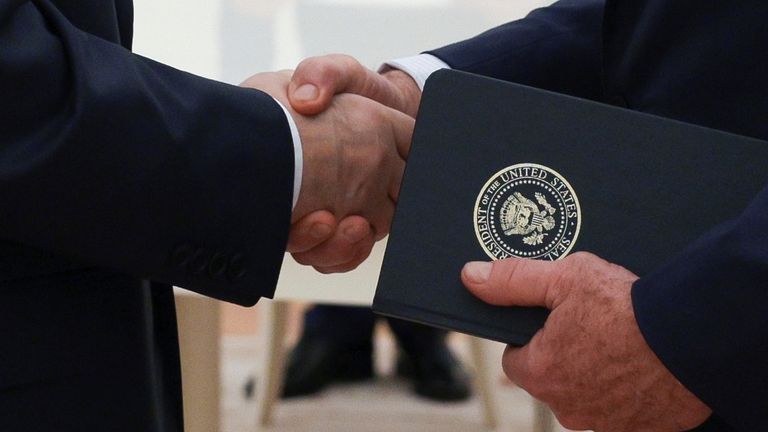
Vladimir Putin and Steve Witkoff shaking hands in August. AP file pic
Putin thinks he’s winning…
Russia wants to return to the 28-point plan that caved in to its demands. And it believes it has the right to because of what’s happening on the battlefield.
It’s no coincidence that on the eve of the US delegation’s visit to Moscow, Russia announced the apparent capture of Pokrovsk, a key strategic target in the Donetsk region.
It was a message designed to assert Russian dominance, and by extension, reinforce its demands rather than dilute them.
Read more:
Michael Clarke answers your Ukraine war questions
‘Thousands’ of Westerners applying to live in Russia

‘Everyone must be on this side of peace’
…and believes US-Russian interests are aligned
The other reason I think Vladimir Putin doesn’t feel the need to compromise is because he believes Moscow and Washington want the same thing: closer US-Russia relations, which can only come after the war is over.
It’s easy to see why. Time and again in this process, the US has defaulted to a position that favours Moscow. The way these negotiations are being conducted is merely the latest example.
With Kyiv, the Americans force the Ukrainians to come to them – first in Geneva, then Florida.
As for Moscow, it’s the other way around. Witkoff is happy to make the long overnight journey, and then endure the long wait ahead of any audience with Putin.
It all gives the impression that when it comes to Russia, the US prefers to placate rather than pressure.
According to the Kremlin, both Russia and the US have agreed not to disclose the details of yesterday’s talks in Moscow.
I doubt Volodymyr Zelenskyy is filled with hope.
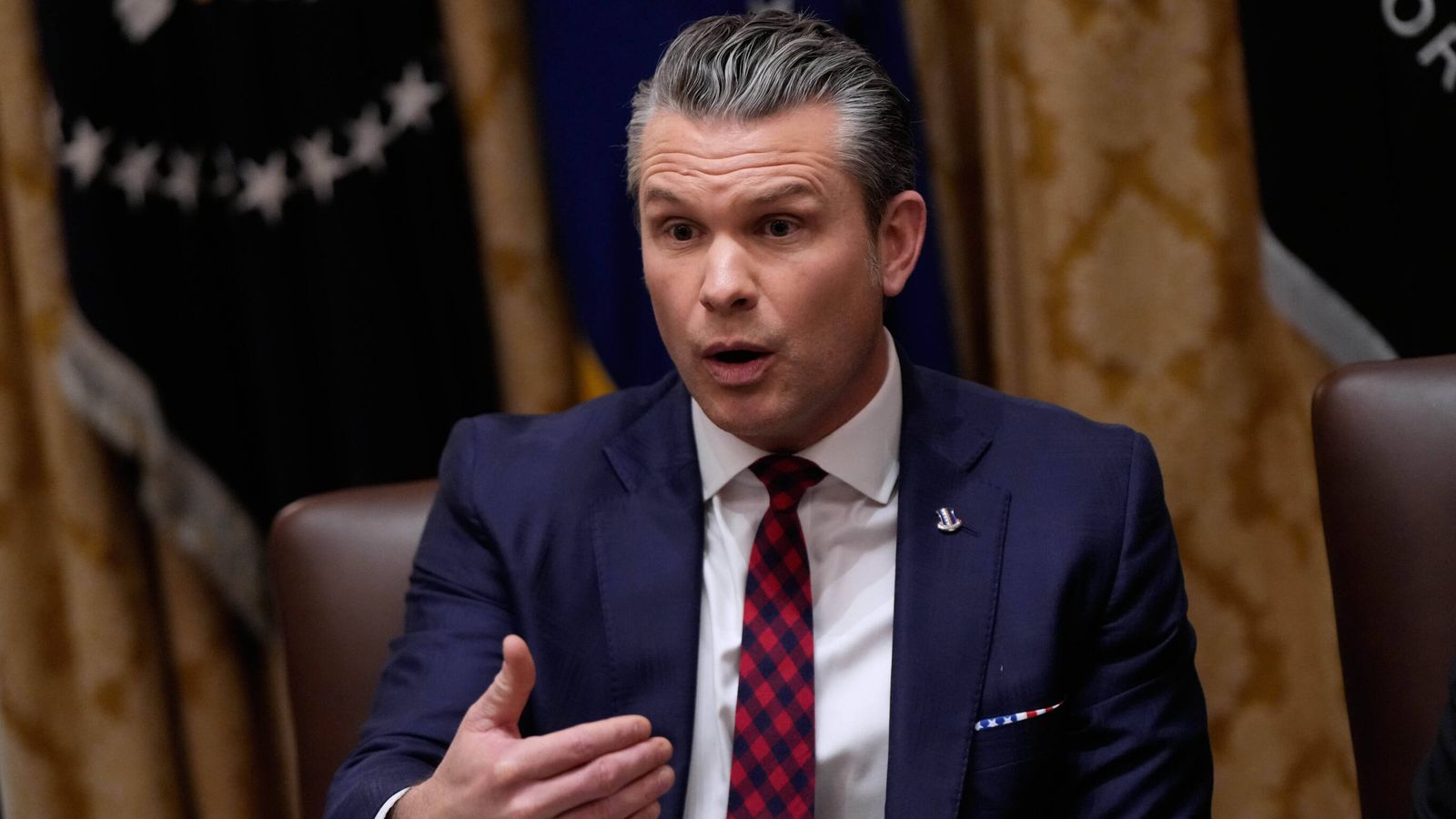
US defence secretary Pete Hegseth has cited the “fog of war” in defence of a follow-up strike earlier this year on a boat alleged to be carrying drugs in the Caribbean Sea.
His comments came on the day the Pope urged Donald Trump not to try to oust Venezuelan President Nicolas Maduro using military force.
Speaking at a cabinet meeting on Tuesday alongside Mr Trump, Mr Hegseth said the US had paused strikes because it was hard to find drug boats.
But strikes against drug traffickers would continue, he said.
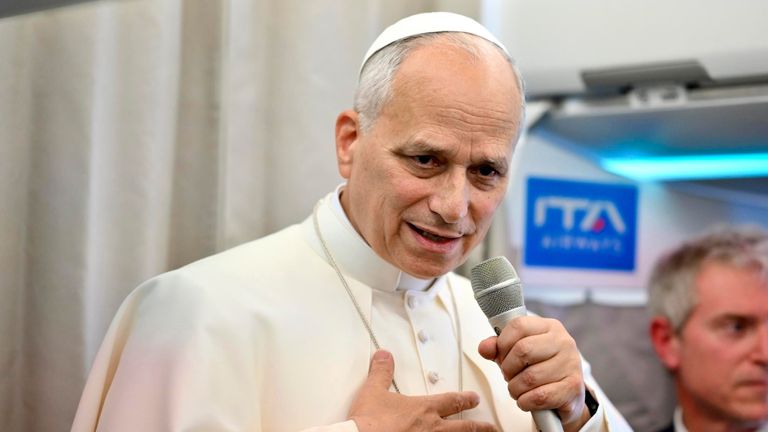
Pope Leo XIV talks to reporters as he returns from visits to Turkey and Lebanon. Pic: AP
During the cabinet meeting at the White House, Mr Hegseth said that he did not see that there were survivors in the water when the second strike was ordered and launched in early September, saying that “the thing was on fire”.
Mr Hegseth also said he “didn’t stick around” for the rest of the mission following the first strike, adding that the admiral in charge had “made the right call” in ordering it, which he “had complete authority to do”.
The Washington Post first reported that Mr Hegseth issued a verbal order for the second strike that killed survivors on the boat.
On Monday, the White House said that Navy vice admiral Frank “Mitch” Bradley acted “within his authority and the law” when he ordered the second strike.
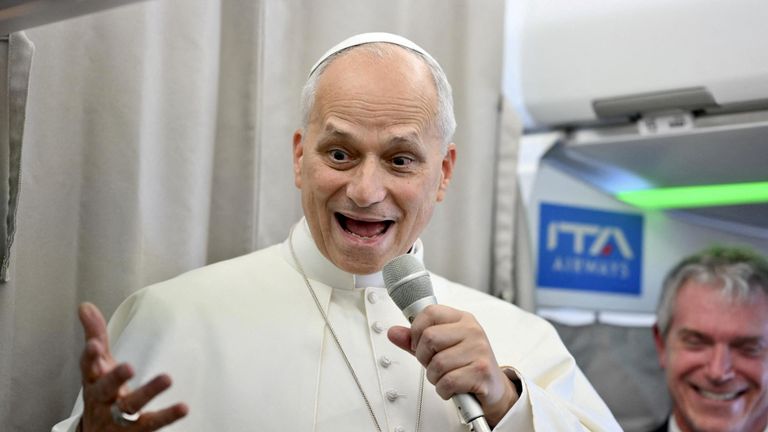
Pope pleads to Trump not to oust Venezuelan president by force
Asked if he supported the second strike on a boat in the Caribbean Sea in September, President Trump said he “didn’t know anything” and “still haven’t gotten a lot of information because I rely on Pete”, referencing Mr Hegseth.
On Tuesday, Pope Leo, the first American pontiff, said it would be better to attempt dialogue or impose economic pressure on Venezuela if Washington wanted to pursue change there.
Read more from Sky News:
Government delays Chinese ‘super embassy’ decision
Imran Khan healthy but isolated in jail, his sister says
The Trump administration has been weighing options to combat what it has portrayed as Mr Maduro’s role in supplying illegal drugs that have killed Americans.
The socialist Venezuelan president has denied having any links to the illegal drug trade.
Asked during a news conference about President Trump’s threats to remove Mr Maduro by force, the Pope said: “It is better to search for ways of dialogue, or perhaps pressure, including economic pressure.”
He added that Washington should search for other ways to achieve change “if that is what they want to do in the United States”.
The Pope was speaking as he flew home from visiting Turkey and Lebanon – his first overseas trip in the role.
Mr Maduro has said Venezuelans are ready to defend their country as the US considers a land attack.
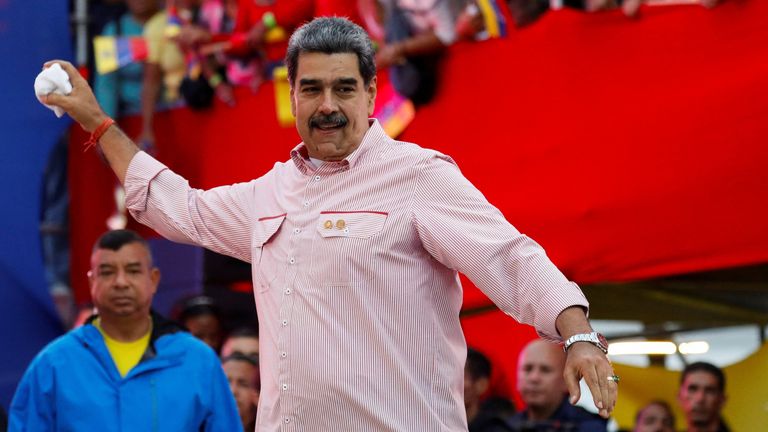
Venezuela’s President Nicolas Maduro in Caracas. Pic: Reuters

A map showing Venezuelan military facilities
The president held a rally in Caracas amid heightened tensions with Mr Trump’s administration, which has been targeting what it says are boats carrying drug smugglers.
Mr Trump met his national security team on Monday evening, having warned last week that land strikes would start “very soon”.
It has not been confirmed what was discussed at the meeting. But White House press secretary Karoline Leavitt told reporters: “There’s many options at the president’s disposal that are on the table – and I’ll let him speak on those.”
US forces have carried out at least 21 strikes on boats it claims were carrying narcotics to its shores over the last few months.
Did Pete Hegseth commit a war crime?
Mr Maduro – considered a dictator by many in the West – said on Monday that Venezuelans were ready “to defend [the country] and lead it to the path of peace”.
“We have lived through 22 weeks of aggression that can only be described as psychological terrorism,” he said.
Venezuela has said the boat attacks, which have killed more than 80 people, amount to murder – and that Mr Trump’s true motivation is to oust Mr Maduro and access its oil.
US
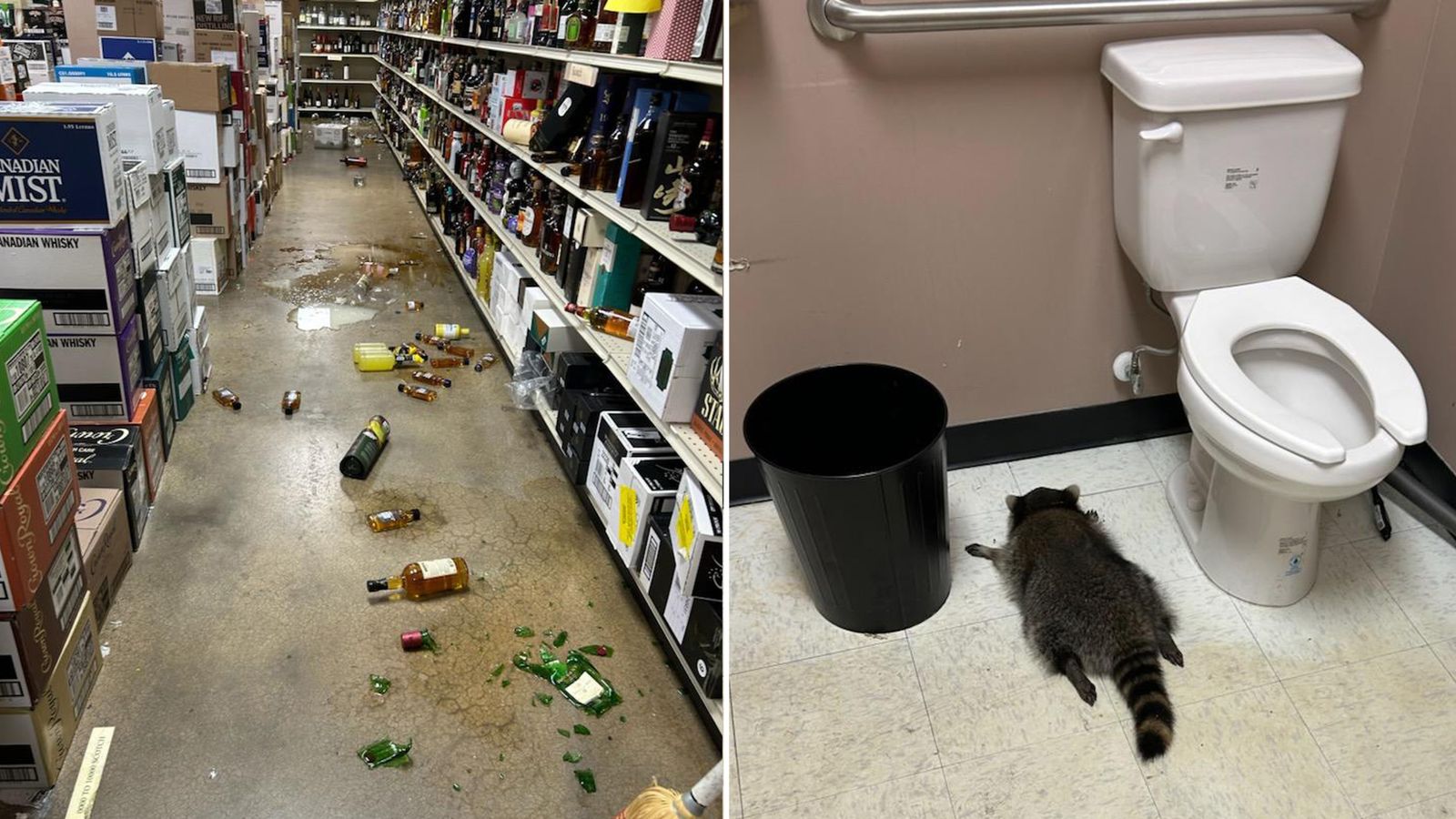
Spirit animal: Raccoon gets drunk as a skunk in a booze store – and sleeps off hangover in the toilet
-
 Sports2 years ago
Story injured on diving stop, exits Red Sox game
-
 Sports3 years ago
‘Storybook stuff’: Inside the night Bryce Harper sent the Phillies to the World Series
-
 Sports2 years ago
Game 1 of WS least-watched in recorded history
-
 Sports3 years ago
Button battles heat exhaustion in NASCAR debut
-
 Sports3 years ago
MLB Rank 2023: Ranking baseball’s top 100 players
-
Sports4 years ago
Team Europe easily wins 4th straight Laver Cup
-
 Environment3 years ago
Japan and South Korea have a lot at stake in a free and open South China Sea
-
 Environment1 year ago
Here are the best electric bikes you can buy at every price level in October 2024