
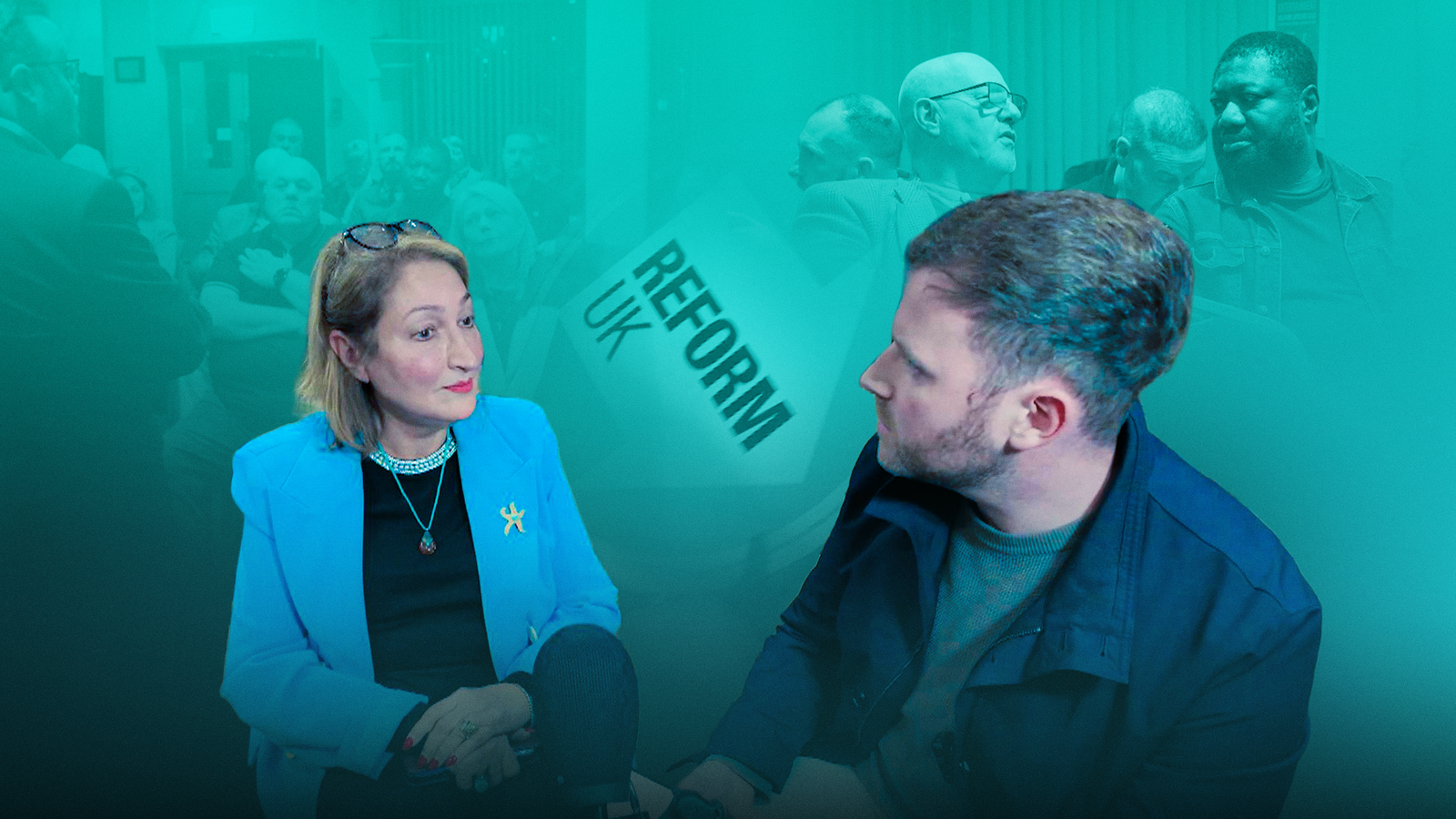
‘Put them in camps and deport them’: Sky News gets rare access inside Reform UK meeting

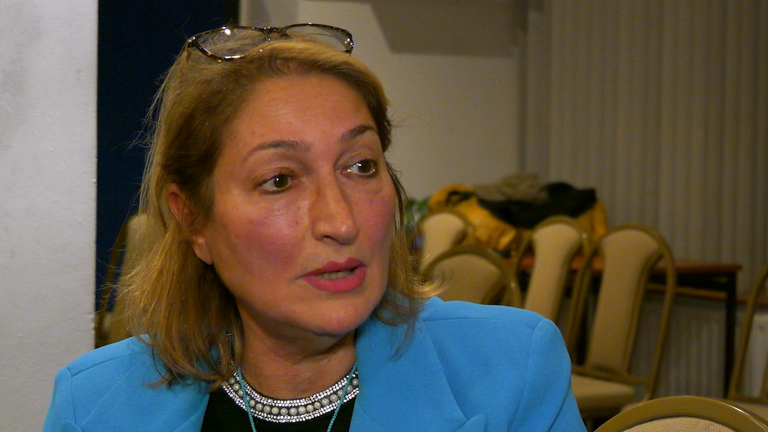
“Put them in camps and deport them.”
That is the view on illegal immigrants of Faten Hameed, who has passed the vetting stage and is now hoping to stand for Reform UK in next year’s Scottish parliamentary elections.
Ms Hameed, who moved to Scotland from Iraq 30 years ago, believes the country is now “drained” and says asylum seekers “shouldn’t be here”.
She is one of about 1,000 members of Reform’s branch in Glasgow, with the party attempting to come from nothing to become Holyrood’s second largest.
Faten Hameed says people in the UK illegally should be put in camps and deported
Reform rarely opens up, with the party often keeping events quiet and relying on encrypted WhatsApp groups to coordinate their efforts.
But we’ve been given exclusive access to a branch meeting inside a small bowling club.
The group’s discussion is raw and unfiltered.
‘Natives first’
Grant Caldwell didn’t mince his words.
“I am sick of the same old politics,” he said.
Asked what he wanted changed, he said: “I am more concerned about the social housing aspect from native people.
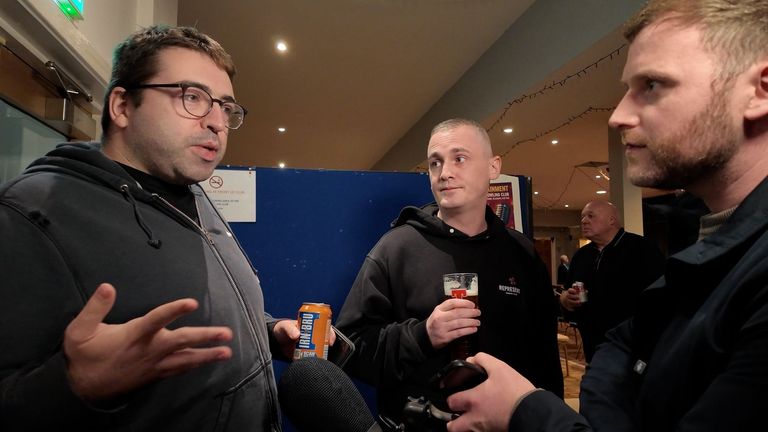
Niall (left) and Grant say homeless Scots should be prioritised for housing
“There is a lot of homeless Scots that aren’t getting a bed or a homeless accommodation – to suit the migrants.
“Natives first, I think.
“Obviously, I don’t mind helping people out, but we have to prioritise our own people first.”
Nodding along beside him is Niall.
A former UKIP member, he tells me Reform now feels like home.
We then meet Audrey Dempsey, who quit as a Labour councillor after being accused of making racist remarks.
She now represents Reform in Glasgow.
“If they [migrants] were arriving in the country, and they were fitting in with our culture and values and learning our way of life then that would be more than welcome,” she says.
Asked what she meant, Ms Dempsey says: “Well, instead of trying to inflict their culture on other people here like Sharia law. They are trying to bring that here.”
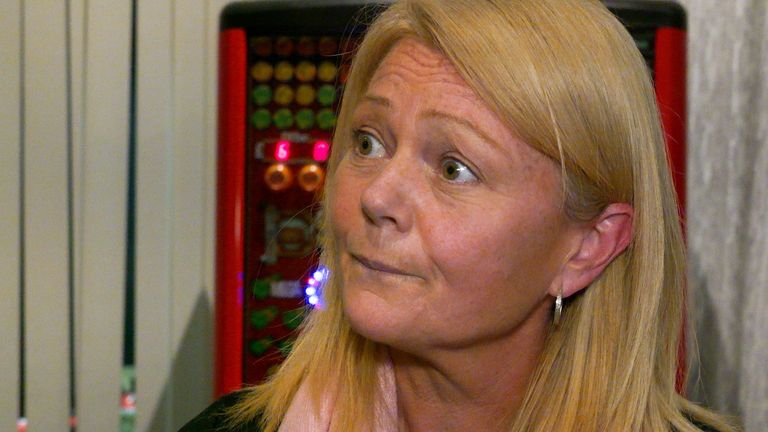
Audrey Dempsey quit as a Labour councillor
Questioned on who she believed was introducing Sharia law and where, she said: “The asylum seekers. Some of the asylum seekers. The legal migrants. Absolutely.
“Do you not have conversations in the street? You just have to take a walk through Glasgow city centre on any given day. I think by the line of questioning that you haven’t, if you are so shocked by this.”
Asked for evidence to substantiate her claims, Ms Dempsey said there was “stacks of evidence online”.
And questioned if she believed “they are coming to take over,” the Reform councillor said: “I don’t quite know what I believe at this moment.”
Ms Dempsey said there had been “too many” crimes involving asylum seekers in Glasgow, but was unable to provide any specific details “off the top of my head right now”.
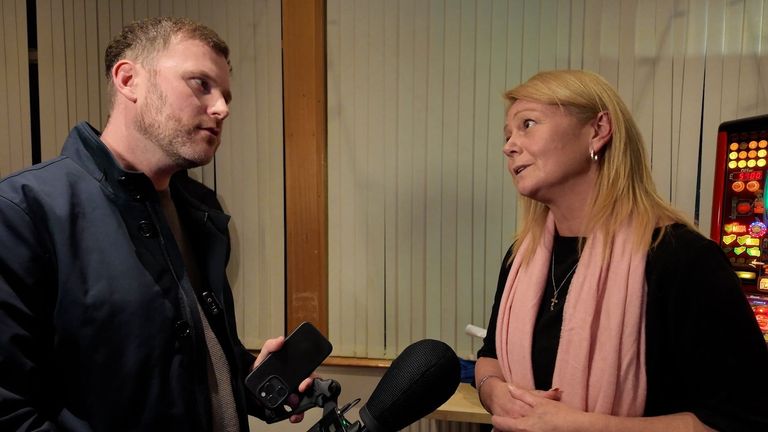
Audrey Dempsey says migrants need to ‘fit in with our culture’
‘It’s a fix’
At another table I am introduced to retiree Gordon Miller, who is now the treasurer of Reform’s Glasgow operation.
He accused the SNP of rigging the system when I told him polls suggested John Swinney’s party could win again and enter their third decade in power.
He said: “There is nothing like a bit of gerrymandering to make sure the constituencies fit your profiles.
“It has been a fix for donkey’s years, and the facts speak for themselves. They keep changing the borders so regularly.”
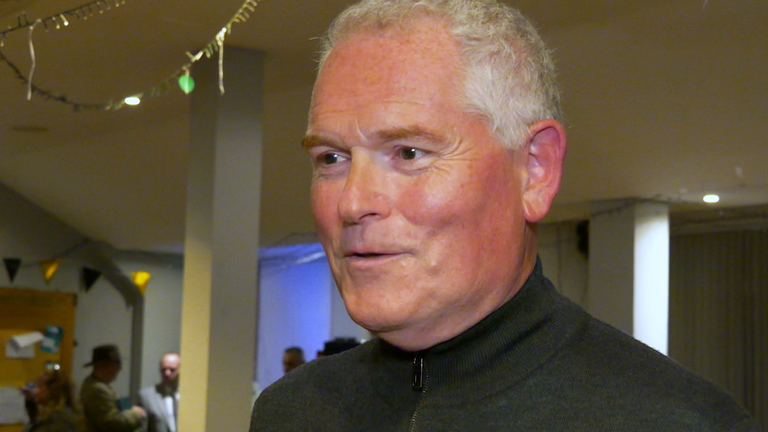
Gordon Miller claims Scottish boundaries are rigged
A review of changes to constituency boundaries has been submitted to Scottish ministers for approval.
Reform plans to stand a candidate in each Scottish constituency next May.
Those hoping to be successful are currently going through a vetting process and “assessment centres” and mock interviews.
One of those wannabe MSPs is Paul Bennie, an army veteran turned ambulance worker who joined Reform UK a year ago.
“Politics is bust,” he says. “We do need Reform. We need to change the way we do politics and change people’s futures for the better.”
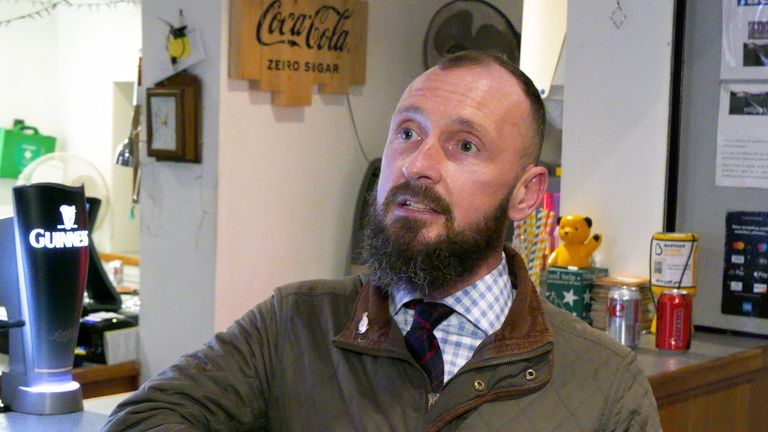
‘Politics is bust,’ says Paul Bennie
‘Put them in camps’
Ms Hameed has been part of three political parties since 2020.
She was once a Labour general election candidate before switching to the Conservatives and recently defected to Reform.
The Scottish Iraqi Association chairwoman has passed the official vetting stages to stand for Reform in May.
She tells us that immigration is one of her top two priorities.
Asked if Reform would deport anyone, she said: “For illegal immigration, yes. Put them in camps and deport them. They shouldn’t be here.”
Questioned on whether she was calling for the establishment of deportation camps in the UK, Ms Hameed said: “Why not? Other countries have done it.”
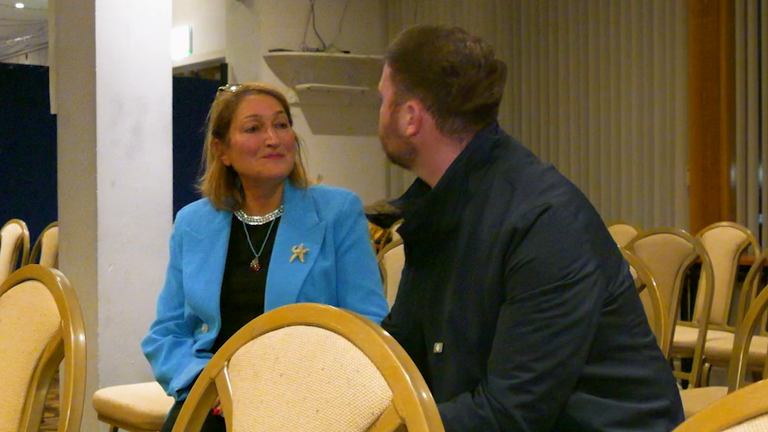
Faten Hameed recently defected to Reform and will stand as a candidate in May’s Scottish Parliament elections
When pushed on where camps should be set up, she said: “It is for the government to decide”.
“They would be in the UK as the boats are coming to us,” she says. “They are all seeking asylum. Why are they here? Why?”
She denied making policy up as she goes along, saying: “It’s not a matter of what is Reform policy, it is a matter of what is required. The country is drained.”
Reform a ‘serious competitor’ in Scotland
Britain’s leading polling expert, Professor Sir John Curtice, told Sky News there was a “very clear race” between Reform and Labour for second place in Scotland.
He said: “The rise of Reform is a remarkable story. They are a serious competitor for becoming the principal opposition party at Holyrood.”
A Survation poll in May suggested Nigel Farage’s party will beat the other unionist parties in 2026, although by September Labour had edged ahead by two points.
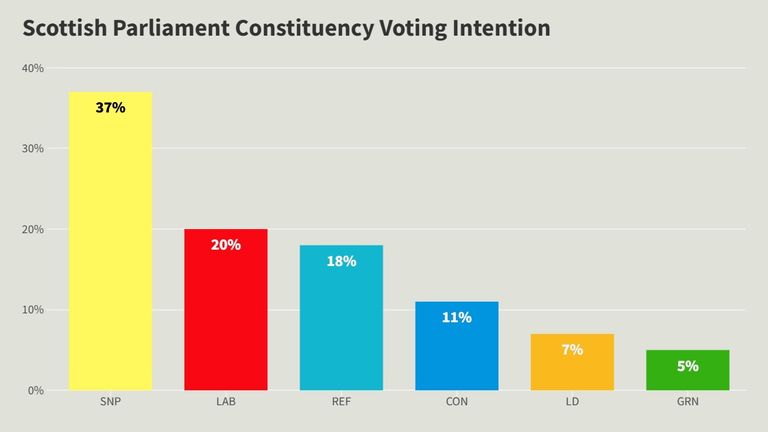
Survation polling from September
Mr Farage previously told me he would not be standing in the Holyrood election, and the party would have a bespoke leader north of the border.
Thomas Kerr, a Glasgow councillor who defected from the Conservatives to Reform in January, did not deny he would throw his hat in the ring to be the Scottish party chief.
He told us that the potential candidates we met going “off-script” was “problem we are working with”.
But he insisted vetting procedures have been strengthened and “every candidate we will see standing for Reform UK will be top-notch”.
Responding to the claims made in this report, SNP leader and First Minister John Swinney said he was “very concerned”.
“Sharia law is not taking over Scotland, and I find the idea of deportation camps just utterly repugnant,” he said.
“I think what you are sharing with me reinforces my view that the politics of Nigel Farage are repulsive, and Scotland should have nothing to do with it.”
The Reform UK party in London told Sky News it had nothing further to add in response to this report.
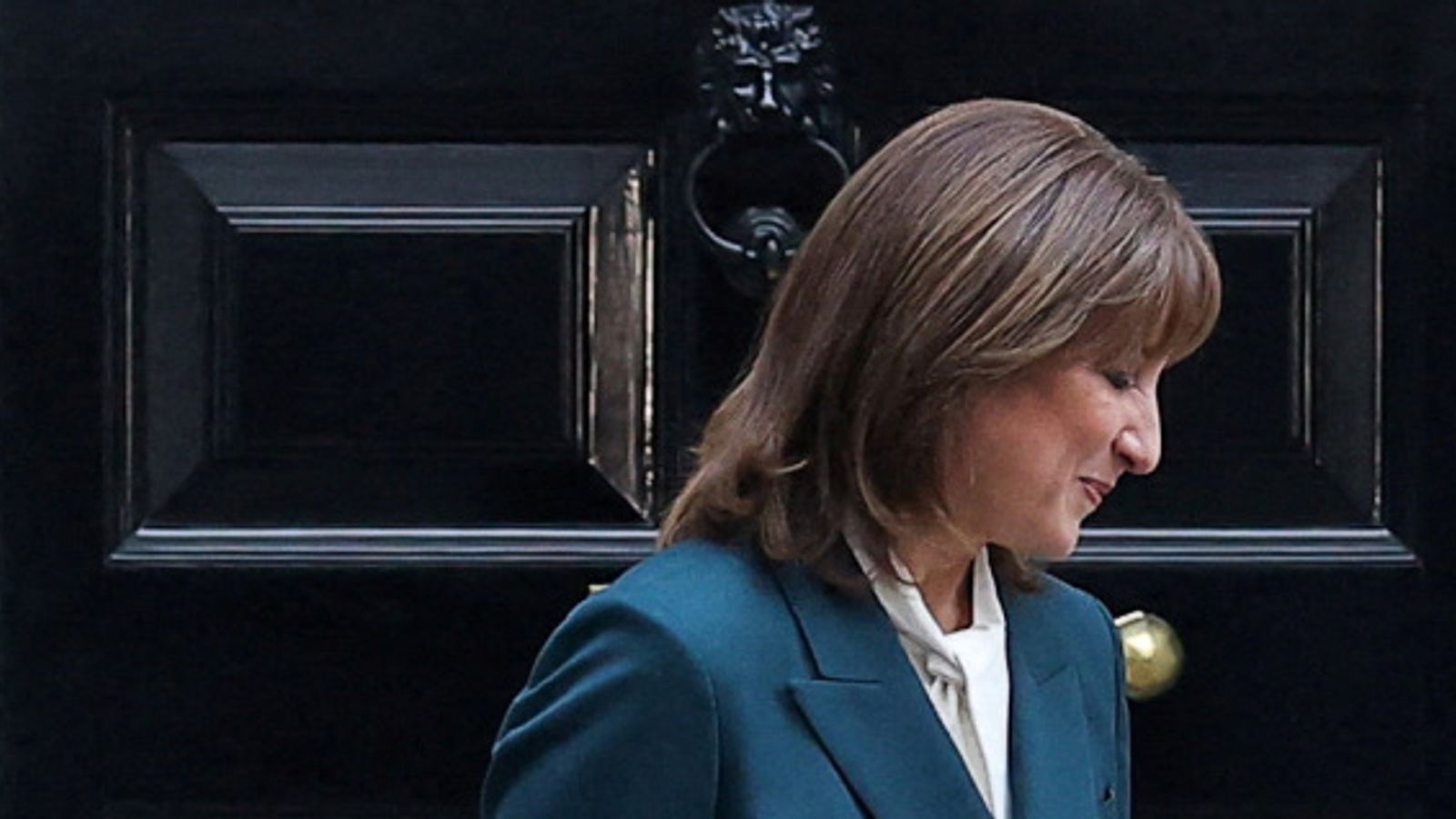
Chancellor Rachel Reeves has suffered another budget blow with a rebellion by rural Labour MPs over inheritance tax on farmers.
Speaking during the final day of the Commons debate on the budget, Labour backbenchers demanded a U-turn on the controversial proposals.
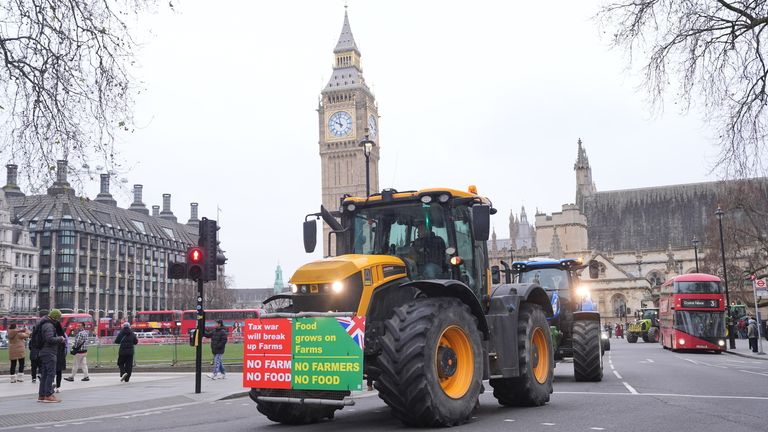
Plans to introduce a 20% tax on farm estates worth more than £1m from April have drawn protesters to London in their tens of thousands, with many fearing huge tax bills that would force small farms to sell up for good.
Farmers have staged numerous protests against the tax in Westminster. Pic: PA
MPs voted on the so-called “family farms tax” just after 8pm on Tuesday, with dozens of Labour MPs appearing to have abstained, and one backbencher – borders MP Markus Campbell-Savours – voting against, alongside Conservative members.
In the vote, the fifth out of seven at the end of the budget debate, Labour’s vote slumped from 371 in the first vote on tax changes, down by 44 votes to 327.
‘Time to stand up for farmers’
The mini-mutiny followed a plea to Labour MPs from the National Farmers Union to abstain.
“To Labour MPs: We ask you to abstain on Budget Resolution 50,” the NFU urged.
“With your help, we can show the government there is still time to get it right on the family farm tax. A policy with such cruel human costs demands change. Now is the time to stand up for the farmers you represent.”
After the vote, NFU president Tom Bradshaw said: “The MPs who have shown their support are the rural representatives of the Labour Party. They represent the working people of the countryside and have spoken up on behalf of their constituents.
“It is vital that the chancellor and prime minister listen to the clear message they have delivered this evening. The next step in the fight against the family farm tax is removing the impact of this unjust and unfair policy on the most vulnerable members of our community.”
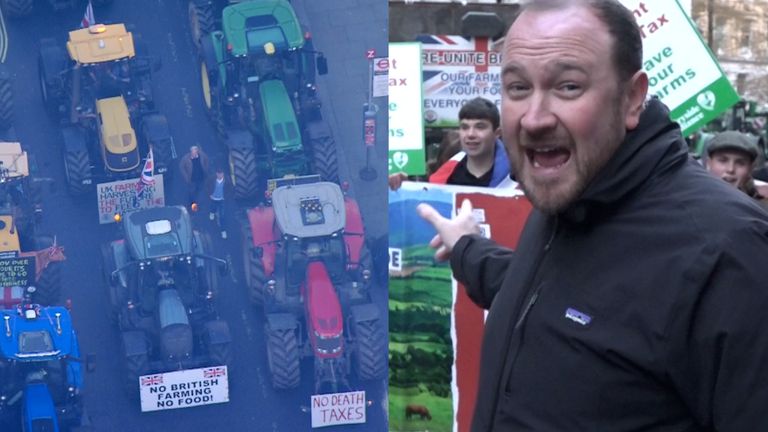
Farmers defy police ban in budget day protest in Westminster.
The government comfortably won the vote by 327-182, a majority of 145. But the mini-mutiny served notice to the chancellor and Sir Keir Starmer that newly elected Labour MPs from the shires are prepared to rebel.
Speaking in the debate earlier, Mr Campbell-Savours said: “There remain deep concerns about the proposed changes to agricultural property relief (APR).
“Changes which leave many, not least elderly farmers, yet to make arrangements to transfer assets, devastated at the impact on their family farms.”
Samantha Niblett, Labour MP for South Derbyshire abstained after telling MPs: “I do plead with the government to look again at APR inheritance tax.
“Most farmers are not wealthy land barons, they live hand to mouth on tiny, sometimes non-existent profit margins. Many were explicitly advised not to hand over their farm to children, (but) now face enormous, unexpected tax bills.
“We must acknowledge a difficult truth: we have lost the trust of our farmers, and they deserve our utmost respect, our honesty and our unwavering support.”

UK ‘criminally’ unprepared to feed itself in crisis, says farmers’ union.
Labour MPs from rural constituencies who did not vote included Tonia Antoniazzi (Gower), Julia Buckley (Shrewsbury), Jonathan Davies (Mid Derbyshire), Maya Ellis (Ribble Valley), and Anna Gelderd (South East Cornwall), Ben Goldsborough (South Norfolk), Alison Hume (Scarborough and Whitby), Terry Jermy (South West Norfolk), Jayne Kirkham (Truro and Falmouth), Noah Law (St Austell and Newquay), Perran Moon, (Camborne and Redruth), Samantha Niblett (South Derbyshire), Jenny Riddell-Carpenter (Suffolk Coastal), Henry Tufnell (Mid and South Pembrokeshire), John Whitby (Derbyshire Dales) and Steve Witherden (Montgomeryshire and Glyndwr).

The UK has passed a bill into law that treats digital assets, such as cryptocurrencies and stablecoins, as property, which advocates say will better protect crypto users.
Lord Speaker John McFall announced in the House of Lords on Tuesday that the Property (Digital Assets etc) Bill was given royal assent, meaning King Charles agreed to make the bill into an Act of Parliament and passed it into law.
Freddie New, policy chief at advocacy group Bitcoin Policy UK, said on X that the bill “becoming law is a massive step forward for Bitcoin in the United Kingdom and for everyone who holds and uses it here.”

Common law in the UK, based on judges’ decisions, has established that digital assets are property, but the bill sought to codify a recommendation made by the Law Commission of England and Wales in 2024 that crypto be categorized as a new form of personal property for clarity.
“UK courts have already treated digital assets as property, but that was all through case-by-case judgments,” said the advocacy group CryptoUK. “Parliament has now written this principle into law.”
“This gives digital assets a much clearer legal footing — especially for things like proving ownership, recovering stolen assets, and handling them in insolvency or estate cases,” it added.
Digital “things” now considered personal property
CryptoUK said that the bill confirms “that digital or electronic ‘things’ can be objects of personal property rights.”
UK law categorizes personal property in two ways: a “thing in possession,” which is tangible property such as a car, and and a “thing in action,” intangible property, like the right to enforce a contract.
The bill clarifies that “a thing that is digital or electronic in nature” isn’t outside the realm of personal property rights just because it is neither a “thing in possession” nor a “thing in action.”
The Law Commission argued in its report in 2024 that digital assets can possess both qualities, and said that their unclear fit into property rights laws could hamstring dispute resolutions in court.
Related: Group of EU banks pushes for a euro-pegged stablecoin by 2027
Change gives “greater clarity” to crypto users
CryptoUK said on X that the law gives “greater clarity and protection for consumers and investors” and gives crypto holders “the same confidence and certainty they expect with other forms of property.”
“Digital assets can be clearly owned, recovered in cases of theft or fraud, and included within insolvency and estate processes,” it added.
The group added that the UK now has a “clear legal basis for ownership and transfer” of crypto and the country would now be “better positioned to support the growth of new financial products, tokenised real-world assets, and more secure digital markets.”
The country’s finance authority reported late last year that roughly 12% of UK adults own cryptocurrency, up from 10% in its previous findings.
The UK also revealed plans for a crypto regulatory regime in April that would bring crypto businesses under similar rules to other finance companies, aiming to make the country a global hub for crypto while promoting consumer protections.
Magazine: 2026 is the year of pragmatic privacy in crypto — Canton, Zcash and more

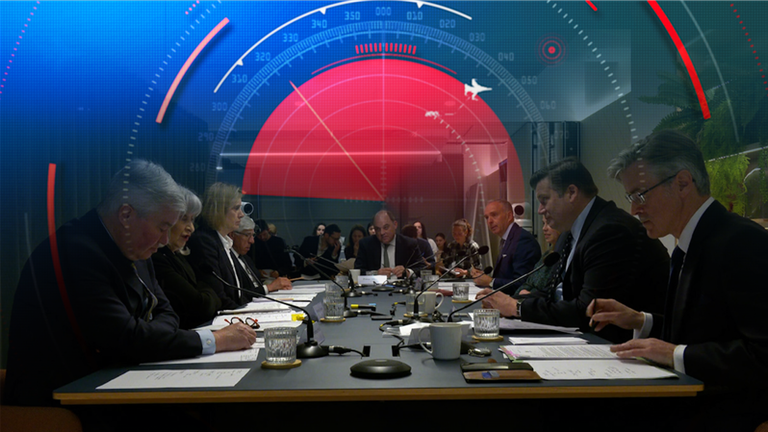
The UK is “really unprepared” to fight a war and has been living on a “mirage” of military strength that was shocking to discover, interviews with almost every defence secretary since the end of the Cold War have revealed.
With Sir Keir Starmer under pressure to accelerate plans to reverse the decline, two new episodes of Sky News and Tortoise’s podcast series The Wargame uncover what happened behind the scenes as Britain switched funding away from warfare and into peacetime priorities such as health and welfare after the Soviet Union collapsed.
👉Search for The Wargame on your podcast app👈
This decades-long saga, spanning multiple Labour, Conservative and coalition governments, includes heated rows between the Ministry of Defence (MoD) and the Treasury, threats to resign, and dire warnings of weakness.
It also exposes a failure by the military and civil service to spend Britain’s still-significant defence budget effectively, further compounding the erosion of fighting power.
The Wargame: Behind the scenes
‘Russia knew’ about UK’s weaknesses
Now, with the threat from Russia returning, there is a concern the UK has been left to bluff about its ability to respond, rather than pivot decisively back to a war footing.
“We’ve been living on a sort of mirage for so long,” says Sir Ben Wallace, a Conservative defence secretary from 2019 until 2023.
“As long as Trooping the Colour was happening, and the Red Arrows flew, and prime ministers could pose at NATO, everything was fine.
“But it wasn’t fine. And the people who knew it wasn’t fine were actually the Americans, but also the Russians.”

Not enough troops, medics, or ammo
Lord George Robertson, a Labour defence secretary from 1997 to 1999 and the lead author of a major defence review this year, says when he most recently “lifted the bonnet” to look at the state of the Army, Royal Navy and Royal Air Force, he found “we were really unprepared”.
“We don’t have enough ammunition, we don’t have enough logistics, we don’t have enough trained soldiers, the training is not right, and we don’t have enough medics to take the casualties that would be involved in a full-scale war.”
Asked if the situation was worse than he had imagined, Lord Robertson says: “Much worse.”
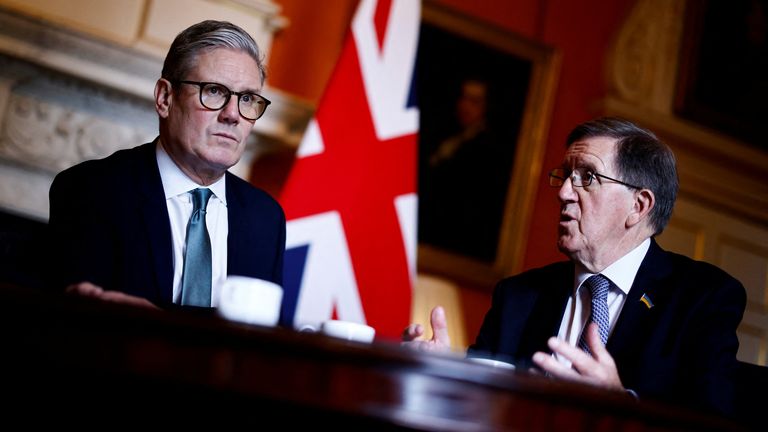
Robertson meets the PM after last year’s election. Pic: Reuters
‘I was shocked,’ says ex-defence secretary
Sir Gavin Williamson, a former Conservative defence secretary, says he too had been “quite shocked as to how thin things were” when he was in charge at the MoD between 2017 and 2019.
“There was this sort of sense of: ‘Oh, the MoD is always good for a billion [pounds] from Treasury – you can always take a billion out of the MoD and nothing will really change.’
“And maybe that had been the case in the past, but the cupboards were really bare.
“You were just taking the cupboards.”
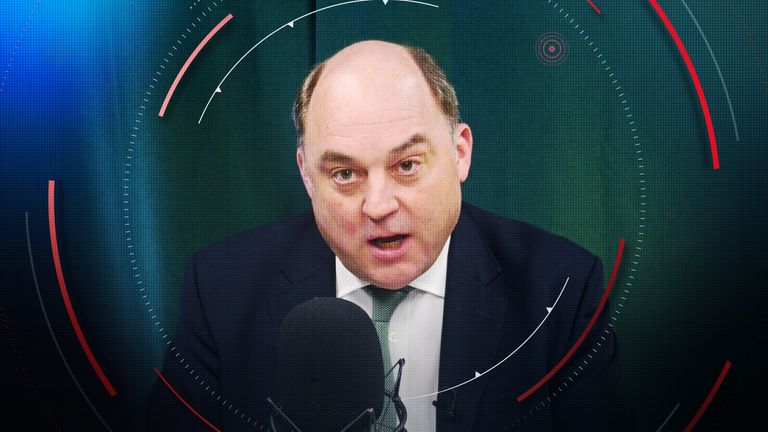
Ben Wallace on role as PM in ‘The Wargame’
But Lord Philip Hammond, a Conservative defence secretary from 2011 to 2014 and chancellor from 2016 until 2019, appears less sympathetic to the cries for increased cash.
“Gavin Williamson came in [to the Ministry of Defence], the military polished up their bleeding stumps as best they could and convinced him that the UK’s defence capability was about to collapse,” he says.
“He came scuttling across the road to Downing Street to say, I need billions of pounds more money… To be honest, I didn’t think that he had sufficiently interrogated the military begging bowls that had been presented to him.”
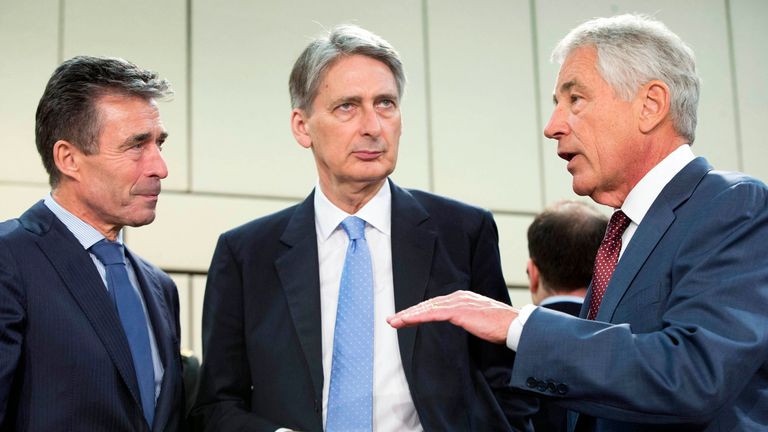
Hammond at a 2014 NATO meeting. Pic: Reuters
What to expect from The Wargame’s return
Episodes one to five of The Wargame simulate a Russian attack on the UK and imagine what might happen, with former politicians and military chiefs back in the hot seat.
The drama reveals how vulnerable the country has really become to an attack on the home front.
The two new episodes seek to find out why.
The story of the UK’s hollowed-out defences starts in a different era when an Iron Curtain divided Europe, Ronald Reagan was president of the US, and an Iron Lady was in power in Britain.
Sir Malcolm Rifkind, who went on to serve as defence secretary between 1992 and 1995 under John Major, recalls his time as minister for state at the Foreign Office in 1984.
In December of that year, then prime minister Margaret Thatcher agreed to host a relatively unknown member of the Soviet Communist Party Politburo called Mikhail Gorbachev, who subsequently became the last leader of the Soviet Union.
Sir Malcolm remembers how Mrs Thatcher emerged from the meeting to say: “I think Mr Gorbachev is a man with whom we can do business.”
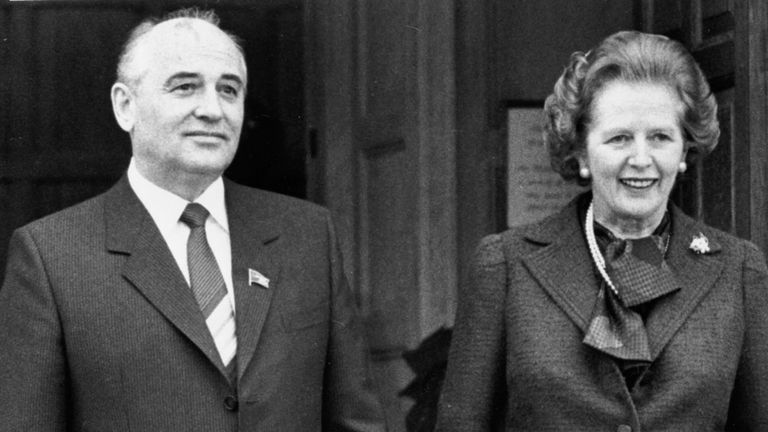
Gorbachev was hosted at Chequers in 1984. Pic: Reuters
It was an opinion she shared with her close ally, the US president.
Sir Malcolm says: “Reagan would have said, ‘I’m not going to speak to some unknown communist in the Politburo’. But if the Iron Lady, who Reagan thought very highly of, says he’s worth talking to, he must be worth it. We’d better get in touch with this guy. Which they did.
“And I’m oversimplifying it, but that led to the Cold War ending without a shot being fired.”
Read more from Sky News:
Courts in ‘calamitous’ state
Reeves faces rural Labour rebellion
In the years that followed, the UK and much of the rest of Europe reaped a so-called peace dividend, cutting defence budgets, shrinking militaries and reducing wider readiness for war.
Into this different era stepped Tony Blair as Labour’s first post-Cold War prime minister, with Lord Robertson as his defence secretary.
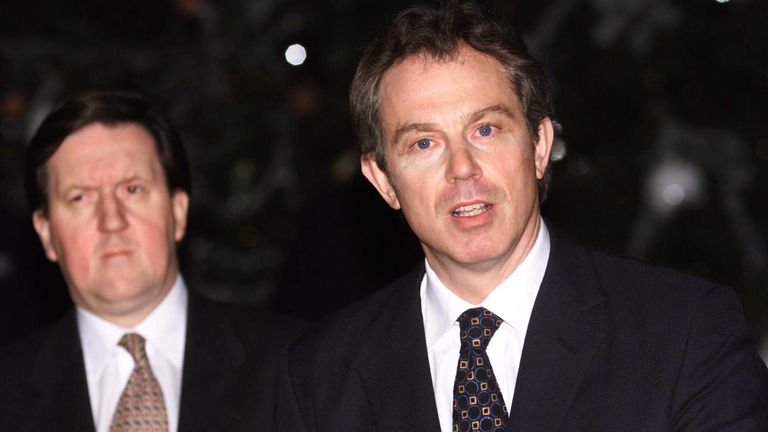
Robertson and Blair in 1998. Pic: Reuters
Lord Robertson reveals the threat he and his ministerial team secretly made to protect their budget from then chancellor Gordon Brown amid a sweeping review of defence, which was meant to be shaped by foreign policy, not financial envelopes.
“I don’t think I’ve ever said this in public before, but John Reid, who was the minister for the Armed Forces, and John Speller, who was one of the junior ministers in the department, the three of us went to see Tony Blair late at night – he was wearing a tracksuit, we always remember – and we said that if the money was taken out of our budget, the budget that was based on the foreign policy baseline, then we would have to resign,” Lord Robertson says.
“We obviously didn’t resign – but we kept the money.”
The podcast hears from three other Labour defence secretaries: Geoff Hoon, Lord John Hutton and the current incumbent, John Healey.
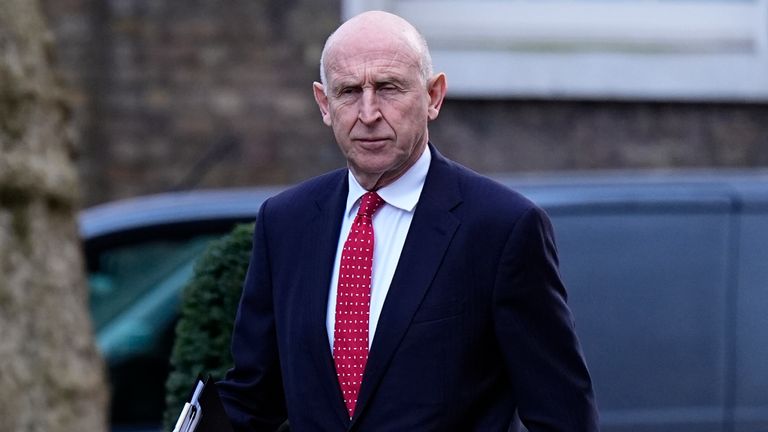
John Healey, the current defence secretary. Pic: PA
For the Conservatives, as well as Rifkind, Hammond, Williamson and Wallace, there are interviews with Liam Fox, Sir Michael Fallon, Dame Penny Mordaunt and Sir Grant Shapps.
In addition, military commanders have their say, with recollections from Field Marshal Lord David Richards, who was chief of the defence staff from 2010 until 2013, General Sir Nick Carter, who led the armed forces from 2018 until 2021, and Vice Admiral Sir Nick Hine, who was second in charge of the navy from 2019 until 2022.

‘We cut too far’
At one point, Sir Grant, who held a variety of cabinet roles, including defence secretary, is asked whether he regrets the decisions the Conservative government took when in power.
He says: “Yes, I think it did cut defence too far. I mean, I’ll just be completely black and white about it.”
Lord Robertson says Labour too shares some responsibility: “Everyone took the peace dividend right through.”
-
 Sports2 years ago
Story injured on diving stop, exits Red Sox game
-
 Sports3 years ago
‘Storybook stuff’: Inside the night Bryce Harper sent the Phillies to the World Series
-
 Sports2 years ago
Game 1 of WS least-watched in recorded history
-
 Sports3 years ago
Button battles heat exhaustion in NASCAR debut
-
 Sports3 years ago
MLB Rank 2023: Ranking baseball’s top 100 players
-
Sports4 years ago
Team Europe easily wins 4th straight Laver Cup
-
 Environment3 years ago
Japan and South Korea have a lot at stake in a free and open South China Sea
-
 Environment1 year ago
Here are the best electric bikes you can buy at every price level in October 2024