

Tories and Reform: From feud to love-in?

The US Commodity Futures Trading Commission has given approval for spot cryptocurrency products to trade on federally regulated futures exchanges.
In a Thursday notice, Acting CFTC Chair Caroline Pham said the move was in response to policy directives from US President Donald Trump. She added that the approval followed recommendations by the President’s Working Group on Digital Asset Markets, engagement with the US Securities and Exchange Commission and consultations from the CFTC’s “Crypto Sprint” initiative.
“[F]or the first time ever, spot crypto can trade on CFTC-registered exchanges that have been the gold standard for nearly a hundred years, with the customer protections and market integrity that Americans deserve,” said Pham.

Pham, who became acting CFTC chair in January amid Trump’s taking office, is expected to step down once the US Senate confirms a replacement. The nomination of Michael Selig, an SEC official whom Trump nominated to chair the CFTC, is expected to head to the Senate floor for a vote soon after moving out of committee.
Related: Acting CFTC chair seeks CEOs for ‘innovation council,’ citing crypto policy
One of the derivatives exchanges poised to be among the first to begin enacting trading is Bitnomial, which scheduled its launch for next week. The exchange is authorized to operate under the CFTC as a Designated Contract Market, which Coinbase also obtained in 2020.
Awaiting market structure, new leadership at CFTC
In addition to Selig’s nomination under consideration in the Senate, the CFTC has four empty commissioner seats on its leadership. As of Thursday, Trump had not announced any potential replacements for the regulator.
Also expected soon is for US senators to advance a digital asset market structure bill, legislation expected to lay out clear regulatory roles for the CFTC and SEC over cryptocurrencies. Discussion drafts of possible frameworks would give the CFTC more authority to regulate digital assets.
Magazine: When privacy and AML laws conflict: Crypto projects’ impossible choice
Politics
Soaring demand for mental health, ADHD and autism services to be reviewed after ‘overdiagnosis’ claim

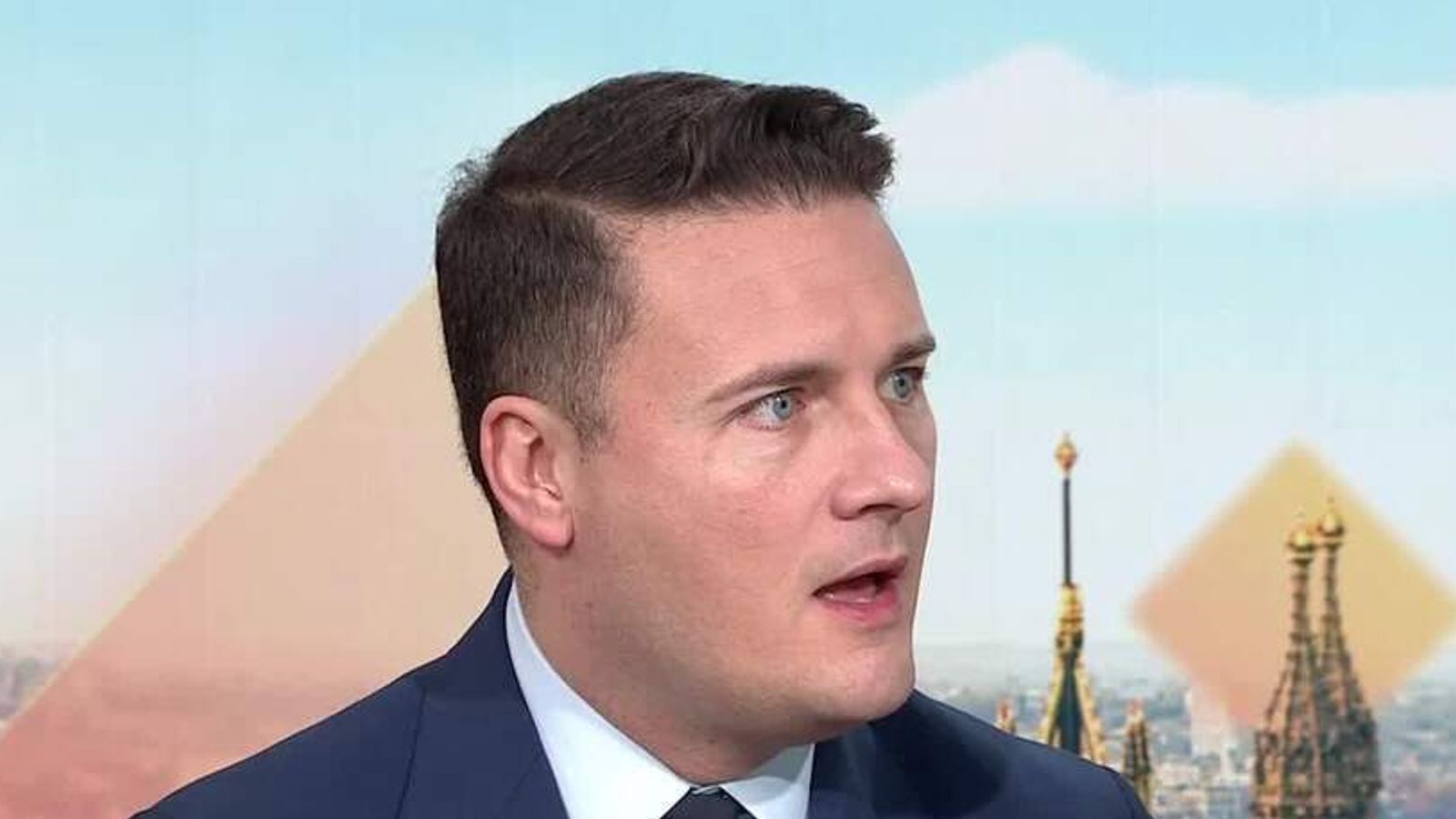

A review into the rising demand for mental health, ADHD and autism services has been launched by the health secretary.
The independent review will look at rates of diagnosis, and the support offered to people.
Health Secretary Wes Streeting said the issue needs to be looked at through a “strictly clinical lens” after he claimed in March that there had been an “overdiagnosis” of mental health conditions, with “too many people being written off”.
Politics latest: Reform receives largest ever UK donation from living person
Mental health conditions are being more commonly reported among the working-age population, figures analysed by the Institute for Fiscal Studies found.
More than half of the increase in 16 to 64-year-olds claiming disability benefits since the pandemic is due to more claims relating to mental health or behavioural conditions.
A total of 1.3 million people claim disability benefits – 44% of all claimants – primarily for mental health or behavioural conditions, the analysis shows.
The review will be led by leading clinical psychologist Professor Peter Fonagy, the national clinical adviser on children and young people’s mental health, who will work with academics, doctors, epidemiological experts, charities and parents.
He will look at what is driving the rising demand for services, and inequalities in accessing support.
Govt orders review into ADHD rise
The Department of Health said 13 times more people were waiting for an autism assessment in September 2025 compared with April 2019.
There is £688m in extra funding going towards hiring 8,500 more mental health workers so the NHS can expand on talking therapies and increase the number of mental health emergency departments.
Mr Streeting said: “I know from personal experience how devastating it can be for people who face poor mental health, have ADHD or autism, and can’t get a diagnosis or the right support.
“I also know, from speaking to clinicians, how the diagnosis of these conditions is sharply rising.
“We must look at this through a strictly clinical lens to get an evidence-based understanding of what we know, what we don’t know, and what these patterns tell us about our mental health system, autism and ADHD services.
“That’s the only way we can ensure everyone gets timely access to accurate diagnosis and effective support.”
Read more:
Tory-Reform pact talks ‘not happening’, says Tice
Reeves hit by rural Labour MP rebellion

ADHD is changing the world of work
Prof Fonagy said: “This review will only be worthwhile if it is built on solid ground. We will examine the evidence with care to understand, in a grounded way, what is driving rising demand.
“My aim is to test assumptions rigorously, and listen closely to those most affected, so that our recommendations are both honest and genuinely useful.”
The findings will be published next summer.
-
 Sports2 years ago
Story injured on diving stop, exits Red Sox game
-
 Sports3 years ago
‘Storybook stuff’: Inside the night Bryce Harper sent the Phillies to the World Series
-
 Sports2 years ago
Game 1 of WS least-watched in recorded history
-
 Sports3 years ago
Button battles heat exhaustion in NASCAR debut
-
 Sports3 years ago
MLB Rank 2023: Ranking baseball’s top 100 players
-
Sports4 years ago
Team Europe easily wins 4th straight Laver Cup
-
 Environment3 years ago
Japan and South Korea have a lot at stake in a free and open South China Sea
-
 Environment1 year ago
Here are the best electric bikes you can buy at every price level in October 2024