

Hydrogen Mafia: Toyota faces $5.7 billion RICO lawsuit

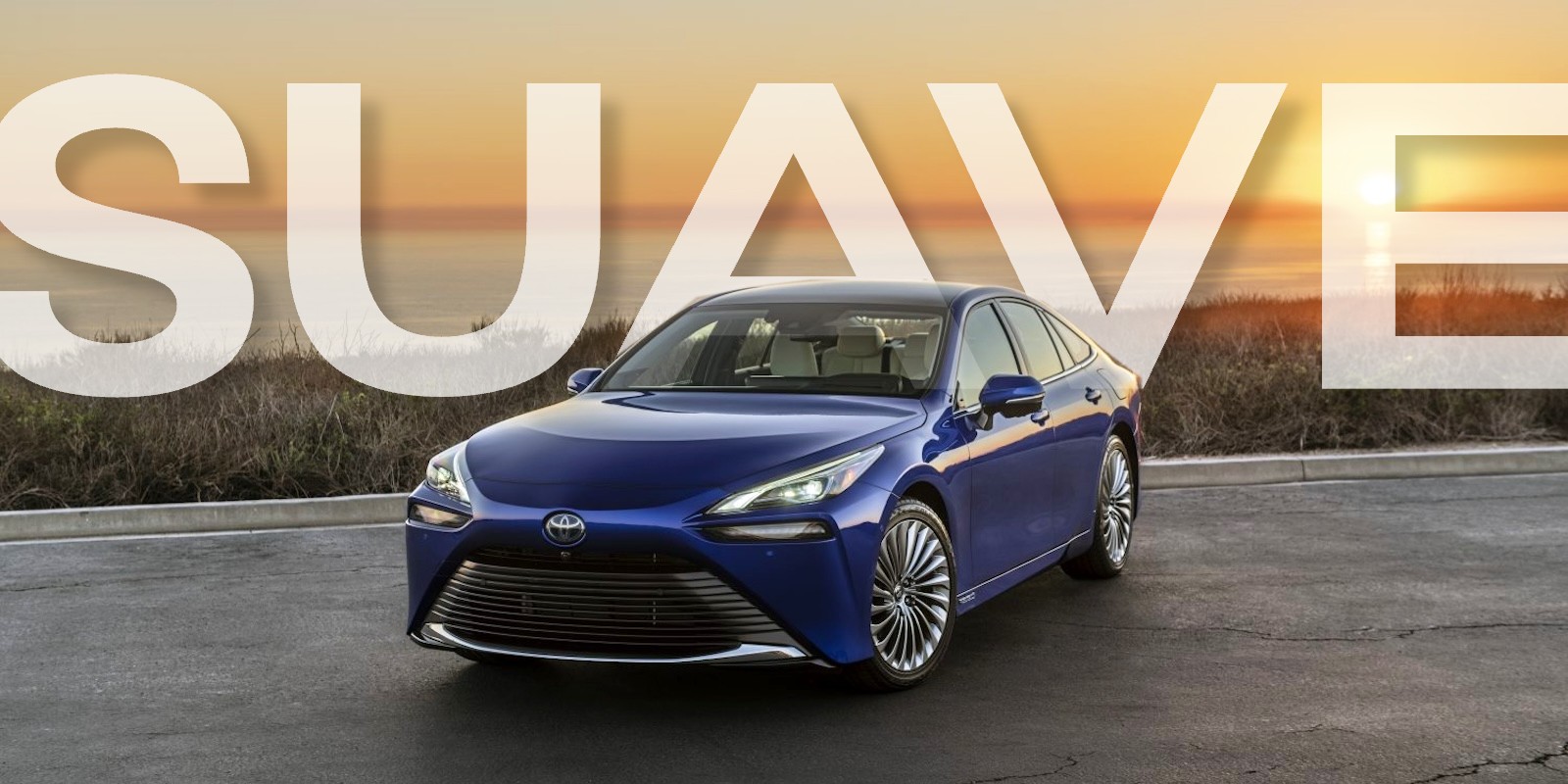
A $5.7B lawsuit filed in Federal court alleges that Toyota operated what amounts an organized, fraudulent enterprise that intentionally concealed known, catastrophic safety defects associated with their hydrogen fuel cell-powered Toyota Mirai sedans.
Originally passed as part of the Organized Crime Control Act of 1970, the Racketeer Influenced and Corrupt Organizations (RICO) Act is designed to help prosecutors go after people or companies that commit a pattern of crimes as part of an ongoing organization or enterprise — like the Mafia (which doesn’t exist), or large-scale fraud operations at a corporation.
That RICO statute is now at the center of a new case against Toyota. In it, the plaintiff’s attorneys argue that Toyota knowingly engaged in a decade of fraud surrounding the hydrogen fuel cell-powered MIrai sedan that jeopardized public safety and breached the terms of a previous DOJ settlement.
The case, filed by Jason M. Ingber, lead attorney for the plaintiffs in the US District Court for the Central District of California, is a 142-page RICO complaint alleging that Toyota, its financing arm, and its California dealerships coordinated conspired to market and finance HFCEVs that technicians allegedly referred to as, “ticking hydrogen bombs.”
“This lawsuit isn’t about a simple defect, it’s about organized fraud,” argues Mr. Ingber. “Toyota engineered, financed, and controlled California’s hydrogen network, then used that control to hide safety failures and financial harm to consumers.”
According to the complaint, Toyota and its hydrogen partner, FirstElement Fuel (True Zero), intentionally concealed evidence of:
- hydrogen leaks near hot engine components, creating explosion risks
- sudden power loss, acceleration, and braking failures leading to collisions and injuries
- a collapsing hydrogen infrastructure, leaving drivers stranded for weeks without access to fuel
- aggressive financial collection tactics by Toyota Motor Credit Corporation, targeting owners of inoperable vehicles.
The suit further argues that Toyota’s concealment of these facts violates a 2014 Deferred Prosecution Agreement with the US Department of Justice (DOJ), in which the company admitted to concealing safety defects surrounding the highly publicized incidents of unintended-acceleration and agreed to report all (emphasis mine) future safety issues truthfully.
Ingber is seeking treble damages for the class, injunctive relief, and a federal order halting Toyota’s hydrogen enterprise, citing a continuing pattern of mail and wire fraud.
“Toyota built its reputation on trust,” Ingber said, in a statement. “Our case will show how that trust is violated and why consumers deserve accountability now.”
The case is titled Aminah Kamran et al. v. Toyota Motor Corporation et al., and is docketed as Case No. 2:25-cv-09542.
Electrek’s Jo’s Take
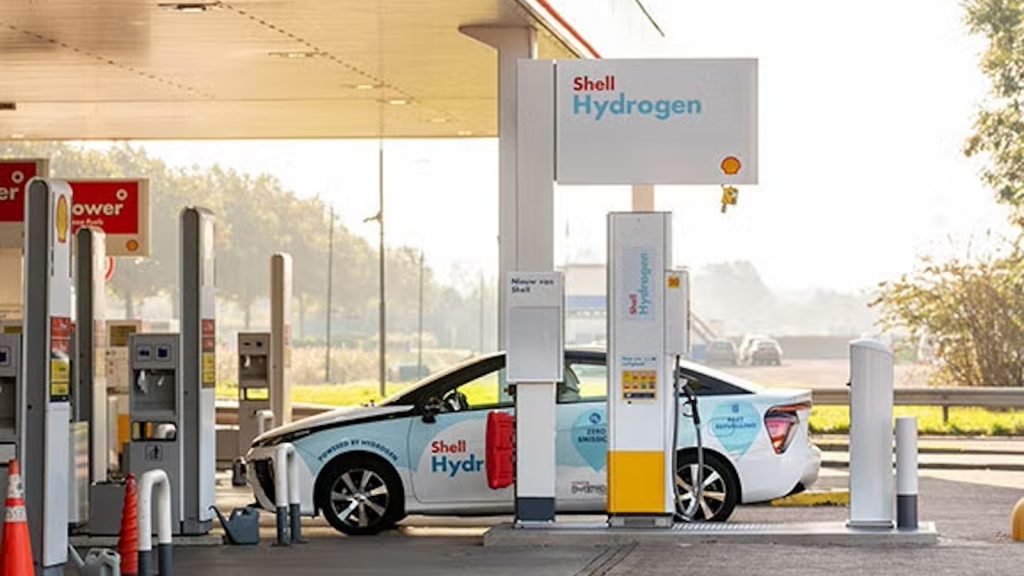
Despite the ebb and flow of media chatter about hydrogen fuel, the simple fact is that America’s hydrogen infrastructure isn’t, and what little infrastructure we did have took a hit last January, when Shell abruptly closed its publicly-accessible charging stations. That left precious few open and operational hydrogen stations available for public use – and the ones that are open don’t seem to be reliable, with Car Complaints reporting that Toyota Mirai owners say they can’t find working hydrogen refueling stations while others complained they had to park their cars for weeks because they couldn’t find hydrogen.
As a result, with supply issues impacting the few stations that are still available (see the DOE’s Alternative Fuels Data Center map, below), it’s tough to argue that Mirai buyers may not have gotten what they were expecting – regardless of the killer, 50% off plus $15,000 in free hydrogen fuel deals that were being offered.
Loading alternative fueling station locator…
SOURCE | IMAGES: CBS News, via CarScoops; Car Complaints.

If you’re considering going solar, it’s always a good idea to get quotes from a few installers. To make sure you find a trusted, reliable solar installer near you that offers competitive pricing, check out EnergySage, a free service that makes it easy for you to go solar. It has hundreds of pre-vetted solar installers competing for your business, ensuring you get high-quality solutions and save 20-30% compared to going it alone. Plus, it’s free to use, and you won’t get sales calls until you select an installer and share your phone number with them.
Your personalized solar quotes are easy to compare online and you’ll get access to unbiased Energy Advisors to help you every step of the way. Get started here.


FTC: We use income earning auto affiliate links. More.

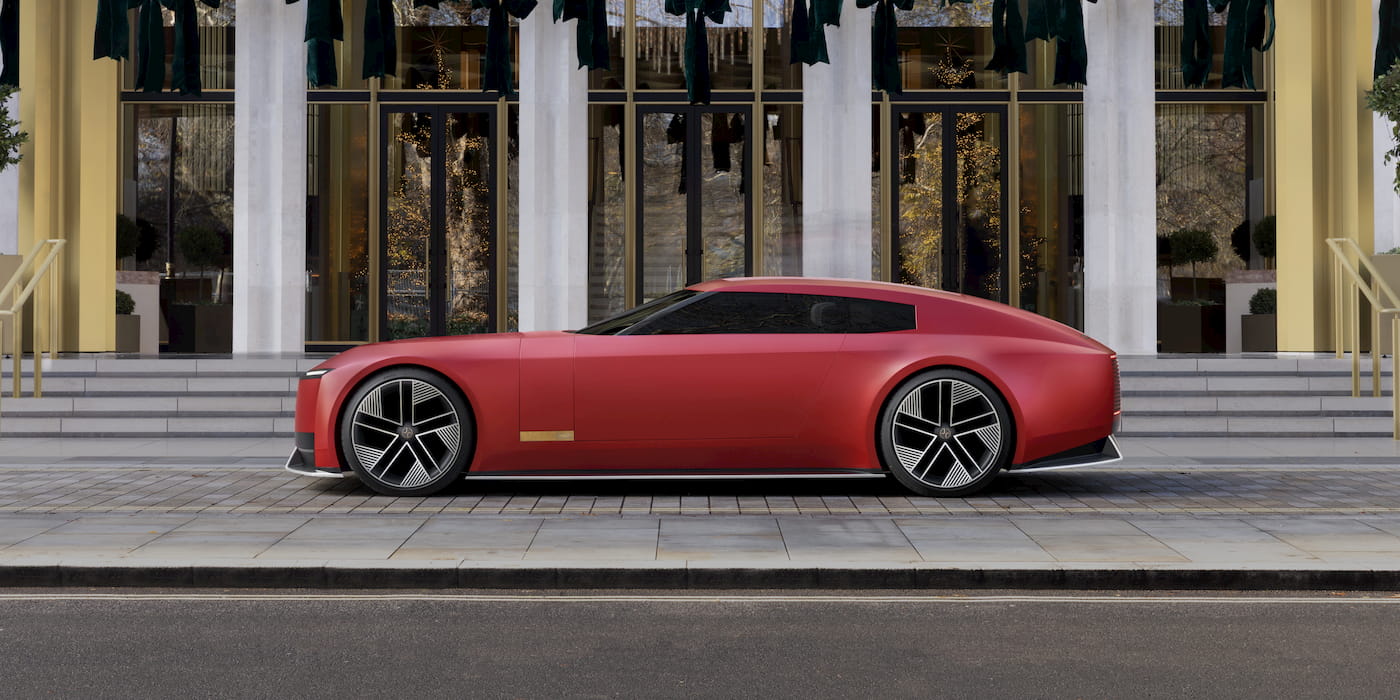
The man behind Jaguar’s radical new EV design, Gerry McGovern, was reportedly fired this week and “escorted out of the office.”
Jaguar design boss who led controversial EV was fired
After unveiling the Type 00 last year, an ultra-luxury two-door EV concept, and what Jaguar claimed to be a preview of its new design, the struggling British automaker almost broke the internet.
The radical, chunky-looking concept came under heavy fire online with comparisons to the Pink Panther and Barbie’s dream car.
Even Tesla’s CEO, Elon Musk, and EV maker Lucid Motors poked fun at the controversial concept. Musk responded to Jaguar’s post on X last year, “Do you sell cars?” mocking its bold attempt at a rebrand.
Jaguar describes the Type 00 as “an indicator of design philosophy and intent for the coming new vehicles.” The concept not only looks like it was created with Grok or some other AI, but it’s also expected to be pretty pricey.

During an interview with The Sunday Times last year, former CEO Adrian Mardell said Jaguar’s new luxury EV lineup would likely be priced around £150,000, or nearly $200,000.
According to sources from inside the company, Jaguar’s chief creative officer, Gerry McGovern, was fired on Monday.
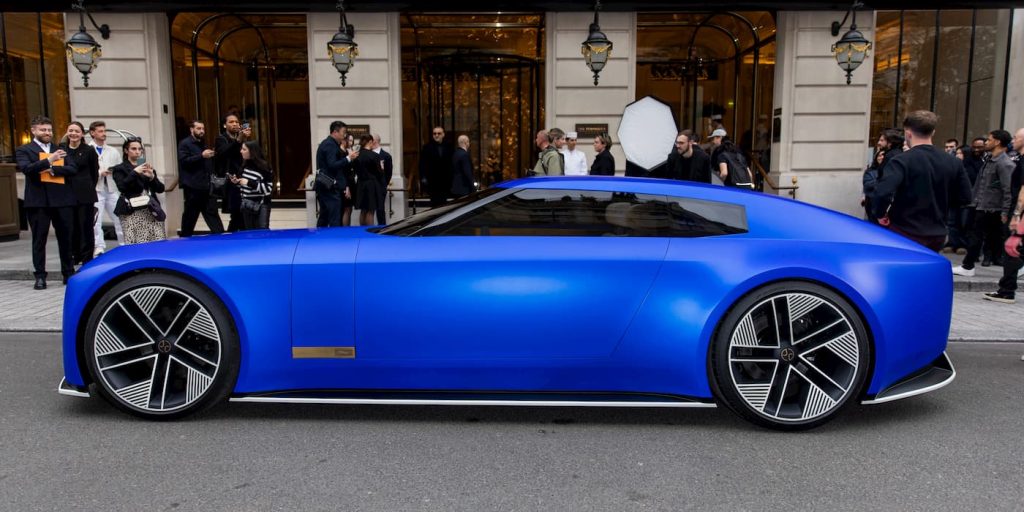
The sources told Autocar and Autocar India that McGovern was “escorted out of the office” and that his position was eliminated immediately.
When asked for more details, a JLR spokesperson responded, “No comment,” while Tata Motors has yet to respond.
The sudden news comes just a week after PB Balaji, former Tata Motors’ CFO, took over as Jaguar Land Rover CEO amid the company’s struggling efforts to turn things around.
McGovern’s departure after 21 years at JLR signals that bigger changes are coming for the ailing British luxury brand.
The first model from Jag’s new EV lineup was expected to be an electric four-door GT, set for production in mid-2026, followed by at least two more luxury EVs. With McGovern out, those plans will likely change. We’ll keep you updated with the latest.
FTC: We use income earning auto affiliate links. More.


Tesla’s registration numbers for November 2025 are starting to roll in for European markets, and they paint a stark picture: demand is still collapsing in nearly every major market, with one massive exception that is propping up the entire region.
According to registration data tracked by Electrek, Tesla’s volumes in key European markets are down 12.3% year-over-year.
At first glance, the 12% decline in November might sound like good news, given Tesla’s sales in Europe have been declining by 30% to 40% each month all year, but it doesn’t tell the whole story.
If you exclude Norway, where a specific tax-incentive change is pushing demand forward, Tesla’s sales in the rest of Europe have plummeted by 36.3% – in line with the year-long decline.
The Norway anomaly vs. the reality
We have been tracking Tesla’s difficult year in Europe for months now, but November’s data shows an unprecedented divergence.
In Norway, Tesla registrations skyrocketed 175% year-over-year to 6,215 units. This massive surge is due to buyers rushing to beat new EV tax changes expected in 2026, which would eliminate tax benefits for more expensive EVs, including virtually all of Tesla’s vehicles.
Norway alone accounted for over 35% of the total tracked volume this month.
Everywhere else, however, the floor is falling out.
Major volume markets are seeing declines of 40-60%:
- France: Down 57.8% (1,593 units)
- Sweden: Down 59.3% (588 units)
- Netherlands: Down 43.5% (1,627 units)
- Germany: Down 20.2% (1,763 units)
Italy remains the only other bright spot with 58.5% growth, but the volume (1,281 units) is too small to offset the crashes in France and Germany. Unlike Norway, where sales are booming as incentives expire, Tesla’s sales in Italy surged due to a new EV incentive.
It sent Tesla’s sales surging 58%, compared with the broader EV industry, which rose 170% in November due to the new incentives.
Here is the full breakdown of the markets reporting so far:
| Market | Nov 2025 | Nov 2024 | Change (Vol) | Change (%) |
| Norway | 6,215 | 2,258 | +3,957 | +175.2% |
| Germany | 1,763 | 2,208 | -445 | -20.2% |
| Netherlands | 1,627 | 2,881 | -1,254 | -43.5% |
| France | 1,593 | 3,774 | -2,181 | -57.8% |
| Spain | 1,523 | 1,669 | -146 | -8.7% |
| Italy | 1,281 | 808 | +473 | +58.5% |
| Belgium | 998 | 1,691 | -693 | -41.0% |
| Sweden | 588 | 1,446 | -858 | -59.3% |
| Denmark | 534 | 1,054 | -520 | -49.3% |
| Portugal | 425 | 801 | -376 | -46.9% |
| Austria | 406 | 440 | -34 | -7.7% |
| Finland | 257 | 323 | -66 | -20.4% |
| Switzerland | 242 | 536 | -294 | -54.9% |
Electrek’s Take
A single market, Norway, is currently saving Tesla’s European sales, but that is clearly temporary. It simply pulled a lot of demand from Tesla’s sales in 2026.
When you strip out the Norway anomaly, a 36% drop in the rest of Europe shows that Tesla’s demand crisis is continuing in Europe.
We are seeing the compound effect of two problems we’ve discussed at length:
- Stale Lineup: The Model Y refresh is here, but it hasn’t been enough to stop buyers from defecting to newer, more competitively priced options from Chinese OEMs like BYD and legacy players who are starting to catch up with Tesla with increasingly more competitive offering.
- Brand Toxicity: As polls in Germany have shown, Elon Musk’s continued political polarization is actively driving away the core EV-buying demographic in Western Europe. You can see this most clearly in markets like France and Sweden, where the drop is nearly 60%.
Tesla needs more than just price cuts or minor refreshes to stop this bleeding. They need to address the brand issue, or 2026 will be a very long year for the company in Europe.
Keep in mind that those 2025 results are also being compared to Tesla’s 2024 performance, which was already down from 2023. This decline has been going on for 2 years now, it only accelerated in 2025.
FTC: We use income earning auto affiliate links. More.
Environment
How families could get stuck with higher electric bills if the AI data center boom goes bust


Homes near a data center in Ashburn, Virginia, US, on Friday, July 25, 2025.
Bloomberg | Bloomberg | Getty Images
Data centers that haven’t been built yet are driving up electricity prices and could leave consumers on the hook for expensive power infrastructure if demand projections are wrong.
The race to build facilities that provide artificial intelligence has fueled a boom in data centers that train and run large language models, like OpenAI’s ChatGPT and Anthropic’s Claude, upending a utility industry that grew used to 20 years of no increase in electricity demand.
But now, some investors and energy market analysts are questioning whether the AI race has turned into a bubble, one that would prove expensive to unravel as new transmission lines and power plants are built to support those data centers.
Consumers served by the largest electric grid in the U.S. will pay $16.6 billion to secure future power supplies just to meet demand from data centers from 2025 through 2027, according to a watchdog report published this month.
The grid is PJM Interconnection, serving more than 65 million people across 13 states, including the world’s largest data center hub in Virginia and fast-growing markets like northern Illinois and Ohio.
About 90% of that bill, or $15 billion, is to pay for future data center demand, according to Monitoring Analytics, PJM’s independent market monitor. This amounts to a “massive wealth transfer” from consumers to the data center industry, the watchdog told PJM in a Nov. 10 letter.
“A lot of us are very concerned that we are paying money today for a data center tomorrow,” said Abe Silverman, general counsel for the public utility board in New Jersey, one of the states served by PJM, from 2019 until 2023. “That’s a little bit scary if you don’t really have faith in the load forecast.”
Residential electricity prices in September rose 20% in Illinois, 12% in Ohio, and 9% in Virginia compared to the same period last year, according to data from the federal Energy Information Administration. Each of those states are among the top five markets for data centers in the U.S.
The costs associated with securing power for data centers is directly reflected in consumer’s utility bills, said Joe Bowring, president of Monitoring Analytics. “When the wholesale power costs go up, people pay more, when it goes down people pay less,” he said.
Forecast uncertainty
PJM is forecasting 30 gigawatts of extra demand from data centers through 2030, but it’s unclear how much will actually materialize in the end. That’s the equivalent of the average annual power consumption of more than 24 million homes in the U.S.
Data center developers are shopping projects around in different locations before committing to a site, so there is likely duplication in the forecasts, said Cathy Kunkel, a consultant at the Institute for Energy Economics and Financial Analysis (IEEFA).

“We’re in a bit of a bubble,” Silverman, the New Jersey official, said. “There is no question that data center developers are coming out of the woodwork, putting in massive numbers of new requests. It’s impossible to say exactly how many of them are speculative versus real.”
Independent power producers such as Constellation Energy, the biggest owner of nuclear plants in the U.S., and Vistra Corp. warned earlier this year that data center demand forecasts are likely inflated.
“I just have to tell you, folks, I think the load is being overstated. We need to pump the brakes here,” Constellation CEO Joe Dominguez said on the company’s earnings call in May.
Meanwhile, Vistra CEO James Burke also said in May that data center demand could be overstated by three to five times in some jurisdictions as developers scout their projects around the country.
‘Stranded cost’
The risk is that utilities invest in expensive infrastructure to meet data center demand, but not all those facilities are eventually built or they end up using less electricity than expected, said Kunkel, the consultant.
“It does tend to be consumers — residential, commercial, and other industrial ratepayers — that end up paying for overbuilt electrical infrastructure,” Kunkel said. The potential problem will come if capacity is built that isn’t needed, that “would tend to leave ratepayers holding the stranded cost bag.”
Data center demand forecasts have declined when utilities implement stricter rules.
In Ohio, for example, American Electric Power recently had requests for 30 gigawatts of electric connections from data centers.
AEP proposed stricter rules “to mitigate the risk that transmission infrastructure will be built for speculative data center projects,” according to a filing with the state utility commission in May 2024.

The AEP rules require data centers to pay for 85% of the energy they claim to need, even if they actually use less, to cover infrastructure costs. It also implemented an exit fee if data centers cancel their project or can’t meet the terms of their contract.
AEP’s data center requests in Ohio dropped by more than half, to 13 gigawatts after the utility commission approved the rules last July.
“When faced with potential financial commitments, the most speculative or uncertain data center projects did not submit load study requests — as was intended,” the Columbus, Ohio-based utility said in a statement.
The number of requests might decline further as the new rules force data centers to make binding contracts, it said.
The Data Center Coalition, a lobbying group for big tech companies, and other industry advocates have opposed AEP’s stricter rules as “discriminatory.”
Meeting demand
There is also a risk that the electrical grid grows less reliable as many large data center projects move forward. The 13 gigawatts of data center requests that AEP views as a more accurate figure, for example, is equivalent to about a dozen large nuclear plants. The infrastructure, in power plants and transmission lines, required to meet that demand is immense, the utility said.
The solution is for PJM to reject data centers’ requests for grid connection if there is not enough power to supply them, Bowring of Monitoring Analytics said. Data centers can either wait until there is enough power to supply them, or they can bring their own generation with them and jump the line, he said.
Monitoring Analytics filed a complaint with the Federal Energy Regulatory Commission last week calling on PJM to adopt this approach.
“That will give data centers a clear incentive to bring their [own] generation,” Bowring said. That formula would also help clear up uncertainty over demand forecasts because data centers are unlikely to pay for infrastructure if they are not serious, he said.
Otherwise, the costs that consumers are bearing from data center demand will continue to grow, the watchdog warned FERC in its complaint.
-
 Sports2 years ago
Story injured on diving stop, exits Red Sox game
-
 Sports3 years ago
‘Storybook stuff’: Inside the night Bryce Harper sent the Phillies to the World Series
-
 Sports2 years ago
Game 1 of WS least-watched in recorded history
-
 Sports3 years ago
Button battles heat exhaustion in NASCAR debut
-
 Sports3 years ago
MLB Rank 2023: Ranking baseball’s top 100 players
-
Sports4 years ago
Team Europe easily wins 4th straight Laver Cup
-
 Environment3 years ago
Japan and South Korea have a lot at stake in a free and open South China Sea
-
 Environment1 year ago
Here are the best electric bikes you can buy at every price level in October 2024