

Joey Barton’s posts ’caused me sleepless nights’, says Jeremy Vine


Broadcaster Jeremy Vine has told a jury he felt “wickedly torn down for no reason” by ex-footballer Joey Barton, whose online posts led him to take civil action.
The TV and radio presenter said he intervened to support football commentators Lucy Ward and Eni Aluko after Barton shared an image online of their faces superimposed on to a photograph of notorious serial killers Fred and Rose West.
After a televised FA Cup match between Crystal Palace and Everton in January 2024, the former Manchester City and Newcastle United footballer likened the sports broadcasters to the “Fred and Rose West of commentary”.
Responding to the comment, Vine said on X: “What’s going on with @Joey7Barton? I just glanced at the Rose West thing… genuinely, is it possible we are dealing with a brain injury here?”
Joey Barton arrives at Liverpool Crown Court. Pic: PA
‘I was quite shocked’
Giving evidence on Wednesday, Vine said: “I was quite shocked by what Mr Barton had said about two very respected commentators in Lucy Ward and Eni Aluko.
“I thought it was very vicious to impose them on the images of two mass murderers of children, and I was looking for an explanation.
“I said ‘are we dealing with a brain injury here’ as a way of underlining my own feelings that he had crossed the line on that tweet.”
Barton, 43, is currently standing trial at Liverpool Crown Court, accused of posting grossly offensive messages on X aimed at the three broadcasters, allegedly with the intent to cause distress or anxiety.
The court heard that Mr Barton replied to Vine’s tweet with a post referring to him as “you big bike nonce”.
The defendant, who has 2.7 million followers on X, also made references to convicted child sex offender Jeffrey Epstein.

Jeremy Vine. Pic: PA
‘This now gets really serious’
Vine told the prosecutor he felt “very alarmed” that Mr Barton was choosing “this word ‘nonce’ to throw around” and that “this was now escalating”.
“This now gets really serious. He is accusing me of being a paedophile,” he said.
“These are disgusting actions. It’s a despicable thing to say.
“It gravely upset me, and I had a sleepless night that night.”
As more posts followed, Vine “began to feel scared”.
Read more from Sky News:
How many prisoners are released by mistake in the UK?
Migrant sent back to France for second time in two months
Vine said: “I realised I had to take some action, but I was not sure what to do. I realised the quickest remedy would be some sort of civil action.”
Civil proceedings were initiated in March 2024. A week later, a post from Mr Barton’s X account stated: “If anyone has any information about Jeremy Vine – pictures, screenshots, videos, or messages that could help us in the case – please send them to me using the hashtag #bikenonce.”
Jurors heard that in June 2024, Barton agreed to pay Mr Vine £75,000 in damages for defamation and harassment, along with his legal expenses, as the two parties reached a settlement in the civil case.
In a separate agreement, Barton also paid Vine an additional £35,000 in damages and legal costs relating to similar issues.
The court was told that Mr Barton issued a public apology on his X account in June 2024, admitting that he had made a “very serious allegation” on social media.
He denies the offences said to have been committed between January and March 2024.

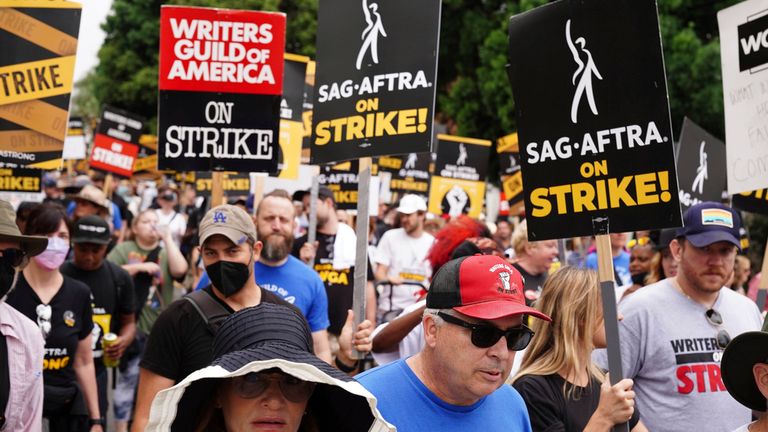
Thousands of members of actors’ trade union Equity are being asked whether they would support industrial action over artificial intelligence protections.
The organisation has launched an indicative ballot among about 7,000 members working in film and TV.
Performers are being asked whether they are prepared to refuse to be digitally scanned on set in order to secure adequate artificial intelligence protections.
It will be the first time the performing arts and entertainment trade union has asked this whole section of its membership to vote in a ballot.
The Hollywood strikes took place in 2023. File pic: AP
The announcement follows the Hollywood strikes in 2023, when members of Equity’s sister union in the US, SAG-AFTRA, and writers, went on strike over issues including AI.
Video game actors in the US also protested over the use of AI, ending almost a year of industrial action earlier in 2025.
Equity’s ballot opens on Thursday and runs for two weeks, and will show the level of support the union has for action short of a strike.
Another statutory ballot would have to be made before any industrial action is taken.
“While tech companies get away with stealing artists’ likeness or work, and the government and decision makers fret over whether to act, unions including Equity are at the forefront of the fight to ensure working people are protected from artificial intelligence misuse,” Equity general secretary Paul W Fleming said in a statement.
“If bosses can’t ensure someone’s likeness and work won’t be used without their consent, why should performers consent to be digitally scanned in the first place?”
Mr Fleming said the ballot would give members the opportunity to “send a clear message to the industry: that it is a basic right of performers to have autonomy over their own personhood and identity”.
The union has no choice but to recommend members support industrial action, he said.
“It’s time for the bosses to step away from the brink and offer us a package, including on AI protections, which respects our members,” added Mr Fleming.
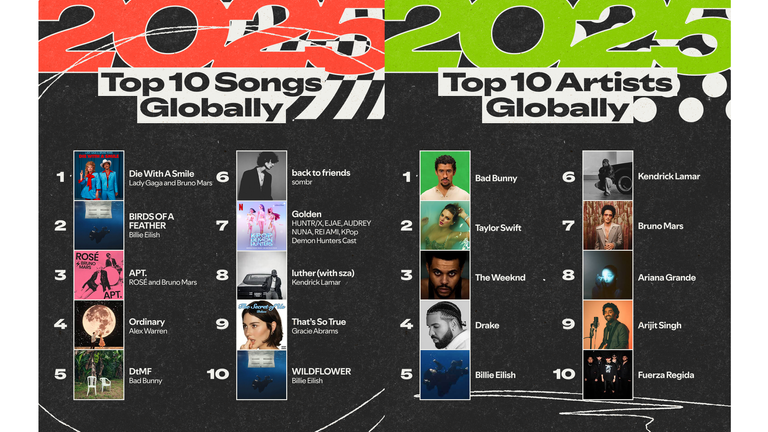
The hotly anticipated Spotify Wrapped is revealing our top tracks, artists and albums for 2025.
But how does the streaming service calculate personalised summaries of users’ listening habits and rank the UK’s hottest artists?
Here’s a look at how your data is used.
The platform describes the annual statistics as “a chance to look back on your year in sound”.
It says data is captured between January and mid-November on every account, although it mostly excludes anything streamed in private mode. (Don’t worry, your passion for the Spice Girls can be kept secret.)
Wrapped presents personalised listening statistics, which Spotify calls the “real story of your year of listening”, alongside global figures for comparison.
The streaming service says Minutes Listened reflects the actual time spent listening to audio on the platform.
Once a user streams at least 30 tracks, Spotify generates a list of Your Top Songs. Similarly, Your Top Artists ranks artists based on total minutes listening to a particular performer.
Other metrics identify the top genres users have played, as well as podcasts and audiobooks ranked by total minutes listened. And if you’ve listened to at least 70% of tracks on a record, you’ll see top albums too.
Spotify also creates Your Listening Age, a guesstimate of your age based on the era of the music “you feel most connected to”.
The streaming service says the statistic is calculated using a five-year span of music which users engaged with more than other listeners of a similar age.
Spotify has been summing up 2025’s most listened to tracks. Pic: Spotify
Swift vs Bunny
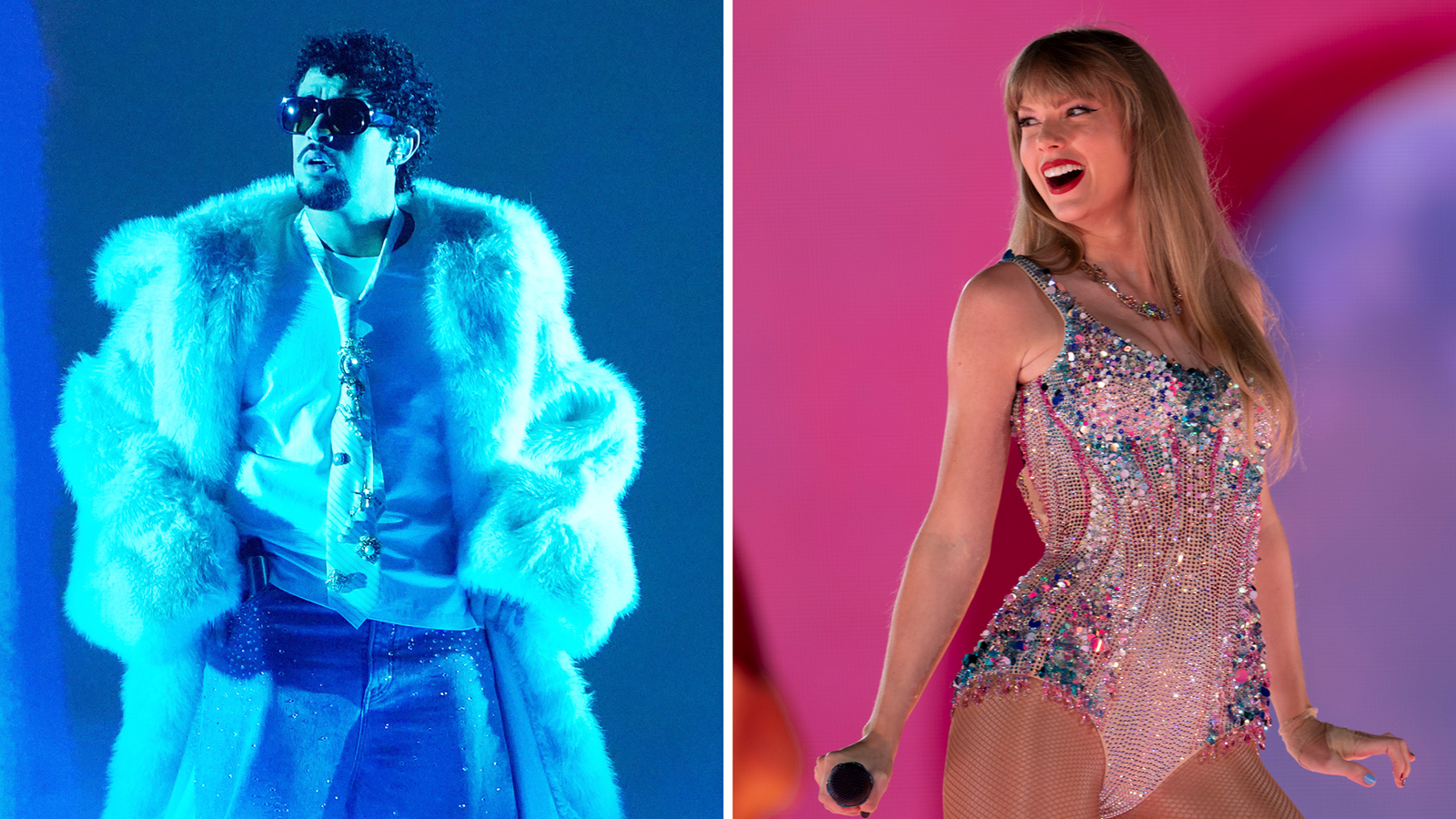
Pop superstar Taylor Swift has been named the UK’s most-streamed artist on Spotify for the third year in a row.
But she dropped out of the top spot in the global rankings, coming second to Puerto Rican superstar Bad Bunny, who secured more than 19.8 billion streams. Third were The Weeknd, followed by Drake and Billie Eilish.
Bad Bunny’s LP Debi Tirar Mas Fotos was the most listened-to album worldwide.
Read more from Sky News:
Sabrina Carpenter fury at video
Drake’s lawsuit dismissed
Spotify hikes UK prices
Spotify revealed Drake was the UK’s second most-listened to artist, followed by Sabrina Carpenter in third, The Weeknd in fourth and Billie Eilish in fifth.
Despite being the most listened-to artist, Swift failed to break into the UK’s top five most listened-to songs and albums of the year.
Alex Warren’s Ordinary was the most-streamed song, and Short ‘N’ Sweet, released by Carpenter last year, the top album.

-
 Sports2 years ago
Story injured on diving stop, exits Red Sox game
-
 Sports3 years ago
‘Storybook stuff’: Inside the night Bryce Harper sent the Phillies to the World Series
-
 Sports2 years ago
Game 1 of WS least-watched in recorded history
-
 Sports3 years ago
Button battles heat exhaustion in NASCAR debut
-
 Sports3 years ago
MLB Rank 2023: Ranking baseball’s top 100 players
-
Sports4 years ago
Team Europe easily wins 4th straight Laver Cup
-
 Environment3 years ago
Japan and South Korea have a lot at stake in a free and open South China Sea
-
 Environment1 year ago
Here are the best electric bikes you can buy at every price level in October 2024