
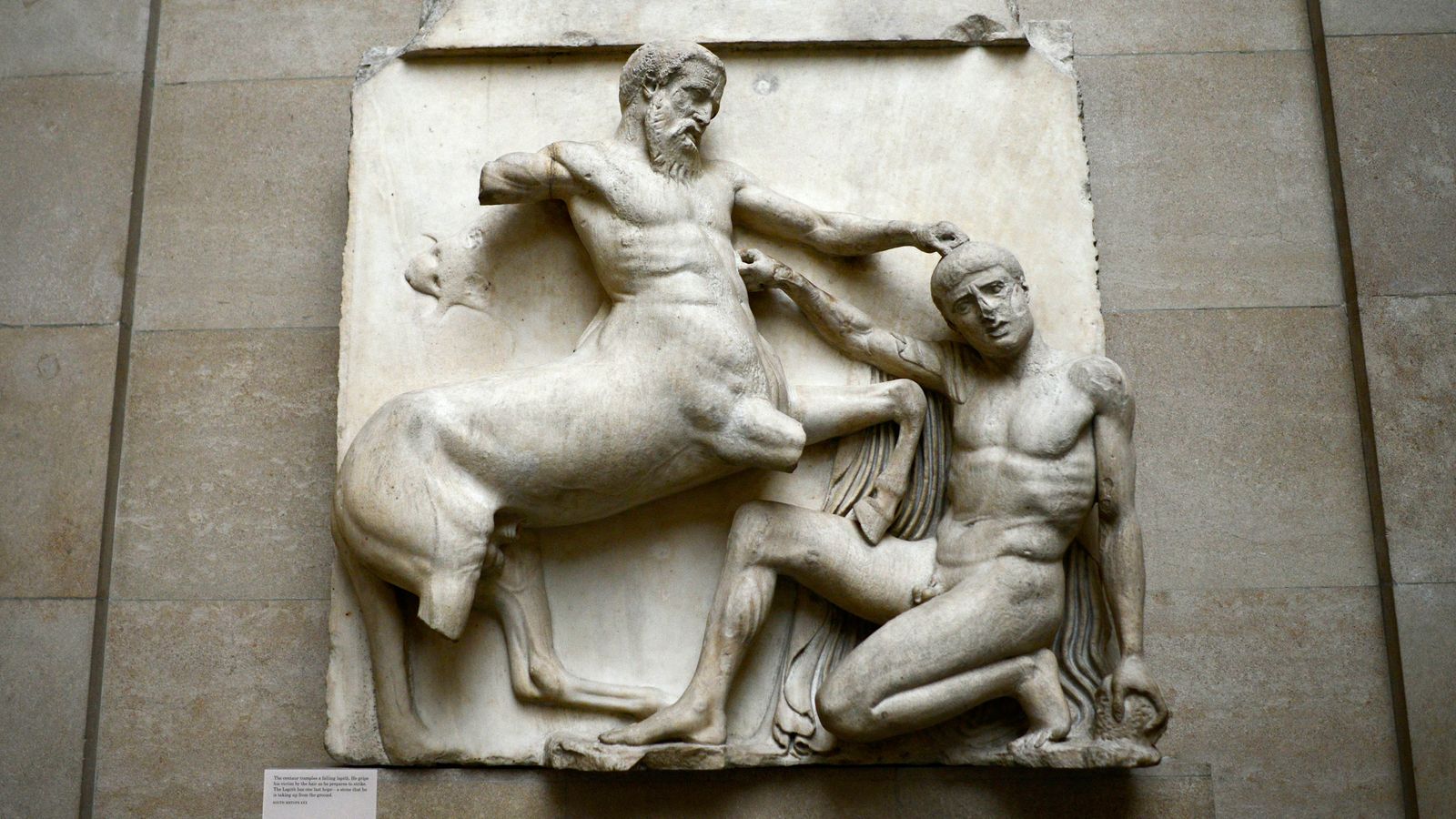
New film ‘proves beyond shadow of a doubt’ that Elgin Marbles were stolen, director claims

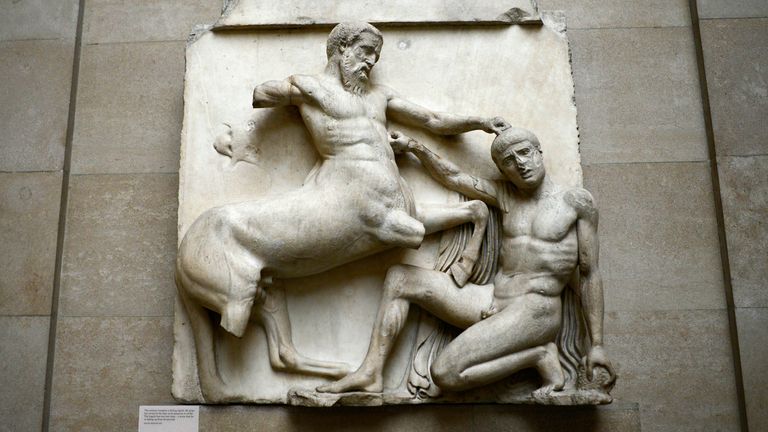
A new documentary proves “beyond any shadow of a doubt” that the Elgin Marbles were stolen, according to its director.
David Wilkinson claims The Marbles settles one of the most divisive debates in cultural heritage: whether 19th-century diplomat Lord Elgin legally acquired the Parthenon Sculptures, better known as the Elgin Marbles.
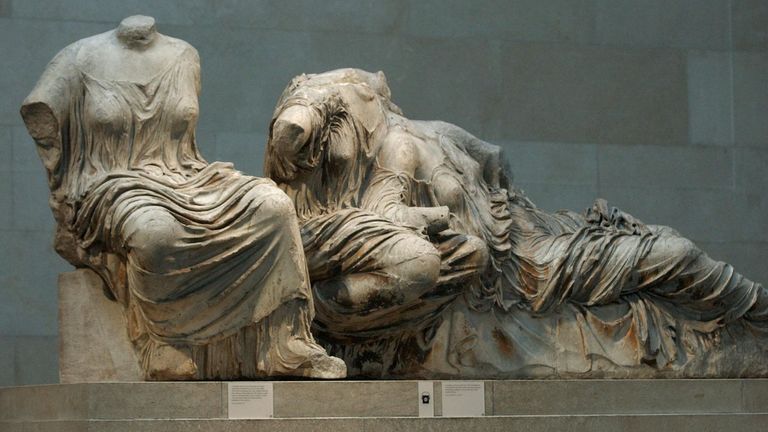
The film revisits how the sculptures were removed from the Parthenon in Athens while Greece was under Ottoman rule – and ended up in London.
It argues that Lord Elgin did not legally acquire the artefacts – and instead, it amounts to “the greatest heist in art history”.
Reuters file pic
Actor Brian Cox, historian Dominic Selwood and solicitor Mark Stephens are among those who appear in the documentary.
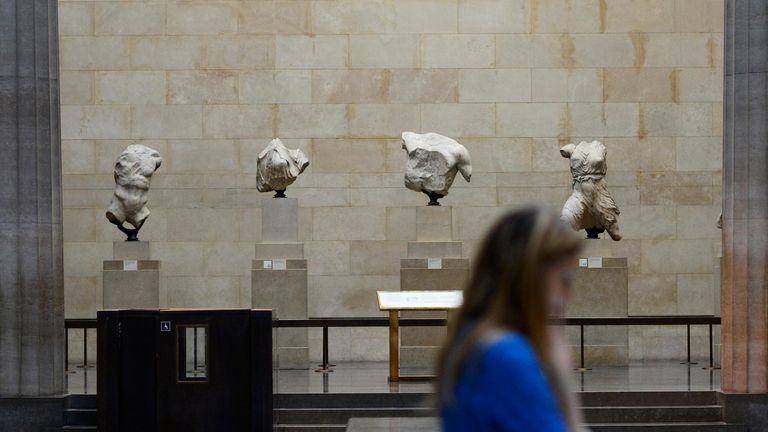
The British government bought the sculptures from Lord Elgin and installed them into the trusteeship of the British Museum, where they have remained for 200 years.
“He needed the money from the British government to pay for all the bribes he’d given to members of the Ottoman Empire,” Wilkinson says of the transaction.
“Lord Elgin did sell them … but the question becomes, did Lord Elgin actually have the right to purchase them?”
PA file pic
Classical archaeologist Mario Trabucco della Torretta dismisses Wilkinson’s claims.
“The allegation of bribery to obtain the Marbles is just wrong in historical terms,” he told Sky News.
Torretta was the key architect behind a joint letter that included former prime minister Liz Truss, historian Dr David Starkey and Sir John Redwood – alleging the British Museum is part of a “covert” and “accelerating campaign” to return the Elgin Marbles to Greece.
Responding to Wilkinson’s claims of bribery, he added: “The only reference to ‘presents’ comes years after the start of the removals … do people presume that they run a ‘bribe now, pay later’ scheme back then in Constantinople?”
One of the most contentious points in the debate is the legitimacy of an Ottoman permission document known as a “firman”, which is claimed to have authorised Lord Elgin removing the items from Greece.
There is only an Italian text referred to as a translation of this document.

David Wilkinson
Wilkinson said: “It was normal practice at the time that a copy would be kept in what was then Constantinople, and another copy would have been sent off to Athens.
“There would be a record in Istanbul and the Turks have gone through it in great detail over many decades and they can find nothing.”
Speaking to Sky News in 2024, Dr Zeynep Boz – head of combatting illicit trafficking for Turkey’s culture ministry – said there is no proof of the firman in the Ottoman archive.
“Despite extensive archival research, no such firman has been found. It is even difficult to call this document a translation when the original is not available,” she said at the time.
Torretta offers an explanation: “Burning the Ottoman governor’s archive was one of the first acts of the Greek revolution.”
Reuters file pic
While the arguments are not new, The Marbles also examines how other institutions have handled similar restitution cases.
In the film, Cox says if the marbles would have gone back to Athens already if they had found their way to Edinburgh and not London.
Back in 2023, the National Museum of Scotland returned The House Of Ni’isjoohl memorial pole to Canada.
Meanwhile, Glasgow’s Kevingrove Art Gallery Museum returned a shirt to the South Dakota Cultural Heritage Center in the US.
And when it comes to the Parthenon Sculptures – Germany’s Heidelberg University and The Vatican have both returned fragments to Greece.

Dec 2024: Elgin Marbles ‘belong in the UK’
The British Museum Act 1963 prevents treasures being legally given away by the British Museum.
The government has repeatedly it has no plans to change existing policy on restitution, and that it is up to the trustees of the museum to decide.
A spokesperson for the British Museum repeated a statement given to Sky News in July: “Discussions with Greece about a Parthenon Partnership are ongoing and constructive.”
The documentary scrutinises the ethics of foreign national treasures that were taken and are now housed in Western museums, but as it stands the institutional and governmental answers don’t appear to be changing.
The Marbles is in UK and Irish cinemas from today.

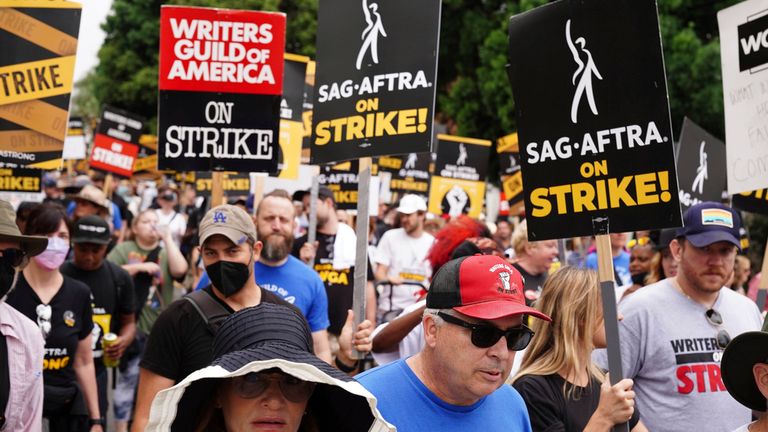
Thousands of members of actors’ trade union Equity are being asked whether they would support industrial action over artificial intelligence protections.
The organisation has launched an indicative ballot among about 7,000 members working in film and TV.
Performers are being asked whether they are prepared to refuse to be digitally scanned on set in order to secure adequate artificial intelligence protections.
It will be the first time the performing arts and entertainment trade union has asked this whole section of its membership to vote in a ballot.
The Hollywood strikes took place in 2023. File pic: AP
The announcement follows the Hollywood strikes in 2023, when members of Equity’s sister union in the US, SAG-AFTRA, and writers, went on strike over issues including AI.
Video game actors in the US also protested over the use of AI, ending almost a year of industrial action earlier in 2025.
Equity’s ballot opens on Thursday and runs for two weeks, and will show the level of support the union has for action short of a strike.
Another statutory ballot would have to be made before any industrial action is taken.
“While tech companies get away with stealing artists’ likeness or work, and the government and decision makers fret over whether to act, unions including Equity are at the forefront of the fight to ensure working people are protected from artificial intelligence misuse,” Equity general secretary Paul W Fleming said in a statement.
“If bosses can’t ensure someone’s likeness and work won’t be used without their consent, why should performers consent to be digitally scanned in the first place?”
Mr Fleming said the ballot would give members the opportunity to “send a clear message to the industry: that it is a basic right of performers to have autonomy over their own personhood and identity”.
The union has no choice but to recommend members support industrial action, he said.
“It’s time for the bosses to step away from the brink and offer us a package, including on AI protections, which respects our members,” added Mr Fleming.

The hotly anticipated Spotify Wrapped is revealing our top tracks, artists and albums for 2025.
But how does the streaming service calculate personalised summaries of users’ listening habits and rank the UK’s hottest artists?
Here’s a look at how your data is used.
The platform describes the annual statistics as “a chance to look back on your year in sound”.
It says data is captured between January and mid-November on every account, although it mostly excludes anything streamed in private mode. (Don’t worry, your passion for the Spice Girls can be kept secret.)
Wrapped presents personalised listening statistics, which Spotify calls the “real story of your year of listening”, alongside global figures for comparison.
The streaming service says Minutes Listened reflects the actual time spent listening to audio on the platform.
Once a user streams at least 30 tracks, Spotify generates a list of Your Top Songs. Similarly, Your Top Artists ranks artists based on total minutes listening to a particular performer.
Other metrics identify the top genres users have played, as well as podcasts and audiobooks ranked by total minutes listened. And if you’ve listened to at least 70% of tracks on a record, you’ll see top albums too.
Spotify also creates Your Listening Age, a guesstimate of your age based on the era of the music “you feel most connected to”.
The streaming service says the statistic is calculated using a five-year span of music which users engaged with more than other listeners of a similar age.
Spotify has been summing up 2025’s most listened to tracks. Pic: Spotify
Swift vs Bunny
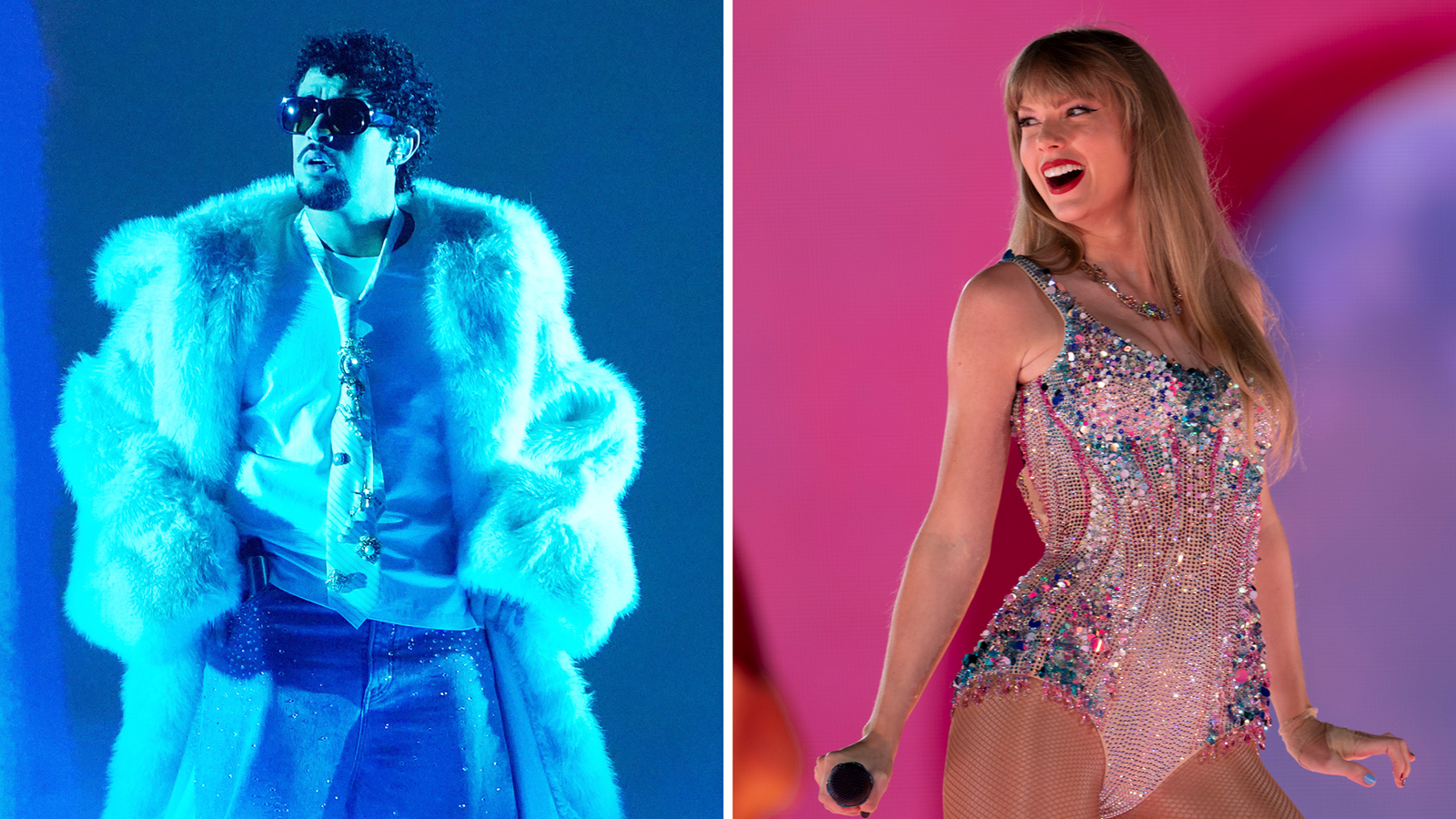
Pop superstar Taylor Swift has been named the UK’s most-streamed artist on Spotify for the third year in a row.
But she dropped out of the top spot in the global rankings, coming second to Puerto Rican superstar Bad Bunny, who secured more than 19.8 billion streams. Third were The Weeknd, followed by Drake and Billie Eilish.
Bad Bunny’s LP Debi Tirar Mas Fotos was the most listened-to album worldwide.
Read more from Sky News:
Sabrina Carpenter fury at video
Drake’s lawsuit dismissed
Spotify hikes UK prices
Spotify revealed Drake was the UK’s second most-listened to artist, followed by Sabrina Carpenter in third, The Weeknd in fourth and Billie Eilish in fifth.
Despite being the most listened-to artist, Swift failed to break into the UK’s top five most listened-to songs and albums of the year.
Alex Warren’s Ordinary was the most-streamed song, and Short ‘N’ Sweet, released by Carpenter last year, the top album.
-
 Sports2 years ago
Story injured on diving stop, exits Red Sox game
-
 Sports3 years ago
‘Storybook stuff’: Inside the night Bryce Harper sent the Phillies to the World Series
-
 Sports2 years ago
Game 1 of WS least-watched in recorded history
-
 Sports3 years ago
Button battles heat exhaustion in NASCAR debut
-
 Sports3 years ago
MLB Rank 2023: Ranking baseball’s top 100 players
-
Sports4 years ago
Team Europe easily wins 4th straight Laver Cup
-
 Environment3 years ago
Japan and South Korea have a lot at stake in a free and open South China Sea
-
 Environment1 year ago
Here are the best electric bikes you can buy at every price level in October 2024