

New U.S. nuclear power boom begins with old, still-unsolved problem: What to do with radioactive waste


Castor containers for high-level radioactive waste.
Ina Fassbender | Afp | Getty Images
Nuclear power is back, largely due to the skyrocketing demand for electricity, including big tech’s hundreds of artificial intelligence data centers across the country and the reshoring of manufacturing. But it returns with an old and still-unsolved problem: storing all of the radioactive waste created as a byproduct of nuclear power generation.
In May, President Trump issued executive orders aimed at quadrupling the current nuclear output over the next 25 years by accelerating construction of both large conventional reactors and next-gen small modular reactors. Last week, the U.S. signed a deal with Westinghouse owners Cameco and Brookfield Asset Management to spend $80 billion to build nuclear plants across the country that could result in Westinghouse attempting to spinoff and IPO a stand-alone nuclear power company with the federal government as a shareholder.
There’s a growing consensus among governments, businesses and the public that the time is right for a nuclear power renaissance, and even if the ambitious build-out could take a decade or more and cost hundreds of billion of dollars, it will be an eventual boon to legacy and start-up nuclear energy companies, the AI-fixated wing of the tech industry and investors banking on their success.
But there are plenty of reasons to be skeptical. Only two nuclear power plants have been built since 1990 — more than $15 billion over budget and years behind schedule — and they went online in just the last two years. Almost all of the 94 reactors currently operating in 28 states, generating about 20% of the nation’s electricity, were built between 1967 and 1990. And though often unspoken, there’s the prickly issue that’s been grappled with ever since the first nuclear energy wave during the 1960s and ’70s: how to store, manage and dispose of radioactive waste, the toxic byproduct of harnessing uranium to generate electricity — and portions of which remain hazardous for millennia.
Solutions, employing old and new technologies, are under development by a number of private and public companies and in collaboration with the Department of Energy, which is required by law to accept and store spent nuclear fuel.
The most viable solution for permanently storing nuclear waste was first proffered back in 1957 by the National Academy of Sciences. Its report recommended burying the detritus in deep underground repositories (as opposed to the long-since-abandoned notion of blasting it into low-Earth orbit). It wasn’t until 1982, though, that Congress passed the Nuclear Waste Policy Act, assigning the DOE responsibility for finding such a site.
Five years later, lawmakers designated Yucca Mountain, a 6,700-foot promontory about 100 miles northwest of Las Vegas, Nevada, as the nation’s sole geological repository. Thus began a contentious, years-long saga — involving the Nuclear Regulatory Commission, legislators, lawyers, geologic experts, industry officials and local citizens — that delayed, defunded and ultimately mothballed the project in 2010.
Other nations have moved forward with the idea. Finland, for instance, is nearing completion of the world’s first permanent underground disposal site for its five reactors’ waste. Sweden has started construction on a similar project, and France, Canada and Switzerland are in the early stages of their subterranean disposal sites.
Workers inspect the Repository in ONKALO, a deep geological disposal underground facility, designed to safely store nuclear waste, on May 2, 2023, on the island of Eurajoki, western Finland.
Jonathan Nackstrand | Afp | Getty Images
An American startup, Deep Isolation Nuclear, is combining the underground burial concept with oil-and-gas fracking techniques. The methodology, called deep borehole disposal, is achieved by drilling 18-inch vertical tunnels thousands of feet below ground, then turning horizontal. Corrosion-resistant canisters — each 16 feet long, 15 inches in diameter and weighing 6,000 pounds — containing nuclear waste are forced down into the horizontal sections, stacked side-by-side and stored, conceivably, for thousands of years.
Deep Isolation foresees co-locating its boreholes at active and decommissioned nuclear plants, according to CEO Rod Baltzer. “Eighty percent look like they have good shale or granite formations nearby,” he said, referring to a geologic prerequisite. “That means we would not have to transport the waste” and the risk of highway or railway crashes unleashing radioactive material.
The company has received grants from the DOE’s Advanced Research Projects Agency for Energy program, Baltzer said, and in July closed a reverse merger transaction, an alternative to an IPO for going public. Through that deal, he said, “we raised money for a full-scale demonstration project [in Cameron, Texas]. It will probably be early 2027 by the time we get that fully implemented.”
Recycling radioactive waste for modular reactors
An entirely different, old-is-new-again technology, pioneered in the mid-1940s during the Manhattan Project, is gathering steam. It involves reprocessing spent fuel to extract uranium and other elements to create new fuel to power small modular reactors. The process is being explored by several startups, including Curio, Shine Technologies and Oklo. France has been utilizing reprocessed nuclear fuel at its vast network of reactors since the 1970s.
Oklo has gained attention among investors drawn to its two-pronged approach to nuclear energy. The company — which went public via a SPAC in 2024, after early-stage funding from OpenAI CEO Sam Altman, Peter Thiel’s venture capital firm and others — announced in September that it is earmarking $1.68 billion to build an advanced fuel reprocessing facility in Oak Ridge, Tennessee. Concurrently, the company signed an agreement with the Tennessee Valley Authority “to explore how we can take used nuclear fuel sitting on its sites and convert it into fuel we can use in our reactors,” said a company spokeswoman.
That refers to the TVA’s three nuclear reactors — two in Tennessee, another in Alabama — as well as the other part of Oklo’s business model, which focuses on constructing SMRs. In September, the company broke ground in Idaho Falls, Idaho, on its Aurora fast reactor, a type of SMR that will use reprocessed nuclear fuel. “We’re working on [reprocessing] the fuel right now, so that we can turn on the plant around late 2027 or early 2028,” the Oklo spokeswoman said. The separate Oak Ridge facility, she said, is expected to begin producing fuel by the early 2030s.
Oklo exemplifies both the promise and the perplexity associated with the rebirth of nuclear power. On one hand is the attraction of repurposing nuclear waste and building dozens of SMRs to electrify AI data centers and factories. On the other hand, the company has no facilities in full operation, is awaiting final approval from the NRC for its Aurora reactor, and is producing no revenue. Oklo’s stock has risen nearly 429% this year, with a current market valuation of more than $16.5 billion, but share prices have fluctuated over the past month.
“It’s a high-risk name because it’s pre-revenue, and I anticipate that the company will need to provide more details around its Aurora reactor plans, as well as the [fuel reprocessing] program on the [November 11] earnings report call,” said Jed Dorsheimer, an energy industry analyst at William Blair in a late October interview. “But we haven’t changed our [outperform] rating on the name as of right now,” he added.

Performance of nuclear power company Oklo shares over the past one-year period.
In the meantime, more than 95,000 metric tons of spent nuclear fuel (about 10,000 tons is from weapons programs) sits temporarily stockpiled aboveground in special water-filled pools or dry casks at 79 sites in 39 states, while about 2,000 metric tons are being produced every year. That’s a lot of tonnage, but requires perspective. The Nuclear Energy Institute, the industry’s trade association, states that the entirety of spent fuel produced in the U.S. since the 1950s would cover a football field to a depth of about 12 yards.
But because the DOE, despite its mandate, still hasn’t found a permanent disposal facility for nuclear waste, taxpayers pay utilities up to $800 million every year in damages. Since 1998, the federal government has paid out $11.1 billion, and the tab is projected to reach as much as $44.5 billion in the future.
The DOE’s Department of Nuclear Energy has initiated several programs to address nuclear waste, including coordination with Deep Isolation and Oklo. The agency declined to comment on its efforts in this area, citing the federal government shutdown.
Debate over size of the radiation problem
Opponents to nuclear power cite the well-documented accidents at Three Mile Island in Pennsylvania (1979), Chernobyl in Ukraine (1986) and Fukushima in Japan (2011) — all three which resulted in radiation leaks, and, at Chernobyl and Fukushima, related deaths — as reasons enough to halt building new reactors. Following Fukushima, Japan, Germany and some other nations shut down or suspended operations. Japan has since restarted its nuclear energy program, and its new prime minister, Sanae Takaichi, is expected to accelerate it.
There’s also the viewpoint, related to climate change, that nuclear energy is a emissions-free power source — and unlike solar and wind runs 24/7/365 — that produces relatively manageable waste.
“If you walk up to recently discharged spent fuel and get really close to it, you’ll probably get a lethal dose of radiation,” said Allison Macfarlane, professor and director of the School of Public Policy and Global Affairs at the University of British Columbia, as well as the chair of the NRC from 2012–2014. “But is it this huge, massive problem? No, it’s solvable.” By comparison, she said, “we are under much graver threat from fossil fuel emissions than we are from nuclear waste.”
As far as nuclear waste, “we need to put [it] deep underground,” Macfarlane said.
That was the recommendation of the Blue Ribbon Commission on America’s Nuclear Future, created by the Obama administration in 2010 after the Yucca Mountain project was defunded, on which she served. Macfarlane deems spent fuel reprocessing as far too expensive and a source of new waste streams, and dismisses deep borehole disposal as a “non-starter.”
“You think you’re going to be able to put waste packages down a hole and they’re not going to get stuck on the way?” she said.
Inside the north portal to a five-mile tunnel in Yucca Mountain, 90 miles northwest of Las Vegas.
Las Vegas Review-journal | Tribune News Service | Getty Images
Macfarlane said that the Trump administration’s fast-tracking of new reactors is neither realistic nor achievable, but “I certainly would not support shutting down the operating reactors. I’m not anti-nuclear, but I’m practical.”
She added that while nuclear may not face the current intermittent production challenges of renewables, it is one of the most expensive forms of electricity production, especially compared to utility-scale solar, wind and natural gas.
Nonetheless, the rush to build new reactors — and generate even more waste — marches on alongside the data center boom. Google and NextEra Energy are teaming up to reopen Iowa’s Duane Arnold Energy Center, a nuclear plant that closed five years ago. Microsoft and Constellation Energy plan to restart the Three Mile Island Unit 1 reactor in 2028. And Meta has signed a 20-year power purchase agreement with Constellation and its Clinton, Illinois, nuclear facility.
Although no SMRs have been completed yet in the U.S., several projects are under development by companies including NuScale Power, Holtec International, Kairos Power and X-Energy, which has received backing from Amazon. The only SMR actually under construction is from Bill Gates’ co-founded TerraPower, in Kemmerer, Wyoming, which aims to be operational by the end of 2030.
Those long timelines alone should be a deterrent, said Tim Judson, executive director of the Nuclear Information Resource Service, a nonprofit advocate for a nuclear-free world. “It is fanciful to think that nuclear energy is going to be helpful in dealing with the increases in electricity demand from data centers,” he said, “because nuclear power plants take so long to build and the data centers are being built today.”
And then there’s the waste issue, Judson said. “I’m not sure that the tech industry has really thought through whether they want to be responsible for managing nuclear waste at their data center sites.”
But you can count Gates, the big tech billionaire who was backing nuclear even before the AI data center boom, as having not only thought about the waste problem, but dismissed it as major impediment. “The waste problems should not be a reason to not do nuclear,” Gates said in an interview with the German business publication Handelsblatt back in 2023. “The amount of waste involved … that’s not a reason not to do nuclear. … Say the U.S. was completely nuclear-powered — it’s a few rooms worth of total waste. So it’s not a gigantic thing,” Gates said.


Rush Township supervisors in Centre County, Pennsylvania, voted this week to greenlight a key permit for the Black Moshannon Solar project – a large solar development that would turn toxic former mineland into a major source of clean power.
If built, the Pennsylvania solar project would generate 265 megawatts of electricity – enough to power about 200,000 homes annually – on nearly 2,000 acres of toxic mineland. Developers deliberately chose the site, as the project is designed to reclaim land left behind by mining and fold environmental cleanup into the solar buildout.
According to project plans, the site would be restored with pollinators and pollinator-friendly ground cover planted beneath the solar panels. Developers have also committed to ongoing water quality and soil testing during construction and operations, along with soil improvements such as applying lime to help neutralize mining-related contamination and support vegetation growth.
Beyond the environmental cleanup, the project is expected to deliver a financial boost to the region. Black Moshannon Solar is projected to generate more than $5 million in tax revenue for the Phillipsburg-Osceola Area School District, along with more than $700,000 in direct tax payments to Centre County.
Environmental and energy advocates praised the township’s decision. David Masur, executive director of PennEnvironment, called the vote a model for other communities across the state. “We are hopeful that other local government officials across Pennsylvania will follow Rush Township’s lead and implement similar, much-needed solar projects all across the Keystone State.”
Jim Gregory, executive director of the Conservative Energy Network-Pennsylvania, also applauded the approval. “In 40 years, their forward-thinking decisions will be recognized as catalysts for environmental protection, public health improvements, and economic prosperity.”
Read more: Trump admin OKs $1B loan for Three Mile Island nuclear reboot

If you’re looking to replace your old HVAC equipment, it’s always a good idea to get quotes from a few installers. To make sure you’re finding a trusted, reliable HVAC installer near you that offers competitive pricing on heat pumps, check out EnergySage. EnergySage is a free service that makes it easy for you to get a heat pump. They have pre-vetted heat pump installers competing for your business, ensuring you get high quality solutions. Plus, it’s free to use!
Your personalized heat pump quotes are easy to compare online and you’ll get access to unbiased Energy Advisors to help you every step of the way. Get started here. – *ad


FTC: We use income earning auto affiliate links. More.
![Genesis GV90 leaks as breathtaking ultra-luxe SUV with coach doors [Video]](https://i0.wp.com/electrek.co/wp-content/uploads/sites/3/2025/11/Genesis-GV90-leak-coach-doors.jpeg?resize=1200,628&quality=82&strip=all&ssl=1)
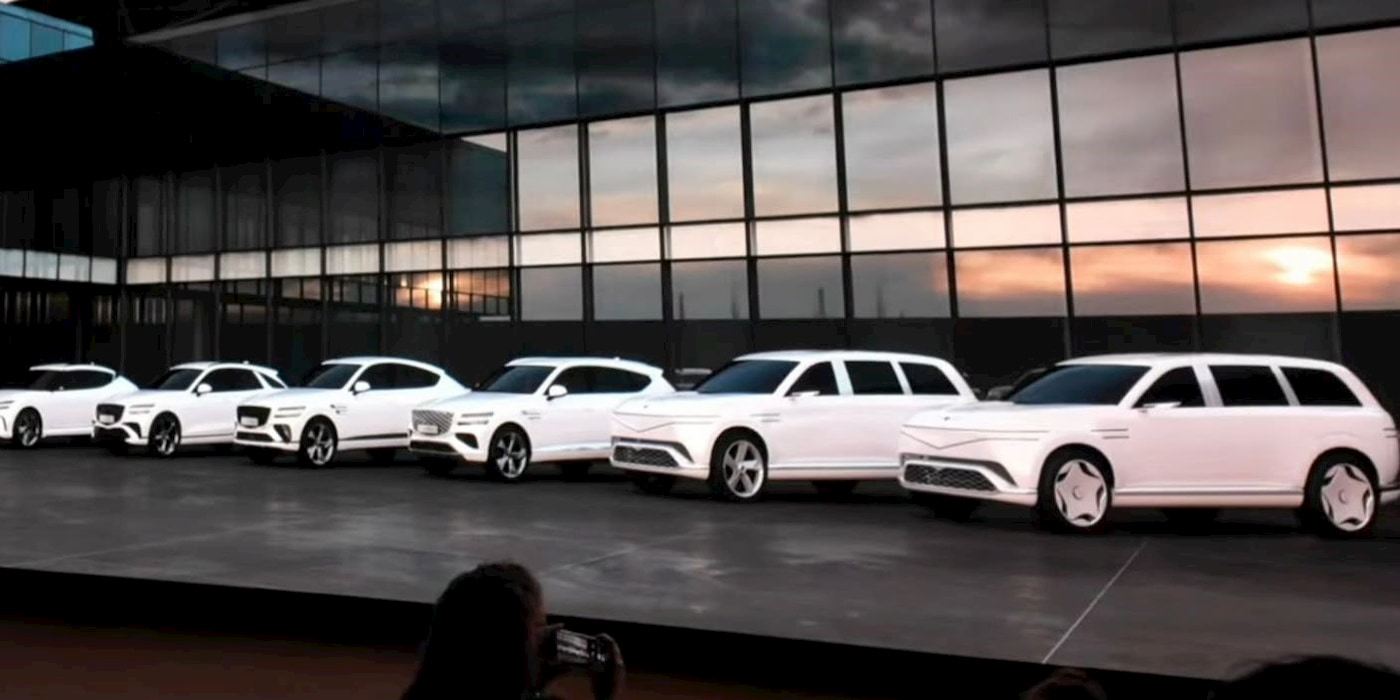
Genesis is gearing up to launch the stunning new flagship SUV. Ahead of its official debut, the GV90 leaked during an internal presentation, revealing our first look at the ultra-luxe electric SUV.
Genesis GV90 leak reveals coach doors and more
The GV90 is arriving as the largest, most luxurious Genesis SUV to date. Based on the Neolun Concept, the new flagship SUV will sit above the GV80 as Genesis expands into new segments.
As Genesis calls it, the “ultra-luxe, state-of-the-art SUV” stole the spotlight at the New York Auto Show last March.
It wasn’t the stunning, reductive design inspired by Korea’s moon-shaped porcelain jars or the premium Royal Indigo and Purple silk materials that caught most people’s attention at the event, but the B-pillarless coach doors.
The SUV was showcased with Rolls-Royce-like coach doors, offering a new level of luxury for Genesis. Although we’ve seen the GV90 spotted out in public testing a few times now with coach doors, we wondered if they would make it to the production model.
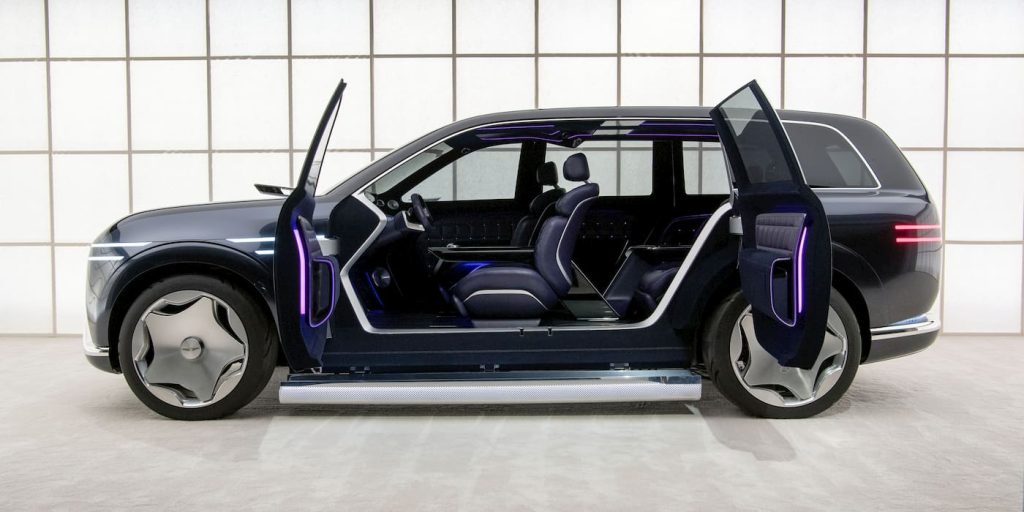
After the full-size SUV reportedly leaked during an internal presentation, it looks like we’ve found our answer. The Genesis GV90 leak reveals two versions: a standard model and a coach-door model.
The leaked images from our friends at ShortsCar offer our first look at the production version in full. Earlier this month, a GV90 prototype was spotted out in public with the coach doors wide open, providing a sneak peek of the interior.
From what was shown, the cabin will feature a similar layout to the concept, with high-end purple and indigo materials. The GV90 was also caught with an all-black interior, which is expected to be the standard version.
A new video from the folks over at HealerTV offers a closer look at the breathtaking interior ahead of its official debut.
The GV90 appears to retain the gear selector located near the top of the steering wheel from the Neolun concept.
Another report, from TheKoreanCarBlog, confirms the new gear selector after the first interior spy shots surfaced.
From what we’ve seen so far, the GV90 is shaping up to be a near replica of the ultra-luxe Neolun concept. Genesis has yet to announce a launch date for the GV90, but it is expected to make an official debut by the end of the year with sales starting in mid-2026.
Prices and final specs, like driving range, will be revealed closer to launch, but the Genesis GV90 is rumoured to be the first vehicle to ride on Hyundai’s new eM platform.
Hyundai said the new platform will deliver a 50% improvement in range compared to its current E-GMP-based EVs, such as the IONIQ 5. It’s also expected to offer Level 3 autonomous driving as well as other advanced driver assistance system (ADAS) features.
FTC: We use income earning auto affiliate links. More.

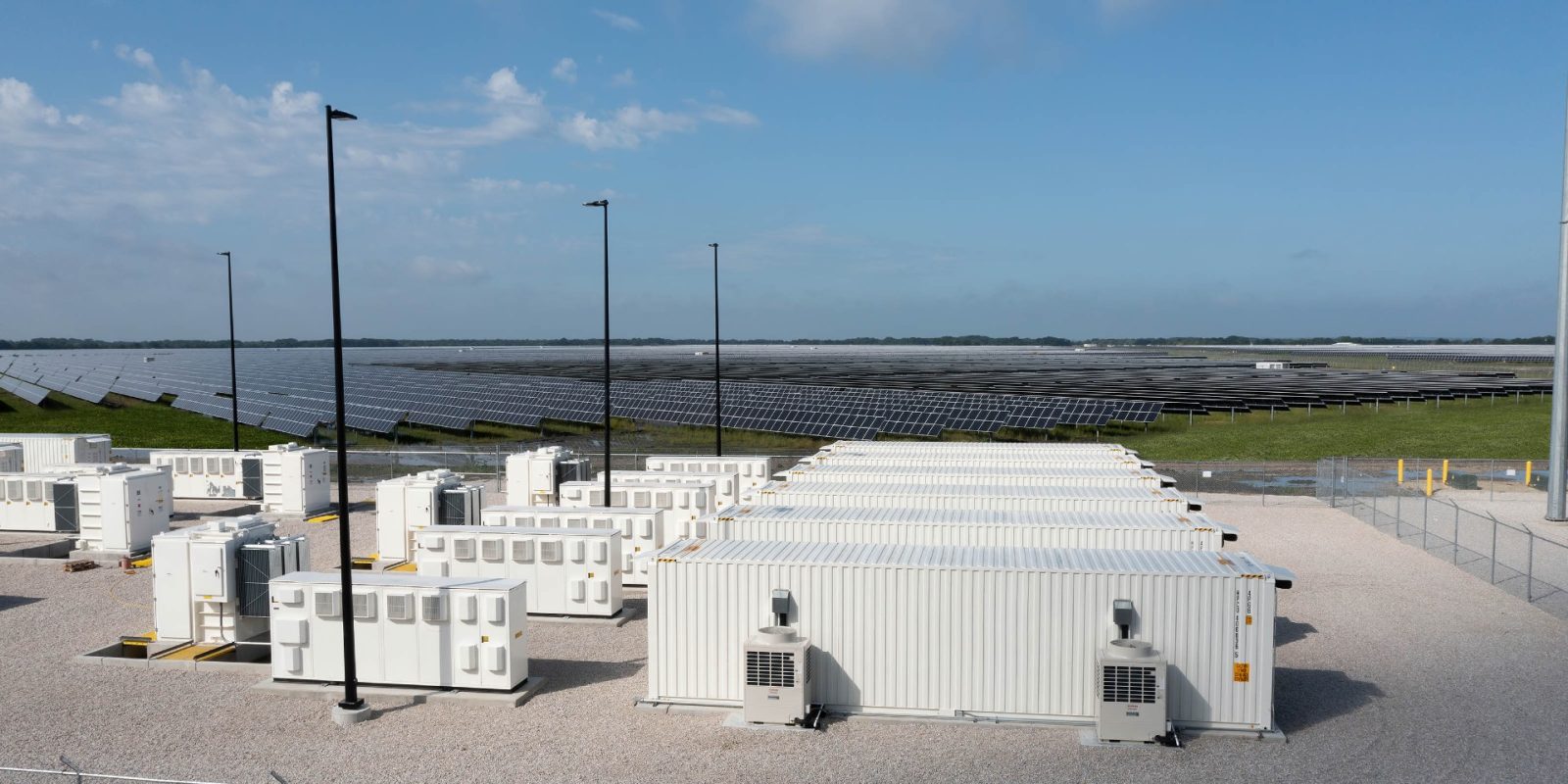
Turning cheap daytime solar into electricity you can actually use at night just got a lot cheaper. A new analysis from energy think tank Ember shows that utility-scale battery storage costs have fallen to $65 per megawatt-hour (MWh) as of October 2025 in markets outside China and the US. At that level, pairing solar with batteries to deliver power when it’s needed is now economically viable.
Battery storage costs have fallen dramatically over the past two years, and the decline continues. Following a steep decline in 2024, Ember’s analysis indicates that prices continued to fall sharply again in 2025.
The findings are based on real-world data from recent battery and solar-plus-storage auctions in Italy, Saudi Arabia, and India, as well as interviews with active developers across global markets.
According to Ember, the cost of a whole, grid-connected utility-scale battery storage system for long-duration projects (four hours or more) is now about $125 per kilowatt-hour (kWh) as of October 2025. That figure applies to projects outside China and the US. Core battery equipment delivered from China costs around $75/kWh, while installation and grid connection typically add another $50/kWh.
Those lower upfront costs have pushed down the levelized cost of storage (LCOS) to just $65/MWh. Ember’s calculation reflects real-world assumptions around financing costs, system lifetime, efficiency, and battery degradation.
Cheaper hardware isn’t the only reason storage costs are falling. Longer battery lifetimes, higher efficiencies, and lower financing costs, helped by clearer revenue models such as auctions, have all contributed to the sharp drop in LCOS. Ember has published a live calculator alongside the report, allowing users to estimate LCOS using their own assumptions.
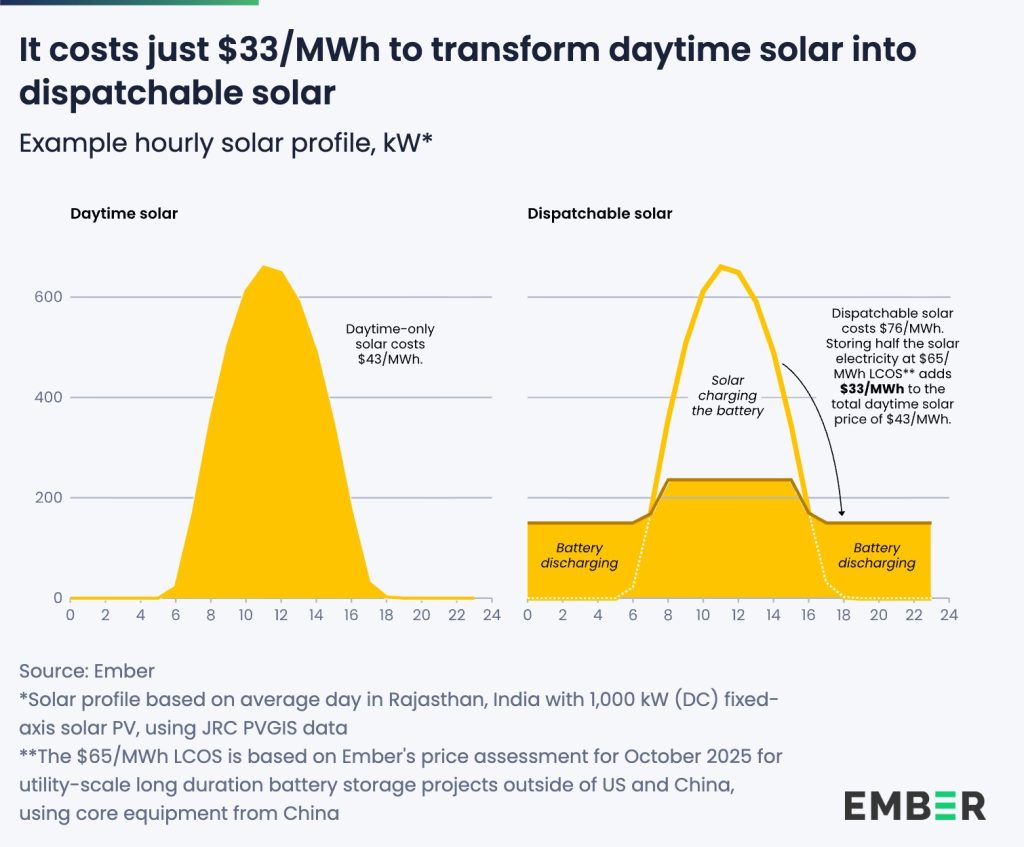
Why this matters comes down to how solar is actually used. Most solar power is generated during the day, so only a portion needs to be stored to make it dispatchable. Ember estimates that if half of daytime solar generation is shifted to nighttime, the $65/MWh storage cost adds about $33/MWh to the cost of solar electricity.
With the global average price of solar at $43/MWh in 2024, adding storage would bring the total cost to about $76/MWh, delivering power in a way that better matches real demand.
As Ember global electricity analyst Kostantsa Rangelova put it, after a 40% drop in battery equipment costs in 2024, the industry is now on track for another major fall in 2025. The economics of battery storage, she said, are “unrecognizable,” and the industry is still adjusting to this new reality.
“Solar is no longer just cheap daytime electricity; now it’s anytime dispatchable electricity. This is a game-changer for countries with fast-growing demand and strong solar resources,” Rangelova added.
Together, solar and battery storage are increasingly emerging as a scalable, secure, and affordable foundation for future power systems.
Read more: EIA: Solar + storage soar as fossil fuels stall through September 2025

If you’re looking to replace your old HVAC equipment, it’s always a good idea to get quotes from a few installers. To make sure you’re finding a trusted, reliable HVAC installer near you that offers competitive pricing on heat pumps, check out EnergySage. EnergySage is a free service that makes it easy for you to get a heat pump. They have pre-vetted heat pump installers competing for your business, ensuring you get high quality solutions. Plus, it’s free to use!
Your personalized heat pump quotes are easy to compare online and you’ll get access to unbiased Energy Advisors to help you every step of the way. Get started here. – *ad
FTC: We use income earning auto affiliate links. More.
-
 Sports2 years ago
Story injured on diving stop, exits Red Sox game
-
 Sports3 years ago
‘Storybook stuff’: Inside the night Bryce Harper sent the Phillies to the World Series
-
 Sports2 years ago
Game 1 of WS least-watched in recorded history
-
 Sports3 years ago
Button battles heat exhaustion in NASCAR debut
-
 Sports3 years ago
MLB Rank 2023: Ranking baseball’s top 100 players
-
Sports4 years ago
Team Europe easily wins 4th straight Laver Cup
-
 Environment3 years ago
Japan and South Korea have a lot at stake in a free and open South China Sea
-
 Environment1 year ago
Here are the best electric bikes you can buy at every price level in October 2024