
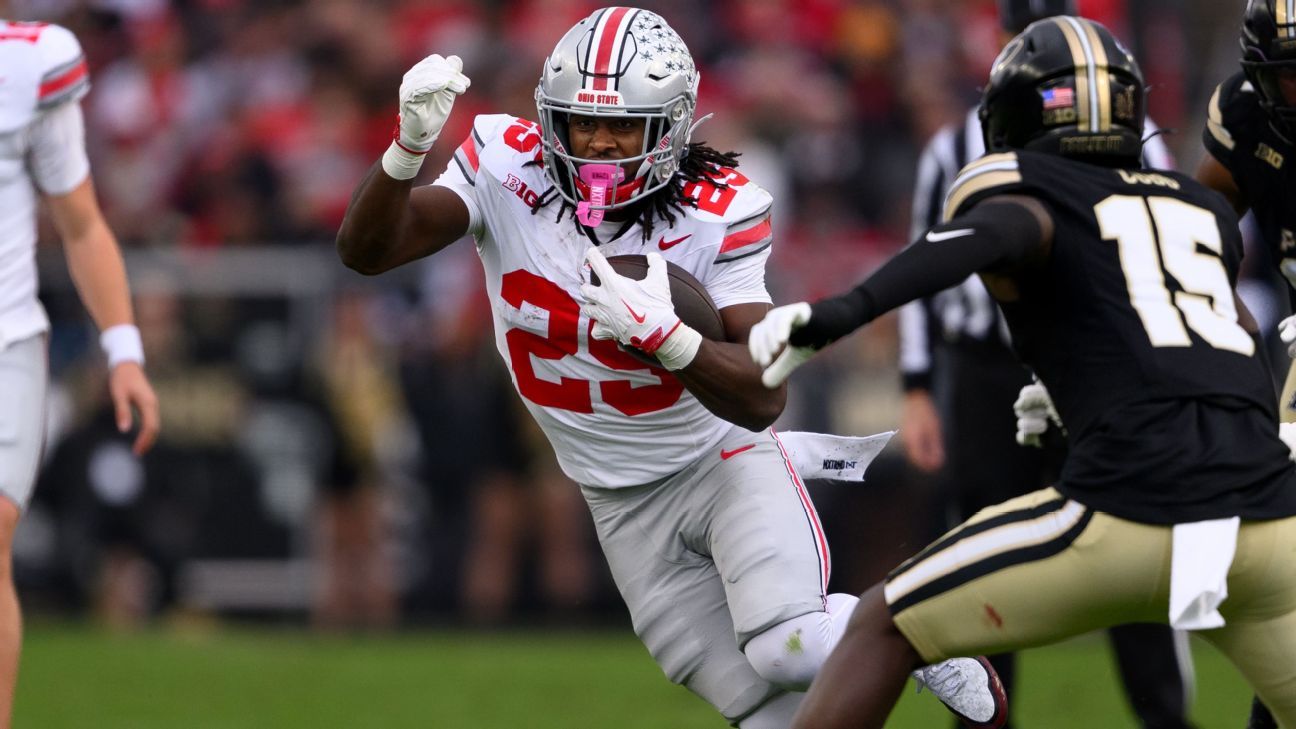
Potential fatal flaws that could sink 26 playoff contenders


-
Bill Connelly
It was an “almost” sort of Saturday in college football. No. 2 Indiana flirted with disaster at Penn State but survived thanks to an Omar Cooper Jr. toe tap. No. 9 Oregon nearly got Iowa’d but saved itself with an Atticus Sappington field goal. Auburn came close to actually winning a close game against a ranked team for once but got Diego Pavia‘d in overtime and couldn’t respond. We even had almosts at the FCS and Division II levels, where top-ranked teams North Dakota State and Ferris State each trailed late but rallied.
Granted, we still got some upsets. Two more top-15 ACC teams fell (in what feels like a weekly occurrence), No. 23 Washington fell to 2-6 Wisconsin in drizzly Madison, and Hawai’i knocked San Diego State out of playoff contention late Saturday night. Lord knows the ACC race doesn’t make any more sense than it did a week ago, but Week 11 wasn’t quite as chaotic as it could have been, and it ended up offering us a decent amount of clarity in the College Football Playoff hunt.
Using the same average CFP odds formula that I used last week — combining those of the Allstate Playoff Predictor with my own odds derived from SP+ — we now have eight teams with at least an 81% chance of making the field of 12. Loads of teams are in the hunt for those other four (or so) spots, but with three Saturdays remaining before Championship Week, let’s again break contenders into tiers and talk about their most toxic traits, the flaws that will likely keep them from either winning the national title or reaching the CFP at all.

Playoff contenders’ fatal flaws
Tier 1
At a combined 28-0 with a 95% (Indiana), 75% (Ohio State) and 49% (Texas A&M) chance of finishing the regular season 12-0, respectively, these three teams are just about at the finish line when it comes to sealing playoff bids. Indiana needed all 60 minutes to get to that point at Penn State, however. For these teams, we’re definitely gauging fatal flaws in terms of what will prevent them from winning the national title; almost nothing will prevent them from reaching the CFP.
 Indiana (average CFP odds: 99.9%): Big-play glitches. Indiana has had a dynamite defense since Curt Cignetti and coordinator Bryant Haines moved to Bloomington, but when the Hoosiers give up a successful play, it’s a very successful play. Usually that comes via run defense — as evidenced by a 59-yard run for Penn State’s Nicholas Singleton on Saturday — but IU also gave up six completions of 19 or more yards against an iffy PSU passing attack, and, combined with an ill-timed interception from Fernando Mendoza, it almost cost them their unbeaten record.
 Ohio State (99.6%): A merely decent run game. Indiana’s combined playoff odds are ever-so-slightly higher than those of top-ranked Ohio State, primarily because the Hoosiers only have two remaining regular-season games left and the Buckeyes have three (including one against 7-2 Michigan). But OSU is indeed the top-ranked team per both the computers. It’s not hard to see why: The defense ranks first nationally in points per drive and yards per play, and the offense features the best receiver in the country (Jeremiah Smith) and a quarterback completing over 80% of his passes (Julian Sayin).
Sayin will face plenty of elite defenses down the stretch, however — Michigan ranks ninth in defensive SP+, likely Big Ten championship opponent Indiana ranks fourth despite the big plays, and the CFP will obviously feature lots of good defenses — and there’s a chance the Buckeyes are rendered one-dimensional at some point because of a run game that ranks 19th in rushing success rate* but doesn’t really go anywhere (4.7 yards per carry). Sayin could carry the offense anyway, but he’s still a redshirt freshman.
(* Success rate: how frequently an offense is gaining 50% of necessary yards on first down, 70% on second and 100% on third and fourth.)
 Texas A&M (99.3%): Run defense. A&M once again proved its versatility on Saturday. The Aggies thumped a Missouri team that was admittedly without starting quarterback Beau Pribula — third-string freshman Matt Zollers was a dire 7-for-22 passing — but they showed off a wonderfully spaced passing game and an elite pass rush, and after a poor first half, the run game showed up in the second half, too. But even with no pass threat, Mizzou rushed for 207 yards, furthering a scary trend: A&M ranks 130th in yards allowed per carry (no sacks). I’m really struggling to see them winning three or four straight playoff games with that anchor dragging them down.
Tier 2
All of the teams in Tier 2 have one loss; four are part of either the Big Ten or SEC, while Texas Tech lands here both because of its overwhelming quality (the Red Raiders remain fourth in SP+) and its increasingly likely Big 12 title push. Only James Madison (74%) can top Tech’s 71% conference title odds, per SP+. There’s still a chance that one of these five teams misses the dance, so we’ll say fatal flaws mean a couple of different things here.
 Texas Tech (average CFP odds: 90.1%): Quarterback. On one hand, Tech has played a pretty weak schedule featuring only two SP+ top-40 opponents. On the other hand, after Saturday’s win over BYU, the Red Raiders have beaten those two opponents by a combined 63-17. The dream season rolls on in Lubbock. But the school of Patrick Mahomes and the Air Raid’s legacy is still merely good throwing the ball, not great. Behren Morton is (A) injury-prone and (B) only 45th in Total QBR, and while the Red Raiders have scored 34 or more eight times, they’re 53rd in three-and-out rate and are mortal against good defenses.
 Ole Miss (87.7%): The run game is a wash. Trinidad Chambliss‘ emergence at quarterback has given Ole Miss another dimension, both passing efficiently and running well at times. But even with Chambliss, and even with Kewan Lacy ranking 10th nationally in rushing yards (first in rushing TDs), Ole Miss still averages only 4.8 yards per carry while allowing the same. They have big advantages in the passing game (8.7 yards per dropback, 5.6 allowed), but it’s their only path to victory against awesome opponents, and it will be hard to win three or four playoff games without a solid Plan B.
 Oregon (87.0%): No easy points against good defenses. Oregon’s defense has rounded nicely into form, and beating Iowa in cold and rain, as the Ducks did Saturday, is a great way to prove your resourcefulness. But in their five games against SP+ top-50 defense, they’ve scored just 22.0 points per game in regulation, with Dante Moore averaging just 9.2 yards per completion (he averages 15.3 against everyone else). The run game almost always shows up, but can Moore make big throws in a run of big games?
 Georgia (85.4%): The defense only shows up when it has to. Georgia tried something novel Saturday, showing up before the fourth quarter and putting away Mississippi State early with a 38-0 run. But the season stats are still alarming: In the first half, the Dawgs rank 74th in points allowed per drive (2.1) and 106th in success rate allowed (44.8%). It’s hard to beat a string of elite teams if you’re taking 30-45 minutes to play your way into the game.
 Alabama (81.0%): No run game. As you’re probably picking up by now, a lot of contenders struggle either with or against the run (or both). Alabama ranks 83rd in yards allowed per carry (not factoring in sacks) despite a solid showing against an admittedly poor LSU run game, but the more alarming part was on the other side of the ball, where Jam Miller and Daniel Hill combined to rush 15 times for 34 yards. Bama is 126th in yards per carry and continues to put everything on Ty Simpson and the (strong) passing game.
Tier 3
Notre Dame was, as expected, the highest-ranked two-loss team in last week’s CFP rankings, while BYU and Georgia Tech have each suffered only one loss (even though both losses were recent and rather demoralizing). It’s highly unlikely all three will reach the CFP, but they each have a decent chance.
 Notre Dame (average CFP odds: 59.6%): Third-and-longs. They face too many of them on offense and allow too many conversions on defense. Thanks in part to a lot of negative run plays (which are often offset by explosive runs), CJ Carr & Co. have needed at least seven yards on 50% of third downs, 86th in the country. They’ve converted 46.9% of them (second), but that will be harder to do against elite teams. Meanwhile, they rank 87th in third-and-long conversion rate allowed.
 BYU (45.4%): Not enough offensive threat. Despite Saturday’s loss at Texas Tech, BYU still has plenty to offer: The Cougars defend the pass well and both create and avoid negative plays. But against two SP+ top-30 defenses, they’ve scored just 31 combined points and averaged 4.8 yards per play. Quarterback Bear Bachmeier has been excellent for a freshman, but he doesn’t get the help he needs against the best defenses.
 Georgia Tech (37.4%): Defense. The Yellow Jackets rank 82nd in points allowed per drive, and they don’t offer enough in terms of either efficiency (87th in success rate) or explosiveness (113th in percent of 20-yard gains allowed). Haynes King and the offense are dynamite, but the dam broke in Week 10’s 48-36 loss to NC State, and it will probably break again moving forward.
Tier 4a: Non-ACC teams
All of these teams are in “win out to finish the regular season, and you have to feel good about your chances” territory. Unfortunately, SP+ gives only one of them (Utah) a greater than 35% chance of winning out, and a 10-2 Utah team wouldn’t have a spectacular résumé to lean on.
 Texas (average CFP odds: 28.0%): Negative plays. Offensive line issues have plagued Texas this season; it ranks 108th in stuff rate allowed (run stops at or behind the line) and 122nd in pressure rate allowed. Running back injuries and Arch Manning taking forever to throw haven’t helped, obviously, and shuffling the line a bit paid off against Vanderbilt. But it’s a lot to ask for the O-line to suddenly become a strength in November.
 Oklahoma (27.0%): Offensive mistakes. Despite their past two games coming against top-10 offenses, the Sooners rank fifth in points allowed per drive and first in success rate allowed. The defense will keep showing up. But the offense has had to master the art of doing just enough to overcome a lack of big plays (102nd in yards per successful play), too many negative plays (84th in percentage of snaps gaining zero or negative yards) and turnovers (12 of them, for 71st).
 Utah (25.6%): Untrustworthy explosiveness. In their seven wins, the Utes have been the 1985 Chicago Bears — average score: 46-10 (same as Super Bowl XX) — but in two losses they’ve scored just 31 total points, with below-average efficiency, minimal big-play presence and six turnovers. Even including the wins, quarterback Devon Dampier averages just 10.3 yards per completion. As with other teams here, a lack of easy points will likely be their downfall.
 Vanderbilt (25.5%): The defense is fading quickly. While a majority of contenders are less trustworthy on offense, Vandy has few issues in that regard. Just ask Auburn, which was allowing 17.0 points per game in regulation this season but allowed 38 to the Commodores. But after allowing 34 points to Texas and 38 to Auburn, Vanderbilt ranks just 84th in points allowed per drive and 124th in completion rate allowed.
 USC (15.8%): Run defense. My line for a while has been that if Lincoln Riley could just craft a top-40 defense, he’d have himself a playoff team. Well, the Trojans are 42nd in defensive SP+. Close. But they’ll probably need to beat Iowa and Oregon to reach the CFP, and both teams have offenses built to punish a terribly passive run defense that ranks 126th in rushing success rate allowed. USC can do the bend-don’t-break thing pretty well, but that’s far too much bending.
 Michigan (7.6%): Not enough risk or reward. Michigan runs the ball well, prevents big plays and takes as few risks as possible with freshman quarterback Bryce Underwood. The issue: The Wolverines can’t force the issue very well. They can’t knock opponents off schedule to take advantage of a good pass rush, and among 132 QBR-eligible QBs, Underwood ranks 95th in completion rate (60.9%) despite ranking 86th in air yards per attempt (7.6).
Tier 4b: ACC teams
Someone has to win the ACC, and after both Louisville and Virginia went down Saturday, everything is as blurry as possible. Here are the current ACC title odds, per SP+: Georgia Tech 25.5%, Virginia 17.6%, Duke 17.1%, SMU 15.8%, Pitt 11.3%, Louisville 8.5%, Miami 4.2%. Tech is in Tier 3 thanks to its one-loss status, but there’s a 74.5% chance someone not named the Yellow Jackets will win the conference title.
 Miami (15.7%): Not enough big plays. The Canes still have a chance despite two demoralizing losses in the past month, but the offense has underachieved against projections five times in six games, primarily due to a total lack of explosiveness.
They have Georgia’s efficiency but Kentucky’s explosiveness. A lack of easy points will likely be their downfall.
 Virginia (14.5%): The offense has run out of juice. Even before Chandler Morris left Saturday’s loss to Wake Forest injured, Virginia had gained just 36 yards in 14 scoreless snaps, furthering a recent downward trend.
First six games: 6.4 yards per play, 46.5% success rate, 3.25 points per drive
Last four games: 5.0 yards per play, 37.0% success rate, 1.37 points per drive
That the Cavaliers reached 8-1 before finally dropping a close game was remarkable. It was also unsustainable. We’ll see if they’re able to rebound in an elimination game at Duke this week.
 SMU (11.8%): Alls vs. nothings. Let’s bring that efficiency and explosiveness chart back up for a moment and highlight a different team.
SMU has won five of six thanks to a surging defense and an offense that gets chunk plays from receivers Romello Brinson and Jordan Hudson and back Chris Johnson Jr. But even with some recent improvement, the Mustangs still rank 86th in success rate and 114th in three-and-out rate. That will make beating Louisville, Cal and a potential ACC championship game opponent awfully difficult.
 Louisville (8.1%): Negative plays. In Saturday’s 29-26 upset loss to Cal, Louisville ran 69 plays; 29 of them (42.0%) gained zero or negative yardage. The Cardinals turned positive yardage on just four of their last 13 snaps. That raised their season average to 35.0%, which ranks 116th nationally. Running back injuries and unreliable QB and line play are dragging Louisville down.
 Pittsburgh (7.8%): Red zone and turnovers. Pitt is on a five-game winning streak since making freshman Mason Heintschel the starting quarterback, and even if the Panthers don’t win the ACC or make the CFP, they’ll decide who will — their last three games are against Notre Dame, Georgia Tech and Miami. Pitt’s defense ranks fourth in three-and-out rate but 112th in red zone TD rate allowed. Meanwhile, even looking only at Heintschel’s starts, the offense ranks 78th in red zone TD rate and 73rd in turnover rate.
Tier (Group of) 5
With Memphis and San Diego State getting more-or-less eliminated in Week 11 – Memphis due to a tight loss to Tulane, SDSU due to a blowout loss at Hawai’i – we’re basically looking at a 1-in-3 playoff chance for James Madison and a 2-in-3 chance for whoever emerges from the American Conference battle royale.
 James Madison (34.3%): Turnovers and short fields. JMU ranks third in success rate allowed (31.2%) and eighth in yards allowed per play (4.5), but the Dukes have given up at least 20 points against all four top-60 offenses they’ve faced, in part because of turnovers (including a pair of fumble-return scores) or short fields generated by special teams issues. The Dukes are good at almost everything, but underdogs can’t afford egregious breakdowns in the CFP.
 North Texas (28.3%): Run defense. Drew Mestemaker is on pace for about 4,000 passing yards, UNT ranks third nationally in points per drive, and the defense – forever flawed in Denton – ranks a solid 26th in yards allowed per dropback. There’s a lot to like here. One thing to dislike? The Mean Green are 125th in rushing success rate allowed. In their lone loss, to USF, they gave up 306 rushing yards. That feels quite damning.
 South Florida (22.4%): Soft pass defense. Like North Texas, USF can score in all sorts of ways, and the Bulls’ run defense creates negative plays and renders opponents one-dimensional. But they can let opponents off the hook. They’re just 73rd in both third-down conversion rate allowed and sack rate, and in two losses their opponents completed 69% of their passes.
 Tulane (7.5%): Defensive inefficiency. When Tulane looks good, you see a clear playoff contender. The Green Wave have two power-conference wins on their résumé, and they look the part athletically. But they rank 117th in success rate allowed, they don’t create negative plays and their defense no-showed in two losses, allowing a combined 93 points and 1,071 yards to Ole Miss (forgivable) and UTSA (less so).
This week in SP+
The SP+ rankings have been updated for the week. Let’s take a look at the teams that saw the biggest change in their overall ratings. (Note: We’re looking at ratings, not rankings.)
Moving up
Here are the five teams that saw their ratings rise the most this week:
Hawai’i: up 4.1 adjusted points per game (ranking rose from 90th to 72nd)
Utah State: up 3.3 points (from 95th to 79th)
Akron: up 3.1 points (from 126th to 123rd)
Florida International: up 3.1 points (from 125th to 118th)
Kentucky: up 3.1 points (from 63rd to 52nd)
Hawai’i’s blowout of San Diego State was a lovely highlight for a lovely season out on the islands. The Rainbow Warriors hadn’t won more than six games in a season since 2019 and haven’t finished in the SP+ top 75 since 2010, but they’re currently 7-3 and 72nd. College football is a lot more fun when Hawai’i’s doing mean things to opponents late on Saturday night.
Meanwhile, Kentucky has overachieved against SP+ projections by double digits in three of its last four games and has won two in a row to get to 4-5 and keep bowl hopes alive. Nice second-half improvement from Mark Stoops’ Wildcats.
Moving down
Here are the five teams whose ratings fell the most:
San Diego State: down 4.5 points (ranking fell from 44th to 56th)
Navy: down 4.0 points (from 50th to 63rd)
Florida: down 3.1 points (from 39th to 48th)
Nevada: down 2.8 points (from 123rd to 128th)
BYU: down 2.8 points (from 16th to 22nd)
In my Friday preview, I wrote that if BYU’s Bachmeier was ever going to look like a freshman, it was going to be against a hostile crowd and hostile defense in Lubbock. He didn’t completely implode by “freshman implosion” standards, but he averaged just 4.7 yards per dropback, found no room to run, threw what amounted to a game-clinching interception in the third quarter and lost a late fumble for good measure. Tech was too good, and BYU’s offensive SP+ ranking fell from 25th to 39th.
Who won the Heisman this week?
I am once again awarding the Heisman every single week of the season and doling out weekly points, F1-style (in this case, 10 points for first place, nine for second, and so on). How will this Heisman race play out, and how different will the result be from the actual Heisman voting?
Here is this week’s Heisman top 10:
1. Diego Pavia, Vanderbilt (25-for-33 passing for 377 yards and 3 touchdowns, plus 114 non-sack rushing yards and a TD against Auburn).
2. Emmett Johnson, Nebraska (28 carries for 129 yards and a touchdown, plus 103 receiving yards and 2 TDs against UCLA).
3. Jake Retzlaff, Tulane (16-for-23 for 332 yards and 3 touchdowns, plus 53 non-sack rushing yards and a TD against Memphis).
4. Byrum Brown, USF (14-for-15 for 239 yards and 2 touchdowns, plus 109 non-sack rushing yards and a TD against UTSA).
5. Ashton Daniels, Auburn (31-for-44 for 353 yards and 2 touchdowns, plus 103 non-sack rushing yards and 2 TDs against Vanderbilt).
6. Bryun Parham, UConn (16 tackles, 1.5 TFLs, 1 sack, 1 forced fumble and 1 interception against Duke).
7. Julian Sayin, Ohio State (27-for-33 for 303 yards, 1 TD and 1 INT against Purdue).
8. Isaiah Smith, SMU (nine tackles, four sacks against Boston College).
9. Beau Sparks, Texas State (10 catches for 186 yards and a touchdown, plus a 49-yard TD run against Louisiana).
10. Antwan Raymond, Rutgers (41 carries for 240 yards and a touchdown against Maryland).
Vandy’s defense is running on fumes, and Auburn’s offense showed up for just about the first time all season, but the Commodores’ playoff hopes remain alive because Diego Pavia pulled another Diego Pavia. Vanderbilt trailed by 14 early and nearly blew it at the end of regulation, but Pavia’s third TD pass of the evening, to Cole Spence in overtime, saved the day and put him atop this list.
Honorable mentions:
• Sieh Bangura, Ohio (17 carries for 102 yards and a touchdown, plus 30 receiving yards and a 97-yard kick return TD against Miami of Ohio).
• Jacob De Jesus, Cal (16 catches for 158 yards and a touchdown against Louisville).
• Phillip Dunnam, UCF (four tackles and three interceptions, including a pick-six, against Houston).
• Nate Frazier, Georgia (12 carries for 181 yards and a touchdown against Mississippi State).
• Makai Lemon, USC (five catches for 166 yards and a touchdown against Northwestern).
• Jayden Maiava, USC (24-for-33 for 299 yards, 2 TDs and 1 INT, plus 19 non-sack rushing yards and 1 TD against Northwestern).
• Josh Moten, Southern Miss (six tackles, three interceptions and 1 pass breakup against Arkansas State).
• Mason Posa, Wisconsin (11 tackles, 2.5 sacks, 1 forced fumble, 1 fumble recovery and 1 pass breakup against Washington).
• Jaron-Keawe Sagapolutele, Cal (30-for-47 for 323 yards and 2 touchdowns against Louisville).
• Gunner Stockton, Georgia (18-for-29 for 264 yards and 3 touchdowns, plus 31 non-sack rushing yards against Mississippi State).
Through 11 weeks, here are your points leaders. Where there’s a tie, I’ll use players’ points from the past four weeks as a tiebreaker.
1. Julian Sayin, Ohio State (29 points, 20 in the past four weeks)
2. Ty Simpson, Alabama (29 points, zero in the past four weeks)
3. Taylen Green, Arkansas (27 points)
4. Trinidad Chambliss, Ole Miss (25 points)
5. Diego Pavia, Vanderbilt (24 points)
6. Demond Williams Jr., Washington (21 points)
7. Gunner Stockton, Georgia (19 points, 10 in the past four weeks)
8. Fernando Mendoza, Indiana (19 points, nine in the past four weeks)
9. Luke Altmyer, Illinois (16 points)
10. Jake Retzlaff, Tulane (14 points)
I understand that it’s my own damn fault for bringing stats to the vibes-based Heisman race, but I’m never going to fully understand Heisman odds. Sayin entered the week as the Heisman betting favorite and went 27-for-33 for 303 yards, a touchdown and an interception. His Total QBR for the week was 89.2, he kept his season completion rate above 80% — a ridiculously high number — and his interception happened when the Buckeyes were up 21.
Fernando Mendoza, meanwhile, went just 19-for-30 for 218 yards against a Penn State defense that Sayin just torched. He averaged 6.1 yards per dropback with a 75.0 Total QBR, both his worst numbers since Week 1. He threw a devastating fourth-quarter pick that could have cost the Hoosiers the game. But then he rallied, making a couple of lovely throws on Indiana’s game-winning drive, and receiver Omar Cooper Jr. made maybe the greatest TD catch of the season — or the 2020s? The 21st Century? Ever? — to save his team.
And after all that … Mendoza became the Heisman betting favorite? Cooper’s amazing catch became Mendoza’s Heisman moment because Sayin’s team won too easily? Do I have that right? Mendoza winning the Heisman would be a spectacular story (just add it to Indiana’s list of spectacular stories at this point), but if anything happened Saturday, it should have been Sayin solidifying his lead.
My 10 favorite games of the weekend
1. No. 2 Indiana 27, Penn State 24. Regardless of my confusion toward Heisman odds, this was a brilliant football game. Penn State reminded everyone of its talent, the Nittany Lions’ home crowd came through, and Indiana drove 80 yards in 1:15 for a glorious game-winning TD. Brilliant stuff, with a brilliant in-game win probability chart.
2 and 3. Division II: No. 1 Ferris State 51, Saginaw Valley State 45 (2OT); No. 6 Colorado State-Pueblo 41, Colorado Mines 34 (OT).
Division II brought it Saturday. Ferris State won its first nine games by an average of 54-15, but redshirt freshman Wyatt Bower, Trinidad Chambliss’ successor, looked incredibly freshman-like Saturday, throwing three picks in eight passes and losing two fumbles. With the Bulldogs trailing 24-7 early in the third quarter, backup QB Chase Carter keyed a 31-7 run, but SVSU tied the game on a Mason McKenzie-to-Zarek Zelinski touchdown pass with 1:55 left. FSU missed a 39-yard field goal at the buzzer and couldn’t seal the deal until Taariik Brett’s 12-yard touchdown run in the second OT. If not for the Mendoza-to-Cooper touchdown, this would have easily been the No. 1 game of the week.
Meanwhile, after coming back from 21 points down to beat a top-10 Western Colorado team last week, CSU-Pueblo spotted rival Colorado Mines a 28-6 lead late in the first half, then slowly clawed all the way back. Roman Fuller found Marcellus Honeycutt Jr. for a tying 32-yard touchdown with 56 seconds left, then hit Reggie Retzlaff for the go-ahead score in OT. Peyton Shaw then sealed the ThunderWolves’ win with an interception.
4. Delaware 25, Louisiana Tech 24. The Blue Hens led 16-10 with under four minutes remaining, but Louisiana Tech scored twice in 46 seconds, first on a short TD run, then on a Jacob Fields pick-six, to take a 24-16 lead. Delaware’s Nick Minicucci rebounded with a TD pass to Elijah Sessoms with 34 seconds left, then the Blue Hens recovered an onside kick and set Nate Reed up for a game-winning 51-yard field goal.
1:16
Louisiana Tech Bulldogs vs. Delaware Blue Hens: Full Highlights
Louisiana Tech Bulldogs vs. Delaware Blue Hens: Full Highlights
5. No. 9 Oregon 18, No. 20 Iowa 16. Iowa proved its top-20 bona fides, Dante Moore and Oregon proved their playoff chops and Atticus Sappington nailed a huge field goal. Just a great game in November Iowa weather.
SAPPINGTON CONNECTS FOR THE DUCKS! pic.twitter.com/8QZdcfVMhW
— CBS Sports College Football 🏈 (@CBSSportsCFB) November 8, 2025
6. No. 16 Vanderbilt 45, Auburn 38 (OT). Indiana’s win probability chart was a classic of one genre (blow it, and then save yourself). Vandy’s was a classic in another (rally, then nearly fall apart multiple times).
7 and 8. FCS: No. 2 Montana 29, Eastern Washington 24; No. 1 North Dakota State 15, No. 15 North Dakota 10. Top-ranked teams struggled in FCS as well. NDSU, barely challenged all year, trailed its in-state rival 10-9 heading into the fourth quarter. The Bison finally took their first lead on Cole Payton‘s 8-yard touchdown with 2:22 remaining, but UND drove inside the NDSU 30 in the closing seconds before Anthony Chideme-Alfaro made a lunging interception to seal the win.
0:31
Picked! Anthony Chideme-Alfaro hauls in the interception
Picked! Anthony Chideme-Alfaro hauls in the interception
Of course, we’ve seen game-sealing picks before. Have you ever seen a game-sealing fumbled spike?
0:23
Eastern Washington loses on fumbled spike attempt
Jake Schakel fumbles the spike attempt, and the Grizzlies’ defense recovers it.
Unbeaten Montana took a 29-14 lead early in the third quarter but shifted into cruise control too early, allowing 4-6 EWU to score twice, recover a late onside kick — it was a great week for successful onside kicks, by the way — and drive inside the 10 with eight seconds remaining. But Jake Schakel, who shined in his first career start, let the ball slip out of his hands on a spike, and the Griz survived.
9. UConn 37, Duke 34. There were 12 scores in this game; 10 gave a team the lead, including all six in the second half. Skyler Bell‘s 19-yard touchdown catch gave UConn the advantage with 1:58 remaining, but the game wasn’t iced until Trent Jones II recovered a sack-and-strip of Darian Mensah with 18 seconds left.
10. Sam Houston 21, Oregon State 17. Oregon State has suffered some utterly snake-bitten losses this season, but this one takes the cake. The Beavers led 17-0 midway through the second quarter, but thanks to an interception (which set up a 35-yard touchdown pass), a kick return touchdown to open the second half and a blocked punt return score with 8:29 remaining, SHSU somehow came back to win its first game of the season despite a yardage disadvantage of 474-157. Shocking stuff. And you know what? Good. I ache for Beaver fans this year, but fielding even a bad team is so involved and so difficult, and every team deserves to celebrate at least one win. Now we just need to get 0-9 UMass off the schneid at some point in the next three weeks.
Honorable mention:
• Division II: Chadron State 27, No. 11 Western Colorado 24 (OT).
• FCS: No. 10 Mercer 49, No. 24 Western Carolina 47.
• FCS: Mercyhurst 16, Saint Francis 15.
• Missouri State 21, Liberty 17.
• Ohio 24, Miami (Ohio) 20 (Tuesday).
• Division II: Ouachita Baptist 42, SW Oklahoma State 38.
• Tulane 38, Memphis 32 (Friday).
• FCS: William & Mary 30, Campbell 27 (OT).
• Wisconsin 13, No. 23 Washington 10.
• Division III: No. 14 Wisconsin-Platteville 24, Wisconsin-Stout 23.
One last special shout-out: Army’s 14-13 win over Temple didn’t quite make the list, but Army’s last drive — an epic, 18-play, 9:53 clock killer — deserved to.
The midweek playlist
Ohio at Western Michigan (Tuesday, 8 p.m., ESPN2). One week into our midweek MACtion slate, the MAC title race is as blurry as ever. Ohio’s win over Miami gave the Bobcats the slightest of edges, but it could disappear this week. Current MAC title odds, per SP+: Ohio 22.2%, Toledo 20.2%, Western Michigan 20.1%, Miami 19.2%, Buffalo 16.7%. What a race! The winner of this one should inch ahead in the odds.
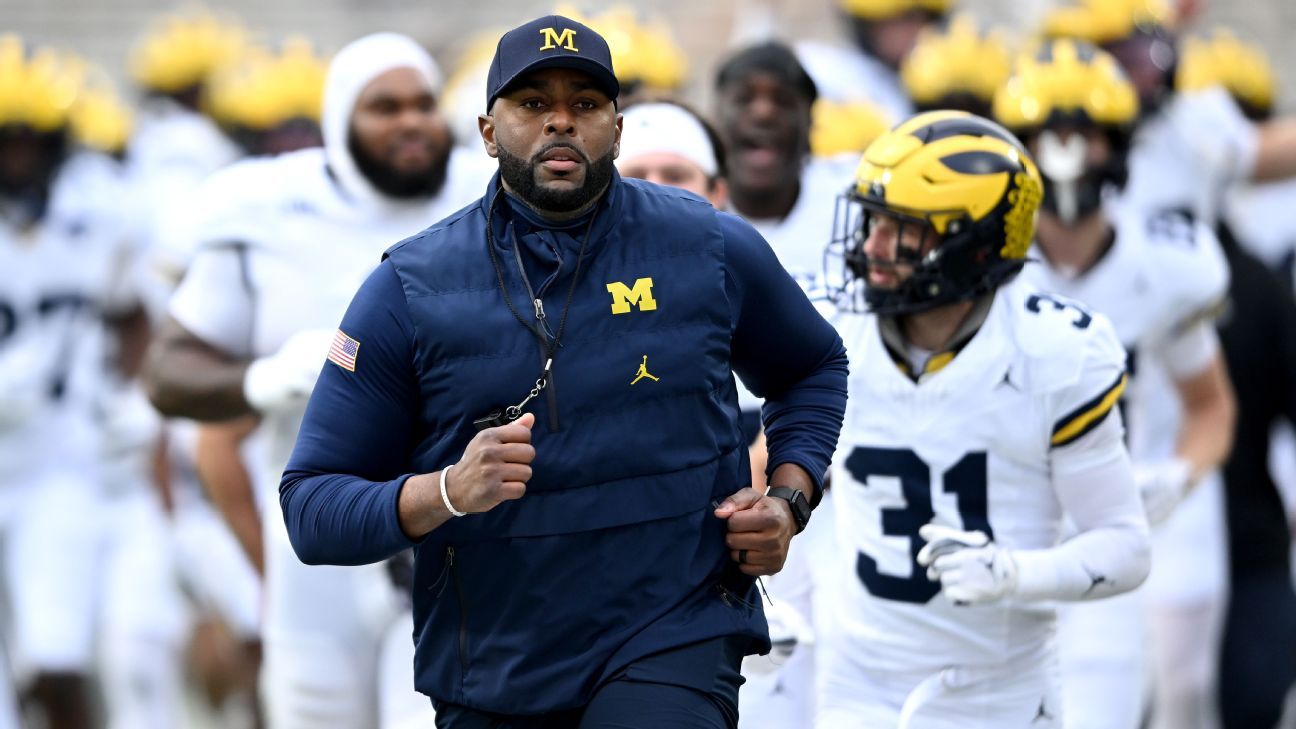
Michigan fired coach Sherrone Moore for cause Wednesday after a university investigation that found “credible evidence” he was engaged in an inappropriate relationship with a staff member.
“This conduct constitutes a clear violation of University policy, and U-M maintains zero tolerance for such behavior,” athletic director Warde Manuel said in a statement Wednesday.
Biff Poggi was named interim coach. Michigan is slated to play Texas in the Cheez-It Citrus Bowl on Dec. 31.
The news ends Moore’s Michigan coaching career at 17-8, with his final game a 27-9 loss to Ohio State to conclude a 9-3 season. The 39-year-old had gone through two years of his five-year contract as the Wolverines’ head coach, and the school’s firing for cause means it isn’t planning to pay the nearly $12.3 million it would have owed him on his deal.
Moore was promoted to Michigan’s head coach in the wake of Jim Harbaugh’s departure for the NFL after Michigan’s 2023 national title.
Moore endured some off-field controversies before his firing, including a suspension in Week 3 and Week 4 of this season tied to the Connor Stalions illegal advanced scouting scheme.
Moore was set to serve an additional one-game suspension for the start of the 2026 season as well. He was also suspended for the season opener in 2023 as part of self-imposed penalties for breaking recruiting rules.
Moore was a successful offensive line coach and offensive coordinator before being promoted to head coach. He was a finalist for the Broyles Award in 2023, when he was the playcaller on Michigan’s national title team.
The firing puts Michigan in a difficult position of finding a coach in the wake of what’s been considered the most volatile coaching carousel in recent college football history. There’s already been a flurry of hires and extensions, which will complicate Michigan’s search.

Throughout the 2025 season, rumors circulated that Michigan coach Sherrone Moore was in danger of losing his job. No credible details surfaced and Moore continued his duties, completing the regular season at 9-3 and participating in a news conference Monday to discuss Michigan’s upcoming game against Texas in the Cheez-It Citrus Bowl.
Two days later, the news came down: Michigan fired Moore for cause, after finding that the coach engaged in an inappropriate relationship with a staff member. The dismissal marked a very troubling end to Moore’s tenure at Michigan, which began in 2018 when he joined coach Jim Harbaugh’s staff as tight ends coach. He then became offensive line coach and oversaw a group that won the Joe Moore Award.
Moore’s ascent continued as offensive coordinator, and he stepped in for Harbaugh as acting head coach during Harbaugh’s Big Ten-imposed suspension late in the 2023 season. An emotional Moore led Michigan to a win at Penn State, and then followed with others against Maryland and Ohio State, as the Wolverines went on to their third straight Big Ten title and their first national title in the BCS/CFP era. Then, when Harbaugh returned to the NFL, Michigan promoted Moore as permanent coach. He stunned Ohio State in his first full season as coach, and went 17-8 overall, but now he’s out.
Michigan enters the coaching market at a precarious time, as all major openings have been filled and, perhaps more important, a number of potential candidates have re-signed with their existing schools. Still, Michigan can offer a lot — an iconic American sports brand with deep pockets and a recent run of regional and national success — and should garner good interest for the job. The school clearly needs a replacement with no off-field character concerns.
Beyond the coaching search, though, Moore’s firing undoubtedly rocks the program weeks before the transfer portal opens. Here’s a look at the players and recruits Michigan must strive to retain, as well as the coaches the school could target to replace Moore. — Adam Rittenberg
Candidates | Transfers | Recruits
Five candidates for the job
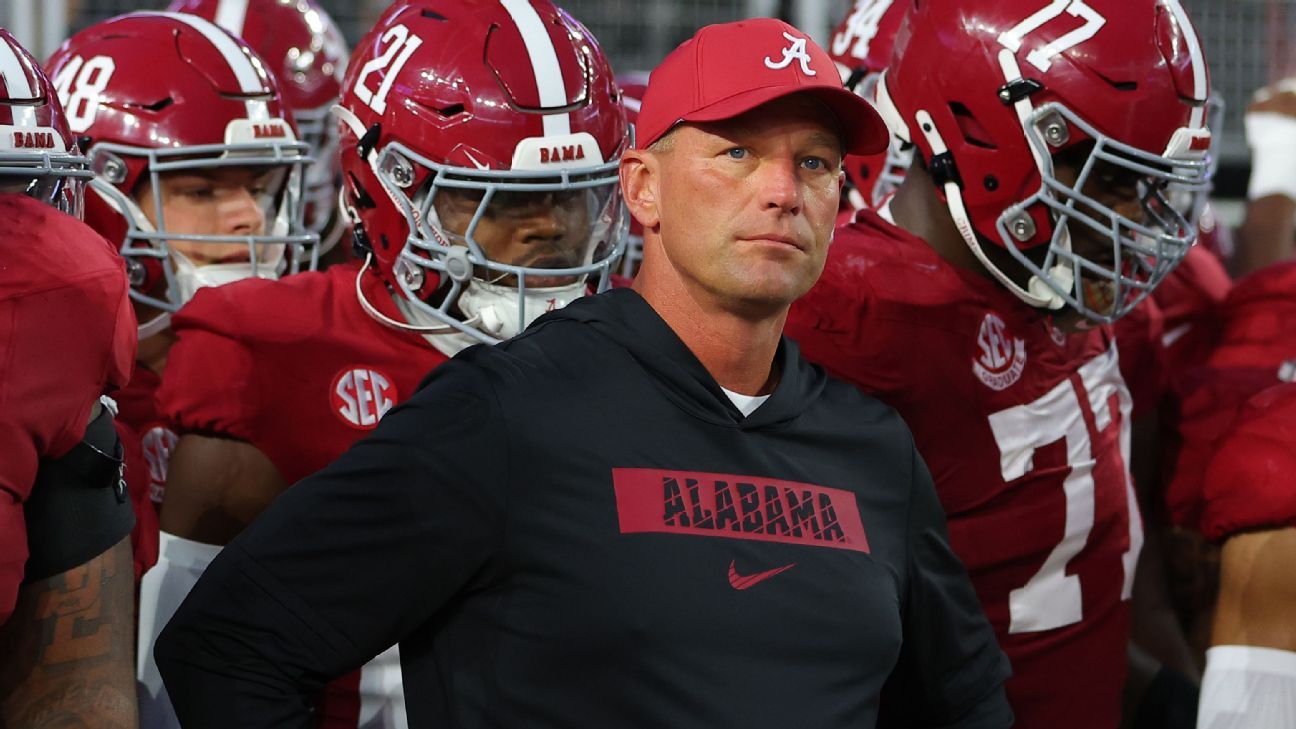
Alabama coach Kalen DeBoer: He has stated that he’s happy at Alabama, following some half-baked buzz about Penn State as a potential destination. DeBoer was never going to Happy Valley, but Ann Arbor? He might have to think about it, especially if Alabama makes an early exit in the CFP. DeBoer, 51, likely would have been a top candidate for Michigan if Harbaugh had left a bit earlier. He landed his first FBS coaching job minutes from Michigan Stadium at Eastern Michigan, where he served as offensive coordinator from 2014 to 2016. DeBoer also has Big Ten experience as Indiana’s OC in 2019. He’s 56-16 as an FBS coach at Fresno State, Washington and Alabama, with two CFP appearances and a national runner-up finish (to Michigan) in 2023. If Michigan can land DeBoer, it should shut down its search.
Los Angeles Chargers defensive coordinator Jesse Minter: There are two challenges with Minter’s candidacy, but he still might be worth considering, especially under less-than-ideal circumstances. Minter received a one-year show-cause for recruiting violations while on Harbaugh’s staff at Michigan. He also worked closely with Connor Stalions, the ex-Michigan staffer at the center of the signal-sealing scandal. Minter, 42, also projects as a strong candidate for NFL head coaching openings after his strong performance alongside Harbaugh with the Chargers. He spent 2022 and 2023 as Michigan’s defensive coordinator, and in 2022 was a finalist for the Broyles Award, which goes to the nation’s top assistant. The son of college coach Rick Minter, Jesse has never been a head coach but would bring extensive assistant experience from both college and the NFL.
Washington coach Jedd Fisch: He has been just about everywhere in his coaching career, including Michigan, where he coached quarterbacks and wide receivers under Harbaugh in 2015 and 2016. Fisch, 49, has a distinct mix of college and NFL experience, and has had success as a head coach with both Arizona and Washington. He elevated Arizona to 10 wins and an AP No. 11 finish in 2023, and has led Washington to consecutive bowl appearances. Fisch is a gifted playcaller and has an incredibly large network of coaches, allowing him to compile a strong staff at Michigan in the wake of Moore’s ouster.
Duke coach Manny Diaz: He oversees the reigning ACC champions and has a solid overall record (38-24) at two Power 4 programs. Diaz, 51, is extremely sharp and likely would connect well with Michigan’s fans and key constituents. He also has some Big Ten experience after serving as Penn State’s defensive coordinator in 2022 and 2023, when the Lions ranked No. 6 nationally against the run during the span. Diaz has coached extensively in the South — Miami, Texas, Mississippi State, Louisiana Tech — and likely could enhance Michigan’s recruiting in those areas as well as the Midwest.
Cleveland Browns offensive coordinator Tommy Rees: He’s only 33 so there would be some risk involved, but Rees has positioned himself for head coaching opportunities in the near future. He was a top candidate at North Carolina last year and has been on the radar at UCLA and elsewhere. Things obviously haven’t gone great with the Browns the past two seasons, but the issues in Cleveland go deeper than Rees. A former Notre Dame quarterback under Brian Kelly, Rees began his coaching career in the Big Ten as a graduate assistant at Northwestern and held coordinator roles with both Notre Dame and Alabama before entering the NFL. He might be a bit of a stretch for Michigan, but an interview would make sense, especially given the timing of this search. — Rittenberg
Most important players to retain
QB Bryce Underwood: The signature recruiting victory of Moore’s tenure at Michigan was flipping Underwood away from LSU last year and securing a No. 1 overall recruit at QB to build the program’s future around. The 6-foot-4, 228-pound rising star from Detroit had a solid debut season with the Wolverines: 2,229 passing yards on 61% passing, 323 rushing yards, 14 total touchdowns and eight turnovers with the seventh-best QBR (73.0) in the Big Ten. Underwood was good enough to get this team to 9-3, and it’s easy to see the potential for him to get so much better and be a first-round talent two years from now. The firing of Moore is a major crossroads moment early in his career, and it’ll be fascinating to see how one of the highest-paid young QBs in the game navigates this change ahead of the portal window.
RB Jordan Marshall: The talented sophomore back stepped up for an injured Justice Haynes and emerged as the fifth-leading rusher in the Big Ten with 932 yards and 10 touchdowns on 6.2 yards per carry, earning second-team All-Big Ten recognition. Marshall produced four consecutive 100-yard games late in the season, including a career-high 185 yards against Purdue, and has two more seasons of eligibility. He’ll be a big priority for the next coaching staff, especially if Haynes decides to go pro.
WR Andrew Marsh: The Wolverines have been searching for a difference-maker at wide receiver and Marsh, a touted top-100 recruit, definitely flashed during his true freshman season in Ann Arbor. The 6-foot, 190-pound wideout caught a team-high 42 passes for 641 yards and three touchdowns and put together some impressive performances, including a 12-catch, 189-yard day to beat Northwestern. He’ll have three more seasons of eligibility.
CB Jyaire Hill: The 6-2, 190-pound cover man had big expectations as a potential early-round draft pick entering 2025. He had an inconsistent season in allowing 136 passing yards and three touchdowns on 38 targets with six pass breakups and one interception. Hill still has two more seasons of eligibility and an opportunity to raise his draft stock if he comes back in a secondary that could potentially return several more veteran starters.
OT Andrew Sprague: Michigan has a bunch of quality young offensive line prospects who’ll get plenty of attention from other programs if they’re looking to move on after Moore’s firing. Sprague, a 6-8, 315-pound redshirt freshman, started all 12 games at right tackle this season and allowed just two sacks on 345 snaps in pass protection, according to ESPN Research, while earning honorable mention All-Big Ten recognition. Blake Frazier also earned seven starts at left tackle as a redshirt freshman, and true freshmen Ty Haywood and Andrew Babalola were top-50 recruits a year ago. — Max Olson
Three key recruits
Note: Michigan signed 27 high school prospects during this month’s early signing period. In the event of a coaching change after the early signing period, players can be granted their release from a given school without penalty.
DE Carter Meadows, No. 23 in the 2026 ESPN 300: ESPN’s No. 4 defensive end in 2026 is a rangy, 6-6 pass rusher from Washington, D.C. Meadows initially committed to the Wolverines in June over Ohio State, Penn State and South Carolina and signed with Michigan on Dec. 3 as the program’s highest-ranked defensive addition since the 2022 cycle. An elite basketball talent, Meadows is a raw, high-upside prospect with all the tools to develop into a difference-maker on the Wolverines’ defense.
RB Savion Hiter, No. 27 in 2026 ESPN 300: Michigan hasn’t signed a higher-ranked running back in the ESPN recruiting era (since 2006) than Hiter, the productive, 6-foot, 210-pound rusher from Louisa, Virginia. Moore and the Wolverines made Hiter a priority in 2026 and ultimately beat Georgia, Ohio State and Tennessee to his pledge in August. With a mix of power and speed, Hiter could be ready to compete for carries immediately next fall, especially if Justice Haynes heads to the NFL.
DT Titan Davis, No. 171 in 2026 ESPN 300: The Wolverines dipped into St. Louis and beat Alabama to land Davis in June. The 6-4, 275-pound defensive lineman carries the versatility to play both inside and off the edge, but projects long term as an intriguing defensive tackle prospect. With Michigan expected to lose a number of players on the defensive line after the 2025 season, Davis has the potential to carve a role in the program’s rotation as a true freshman next fall. — Eli Lederman

-
Ryan Hockensmith
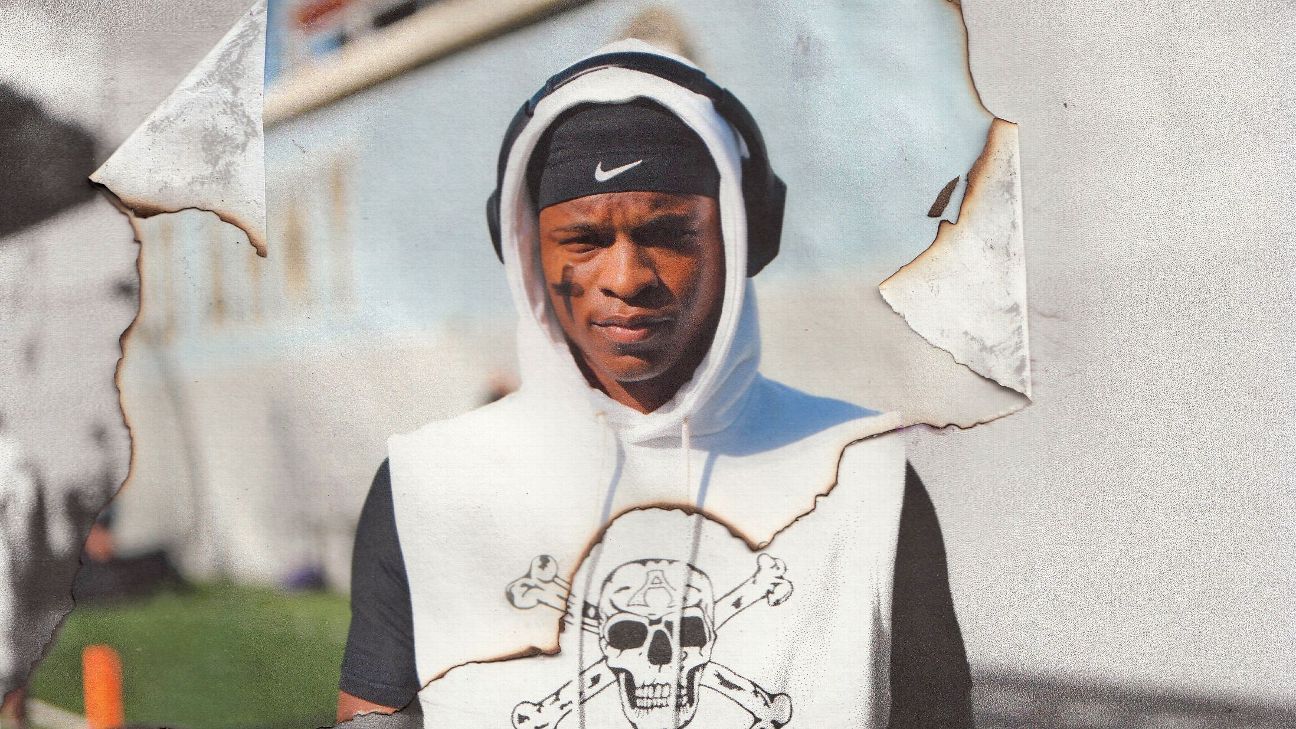
HE IS HALF ASLEEP when he feels his dad slam the brakes of his van. Larry Pickett Jr.’s head darts up from the back seat, and he squints his eyes to try to understand the mayhem on the road in front of him.
Smoke rising. Cars stopped. Wires down. People standing around. A man stuck in a car — is he alive? Sparks buzz underneath his vehicle.
It’s midnight on Aug. 31, a few miles south of West Point, New York, where Pickett is a sophomore safety on the Army football team. About 20 different things are happening at once, with just enough headlights aimed in opposite directions to make it more blurred than illuminated in the cool late summer air. Fifty yards away, a closed Dunkin’ store provides a slight orange and pink tint in the background.
All six people in the van — Pickett, his mom, dad, two sisters and his girlfriend — are racing to synthesize what happened before they arrived. This is one of those rare moments in life that people stumble into, where they have to decide whether to run toward danger or stay safe on the perimeter.
Why isn’t anybody helping the driver? Why are they just standing there?
Pickett’s brain is different. He wanted to be in the Army when he was a preschooler, wearing camo for Halloween and watching “Saving Private Ryan” with his mom. He wasn’t drawn to the idea of war; he loved the military’s structure and insistence on thinking of others before oneself. So, when he had offers from schools such as Duke, NC State and South Carolina near his hometown of Raleigh, North Carolina, he chose Army to try to do something of maximum service with his life, as his parents and his Christian faith preach.
The whole scene is coming into focus now. A man clearly hit a utility pole, causing the power lines to fall and begin sparking about 10,000 volts of electricity into the air near the driver’s side door.
Pickett sits up in his seat but doesn’t say anything. Then a familiar voice cuts through the air: “Larry, you have to get that man out of the car,” his mom says. Pickett, 20, streaks out of the van, toward the car, the power line flopping and spraying electricity near the car.
He didn’t know it at the time, but in about 60 seconds, all four tires will pop, and the car will explode in flames.
WHEN PICKETT GETS to the car, the man isn’t moving. He’s staring off into space, blinking but frozen. Pickett notices a power line directly under the driver’s side, and he pauses for a moment. He feels heat pouring from inside of the car and he can’t help but wonder if the man is being electrocuted.
He hesitates for a moment, then says a prayer before he reaches his hands under the man’s armpits.
Phew. No jolt.
The car has become what electricity expert John Averrett calls a “Faraday cage,” which is a structure meant to conduct electricity — even from a lightning strike — without harming the person inside. The rubber tires can dump the voltage from the metal car into the ground without shocking the person inside.
Averrett, an electrical engineer who is licensed in 20 states and has done energy work for several NASA shuttles, has actually seen cases where people in cars think they are OK, then get out of the car and are killed by the voltage in the ground.
When Averrett analyzed the circumstances around what the Picketts encountered, he says that the scene was so hazardous that even if police or fire had gotten there first, they would have likely had to just watch the car go up in flames. “It’s in their training to not go within about 30 feet of potential live wires before the electricity is turned off for the entire area,” he says.
He pauses for a moment and then says, “If people knew more about electricity, they probably wouldn’t want it in their homes.”
Pickett feels nothing, though, as he grabs the driver’s body from behind the steering wheel. The man, David Denton, is lodged and motionless, and Pickett quickly realizes as he yanks on his body that he isn’t going to be able to maneuver the man out of the car and not hit the wire.
He pulls again, managing to get Denton angled out the side of the car, but he isn’t sure if he will be able to lug him any farther. The entire car seems to be getting hotter by the second. He feels like the clock is ticking down fast and he needs help.
That’s when he realizes someone is beside him at the exact moment he needs him. It’s one of his heroes — his dad, Larry Pickett, Sr.
THE HELP KICK-STARTS Pickett Jr. He muscles up and pulls the man’s torso out of the car. Larry Sr. gets under the man’s legs, but he immediately loses his footing and falls to his hip on the ground, dangerously close to the downed power line.
But he manages to scramble back to his feet and help carry the man across the street as another tire pops. “The best way to describe it is that it was like there were fireworks going off,” Pickett Jr. says.
His mom, Shawnonne, gets his 15-year-old sisters, Lauren and Olivia, into the van, as Lauren films most of the rescue. The scene is terrifying, even from a distance, but Shawnonne is heard on video urging them on.
Three decades earlier, she met Larry Sr. in what would be a great rom-com setup. Larry, 17, was riding in a friend’s car on Dec. 23, 1996, when a beautiful 15-year-old girl named Shawnonne (pronounced Shuh-known) Taylor made her way through a crosswalk in front of them. He felt like he was meant to talk to her, but his friend drove off before he could. An hour later, when he ran into her on another street in Raleigh, he felt like fate had swiped right on them.
Next, he pulled off an approach that will forever be a part of their family lore. He introduced himself to her, but instead of asking for her number, he wrote down his and handed it to her. She thought he was very good-looking and appreciated that he didn’t ask for her number — she considered it gentlemanly to leave her feeling no pressure to ever call. And the fact that he had a Nokia cellphone certainly didn’t hurt.
So, she did call — for 55 seconds. Back then, Pickett had a cellphone plan that allowed for one free minute before the rate jumped to 99 cents per minute. So, she started calling him to say she was home, then he would hang up and find a landline to call her back. Their relationship was forged on those calls, one 55-second “Hey, I’m home” at a time.
They started dating, and they haven’t stopped. They’re that couple who won’t stop saying nice things about each other, even if their spouse isn’t around. They go to church together and insist on a date night every week, usually to a local Steelers bar and restaurant, Overtime Sports Pub. Shawnonne’s brother, Ike Taylor, won two Super Bowls as a corner in Pittsburgh, so Pickett Sr. became an honorary Steelers fan. He even has a tattoo of the date they met and the GPS coordinates of the crosswalk. Everyone should love the way they do.
On the night of the accident, it’s her voice propelling son and husband along. She yells from the van as Larry Sr. and LJ (that’s what everybody in the family calls Larry Jr.) drag Denton across the road. Both of them are shocked at the visual of Denton’s eyes — open but empty, his arm dangling and scraping across the pavement of Route 9W. Police and fire crews arrive a few minutes later and set up a perimeter as they work to get the power company to shut down electricity to that corner of the town.
In the background, the car goes up in flames, all four tires melting down until the metal touches the ground. That amount of heat, Averrett says, will cause an explosion in just a few seconds, and that’s what happens. With the power off 20 minutes later, the local fire department is able to douse the flames before they reach a nearby propane tank.
Averrett is at a complete loss for how Denton and the Picketts survived such a dangerous scene. On a Zoom call, he just looks off into the distance and says, “You always hear that God has his hand on a lot of things. This may have been one of them.”
A month after the accident, Shawnonne sits beside Lauren and Olivia across the table from Larry Sr. and me at Overtime Sports Pub. I run through all the different ways that that night could have gone horribly wrong. All of the Picketts are attentive people — when someone is speaking, they never seem to be waiting to respond. They leave space for whatever someone is saying to them.
There’s silence when I get through with my list of terrible possibilities. A few seconds go by and nobody says anything. The girls’ eyes move from mom and dad, and then over to me. At first, I couldn’t quite decipher what the looks mean.
Then Larry Sr. speaks. “I’ve had people say we should have waited for the police to arrive,” he says. “But there’s no way he would have gotten out of that car.”
He’s not dramatic when he says it. It’s very monotone, like he’s reading off road directions. I stare over at Shawnonne, and so do the girls. I’m expecting her to have some second thoughts, to contemplate the idea that maybe in retrospect, they might have been a little more cautious.
But that’s not how the Picketts walk through the world. What happened that night was what needed to be done, and so it was done. They believe the right thing can sometimes be scary, but that’s because it’s the right thing, there shall be no handwringing, regardless of the outcome.
In a slow but emphatic voice, Shawnonne finally says, “I would change nothing about it,” and the whole table nods.
NEARLY 10 MINUTES after arriving at the scene, the Picketts sit across the street with Denton. He’s wide awake now but completely woozy. He’s on his butt on the ground, his back against Pickett Jr.’s legs.
“What car was that?” Denton asks.
“Your car,” Pickett Sr. says.
“That wasn’t my car.” Denton argues.
“It’s your car,” Pickett Jr. insists.
“You got to be kidding me,” Denton says.
They go back and forth some more with Denton, who seems disoriented and in disbelief. The entire time, he rests with Pickett Jr. as his backstop alongside the road. Eventually paramedics arrive and cart off Denton, who has only minor bumps and bruises. The Picketts have an Airbnb nearby, so they turn the van around and they all go home.
For the next few hours, adrenaline still surges through the entire family. They talk about the accident and try to piece together what must have happened. Their guess is about the same as what the facts ended up being: Denton, a 66-year-old MTA worker from New York City, had been at a party near West Point. On the trip home, he missed a turn on Route 9W, which is a treacherous, twisty four-lane road that runs beside the Hudson River to Army. Denton, who hadn’t been drinking, had driven straight through a curve into a telephone pole. But now he is going to be fine.
“I’m just thankful that we were in the right place at the right time,” Pickett Jr. says. “A lot of different things had to go right that night for it to work out the way that it did. I was just a small part of what happened.”
Larry Sr. is a wizard with cameras and video editing (he owns a multimedia company in Raleigh), so he takes the footage that Lauren had shot earlier in the night and makes a Facebook post before they go to bed. He keeps telling Pickett Jr. that he is a hero, and his son just smiles and shakes his head.
He’s a stoic 6-1 young man who is 195 pounds of “yes, sir” and “thank you, ma’am” and might very well be a starting safety for Army a year or two from now. But he is also very warm, with a smile that is easily accessible. Teammates gently goof on him for being so straightlaced, like the time players went around the room announcing their celebrity crush. When it was Pickett’s turn, he said, “My girlfriend,” and everybody yelled, “Shut up!” at him.
“She is my celebrity crush,” he insists.
Pickett Jr. continues to try to stiff-arm the compliments as he turns in for the night. But Larry Sr. is just too proud to not tell his son — and the world — what an awesome kid he has watched grow up. By the time Pickett’s head hits the pillow at around 3 a.m., he’s done cringing at his family for the night.
His last thought is, Wow, that really happened tonight.
Little does he know that as he brushes his teeth, a few million people around the world have begun to go wild over the Gen Zer who saved a guy’s life.
KIDS THESE DAYS, RIGHT? Perhaps no comment summarizes today’s youth better than this popular quote: “The children now love luxury. They have bad manners and contempt for authority. They show disrespect for elders and love chatter in place of exercise. Children are now tyrants.”
Here’s the thing, though — that quote is from 1907, and it’s not even about the young people of 1907. That quote is pulled from a college dissertation written by a 24-year-old college student named Kenneth John Freeman, and he was actually summarizing how Plato, Aristotle, Socrates and the ancient Greeks panicked about the lazy, entitled, luxury-loving next generation of young people. Turns out, middle-aged humans have been using the same critiques for at least the last 2,500 or so years.
This age-old generational divide is, of course, a two-way street. Aristotle’s daughter was probably rolling her eyes as he told her to go touch some grass, then responding with her own version of “OK, boomer.”
But the Greeks never had smartphones, you’re probably saying. And that’s a fair point. Recent studies are showing that the digital world — specifically social media — might indeed have unprecedented ugly effects on brains, especially young brains. “There are reasons to be concerned,” says Maria Rosario de Guzman, a professor of child, youth and family studies at the University of Nebraska. “But it’s important to remember that we don’t know yet. Worrying about technology’s effects on kids is certainly not new.”
Rosario de Guzman cites remarkably similar moral panics over the past few centuries from middle-aged people about the next generation’s relationship with new inventions. The English freaked out in the late 1700s over the incredible brain rot that novels were creating for kids. Americans then had now-hilarious meltdowns in the 1930s over the dangers of the radio, followed by the same freak-outs in the 1950s about TV, the 1980s about Nintendos, the 1990s about the internet and now social media for the foreseeable future.
British psychology researcher Amy Orben recently coined a term for this consistent societal dread: The Sisyphean Cycle of Technology Panics, named for the Greek mythological character doomed to an eternity of pushing a rock up a mountain only to have it roll back down over and over again.
Rosario de Guzman is one of many experts who share those worries but also say to take a deep breath and try to zoom out to see the whole picture. Kids will always be one big sauce, a blend of ingredients that has, for centuries now, mostly ended up coming out just fine. “As we discuss all the problems facing this generation, just try to realize there are things to celebrate, too,” she says.
Touching grass is a foundational principle at Little People Preschool in Raleigh, where a young boy named Larry Pickett Jr. enrolled 17 years ago. This is the Pickett family business now — Shawnonne has gone from a teacher when Pickett Jr. was a toddler to co-owning the school with her husband. Larry Sr. joined her after a very successful 20-year career in auto sales. They loved the school so much that they had to buy it.
They had big ideas for the preschool. They wanted the kids to be around nature every single day, so they got two goats and a bunch of chickens and ducks that the students had to go feed and take care of daily. They also started growing flowers and vegetables in the backyard of the school with hopes of the kids tending to the garden themselves. Their goal was to be able to grow, harvest and cook some of their own vegetables for school lunches. Larry Sr. says that when former North Carolina Gov. Roy Cooper visited the school in 2023, Cooper toured the outdoor section and said, “I wish this place was around when my kids were in school.”
The biggest idea of all, though, was a different way to work with parents. On tours of the preschool, Shawnonne makes sure to let parents know that they have high standards at Little People for them, too. She tells them that any time there is a behavioral issue, the Picketts will want to discuss with them their attitude, not just the kids’ behavior. They truly believe that when they see a kid struggling, acting out or attached to devices, the parents should be held accountable, first and foremost.
“Kids are innocent and hopeful,” Shawnonne says. “Why are they trying to fill space in their lives with screens? That’s on us as adults. They have only been clouded with whatever you provided for them.”
If the Pickett kids are the end result of Little People Preschool’s “start with the parents” brand of raising kids, then it might be time to franchise the business nationwide. Larry Jr., Lauren and Olivia Pickett are all ridiculously nice and respectful straight-A students. Pickett Jr. calls home from West Point every evening to say goodnight to his 15-year-old sisters. Lauren loves drawing and the theater and thinks she wants to be involved in show business someday. Olivia is a little more reserved than her sister, but her parents believe she will be a fierce attorney someday. They’re all proud Little People Preschool graduates.
“My parents have always had a great passion to just help the kids of our generation — help nurture us, love us, help the kids love each other,” Larry Jr. says, “so that hopefully we can grow up in this world and go and do great things as we share that same love and compassion toward other people.”
The 2025-26 class of tiny humans at Little People Preschool are 100%, not from concentrate organic joy. Knox, Kylie, Nairobi and Ryley follow Miss Shameeka into the animal pen, and the goats, Ava and Goatie, come trucking out to greet them with a blast of bleats. The kids all scream, but it’s not a scared scream — more like exuberant kids if Mickey Mouse or Moana walked into the room. They feed the animals every day, even on this sloppy Wednesday in October. Miss Shameeka does most of the actual feeding as the kids goof around in the pen and pet the animals. They are close to nature and loving it, and Mr. Larry still belly laughs as he watches from the side of the pen as the kids jump around near the goats, ducks and chickens. The grass is wet and muddy on this day. But they’re touching it.
The 4-year-olds all go inside a few minutes later for a math lesson that Miss Shawnonne is going to teach. She comes in with one onion and a basket of tomatoes that she had gotten at a local farmer’s market a few days before. She puts the basket down and asks the kids to each pick out a tomato as she sets down a scale on the table.
The kids take turns grabbing a tomato. Then Miss Shawnonne wants them to compare the sizes of their tomato with the onion.
“I love tomatoes,” a little girl says. “They make ketchup!”
Miss Shameeka and Shawnonne both nod their heads as they set up a scale.
“But onions are nasty,” one boy says. Other kids all agree.
“They do have a strong flavor,” Miss Shawnonne says with a smile. “But they also are a part of lots of meals where you probably don’t even notice that they’re in there.”
For the next 15 minutes, the kids all make their predictions about weights for the onion and tomatoes, and there’s more joy and open-mindedness in this small classroom than in any screeching think piece about the participation trophy generation on the horizon.
After the lesson, Miss Shawnonne takes the vegetables into a small kitchen area outside the classroom. She washes them, then chops up and starts to fry everything — one “nasty” onion and about 10 tomatoes.
While the vegetables cook, Miss Shawnonne talks about how optimistic she is about the future. She believes these precious little humans will be awesome big people someday. “They’re going to be OK,” she says. “But we have to do our jobs as adults, too.”
Another 15 minutes later, the pasta and sauce are ready. The kids sit in their tiny chairs, with their tiny silverware and bowls, and they eat the lunch they had helped to make. They love their sauce, and maybe we should, too.
AT BREAKFAST THE morning after the accident, Pickett Jr.’s phone lights up with text messages in a group chat of Army defensive backs. A few of the guys had seen the video as it circulated overnight, and word quickly spread to the coaching staff.
By the time Army has a team meeting that Sunday afternoon, everybody knows — though Pickett is caught off guard when head coach Jeff Monken starts the meeting by saying, “It looks like we’ve got a hometown hero on this team!” Everybody whoops and hollers, and Pickett stands up to tell the story of what happened.
The coaches notice that when he tells the story, he recites the same basic facts that the video shows and that his dad described in the Facebook post. But they spot that his version emphasizes his dad’s role, and that Pickett’s dad had emphasized Pickett Jr.’s role. “That tells you why Larry is the person that he is,” Monken says. “They went together, then his dad took no credit. Then Larry tells the story and credits his dad.”
The next few months are a wild ride for the Picketts. News outlets across the U.S. write about them. And the whole family flies to Long Island, New York, for the Fox Nation Patriot Awards in November, where LJ is honored as a hero. He accepts the award and speaks for about a minute, thanking his family and Army.
At the end, the three Fox hosts announce there is a surprise guest: “David Denton, come on out.”
The crowd roars as Denton comes on stage and says to Pickett Jr., “You saved my life. God sent you as an angel that night.”
Denton then walks to the microphone. “If it wasn’t for him, I would not be here today,” Denton says. “And that lesson taught me a lot. … I’m always going to be in my life out there helping other people.
“I appreciate you. I thank you. Such a selfless act.”
ON NOV. 10, a week after visiting Pickett Jr. at West Point, I drive my daughter and her boyfriend to New York City for a Broadway show. They’re both awesome kids, high school seniors with big hearts and bright futures. They make me feel the same optimism as the Pickett family about the next generation.
But they’re also teenagers who speak a foreign language to a 48-year-old like me. For the first 30 minutes of the two-hour trip, I try to listen and participate in the conversation. There is talk of group texts, other group texts about those group texts, people liking Instagram posts but not liking others, people being “sus” or “crashing out” and a situation that required my daughter to say several times, with authority, “Facts.” (I believe that means something is, like, extremely true.) At one point, I suggest a pizza place in NYC where we could eat, and her boyfriend says, “Good shout,” which apparently means a teenager likes what you just said.
A few minutes later, my daughter starts playing videos from a kid on Instagram who has 420,000 followers who watch him go to stores and restaurants that are about to close for the night. He then says, “Let’s watch the lights turn off.”
Then the lights turn off.
That’s it. That’s the bit.
If there were a breathalyzer for having too much teenager nonsense in your bloodstream, I just flew past the legal limit.
I think, I’m out. I can’t listen to this.
So I put in my AirPods to listen to my very smart, important podcasts about, uh, MMA and the TV show “Survivor.”
But my mind gradually drifts from listening to a preview of UFC 322 back to the Larry Pickett Jr. story. I keep trying to get my head around what I want this story to mean. I want to talk about the incident itself with care, because, let’s be honest, not everybody should just read about him and decide to run into burning buildings. But we could all probably do a little more in our daily lives to make this world a better place for the kids we dump on all the time.
Or maybe I’m overcomplicating things? Maybe this is just a story about an impressive young person who did a beautiful thing, and that’s it. Perhaps this is a simple story that puts some optimism into the world about selfless young people.
As I drive, I keep coming back to something Shawnonne Pickett said at the Steelers bar about how when adults rail against kids these days, they’re often pointing fingers with no real good-faith purpose. “If everybody who said those things did something that day to enrich a young person’s life, can you imagine that world?” she says.
I actually can’t, I think. It feels like pessimism about kids, and the future is being implanted into my middle-aged brain every week, which allows me to blamelessly ascend to the same perch that Socrates once occupied, putting down the next generation because it might make me feel better about the life I have lived.
That abruptly brings me back to this moment in the car. My daughter and her boyfriend have drifted back to their devices, silently scrolling while I am disengaged listening to my podcasts. In the Picketts’ minds, that is not giving the kids something productive to fill the space. How could I whine later that my kids’ faces are glued to screens if I tune them out?
Right about then, I pull onto the Saw Mill River Parkway, a twisty four-lane road that cuts down toward the Bronx and Manhattan. It’s one of those roads that has straight stretches where everybody’s going 70, then a mile with three turns and a red light where traffic slows to 25.
Sort of like 9W, near West Point.
My daughter’s boyfriend makes a comment about how short the on-ramps are for the road, and my daughter chimes in that she doesn’t love this road and never wants to drive on it. I take out my AirPods and jump into the conversation, trying to be present with them. We talk together for a few minutes, laughing and enjoying ourselves.
Then it happens.
Cars swerving. Horns. Smoke. A big truck with its four-ways on. Frantic brake lights. Shattered glass. A car on its roof, still rocking. A woman running.
The accident must have begun 10 seconds before I get there.
I’m ashamed to admit it, but my first thought is, Damn, we are making really good time.
But my brain has been Pickett-pilled just enough that my second thought is a little less selfish. I veer off the road and park 20 feet from the crash. A black pickup truck stops in front of me as I turn toward my daughter and boyfriend to say, “No matter what, stay in the car.” I don’t tell her to do this, but my daughter dials 911.
The guy in the truck gets to the car first. The woman who ran from the driver’s side is sitting in the grass. She’s bleeding from her lip and wrist.
“Is there anybody else in the car?” he yells over the whir of cars still buzzing by. She doesn’t answer. She seems so shaken sitting on the ground beside the wreck.
We go over to the passenger side to try to open the door. It’s wedged into the pavement, the car’s weight pressing down on the door. There’s smoky air all over, so it’s impossible to see inside. I grab a hold of the door handle and yank as hard as I can. It makes a hideous cloying noise as the metal grinds against the road. But it starts to open, crushing pieces of broken glass as it slowly opens.
Oh no…
There’s an older woman, about 70, hanging upside down, her seat belt suspending her face down. The other guy runs to get a knife from his truck so we can cut her out of there. The air is tangy and gross — it’s from the airbags, not a fire.
I have to reach under her body to try to unlock the seat belt, and my face goes past hers. She’s looking out into nowhere, unblinking, and her forehead has blood all over it. That visual haunts me then and now, this poor person prone in the air, bleeding. Her arms are dangling, and I don’t see her blink.
She might already be gone.
I reach through and fumble at the seat belt. But her weight is so heavy that the belt is stretched taut. I lay down on the ground, the glass pieces poking into the knees of my jeans, and I get a shoulder under her body, just enough to take some pressure off the seat belt. After a second or two, I feel the click of the belt and I’m under her body enough that when she falls, I’m able to help her body flutter to the ground. I roll her onto her side, then to her butt.
She just blinked. Thank God. She’s moving. She’s alive.
The other guy gets back and grabs her legs. I take her shoulders, and we lug her over beside her daughter at the side of the road.
About two minutes later, a police officer and an EMT show up. They barely speak. They just go to work. Everybody seems fine. The car isn’t on fire, so this isn’t even remotely close to what the Picketts ran into. We’ve all convened in the grass near the older woman, who is now wrapped into several bright silver foil-ish warming sheets that the EMT provided. The daughter, who is maybe 40 years old, seems so relieved. She is dabbing blood off her lip, but she keeps saying thank you to everyone sitting nearby.
“Everything is OK now,” I say.
“I know,” she says back.
It’s been less than five minutes but feels like a lifetime. I’m able to stand back and watch as others show up to help. The adrenaline is wearing off a bit, so I can feel a bunch of small abrasions in my hands and legs from laying in the broken glass. Nothing serious.
The police officer is walking around surveying the scene as cars whiz by. Occasionally, a passing car hits some debris and causes a really jarring clank or crunch noise.
A woman is crouching behind the passenger, propping her up on the ground as the driver comes over and says that the older woman is her mom. Another woman appears out of nowhere with blue rubber gloves on — she says she’s a nurse and she starts wrapping the daughter’s hand in gauze.
The real hero might have been the guy with the truck, and the blinking lights a football field away. He had been right behind the car when it rolled, and he slowed to a stop and put his four-ways on — he essentially shut down traffic and prevented untold havoc behind the single-car accident.
The police officer eventually comes over and tells us all we can go. He makes a comment about how it’s probably safer if people clear out from the scene.
I look back at my car, and my daughter and her boyfriend are staring out the back window. I have a brief moment of panic.
Was it a bad idea to stop? I mean, I have two teenagers in the car, one of whom isn’t my kid.
As I watch this ragtag collection of strangers all pick themselves up off the ground, I’m struck by the humor of all of us crouched down, touching grass together. To this day, I don’t know their names. I don’t know what they do for a living. I don’t know what they all risked by trying to do the right thing.
And yet, I feel comfortable saying they all would probably agree with the words of Shawnonne Pickett: We would change nothing about it.
-
 Sports2 years ago
Story injured on diving stop, exits Red Sox game
-
 Sports3 years ago
‘Storybook stuff’: Inside the night Bryce Harper sent the Phillies to the World Series
-
 Sports2 years ago
Game 1 of WS least-watched in recorded history
-
 Sports3 years ago
Button battles heat exhaustion in NASCAR debut
-
 Sports3 years ago
MLB Rank 2023: Ranking baseball’s top 100 players
-
Sports4 years ago
Team Europe easily wins 4th straight Laver Cup
-
 Environment3 years ago
Japan and South Korea have a lot at stake in a free and open South China Sea
-
 Environment1 year ago
Here are the best electric bikes you can buy at every price level in October 2024