

Tim Davie resigns as BBC’s director-general – with CEO of BBC News also stepping down

Tim Davie has resigned as the BBC’s director-general after five years in the role.
The chief executive of BBC News Deborah Turness has also resigned.
It comes as the corporation is expected to apologise on Monday following concerns about impartiality, including how a speech by US President Donald Trump was edited in an episode of Panorama.
White House and others react to resignations – latest
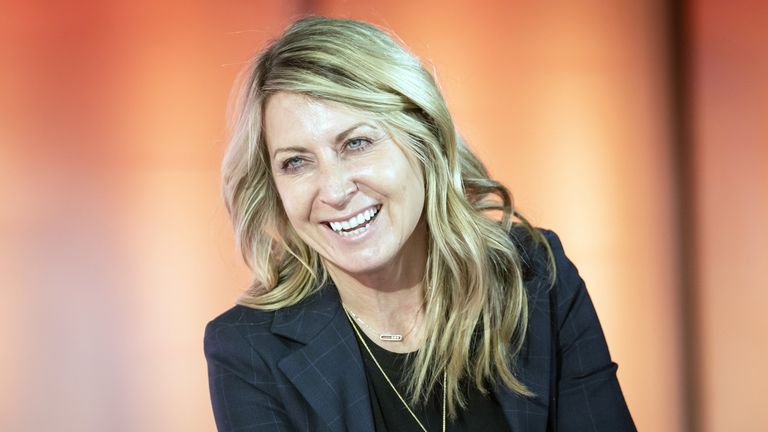
Deborah Turness, the CEO of BBC News and Current Affairs. Pic: PA
The concerns regard clips spliced together from sections of the US president’s speech on 6 January 2021 to make it appear he told supporters he was going to walk to the US Capitol with them to “fight like hell” in the documentary Trump: A Second Chance?, which was broadcast by the BBC the week before last year’s US election.
Mr Davie sent a message to staff on Sunday afternoon, saying it was “entirely” his decision to quit.
Admitting the BBC “is not perfect”, he said: “We must always be open, transparent and accountable.”
“While not being the only reason, the current debate around BBC News has understandably contributed to my decision.
“Overall, the BBC is delivering well, but there have been some mistakes made and as director-general I have to take ultimate responsibility.”
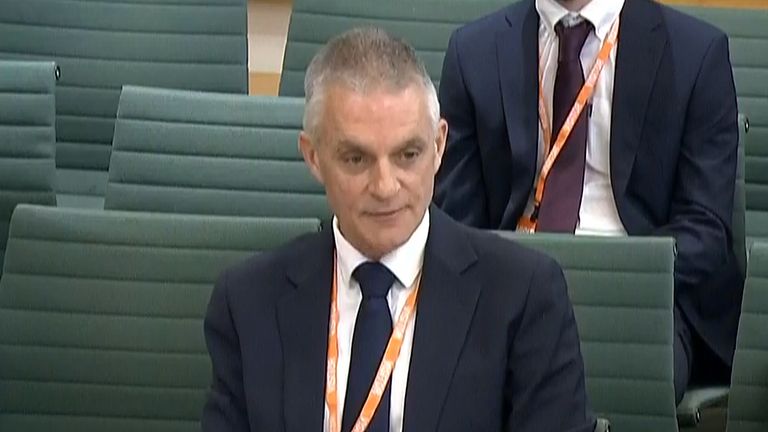
How ‘Teflon Tim’ was forced to resign
Ms Turness told staff the “ongoing controversy” around the edition of Panorama “has reached a stage where it is causing damage to the BBC – an institution that I love.
“The buck stops with me – and I took the decision to offer my resignation to the director-general last night.
“In public life, leaders need to be fully accountable, and that is why I am stepping down. While mistakes have been made, I want to be absolutely clear recent allegations that BBC News is institutionally biased are wrong.”
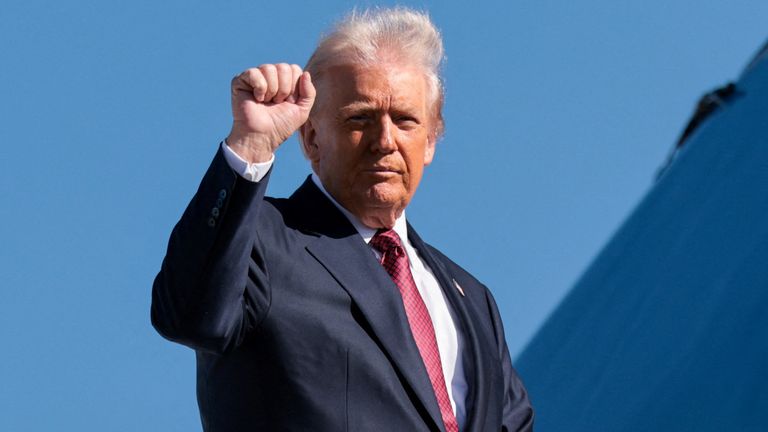
Donald Trump boarding Air Force One last week. Pic: Reuters
BBC Chair, Samir Shah called it “a very difficult day”, thanking Ms Turness and crediting her with having “transformed” the corporation’s news output.
Mr Trump said Mr Davie and Ms Turness were “very dishonest people who tried to step on the scales of a presidential election”. In a post on Truth Social, he called it “a terrible thing for democracy!”
Mr Trump’s press secretary, Karoline Leavitt, posted a triumphant two-word reaction on X, using the drinking term “shot” to describe reports that the US president was “going to war with fake news”, referring to the BBC programme, and describing Mr Davie’s resignation as a “chaser” – a drink taken after the shot to soften the taste of the alcohol.
In an interview published on Friday, she had described the BBC as “100% fake news” and a “propaganda machine”.
Farage: ‘BBC’s last chance’
In a message posted on social media, Culture Secretary Lisa Nandy thanked Mr Davie for leading the BBC through a period of “significant change”.
She called the organisation “one of our most important national institutions”, adding that “now, more than ever, the need for trusted news and high-quality programming is essential to our democratic and cultural life, and our place in the world”.
Conservative leader, Kemi Badenoch, said it was “right that Tim Davie and Deborah Turness have finally taken responsibility and resigned from the BBC”.
She said: “The culture at the BBC has not yet changed. BBC Arabic must be brought under urgent control. The BBC’s US and Middle East coverage needs a full overhaul.”
Ms Badenoch said it “should not expect the public to keep funding it through a compulsory licence fee unless it can finally demonstrate true impartiality”.
Liberal Democrat leader Sir Ed Davey said Sunday’s resignations “must be an opportunity for the BBC to turn a new leaf, rebuild trust and not give in to the likes of [Reform UK leader] Nigel Farage who want to destroy it”.
Mr Farage said the pair’s resignations must be “the start of wholesale change” at the BBC.
He urged the ministers to appoint “somebody with a record of coming in and turning companies and their cultures around”, preferably someone “from the private sector who has run a forward-facing business and understands PR”.
Mr Farage said: “This is the BBC’s last chance. If they don’t get this right, there will be vast numbers of people refusing to pay the licence fee.”
As well as the Panorama show on Mr Trump, the BBC has also been accused of failing to maintain its neutrality in its coverage of the Israel-Hamas war and over trans issues.
Read more on the BBC:
Glastonbury complaints partly upheld
Gaza documentary ‘breached Ofcom rules’
Wallace responds to Masterchef sacking
Who are BBC’s highest earners?
The Campaign Against Antisemitism (CAA) called for an independent inquiry into potential bias at the BBC, saying “growing bias” had been evident for “many years across a wide array of issues”.
The group claimed that, under Mr Davie and Ms Turness, the BBC had “often served as a mouthpiece for Hamas” and “gaslit” its audience “by claiming to be a bastion of ethics and truthful journalism”.
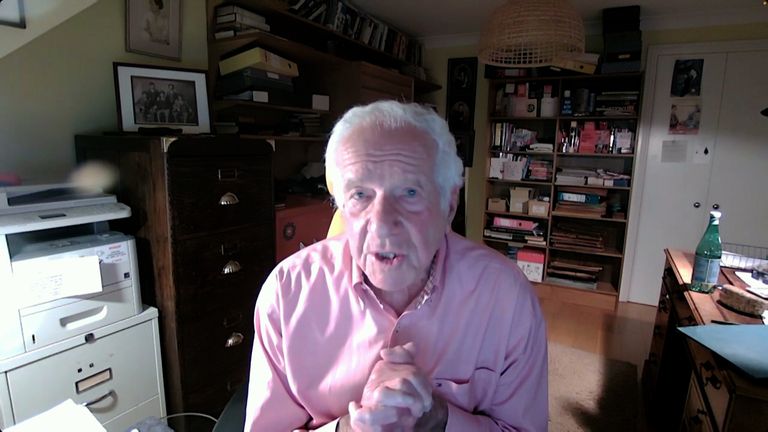
Ex-Panorama staffer: Trump edit ‘worst crime imaginable’
Marcus Ryder, a former executive producer of current affairs at the BBC, called the resignations “really sad”, adding that “it shows the pressure and ethical climate that the BBC is operating in, that this edit can actually bring down the director- general”.
Dame Melanie Dawes, chief executive of Ofcom, thanked Mr Davie, saying he had led the organisation “at a time of great change and challenge”.
The Daily Telegraph reported on Tuesday that a memo by a former external adviser to the BBC’s editorial standards committee raised the issue, as well as other concerns about impartiality, in the summer.
Dealing with controversies
Mr Davie took the role in 2020, replacing Tony Hall.
During his time in charge of the broadcaster, he has dealt with a number of high-profile controversies within the corporation.
They include a row over former Match of the Day host Gary Lineker’s sharing of his political views, top presenter Huw Edwards being convicted of making indecent images of children, and the BBC’s broadcasting of Bob Vylan’s controversial Glastonbury performance.
There were also controversies surrounding some of its top shows, such as MasterChef and its former presenter, Gregg Wallace, as well as Strictly Come Dancing.
Mr Davie, who had a career in marketing and finance before joining the BBC’s marketing team in 2005, was previously acting director-general from November 2012 until April 2013.
He said his departure will not be immediate and that he is “working through” timings to ensure an “orderly transition” over the coming months.
A person familiar with the situation said Davie’s decision had left the BBC board stunned by the move.
Entertainment
‘An enigma’ to the end: John le Carré’s son on his father – and how his legacy lives on
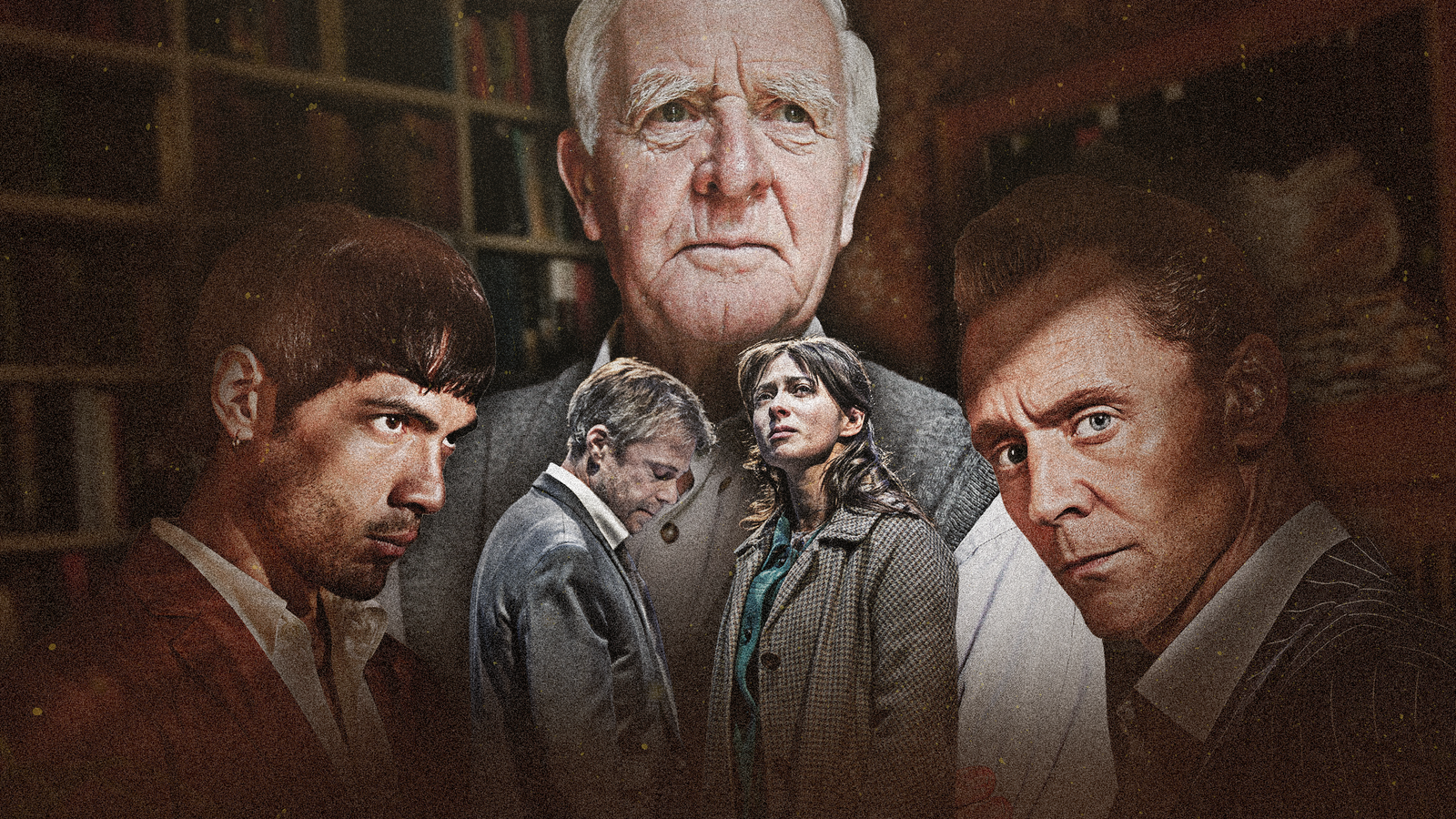
Writing 26 books and a memoir in his lifetime, John le Carré is widely considered to be one of the best spy novelists of all time.
His son, Simon Cornwell, told Sky News: “I think there was only one thing that was more important to him than his family and that was his writing.”
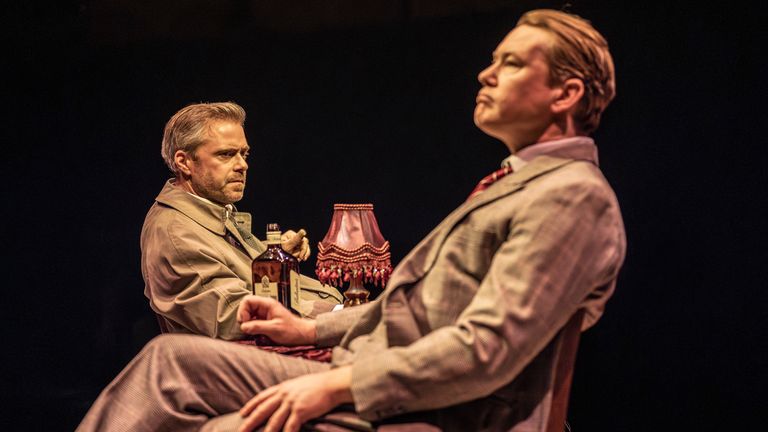
Rory Keenand and Mat Betteridge in The Spy Who Came In From The Cold. Pic: Johan Persson
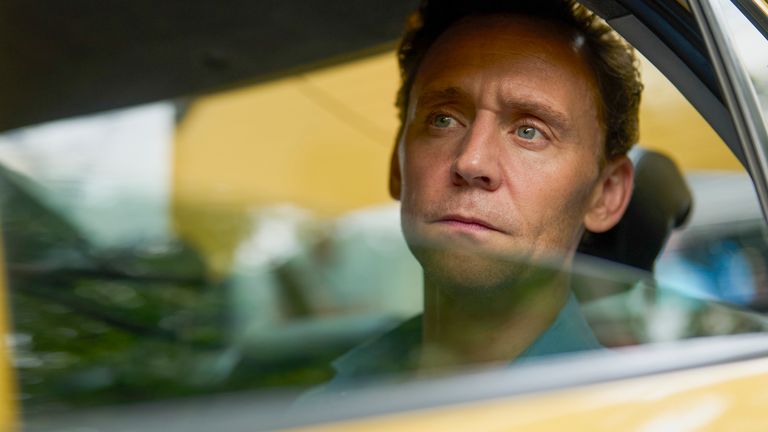
Tom Hiddleston returns in season two of The Night Manager. Pic: BBC/Ink Factory/Des Willie
First gaining attention in 1963 with his breakout novel, The Spy Who Came In From The Cold, cementing his reputation 10 years later with Tinker Tailor Soldier Spy, his work is now enjoying a resurgence.
The Spy Who Came In From The Cold has been adapted for the stage for the first time, with confirmation of a TV series to follow, while another of his works, The Night Manager, premieres its second season starring Tom Hiddleston in the new year.
There are further productions waiting in the wings, plus an unfinished le Carré play with the potential to be developed.
And archives of le Carré’s work – containing over 1,200 boxes of material – have gone on display at the Bodleian Libraries at the University of Oxford.
Writing under a pen name, le Carré, who was born David Cornwell, died in December 2020.
His elder sons, Simon and Stephen, now manage the film, TV and stage rights of his work through their studio The Ink Factory, while his youngest son, Nick, expands the George Smiley universe.

(R-L) Nick Harkaway, John Le Carré, and Simon, Stephen and Tim Cornwell. Pic: Clare Cornwell
Smiley’s continuation ‘could have gone horribly wrong’
One of le Carré’s most well-known creations, Smiley was the antidote to James Bond – bespectacled, balding and a little out of shape – and a recurring character in le Carré’s books.
Simon says Nick, who has two more Smiley books in the pipeline, was “taking on a big risk” developing the character, but insists, “he is the only person who could have done it and done it that well”.
He goes on: “He could find my father’s voice… he grew up talking every day to my dad, as we did, and he just knows at an instinctive level what’s important…
“There are so many ways in which it could have gone horribly wrong, and it went brilliantly right.”
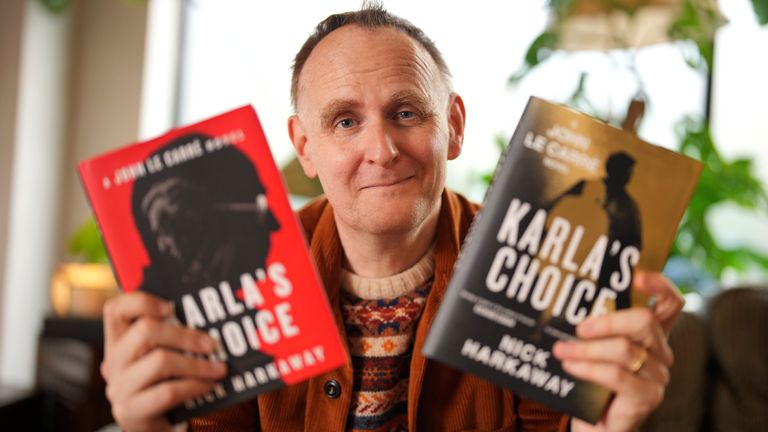
Nick Harkaway with his first Smiley continuation novel, Karla’s Choice. Pic: AP
‘A family enterprise’
Explaining how they all work together – calling it a “family enterprise in the best of ways” – Simon explains: “A lot of authors, when they die, they leave very strict instructions to their children, their estate as to how things should be managed and lots of rules and restrictions and everything else. My dad didn’t do that.”
Le Carré’s fourth son, Tim, sadly died aged 59 in 2022, shortly after editing a collection of his father’s letters, titled A Private Spy.
Le Carré is by no means the only author whose legacy lives on via others.
Announcing a staggered retirement, Lee Child passed his hit creation Jack Reacher on to his younger brother Andrew in 2020.
PG Wodehouse’s much-loved Jeeves and Wooster stories have been rewritten this Christmas by celebrity fans including Frank Skinner and Alan Titchmarsh, half a century after his death.
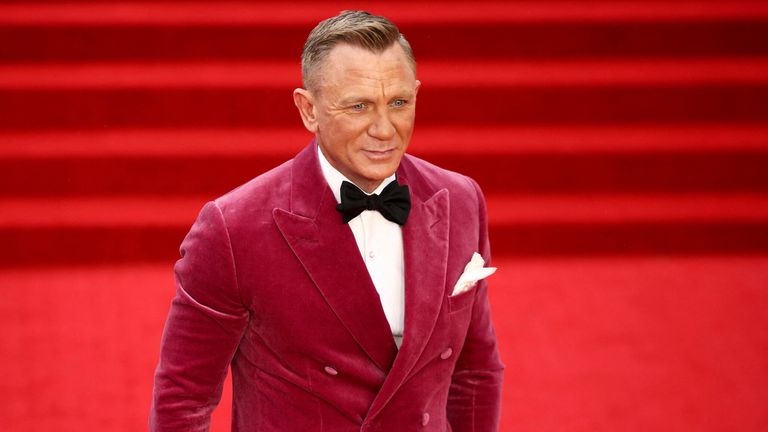
Daniel Craig at the No Time To Die world premiere in 2021. Pic: Reuters
Staying part of the conversation is key
While Ian Fleming’s James Bond has been continued by 15 authors so far, and spilling into the young adult genre, capturing a whole new generation of readers.
Mark Edlitz, intellectual expert and author of The Many Lives Of James Bond, told Sky News such continuations are essential to the survival of the work.
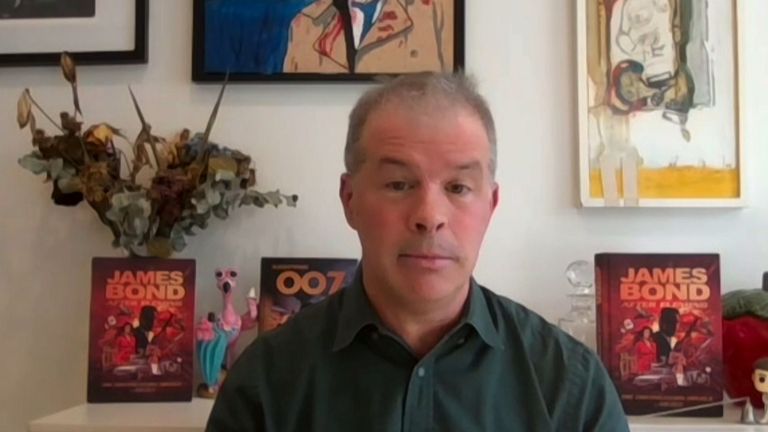
Author Mark Edlitz has written about the Bond continuation novels
“We have seen all these detectives and spies who don’t have a movie series or a TV series to bolster their eyeballs, and then they fade from public view.
“These books and movies help keep the author’s work present and viable and part of the public conversation.”
Sarah Baxter, senior contracts advisor for The Society of Authors, says remaining relevant and visible has another big benefit too.
“That kind of partnership can go on to give a whole new lease of life to works that may have been written many, many years ago, and it can go on to generate a lot of income for a literary estate.”
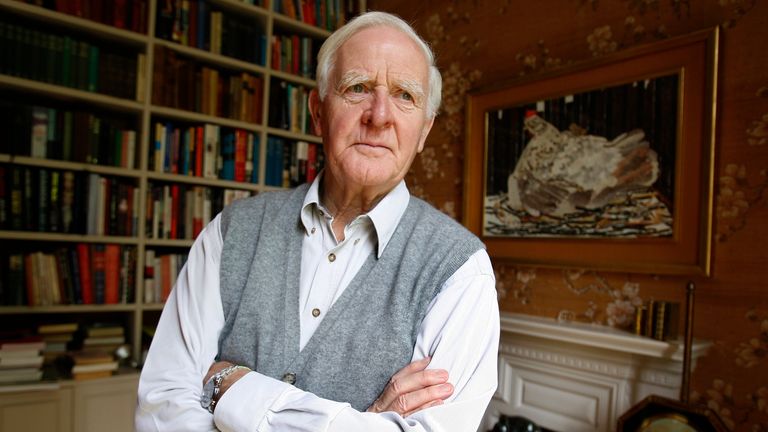
Le Carré – an enigma, even to his family, to the end. Pic: AP
‘An enigma’
More than 60 million copies of Le Carré’s books have been sold worldwide, with new adaptations likely to boost those sales further.
But Simon Cornwell says the investment in his father’s work is about more than just profits.
“We became very, very close as a family because he was very keen to be a proper dad and we were working with him and his material as well, so it was particularly towards the end of his life. It was a beautiful, thrilling thing.”
A master storyteller, the moral ambiguity of the fictional world he constructed reflected back on to its creator.
Simon says: “He remained an enigma. I think in some ways he was probably an enigma to himself…
“He was an extraordinary man to be close with, but do you ever understand somebody like that? Probably not.”
His work more widespread than ever, but the man himself – still a mystery.
The Spy Who Came In From The Cold is at @sohoplace in London’s West End to 21 February before embarking on a UK Tour.
John le Carré: Tradecraft is at the Bodleian Libraries at the University of Oxford until 6 April.
Entertainment
Primal Scream says video with alleged antisemitic imagery shown at gig was meant to provoke debate
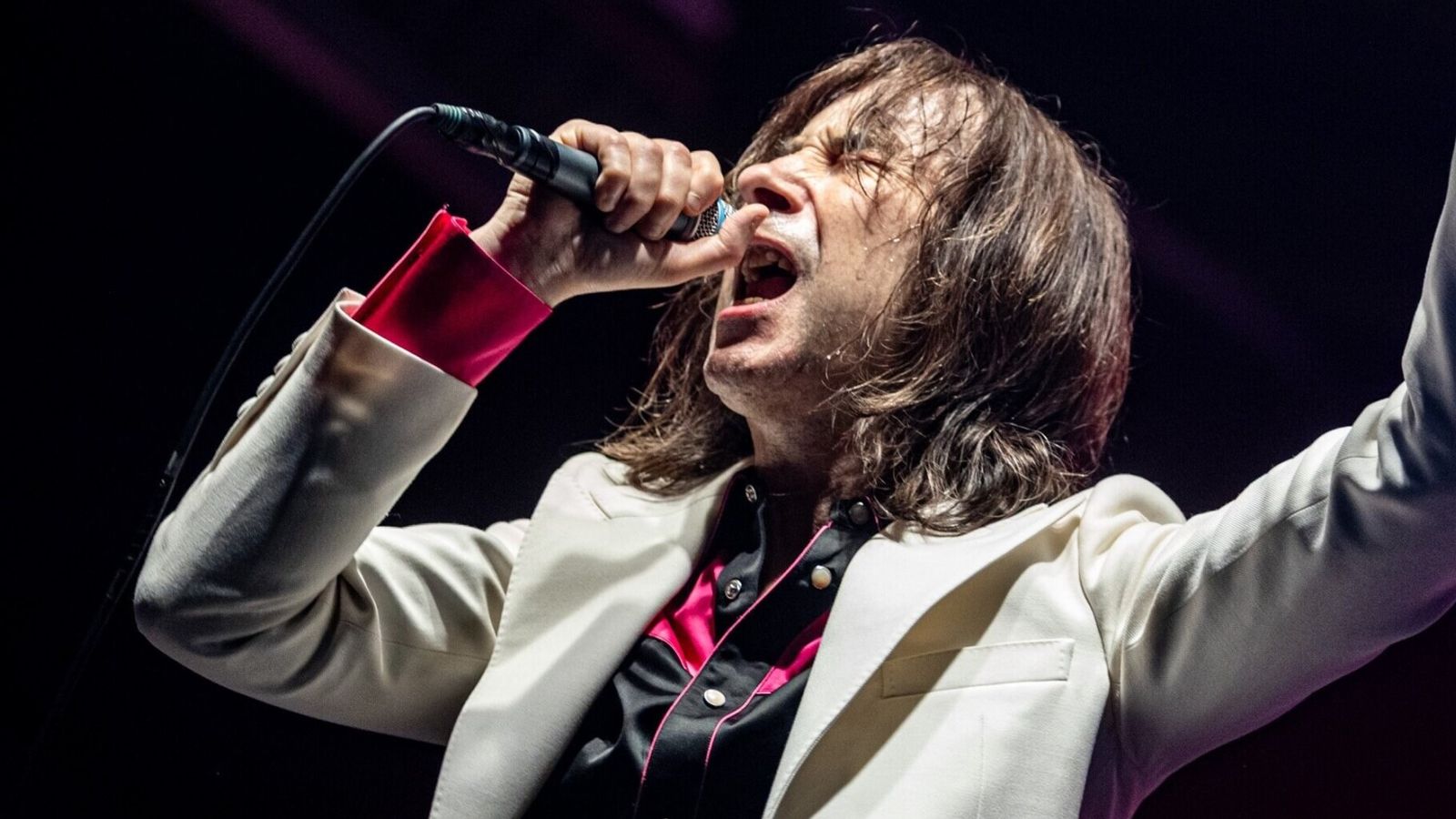
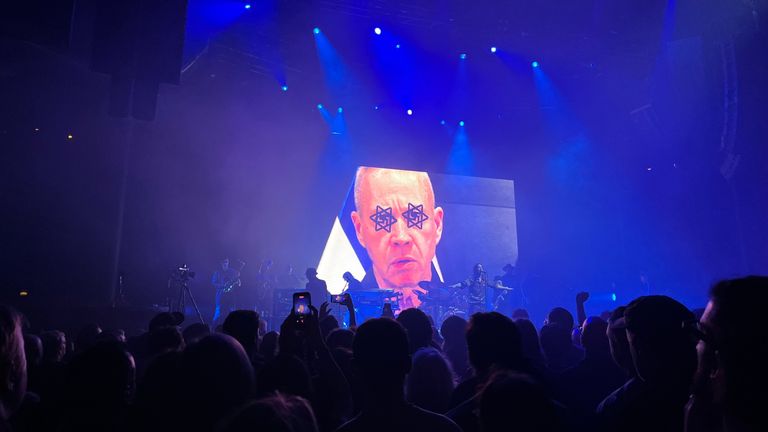
Primal Scream have said a video containing alleged antisemitic imagery was a “piece of art” and was intended to “provoke debate, not hate”.
Warning: This article contains alleged antisemitic imagery.
The Scottish rock band have been reported to the Metropolitan Police for showing a film at their Roundhouse concert in Camden, London on Monday which appeared to include imagery of the Star of David entwined with a swastika.
The force is now assessing the report.
‘Film is a piece of art’
Primal Scream said in a statement on Instagram: “The film is a piece of art. It clearly draws from history to question where the actions of current world governments sit in that context. It is meant to provoke debate, not hate.
“In a free, pluralistic and liberal society freedom of expression is a right which we choose to exercise.”
Primal Scream, founded by frontman Bobby Gillespie in 1982, were playing a 25-year anniversary show for their album XTRMNTR.
As the group performed Swastika Eyes, pictures of political figures including Israeli Prime Minister Benjamin Netanyahu appeared behind them, showing what appeared to be the Star of David combined with a swastika in their eyes.
The video from the gig that sparked the report to police
Venue ‘appalled’
The Roundhouse has apologised, saying it was “appalled” that “antisemitic imagery was displayed”, adding it was done entirely without its knowledge.
It said in a statement: “We deeply regret that these highly offensive images were presented on our stage and unequivocally apologise to anyone who attended the gig and to the wider Jewish community.”
It added: “Our organisation absolutely condemns antisemitism in every form.”
Call for ‘urgent investigation’
The Community Security Trust (CST), which provides protection for Jewish communities in the UK, said it had reported the band to police and called on the venue to carry out an “urgent investigation”.
In a statement, a CST spokesperson said: “CST is appalled by the grossly antisemitic image displayed at Primal Scream. Entwining a Star of David with a swastika implies that Jews are Nazis and risks encouraging hatred of Jews.
“There needs to be an urgent investigation by the venue and the promoter about how this happened, and we have reported this to the police.”
What have police said?
Responding to that report, a Met Police spokesperson said: “On Wednesday, 10 December, we received a report in relation to a video shown on stage during a concert at the Roundhouse in Chalk Farm Road, Camden on Monday, 8 December.
“It is being assessed by officers.”
Read more from Sky News:
Man found guilty of savage train glass bottle attack
Taylor Swift breaks down in tears over Southport attacks
‘Unadulterated hatred’
The charity Campaign Against Antisemitism said: “The Nazi swastika represents the ideology that inspired people to industrially slaughter six million innocent Jewish men, women and children by bullet, gas and any other means available.
“To visually combine that with the Star of David – the pre-eminent symbol of Judaism – is absolutely sickening and totally inexcusable.
“This isn’t art. This isn’t edgy. This isn’t political statement. It is unadulterated hatred and a clear breach of the international definition of antisemitism.
“We will be writing to the Camden Roundhouse and our legal team is examining the footage to consider further steps.”
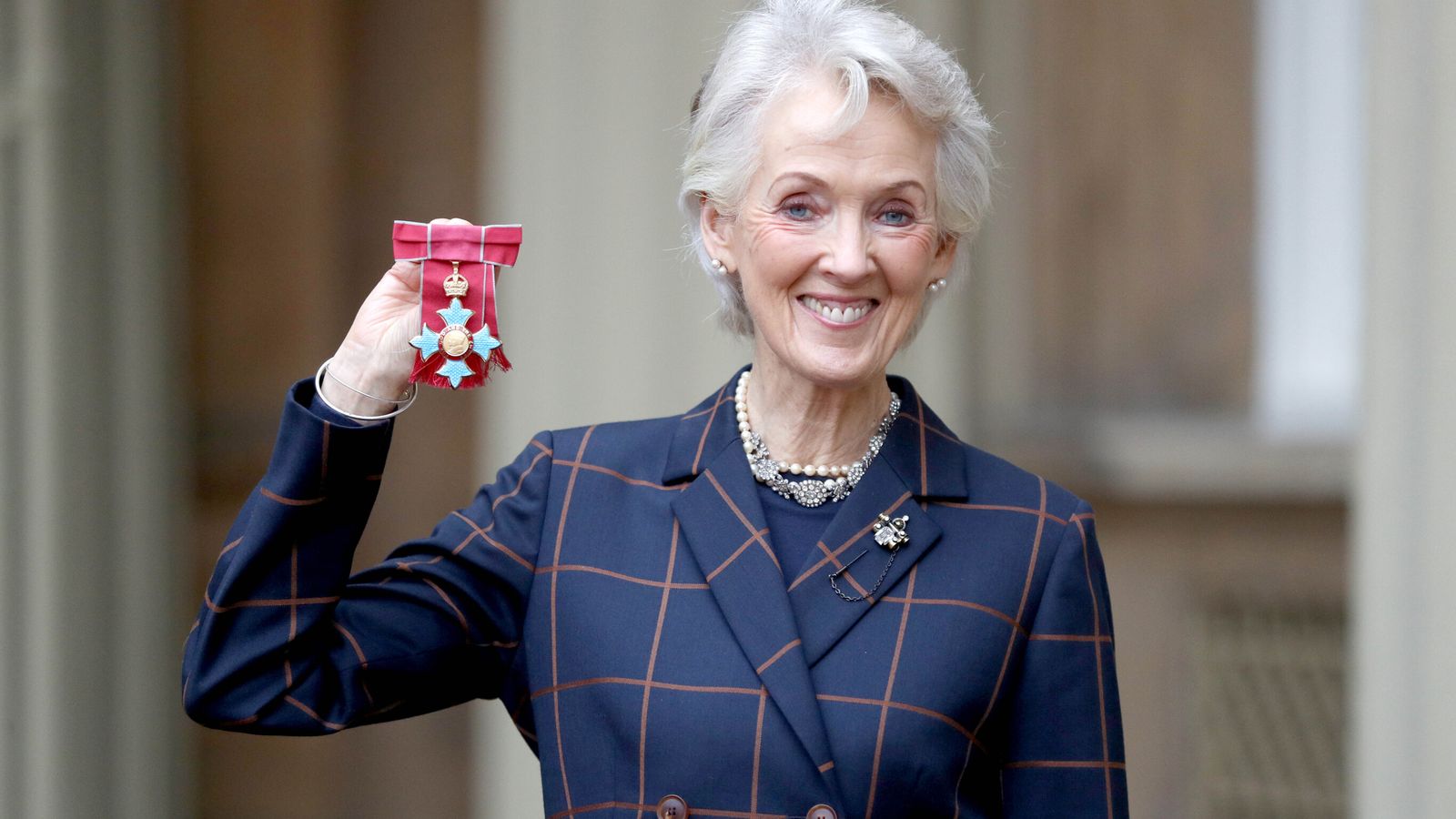
Author Joanna Trollope has died aged 82, her family has said.
Trollope was one of the nation’s most widely read authors, having published more than 30 novels during a career that began in the 1970s.
Her novels include “Aga sagas” The Rector’s Wife, Marrying The Mistress and Daughters-in-Law.
In a statement, Trollope’s daughters Antonia and Louise said: “Our beloved and inspirational mother Joanna Trollope has died peacefully at her Oxfordshire home, on December 11, aged 82.”
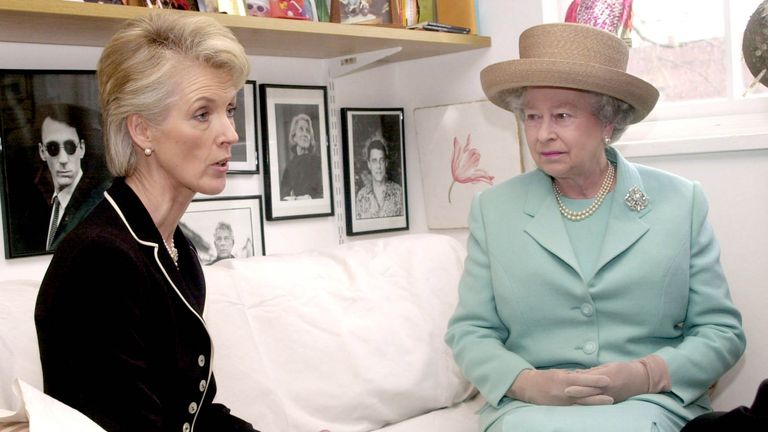
Trollope with Queen Elizabeth II in 2001. Pic: PA
Her literary agent James Gill said: “It is with great sadness that we learn of the passing of Joanna Trollope, one of our most cherished, acclaimed and widely enjoyed novelists.
“Joanna will be mourned by her children, grandchildren, family, her countless friends and – of course – her readers.”
Trollope was born in Gloucestershire in 1943. She won a scholarship to study at the University of Oxford in the 1960s.
After graduating, she joined the Foreign Office before training as a teacher and then turning to writing full-time in 1980.
The author was best known for her novels set in rural middle England and centred around domestic life and relationships.
Her early historical romances were written under the pseudonym Caroline Harvey, before she turned to contemporary fiction.
Her work tackled a range of topics from affairs, blended families and adoption, to parenting and marital breakdown.
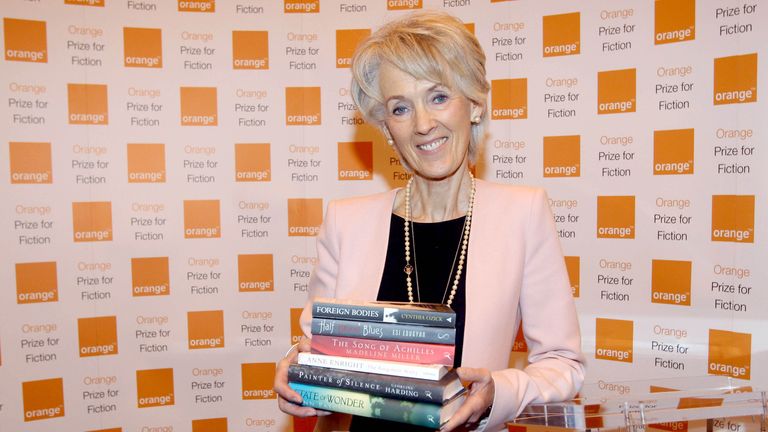
Trollope with shortlisted novels for the Orange Prize for Fiction. Pic: PA
Trollope also took part in The Austen Project, which saw six of Jane Austen’s novels retold by contemporary writers.
She wrote the first book in the series, Sense & Sensibility, published in 2013.
Read more from Sky News:
Man found guilty of murdering wife in rare retrial
UK ‘rapidly developing’ plans to prepare for war
In 1996, Trollope was awarded the Order of the British Empire (OBE) for her services to literature and later made a Commander of the Order of the British Empire (CBE) in 2019.
She won the Romantic Novel of the Year in 1980 for the book Parson Harding’s Daughter and in 2010 was given a lifetime achievement award from the Romantic Novelists’ Association (RNA) for her services to romance.
She went on to chair a number of award ceremonies, including the Costa Book Awards, formerly the Whitbread Prize, as well as the BBC National Short Story Award and the Orange Prize for Fiction.
-
 Sports2 years ago
Story injured on diving stop, exits Red Sox game
-
 Sports3 years ago
‘Storybook stuff’: Inside the night Bryce Harper sent the Phillies to the World Series
-
 Sports2 years ago
Game 1 of WS least-watched in recorded history
-
 Sports3 years ago
Button battles heat exhaustion in NASCAR debut
-
 Sports3 years ago
MLB Rank 2023: Ranking baseball’s top 100 players
-
Sports4 years ago
Team Europe easily wins 4th straight Laver Cup
-
 Environment3 years ago
Japan and South Korea have a lot at stake in a free and open South China Sea
-
 Environment1 year ago
Here are the best electric bikes you can buy at every price level in October 2024