
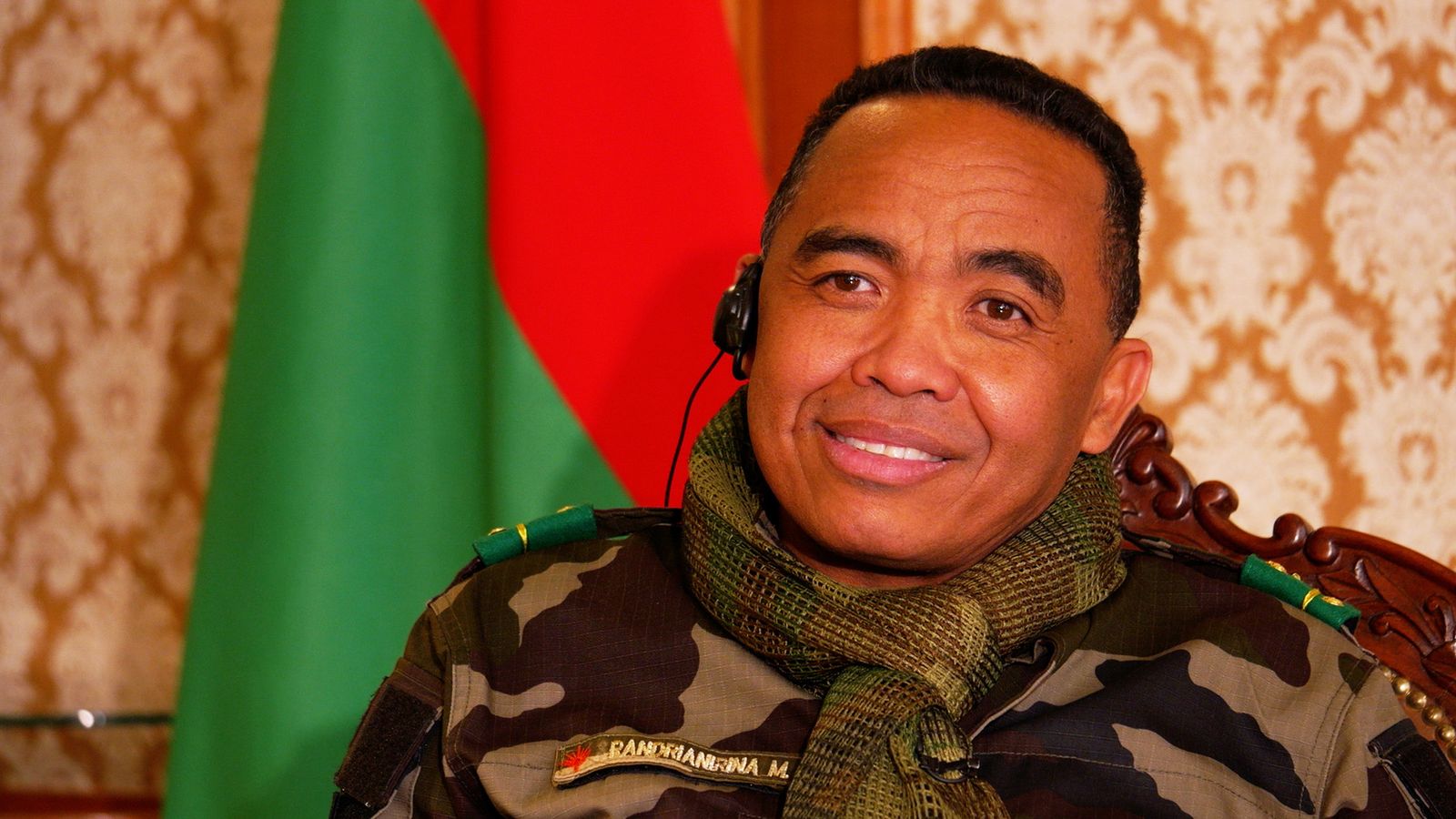
Madagascar’s new president Michael Randrianirina denies coup after taking office following Gen Z uprising

A Gen Z uprising has pushed Madagascar’s former leader Andry Rajoelina, not only out of office but out of the country.
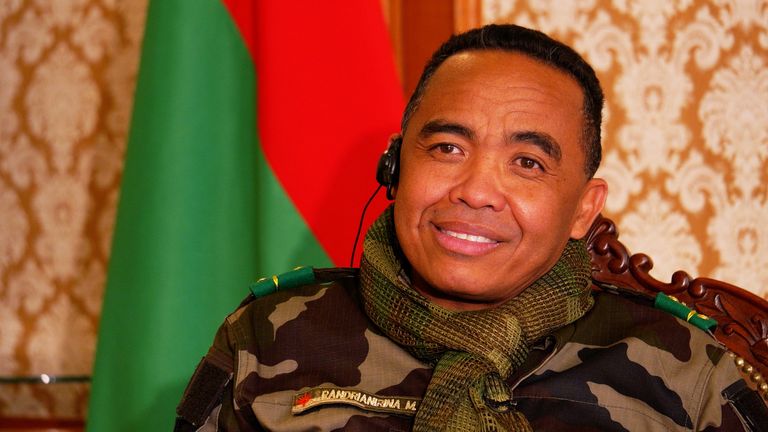
In his place is Colonel Michael Randrianirina, who was sworn in as president of the island nation last month after his military unit joined the protesters.
Sky News’ Africa correspondent Yousra Elbagir sits down with the new leader.
The first question I ask Colonel Randrianirina, as he sits in an ornate mahogany chair in his military fatigues, is how it feels to be in the palace as president.
He sighs and sinks deeper into the chair. He looks humbled and struggles to find the words.
“How do I put it?” he says. “I am happy and it is also a great honour to have come to this palace to be able to help and support the Malagasy people in deep poverty.”
As commander of an elite non-combatant military unit, Corps d’Administration des Personnels et des Services de l’Armée de Terre (CAPSAT), the colonel rode a wave of Gen Z protests to the palace. On 11 October, he shared a video on social media instructing officers to disobey shoot-to-kill orders and support the movement.
The new Madagascan leader, Colonel Michael Randrianirina
At least 22 protesters have been killed and more than 100 injured after denouncing the power cuts and water shortages that have come to signify government corruption in the impoverished island nation.
Why did he share the pivotal video?
He says: “I am a military officer but I am also part of the people and I will return to the people. When you feel sorry for what the people are suffering from… they have been poor for so long and wealth has been looted – but you still shoot them and kill them. That was not why I entered the military of Madagascar, to kill people.”
Soon after his speech, soldiers allowed the young protesters rejecting then president Andry Rajoelina to occupy Place du 13 Mai Square on Independence Avenue in the heart of Antananarivo, the island nation’s capital.
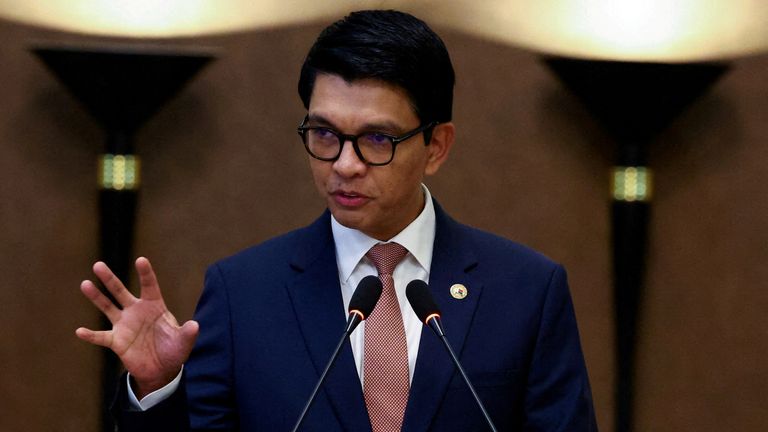
October: Madagascar’s president flees country after coup
Colonel Randrianirina paraded through a crowd and addressed them from the hatch of an armoured vehicle. “The president of the nation has to leave… If that does not happen,” he threatened, “we will see”.
After Mr Rajoelina fled Madagascar on 13 October, the National Assembly voted to impeach him for “desertion of duty”. Three days later, Colonel Randrianirina stood in fatigues in front of the palace. With officers by his side, he announced their seizure of power and the dissolution of the constitution and all government institutions outside of the National Assembly.
Shortly after, the African Union suspended Madagascar‘s membership on account of the military takeover.
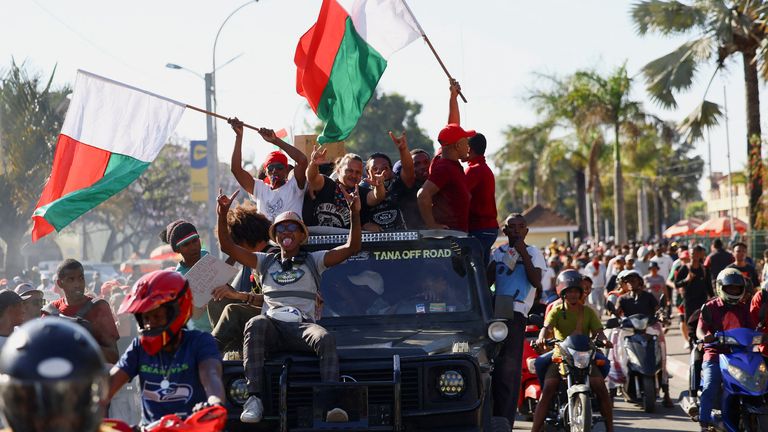
A demonstration in Antananarivo last month. Pic: Reuters
In the palace as president, he insists that this is not a military coup.
“It is support for the people and the country and for us to not be prone to civil war – between the people – between the military officers and your needs, so you adjust helping to support the people to avoid this.
“We were not conducting any coup at all, it was the president [Rajoelina] himself who decided to leave the country.”
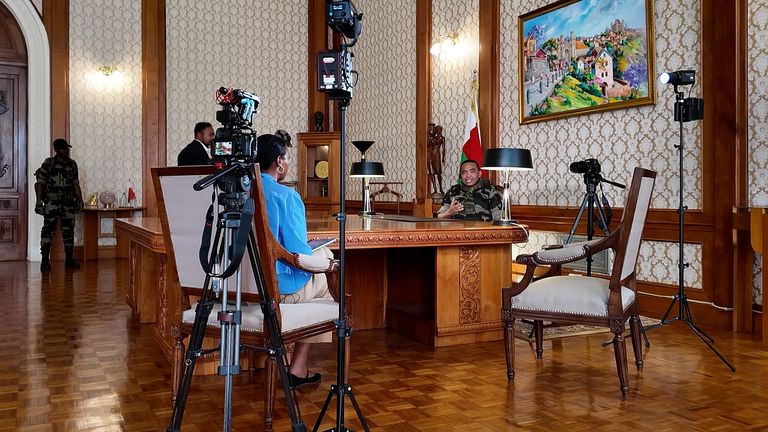
Sky News meets Colonel Randrianirina
United Nations secretary-general Antonio Guterres condemned “the unconstitutional change of government in Madagascar” and called for “the return to constitutional order and the rule of law,” when reports of a military takeover first circulated on 16 October. The day we met the new president, he had just been congratulated by France’s President Emmanuel Macron.
Colonel Randrianirina is promising elections in 18 to 24 months, after what he calls a “refoundation and recovery” of the country – a process he admits might take a long time.
Observers are concerned that elections will be postponed and the new president will become another strongman, but Gen Z organisers are holding on to faith that this hard-earned outcome is worth it.
‘We were living under a dictatorship’
I asked a group of five young organisers if they have concerns that the president will become another dictator, just like previous Malagasy rulers who ascended to power off the back of a popular uprising. Ousted president Mr Rajoelina came into power after protests in 2009 that also ended in a CAPSAT-supported coup.
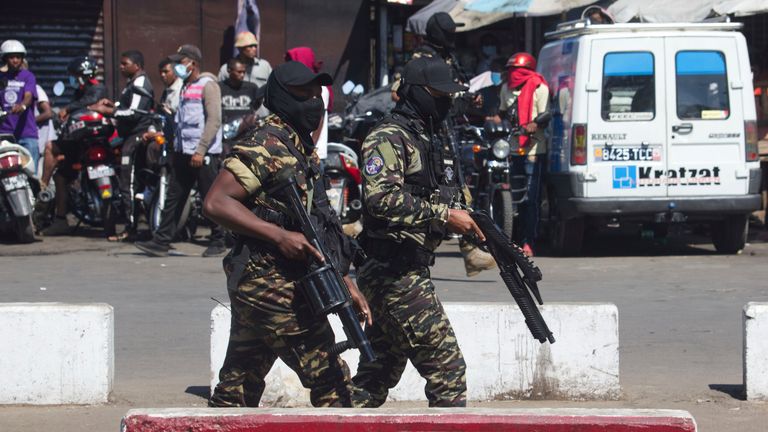
Police patrolling the streets during last month’s protests. Pic: AP
University student Ratsirarisoa Nomena told us: “The new president is not a dictator… he is listening to the people and he is validated by the people.
“We as students also validated him – he is not a dictator because the motivation of the army is from the people for the people.
“We were living under dictatorship. There was no freedom of expression and it was very hard to fight for that in Madagascar. We had to face being injured and losing our lives and the lives of our fellow students. Malagasy citizens who fought with us lost their lives too. This is what we went through – to me, we are halfway to victory.”
Their president is aware of their support and does not credit Gen Z alone for his place in the palace.
“Generation Z are part of the reason [I am here] but the full Malagasy people really wanted change at the time we are speaking,” Mr Randrianirina told me. “The Malagasy people have been suffering for so long and deprived of fundamental rights – no access to water supply and electricity, facing insecurity.
“Malagasy people, including the Gen Z, government officials and trade unions really wanted change so it is the whole Malagasy people that supported me to this point.”
Read more from Sky News:
Ex-jihadist Syrian president to meet Trump
Two dead as Super Typhoon hits Philippines
UK deploying specialist RAF team to defend Belgium from ‘rogue’ drones
Across Africa, young people are showing their disapproval of the old guard.
Gen Z protesters have made their mark in Tanzania, Kenya, Cameroon, Morocco, Mozambique and Nigeria in 2025 alone – denouncing disputed elections and the corruption impacting their futures.
Is the Gen Z coup of Madagascar a warning for old leaders on a young continent?
“I don’t know what to say about the other countries, but I know my own country,” Mr Randrianirina says.
“If tomorrow the people of Madagascar hate me, then I will leave this palace.”
Russia launched a massive missile and drone attack on Ukraine overnight, after US and Ukrainian officials said they would meet for a third day of talks aimed at bringing the war to an end.
The two sides said they had made progress on a security framework for post-war Ukraine, but that any “real progress toward any agreement” will depend “on Russia’s readiness to show serious commitment to long-term peace.”
Russia launched 653 drones and 51 missiles in its attack on Ukraine, triggering air raid alerts across the country, Ukraine’s air force said.
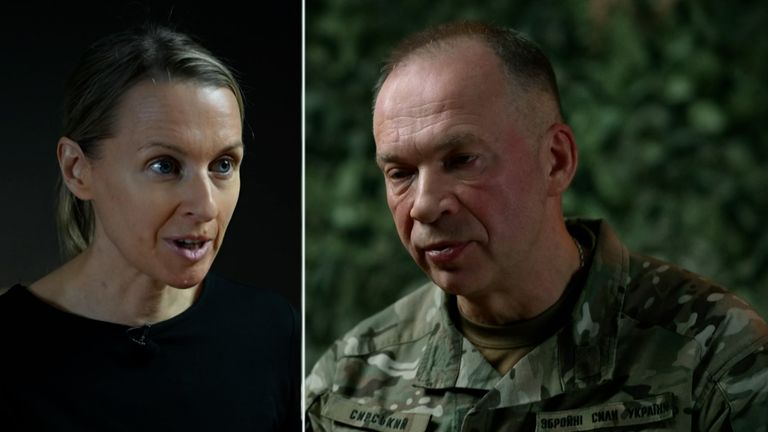
Giving up territory ‘unacceptable’ – Ukraine’s military chief
Ukrainian forces shot down and neutralised 585 drones and 30 missiles, the air force said, adding that 29 locations were struck.
At least eight people were wounded in the attacks, Ukraine’s minister of internal affairs Ihor Klymenko said.
Russia conducted a “massive missile-drone attack” on power stations and other energy infrastructure in several regions, Ukraine’s national energy operator Ukrenergo said on Instagram.
Ukraine’s Zaporizhzhia nuclear power plant temporarily lost all off-site power overnight, the International Atomic Energy Agency said.
The plant is in an area that has been under Russian control since early in Moscow’s invasion of Ukraine. It is not in service, but needs reliable power to cool its six shutdown reactors and spent fuel in order to avoid any catastrophic nuclear incidents.
Read more from Sky News:
Young Germans fear return to conscription
Giving up territory would be ‘unjust’, says Kyiv armed forces chief

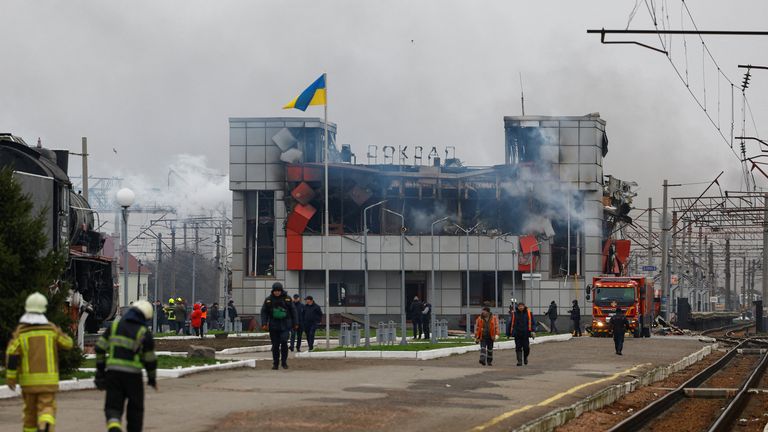
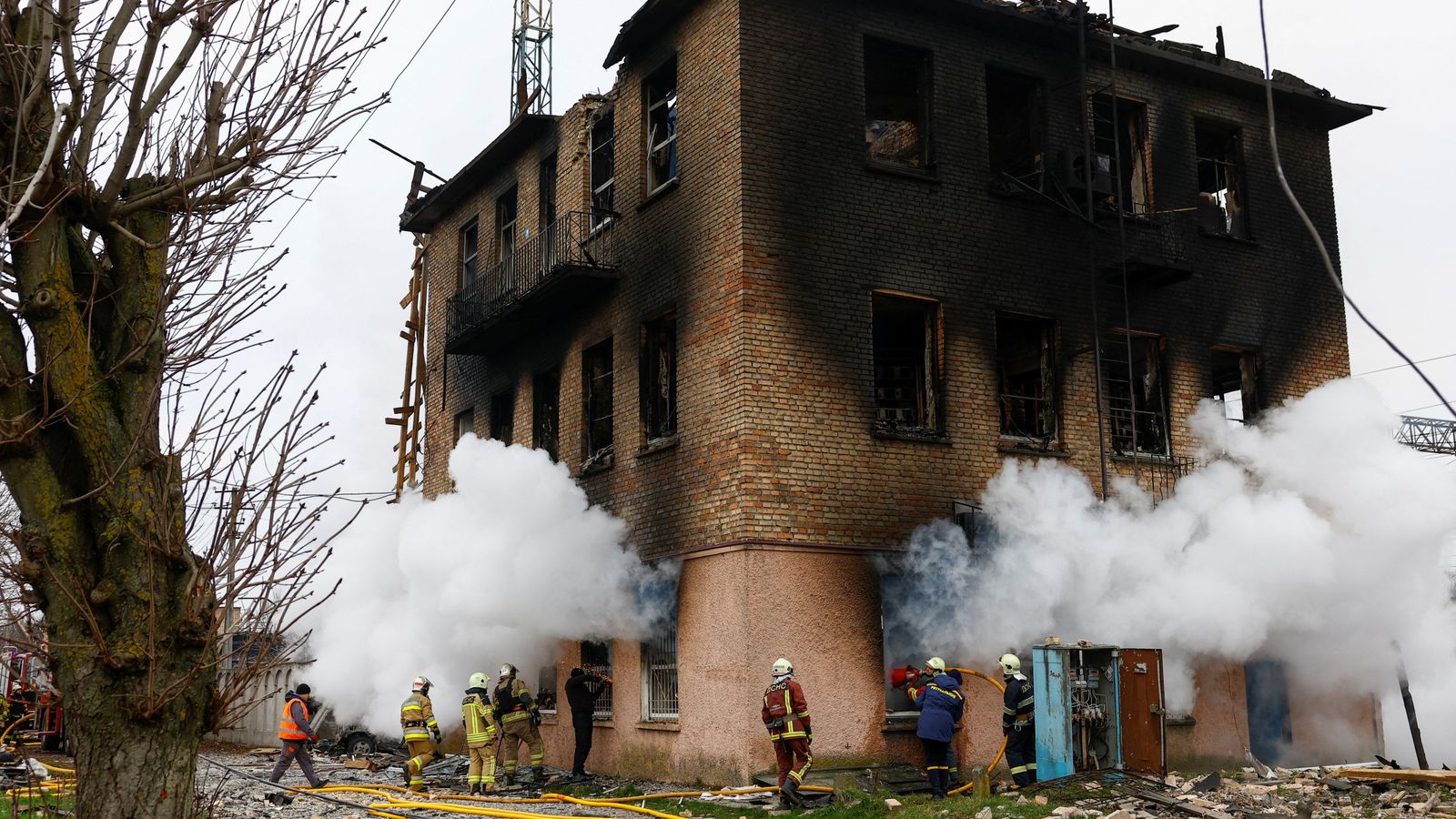
Russia struke a train station in the city of Fastiv. Pics: Reuters
Zelenskyy condemns ‘meaningless’ strikes
Ukrainian President Volodymyr Zelenskyy condemned the strikes as “meaningless” from a military point of view.
He said energy facilities were the main targets, but a drone strike had “burned down” a train station in the city of Fastiv, in the Kyiv region.
“The Russians’ goal is to hurt millions of Ukrainians, and they have sunk so low that they are launching missiles at peaceful cities on St. Nicholas Day,” he said.
“That is why additional pressure is needed. Sanctions must work, and so must our air defence, which means we must continue to support those who defend our lives.”
Ukraine strikes oil refinery
Meanwhile, Russia’s defence ministry said its air defences had shot down 116 Ukrainian drones over Russian territory overnight.
The General Staff of the Ukrainian Armed Forces said Ukrainian forces had struck Russia’s Ryazan Oil Refinery, while Russian Telegram news channel Astra shared footage appearing to show a fire breaking out and plumes of smoke rising above the refinery.
Over the last few months, Ukraine has used long-range drones to target Russian refineries in an attempt to deprive Moscow of the oil export revenue it needs to continue the war.
Meanwhile, Kyiv and its Western allies say Russia is trying to cripple Ukraine’s power grid and deny civilians access to heat, light and running water in winter, which Ukrainian officials call “weaponising” the cold.
On Monday, Mr Zelenskyy will meet Sir Keir Starmer in London to discuss the ongoing negotiations mediated by the US, along with French President Emmanuel Macron and German Chancellor Friedrich Merz.
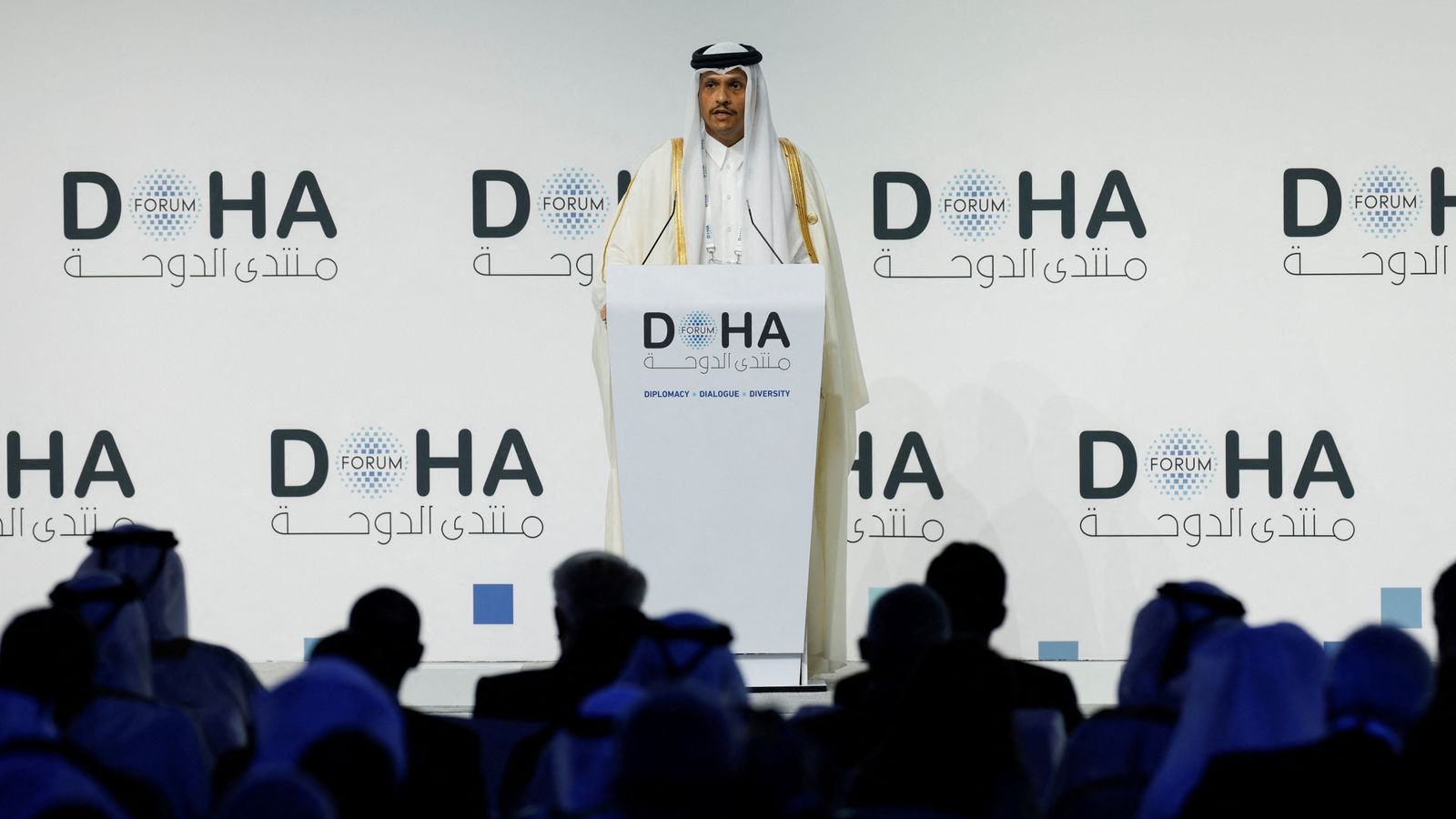
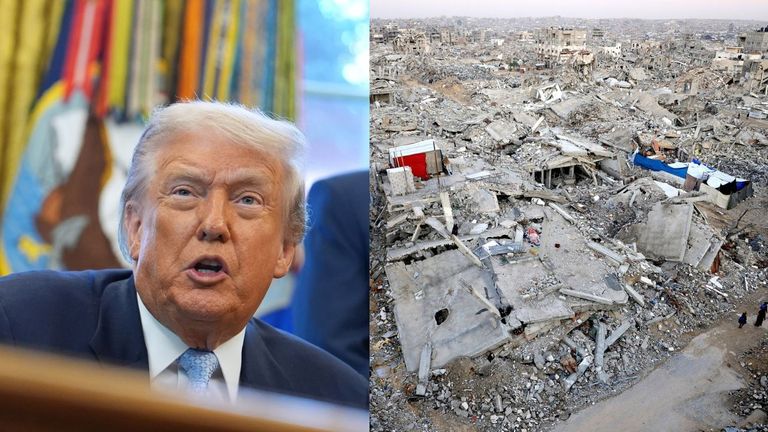
Negotiations on a lasting ceasefire deal for Gaza are at a “critical moment”, the prime minister of Qatar, which has played a key role in brokering the deal, has said.
Sheikh Mohammed bin Abdulrahman said a definitive ceasefire could only happen with a full withdrawal of Israeli troops from the besieged enclave.
The first stage of a ceasefire deal was agreed in October, but violence in Gaza has not stopped. On Saturday alone, seven people were reportedly killed.
Palestinian local health authorities said the victims were from Beit Lahiya, Jabalia and Zeitoun in northern Gaza and included a 70-year-old woman who was killed by a drone strike.
What is the UN-approved Trump peace plan for Gaza?
The Israeli military said that in two separate incidents on Saturday, forces deployed in northern Gaza behind the so-called yellow line of withdrawal agreed in the ceasefire had fired on Palestinian militants who crossed the line, killing three.
The military was unaware of any drone strike, a spokesperson said.
The long-sought ceasefire – and the second one after a first deal fell apart earlier this year – began on 11 October after Israel and Hamas agreed to the first phase of Donald Trump’s 20-point peace plan.
Despite accusations by both sides of violations, talks on the next phase of the ceasefire deal began almost two weeks ago, with Turkish, Qatari and Egyptian officials meeting in Cairo to discuss the second part of the agreement, including deploying a stabilisation force and body to govern Gaza and oversee reconstruction.
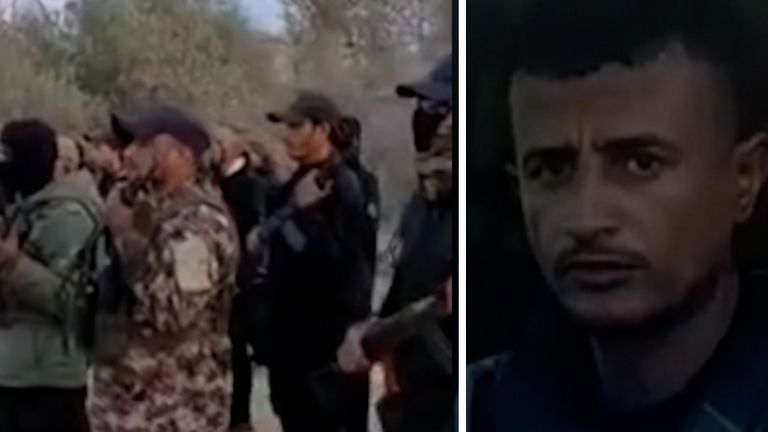
Fragile Gaza ceasefire persists as anti-Hamas leader killed
Read more:
Two brothers killed in Israeli drone strike on Gaza
Gaza child has vital operation
“We are at a critical moment. It’s not yet there. So what we have just done is a pause,” PM al-Thani said during a panel discussion at the Doha Forum conference in Qatar.
“We cannot consider it yet a ceasefire. A ceasefire cannot be completed unless there is a full withdrawal of the Israeli forces – (until) there is stability back in Gaza, people can go in and out – which is not the case today.”
On Thursday, an Israeli delegation held talks in Cairo with mediators on the return of the body of the last hostage held in Gaza, which would complete an initial part of Mr Trump’s plan to bring an end to the two-year war.
Since the truce started, Hamas has returned all 20 living hostages and 27 bodies in exchange for around 2,000 Palestinian detainees and convicted prisoners.


At least 50 people, including 33 children, have been killed in southern Sudan after a drone attack by paramilitary forces hit a nursery in South Kordofan state.
Sudan Doctors’ Network says paramedics on the scene in the town of Kalogi were also targeted by the Rapid Support Forces (RSF) in a “second unexpected attack”.
Rights group Emergency Lawyers reported a “third civilian site” near the previous two attacks was also targeted.
The death toll is expected to be higher, but communication blackouts have made it difficult to confirm the full number of casualties.
Emergency Lawyers says the strikes are a “flagrant violation of international humanitarian law, including the protection of civilians, especially children, and vital civilian infrastructure.”
UNICEF has urged both parties to stop the attacks immediately and allow safe access for humanitarian aid.
“Killing children in their school is a horrific violation of children’s rights,” said UNICEF representative for Sudan Sheldon Yett.
“Children should never pay the price of conflict.”
Read more from Sky News
RSF says it has captured Babanusa in West Kordofan
Sudan ‘epicentre of suffering in the world’
Sudan’s paramilitary forces agree to US-led humanitarian ceasefire proposal
The attack on the nursery is among the latest in the two-year conflict between the RSF and Sudan’s military, where the focus has recently shifted to the oil-rich Kordofan states.
A photo released by UNICEF shows displaced children and families from al-Fashir. (Mohammed Jammal/UNICEF via AP)
Hundreds of civilians have been killed in the last few weeks as fighting shifted from Darfur, following the RSF’s violent takeover of the city of Al Fashir, which was marked with civilians being executed, rapes, sexual assaults and other atrocities.
Thousands managed to escape the violence, but thousands more are trapped or feared killed.
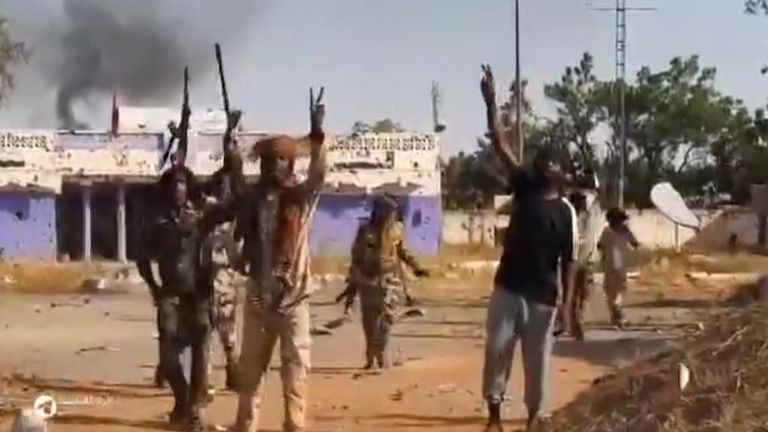
Grab from RSF social media channels in Al Fashir, Sudan
Meanwhile, Sudanese military aerial strikes last weekend killed at least 48 people, mostly civilians, in South Kordofan.
The RSF has also accused the military of carrying out a drone strike on the border with Chad, posting a video showing billowing black smoke.
The Associated Press has been unable to verify the video or whether there were any casualties, while Sudan’s military also hasn’t commented.
The RSF and the Sudanese military have been fighting for power over the country since 2023, which has seen more than 40,000 people killed, according to the World Health Organisation, although the real death toll is expected to be higher. 12 million people have been displaced.
-
 Sports2 years ago
Story injured on diving stop, exits Red Sox game
-
 Sports3 years ago
‘Storybook stuff’: Inside the night Bryce Harper sent the Phillies to the World Series
-
 Sports2 years ago
Game 1 of WS least-watched in recorded history
-
 Sports3 years ago
Button battles heat exhaustion in NASCAR debut
-
 Sports3 years ago
MLB Rank 2023: Ranking baseball’s top 100 players
-
Sports4 years ago
Team Europe easily wins 4th straight Laver Cup
-
 Environment3 years ago
Japan and South Korea have a lot at stake in a free and open South China Sea
-
 Environment1 year ago
Here are the best electric bikes you can buy at every price level in October 2024