
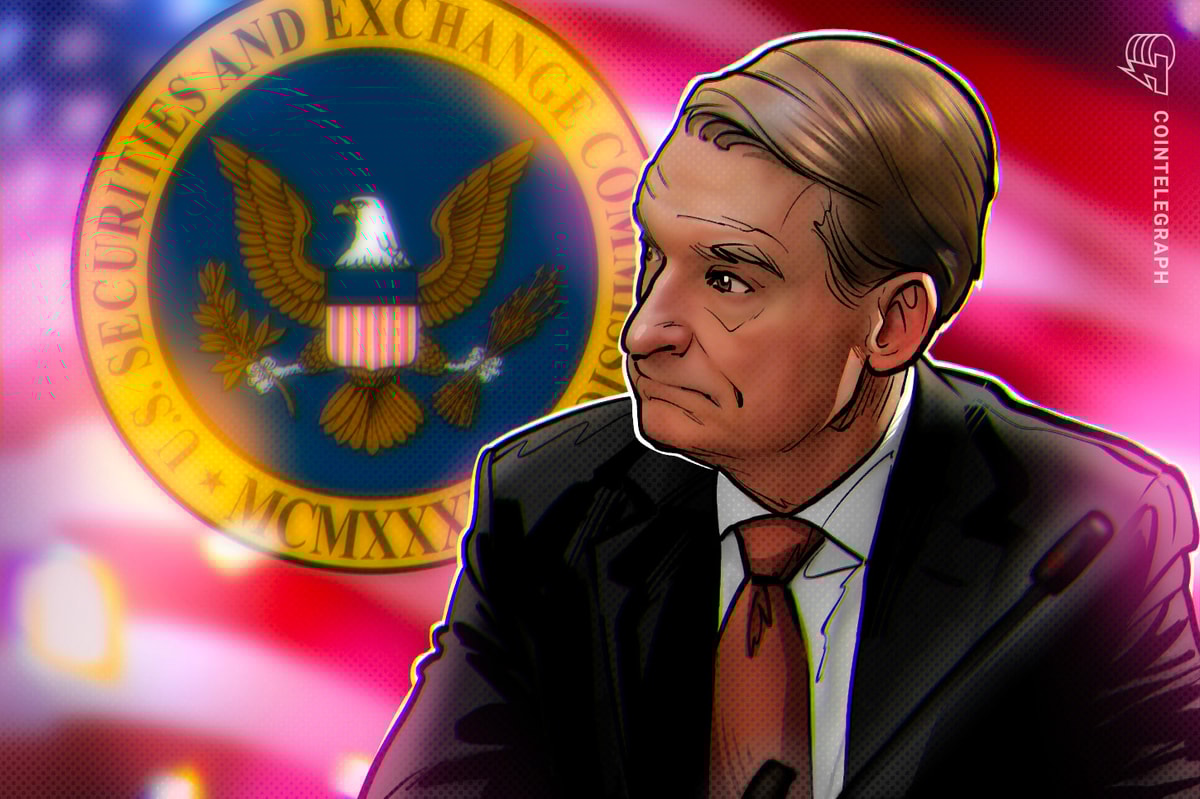
SEC chair pledges no ‘lax enforcement’ on crypto under market structure

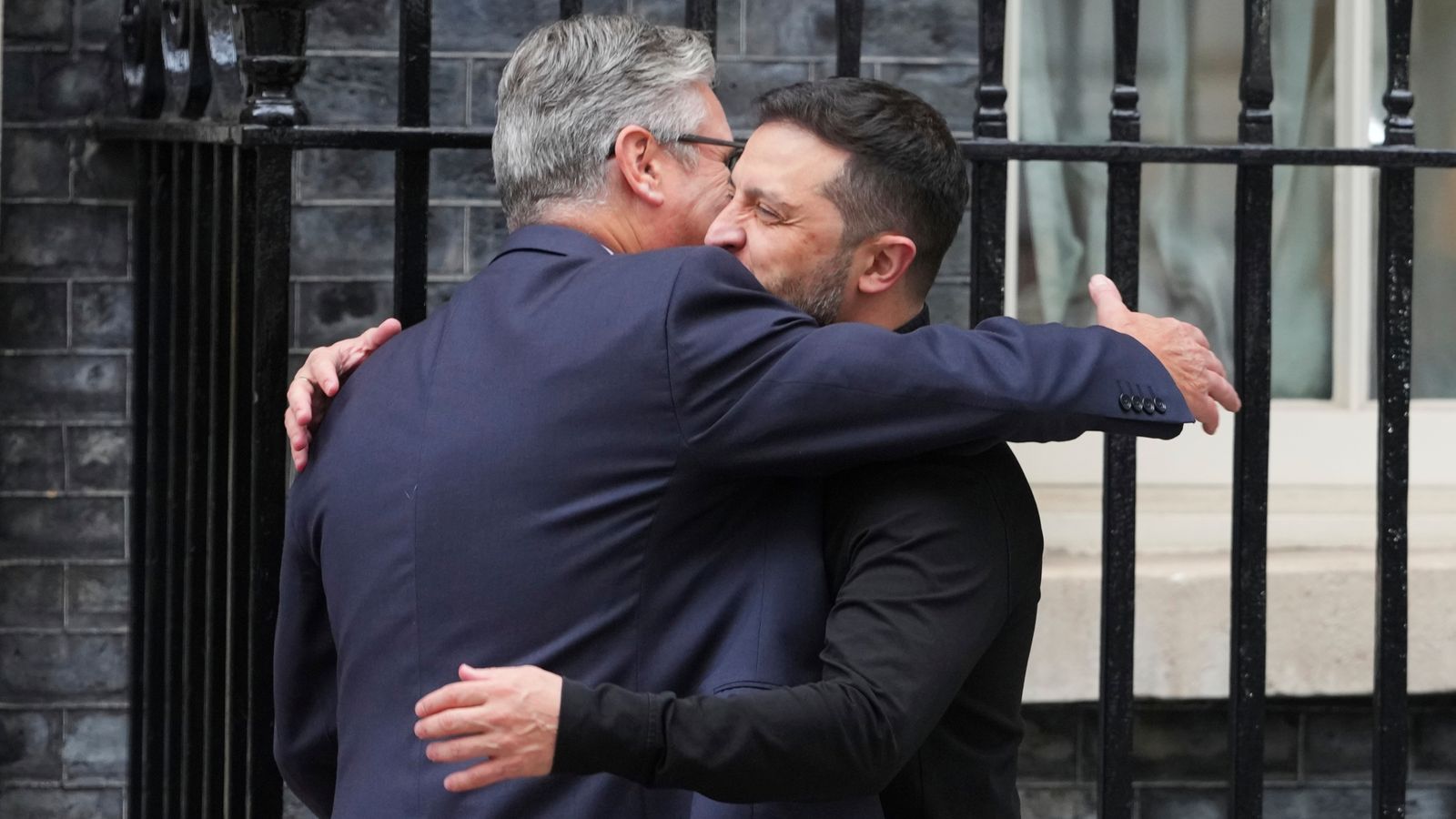
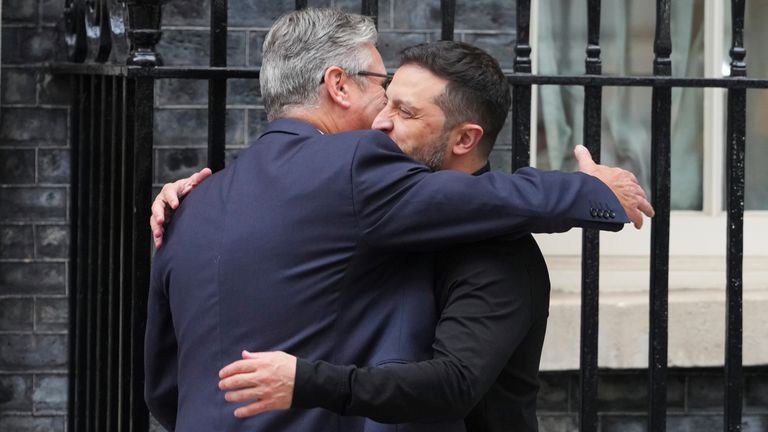
Volodymyr Zelenskyy is heading to Downing Street once again, but Prime Minister Sir Keir Starmer will be keen to make this meeting more than just a photo op.
On Monday the prime minister will welcome not only the Ukrainian president, but also E3 allies France and Germany to discuss the state of the war in Ukraine.
French President Emmanuel Macron and German Chancellor Friedrich Merz will join Sir Keir in showing solidarity and support for Ukraine and its leader, but it’s the update on the peace negotiations that will be the main focus of the meet up.
The four leaders are said to be set to not only discuss those talks between Ukraine, the US and Russia, but also to talk about next steps if a deal were to be reached and what that might look like.
Ahead of the discussions, Sir Keir spoke with the Dutch leader Dick Schoof where both leaders agreed Ukraine’s defence still needs international support, and that Ukraine’s security is vital to European security.
But while Russia’s war machine shows no signs of abating, a warm welcome and kind words won’t be enough to satisfy the embattled Ukrainian president at a time when Russian drone and missile attacks continue to bombard Kyiv.
Keir Starmer welcoming Volodymyr Zelenskyy to Downing Street during a previous visit. Pic: AP
What is the latest in negotiations?
Over the weekend, Mr Zelenskyy said he had discussed “next steps” with US President Donald Trump’s advisers and was “determined to keep working in good faith”.
“The American representatives know the basic Ukrainian positions,” Mr Zelenskyy said in his nightly video address. “The conversation was constructive, although not easy.”
But on Sunday evening, ahead of an event at the Kennedy Center, President Trump said he was “disappointed” with Mr Zelenskyy, as was asked about the next steps in Russia-Ukraine talks following negotiations.
He said: “We’ve been speaking to President Putin and we’ve been speaking to Ukrainian leaders, including Zelenskyy, President Zelenskyy.
“And I have to say that I’m a little bit disappointed that President Zelenskyy hasn’t yet read the proposal. That was as of a few hours ago.
“His people love it. But he hasn’t – Russia’s fine with it. Russia’s you know, Russia, I guess, would rather have the whole country when you think of it. But Russia is, I believe, fine with it, but I’m not sure that Zelenskyy’s fine with it. His people love it but he hasn’t read it.”
Read more:
Ukraine has become Europe’s war – so why doesn’t it act like it?
Inside a secret underground military base in eastern Ukraine
On Saturday, Keith Kellogg, Trump’s outgoing Ukraine envoy, had told the Reagan National Defence Forum that efforts to resolve the conflict were in “the last 10 metres”.
Kremlin spokesman Dmitry Peskov praised new US security strategy over the weekend, adding that Russia hopes this would lead to “further constructive cooperation with Washington on the Ukrainian settlement”.

Major US cryptocurrency exchange Coinbase is returning to India after a two-year absence from the market.
Coinbase has resumed app registrations in India as it prepares to roll out local fiat on-ramps in 2026, Coinbase APAC director John O’Loghlen announced at India Blockchain Week (IBW), according to a Sunday report by TechCrunch.
Coinbase’s return to India comes more than two years after it ceased local services in September 2023, following a troubled debut of its local exchange launched in 2022.
“We had millions of customers in India, historically, and we took a very clear stance to off-board those customers entirely from overseas entities, where they were domiciled and regulated. Because we wanted to kind of burn the boats, have a clean slate here,” O’Loghlen said.
Crypto-to-crypto trades available immediately
As Coinbase resumes customer onboarding in India, users can immediately execute crypto-to-crypto trades, according to the report by TechCrunch.
The exchange initially began onboarding users through an early-access program in October, around the time it hired Karan Malik as its India marketing lead.

Malik had previously overseen marketing for last year’s IBW event, where Coinbase served as a platinum sponsor this year.
“Last year, I was leading the charge and building the marketing and brand playbook for IBW. This year, I’m bringing Coinbase to the party,” the exec said.
Coinbase ramps up push in India
Coinbase has been actively working to rebuild its relationship with the Indian government. In early December, Coinbase’s international policy adviser Katie Mitch represented the exchange before India’s Parliamentary Standing Committee on Finance.
“We are optimistic on the potential for forward-looking VDA regulation in India,” she said in an X post last Thursday.
In another development last week, Priyank Kharge, IT minister for Karnataka, signed a memorandum of understanding with Coinbase India to deepen the state’s leadership in blockchain innovation and cybersecurity.

Through the collaboration, the Karnataka government will collaborate with the exchange on startup incubation on Coinbase-backed Base protocol and speed up real-world applications of blockchain technology, the minister said.
Related: Coinbase invests in Indian crypto exchange CoinDCX at $2.45B valuation
As previously mentioned, Coinbase secured a license with India’s Financial Intelligence Unit in March 2025, positioning the exchange for a potential launch in the country. In August, Coinbase chief legal officer Paul Grewal also met with Karnataka’s IT minister Kharge to explore collaboration on developer tools, cybersecurity and blockchain in governance.
Cointelegraph approached Coinbase for comment regarding its relaunch in India, but had not received a response by the time of publication.
Magazine: When privacy and AML laws conflict: Crypto projects’ impossible choice

Crypto giant Binance has been granted three separate licenses from Abu Dhabi’s financial regulator, providing a green light to operate its exchange, clearing house and broker-dealer services under the Financial Services Regulatory Authority’s (FSRA) regulatory framework.
The FSRA, an independent financial regulator of the Abu Dhabi Global Market (ADGM), a financial free zone in Abu Dhabi, has approved licenses for Binance’s Nest Exchange Limited, Nest Clearing and Custody Limited, and Nest Trading Limited, according to a news release and announcement from Binance on Monday.
Richard Teng, the co-CEO of Binance, said in a statement that the licenses provide regulatory clarity and legitimacy, enabling Binance to support its global operations from ADGM.
“While our global operations remain distributed, leveraging talent and innovation worldwide, this regulatory foundation offers our users peace of mind knowing Binance operates under a globally recognised, gold standard framework,” he said
“We are grateful for the FSRA’s forward-thinking approach, which safeguards users while fostering innovation.”

Binance could set up shop in Abu Dhabi
Binance doesn’t have an official corporate headquarters, which can dictate tax obligations and the regulations a company must follow.
Cointelegraph has contacted Binance for additional comment.
Related: Former Binance US CEO launches stablecoin platform ahead of L1 network
Under a February 2020 guidance, the FSRA outlines that authorised entities conducting regulated activities within the ADGM need to have “mind and management” operating out of the zone, which includes devoting resources to commercial, governance, compliance, surveillance, operations, technical, IT and HR functions.
Operating under the ADGM’s financial services regime provides Binance users with additional consumer protections, along with enhanced oversight from regulators, according to Binance. The exchange plans to start operating its “regulated activities” on Jan. 5, 2026.
Teng said in an X post on Monday that it’s an “important milestone for Binance,” because it’s become the first global exchange to secure regulatory approval from a respected regulator, and will now have its international operations and liquidity supervised end-to-end.

Binance already has a foothold in the United Arab Emirates, with its virtual asset service provider license in Dubai, which it obtained in April 2024, and a $2 billion investment from MGX, an Abu Dhabi-based artificial and technology venture firm, in March.
Magazine: When privacy and AML laws conflict: Crypto projects’ impossible choice
-
 Sports2 years ago
Story injured on diving stop, exits Red Sox game
-
 Sports3 years ago
‘Storybook stuff’: Inside the night Bryce Harper sent the Phillies to the World Series
-
 Sports2 years ago
Game 1 of WS least-watched in recorded history
-
 Sports3 years ago
Button battles heat exhaustion in NASCAR debut
-
 Sports3 years ago
MLB Rank 2023: Ranking baseball’s top 100 players
-
Sports4 years ago
Team Europe easily wins 4th straight Laver Cup
-
 Environment3 years ago
Japan and South Korea have a lot at stake in a free and open South China Sea
-
 Environment1 year ago
Here are the best electric bikes you can buy at every price level in October 2024