

A third of daily music uploads are AI-generated and 97% of people can’t tell the difference, says report


Do you care if the music you’re listening to is artificially generated?
That question – once the realm of science fiction – is becoming increasingly urgent.
An AI-generated country track, Walk My Walk, is currently sitting at number one on the US Billboard chart of digital sales and a new report by streaming platform Deezer has revealed the sheer scale of AI production in the music industry.
Deezer’s AI-detection system found that around 50,000 fully AI-generated tracks are now uploaded every day, accounting for 34% of all daily uploads.
File pic: iStock
The true number is most likely higher, as Deezer’s AI-detection system does not catch every AI-generated track. Nor does this figure include partially AI-generated tracks.
In January 2025, Deezer’s system identified 10% of uploaded tracks as fully AI-generated.
Since then, the proportion of AI tracks – made using written prompts such as “country, 1990s style, male singer” – has more than tripled, leading the platform’s chief executive, Alexis Lanternier, to say that AI music is “flooding music streaming”.
‘Siphoning money from royalty pool’
What’s more, when Deezer surveyed 9,000 people in eight countries – the US, Canada, Brazil, UK, France, Netherlands, Germany and Japan – and asked them to detect whether three tracks were real or AI, 97% could not tell the difference.
That’s despite the fact that the motivation behind the surge of AI music is not in the least bit creative, according to Deezer. The company says that roughly 70% of fully AI-generated tracks are what it calls “fraudulent” – that is, designed purely to make money.
“The common denominator is the ambition to boost streams on specific tracks in order to siphon money from the royalty pool,” a Deezer spokesperson told Sky News.
“With AI-generated content, you can easily create massive amounts of tracks that can be used for this purpose.”
File pic: Reuters
The tracks themselves are not actually fraudulent, Deezer says, but the behaviour around them is. Someone will upload an AI track then use an automated system – a bot – to listen to a song over and over again to make royalties from it.
Even though the total number of streams for each individual track is very low – Deezer estimates that together they account for 0.5% of all streams – the work needed to make an AI track is so tiny that the rewards justify the effort.
Are fully-AI tracks being removed?
Deezer is investing in AI-detection software and has filed two patents for systems that spot AI music. But it is not taking down the tracks it marks as fully-AI.
Instead it removes them from algorithmic recommendations and editorial playlists, a measure designed to stop the tracks getting streams and therefore generating royalties, and marks the tracks as “AI-generated content”.
“If people want to listen to an AI-generated track however, they can and we are not stopping them from doing so – we just want to make sure they are making a conscious decision,” the Deezer spokesperson says.
Read more from Sky News:
How Elon Musk is boosting the British right
The extraordinary impact of a crime on UK growth
Concerns about artists’ livelihoods
Deezer’s survey found that more than half (52%) of respondents felt uncomfortable with not being able to tell the difference between AI and human-made music.
“The survey results clearly show that people care about music and want to know if they’re listening to AI or human-made tracks or not,” said the company’s boss Alexis Lanternier.
“There’s also no doubt that there are concerns about how AI-generated music will affect the livelihood of artists.”

Musicians protests AI copyright plans
Earlier this year, more than 1,000 musicians – including Annie Lennox, Damon Albarn and Kate Bush – released a silent album to protest plans by the UK government to let artificial intelligence companies use copyright-protected work without permission.
A recent study commissioned by the International Confederation of Societies of Authors and Composers suggested that generative AI music could be worth £146bn a year in 2028 and account for around 60% of music libraries’ revenues.
By this metric, the authors concluded, 25% of creators’ revenues are at risk by 2028, a sum of £3.5bn.

Thousands of members of actors’ trade union Equity are being asked whether they would support industrial action over artificial intelligence protections.
The organisation has launched an indicative ballot among about 7,000 members working in film and TV.
Performers are being asked whether they are prepared to refuse to be digitally scanned on set in order to secure adequate artificial intelligence protections.
It will be the first time the performing arts and entertainment trade union has asked this whole section of its membership to vote in a ballot.
The Hollywood strikes took place in 2023. File pic: AP
The announcement follows the Hollywood strikes in 2023, when members of Equity’s sister union in the US, SAG-AFTRA, and writers, went on strike over issues including AI.
Video game actors in the US also protested over the use of AI, ending almost a year of industrial action earlier in 2025.
Equity’s ballot opens on Thursday and runs for two weeks, and will show the level of support the union has for action short of a strike.
Another statutory ballot would have to be made before any industrial action is taken.
“While tech companies get away with stealing artists’ likeness or work, and the government and decision makers fret over whether to act, unions including Equity are at the forefront of the fight to ensure working people are protected from artificial intelligence misuse,” Equity general secretary Paul W Fleming said in a statement.
“If bosses can’t ensure someone’s likeness and work won’t be used without their consent, why should performers consent to be digitally scanned in the first place?”
Mr Fleming said the ballot would give members the opportunity to “send a clear message to the industry: that it is a basic right of performers to have autonomy over their own personhood and identity”.
The union has no choice but to recommend members support industrial action, he said.
“It’s time for the bosses to step away from the brink and offer us a package, including on AI protections, which respects our members,” added Mr Fleming.
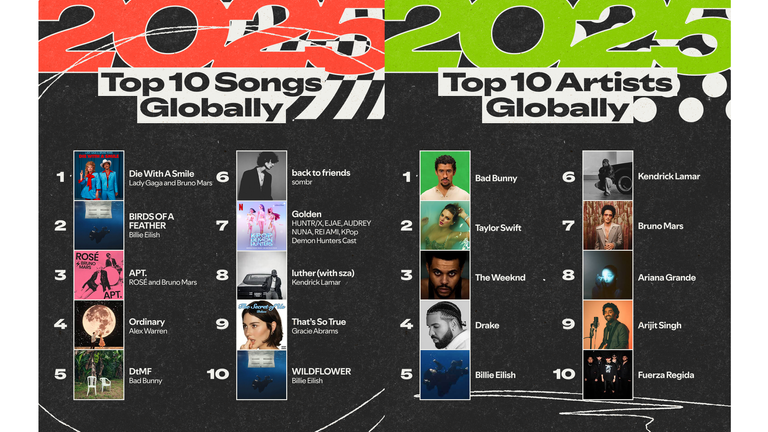
The hotly anticipated Spotify Wrapped is revealing our top tracks, artists and albums for 2025.
But how does the streaming service calculate personalised summaries of users’ listening habits and rank the UK’s hottest artists?
Here’s a look at how your data is used.
The platform describes the annual statistics as “a chance to look back on your year in sound”.
It says data is captured between January and mid-November on every account, although it mostly excludes anything streamed in private mode. (Don’t worry, your passion for the Spice Girls can be kept secret.)
Wrapped presents personalised listening statistics, which Spotify calls the “real story of your year of listening”, alongside global figures for comparison.
The streaming service says Minutes Listened reflects the actual time spent listening to audio on the platform.
Once a user streams at least 30 tracks, Spotify generates a list of Your Top Songs. Similarly, Your Top Artists ranks artists based on total minutes listening to a particular performer.
Other metrics identify the top genres users have played, as well as podcasts and audiobooks ranked by total minutes listened. And if you’ve listened to at least 70% of tracks on a record, you’ll see top albums too.
Spotify also creates Your Listening Age, a guesstimate of your age based on the era of the music “you feel most connected to”.
The streaming service says the statistic is calculated using a five-year span of music which users engaged with more than other listeners of a similar age.
Spotify has been summing up 2025’s most listened to tracks. Pic: Spotify
Swift vs Bunny
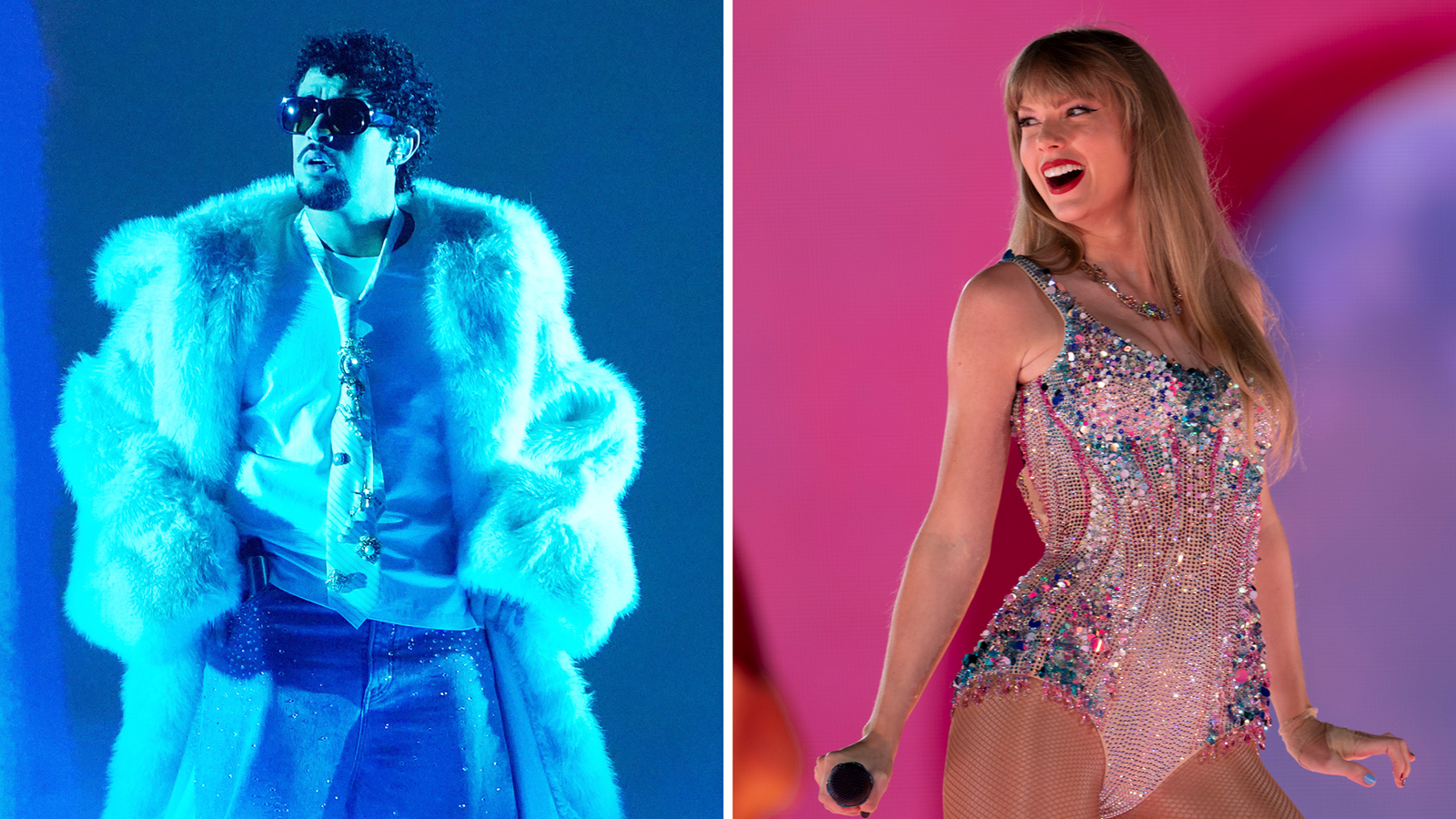
Pop superstar Taylor Swift has been named the UK’s most-streamed artist on Spotify for the third year in a row.
But she dropped out of the top spot in the global rankings, coming second to Puerto Rican superstar Bad Bunny, who secured more than 19.8 billion streams. Third were The Weeknd, followed by Drake and Billie Eilish.
Bad Bunny’s LP Debi Tirar Mas Fotos was the most listened-to album worldwide.
Read more from Sky News:
Sabrina Carpenter fury at video
Drake’s lawsuit dismissed
Spotify hikes UK prices
Spotify revealed Drake was the UK’s second most-listened to artist, followed by Sabrina Carpenter in third, The Weeknd in fourth and Billie Eilish in fifth.
Despite being the most listened-to artist, Swift failed to break into the UK’s top five most listened-to songs and albums of the year.
Alex Warren’s Ordinary was the most-streamed song, and Short ‘N’ Sweet, released by Carpenter last year, the top album.
-
 Sports2 years ago
Story injured on diving stop, exits Red Sox game
-
 Sports3 years ago
‘Storybook stuff’: Inside the night Bryce Harper sent the Phillies to the World Series
-
 Sports2 years ago
Game 1 of WS least-watched in recorded history
-
 Sports3 years ago
Button battles heat exhaustion in NASCAR debut
-
 Sports3 years ago
MLB Rank 2023: Ranking baseball’s top 100 players
-
Sports4 years ago
Team Europe easily wins 4th straight Laver Cup
-
 Environment3 years ago
Japan and South Korea have a lot at stake in a free and open South China Sea
-
 Environment1 year ago
Here are the best electric bikes you can buy at every price level in October 2024