
Brazil ‘surprised’ UK not investing in new rainforest fund it helped design

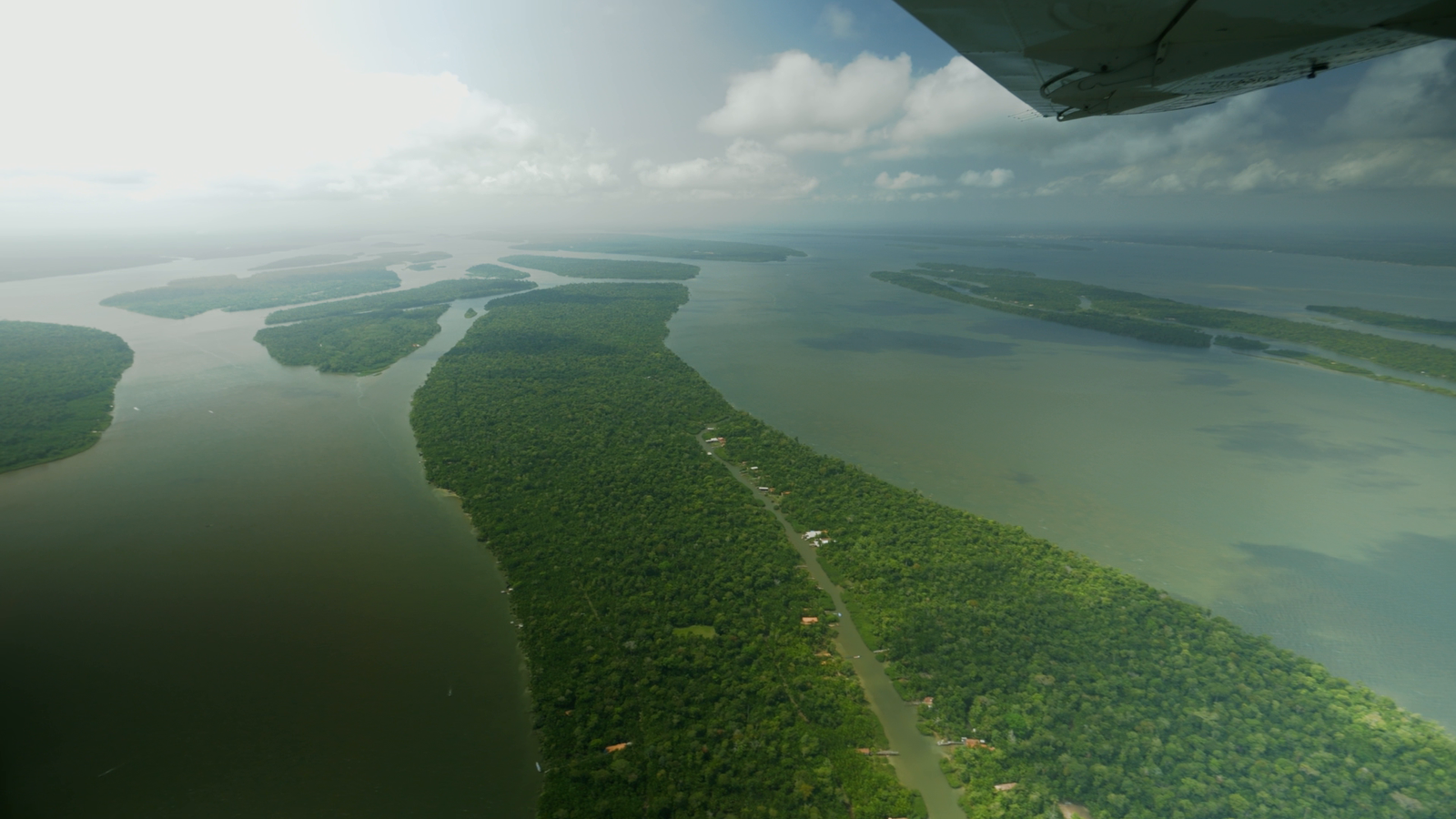
Brazil was “a bit surprised” Britain hasn’t contributed to a new investment fund to protect tropical forests, despite having helped to design it, a senior official has told Sky News.
The Amazon nation has used its role as host of the COP30 climate talks to tout its new scheme, which it drew up with the help of countries including the UK and Indonesia.
With Britain’s budget day looming, Prime Minister Sir Keir Starmer decided against chipping in when he visited the Amazonian city of Belem this month.
The news came out the day before Brazil was about to launch it.
“The Brazilians were livid” about the timing, one source told Sky News.
Lush rainforest and waterways in the Brazilian Amazon

A waterfall in Kayapo territory in Brazil
Garo Batmanian, director-general of the Brazilian Forestry Service and coordinator of the new scheme, said: “We were expecting [Britain to pay in] because the UK was the very first one to support us.”
The so-called Tropical Forests Forever Facility (TFFF) was drawn up with the help of “very bright people from the UK”, according to Mr Batmanian.
“So we are a bit surprised, but we expect that once internal situations get better, hopefully they will come through,” he added.
The UK’s climate envoy, Rachel Kyte, told Sky News: “The PM agreed the decision was about not doing it now, as opposed to not ever.
“We will look at the TFFF after the budget and are carefully tracking how others are investing.”

Forest growing back from a fire (bottom left) and deforestation alongside healthy sections of Amazon rainforest
The fund has been hailed as a breakthrough – if Brazil can get if off the ground.
Paul Polman, former Unilever boss and now co-vice chair of Planetary Guardians, said it could be the “first forest-finance plan big enough to change the game”.
Why do tropical forests need help?
At their best, tropical forests like the Amazon and the Congo Basin provide food, rainfall and clean air for millions of people around the world.
They soak up carbon dioxide – the main driver of climate change – providing a cooling effect on a heating planet.
But they are being nibbled away at by extractive industries like oil, logging, soy and gold.
Parts of the Amazon rainforest already emit more carbon dioxide than they store.
Other pockets are expected to collapse in the next few decades, meaning they’d no longer be rainforests at all.
Read more from COP30:
Climate protest in Brazilian city aims to hold governments’ feet to the fire
Are climate summits saving the world – or just hot air?
COP30 – why is it so controversial?

Greenpeace says deforested land could be better used, which would save the need for more land to be cleared
Cristiane Mazzetti, senior forest campaigner at Greenpeace Brazil, said: “Science is saying we need to immediately stop deforestation and start restoring what was once lost.
“And in Brazil, we already have enough open land that could be better used for agricultural expansion… There is no need [to open up] new areas.”
Can Brazil’s new investment fund save the world’s rainforests?
For decades, forests have been worth more dead than alive.
Successive attempts to save them have fallen flat because they’ve not been able to flip the economics in favour of conservation, or ensure a long-term stream of cash.
Brazil hopes the TFFF, if it launches, would make forests worth more standing than cut down, and pay out to countries and communities making that happen.

Mining is a lucrative industry in the Amazon. Pic: Reuters
“We don’t pay only for carbon, we are paying for a hectare of standing forest. The more forests you have, the more you are paid,” said Mr Batmanian.
The other “innovation” is to stop relying on aid donations, he said.
“There is a lot of demand for overseas development assistance. It’s normal to have that. We have a lot of crisis, pandemics, epidemics out there.”
Instead, the TFFF is an investment fund that would compete with other commercial propositions.
Mr Polman said: “This isn’t charity, it’s smart economic infrastructure to protect the Amazon and keep our planet safe.”
How does the TFFF raise money?
The idea is to raise a first tranche of cash from governments that can de-risk the fund for private investors.
Every $1 invested by governments could attract a further $4 of private cash.
The TFFF would then be able to take a higher amount of risk to raise above-market returns, Brazil hopes.
That means it could generate enough cash to pay competitive returns to investors and payments to the eligible countries and communities keeping their tropical trees upright.
At least 20% of the payments has been earmarked for indigenous communities, widely regarded as the best stewards of the land. Many, but not all, have welcomed the idea.
Will the TFFF work?
The proposal needs at least $10-25bn of government money to get off the ground.
So far it has raised $5.5bn from the likes of Norway, France, and Indonesia. And the World Bank has agreed to host it, signalling strong credibility.
But it’s a hard task to generate enough money to compete with lucrative industries like gold and oil, many of which governments already invest in.

Dr Andreza Aruska de Souza Santos, director, Brazil Institute, King’s College London
Dr Andreza Aruska de Souza Santos, director of King’s College London’s Brazil Institute, said TFFF has the potential to make it “very financially viable to have a forest as a forest”.
“But the problem is that TFFF would need to compete with these very profitable industries… because you need to capture as much money from governments, from investors.
“And so far it’s not quite balancing the competitiveness of other sectors that are potentially harmful for forests.”
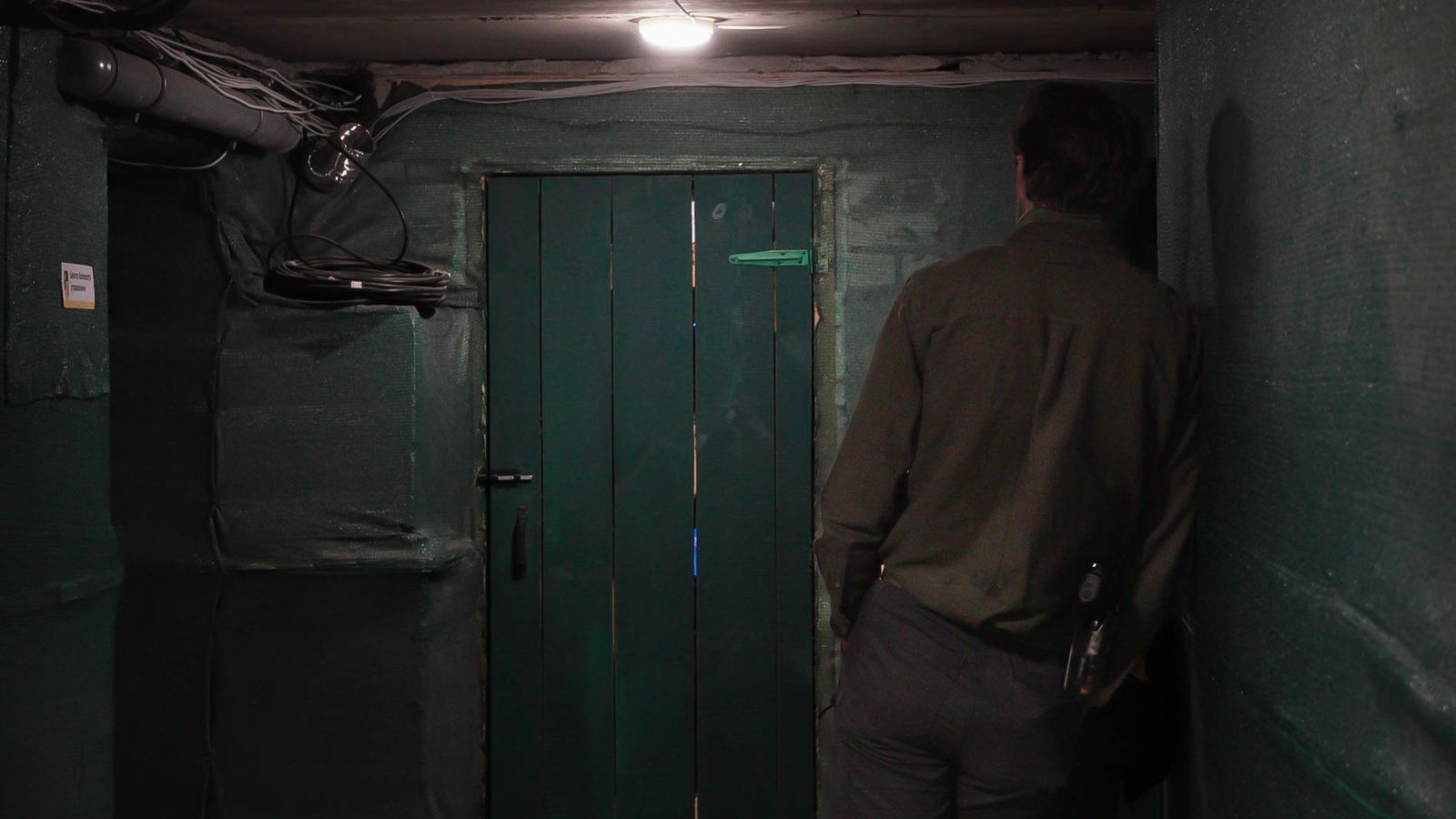

A hidden, underground military base in eastern Ukraine is so secret, soldiers change into civilian clothes whenever they step outside to avoid drawing attention.
Journalists are not usually allowed access.
But the unit that has been using this vast, subterranean warren of war rooms, a dormitory, kitchen, canteen and makeshift gym as its headquarters since the summer is imminently relocating, so Sky News was invited inside.
Lieutenant Colonel Arsen Dimitric – call sign Lemko – is the chief of staff of 1st Corps Azov of the National Guard of Ukraine, one of the country’s most effective combat forces.
Lemko
He sat with us in the base, next to a large square table, covered by a map of the Donbas region.
His soldiers have been fighting in this area since the summer, countering a surge in Russian attacks in and around the frontline city of Pokrovsk.
“We aim to destroy as much of the enemy as possible,” he said.
“Will we take losses? Yes. Will it hurt? Absolutely.”
But he said if Russia is allowed to advance, even more Ukrainians will suffer.
“Their [the Russians’] only advantage is numbers,” he said.
“They don’t care how many people they lose.”
Lemko said almost 17,000 Russian soldiers had been killed or wounded fighting in this section of the warzone alone between August to November.
Read more:
Russia hits Ukraine with massive missile and drone attack

Ukrainian video footage of the battlefield showed Russian armoured vehicles being taken out by drones and artillery fire.
At one point, Russian soldiers mounted on motorbikes try to advance, only to be stopped by Ukrainian fire.
“Our task is to hit them as hard as possible in various areas,” Lemko said. “We focus on our operations, others on theirs, and leadership will negotiate the best possible terms.”
The Azov Corps soldiers are fighting over land that should be handed over to Russia, according to an initial draft of a peace deal proposal between Kyiv and Moscow put forward by the United States. This is despite swathes of the Donbas remaining under Ukrainian control.
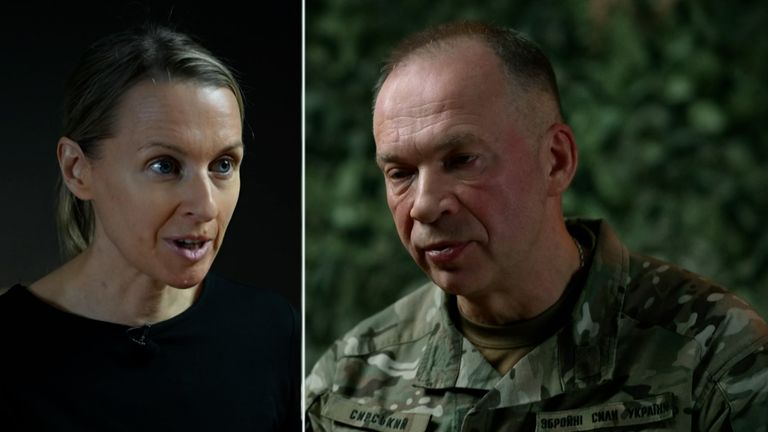
But General Oleksandr Syrskyi, the head of the Ukrainian armed forces, has since told Sky News that simply surrendering territory would be “unacceptable”.
Giving up territory ‘unacceptable’, Ukraine’s military chief says
For Lemko, he says the job of his troops is to inflict as much damage as possible on the Russian side to help strengthen Ukraine’s hand in negotiations.
“Simply giving it [land] away isn’t the way,” he said.
“Diplomats do their work, we do ours. Our job as soldiers is to give as many advantages as possible to our negotiating team. And we’re doing exactly that.”
Lemko, who has been battling against Russia since the Crimean annexation in 2014, also had a warning for the rest of Europe about a rise in hybrid attacks, such as mysterious drone sightings, acts of sabotage and cyber hacks suspected of being linked to Moscow.
He said Ukraine’s experience showed that if attacks by Russia that fall under the threshold of conventional war are not successfully countered, full-scale conflict could follow.
“Ukraine once lost a hybrid war that had been waged since the very start of our independence,” he said.
“Because of that defeat, there was a physical operation against us in Crimea and then a physical operation in 2022.
“Now the hybrid war has reached its climax, and it is moving into the Baltic States and Europe.
“That is why, in my opinion – and in the opinion of most of our officers – now is the moment for all countries to unite and counter this hybrid war. Because the consequence may be a physical one.”
Production: Katy Scholes, security and defence producer, and Azad Safarov, Ukraine producer.
Camera operator: Mostyn Pryce
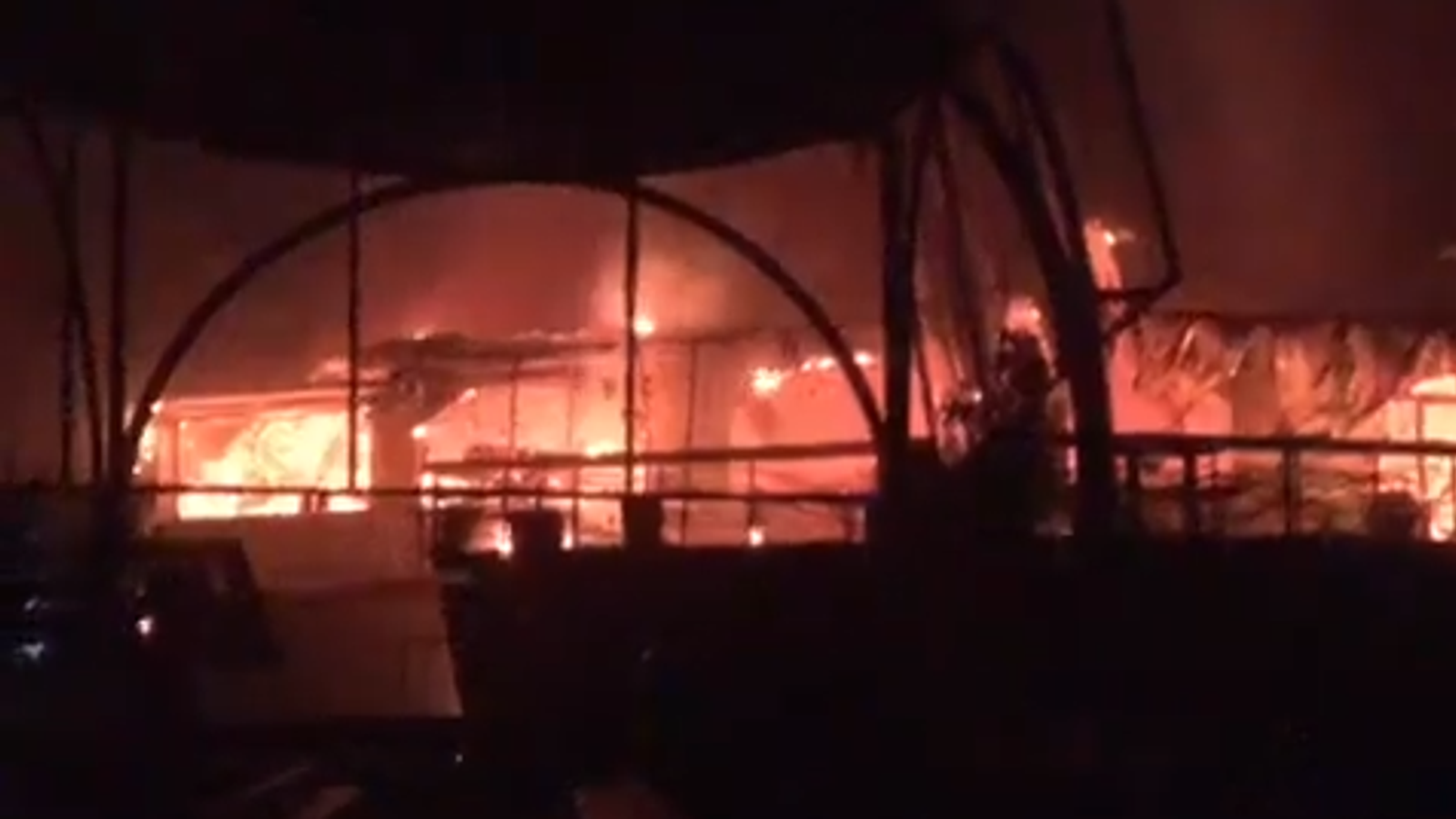

At least 25 people have been killed after a fire at a nightclub in Goa, the state’s police service has said.
The fire reportedly started around midnight on Saturday local time.
The majority of victims were kitchen staff at the club – although around three to four tourists are thought to be among those killed.
Videos on social media showed emergency services lining up to help the injured – some of whom were taken to nearby hospitals.
Dr Pramod Sawant, Goa’s chief minister, said: “I am deeply grieved and offer my heartfelt condolences to all the bereaved families in this hour of unimaginable loss.”
He later said he was “closely reviewing the situation arising from the tragic fire” – adding six additional people had been injured.
“All six injured persons are in a stable condition and are receiving the best medical care,” he said.
Pic: NDTV
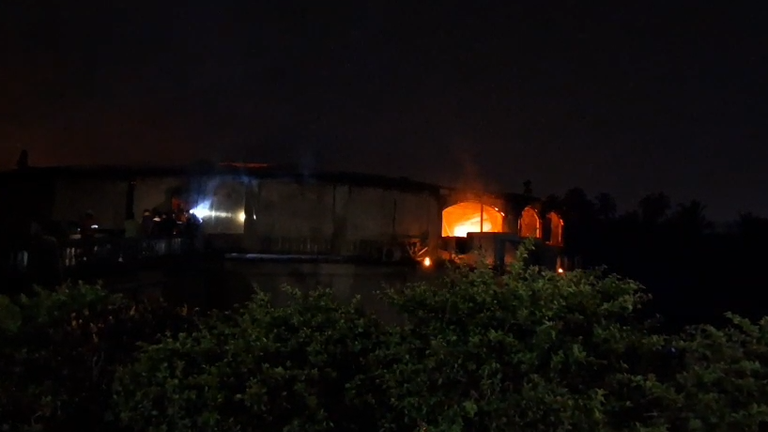
Fire at nightclub in Goa. Pic: NDTV
Authorities worked through the night to bring the situation under control and all bodies have been recovered, the state’s police chief told reporters, according to Reuters news agency.
India’s Prime Minister Narendra Modi said the deadly fire was “deeply saddening”.
He said he had spoken with Goa’s chief minister and that “the state government is providing all possible assistance to those affected”.
Dr Sawant said he has “ordered an inquiry” to discover what happened after visiting the site.
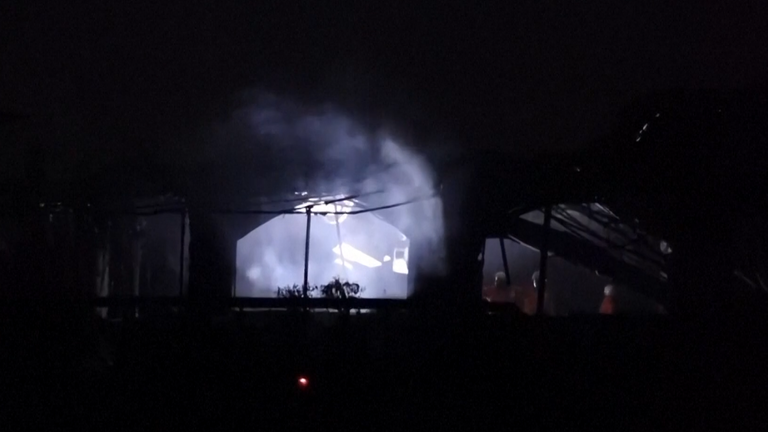
Pic: AP
“The inquiry will examine the exact cause of the fire and whether fire safety norms and building rules were followed,” he said.
“Those found responsible will face most stringent action under the law – any negligence will be dealt with firmly.”
Goa, a small state on India’s western coast, is a popular tourist destination, attracting millions of tourists every year.
Russia launched a massive missile and drone attack on Ukraine overnight, after US and Ukrainian officials said they would meet for a third day of talks aimed at bringing the war to an end.
The two sides said they had made progress on a security framework for post-war Ukraine, but that any “real progress toward any agreement” will depend “on Russia’s readiness to show serious commitment to long-term peace.”
Russia launched 653 drones and 51 missiles in its attack on Ukraine, triggering air raid alerts across the country, Ukraine’s air force said.
Giving up territory ‘unacceptable’ – Ukraine’s military chief
Ukrainian forces shot down and neutralised 585 drones and 30 missiles, the air force said, adding that 29 locations were struck.
At least eight people were wounded in the attacks, Ukraine’s minister of internal affairs Ihor Klymenko said.
Russia conducted a “massive missile-drone attack” on power stations and other energy infrastructure in several regions, Ukraine’s national energy operator Ukrenergo said on Instagram.
Ukraine’s Zaporizhzhia nuclear power plant temporarily lost all off-site power overnight, the International Atomic Energy Agency said.
The plant is in an area that has been under Russian control since early in Moscow’s invasion of Ukraine. It is not in service, but needs reliable power to cool its six shutdown reactors and spent fuel in order to avoid any catastrophic nuclear incidents.
Read more from Sky News:
Young Germans fear return to conscription
Giving up territory would be ‘unjust’, says Kyiv armed forces chief

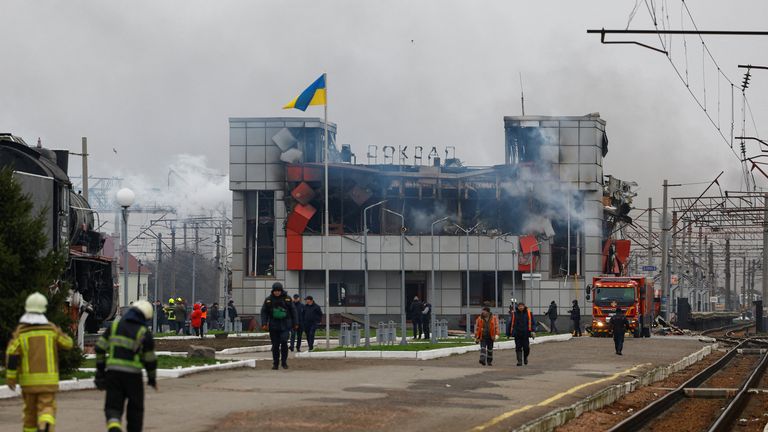
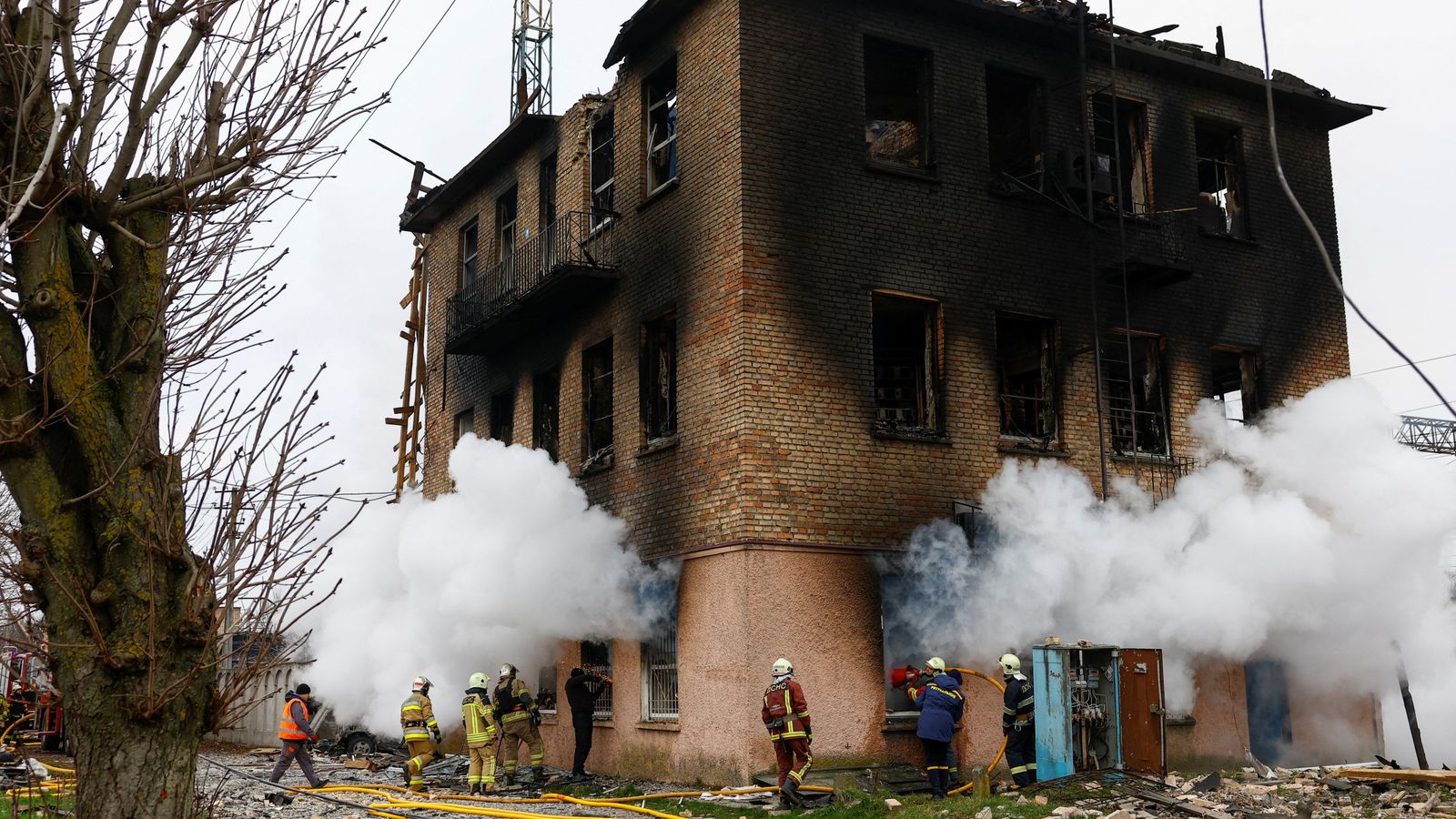
Russia struke a train station in the city of Fastiv. Pics: Reuters
Zelenskyy condemns ‘meaningless’ strikes
Ukrainian President Volodymyr Zelenskyy condemned the strikes as “meaningless” from a military point of view.
He said energy facilities were the main targets, but a drone strike had “burned down” a train station in the city of Fastiv, in the Kyiv region.
“The Russians’ goal is to hurt millions of Ukrainians, and they have sunk so low that they are launching missiles at peaceful cities on St. Nicholas Day,” he said.
“That is why additional pressure is needed. Sanctions must work, and so must our air defence, which means we must continue to support those who defend our lives.”
Ukraine strikes oil refinery
Meanwhile, Russia’s defence ministry said its air defences had shot down 116 Ukrainian drones over Russian territory overnight.
The General Staff of the Ukrainian Armed Forces said Ukrainian forces had struck Russia’s Ryazan Oil Refinery, while Russian Telegram news channel Astra shared footage appearing to show a fire breaking out and plumes of smoke rising above the refinery.
Over the last few months, Ukraine has used long-range drones to target Russian refineries in an attempt to deprive Moscow of the oil export revenue it needs to continue the war.
Meanwhile, Kyiv and its Western allies say Russia is trying to cripple Ukraine’s power grid and deny civilians access to heat, light and running water in winter, which Ukrainian officials call “weaponising” the cold.
On Monday, Mr Zelenskyy will meet Sir Keir Starmer in London to discuss the ongoing negotiations mediated by the US, along with French President Emmanuel Macron and German Chancellor Friedrich Merz.
-
 Sports2 years ago
Story injured on diving stop, exits Red Sox game
-
 Sports3 years ago
‘Storybook stuff’: Inside the night Bryce Harper sent the Phillies to the World Series
-
 Sports2 years ago
Game 1 of WS least-watched in recorded history
-
 Sports3 years ago
Button battles heat exhaustion in NASCAR debut
-
 Sports3 years ago
MLB Rank 2023: Ranking baseball’s top 100 players
-
Sports4 years ago
Team Europe easily wins 4th straight Laver Cup
-
 Environment3 years ago
Japan and South Korea have a lot at stake in a free and open South China Sea
-
 Environment1 year ago
Here are the best electric bikes you can buy at every price level in October 2024