

A Danish style asylum system? How the UK and Denmark’s immigration policies compare

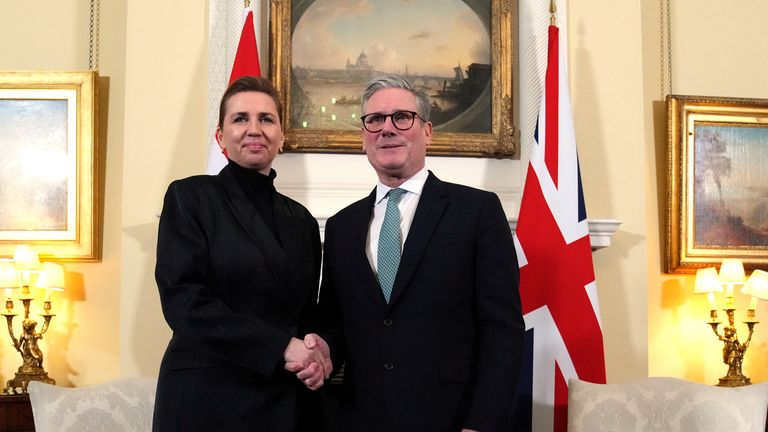
Home Secretary Shabana Mahmood has announced controversial plans for the UK to embrace a “Denmark-style” asylum system, aimed at making Britain less attractive to illegal immigrants and making deportations easier.
The hardline “zero asylum seekers” approach taken by Danish prime minister Mette Frederiksen in 2019 was unusual for a centre-left party.
But her Social Democrats gained seats at the 2022 election, while the populist right-wing Danish People’s Party finished twelfth – having been second in 2015 and third in 2019.
Danish Prime Minister Mette Frederiksen visits British Prime Minister Keir Starmer, in London in February, 2025. Pic: Reuters
With Nigel Farage’s Reform UK currently leading comfortably in national polls, you can imagine why Labour are interested in what Ms Frederiksen is selling.
But how comparable are Denmark’s immigration challenges to those in the UK, and what lessons can we draw from them?
Read more:
Reform’s been pretty quiet since Labour started exploring Danish migration model – and this is why
UK government looking at Danish migration model – here’s how it works
Politics latest: Government releases asylum reforms in full – as Labour MPs attack plans
Reducing demand – Danish asylum claims falling
The most obvious difference between Denmark and the UK is that Denmark is significantly smaller. Its population of 6 million is not much more than that of Yorkshire’s. So it makes sense that it also has significantly fewer asylum seekers than Britain.
The number of asylum claims per person has been similar historically, however.
In the two years before Ms Frederiksen was elected prime minister, Denmark received an average of 57 applications per 100,000 people, while the UK averaged 55.
Since then, the UK figure almost trebled to 145, while the Danish figure fell by a third.
The Danish story breaks the trend from the rest of Europe, where the number of asylum applications to all EU countries rose by two thirds over the same period.
Danish immigration experts say this is not a coincidence, but the result of Ms Frederiksen’s policies.
“The numbers have fallen because Denmark is not a welcoming place,” Michelle Pace, Professor in Global Studies at Roskilde University in Copenhagen, told Sky News.
“That has been made absolutely clear by the Mette Frederiksen government and the previous government before hers,” she added.
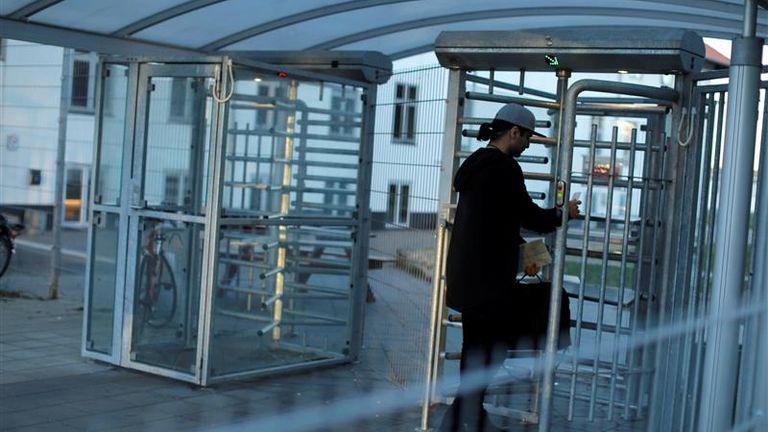
A man walks through the gate at a departure centre for rejected asylum seekers in Jutland, Denmark in March 2019. Pic: Reuters
In contrast, Mihnea Cuibus, a researcher at Oxford University’s Migration Observatory, told Sky News that the UK is typically viewed as an attractive country for migrants.
“There’s this sense among people that the UK is a safe and welcoming place,” he said, also listing several other factors drawing people to the UK, including the English language, existing networks of friends and family, and democracy.
Small boats vs visa overstayers – the routes taken to Denmark and Britain
Much of the political attention around illegal migration in the UK is dedicated to those crossing the Channel from France on small boats. A total of 190,000 people arrived via this route since 2018, including almost 40,000 in 2025 alone.
In Denmark, four in five illegal migrants identified in the country are people who previously had legitimate, time-limited visas, but stayed in the country longer than they should have.
That sounds like it might be a significant divergence from the UK’s system, but maybe not as much as you would think.
New UK data on this part of the system hasn’t been published since 2020. But in the four years prior to that, 250,000 people were identified as potential visa overstayers – significantly more than the number to have arrived on small boats.
Mr Cuibus said there is a big gap in the data, making trends harder to track.
“The only hard data that we have are on failed asylum seekers,” he said.
“We know that roughly half of the people who’ve been rejected for asylum in the last 20 years are still in the country.”
How applications are handled
As well as attracting fewer asylum claims, Denmark is also now more likely to say “no” to claims than the UK has been, a reversal of the trend through most of the 2010s.
That appears to be because the UK has become less likely to refuse applications in the last few years, rather than a big spike in Danish rejections. Both the UK and Denmark granted asylum to large numbers of people from Ukraine during this period.
Mr Cuibus told Sky News that between 2020 and 2023, the UK had some of the highest rates of granting asylum in Europe.
The changes Denmark introduced to its asylum policy between 2015 and 2019 did not significantly increase refusals on asylum applications, but rather made it harder for asylum seekers to stay in the country long-term.
The country also passed measures intended to make applying for asylum more difficult, such as restricting family reunification and threatening to confiscate valuables, which also contributed to deterring people from arriving in the first place.
Sending people home
It’s one thing rejecting people claiming asylum, but it’s another making sure those people leave safely and legally.
One of the mechanisms that protects migrants from unsafe removal is the European Convention on Human Rights (ECHR), which the UK – and Denmark – is signed up to, but which Reform say they would leave if they win power.
One key part of Ms Mahmood’s plans is to change how the ECHR is interpreted in migration court cases.
It would mean that only people with immediate family in the UK – for example, a parent or child – can argue that their “right to family life” would be breached by being deported.
Denmark has had greater success than its European neighbours at removing people it has decided should leave. Between June 2021 and June 2025, 46% of the 10,000 people it ordered to leave did so.
That’s a significantly higher proportion than the EU average of 21% – 400,000 people were returned, of the 1.9 million that were ordered to leave. The equivalent rates for France and Germany were 8% and 28% respectively.
The UK does not collect comparable data on the number of people ordered to leave, but it has returned 86,000 people over a similar time period – more than any other European country.
That number has been climbing in the past two or three years, but it is still 25% lower than it was in the early 2010s.
Voluntary vs enforced returns
Denmark’s asylum seeker removal policy relies almost entirely on “voluntary returns”, rather than those “enforced” by authorities.
In the UK, the proportion of voluntary returns has been steadily rising, but it is still used for fewer than half of migrants who leave the UK.
“There are quite a few reasons for governments to prefer voluntary returns,” Mr Cuibus explained.
“The main reason why the Home Office started shifting away from enforced returns more towards voluntary returns… is money.”
“We don’t really know exactly what the costs are right now, but we had some estimates from back in 2013. And at the time, those were estimating that an enforced return cost around £15,000 per person, compared to around £3,000 for a voluntary return.
“There’s the humanitarian side as well. Enforced returns are not very pleasant things to either go through or watch or have to enforce,” he said. “There is a big need for restraints, trained personnel.”
Individuals who are refused for asylum can apply to the Danish government for the equivalent of several thousand pounds in support to voluntarily return to their country of origin, according to the Danish Return Agency’s website.
While still potentially cheaper for the government than an enforced return, it’s not always popular politically as it can be seen to be rewarding illegality.
There has also been criticism of some of the methods used by Denmark to encourage people to leave.
Asylum seekers who find their claims rejected can be put in “departure centres”, prison-like facilities designed to encourage their voluntary deportation.
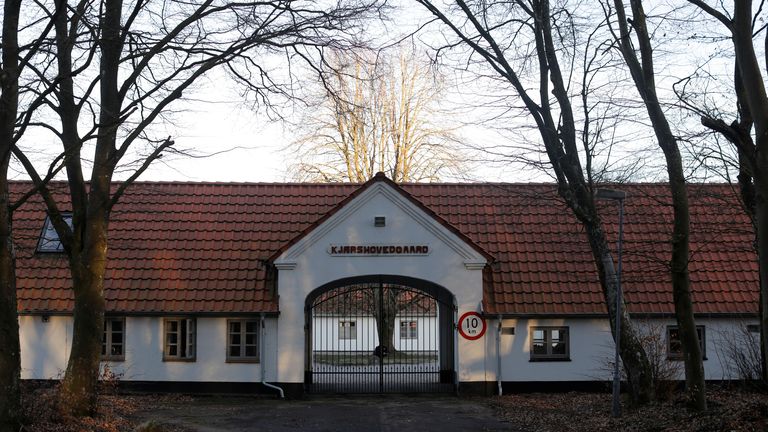
Kaershovedgaard, a former prison and now a departure centre in Denmark. Pic: Reuters
In 2024, the European Committee for the Prevention of Torture criticised one of these facilities for their “carceral environment”.
Denmark’s parliamentary ombudsman described conditions at another as “very burdensome and restrictive for living” and “marked by brutalisation”.
Michelle Pace, a professor from Roskilde University, said Denmark’s policies are a violation of international humanitarian law.
“Denmark prides itself on this negative branding, which is based on extremely harsh rhetoric, an extreme choice of words,” said Pace, referring to some of Denmark’s more controversial immigration policies such as the “jewellery law”, which allows the government to seize asylum seekers’ assets, including their jewellery, to fund their stay in the country.
“It’s violating its commitments internationally according to the Geneva Convention of 1951, which ironically Denmark was the first to sign,” she said.
Ms Pace warned that the UK should look to other European immigration models, like Spain’s, which she argues is less xenophobic and more forward-thinking.
“In the Spanish case, they looked in terms of a long duration and said, okay, we have a low birth rate. We’re going to have a huge shortage of labour in the next 20 to 50 years.
“How can we make a legal pathway that is safe for people to come here, build a life that is legal, that is safe, that is structured, that is organised?”
The Data x Forensics team is a multi-skilled unit dedicated to providing transparent journalism from Sky News. We gather, analyse and visualise data to tell data-driven stories. We combine traditional reporting skills with advanced analysis of satellite images, social media and other open source information. Through multimedia storytelling we aim to better explain the world while also showing how our journalism is done.


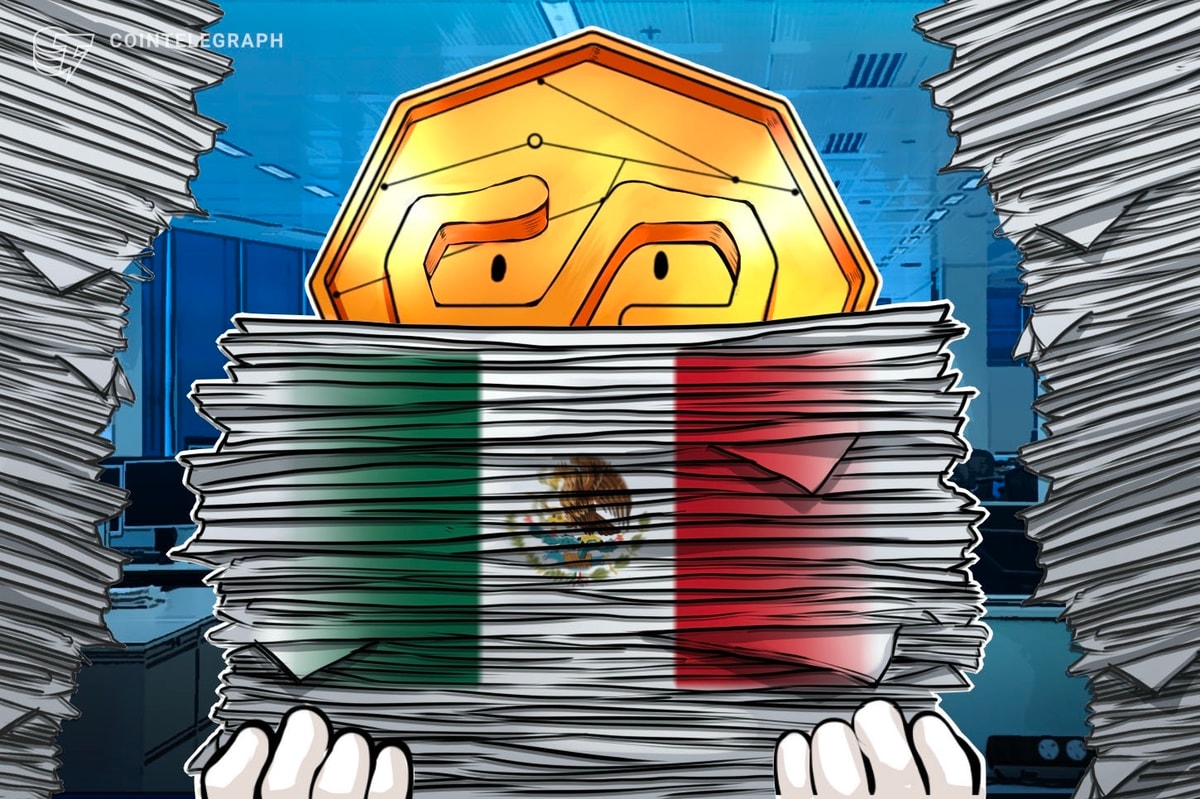
Mexico’s central bank warned in a new financial stability report that “stablecoins pose significant potential risks to financial stability,” citing their rapid growth, links to traditional finance and global regulatory gaps that could fuel arbitrage and magnify market stress.
Stablecoins’ heavy reliance on short-term US Treasurys, market concentration with two issuers controlling 86% of the supply and past depegging episodes with stablecoins underscore how vulnerable the sector remains to stress, according to the Banxico report.
Without coordinated international safeguards, mass redemptions or issuer failures could spill into broader funding markets, the central bank warned.
Banxico also highlighted diverging regulatory approaches as a growing source of risk, noting that frameworks like the EU’s MiCA and the US GENIUS Act impose different reserve, redemption and depositor-protection requirements, creating regulatory gaps that could incentivize arbitrage across jurisdictions.

Banxico acknowledged that stablecoins can improve settlement efficiency, reduce transfer costs and support remittances and liquidity in decentralized finance. However, it plans to keep a cautious distance between the traditional financial system and virtual assets, citing their potential to cause stress in broader markets.
Crypto adoption in Mexico is relatively low. According to Chainalysis’ Global Crypto Adoption Index, the country fell to 23rd place in 2025 from 14th place in 2024 in the adoption ranking.
The central bank’s warning reflects Mexico’s broader cautious stance on crypto. Despite the rise of exchanges like Bitso, the country has not introduced significant new digital-asset legislation and still relies on its 2018 Fintech Law as the primary regulatory framework.
Related: As inflation bites, Latin America banks on stablecoins instead of bankers
Brazil and Argentina lead Latin America in crypto adoption
While Mexico’s central bank maintains a cautious stance on digital assets, other Latin American countries have embraced adoption.
Chainalysis’ 2025 Geography of Crypto Report shows that Latin America generated nearly $1.5 trillion in crypto transaction volume from July 2022 to June 2025, with monthly activity increasing to almost $88 billion by December 2024 from $20.8 billion in mid-2022. Several months in late 2024 and early 2025 consistently exceeded $60 billion.
According to the report, Brazil led Latin America by a wide margin, receiving $318.8 billion in crypto value from July 2022 to June 2025, nearly one-third of all activity in the region, while Argentina ranked second with $93.9 billion in transaction volume.

The central banks of the two leading countries are also taking a more proactive stance in regulating digital assets.
In November, Brazil’s central bank finalized rules that place crypto companies under banking-style supervision, including treating stablecoin transactions and certain self-custody wallet transfers as foreign exchange operations.
In Argentina, a country that has suffered from soaring inflation, the central bank is reportedly weighing whether to allow traditional financial institutions to trade cryptocurrencies in a potential reversal of its 2022 ban, according to a report from La Nación on Friday.
Magazine: Meet the onchain crypto detectives fighting crime better than the cops
-
 Sports2 years ago
Story injured on diving stop, exits Red Sox game
-
 Sports3 years ago
‘Storybook stuff’: Inside the night Bryce Harper sent the Phillies to the World Series
-
 Sports2 years ago
Game 1 of WS least-watched in recorded history
-
 Sports3 years ago
Button battles heat exhaustion in NASCAR debut
-
 Sports3 years ago
MLB Rank 2023: Ranking baseball’s top 100 players
-
Sports4 years ago
Team Europe easily wins 4th straight Laver Cup
-
 Environment3 years ago
Japan and South Korea have a lot at stake in a free and open South China Sea
-
 Environment1 year ago
Here are the best electric bikes you can buy at every price level in October 2024