

If you think Trump will bring tiny kei cars to the US, you might be as dumb as he is

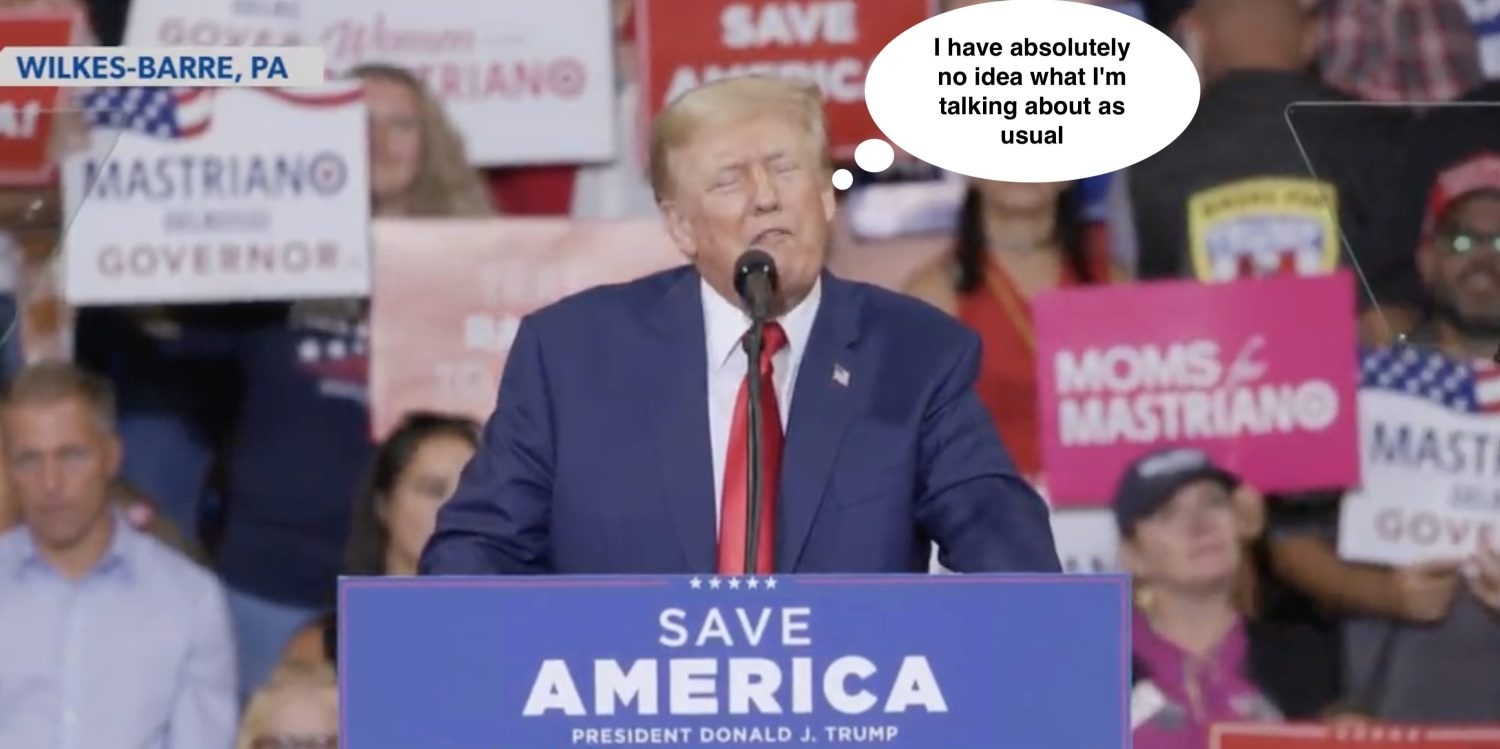
Multiple outlets are reporting on Donald Trump’s apparent effort to change US regulations to bring tiny Japanese kei cars to the US, but there’s little reason to think that effort will be serious.
Convicted felon Donald Trump has directed former reality TV contestant Sean Duffy to examine how kei cars, a category of Japanese microcars, could be brought to the US, calling them “cute.”
The statement was made yesterday at the announcement of a fuel efficiency rollback, which will raise your fuel costs by $23 billion and is explicitly intended to make cars bigger and less efficient.
And so, simply by reading the preceding two sentences, you should understand how unserious this effort is. At the same moment that a new proposal was announced to reduce fuel efficiency targets by a third, the same person who is trying to increase your fuel costs and make cars bigger and less efficient apparently also wants tiny efficient vehicles in the US. How does that make sense?
If Trump did know anything about how the auto industry works, he would not speak about making cars smaller at an event to announce rules explicitly intended towards making cars bigger – these are not compatible thoughts, and betray a lack of understanding of the reason he was even in the room to begin with.
Further, in addition to yesterday’s effort to remove CAFE rules, the EPA is currently trying to roll back President Biden’s improved exhaust standards which included a recognition of vehicle sizes becoming too large and a desire to reduce SUV/truck market share, and Mr. Trump is trying to place a 15% tariff on all Japanese goods, meaning higher prices for Americans if these cars were to come to the US.
Thinking more deeply about the reason why Mr. Trump might have mentioned kei cars to begin with, it is likely related to his recent trip to Japan. He went to Japan to negotiate an end to the unwise tariffs that he himself announced on one of America’s closest trading partners (despite that he does not have the Constitutional authority to apply them).
During that trip, he seems to have seen the tiny cars for the first time (or the first time he can remember, given his senility), and been enamored by them. So, he said yesterday (while flanked by Duffy, who showed apparent surprise as the flippant statement came out of his mouth):
“They’re very small, they’re really cute, and I said ‘How would that do in this country?’… But we’re not allowed to make them in this country and I think you’re gonna do very well with those cars, so we’re gonna approve those cars.”
-Donald Trump, upon witnessing a type of vehicle he should have known of by now, having spent 79 years globetrotting around this Earth, so how can he just be seeing this for the first time except if he’s senile.
Now, technically, here he says he wants the US to build the cars here, rather than import them from Japan. Kei cars are very popular in Japan, but rarer in other countries. Some other countries do have their own small cars similar to kei cars (for example, China’s 115-inch Wuling Mini EV), but Japan is where these vehicles have traditionally held the highest share.
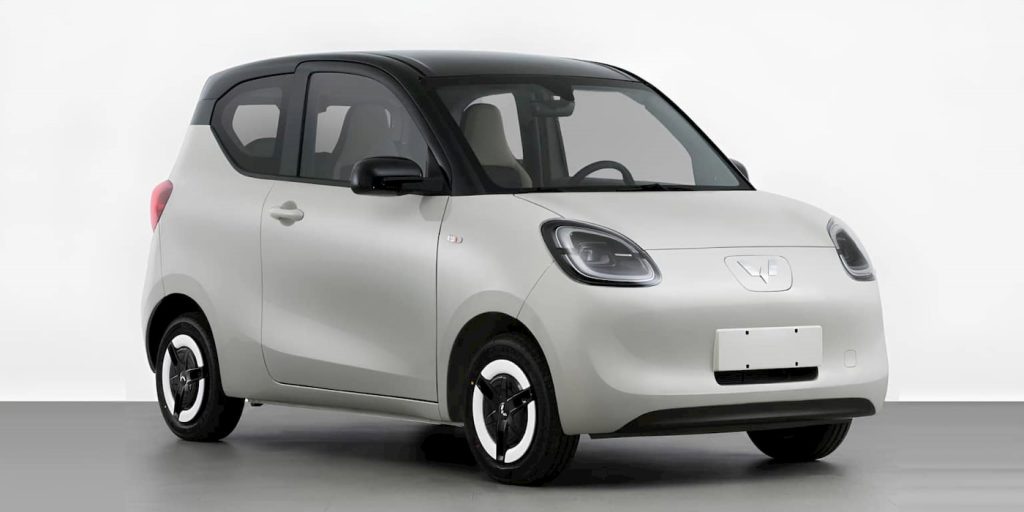
There are various reasons for this, but one of them is due to the high density of Japanese cities. Kei cars are very space efficient for cities that are obsessed with space efficiency in a way that simply is not the case in the US.
Japanese cities are also connected by efficient, fast and reasonably-priced bullet trains, so getting from one side of the country to the other is easy to do without having to stuff the whole family into a vehicle that is under 134 inches long. And the regulatory regime in Japan has been built around kei cars, giving them certain advantages to incentivize their use.

Meanwhile, it’s nigh-impossible to convince any manufacturer to even build a sedan, hatchback or small SUV for the US, or to build any small-displacement vehicle. So this would require a massive change in consumer tastes, which of course manufacturers haven’t been particularly interested in leading, given they’ve been pushing SUVs for decades now.
That said, one of the reasons manufacturers have pushed SUVs is due to regulations which treat them more favorably than smaller vehicles. If those regulations were changed – and that’s what Trump and Duffy have floated – it could open the doors for smaller cars.
But there’s little reason to think either of them are serious about this, given the amount of work that would have to be done to change regulations, and given the work they’re currently doing to change the regulations in the exact opposite direction.
At a minimum, Federal Motor Vehicle Safety Standards (FMVSS) would have to change significantly. This is the set of rules governing safety requirements for all motor vehicles, with requirements for various vehicle classes that have been built and tweaked over time. And these requirements are tailored to how we build roads, infrastructure, and signage in this country, which differs from how these things are done in Japan or Europe or China.
While an effort to harmonize FMVSS and infrastructure standards with other countries would be admirable and has been desired for a long time in the auto industry, the enormity of the undertaking is much greater than a single flippant comment (from someone who probably doesn’t even know what FMVSS stands for).
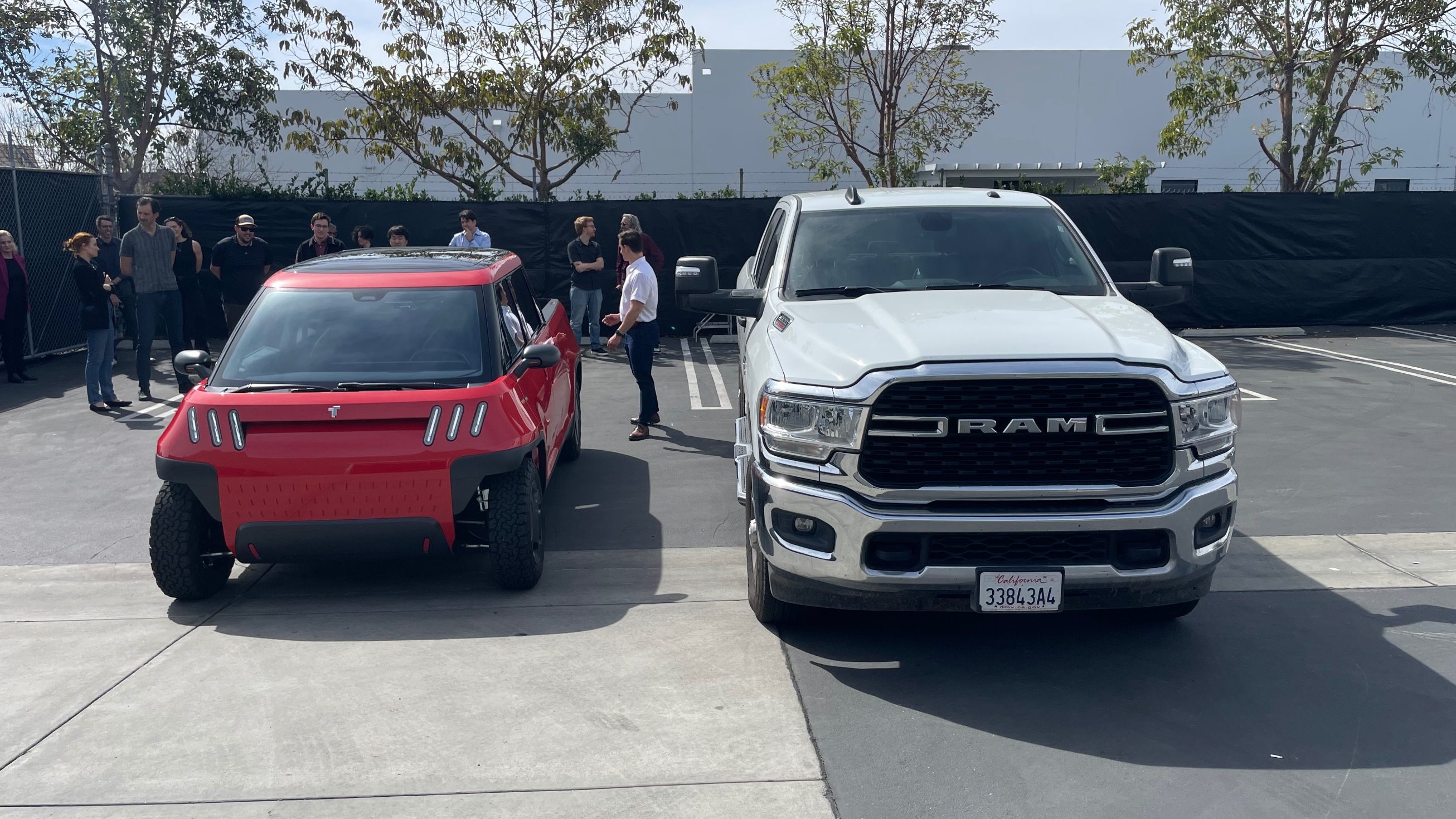
And in fact, US regulations already do allow for exemptions to many regulations for low volume vehicles. So it already is possible to build small cars in the US, at least if you build fewer than 2,500 per year. So a startup focused on tiny cars could already get started here, and could have been selling kei-like cars all along (say, TELO, for example… but even they are offering a 152in truck, a foot and a half longer than a kei car, and with 500hp, about 8x more than a kei car).
But why haven’t manufacturers made these cars already, then?
Again, going back to the above, regulations and manufacturers have both pushed vehicle sizes larger and larger, and consumer tastes have happily followed, with US drivers wasting more and more money and space on larger and more polluting vehicles.
There is a perception that these larger vehicles are safer (even though they aren’t, and we are currently nearing an all-time high in pedestrian fatalities), so if vehicles keep getting bigger as a result of regulations allowing them to, US consumers will be afraid to buy a car that’s even smaller than the smallest available today. And yesterday’s proposed rule explicitly claims, in its third paragraph, that smaller cars are undesirable for this reason (without recognizing that it’s actually the larger cars that are responsible this problem).
Kei cars are also typically less powerful than the average American car, which even Duffy claimed himself, saying “are they going to work on the freeways? Probably not” (even though most vehicles use about ~20hp to sustain highway speeds).
And given that the American consumer has been sold the dream of buying a vehicle not for what it will be used for, but for every conceivable purpose they could ever dream of using any vehicle for, it seems unlikely that many will line up for a car that they have been told can’t even get on the freeway.
After all, Smart cars did exist in the US, as have various other small vehicles, but they’ve always been marginalized, because the whole culture, manufacturing base and regulatory regime around cars and roads has been built to advantage large vehicles, not small ones.
So despite that microcar enthusiasts like myself want to see tiny cars in the US, the idea that manufacturers will suddenly scale up production of these vehicles in the US seems extremely unlikely without a concerted effort to show that they are welcome here and that there will be a market for them.
And I’m not convinced that concerted effort will be undertaken by people who are currently undertaking a concerted effort to do the exact opposite, and by someone who seems to change his mind with whatever stupid nonsense he happened to see 12 seconds ago on fox. Companies don’t build manufacturing facilities based on the whims of an idiot, they do so with clear and consistent policy that they can be certain will last through a vehicle model’s development and sales timeline (typically around ~14 years from start of development to end of production).
So I don’t think this is going to happen. Prove me wrong, I will be happy to eat crow here.
The 30% federal solar tax credit is ending this year. If you’ve ever considered going solar, now’s the time to act. To make sure you find a trusted, reliable solar installer near you that offers competitive pricing, check out EnergySage, a free service that makes it easy for you to go solar. It has hundreds of pre-vetted solar installers competing for your business, ensuring you get high-quality solutions and save 20-30% compared to going it alone. Plus, it’s free to use, and you won’t get sales calls until you select an installer and share your phone number with them.
Your personalized solar quotes are easy to compare online and you’ll get access to unbiased Energy Advisors to help you every step of the way. Get started here.


FTC: We use income earning auto affiliate links. More.
Environment
The UK wants to unlock a ‘golden age of nuclear’ but faces key challenges in reviving historic lead


The Sizewell A and B nuclear power stations, operated by Electricite de France SA (EDF), in Sizewell, UK, on Friday, Jan. 26, 2024. Photographer: Chris Ratcliffe/Bloomberg via Getty Images
Bloomberg | Bloomberg | Getty Images
The U.K. was the birthplace of commercial nuclear energy, but now generates just a fraction of its power from it — big investments are underway to change that.
The country once had more nuclear power stations than the U.S., USSR and France — combined. It was a global producer until 1970 but hasn’t completed a new reactor since Sizewell B in 1995.
Today, the country takes the crown not for being a leader in atomic energy, but for being the most expensive place in the world to build nuclear projects.
Nuclear energy accounted for just 14% of the U.K.’s power supply in 2023, according to the most recent data from the International Energy Agency, trailing its European peers and well behind frontrunner France at 65%.
There is ambition to change that and have a quarter of the U.K.’s power come from nuclear by 2050. Nuclear is considered an attractive bet gas it’s a low-carbon, constant energy source that can act as a baseload to complement intermittent sources like renewables.
“There’s a very clear momentum that has been observed,” Doreen Abeysundra, founder of consultancy Fresco Cleantech, told CNBC. It’s in part due to geopolitical tensions, which pushed energy security and independence onto public agendas.
However, the U.K.’s Nuclear Regulatory Taskforce called for urgent reforms after identifying “systemic failures” in the country’s nuclear framework. It found that fragmented regulation, flawed legislation and weak incentives led the U.K. to fall behind as a nuclear powerhouse. The government committed to implementing the taskforce’s guidance and is expected to present a plan to do so within three months.
Going big – or small
The U.K. is spreading its bets across tried-and-tested large nuclear projects and smaller, next-generation reactors known as small module reactors (SMRs).
British company Rolls-Royce has been selected as the country’s preferred partner for SMRs, which are effectively containerized nuclear reactors designed to be manufactured in a factory. Many include passive cooling techniques, which supporters argue makes them safer and cheaper.
Nuclear has long come under fire by environmentalists due to radioactive waste and disasters like Chernobyl. Indeed, the U.K.’s first commercial plant Windscale became its worst nuclear accident in history when it melted down in 1957.
On October 10, 1957, Windscale became the site of the worst nuclear accident in British history, and the worst in the world until Three Mile Island 22 years later. A facility had been built there to produce plutonium, but when the US successfully designed a nuclear bomb that used tritium, the facility was used to produce it for the UK. However, this required running the reactor at a higher temperature than its design could sustain, and it eventually caught fire. Operators at first worried that e
Photo: George Freston | Hulton Archive | Getty Images
Most SMRs use light water reactor technology – think of the planned large-scale nuclear plant Sizewell C, just “shrunk down,” said Abeysundra – which is tried and tested.
Other designs, known as “advanced” reactors, are more experimental. For example, those that change the cooling solution or solvent, which is typically used in the process of separating and purifying nuclear materials.
The U.K.’s first SMR will be at Wylfa, in Wales, though no timeline has been given for its completion. The site will house three SMRs and grow over time.
In September, the country signed a deal with the U.S. to enable stronger commercial ties on nuclear power and streamline licensing for firms that want to build on the opposite side of the Atlantic.
However, “the first thing is, there is not, at the moment, a single SMR actively producing electricity under four revenues. They will all come at best in the 30s,” Ludovico Cappelli, portfolio manager of Listed Infrastructure at Van Lanschot Kempen, told CNBC.
While SMRs are a “game changer” thanks to their ability to power individual factories or small towns, their days of commercial operation are too far away, he said. From an investment standpoint, “that is still a bit scary,” he added.
To secure the large baseloads needed to offset the intermittency of renewables, “we’re still looking at big power stations,” added Paul Jackson, Invesco’s EMEA global market strategist.
Nuclear share of total electricity (2023)
IEA
SMRs “probably” do have a role — “they can clearly be more nimble” — but it will take time to roll them out, Jackson said, casting doubt on the U.K.’s ability to be a leader in nuclear, as France and China are already miles ahead.
The U.K. government body Great British Energy-Nuclear is set to identify sites for an additional large-scale plant, having already acquired one in Gloucestershire, in the west of England, as well as the site in Wales.
“We are reversing a legacy of no new nuclear power being delivered to unlock a golden age of nuclear, securing thousands of good, skilled jobs and billions in investment,” a spokesperson for the U.K. government’s Department for Energy Security and Net Zero told CNBC.
“Sizewell C will deliver clean electricity for the equivalent of six million of today’s households for at least six decades, and the UK’s first small modular reactors at Wylfa will power the equivalent of three million homes, bringing energy security,” they added.
Innovation in funding
The U.K. has a strong legacy to build on. It pioneered fresh funding mechanisms to make large-scale nuclear projects investible so that they are less reliant on direct government funding, such as a Contract for Differences, which was used for Hinkley Point C.
The mechanism guarantees a fixed price for the electricity generated over a long period of time in order to de-risk investments in an industry that’s known for running over time and budget. Hinkley Point C was initially expected to cost £18 billion (over $24 billion) but the bill has slowly crept up.
“That fixes one part of the equation, the price risk,” Cappelli said of nuclear investments, but the second risk is construction delays.
The Regulated Asset Base (RAB), first used for nuclear at Sizewell C, attempts to reconcile this. Investors get paid from the day they cut a check for a nuclear project, rather than the day it starts operating. Sizewell C is expected to cost £38 billion to build.
Private market investors are increasingly interested in next-generation nuclear as a way to offset soaring energy demands from AI, resulting in a host of young companies trying to build out facilities. Perhaps the most famous is Oklo, a U.S. firm that was taken public by a Special Purpose Acquisition Company (SPAC) founded by OpenAI’s Sam Altman.
Rendering of a proposed Oklo commercial advanced fission power plant in the U.S.
Courtesy: Oklo Inc.
The U.K.’s advanced modular reactor hopeful Newcleo, which uses lead for cooling, moved its headquarters from London to Paris in 2024 — a strategic move to deepen its European footprint. At the time, it told World Nuclear News that it still plans to have a commercial reactor up and running in the U.K. by 2033, but the firm has since scaled back its British efforts.
Meanwhile, Tokamak Energy and First Light Fusion call the U.K. home. They both focus on nuclear fusion, the process of generating power by combining atoms, though this technology is yet to get out of the lab. All of today’s nuclear power comes from fission, where atoms are spit. The U.K. announced £2.5 billion for a world-first fusion prototype in June.
The next generation of engineers
The U.K. faces challenges in access to relevant talent, which is crucial for scaling projects effectively. The country is heralded for its world-class universities and technical know-how, “but that is very much book knowledge,” said Van Lanschot Kempen’s Cappelli.
“What we need is real on-the-ground expertise, and that we are probably lacking for the simple reason that we haven’t been doing it for a very long time,” he said.
For Abeysundra, there’s one area where the U.K. stands out: its mindset. “There is so much knowledge, innovation, and that can-do attitude, which I don’t see as much in other nations,” she said, pointing to the U.K.’s trailblazing role in the Industrial Revolution and establishment of offshore wind energy.
The U.K. government positioned nuclear energy as a key element of the future clean energy workforce in its Clean Energy Jobs Plan released in October, while its national roadmap for nuclear skills, set out in 2024, focuses on apprenticeships, PhDs and upskilling mid-career workers. Industry-led initiatives such as the Energy Skills Passport also support the likes of oil and gas workers to gain green skills.
Securing the supply chain
Perhaps the toughest issue, however, is the supply chain.
Uranium, the fuel used to make a nuclear reaction, is dominated by just four countries, including Russia. Global demand for uranium could rise by nearly a third by 2030 and more than double by 2040, according to the World Nuclear Association, adding further reliance on a select few countries and pressure on developers.
The U.K. government has allocated funding to build up the supply chain and has committed to preventing the import of nuclear fuel from Russia by 2028. Fuel for Sizewell C will come from European or “Western suppliers,” Cappelli noted.
However, for him, it poses the question: How secure is nuclear energy really? “We have to build nuclear power plants, but we need to build the value chain,” Cappelli added.
Workers, expertise and funding are required for nuclear energy, but the supply chain is also key, he said. Otherwise, there will be “the same issues that we had with gas,” a nod to the U.K.’s reliance on just one supplier. Instead of gas, it will be with uranium.


Tesla has officially announced its 2025 Holiday Update, and this year, the automaker is not using the usually bigger update for any groundbreaking stuff, but there are a few interesting new smaller features.
You will find the release notes in this article.
It’s that time of year again. Every December, Tesla bundles a bunch of features it has been working on into a “Holiday Update” to give owners something to play with over the break.
While previous years have focused on adding major apps like Apple Podcasts or Steam integration, the holiday updates have become gradually weaker over the last few years, and they now concentrate mainly on playful features with smaller tweaks and add-ons.
Tesla announced the rollout in a post on X today:
Here is a breakdown of the main features in the 2025 Holiday Update. They are in order that Tesla announced them, which is generally from most to least important new feature.
Grok with Navigation Commands (Beta)

Many automakers are intergrating LLMs into their vehicles and unsuprisingly, Tesla went with Grok, which is developed by xAI, a company owned by Tesla CEO Elon Musk.
Tesla started the integration with an update last summer, but it only consisted of running the chat bot on Tesla’s in-car computer. It was the equivalent of using Grok on your phone as it couldn’t interact with the car.
Now, the automaker is starting to give Grok access to some vehicle functions, starting with navigation. Tesla announced:
Grok can now add & edit navigation destinations, becoming your personal guide.
Tesla says that to use Grok for navigation command, you have to set Grok’s personality to ‘Assistant’.
Tesla Photobooth

The second feature Tesla announced in the holiday update is the “photobooth”:
Turn your car into a photobooth! Take selfies from inside your Tesla & give yourself a makeover with fun filters, stickers, and emojis. Share with others right from the Tesla app
It sounds like a Temu Snapchat. To activate it: Go to Toybox > Photobooth
Dog Mode Live Activity
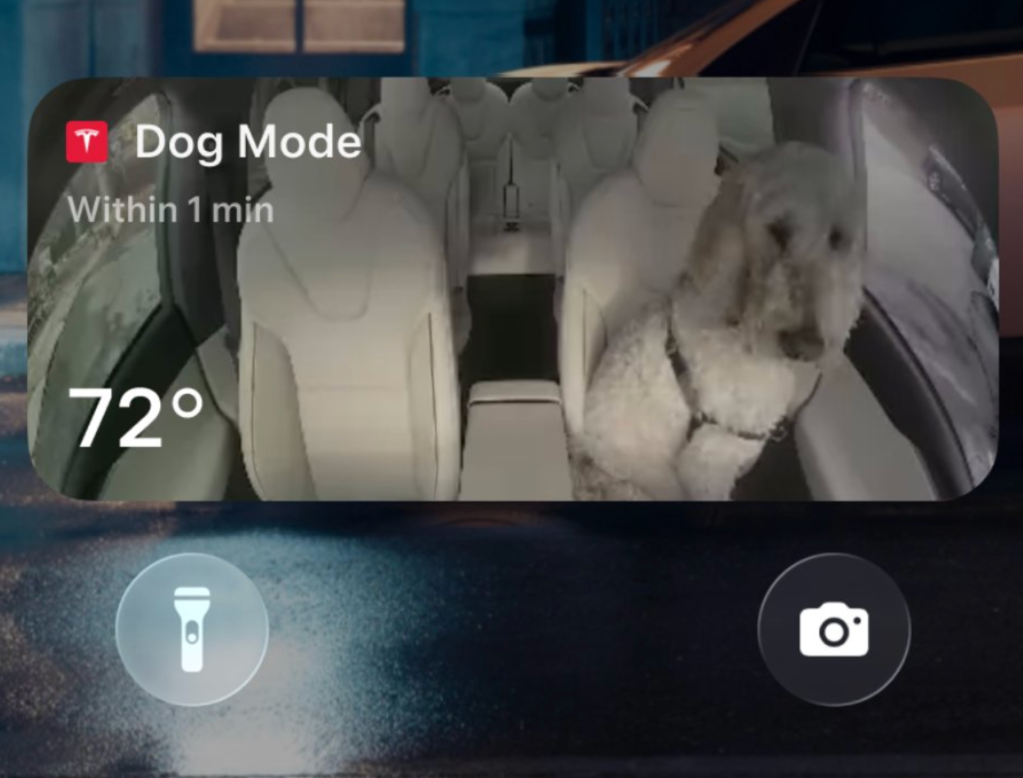
Now, to a more useful feature, Tesla has updated Dog Mode with a live activity feed:
When Dog Mode is active, you’ll see a Live Activity on your iPhone featuring periodic snapshots of your vehicle’s cabin along with live updates on temperature, battery & climate conditions
Dashcam Viewer Update
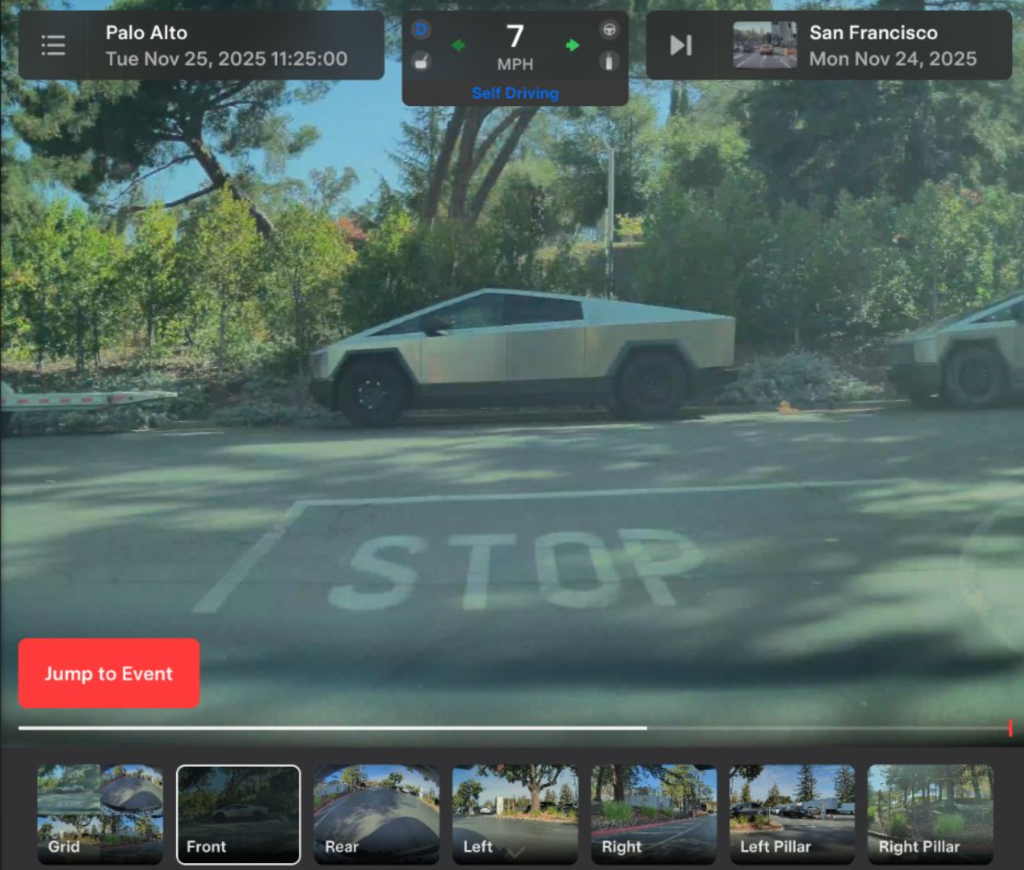
Tesla also added a bunch of information to the Dashcam viewer:
Dashcam clips now include additional details such as speed, steering wheel angle & self-driving state
Santa Mode

You can update the car visualization to this image. Tesla writes in the notes:
Santa Mode now adds festive snowmen, trees, a lock chime & snow effects for a 3D visual treat
You have select ‘Santa’ in the Toybox to activate it.
Light Show Update
Tesla has a dded a new light to the song “Jingle Rush”:
Play instantly or schedule it up to 10 minutes in advance, either on a single vehicle or synced with friends. You can also control interior lighting, add display color effects & create longer custom shows
Custom Wraps and License Plates
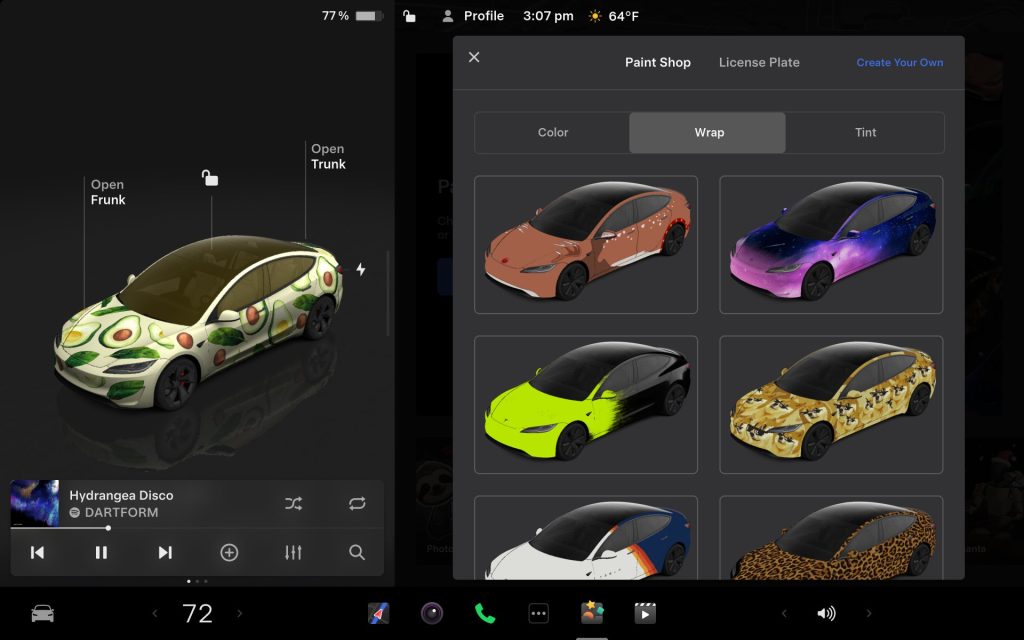
Back to slightly more useful features, Tesla has added custom wraps visualizations:
Personalize your Tesla avatar with window tints, custom wraps & license plates. Use one of many preloaded designs or create and upload your own using a USB flash drive to make your vehicle unique
You can select ‘Paint Shot’ in the Toybox to access it.
Navigation Improvements
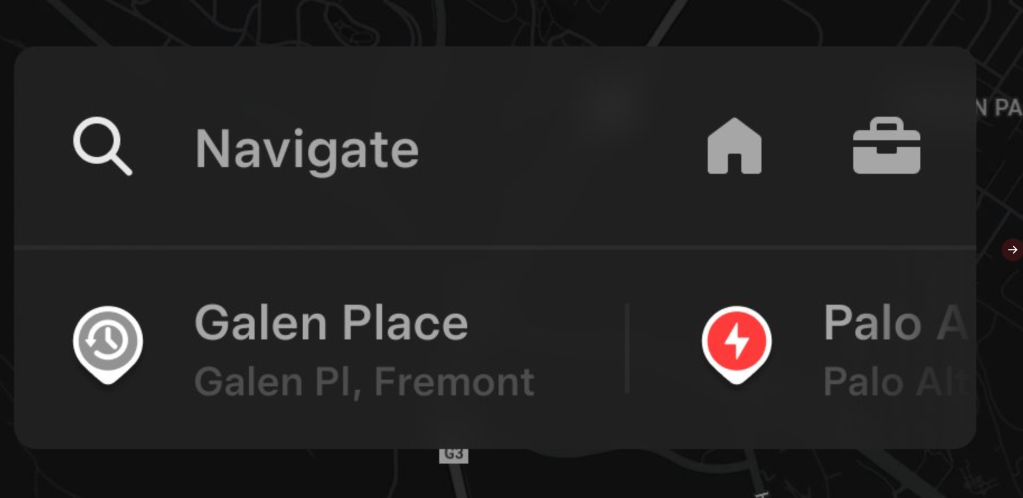
A slight change to the nav UI:
Reorder your navigation favorites & set Home or Work by dropping a pin anywhere on the map
You can also view suggested destinations based on your recent trips and habits while parked
Supercharger Site Map
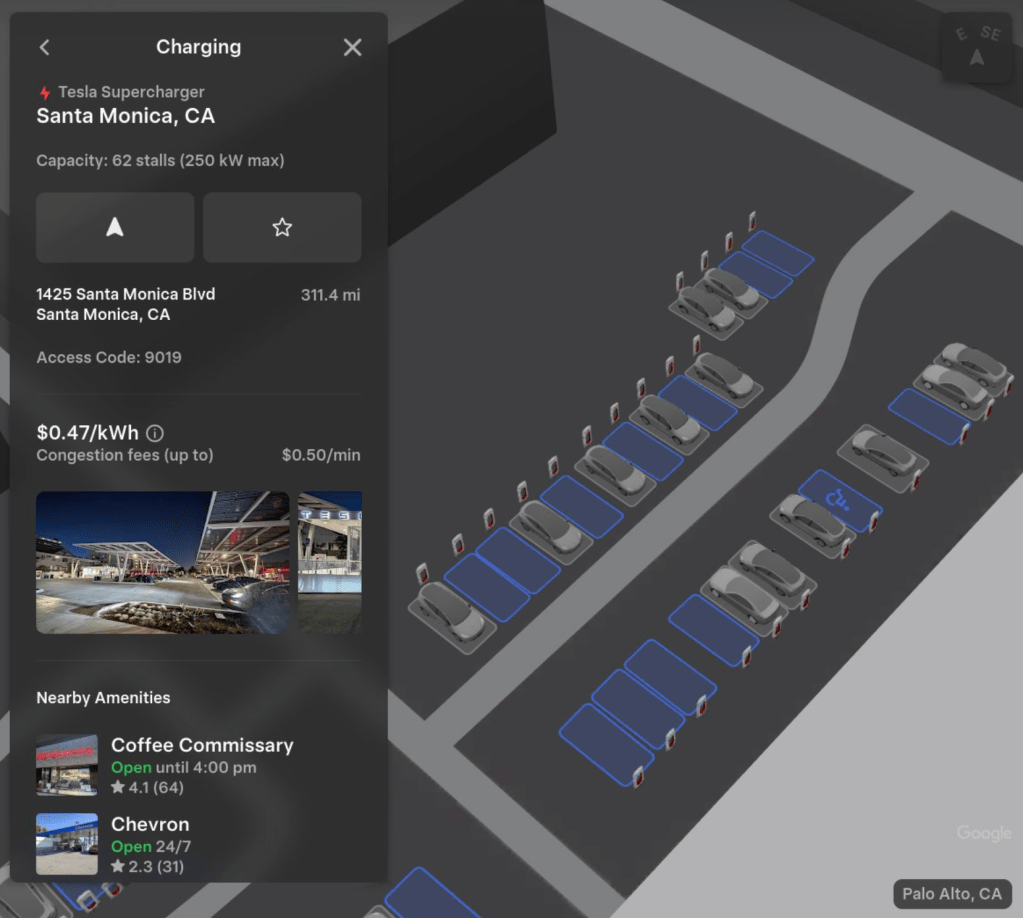
In line with the navigation update, you get a cool 3D view at some Supercharger stations straight in the navigation:
You can now see a 3D view of select Tesla Superchargers by tapping “View Site Map”. When navigating to a pilot location, the site layout and live occupancy (Available / Occupied / Down) will be displayed upon arrival
This could be useful to plan exactly where you’ll park and could open the door to a reservation system, which could be specifically useful for pull-in stalls.
Automatic HOV Lanes Routing
Navigation now includes an option to use high-occupancy vehicle (HOV) carpool lanes. Your route will automatically select the carpool lane when eligible, based on time, location, passenger count & road restrictions
Controls > Navigation > Use HOV Lanes
Phone Left Behind Chime
Your vehicle will chime a few seconds after the doors close if a phone key is inside the cabin or a phone is left on the wireless charger and no occupants are detected. Phone key detection requires UWB-supported devices.
Controls > Locks > Phone Left Behind Chime
Charge Limit per Location
You can now save a charge limit for your current location while parked & it will be applied automatically next time you charge there
Controls > Charging
SpaceX ISS Docking Simulator

Become an astronaut and prove your skills by docking with the International Space Station. Control & guide the rocket in this 3D docking simulator game using a set of controls based on actual interfaces used by NASA astronauts.
Arcade > SpaceX ISS Docking Simulator
Other improvements
- Enable or disable wireless phone charging pads in Controls > Charging (S3XY) or Controls > Outlets & Mods (Cybertruck)
- Add Spotify tracks to your queue right from the search screen & scroll through large Spotify playlists, albums, podcasts, audiobooks & your library seamlessly, without paging
- Take the vibes up another level with rainbow colors during Rave Cave. Accent lights color will change along with the beats of your music. App Launcher > Toybox > Light Sync
- Lock Sound now includes Light Cycle from Tron Mode. Toybox > Boombox > Lock Sound
Feature availability subject to vehicle hardware & region
Electrek’s Take
This is a bit of a mixed bag, which is typical for Tesla’s Holiday Updates.
On one hand, many useless features that will be probably be used once or twice and never again, like the photobooth.
But on the other hand, you have some decent new features, specifically to the navigation system, which put together make for a more than decent upgrade.
FTC: We use income earning auto affiliate links. More.

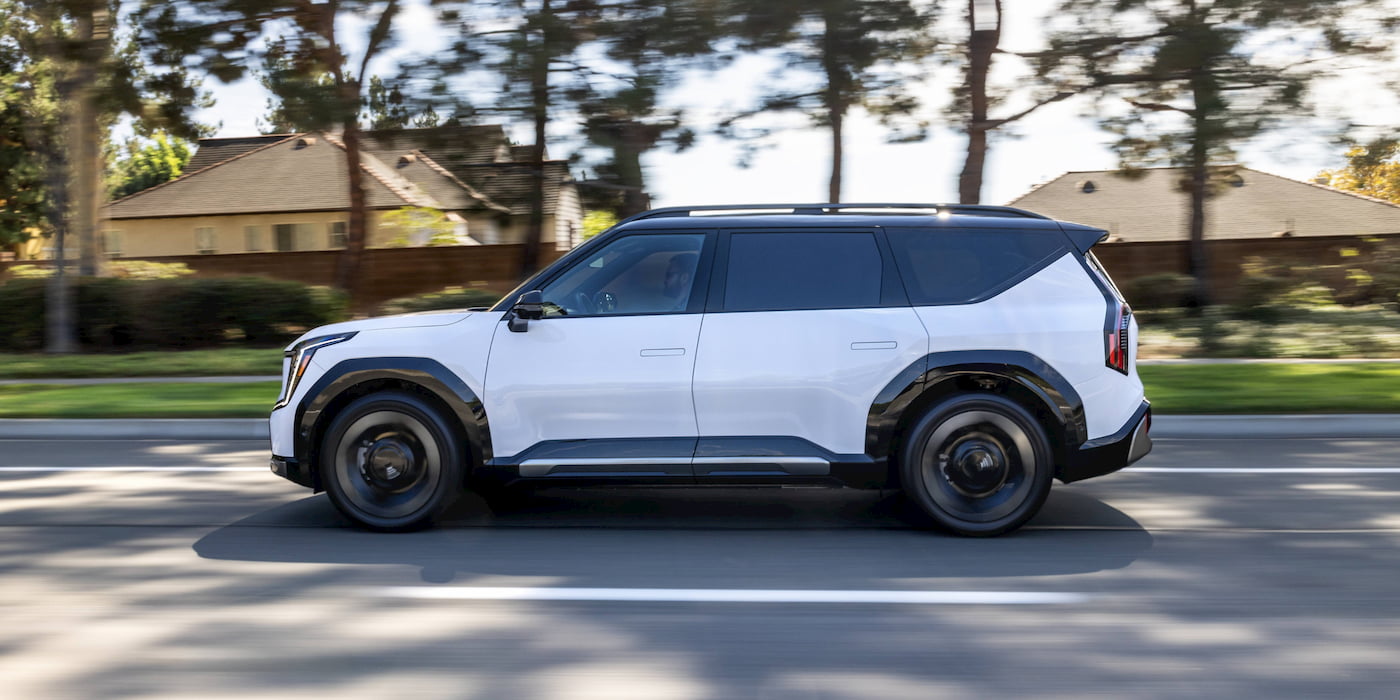
Kia is extending one of its biggest promotions yet, knocking over $10,000 off every EV in its lineup.
Kia knocks $10,000 off EV models
Who said electric vehicles would get more expensive after the $7,500 federal tax credit ended? Kia must not have gotten the memo.
Last month, Kia launched a new promotion, offering a $10,000 customer cash discount for all EVs, including the EV6, EV9, and Niro EV. The discount knocks nearly 25% off MSRP on Kia’s cheapest model, the Niro EV. On the entry-level EV6, it’s 23% off MSRP, while $10,000 off the EV9 is about an 18% discount.
The discounts ended on December 1, but Kia has extended them for at least another month. During its Season of New Tradition sales event, Kia is now offering even more savings.
The 2025 Kia EV6 and Niro EV are now eligible for up to $11,000 in customer cash, including a $10,000 cash back offer and a $1,000 retail bonus cash discount.
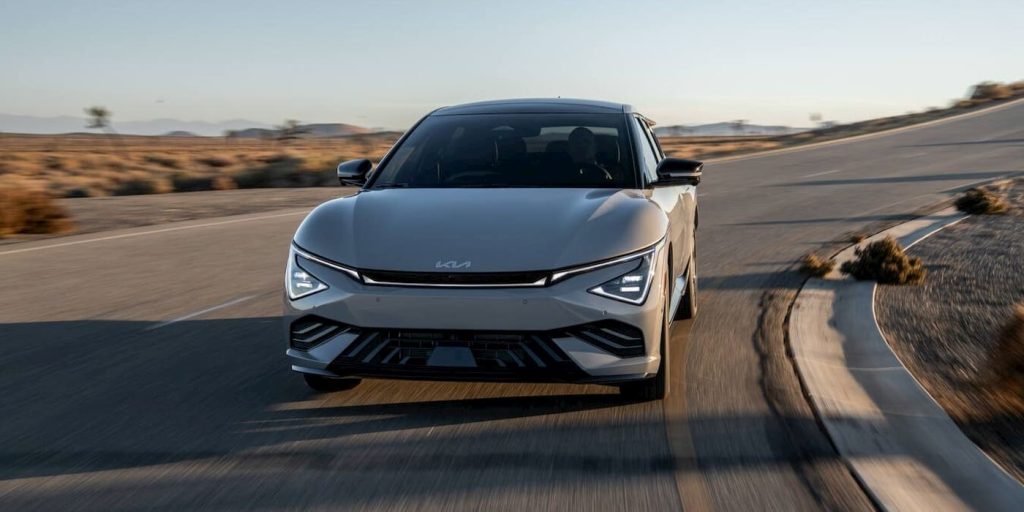
If you’re looking for something a little bigger, the 2026 EV9, Kia’s three-row electric SUV, is available with up to $10,500 in bonus cash.
If you choose to finance, Kia is offering 0% APR for up to 72 months, plus $3,500 APR Bonus Cash on the EV6 and Niro EV. The larger EV9 is available with 0% APR for up to 60 months with a $3,000 APR Bonus Cash offer.
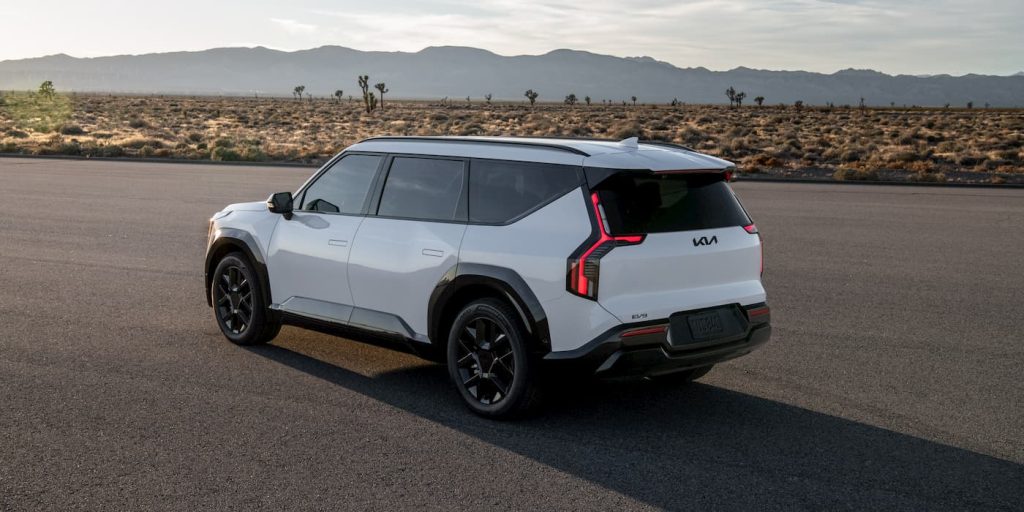
The 2025 Kia Niro EV and EV6 are available to lease, starting at $209 and $309 per month for 24 months. The 2026 EV9 is listed with monthly leases starting at $419.
The new sales event comes after Hyundai extended its EV promotions, keeping the IONIQ 5 as one of the most affordable EV leases in the US, starting at just $189 per month.
Kia’s Seasons of New Traditions sales event runs until January 2, 2026. Some deals may vary by region. You can see offers near you by using the links at the bottom.
Interested in test-driving one for yourself? We can help see what’s available in your area. Check out our links below to find Kia and Hyundai EVs near you.
FTC: We use income earning auto affiliate links. More.
-
 Sports2 years ago
Story injured on diving stop, exits Red Sox game
-
 Sports3 years ago
‘Storybook stuff’: Inside the night Bryce Harper sent the Phillies to the World Series
-
 Sports2 years ago
Game 1 of WS least-watched in recorded history
-
 Sports3 years ago
Button battles heat exhaustion in NASCAR debut
-
 Sports3 years ago
MLB Rank 2023: Ranking baseball’s top 100 players
-
Sports4 years ago
Team Europe easily wins 4th straight Laver Cup
-
 Environment3 years ago
Japan and South Korea have a lot at stake in a free and open South China Sea
-
 Environment1 year ago
Here are the best electric bikes you can buy at every price level in October 2024