
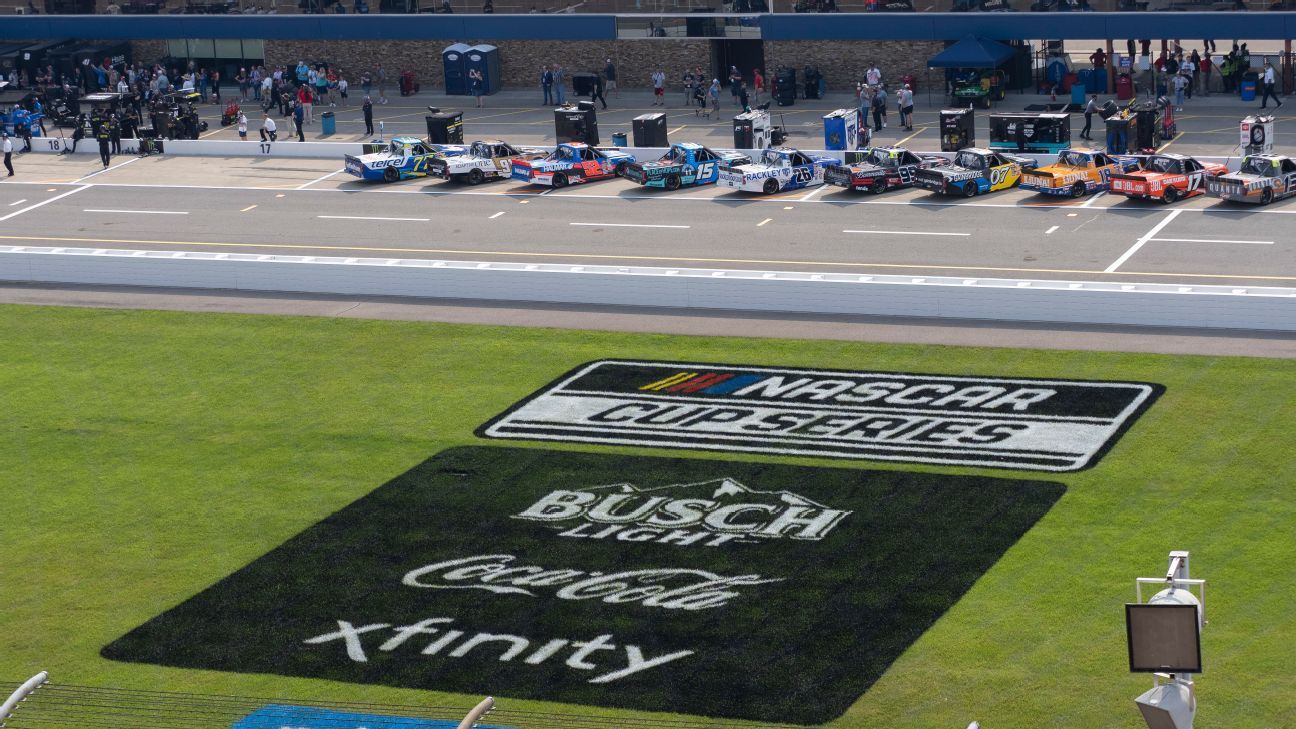
NASCAR’s France labeled ‘brick wall’ on rev share



-
Max Olson
Iowa State coach Matt Campbell has emerged as the focus of Penn State‘s head coaching search, sources told ESPN on Thursday.
Penn State is in discussions with Campbell about its vacancy after initiating contact with him Wednesday. Both sides are early in the process, and any hire at Penn State will require additional steps and board approval.
Penn State shifted its attention to other candidates after BYU coach Kalani Sitake chose to remain with the Cougars and agree to a long-term extension Tuesday.
Penn State had also engaged at least three other candidates over the past few days, sources told ESPN.
The hiring of Campbell, the winningest coach in Iowa State history, would bring an end to a search that has extended more than 50 days since Penn State fired longtime coach James Franklin on Oct. 12.
The three-time Big 12 Coach of the Year achieved a major turnaround and consistent success during his decade in Ames with eight winning seasons, two Big 12 championship game appearances and a Fiesta Bowl victory over Oregon in 2020 for the school’s first top-10 finish.
Campbell is 72-55 during his tenure at Iowa State. He went 8-4 this season.
The news of Campbell emerging in Penn State’s search was first reported by On3.com.
ESPN’s Pete Thamel and Adam Rittenberg contributed to this report.

-
Pamela Maldonado
After a long regular season, conference championship weekend is finally here. Spanning two days, nine conferences, 18 teams — and an eventual 12 College Football Playoff spots — the slate is full of chaos, upsets and betting opportunities. Pamela Maldonado breaks down every game, from C-USA to the ACC.
Jump ahead
Friday’s games | Saturday’s games
Betting lines for every game

Championship week starts early with Friday’s board as the appetizer. No pageantry, no distractions, no look-ahead spots; just four games that force teams to live or die by their identities.
And because people ask how I get from lean to wager, I’m laying it out: The predictions show what I considered, while the bet shows where conviction actually settled. Think of it as reading the sheet music before you hear the song.
Each matchup has a pressure point that decides everything, with the edges coming from how these teams handle who they’ve been all season. Here’s how I see each game playing out.
Conference USA championship
Kennesaw State Owls -2.5 at Jacksonville State Gamecocks, 58.5
Prediction: Jacksonville State team total OVER 28.5
The bet: Jacksonville State +2.5
The Gamecocks have stability, volume and a run game that doesn’t fluctuate. I wrote Jacksonville State +360 to win C-USA ahead of Week 12 because its identity is reliable. The first meeting between these squads was a blueprint. Jacksonville State ran for 252 yards on 42 carries, and none of that came from randomness. It’s who the Gamecocks are as an offense. Kennesaw State’s tackling is still bottom-tier and its rush defense hasn’t improved, which means Jacksonville State’s most stable identity should show up again.
Strip out the turnover-driven points from the first game, the Gamecocks still operated with ease. This matchup will force Kennesaw State into stress repeatedly. The line opened Jacksonville State -1.5, so I’ll back it because it has the style advantage.
Sun Belt championship
Troy Trojans at James Madison Dukes -22.5, 47.5
Prediction: James Madison -23.5
The bet: Troy UNDER 10.5 (-110)
The Dukes are playing for style points, which only puts more pressure on Troy’s offense. This is a matchup where one team has something real on the line and the other is walking into a woodchipper. JMU has a top-10 rush defense, is top-20 in tackling and first in coverage. Troy has lived all season on efficiency — not explosiveness — making this the worst possible opponent to try to be efficient against. The Trojans’ red zone profile is thin, their run game gets erased against real fronts, and QB Goose Crowder has shown nothing that threatens elite secondaries.
Even if JMU rolls to 40 points, that doesn’t help Troy. It only puts more pressure on it to throw into a defense built to punish and needing to dominate to remove any doubt in the committee’s mind. JMU must simply strangle Troy’s offense. With the line opening 22.5, jumping to 23.5 and juiced to the over, I’ll take the wager on the team that doesn’t have tools to navigate a suffocation blueprint.
American Athletic championship
North Texas Mean Green -2.5 at Tulane Green Wave, 66.5
Prediction: North Texas -2.5
The bet: North Texas team total OVER 34.5 (-105)
This is a bet on the unit that has been automatic all season. The Mean Green lead in touchdowns, points per play and yards per play. They overwhelm defenses. Tulane’s tackling issues, mediocre coverage grade and inconsistent red zone defense are the exact traits North Texas punishes.
While the 66.5 total assumes Tulane holds up its end in questionable weather, the 34.5 isolates the one constant. North Texas has cleared this threshold against better defenses. Five touchdowns is well within its baseline, making this the stable side of the scoring equation. Why not the spread then? A spread requires defensive reliability and North Texas doesn’t have that — but they do have offensive reliability. It’s what they’ve had every week, which is why they were the pick to win AAC after Week 12.
Mountain West championship
UNLV Rebels at Boise State Broncos -4, 57.5
Prediction: OVER 57.5
The bet: Boise State -4
With Maddux Madsen back at quarterback, the Broncos finally have a consistent offensive identity built on vertical passing, complimented with two explosive running backs and a path to yards after contact. UNLV doesn’t have the defensive structure to survive that for four quarters. The Rebels’ run defense is graded 110th, tackling 73rd and coverages 64th. That combination is fatal against an offense that can hit explosives from anywhere on the field.
That’s huge trouble when UNLV’s scoring defense isn’t actually red zone efficiency. UNLV’s defense allows almost as many scores outside the red zone as inside it. The Rebels get beat before drives even reach the 20 because they miss tackles, bust coverages and can’t contain chunk plays. That is the one thing Boise under Madsen does at an elite level. This matchup favors Boise, and laying the points is justified. Boise was my preseason prediction to win the Mountain West, and with Madsen back, I’m keeping to that mindset.
Championship Saturday is supposed to be chaotic, but this board could behave more like a puzzle than a demolition. Every conference has noise but only two have leverage, and the ACC title game is the hinge the entire bracket swings on.
The Big 12 is the other pressure point, where BYU needs a miracle that its game style doesn’t support.
Let’s hope for a slate that behaves.
Big 12 championship
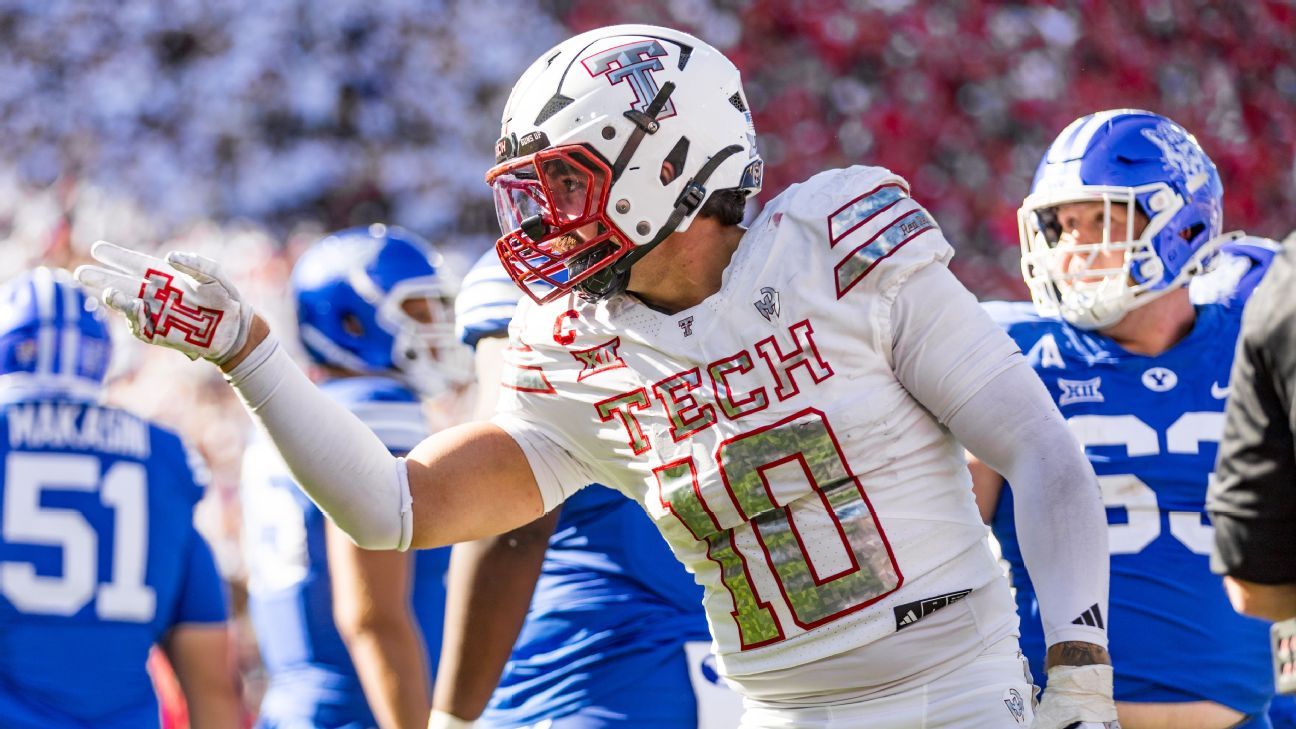
BYU Cougars vs. Texas Tech Red Raiders -13.5, 50.5
Predictions: Tech Tech -12.5, UNDER 49.5
The bet: BYU team total UNDER 17.5
Nothing about the Cougars’ offense travels into a game like this. They’re slow-paced, run-dependent and completely allergic to passing downs. That profile gets buried by Texas Tech’s defense, which grades first in pass rush, first in coverage and second in tackling. In the first matchup against Tech, BYU stopped being competitive and stopped scoring once the game became unstable, fast and pass-dependent. They don’t have the answers when the game moves outside of a controlled environment.
Tech’s defense has only gotten stronger with a front that can win without sending pressure. BYU doesn’t have the vertical threat, no explosive element and no way to manufacture short fields unless Tech hands them gifts. Its red zone efficiency drops against good defenses and Tech almost never allows multiple trips. For the Cougars to hit 18, they would need outlier events that don’t match their identity.
Mid American Conference
Miami (OH) RedHawks vs. Western Michigan Broncos -2.5, 43
Prediction: Miami (OH) +2.5
The bet: Miami (OH) +110
Miami (OH) is +2.5 on the game spread, but that does nothing for you in a game like this. Western Michigan’s profile is binary, which means that when the Broncos win, it’s because their run game controlled tempo and their scripted offense stayed clean. When they lose, it’s because the entire structure cracked, inefficiency on early downs, a one-dimensional passing game and a defense that struggles to adjust once they’re off script. That creates an outcome profile where they either win by margin or lose outright.
The RedHawks are the more adaptable team. They’ve shown they can win in multiple game states: low scoring, comeback scripts or late possession control. In a low total championship with limited possessions, volatility favors the underdog that can adjust, not the favorite that needs conditions to be perfect. Believing Miami (OH) to cover +2.5 is simply saying they’re in the game late, which puts value on the money line.
SEC championship
Georgia Bulldogs -2.5 vs. Alabama Crimson Tide, 48
Prediction: Georgia -2.5 (-115)
The bet: Alabama team total UNDER 22.5 (-105)
Reach 23 points on Georgia twice in the same season? Not this version of Bama. This is a rhythm-dependent offense. The Tide need clean pockets and drive volume to score. Georgia takes all three away. The Bulldogs are the best tackling team in the country, top-five in rush defense, forcing you to earn every yard in 10-12 play chunks. That’s exactly where Bama collapses.
Ty Simpson has been a solid quarterback, but the Tide’s ceiling against real defense has been living in this range all year and now they’re walking into the one front that doesn’t give up explosives or red zone freebies. Georgia -2.5 is the complementary angle that actually matches the game script: Georgia controls pace, Bama gets squeezed and the Tide stall out. I see the team total under as the most rational outcome, for a cheaper price.
Big Ten championship
Indiana Hoosiers vs. Ohio State Buckeyes -5.5, 48
Prediction: UNDER 48, Indiana team total UNDER 22.5 (-140)
The bet: Indiana team total UNDER 21.5 (-130)
I hate this. I hate this because I was on the Indiana train early in the season. The Hoosiers are elite on paper, but their efficiency is built on volume and inferior defense. When they stepped up in class, their ceiling collapsed and they were held to 20 points against Iowa. Even Penn State gave them fits — the Hoosiers scored 27, but only from an insane Heisman moment final drive or otherwise it could have been lower. Both Iowa and Penn State are top-20 defensive efficiency units. Now they get an even bigger jump with Ohio State — a top-three defense, one that eliminates rhythm, kills explosives and forces every opponent into a slower, suffocating script.
That’s the problem for Indiana. It needs 70 plays to hit their offensive efficiency marks. Ohio State drags everyone into (at least) the low 60s. Cut 10 plays from the Hoosier’s normal volume, and their scoring output drops instantly. They can’t run well enough to steal tempo and can’t create chunk plays to bypass long drives, and especially can’t dictate pace against a defense this structured and athletic. Unfortunately, under 21.5 isn’t pessimism; it’s math and value.
ACC
Duke Blue Devils vs. Virginia Cavaliers -3.5, 57
Prediction: OVER 57
The bet: Virginia -3.5 (-108)
This is a bet on stability beating volatility. Duke lives off stress-free possessions, clean pockets, scripted rhythm and wide open windows. The moment a defense forces the Devils to win with patience, they fall out of character. Georgia Tech did it. Clemson did it. Even Tulane did it. Every team with a functional front and coverage has dragged Duke around.
Virginia can prevent Duke from playing fast and loose. The Cavs have the better pass rush, better tackling and far better coverage integrity, with fewer red zone collapses on defense. Duke’s defensive flaws require a shootout to hide them. Virginia doesn’t give you shootouts, playing fewer snaps, leaning on efficiency and squeezing you until your mistakes show up.
If this game becomes about who can hold structure longer, Virginia wins that argument. Even in a track meet, Virginia sustains drives while Duke trades volatility for points, and over four quarters, the team with the steadier floor and cleaner defensive stops covers those last few possessions. A field goal isn’t enough protection for Duke.
-
 Sports2 years ago
Story injured on diving stop, exits Red Sox game
-
 Sports3 years ago
‘Storybook stuff’: Inside the night Bryce Harper sent the Phillies to the World Series
-
 Sports2 years ago
Game 1 of WS least-watched in recorded history
-
 Sports3 years ago
Button battles heat exhaustion in NASCAR debut
-
 Sports3 years ago
MLB Rank 2023: Ranking baseball’s top 100 players
-
Sports4 years ago
Team Europe easily wins 4th straight Laver Cup
-
 Environment3 years ago
Japan and South Korea have a lot at stake in a free and open South China Sea
-
 Environment1 year ago
Here are the best electric bikes you can buy at every price level in October 2024