
Someone had to ‘challenge NASCAR,’ says Jordan

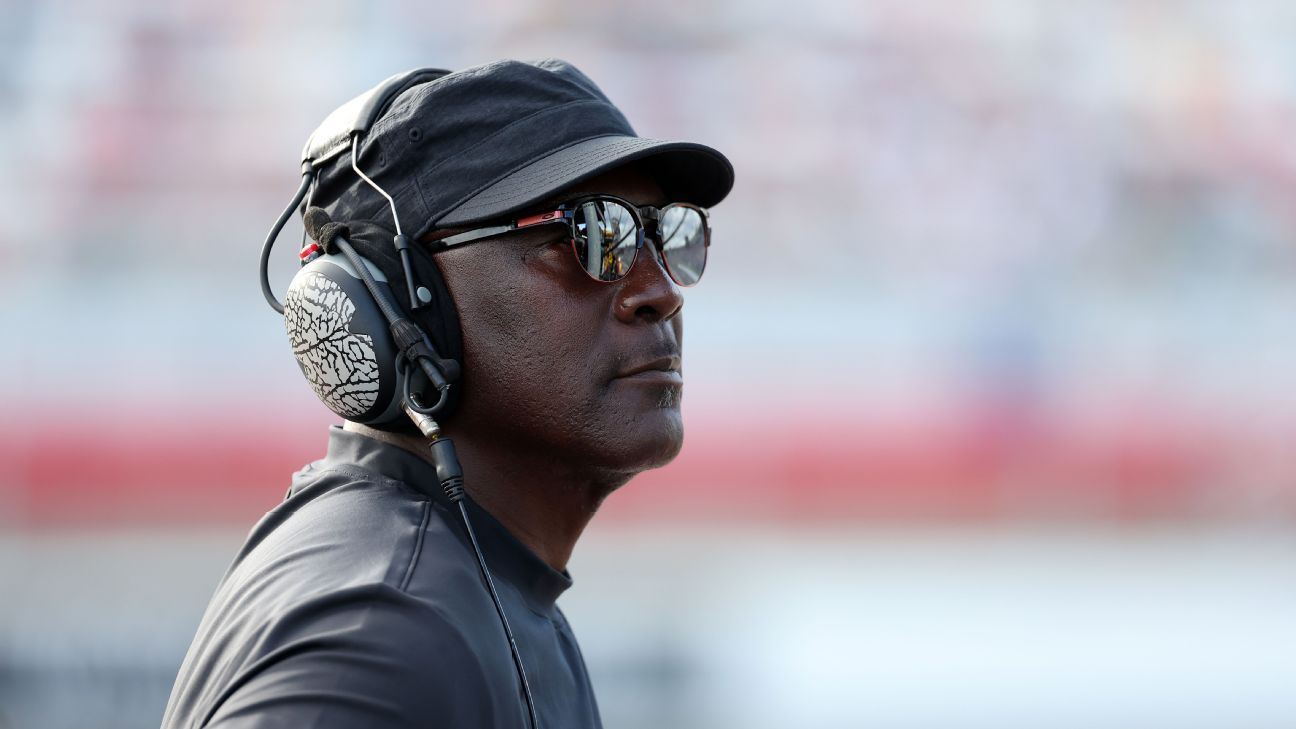
CHARLOTTE, N.C. — Retired NBA great Michael Jordan took the stand at the landmark NASCAR antitrust case and testified Friday that he has been a fan of the stock car series since he was a child but felt he had little choice but to sue to force changes in a business model he sees shortchanging teams and drivers risking their lives to keep the sport going.
Jordan testified before a packed courtroom for an hour. His celebrity drew quips from the judge and even a defense attorney as he outlined why the team he co-owns, 23XI, had joined Front Row Motorsports in going to court against the top auto racing series in the United States.
“Someone had to step forward and challenge the entity,” the soft-spoken Jordan told the jury. “I sat in those meetings with longtime owners who were brow-beaten for so many years trying to make change. I was a new person, I wasn’t afraid. I felt I could challenge NASCAR as a whole. I felt as far as the sport, it needed to be looked at from a different view.”
Jordan’s highy anticipated appearance followed dramatic testimony from Heather Gibbs, the daughter-in-law of race team owner Joe Gibbs, about the chaotic six-hour period in which teams had to sign an extension or forfeit the charters that guarantee revenue week to week throughout NASCAR’s 38-race season.
“The document was something in business you would never sign,” said Heather Gibbs, who is also a licensed real estate agent. “It was like a gun to your head: if you don’t sign, you have nothing.”
Charters are the equivalent of the franchise model used in other sports and in NASCAR it guarantees every chartered car a spot in every race, plus a defined payout from the series. The system was created in 2016, and during the two-plus years of bitter negotiations on an extension teams begged for the renewable charters to be made permanent for revenue stability.
When NASCAR refused to make them permanent and gave the teams six hours in September 2024 to sign the 112-page extension, 23XI and Front Row Motorsports were the only two organizations out of 15 to refuse. They instead filed the antitrust suit and the trial opened Monday to hear their allegations that NASCAR is a monopolistic bully. 23XI is co-owned by Jordan and three-time Daytona 500 winner Denny Hamlin, and Front Row is owned by fast food franchiser Bob Jenkins.
Jordan testified that 23XI bought a third charter late in 2024 for $28 million even with all the uncertainty.
“I’m pretty sure they know I love to win,” the six-time NBA champion said. “Denny convinced me getting a third driver improved our chances to win, so I dove in.”
Like other witnesses this week, Jordan described a NASCAR that refused to discuss options or potential changes to the charter system, which he supports. He was asked why 23XI didn’t sign the extensions last fall.
“One, I didn’t think it was economically viable. Two, it said you could not sue NASCAR, that was an antitrust violation, I felt. Three, they gave us an ultimatum I didn’t think was fair to 23XI,” Jordan said, adding: “I wanted a partnership and permanent charters wasn’t even a consideration. The pillars that the teams wanted, no one on the NASCAR side even negotiated or compromised. They were not even open-minded to welcome those conversations, so this is where we ended up.”
Jordan referred to the NBA business model, which shares approximately half its revenue with players, far more than NASCAR.
“The revenue split was far less than any business I’ve ever been a part of. We didn’t think we’d ever get to what basketball was getting but we wanted to move in that direction,” he said. “The thing I see in NASCAR that I think is absent is a shared responsibility of growth as well as loss.”
Jordan said he owns 60% of 23XI and has invested $35 millioin to $40 million in the team. Jenkins testified earlier this week that has never turned a profit since launching his NASCAR team in the early 2000s and estimates he’s lost $100 million even while winning the Daytona 500 in 2021.
Heather Gibbs earlier told the jury how she became co-owner of Joe Gibbs Racing the day after her husband, Coy, unexpectedly died in his sleep the same night their son, Ty, won NASCAR’s second-tier Xfinity Series championship in 2022. Coy Gibbs had moved into a leadership role with JGR following the death of his older brother, J.D., in 2019.
Because Gibbs had lost both his sons and had built the team as a legacy for his family, his daughter-in-law took an active role in the organization and personally participated in negotiations for the charter extensions. When NASCAR made its final offer at 6 p.m. on a Friday night with just hours to sign, the agreement did not include permanent charters. Gibbs testified the organization was devastated.
“Everything was going so fast, the legacy of Coy, the legacy of J.D., everyone at JGR was very upset,” she told the jury. She said her father-in-law called NASCAR chairman Jim France pleading for a resolution.
“Joe said, ‘Jim, you can’t do this,'” she said. “And Jim was done with the conversation.”
Heather Gibbs said she had to leave to take her son to a baseball game in Chapel Hill and left worried about her father-in-law, who was 84 at the time.
“I left him sitting in the dark, listening to his blood sugar monitors going off,” she testified. “We decided we had to sign. We can’t lose everything. I did not think it was a fair deal to the teams.”
Joe Gibbs is both a Hall of Fame NASCAR owner and NFL Hall of Fame coach. He led the Washington football team to three Super Bowl titles and JGR has won five Cup Series championships. JGR has 450 employees, charters for four Cup cars and relies solely on outside sponsorship and investors to keep the team afloat. The team will mark its 35th season next year and Gibbs told the jury that JGR needs permanent charters to protect its investment in NASCAR.
“It’s the most important point, a permanent place in their history books,” she testified. “It is absolutely vital to the teams for us to know we have security, it can’t be taken away, to know what we’ve invested in is ours.”

-
Greg Wyshynski
Just over a quarter of the way through the 2025-26 NHL season, one trend has caused tired legs, frayed nerves and instant goal-scoring highlights:
Overtime games are being played at a record-setting rate.
In the season’s first 425 games, 27.3% of them had the score tied after regulation, requiring a resolution in either the 3-on-3 overtime or in the shootout. If that trend holds, it would be the highest percentage of games going to overtime since the shootout was implemented in the 2005-06 season, topping the 25% of games that went to OT in the 2013-14 season.
What’s accounted for this spike in overtime games? Could the trend last?
Here are five theories that have come up during conversations with NHL players, coaches and executives about how “extra” this season’s been so far.
Theory: NHL parity means more overtime
Dallas Stars coach Glen Gulutzan has a theory about all these overtimes.
“I think it’s a bit of a ‘squished can,’ to be honest with you,” he said.
A squished can?
“You see a lot of the top teams over the last few years and how they’ve lost players to other teams,” he said. “And then the development of some of these young stars in the league that now have now two, three years in the league … I think it’s squished the league a little bit.”
Parity is the force behind that squish — or “competitive balance,” as NHL commissioner Gary Bettman has referred to it during the salary cap era. Entering Thursday night, 28 out of 32 teams in the NHL had a points percentage of .500 or better. At the end of last season, that number was 23 teams.
0:16
Casey Mittelstadt delivers Bruins a win with shootout goal
Casey Mittelstadt wins it in the shootout for the Bruins vs. the Red Wings.
“Parity” is the go-to answer for many in the NHL.
“I guess teams are even this year. There’s a lot of tie games, a lot of one-goal games,” Stars forward Mikko Rantanen said.
“There’s a record level of parity in the league. I mean from last to first, I mean the points differential and stuff, I can’t remember that really being the case in my 10 years. I think it’s just a really competitive league right now,” New Jersey Devils forward Connor Brown said.
“You look at the standings, and if you’re on top of the mountain, you’re really not on top of the mountain. You’re in the middle of the forest. It’s so tight,” Detroit Red Wings coach Todd McLellan said, via NHL.com.
League parity is nothing new, but there might be a twist on that theme for 2025-26: Some of the league’s rebuilding teams have been ahead of schedule — and playing plenty of overtime games.
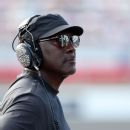
The San Jose Sharks had nine of their first 28 games go past regulation. The Chicago Blackhawks had seven such games in their first 26. The Anaheim Ducks had seven of their first 27 games go past three periods.
“The top teams have lost some players with the cap, and the bottom teams have grown up and then gained some players,” Gulutzan said. “So that’s what happens. It squishes the standings.”
Theory: Playing for the tie
With the standings so tight, every point counts. Finishing regulation in a tie game means both teams earn a point before overtime or the shootout determine who gets a second point in the standings.
Stars forward Jason Robertson said teams aren’t putting the pedal down if overtime beckons.
“When there are a couple minutes left, I think no one’s really pressing,” he said.
Devils coach Sheldon Keefe believes there are an increasing number of games tied entering the third period.
“Teams maybe are a little more conservative in nature to just make sure you get the least the one [point]. So a lot of that’s coming through what’s happening through the first two periods to set the table for that,” he said.
But if Keefe’s team has a lead in the third period?
“You’re mindful of the quick-strike ability of the opponents when you’re playing with the lead, and just how diligent you’ve got to be,” he said.
Theory: No lead is safe anymore
Ducks general manager Pat Verbeek never feels comfortable when his team has a multi-goal lead.
“Every team that you’re playing against, they have game breakers,” he said. “You get down two goals, it’s not the end of the world. We’ve battled back from two goals down numerous times.”
It wasn’t too long ago that a multi-goal deficit in the third period meant the game was over. Today, those types of rallies feel commonplace. Last season, 43% of games were comeback victories, the second highest rate in NHL history. According to the NHL, 74% of last season’s wins were in “close games,” meaning games that were decided by one goal, or by 2-plus goals following an empty-netter. That was the highest rate in NHL history.
“Comebacks and teams that are tying up games and coming from behind, I think there’s an upward trend in that area,” Keefe said.
0:18
Simon Nemec scores OT winner for Devils
Simon Nemec buries the game-winning goal in overtime to lift New Jersey to victory.
The trend started in 2018-19, which is when the league went over two goals per game in the third period. It’s remained over that average for the last seven seasons. Through 850 games in 2025-26, the NHL was averaging 2.14 goals per game in the third period, which is in line with the previous four seasons. The shooting percentage in the third period this season in that span is 12% in the third period. Last season it was 11.8%, which was almost a full percentage point higher than the previous season.
Gulutzan believes that special teams are a key factor in these comeback wins. NHL power-play conversion rates have been over 20% on average in six of the last eight seasons. The 21.6% conversion rate last season was the highest since the 1985-86 season. Through 425 games this season, teams are converting on the power play at a 19.9% rate.
“These power plays have gotten so good that over the last few years, the game can turn on offensive swings,” said Gulutzan, who ran the Edmonton Oilers‘ power play before joining the Stars as head coach last summer.
Verbeek agreed.
“I think obviously the rules and how the games is being played comes into that. Power plays come into play,” he said. “Referees aren’t afraid to call power plays anytime of the game, so that leads into it. You’re never out of it.”
But does all of this add up to a lot of comebacks in the third period?
According to ESPN Research, there have been 68 comeback wins this season in which a team was trailing at any point in the third period. That’s five more wins than the league had at this point last season but only the third-highest mark of the last six seasons. In 2023-24 at this time, the NHL had 78 third-period comeback wins.
Theory: Coaching tactics lead to more OT
Gulutzan said coaches have had to adapt to this surge in third-period scoring, but that’s more about managing emotions than anything systematic.
“What’s changed is your messaging a little bit, and the fact that up two [goals] or down two you see the wild swings and you’re not out of it. There’s less panic on the bench. Just stick with your game a little bit,” he said. “I think just your mentality has changed a little bit. Nothing tactically.”
Keefe also said it’s not because coaches are rewriting their game plans.
“To me it’s more about the rhythm and consistency and the confidence. I wouldn’t say we make any real adjustments. We still want to be aggressive. You want to play on the other team’s half of the ice, just maybe want to be a little more intelligent with the puck and your line changes,” he said. “But the plan really hasn’t changed.”
But Meghan Chayka, co-founder of Stathletes and a hockey data analyst, believes the numbers point to a tactical change from coaches. “Teams are defending leads more conservatively,” she said.
That’s been an ongoing trend. Chayka said that scoring chances are down 5.57% in the final 10 minutes of games since 2015.
She also believes that how coaches choose to manage their goaltenders is also influencing the tightness of games late in regulation.
“In 2015, there were 10 goalies who played 60-plus games, with 68 as the highest number of games. Last season, five goalies played over 60 games and 63 games was the most,” she said.” There has been a shift in workload management for starting goalies. That leads to a conversation about systems and tactics. When a backup goalie is in net, coaches tending to have the team play more conservative and that it can lead to the closer games.”
Theory: This too shall pass?
Over the past nine seasons, the number of overtime games in the NHL has held consistently:
2024-25: 20.5%
2023-24: 20.7%
2022-23: 23%
2021-22: 22%
2020-21: 22.5%
2019-20: 23.1%
2018-19: 21.3%
2017-18: 23.3%
2016-17: 23.5%
So the range is somewhere between 21%-24% as far as games going to overtime. It’s not hard to see a scenario in which this season normalizes to that trend after some anomalous stretches early in the season — including weeks in which 35% and 39% of all games went to overtime, respectively.
0:32
Wyatt Johnston wins it for the Stars in a shootout
Wyatt Johnston wins it for the Stars in a shootout
Or perhaps it won’t. Chayka says “the game has become more random this season,” in particular when looking at results through the lens of sports wagering.
“Looking at the numbers and particularly how accurate the betting lines are in predicting game winners, the level of error has continued to increase, meaning games have been harder and harder to predict,” she said.
To that end, Chayka said the expected score winner has only been the actual game winner 54% of the time, per Stathletes.
Conclusion: Obviously, regulation wins should count for three points, right?
Many fans and media members have argued that making regulation wins worth three points — while regulation losses get nothing, an OT/shootout win gets two and a loss after regulation gets one — would be an enticement for teams to avoid playing for overtime.
Others aren’t as keen on the “3-2-1” points system. Former NHL GM Brian Burke once told ESPN that “you will have teams mathematically eliminated from the playoffs by Christmas” and that “I’d rather put a sharp stick in my eye” than have three-point regulation wins.
Robertson also isn’t a fan of three-point regulation wins.
“I’m traditional. I don’t really like any real change,” he said. “I actually enjoy the shootout. I think that’s great for hockey. I love it. I love watching it as a fan, just being at home, the shootout on, I’d rather watch a shootout than overtime.”
So far, this has been his kind of season: Only 65.5% of games tied after regulation were decided in overtime. That would be the highest percentage of games going to a shootout since 2021-22.

-
Adam Rittenberg
Arkansas‘ coaching staff is coming together under Ryan Silverfield, who is set to hire coordinators Tim Cramsey (offense) and Ron Roberts (defense), sources confirmed to ESPN.
Cramsey served as Silverfield’s offensive coordinator at Memphis the past four seasons, after coordinator stints at Marshall, Sam Houston State, Nevada and other programs. Since 2022, Memphis ranks No. 9 nationally in scoring offense (36.3 PPG) and 20th in passing average (273.6 YPG).
Roberts comes over from Florida, where he coordinated the defense the past two seasons. He is a former defensive coordinator at Auburn, Baylor and Louisiana, and he has been head coach at Southeastern Louisiana and Delta State, where he went 89-45 overall. Roberts helped Baylor to a Big 12 title in 2021 under coach Dave Aranda.
CBS Sports first reported the expected hires of Cramsey and Roberts.

-
Eli Lederman
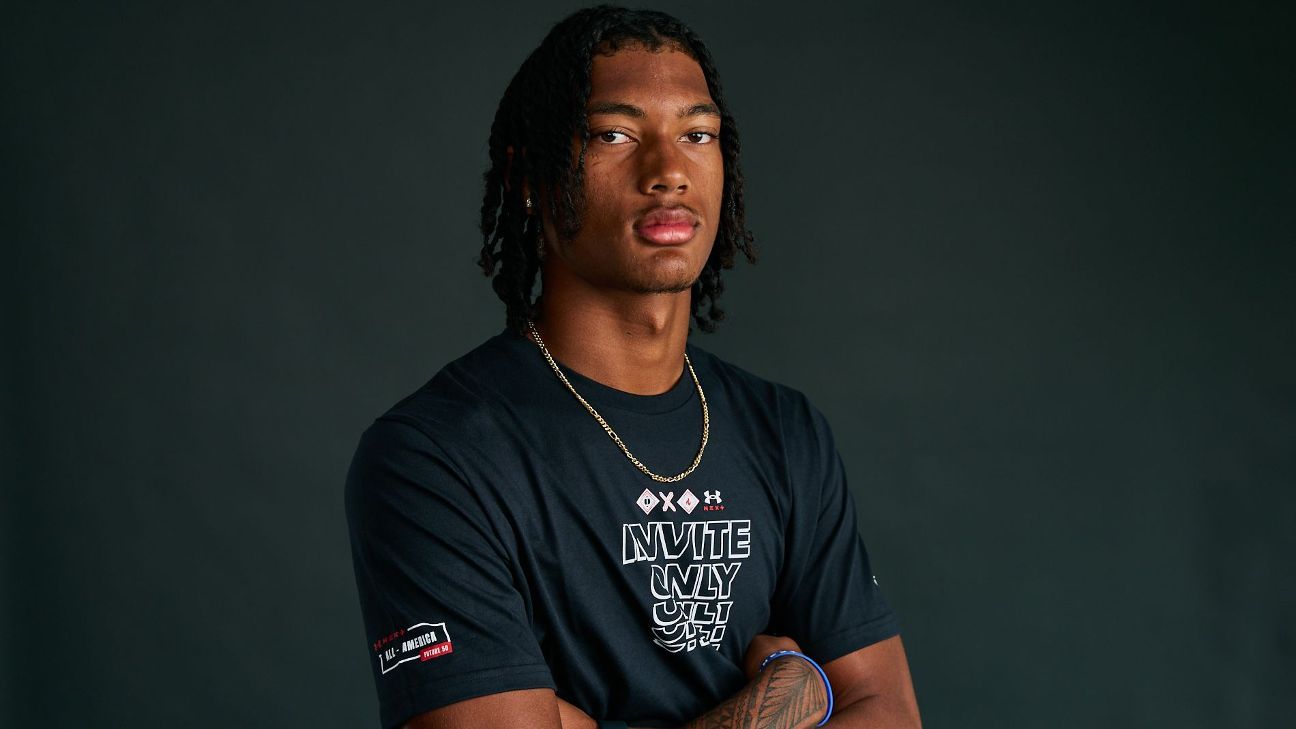
Five-star wide receiver Chris Henry Jr. affirmed his commitment to Ohio State on Friday and will sign with the Buckeyes during the early signing period, concluding a dramatic recruiting saga for the No. 7 overall prospect in the SC NEXT 300.
Henry, a 6-foot-5, 205-pound wide receiver from California power Mater Dei High School, is ESPN’s No. 1 wide receiver in 2026. Sources said Henry’s camp held talks with multiple programs this week, including Ohio State, Oregon, Texas and LSU, before he announced his intention to sign with the Buckeyes during an appearance on “The Pat McAfee Show” on Friday.
“For me, it was really just being at a place where I feel comfortable,” Henry told McAfee. “It was never really about the money. I was getting tons of offers [from] other places … but ultimately for me, it was just a place I feel comfortable being developed and ultimately reaching my goal, which is to be a first-round draft pick.”
Henry is the son of the late Cincinnati Bengals wide receiver Chris Henry, who played at West Virginia from 2002 to 2004. The younger Henry will sign with Ohio State as the top-ranked member of a Buckeyes class that began Friday at No. 9 in ESPN’s class rankings for the cycle.
Committed to Ohio State since July 29, 2023, Henry entered this week’s early signing period as the longest-tenured verbal pledge in the ESPN 300, holding on despite flip efforts from Miami, Oregon, USC and West Virginia, among others, across his junior and senior high school seasons.
Oregon remained the most persistent non-Ohio State program in Henry’s process, sources told ESPN, with the Ducks applying pressure all the way into the early signing period. However, Henry consistently affirmed his pledge to the Buckeyes over the past two-plus years, during which he developed a close relationship with wide receivers coach and offensive coordinator Brian Hartline, who was named the head coach at South Florida earlier this week.
Sources said Henry was unsettled Wednesday morning upon learning of Hartline’s impending departure from the Buckeyes. Henry still stated his intention to sign with Ohio State during a ceremony at Mater Dei on Wednesday, but he never submitted official paperwork to the program.
In a social media post Wednesday afternoon, Henry said he had not yet signed his letter of intent and was “still trying to weigh” his options “due to coaching changes.”
While LSU and Texas also presented significant financial offers, sources told ESPN that Ohio State and Oregon were the two programs most prominently involved in the late stages of Henry’s decision this week.
Henry and his representatives maintained consistent communication with both the Buckeyes and Ducks across Wednesday and Thursday, sources said. Despite a heavy push from Oregon, led by coach Dan Lanning, Henry ultimately held firm on his pledge to Ohio State.
Multiple conversations with Buckeyes coach Ryan Day over the past 48 hours, including a Thursday night phone call, helped sway Henry’s final decision, sources told ESPN.
Henry rose to national stardom as a sophomore at Ohio’s Withrow University High School in 2023, setting school records with 1,127 receiving yards and 10 touchdowns on 71 receptions. He transferred to Mater Dei in 2024 and missed the majority of his junior season with a knee injury before returning to complete his senior campaign this fall.
He will sign with the Buckeyes as the program’s first No. 1 wide receiver addition since Julian Fleming in the 2020 class. In the wake of four-star pass catcher Kayden Dixon-Wyatt‘s flip to USC on Wednesday, Jerquaden Guilford (No. 199 overall) stands alongside Henry as the only other top-300 wide receiver set to join Ohio State in 2026.
-
 Sports2 years ago
Story injured on diving stop, exits Red Sox game
-
 Sports3 years ago
‘Storybook stuff’: Inside the night Bryce Harper sent the Phillies to the World Series
-
 Sports2 years ago
Game 1 of WS least-watched in recorded history
-
 Sports3 years ago
Button battles heat exhaustion in NASCAR debut
-
 Sports3 years ago
MLB Rank 2023: Ranking baseball’s top 100 players
-
Sports4 years ago
Team Europe easily wins 4th straight Laver Cup
-
 Environment3 years ago
Japan and South Korea have a lot at stake in a free and open South China Sea
-
 Environment1 year ago
Here are the best electric bikes you can buy at every price level in October 2024