
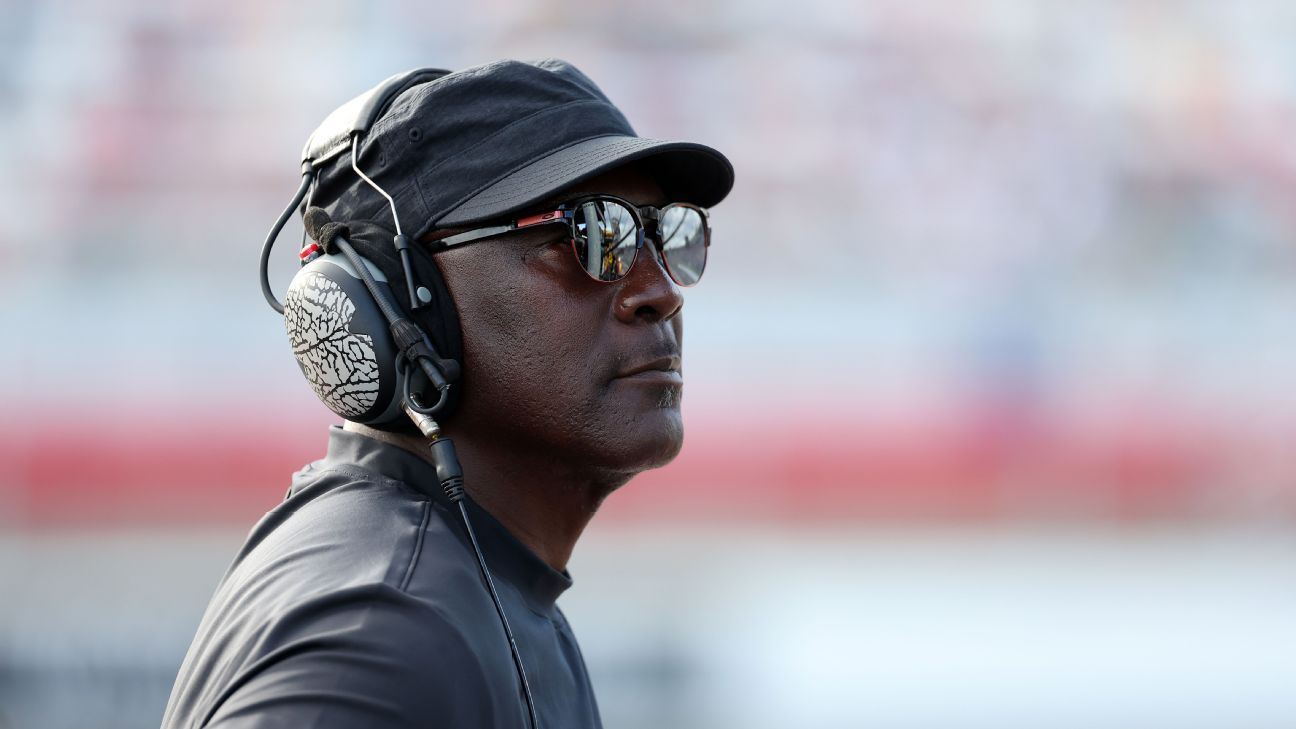
Someone had to ‘challenge NASCAR,’ says Jordan

CHARLOTTE, N.C. — Retired NBA great Michael Jordan took the stand at the landmark NASCAR antitrust case and testified Friday that he has been a fan of the stock car series since he was a child but felt he had little choice but to sue to force changes in a business model he sees shortchanging teams and drivers risking their lives to keep the sport going.
Jordan testified before a packed courtroom for an hour. His celebrity drew quips from the judge and even a defense attorney as he outlined why the team he co-owns, 23XI, had joined Front Row Motorsports in going to court against the top auto racing series in the United States.
“Someone had to step forward and challenge the entity,” the soft-spoken Jordan told the jury. “I sat in those meetings with longtime owners who were brow-beaten for so many years trying to make change. I was a new person, I wasn’t afraid. I felt I could challenge NASCAR as a whole. I felt as far as the sport, it needed to be looked at from a different view.”
Jordan’s highy anticipated appearance followed dramatic testimony from Heather Gibbs, the daughter-in-law of race team owner Joe Gibbs, about the chaotic six-hour period in which teams had to sign an extension or forfeit the charters that guarantee revenue week to week throughout NASCAR’s 38-race season.
“The document was something in business you would never sign,” said Heather Gibbs, who is also a licensed real estate agent. “It was like a gun to your head: if you don’t sign, you have nothing.”
Charters are the equivalent of the franchise model used in other sports and in NASCAR it guarantees every chartered car a spot in every race, plus a defined payout from the series. The system was created in 2016, and during the two-plus years of bitter negotiations on an extension teams begged for the renewable charters to be made permanent for revenue stability.
When NASCAR refused to make them permanent and gave the teams six hours in September 2024 to sign the 112-page extension, 23XI and Front Row Motorsports were the only two organizations out of 15 to refuse. They instead filed the antitrust suit and the trial opened Monday to hear their allegations that NASCAR is a monopolistic bully. 23XI is co-owned by Jordan and three-time Daytona 500 winner Denny Hamlin, and Front Row is owned by fast food franchiser Bob Jenkins.
Jordan testified that 23XI bought a third charter late in 2024 for $28 million even with all the uncertainty.
“I’m pretty sure they know I love to win,” the six-time NBA champion said. “Denny convinced me getting a third driver improved our chances to win, so I dove in.”
Like other witnesses this week, Jordan described a NASCAR that refused to discuss options or potential changes to the charter system, which he supports. He was asked why 23XI didn’t sign the extensions last fall.
“One, I didn’t think it was economically viable. Two, it said you could not sue NASCAR, that was an antitrust violation, I felt. Three, they gave us an ultimatum I didn’t think was fair to 23XI,” Jordan said, adding: “I wanted a partnership and permanent charters wasn’t even a consideration. The pillars that the teams wanted, no one on the NASCAR side even negotiated or compromised. They were not even open-minded to welcome those conversations, so this is where we ended up.”
Jordan referred to the NBA business model, which shares approximately half its revenue with players, far more than NASCAR.
“The revenue split was far less than any business I’ve ever been a part of. We didn’t think we’d ever get to what basketball was getting but we wanted to move in that direction,” he said. “The thing I see in NASCAR that I think is absent is a shared responsibility of growth as well as loss.”
Jordan said he owns 60% of 23XI and has invested $35 millioin to $40 million in the team. Jenkins testified earlier this week that has never turned a profit since launching his NASCAR team in the early 2000s and estimates he’s lost $100 million even while winning the Daytona 500 in 2021.
Heather Gibbs earlier told the jury how she became co-owner of Joe Gibbs Racing the day after her husband, Coy, unexpectedly died in his sleep the same night their son, Ty, won NASCAR’s second-tier Xfinity Series championship in 2022. Coy Gibbs had moved into a leadership role with JGR following the death of his older brother, J.D., in 2019.
Because Gibbs had lost both his sons and had built the team as a legacy for his family, his daughter-in-law took an active role in the organization and personally participated in negotiations for the charter extensions. When NASCAR made its final offer at 6 p.m. on a Friday night with just hours to sign, the agreement did not include permanent charters. Gibbs testified the organization was devastated.
“Everything was going so fast, the legacy of Coy, the legacy of J.D., everyone at JGR was very upset,” she told the jury. She said her father-in-law called NASCAR chairman Jim France pleading for a resolution.
“Joe said, ‘Jim, you can’t do this,'” she said. “And Jim was done with the conversation.”
Heather Gibbs said she had to leave to take her son to a baseball game in Chapel Hill and left worried about her father-in-law, who was 84 at the time.
“I left him sitting in the dark, listening to his blood sugar monitors going off,” she testified. “We decided we had to sign. We can’t lose everything. I did not think it was a fair deal to the teams.”
Joe Gibbs is both a Hall of Fame NASCAR owner and NFL Hall of Fame coach. He led the Washington football team to three Super Bowl titles and JGR has won five Cup Series championships. JGR has 450 employees, charters for four Cup cars and relies solely on outside sponsorship and investors to keep the team afloat. The team will mark its 35th season next year and Gibbs told the jury that JGR needs permanent charters to protect its investment in NASCAR.
“It’s the most important point, a permanent place in their history books,” she testified. “It is absolutely vital to the teams for us to know we have security, it can’t be taken away, to know what we’ve invested in is ours.”

-
Andrea Adelson
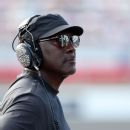
CHARLOTTE, N.C. — Duke coach Manny Diaz says his team has embraced all the doomsday scenarios that have been laid out this week as his 7-5 team prepares to play No. 17 Virginia in the ACC championship game.
If Duke wins the game, there is the possibility the ACC champion would get left out of the 12-team College Football Playoff, as three Group of 5 teams are ranked higher than the Blue Devils. No. 24 North Texas and No. 20 Tulane play in the American title game, while No. 25 James Madison plays Troy in the Sun Belt title game, both on Friday.
“We love it, doomsday scenario and nightmares and this and that the other,” Diaz said. “Our guys deserve to be here. That’s the first thing. There’s a notion that we won a scratch-off lottery-ticket-type deal to get here. We won by the most objective metric possible. We won the second-most games in the league, and everyone else who won the same amount of games that we won, we had the hardest schedule.
“We complain all the time about the subjectivity in college football and rankings and committees and whatnot, and this is the most objective way to determine who the champions are, and the two teams are here that deserve to be here. We’re one of them.”
Duke finished in a five-way tie in the ACC at 6-2. One of the teams that finished in that tie was No. 12 Miami (10-2), a team on the bubble for an at-large CFP berth. The Blue Devils won the fifth tiebreaker, which was conference opponent win percentage. Miami coach Dan Radakovich said earlier in the week the ACC should revisit its championship game tiebreaker policy to ensure the league was putting its “best foot forward.”
Diaz noted his team finished plus-16 in turnover margin in conference games, one of the biggest reasons it is in Charlotte.
The two teams met earlier in November, with Virginia winning 34-17. The top five conference champions are guaranteed a spot in the CFP, regardless of conference. Duke lost three nonconference games, including two on the road to teams outside the Power 4 — at Tulane and at UConn.
Diaz has remained adamant that despite seeing three Group of 5 teams ranked, if his team wins the ACC, it deserves to make the field.
He also noted the point spread in the Big Ten title game between Indiana and Ohio State is the same as the point spread in the ACC title game. Ohio State and Virginia are each favored by 4.
“Those guys in Vegas, they tend to know things,” Diaz said. “No one’s talking about how Indiana doesn’t deserve to be in the Big Ten championship game, because, of course, they do. And I think Duke deserves to be here the same exact way.”

-
Dan Murphy
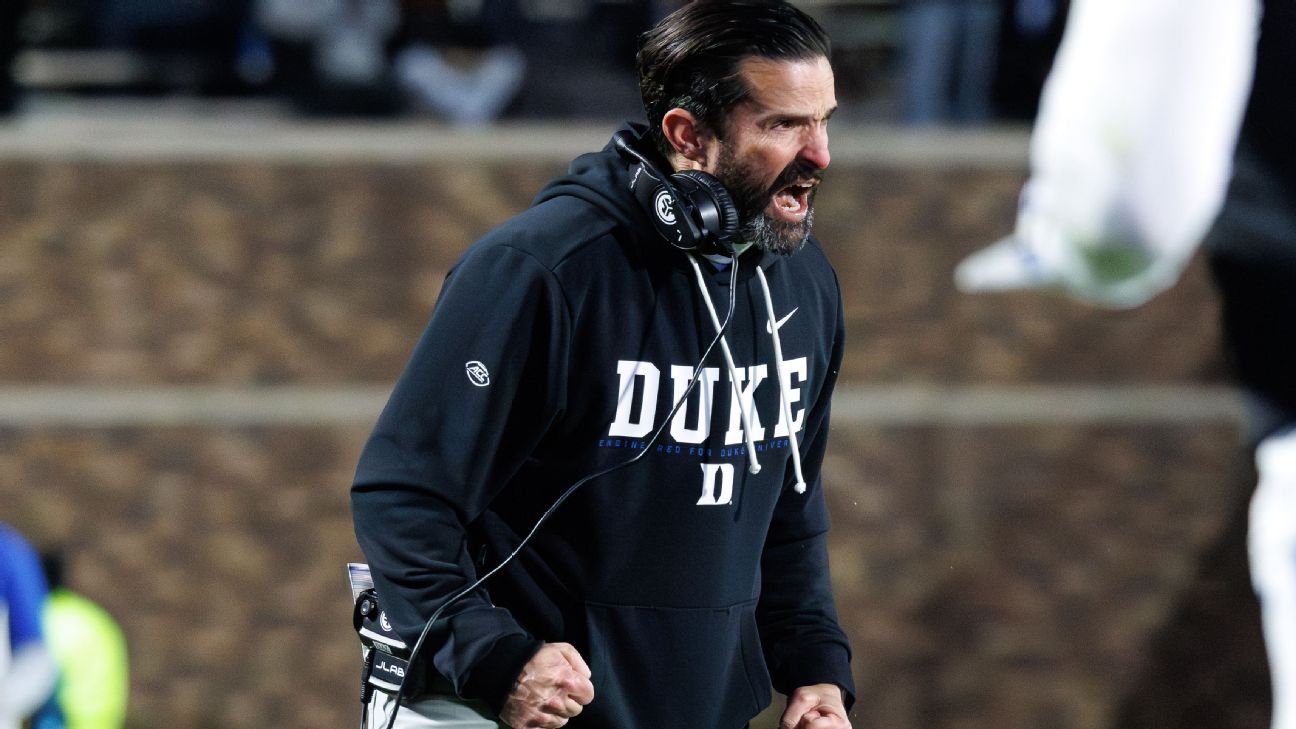
Georgia‘s athletic department is headed to court to try to obtain $390,000 in damages from a former standout defensive end who transferred from the school after his sophomore season in a potentially precedent-setting case.
The Bulldogs have asked a judge to force former defensive end Damon Wilson, currently the top pass rusher on Missouri‘s defensive line, to enter into arbitration to settle a clause in his former contract that serves effectively as a buyout fee for exiting his deal early. Wilson played for Georgia as a freshman and sophomore before transferring to Missouri in January, two weeks after signing a new deal with Georgia’s Classic City Collective.
Many schools and collectives have started to include liquidated damages clauses in their contracts with athletes to protect their investment in players and deter transfers. Georgia is one of the first programs to publicly try to enforce the clause by filing suit against a player.
“When the University of Georgia Athletic Association enters binding agreements with student-athletes, we honor our commitments and expect student-athletes to do the same,” athletics spokesperson Steven Drummond said in a statement to ESPN on Friday.
Wilson was served last week in Missouri with a summons to appear in court, according to legal documents.
“After all the facts come out, people will be shocked at how the University of Georgia treated a student athlete,” said Bogdan Susan, a Missouri-based attorney who is representing Wilson along with attorney Jeff Jensen. “It has never been about the money for Damon, he just wants to play the game he loves and pursue his dream of playing in the NFL.”
Susan and Jensen did not represent Wilson when he negotiated his contact with Georgia. He and his lawyers have 30 days from the time he received his court summons to provide a response.
The Bulldogs paid Wilson a total of $30,000 from the disputed contract. Because of the way the deal was crafted, Georgia says Wilson owed it $390,000 in a lump sum within 30 days of his decision to leave the team. Drummond declined to comment when asked why the damages being sought are much higher than the amount Wilson was paid.
Wilson signed a term sheet with Classic City Collective in December 2024, shortly before Georgia lost in a quarterfinal playoff game to Notre Dame, ending his sophomore season. The 14-month contract — which was attached to Georgia’s legal filing — was worth $500,000 to be distributed in monthly payments of $30,000 with two additional $40,000 bonus payments that would be paid shortly after the NCAA transfer portal windows closed.
The deal states that if Wilson withdrew from the Georgia team or entered the transfer portal, he would owe the collective a lump-sum payment equal to the rest of the money he’d have received had he stayed for the length of the contract. (The two bonus payments apparently were not included in the damages calculation.) Classic City signed over the rights to those damages to Georgia’s athletic department July 1 when many schools took over player payments from their collectives.
Georgia’s filing claims Wilson received his first $30,000 payment Dec. 24, 2024. Less than two weeks later, he declared his plans to transfer.
Legal experts say Georgia’s attorneys will have to convince an arbitrator that $390,000 in damages is a reasonable assessment of the harm the athletic department suffered due to Wilson’s departure. Liquidated damages are not legally allowed to be used as punishment or primarily as an incentive to keep someone from breaking a contract.
In one of the only other examples of a school trying to enforce a similar clause, Arkansas‘ NIL collective filed a complaint in the spring against quarterback Madden Iamaleava and wide receiver Dazmin James after both players transferred out of the program. The Iamaleava case was “resolved to Arkansas’s satisfaction,” according to a source familiar with the matter. James’ attorney, Darren Heitner, told ESPN that the wide receiver “stood his ground” and that Arkansas has not moved forward to date with further attempts to collect damages.
“To me, [these clauses] are clearly penalty provisions masquerading as liquidated damages,” Heitner said.
Several attorneys who have reviewed athlete NIL contracts for ESPN in the past say they believe schools and their collectives are using liquidated damages clauses in bad faith to punish players who break their contract early.
Schools and collectives have not used the negotiated buyout clauses that typically appear in coaching contracts for athletes because the teams aren’t technically paying them to play their sport. Instead, the school pays players for the right to use their name, image and likeness in promotional material. Paying for play could make it more likely that courts would deem athletes to be employees, which almost all college sports leaders want to avoid.
Wilson’s case could help set a precedent on whether liquidated damages clauses will serve as an effective, defensible substitute for more traditional buyout fees.

-
Eli Lederman
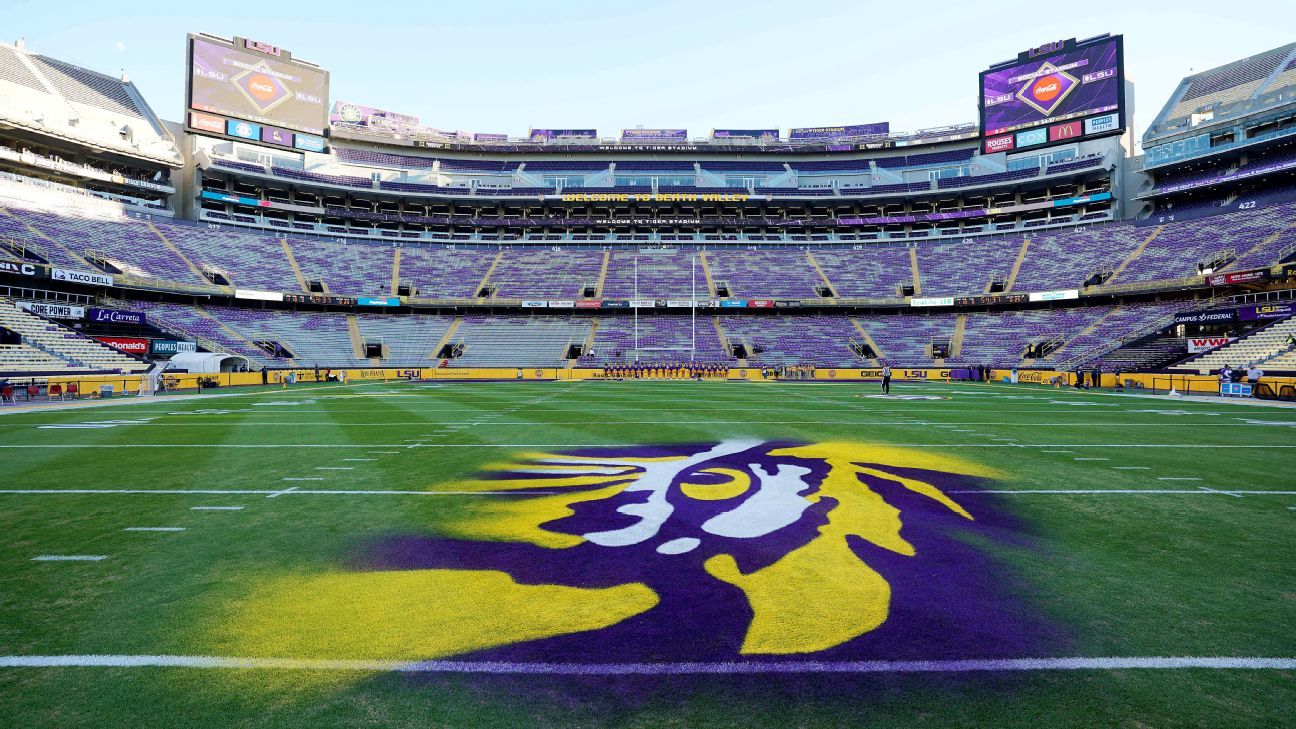
LSU and coach Lane Kiffin closed a busy early signing period with a bang Friday, officially securing the signature of defensive tackle Lamar Brown, ESPN’s No. 1 overall 2026 recruit.
Brown, a 6-foot-5, 285-pound defender from Erwinville, Louisiana, signed his letter of intent on the final day of the three-day period, the program announced, formally joining Kiffin and the Tigers as the program’s first No. 1 overall addition since Leonard Fournette in 2014.
Committed to the program since July, Brown was not initially expected to sign this week following meetings between Brown’s representatives and members of the LSU staff Tuesday.
While Brown remained verbally committed to the program, sources told ESPN that his camp harbored reservations over Kiffin’s to-be-completed coaching staff. Uncertainty hanging over the futures of Tigers interim coach Frank Wilson and defensive coordinator Blake Barker marked a particular concern for Brown, who attends high school on the LSU campus and developed close relationships with the program’s previous staff during his recruitment.
As of Friday afternoon, the Tigers have not publicly announced plans for the program’s defensive staff. The statuses of Wilson and Baker, a reported candidate for multiple head coach openings across the country, remain unclear, too. But according to ESPN sources, Brown and the Tigers progressed toward his signing through talks across Wednesday and Thursday, culminating in the program officially landing his signature Friday afternoon.
Within an impressive Tigers defensive class in 2026, Brown was not alone in initially holding off on signing this week before ultimately submitting the official paperwork.
LSU officially announced the signing of ESPN 300 defensive tackle Richard Anderson (No. 90 overall) on Thursday after questions swirled over his signature on the opening day of the signing period. Top 60 defensive linemen Deuce Geralds (No. 39) and Trenton Henderson (No. 60) each pushed their signings to Friday. Henderson, amid late flip efforts from Auburn and Florida State, gave the Tigers his signature Friday morning. Geralds, ESPN’s No. 2 defensive tackle in 2026, followed in the afternoon, minutes before the program announced Brown’s signing.
For Kiffin, who officially arrived Sunday, Brown’s signature closes LSU’s class of ESPN 300 additions and marks a strong finish to a hectic first week on the recruiting trail with the Tigers.
Uncertainty surrounding Brown and the program’s top defensive pledges hung over early-week commitments from wide receiver Brayden Allen and former Ole Miss pledges J.C. Anderson (No. 165 in the ESPN 300) and Ryan Miret. Pass catcher Corey Barber, another ex-Rebels commit, also signed with the Tigers on Wednesday. LSU also lost five commitments following Kiffin’s arrival, headlined by safety Dylan Purter (No. 266), who flipped to Florida on Thursday.
Kiffin & Co. took some big swings, as well. Sources tell ESPN that the Tigers made late efforts to flip USC tight end signee Mark Bowman (No. 29 overall) and four-star South Carolina quarterback signee Landon Duckworth (No. 186). LSU also attempted to sway No. 1 wide receiver Chris Henry Jr., who affirmed his pledge to Ohio State and signed Friday.
With Brown officially in the fold, the Tigers will close the early signing period with the nation’s No. 14 signing class in ESPN’s latest class rankings for the cycle.
-
 Sports2 years ago
Story injured on diving stop, exits Red Sox game
-
 Sports3 years ago
‘Storybook stuff’: Inside the night Bryce Harper sent the Phillies to the World Series
-
 Sports2 years ago
Game 1 of WS least-watched in recorded history
-
 Sports3 years ago
Button battles heat exhaustion in NASCAR debut
-
 Sports3 years ago
MLB Rank 2023: Ranking baseball’s top 100 players
-
Sports4 years ago
Team Europe easily wins 4th straight Laver Cup
-
 Environment3 years ago
Japan and South Korea have a lot at stake in a free and open South China Sea
-
 Environment1 year ago
Here are the best electric bikes you can buy at every price level in October 2024