

Trump’s national security strategy is silent on crypto, blockchain

The Trump administration did not mention cryptocurrency or blockchain in its latest national security strategy, despite the industry’s growing ties to the financial system and President Donald Trump’s claim of increased competition from overseas.
Trump’s national security strategy, outlining his administration’s priorities, released on Friday, instead said the “core, vital national interests” of the US revolved around artificial intelligence and quantum computing.
“We want to ensure that US technology and US standards — particularly in AI, biotech, and quantum computing — drive the world forward,” the administration said.
The omission of crypto from the national security strategy comes despite Trump telling CBS’ 60 Minutes last month that he did not want to “have China be number one in the world in crypto” and has previously said he wants all Bitcoin (BTC) mining to take place in the US.
CIA Deputy Director Michael Ellis also said in May that crypto was “another area of technological competition where we need to make sure the United States is well-positioned against China and other adversaries.”
There is, however, one section of the document that states that Trump wants to preserve and grow “America’s financial sector dominance” by using the country’s “leadership in digital finance and innovation” to ensure market liquidity and security, which could be a hint at crypto.

Trump has pushed forward crypto policies
The Trump administration has been supportive of crypto this year, moving forward with a slew of promised policies that have led to more financial institution adoption of the technology.
Trump helped the stablecoin-regulating GENIUS Act become law and has signed executive orders creating a crypto task force and banning a central bank digital currency, while also overseeing federal agencies’ abandonment of many crypto-related enforcement actions.
Related: EU may consolidate crypto regulations, IMF warns of stablecoin risk: Global Express
The administration has also established a Bitcoin reserve and crypto stockpile, comprising forfeited digital assets, while the government is exploring “budget-neutral” methods of acquiring more.
Bitcoin traded below $90,000 over the weekend as the market digested the national security strategy document, which called on US allies to “contribute far more” to defence.
It asked NATO countries to spend 5% of their GDP, up from the current 2%, which would mean heightened government borrowing that would drive up inflation, making it harder for central banks to cut interest rates.
The Federal Reserve’s interest rate decision this week is what is driving crypto markets, with many hoping for a cut that historically spurs investors to make riskier bets.
The market is expecting interest rates to drop when the Fed meets on Tuesday and Wednesday, with CME’s FedWatch showing nearly 88.5% betting on a 25 basis point cut.
Magazine: Quitting Trump’s top crypto job wasn’t easy: Bo Hines
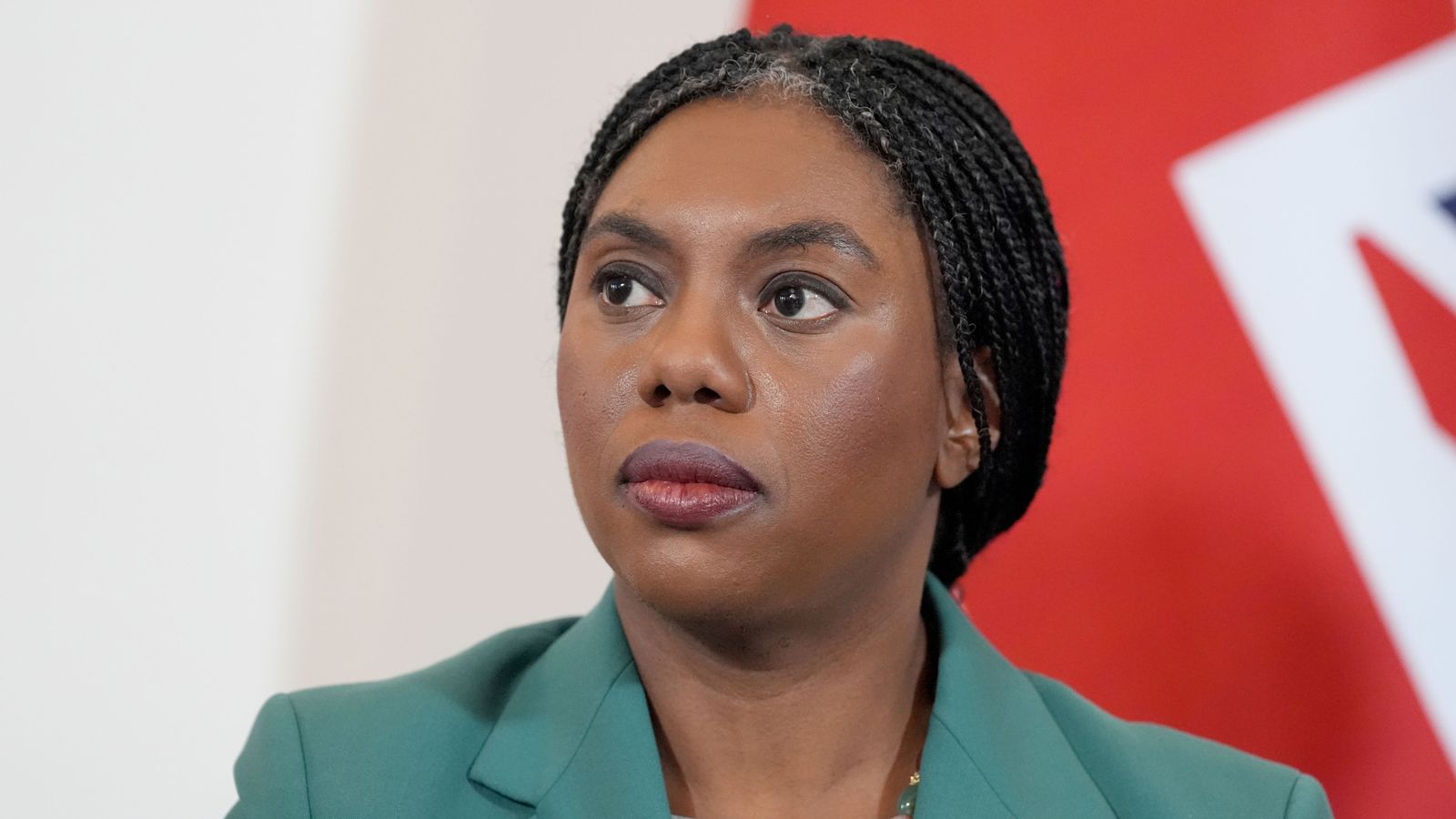

A nationwide grooming gangs inquiry must “leave no stone unturned”, Kemi Badenoch has said as the Conservatives urged the government to ensure ethnicity and religious background are taken into account.
Ms Badenoch and shadow home secretary Chris Philp, appearing alongside a survivor and two parents of survivors/victims, called on the government to adopt draft terms of reference for the inquiry drawn up by the Conservatives with help from some grooming gangs victims and survivors.
The Tory leader said her party is willing to work alongside the government, and an inquiry needs to be undertaken on a cross-party basis as it is ultimately about the survivors, victims and their families.
Politics latest: Starmer becoming ‘second Thatcher’, Scottish first minister says
The Conservatives’ terms of reference include ensuring the inquiry examines the ethnicity and religious background of offenders, a two-year time limit and a focus on extra-familial abuse.
They also want it to forward evidence to police and prosecutors where criminality is indicated.
In June, the government announced it would be launching a national inquiry into grooming gangs, representing a U-turn after previously accusing Reform and the Conservatives of jumping on a far-right bandwagon when they called for one earlier in the year after Labour announced five local inquiries.
‘I’d wake up with really bad bruises’
But a national inquiry has been delayed by rows about its scope, while both shortlisted chair candidates withdrew their candidacy following criticism by survivors of their careers as a police chief and a social worker.
A group of women also quit the inquiry’s victim liaison panel – one who was present with the Tories on Monday – as they accused the government of attempting to widen the inquiry’s remit to consider other forms of child sexual abuse.
Ms Badenoch said: “I want to be clear that a national inquiry must leave no stone unturned.
“It must investigate councils, the police and even the government if necessary.
“It must be time-limited, and it must consider the role of ethnicity, religion and other cultural factors.
“Baroness (Louise) Casey’s own report admitted that many of these cases are committed by people of Asian and Pakistani ethnicities.
“Her own report said that those who downplay the ethnicity of perpetrators are continuing to let down society, local communities and the victims. We agree.
“As I said, I have spoken to many survivors. We are speaking on their behalf.
“Their lives and their families’ lives have been turned upside down, so separate to this inquiry, the government must act now to ensure that they and their families are supported so they can heal.”
Baroness Casey, known as a Whitehall troubleshooter, having worked on social issues for successive prime ministers since Tony Blair, is assisting with setting up the inquiry, but acknowledged it could now be “months” before a chair was appointed.
Fiona Goddard, one of the survivors who left the inquiries’ liaison panel, backed the Conservatives’ proposals as she said she had “lost faith in the ability of the government to make more meaningful progress”.
Read more:
Grooming gang survivors on the role drugs played in their abuse
Why are abuse survivors losing faith in the grooming gang inquiry?
Mr Philp said a two-year time limit on the inquiry is essential as he said: “It can’t drag on for years and years.”
He said the Tories were being “constructive” and that dual nationals found to have been involved in grooming should have their British citizenship removed and be deported “with no exceptions”.
A Labour Party spokesman said: “The Conservatives’ record on this issue is clear: they had years to take action on this appalling scandal, yet time and time again they failed to do so.
“This Labour government accepted all the recommendations from Baroness Casey’s report and we are committed to a full, statutory, national inquiry to uncover the truth.
“It will be robust, rigorous and laser-focused on grooming gangs, and its scope will not change.
“The inquiry will direct and oversee local investigations, with the power to compel witnesses and summon evidence. And it will explicitly examine the background, ethnicity and culture of offenders.”
Politics
Scottish independence could ‘reduce energy bills by more than a third’, First Minister John Swinney says
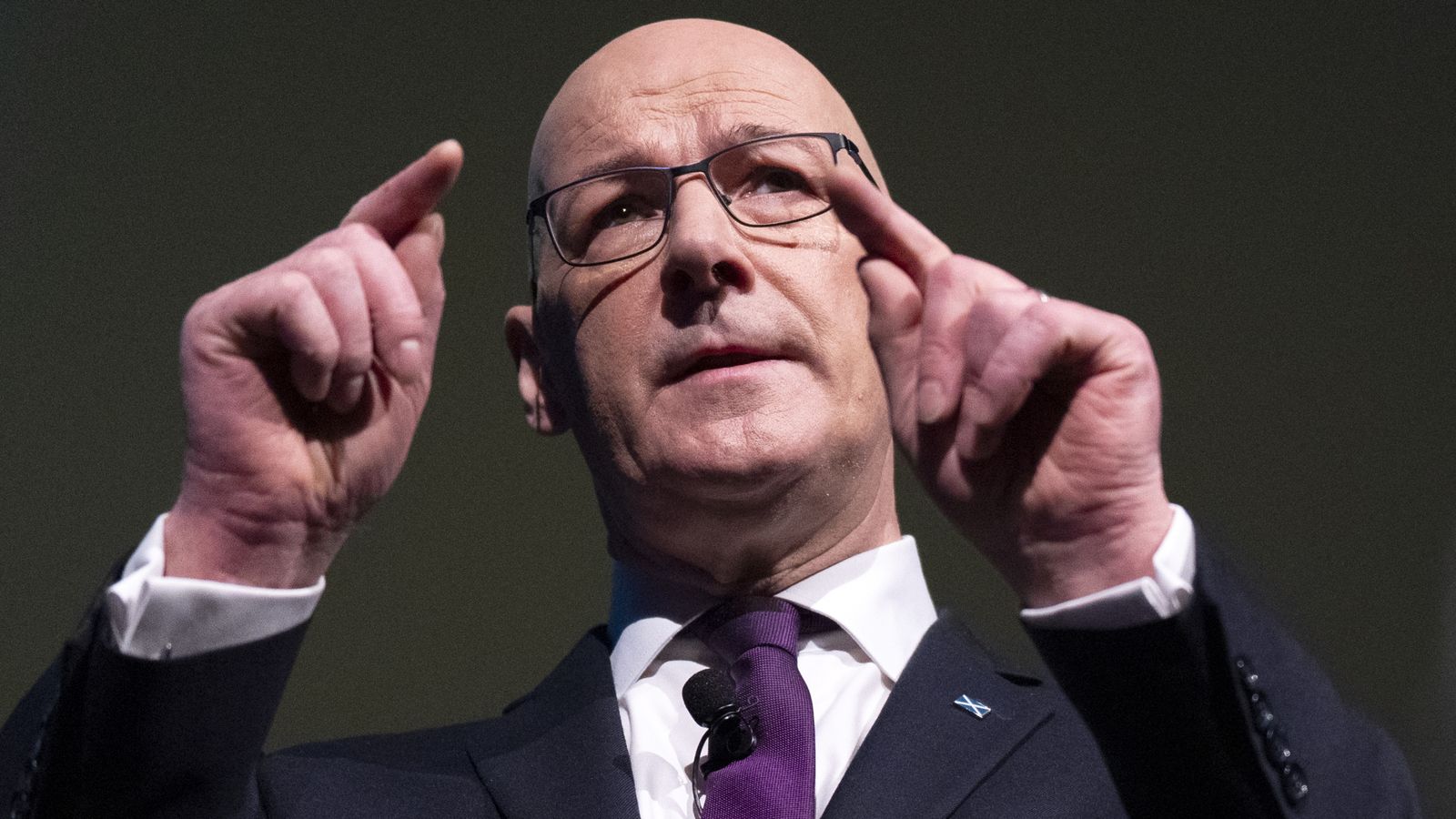
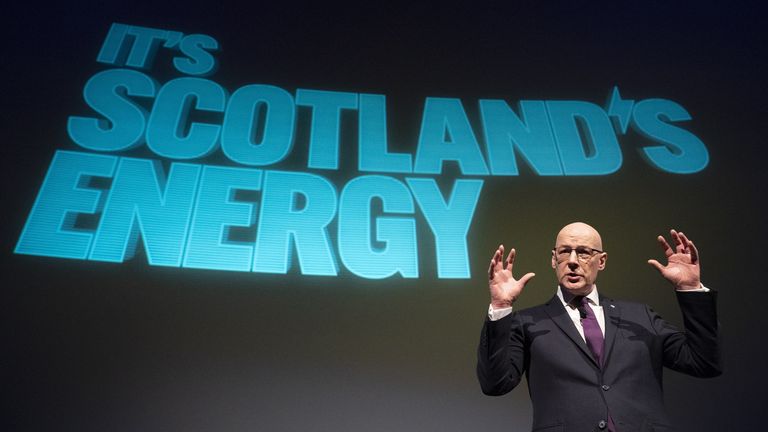
Scottish independence would reduce energy bills north of the border by more than a third, First Minister John Swinney has claimed.
However, the SNP leader was unable to clearly answer how his party would deliver independence if the UK government continues to refuse requests for a second referendum.
Mr Swinney once again made the case for Scotland leaving the UK, and taking full control over its natural resources, at an SNP campaign event in Glasgow on Monday.
Inspired by his party’s old “it’s Scotland’s oil” political slogan, the first minister stated: “It’s Scotland’s energy.”
Pic: PA
He added: “We know from analysis produced for Ofgem that a different policy approach would enable Scotland to have the lowest wholesale electricity prices in Western Europe.
“As we set out in the paper published today, by selling that low-cost electricity into other markets at a profit; by increasing storage capacity, including pumped hydro storage; to end the folly of generators being paid not to produce electricity; and by removing unnecessary costs like the UK’s nuclear levy, we can deliver big benefits here in Scotland.
“That includes being able to lower household electricity bills by over one-third. A big saving for families across Scotland, offering the real hope that cost of living pressures will finally begin to ease.”
Mr Swinney said lower energy bills would benefit schools and the NHS.
He added: “Think what that will mean for our National Health Service.
“Less money spent on energy bills means more money to spend on doctors and nurses, on more operations and appointments.”
When questioned on how he intends to deliver Scottish independence if the UK government refuses a second referendum, Mr Swinney said: “We’ve got to demonstrate emphatic support for the proposition of independence, and we do so by electing a majority of SNP MSPs at the election in May.”
Read more from Sky News:
Millionaire former Tory donor defects to Reform
UK ‘would benefit’ from rejoining an EU customs union
Mr Swinney said he met Prime Minister Sir Keir Starmer on Friday, and warned the Labour leader he is at risk of becoming the new Margaret Thatcher.
The first minister said: “I left the prime minister in no doubt that unless he changes course, what we face is a second wave of 80s-style deindustrialisation, 80s-style economic devastation.
“Today, Sir Keir Starmer is an even less popular prime minister than Liz Truss – and that takes some doing.
“But if he does not change course on the energy profits levy, he will enter our national story as a second Thatcher, a second destroyer of industry, a second destroyer of communities.
“And Scotland will not forget.”
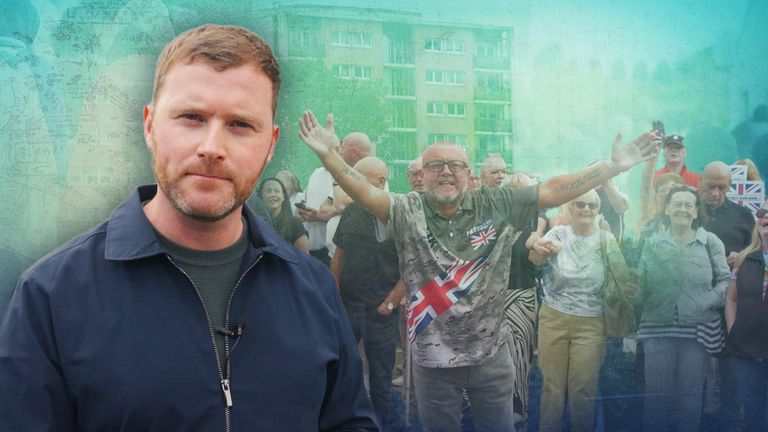
Inside Britain’s asylum seeker capital
The event was held in a city which has been described as the “asylum capital of the UK”.
When questioned on the SNP’s “welcoming” position towards refugees amid growing numbers of protests about the issue, the first minister described the demonstrations outside asylum hotels as “appalling”.
He added: “There’s language on these banners that I just find absolutely wholly and totally contemptible and hostile.”
Mr Swinney acknowledged the growing popularity of Reform UK, but said he would “challenge” the party.
The first minister added: “I will go up against Reform in what they say.
“I will stand firm in exercising that political leadership, and I’m quite sure I speak for the majority of people in Scotland in the process.”
Politics
Young people may lose benefits if they don’t engage with help from new £820m scheme, government warns

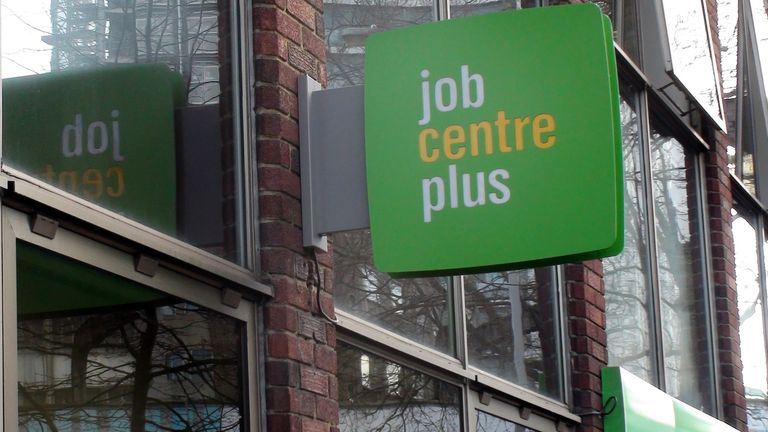
Young people could lose their right to universal credit if they refuse to engage with help from a new scheme without good reason, the government has warned.
Almost one million will gain from plans to get them off benefits and into the workforce, according to officials.
Latest updates from the Politics Hub
Pic: iStock
It comes as the number of young people not in employment, education or training (NEET) has risen by more than a quarter since the COVID pandemic, with around 940,000 16 to 24-year-olds considered as NEET as of September this year, said the Office for National Statistics.
That is an increase of 195,000 in the last two years, mainly driven by increasing sickness and disability rates.
The £820m package includes funding to create 350,000 new workplace opportunities, including training and work experience, which will be offered in industries including construction, hospitality and healthcare.
Around 900,000 people on universal credit will be given a “dedicated work support session”.
That will be followed by four weeks of “intensive support” to help them find work in one of up to six “pathways”, which are: work, work experience, apprenticeships, wider training, learning, or a workplace training programme with a guaranteed interview at the end.
However, Work and Pensions Secretary Pat McFadden has warned that young people could lose some of their benefits if they refuse to engage with the scheme without good reason.
“Doing nothing should not be an option,” he told Sky News’ Sunday Morning with Trevor Phillips.
“If someone just took that attitude, yes, they would then be subject to, you know, the obligations that are already part of the system.”
“What I want to see is young people in the habit of getting up in the morning, doing the right thing, going to work,” he added.
“That experience of that obligation, but also the sense of pride and purpose that comes with having a job.”

Some young people on benefits will be offered job opportunities in construction. Pic: iStock
Read more from Sky News:
Child poverty strategy unveiled – but not everyone’s happy
Universal credit claimants soar by over million in a year
The government says these pathways will be delivered in coordination with employers, while government-backed guaranteed jobs will be provided for up to 55,000 young people from spring 2026, but only in those areas with the highest need.
However, shadow work and pensions secretary Helen Whately, from the Conservatives, said the scheme is “an admission the government has no plan for growth, no plan to create real jobs, and no way of measuring whether any of this money delivers results”.
She told Sky News the proposals are a “classic Labour approach” for tackling youth unemployment.
Youth jobs plan ‘the wrong answer’
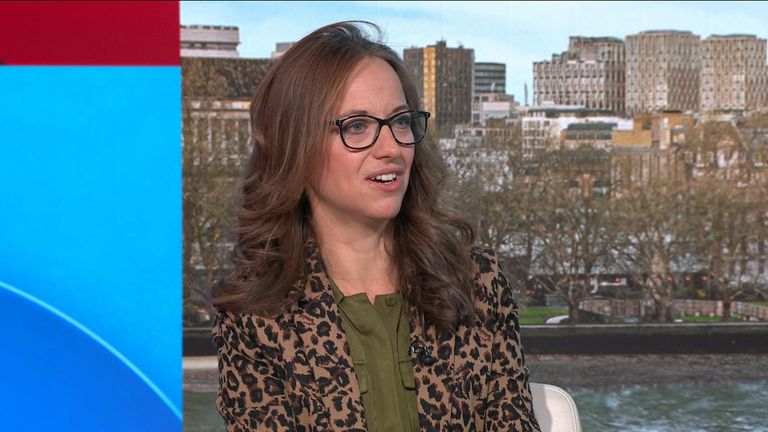
“What we’ve seen today announced by the government is funding the best part of £1bn on work placements, and government-created jobs for young people. That sounds all very well,” she told Sunday Morning with Trevor Phillips.
“But the fact is, and that’s the absurdity of it is, just two weeks ago, we had a budget from the chancellor, which is expected to destroy 200,000 jobs.
“So the problem we have here is a government whose policies are destroying jobs, destroying opportunities for young people, now saying they’re going to spend taxpayers’ money on creating work placements. It’s just simply the wrong answer.”
Ms Whately also said the government needs to tackle people who are unmotivated to work at all, and agreed with Mr McFadden on taking away the right to universal credit if they refuse opportunities to work.
But she said the “main reason” young people are out of work is because “they’re moving on to sickness benefits”.
Ms Whately also pointed to the government’s diminished attempt to slash benefits earlier in the year, where planned welfare cuts were significantly scaled down after opposition from their own MPs.
The funding will also expand youth hubs to help provide advice on writing CVs or seeking training, and also provide housing and mental health support.
Some £34m from the funding will be used to launch a new “Risk of NEET indicator tool”, aimed at identifying those young people who need support before they leave education and become unemployed.
Monitoring of attendance in further education will be bolstered, and automatic enrolment in further education will also be piloted for young people without a place.
-
 Sports2 years ago
Story injured on diving stop, exits Red Sox game
-
 Sports3 years ago
‘Storybook stuff’: Inside the night Bryce Harper sent the Phillies to the World Series
-
 Sports2 years ago
Game 1 of WS least-watched in recorded history
-
 Sports3 years ago
Button battles heat exhaustion in NASCAR debut
-
 Sports3 years ago
MLB Rank 2023: Ranking baseball’s top 100 players
-
Sports4 years ago
Team Europe easily wins 4th straight Laver Cup
-
 Environment3 years ago
Japan and South Korea have a lot at stake in a free and open South China Sea
-
 Environment1 year ago
Here are the best electric bikes you can buy at every price level in October 2024