
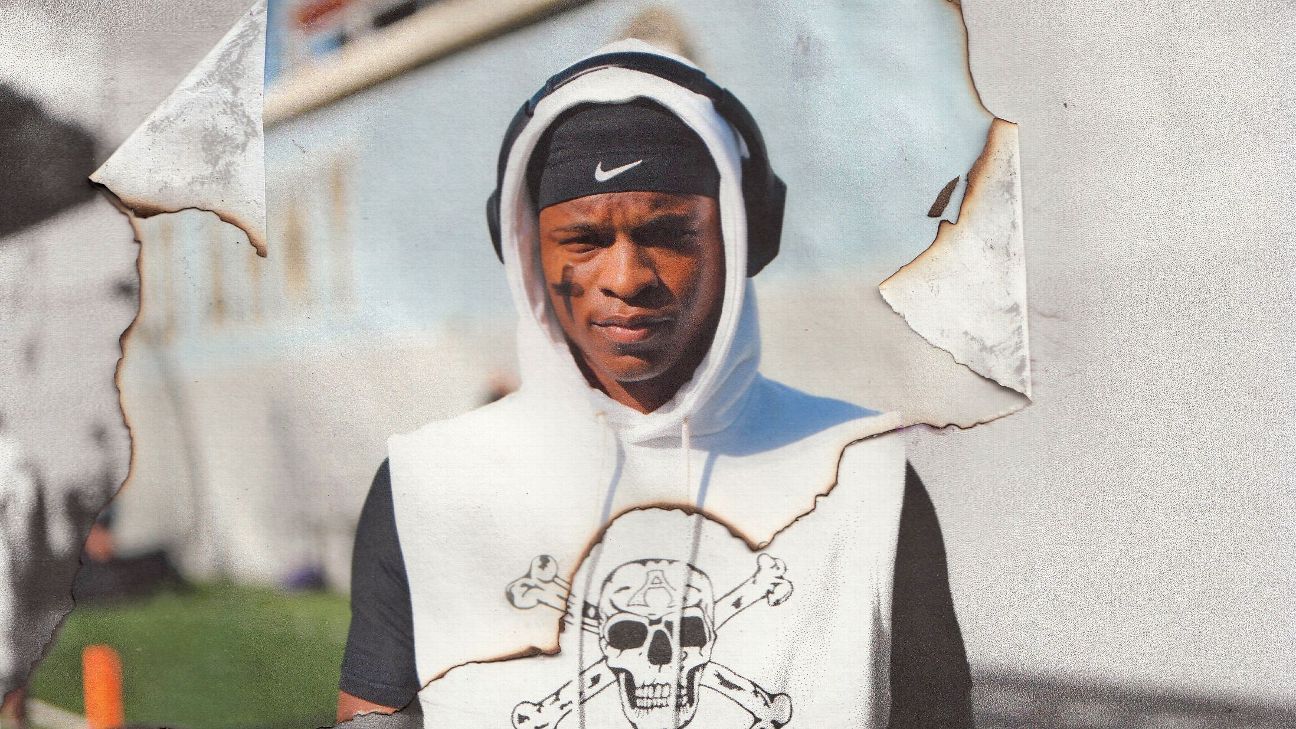
The hope and heroism of Army safety Larry Pickett Jr.


-
Ryan Hockensmith
HE IS HALF ASLEEP when he feels his dad slam the brakes of his van. Larry Pickett Jr.’s head darts up from the back seat, and he squints his eyes to try to understand the mayhem on the road in front of him.
Smoke rising. Cars stopped. Wires down. People standing around. A man stuck in a car — is he alive? Sparks buzz underneath his vehicle.
It’s midnight on Aug. 31, a few miles south of West Point, New York, where Pickett is a sophomore safety on the Army football team. About 20 different things are happening at once, with just enough headlights aimed in opposite directions to make it more blurred than illuminated in the cool late summer air. Fifty yards away, a closed Dunkin’ store provides a slight orange and pink tint in the background.
All six people in the van — Pickett, his mom, dad, two sisters and his girlfriend — are racing to synthesize what happened before they arrived. This is one of those rare moments in life that people stumble into, where they have to decide whether to run toward danger or stay safe on the perimeter.
Why isn’t anybody helping the driver? Why are they just standing there?
Pickett’s brain is different. He wanted to be in the Army when he was a preschooler, wearing camo for Halloween and watching “Saving Private Ryan” with his mom. He wasn’t drawn to the idea of war; he loved the military’s structure and insistence on thinking of others before oneself. So, when he had offers from schools such as Duke, NC State and South Carolina near his hometown of Raleigh, North Carolina, he chose Army to try to do something of maximum service with his life, as his parents and his Christian faith preach.
The whole scene is coming into focus now. A man clearly hit a utility pole, causing the power lines to fall and begin sparking about 10,000 volts of electricity into the air near the driver’s side door.
Pickett sits up in his seat but doesn’t say anything. Then a familiar voice cuts through the air: “Larry, you have to get that man out of the car,” his mom says. Pickett, 20, streaks out of the van, toward the car, the power line flopping and spraying electricity near the car.
He didn’t know it at the time, but in about 60 seconds, all four tires will pop, and the car will explode in flames.
WHEN PICKETT GETS to the car, the man isn’t moving. He’s staring off into space, blinking but frozen. Pickett notices a power line directly under the driver’s side, and he pauses for a moment. He feels heat pouring from inside of the car and he can’t help but wonder if the man is being electrocuted.
He hesitates for a moment, then says a prayer before he reaches his hands under the man’s armpits.
Phew. No jolt.
The car has become what electricity expert John Averrett calls a “Faraday cage,” which is a structure meant to conduct electricity — even from a lightning strike — without harming the person inside. The rubber tires can dump the voltage from the metal car into the ground without shocking the person inside.
Averrett, an electrical engineer who is licensed in 20 states and has done energy work for several NASA shuttles, has actually seen cases where people in cars think they are OK, then get out of the car and are killed by the voltage in the ground.
When Averrett analyzed the circumstances around what the Picketts encountered, he says that the scene was so hazardous that even if police or fire had gotten there first, they would have likely had to just watch the car go up in flames. “It’s in their training to not go within about 30 feet of potential live wires before the electricity is turned off for the entire area,” he says.
He pauses for a moment and then says, “If people knew more about electricity, they probably wouldn’t want it in their homes.”
Pickett feels nothing, though, as he grabs the driver’s body from behind the steering wheel. The man, David Denton, is lodged and motionless, and Pickett quickly realizes as he yanks on his body that he isn’t going to be able to maneuver the man out of the car and not hit the wire.
He pulls again, managing to get Denton angled out the side of the car, but he isn’t sure if he will be able to lug him any farther. The entire car seems to be getting hotter by the second. He feels like the clock is ticking down fast and he needs help.
That’s when he realizes someone is beside him at the exact moment he needs him. It’s one of his heroes — his dad, Larry Pickett, Sr.
THE HELP KICK-STARTS Pickett Jr. He muscles up and pulls the man’s torso out of the car. Larry Sr. gets under the man’s legs, but he immediately loses his footing and falls to his hip on the ground, dangerously close to the downed power line.
But he manages to scramble back to his feet and help carry the man across the street as another tire pops. “The best way to describe it is that it was like there were fireworks going off,” Pickett Jr. says.
His mom, Shawnonne, gets his 15-year-old sisters, Lauren and Olivia, into the van, as Lauren films most of the rescue. The scene is terrifying, even from a distance, but Shawnonne is heard on video urging them on.
Three decades earlier, she met Larry Sr. in what would be a great rom-com setup. Larry, 17, was riding in a friend’s car on Dec. 23, 1996, when a beautiful 15-year-old girl named Shawnonne (pronounced Shuh-known) Taylor made her way through a crosswalk in front of them. He felt like he was meant to talk to her, but his friend drove off before he could. An hour later, when he ran into her on another street in Raleigh, he felt like fate had swiped right on them.
Next, he pulled off an approach that will forever be a part of their family lore. He introduced himself to her, but instead of asking for her number, he wrote down his and handed it to her. She thought he was very good-looking and appreciated that he didn’t ask for her number — she considered it gentlemanly to leave her feeling no pressure to ever call. And the fact that he had a Nokia cellphone certainly didn’t hurt.
So, she did call — for 55 seconds. Back then, Pickett had a cellphone plan that allowed for one free minute before the rate jumped to 99 cents per minute. So, she started calling him to say she was home, then he would hang up and find a landline to call her back. Their relationship was forged on those calls, one 55-second “Hey, I’m home” at a time.
They started dating, and they haven’t stopped. They’re that couple who won’t stop saying nice things about each other, even if their spouse isn’t around. They go to church together and insist on a date night every week, usually to a local Steelers bar and restaurant, Overtime Sports Pub. Shawnonne’s brother, Ike Taylor, won two Super Bowls as a corner in Pittsburgh, so Pickett Sr. became an honorary Steelers fan. He even has a tattoo of the date they met and the GPS coordinates of the crosswalk. Everyone should love the way they do.
On the night of the accident, it’s her voice propelling son and husband along. She yells from the van as Larry Sr. and LJ (that’s what everybody in the family calls Larry Jr.) drag Denton across the road. Both of them are shocked at the visual of Denton’s eyes — open but empty, his arm dangling and scraping across the pavement of Route 9W. Police and fire crews arrive a few minutes later and set up a perimeter as they work to get the power company to shut down electricity to that corner of the town.
In the background, the car goes up in flames, all four tires melting down until the metal touches the ground. That amount of heat, Averrett says, will cause an explosion in just a few seconds, and that’s what happens. With the power off 20 minutes later, the local fire department is able to douse the flames before they reach a nearby propane tank.
Averrett is at a complete loss for how Denton and the Picketts survived such a dangerous scene. On a Zoom call, he just looks off into the distance and says, “You always hear that God has his hand on a lot of things. This may have been one of them.”
A month after the accident, Shawnonne sits beside Lauren and Olivia across the table from Larry Sr. and me at Overtime Sports Pub. I run through all the different ways that that night could have gone horribly wrong. All of the Picketts are attentive people — when someone is speaking, they never seem to be waiting to respond. They leave space for whatever someone is saying to them.
There’s silence when I get through with my list of terrible possibilities. A few seconds go by and nobody says anything. The girls’ eyes move from mom and dad, and then over to me. At first, I couldn’t quite decipher what the looks mean.
Then Larry Sr. speaks. “I’ve had people say we should have waited for the police to arrive,” he says. “But there’s no way he would have gotten out of that car.”
He’s not dramatic when he says it. It’s very monotone, like he’s reading off road directions. I stare over at Shawnonne, and so do the girls. I’m expecting her to have some second thoughts, to contemplate the idea that maybe in retrospect, they might have been a little more cautious.
But that’s not how the Picketts walk through the world. What happened that night was what needed to be done, and so it was done. They believe the right thing can sometimes be scary, but that’s because it’s the right thing, there shall be no handwringing, regardless of the outcome.
In a slow but emphatic voice, Shawnonne finally says, “I would change nothing about it,” and the whole table nods.
NEARLY 10 MINUTES after arriving at the scene, the Picketts sit across the street with Denton. He’s wide awake now but completely woozy. He’s on his butt on the ground, his back against Pickett Jr.’s legs.
“What car was that?” Denton asks.
“Your car,” Pickett Sr. says.
“That wasn’t my car.” Denton argues.
“It’s your car,” Pickett Jr. insists.
“You got to be kidding me,” Denton says.
They go back and forth some more with Denton, who seems disoriented and in disbelief. The entire time, he rests with Pickett Jr. as his backstop alongside the road. Eventually paramedics arrive and cart off Denton, who has only minor bumps and bruises. The Picketts have an Airbnb nearby, so they turn the van around and they all go home.
For the next few hours, adrenaline still surges through the entire family. They talk about the accident and try to piece together what must have happened. Their guess is about the same as what the facts ended up being: Denton, a 66-year-old MTA worker from New York City, had been at a party near West Point. On the trip home, he missed a turn on Route 9W, which is a treacherous, twisty four-lane road that runs beside the Hudson River to Army. Denton, who hadn’t been drinking, had driven straight through a curve into a telephone pole. But now he is going to be fine.
“I’m just thankful that we were in the right place at the right time,” Pickett Jr. says. “A lot of different things had to go right that night for it to work out the way that it did. I was just a small part of what happened.”
Larry Sr. is a wizard with cameras and video editing (he owns a multimedia company in Raleigh), so he takes the footage that Lauren had shot earlier in the night and makes a Facebook post before they go to bed. He keeps telling Pickett Jr. that he is a hero, and his son just smiles and shakes his head.
He’s a stoic 6-1 young man who is 195 pounds of “yes, sir” and “thank you, ma’am” and might very well be a starting safety for Army a year or two from now. But he is also very warm, with a smile that is easily accessible. Teammates gently goof on him for being so straightlaced, like the time players went around the room announcing their celebrity crush. When it was Pickett’s turn, he said, “My girlfriend,” and everybody yelled, “Shut up!” at him.
“She is my celebrity crush,” he insists.
Pickett Jr. continues to try to stiff-arm the compliments as he turns in for the night. But Larry Sr. is just too proud to not tell his son — and the world — what an awesome kid he has watched grow up. By the time Pickett’s head hits the pillow at around 3 a.m., he’s done cringing at his family for the night.
His last thought is, Wow, that really happened tonight.
Little does he know that as he brushes his teeth, a few million people around the world have begun to go wild over the Gen Zer who saved a guy’s life.
KIDS THESE DAYS, RIGHT? Perhaps no comment summarizes today’s youth better than this popular quote: “The children now love luxury. They have bad manners and contempt for authority. They show disrespect for elders and love chatter in place of exercise. Children are now tyrants.”
Here’s the thing, though — that quote is from 1907, and it’s not even about the young people of 1907. That quote is pulled from a college dissertation written by a 24-year-old college student named Kenneth John Freeman, and he was actually summarizing how Plato, Aristotle, Socrates and the ancient Greeks panicked about the lazy, entitled, luxury-loving next generation of young people. Turns out, middle-aged humans have been using the same critiques for at least the last 2,500 or so years.
This age-old generational divide is, of course, a two-way street. Aristotle’s daughter was probably rolling her eyes as he told her to go touch some grass, then responding with her own version of “OK, boomer.”
But the Greeks never had smartphones, you’re probably saying. And that’s a fair point. Recent studies are showing that the digital world — specifically social media — might indeed have unprecedented ugly effects on brains, especially young brains. “There are reasons to be concerned,” says Maria Rosario de Guzman, a professor of child, youth and family studies at the University of Nebraska. “But it’s important to remember that we don’t know yet. Worrying about technology’s effects on kids is certainly not new.”
Rosario de Guzman cites remarkably similar moral panics over the past few centuries from middle-aged people about the next generation’s relationship with new inventions. The English freaked out in the late 1700s over the incredible brain rot that novels were creating for kids. Americans then had now-hilarious meltdowns in the 1930s over the dangers of the radio, followed by the same freak-outs in the 1950s about TV, the 1980s about Nintendos, the 1990s about the internet and now social media for the foreseeable future.
British psychology researcher Amy Orben recently coined a term for this consistent societal dread: The Sisyphean Cycle of Technology Panics, named for the Greek mythological character doomed to an eternity of pushing a rock up a mountain only to have it roll back down over and over again.
Rosario de Guzman is one of many experts who share those worries but also say to take a deep breath and try to zoom out to see the whole picture. Kids will always be one big sauce, a blend of ingredients that has, for centuries now, mostly ended up coming out just fine. “As we discuss all the problems facing this generation, just try to realize there are things to celebrate, too,” she says.
Touching grass is a foundational principle at Little People Preschool in Raleigh, where a young boy named Larry Pickett Jr. enrolled 17 years ago. This is the Pickett family business now — Shawnonne has gone from a teacher when Pickett Jr. was a toddler to co-owning the school with her husband. Larry Sr. joined her after a very successful 20-year career in auto sales. They loved the school so much that they had to buy it.
They had big ideas for the preschool. They wanted the kids to be around nature every single day, so they got two goats and a bunch of chickens and ducks that the students had to go feed and take care of daily. They also started growing flowers and vegetables in the backyard of the school with hopes of the kids tending to the garden themselves. Their goal was to be able to grow, harvest and cook some of their own vegetables for school lunches. Larry Sr. says that when former North Carolina Gov. Roy Cooper visited the school in 2023, Cooper toured the outdoor section and said, “I wish this place was around when my kids were in school.”
The biggest idea of all, though, was a different way to work with parents. On tours of the preschool, Shawnonne makes sure to let parents know that they have high standards at Little People for them, too. She tells them that any time there is a behavioral issue, the Picketts will want to discuss with them their attitude, not just the kids’ behavior. They truly believe that when they see a kid struggling, acting out or attached to devices, the parents should be held accountable, first and foremost.
“Kids are innocent and hopeful,” Shawnonne says. “Why are they trying to fill space in their lives with screens? That’s on us as adults. They have only been clouded with whatever you provided for them.”
If the Pickett kids are the end result of Little People Preschool’s “start with the parents” brand of raising kids, then it might be time to franchise the business nationwide. Larry Jr., Lauren and Olivia Pickett are all ridiculously nice and respectful straight-A students. Pickett Jr. calls home from West Point every evening to say goodnight to his 15-year-old sisters. Lauren loves drawing and the theater and thinks she wants to be involved in show business someday. Olivia is a little more reserved than her sister, but her parents believe she will be a fierce attorney someday. They’re all proud Little People Preschool graduates.
“My parents have always had a great passion to just help the kids of our generation — help nurture us, love us, help the kids love each other,” Larry Jr. says, “so that hopefully we can grow up in this world and go and do great things as we share that same love and compassion toward other people.”
The 2025-26 class of tiny humans at Little People Preschool are 100%, not from concentrate organic joy. Knox, Kylie, Nairobi and Ryley follow Miss Shameeka into the animal pen, and the goats, Ava and Goatie, come trucking out to greet them with a blast of bleats. The kids all scream, but it’s not a scared scream — more like exuberant kids if Mickey Mouse or Moana walked into the room. They feed the animals every day, even on this sloppy Wednesday in October. Miss Shameeka does most of the actual feeding as the kids goof around in the pen and pet the animals. They are close to nature and loving it, and Mr. Larry still belly laughs as he watches from the side of the pen as the kids jump around near the goats, ducks and chickens. The grass is wet and muddy on this day. But they’re touching it.
The 4-year-olds all go inside a few minutes later for a math lesson that Miss Shawnonne is going to teach. She comes in with one onion and a basket of tomatoes that she had gotten at a local farmer’s market a few days before. She puts the basket down and asks the kids to each pick out a tomato as she sets down a scale on the table.
The kids take turns grabbing a tomato. Then Miss Shawnonne wants them to compare the sizes of their tomato with the onion.
“I love tomatoes,” a little girl says. “They make ketchup!”
Miss Shameeka and Shawnonne both nod their heads as they set up a scale.
“But onions are nasty,” one boy says. Other kids all agree.
“They do have a strong flavor,” Miss Shawnonne says with a smile. “But they also are a part of lots of meals where you probably don’t even notice that they’re in there.”
For the next 15 minutes, the kids all make their predictions about weights for the onion and tomatoes, and there’s more joy and open-mindedness in this small classroom than in any screeching think piece about the participation trophy generation on the horizon.
After the lesson, Miss Shawnonne takes the vegetables into a small kitchen area outside the classroom. She washes them, then chops up and starts to fry everything — one “nasty” onion and about 10 tomatoes.
While the vegetables cook, Miss Shawnonne talks about how optimistic she is about the future. She believes these precious little humans will be awesome big people someday. “They’re going to be OK,” she says. “But we have to do our jobs as adults, too.”
Another 15 minutes later, the pasta and sauce are ready. The kids sit in their tiny chairs, with their tiny silverware and bowls, and they eat the lunch they had helped to make. They love their sauce, and maybe we should, too.
AT BREAKFAST THE morning after the accident, Pickett Jr.’s phone lights up with text messages in a group chat of Army defensive backs. A few of the guys had seen the video as it circulated overnight, and word quickly spread to the coaching staff.
By the time Army has a team meeting that Sunday afternoon, everybody knows — though Pickett is caught off guard when head coach Jeff Monken starts the meeting by saying, “It looks like we’ve got a hometown hero on this team!” Everybody whoops and hollers, and Pickett stands up to tell the story of what happened.
The coaches notice that when he tells the story, he recites the same basic facts that the video shows and that his dad described in the Facebook post. But they spot that his version emphasizes his dad’s role, and that Pickett’s dad had emphasized Pickett Jr.’s role. “That tells you why Larry is the person that he is,” Monken says. “They went together, then his dad took no credit. Then Larry tells the story and credits his dad.”
The next few months are a wild ride for the Picketts. News outlets across the U.S. write about them. And the whole family flies to Long Island, New York, for the Fox Nation Patriot Awards in November, where LJ is honored as a hero. He accepts the award and speaks for about a minute, thanking his family and Army.
At the end, the three Fox hosts announce there is a surprise guest: “David Denton, come on out.”
The crowd roars as Denton comes on stage and says to Pickett Jr., “You saved my life. God sent you as an angel that night.”
Denton then walks to the microphone. “If it wasn’t for him, I would not be here today,” Denton says. “And that lesson taught me a lot. … I’m always going to be in my life out there helping other people.
“I appreciate you. I thank you. Such a selfless act.”
ON NOV. 10, a week after visiting Pickett Jr. at West Point, I drive my daughter and her boyfriend to New York City for a Broadway show. They’re both awesome kids, high school seniors with big hearts and bright futures. They make me feel the same optimism as the Pickett family about the next generation.
But they’re also teenagers who speak a foreign language to a 48-year-old like me. For the first 30 minutes of the two-hour trip, I try to listen and participate in the conversation. There is talk of group texts, other group texts about those group texts, people liking Instagram posts but not liking others, people being “sus” or “crashing out” and a situation that required my daughter to say several times, with authority, “Facts.” (I believe that means something is, like, extremely true.) At one point, I suggest a pizza place in NYC where we could eat, and her boyfriend says, “Good shout,” which apparently means a teenager likes what you just said.
A few minutes later, my daughter starts playing videos from a kid on Instagram who has 420,000 followers who watch him go to stores and restaurants that are about to close for the night. He then says, “Let’s watch the lights turn off.”
Then the lights turn off.
That’s it. That’s the bit.
If there were a breathalyzer for having too much teenager nonsense in your bloodstream, I just flew past the legal limit.
I think, I’m out. I can’t listen to this.
So I put in my AirPods to listen to my very smart, important podcasts about, uh, MMA and the TV show “Survivor.”
But my mind gradually drifts from listening to a preview of UFC 322 back to the Larry Pickett Jr. story. I keep trying to get my head around what I want this story to mean. I want to talk about the incident itself with care, because, let’s be honest, not everybody should just read about him and decide to run into burning buildings. But we could all probably do a little more in our daily lives to make this world a better place for the kids we dump on all the time.
Or maybe I’m overcomplicating things? Maybe this is just a story about an impressive young person who did a beautiful thing, and that’s it. Perhaps this is a simple story that puts some optimism into the world about selfless young people.
As I drive, I keep coming back to something Shawnonne Pickett said at the Steelers bar about how when adults rail against kids these days, they’re often pointing fingers with no real good-faith purpose. “If everybody who said those things did something that day to enrich a young person’s life, can you imagine that world?” she says.
I actually can’t, I think. It feels like pessimism about kids, and the future is being implanted into my middle-aged brain every week, which allows me to blamelessly ascend to the same perch that Socrates once occupied, putting down the next generation because it might make me feel better about the life I have lived.
That abruptly brings me back to this moment in the car. My daughter and her boyfriend have drifted back to their devices, silently scrolling while I am disengaged listening to my podcasts. In the Picketts’ minds, that is not giving the kids something productive to fill the space. How could I whine later that my kids’ faces are glued to screens if I tune them out?
Right about then, I pull onto the Saw Mill River Parkway, a twisty four-lane road that cuts down toward the Bronx and Manhattan. It’s one of those roads that has straight stretches where everybody’s going 70, then a mile with three turns and a red light where traffic slows to 25.
Sort of like 9W, near West Point.
My daughter’s boyfriend makes a comment about how short the on-ramps are for the road, and my daughter chimes in that she doesn’t love this road and never wants to drive on it. I take out my AirPods and jump into the conversation, trying to be present with them. We talk together for a few minutes, laughing and enjoying ourselves.
Then it happens.
Cars swerving. Horns. Smoke. A big truck with its four-ways on. Frantic brake lights. Shattered glass. A car on its roof, still rocking. A woman running.
The accident must have begun 10 seconds before I get there.
I’m ashamed to admit it, but my first thought is, Damn, we are making really good time.
But my brain has been Pickett-pilled just enough that my second thought is a little less selfish. I veer off the road and park 20 feet from the crash. A black pickup truck stops in front of me as I turn toward my daughter and boyfriend to say, “No matter what, stay in the car.” I don’t tell her to do this, but my daughter dials 911.
The guy in the truck gets to the car first. The woman who ran from the driver’s side is sitting in the grass. She’s bleeding from her lip and wrist.
“Is there anybody else in the car?” he yells over the whir of cars still buzzing by. She doesn’t answer. She seems so shaken sitting on the ground beside the wreck.
We go over to the passenger side to try to open the door. It’s wedged into the pavement, the car’s weight pressing down on the door. There’s smoky air all over, so it’s impossible to see inside. I grab a hold of the door handle and yank as hard as I can. It makes a hideous cloying noise as the metal grinds against the road. But it starts to open, crushing pieces of broken glass as it slowly opens.
Oh no…
There’s an older woman, about 70, hanging upside down, her seat belt suspending her face down. The other guy runs to get a knife from his truck so we can cut her out of there. The air is tangy and gross — it’s from the airbags, not a fire.
I have to reach under her body to try to unlock the seat belt, and my face goes past hers. She’s looking out into nowhere, unblinking, and her forehead has blood all over it. That visual haunts me then and now, this poor person prone in the air, bleeding. Her arms are dangling, and I don’t see her blink.
She might already be gone.
I reach through and fumble at the seat belt. But her weight is so heavy that the belt is stretched taut. I lay down on the ground, the glass pieces poking into the knees of my jeans, and I get a shoulder under her body, just enough to take some pressure off the seat belt. After a second or two, I feel the click of the belt and I’m under her body enough that when she falls, I’m able to help her body flutter to the ground. I roll her onto her side, then to her butt.
She just blinked. Thank God. She’s moving. She’s alive.
The other guy gets back and grabs her legs. I take her shoulders, and we lug her over beside her daughter at the side of the road.
About two minutes later, a police officer and an EMT show up. They barely speak. They just go to work. Everybody seems fine. The car isn’t on fire, so this isn’t even remotely close to what the Picketts ran into. We’ve all convened in the grass near the older woman, who is now wrapped into several bright silver foil-ish warming sheets that the EMT provided. The daughter, who is maybe 40 years old, seems so relieved. She is dabbing blood off her lip, but she keeps saying thank you to everyone sitting nearby.
“Everything is OK now,” I say.
“I know,” she says back.
It’s been less than five minutes but feels like a lifetime. I’m able to stand back and watch as others show up to help. The adrenaline is wearing off a bit, so I can feel a bunch of small abrasions in my hands and legs from laying in the broken glass. Nothing serious.
The police officer is walking around surveying the scene as cars whiz by. Occasionally, a passing car hits some debris and causes a really jarring clank or crunch noise.
A woman is crouching behind the passenger, propping her up on the ground as the driver comes over and says that the older woman is her mom. Another woman appears out of nowhere with blue rubber gloves on — she says she’s a nurse and she starts wrapping the daughter’s hand in gauze.
The real hero might have been the guy with the truck, and the blinking lights a football field away. He had been right behind the car when it rolled, and he slowed to a stop and put his four-ways on — he essentially shut down traffic and prevented untold havoc behind the single-car accident.
The police officer eventually comes over and tells us all we can go. He makes a comment about how it’s probably safer if people clear out from the scene.
I look back at my car, and my daughter and her boyfriend are staring out the back window. I have a brief moment of panic.
Was it a bad idea to stop? I mean, I have two teenagers in the car, one of whom isn’t my kid.
As I watch this ragtag collection of strangers all pick themselves up off the ground, I’m struck by the humor of all of us crouched down, touching grass together. To this day, I don’t know their names. I don’t know what they do for a living. I don’t know what they all risked by trying to do the right thing.
And yet, I feel comfortable saying they all would probably agree with the words of Shawnonne Pickett: We would change nothing about it.

-
Dan Wetzel
Close
Dan Wetzel
ESPN
- Dan Wetzel is a senior writer focused on investigative reporting, news analysis and feature storytelling.
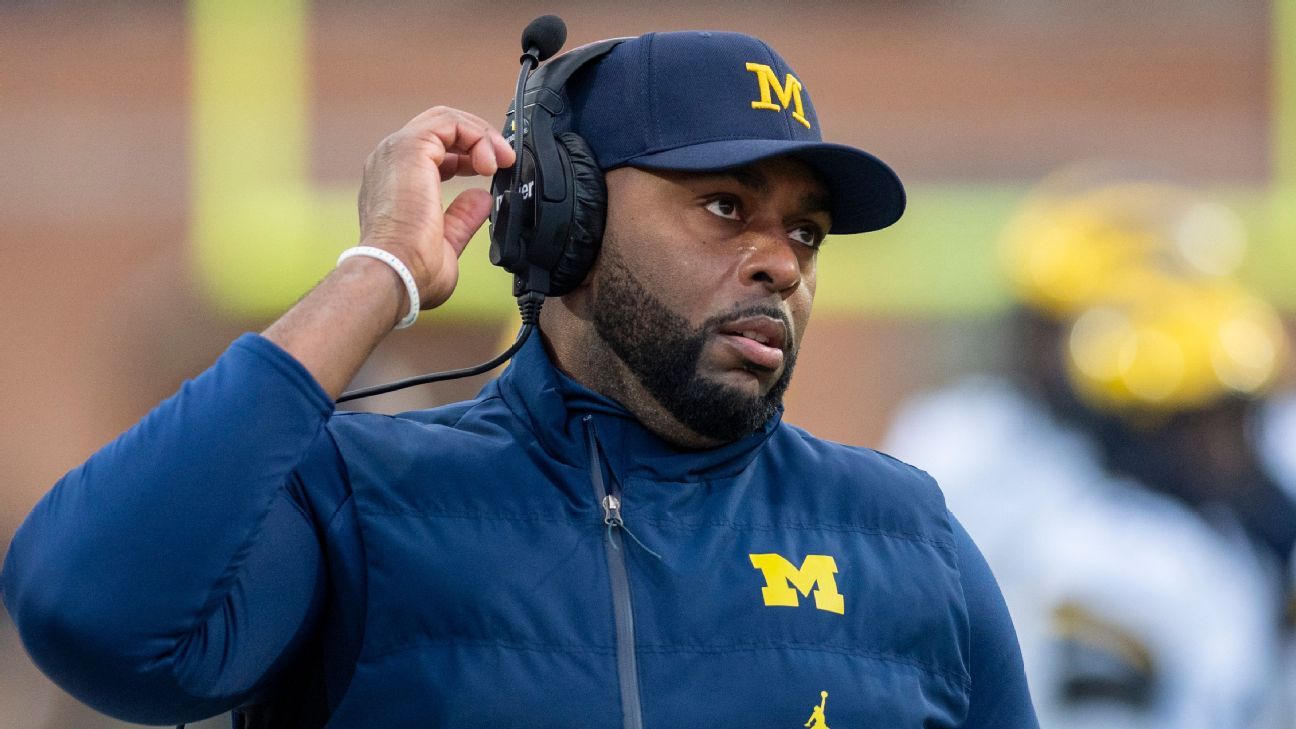
Sherrone Moore was in custody in the Washtenaw (Michigan) County Jail on Wednesday night as a suspect in an alleged assault, just hours after he was fired as Michigan’s football coach for having what the school said was an “inappropriate relationship with a staff member.”
Moore was initially detained by police in Saline, Michigan, on Wednesday and turned over to authorities in Pittsfield Township “for investigation into potential charges.”
Pittsfield police released a statement Wednesday night saying they responded at 4:10 p.m. to the 3000 block of Ann Arbor Saline Road “for the purposes of investigating an alleged assault. … A suspect in this case was taken into custody. This incident does not appear to be random in nature, and there appears to be no ongoing threat to the community.
“The suspect was lodged at the Washtenaw County Jail pending review of charges by the Washtenaw County Prosecutor,” the statement continued. “At this time, the investigation is ongoing. Given the nature of the allegations, the need to maintain the integrity of the investigation, and its current status at this time, we are prohibited from releasing additional details.”
Pittsfield police did not name the suspect in its statement.
Earlier, Saline police stated they “assisted in locating and detaining former University of Michigan football coach Sherrone Moore. Mr. Moore was turned over to the Pittsfield Township Police Department for investigation into potential charges.”
Michigan fired Moore on Wednesday following an investigation into his conduct with a staff member.
“U-M head football coach Sherrone Moore has been terminated, with cause, effective immediately,” the school said in a statement. “Following a University investigation, credible evidence was found that Coach Moore engaged in an inappropriate relationship with a staff member.”
Moore, 39, spent two seasons as Michigan’s coach, after serving as the team’s offensive coordinator.

-
Jorge Castillo
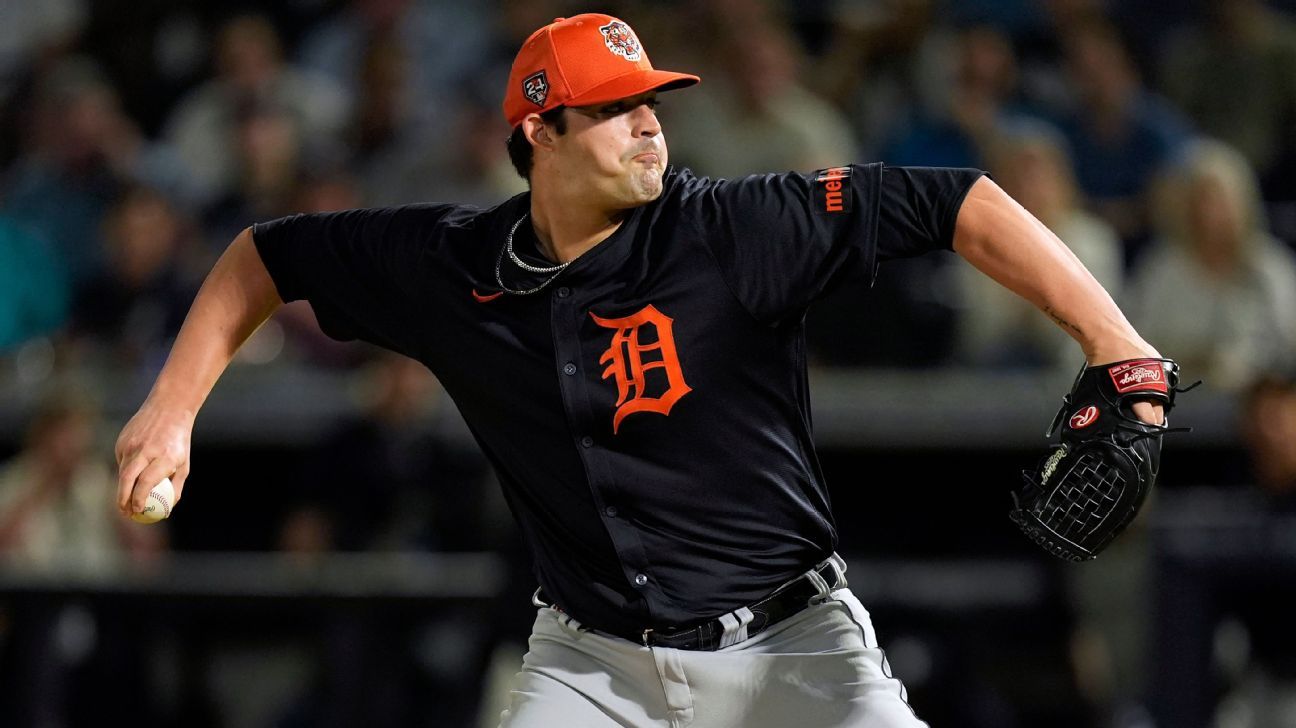
ORLANDO, Fla. — The New York Yankees made their first selection in a Rule 5 draft since 2011 on Wednesday, taking right-hander Cade Winquest from the St. Louis Cardinals.
Winquest was one of 13 players — and 12 right-handed pitchers — chosen in the major league portion of the draft.
The Rockies took RJ Petit, a 6-foot-8 reliever, with the first pick from the Detroit Tigers. Petit, 26, had a 2.44 ERA in 45 relief appearances and two starts between Double A and Triple A last season. The Minnesota Twins chose the only position player, selecting catcher Daniel Susac from the Athletics.
Clubs pay $100,000 to select a player and must keep him on the active major league roster for the entire following season unless he lands on the injured list. Players taken off the roster must be offered back to the former club for $50,000.
The 25-year-old Winquest recorded a 4.58 ERA with a 48% groundball rate in 106 innings across 25 games, including 23 starts, between Single A and Double A last season. He features a fastball that sits in the mid-90s and touches 98 mph plus a curveball, cutter and sweeper. He is expected to compete for a spot in the Yankees’ bullpen next season.
Right-hander Brad Meyers was the last player the Yankees had chosen in a Rule 5 draft. He suffered a right shoulder injury in spring training and was on the injured list for the entire 2012 season before he was offered back to the Washington Nationals. He never appeared in a major league game.
Also picked were right-hander Jedixson Paez (Colorado from Boston), right-hander Griff McGarry (Washington from Philadelphia), catcher Carter Baumler (Pittsburgh from Baltimore), right-hander Ryan Watson (Athletics from San Francisco), right-hander Matthew Pushard (St. Louis from Miami), right-hander Roddery Munoz (Houston from Cincinnati), right-hander Peyton Pallette (Cleveland from Chicago White Sox), right-hander Spencer Miles (Toronto from San Francisco), right-hander Zach McCambley (Philadelphia from Miami) and right-hander Alexander Alberto (White Sox from Tampa Bay).

-
 Sports2 years ago
Story injured on diving stop, exits Red Sox game
-
 Sports3 years ago
‘Storybook stuff’: Inside the night Bryce Harper sent the Phillies to the World Series
-
 Sports2 years ago
Game 1 of WS least-watched in recorded history
-
 Sports3 years ago
Button battles heat exhaustion in NASCAR debut
-
 Sports3 years ago
MLB Rank 2023: Ranking baseball’s top 100 players
-
Sports4 years ago
Team Europe easily wins 4th straight Laver Cup
-
 Environment3 years ago
Japan and South Korea have a lot at stake in a free and open South China Sea
-
 Environment1 year ago
Here are the best electric bikes you can buy at every price level in October 2024