
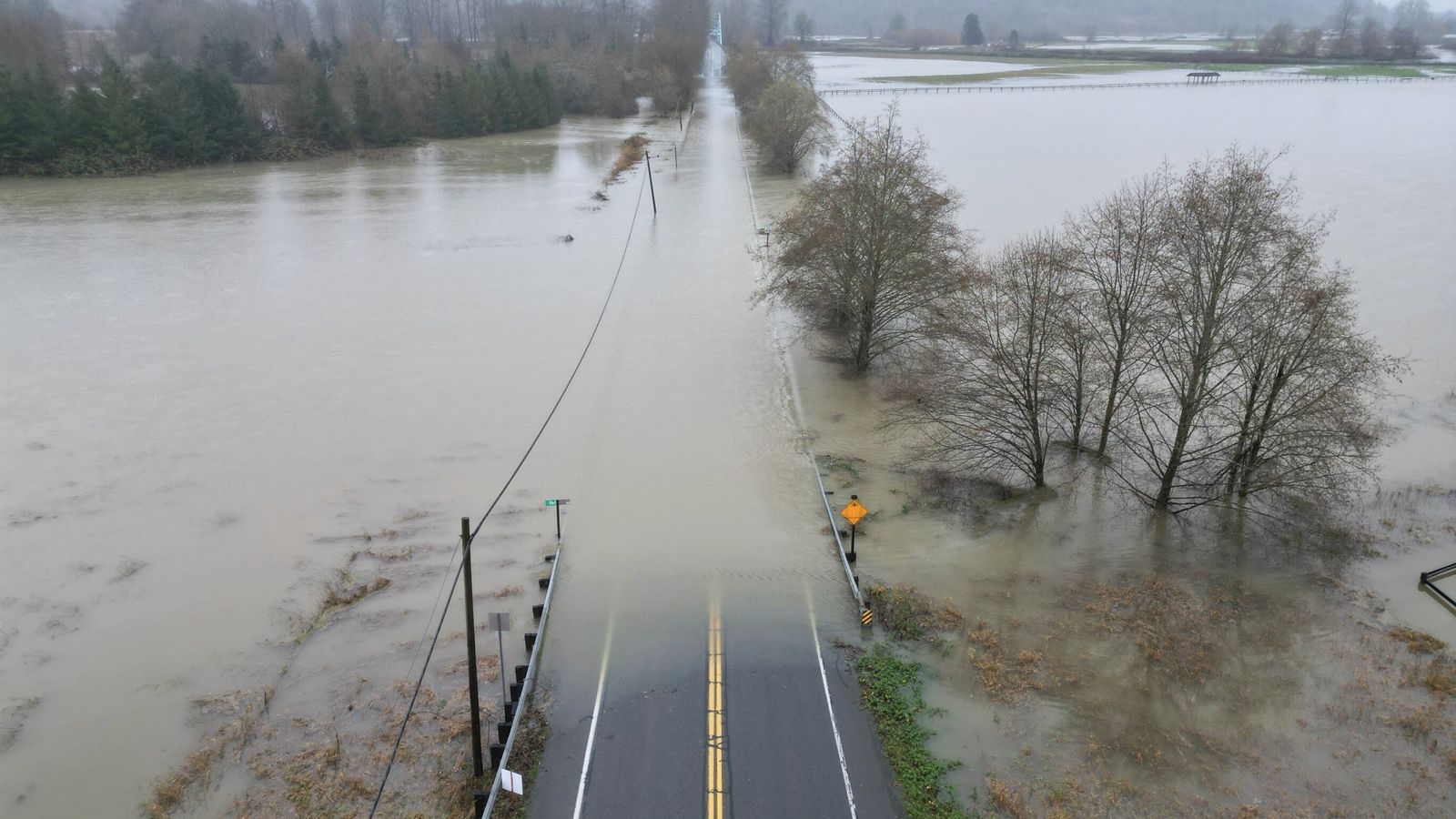
‘Catastrophic’, life-threatening, floods hitting Washington State, USA

Tens of thousands of people have been told to evacuate homes in Washington State, northwest America, to escape “catastrophic”, life-threatening, floods.
Days of relentless heavy rain have triggered rescues and road closures and the state’s governor, Bob Ferguson, declared a state-wide emergency on Wednesday, warning that “lives will be at stake in the coming days”.
“Catastrophic flooding is likely” in many areas and the state is requesting rescue teams and boats, Mr Ferguson said, as rivers reached near historic levels.
Heavy rain continued to fall over parts of the state on Thursday morning, and led to the suspension of Amtrak trains between Seattle and Vancouver.
A large swathe of the Cascade mountains saw 4-6in of rain fall between late Tuesday and late Wednesday, the National Weather Service in Seattle said. Almost 7in was recorded in the Olympic Mountains.
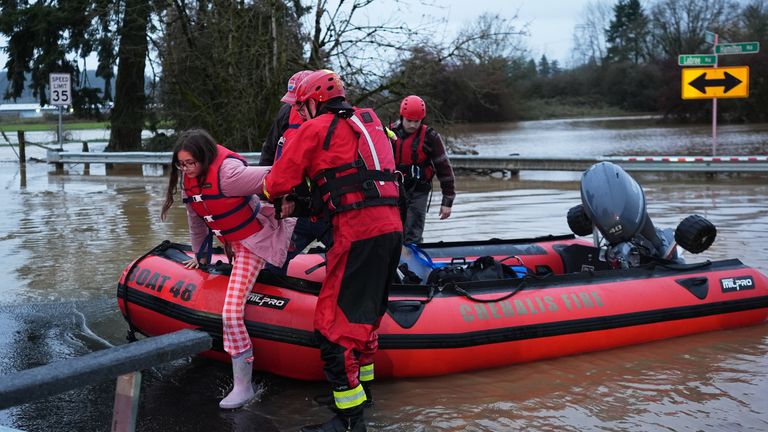
Maery Schine, 11, is helped out of a rescue boat. Pic: AP
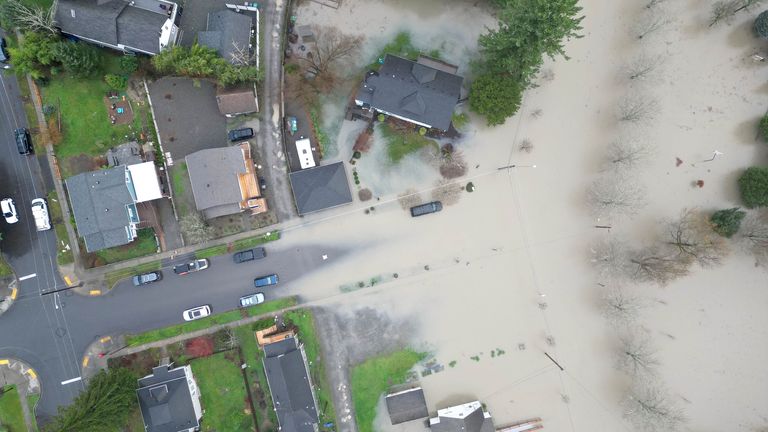
The Snoqualmie River floods over its banks at Riverview Park in Snoqualmie. Pic: The Seattle Times/AP
“Approximately 100,000 people in Washington State have been advised to evacuate,” Washington Emergency Management Division spokesperson Karina Shagren told CNN on Wednesday.
Hundreds of National Guard troops are being sent in to help stricken communities. A major road – Interstate 90 east of Seattle – has been blocked by a landslide leaving vehicles trapped by tree trunks, branches, mud and standing water.
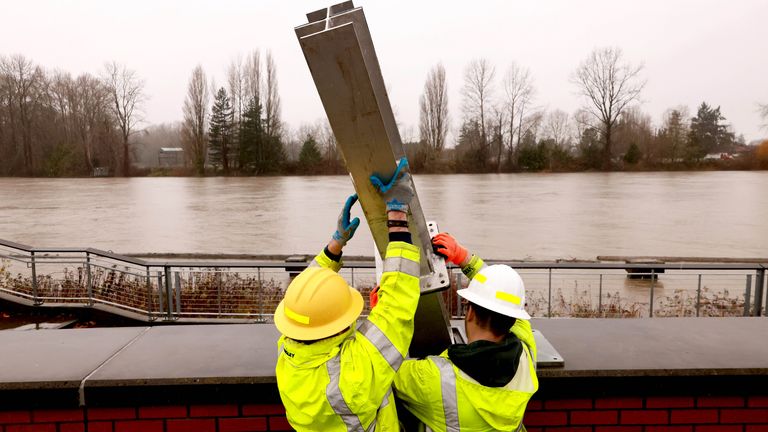
Mount Vernon city employees install a flood wall in downtown Mount Vernon, Washington. Pic: The Seattle Times/AP
The city of Mount Vernon, Washington, and upriver communities were given instructions to evacuate to higher ground as flooding is anticipated in the region, Mr Ferguson said on Wednesday.
Read more from Sky News:
Why did the US seize an oil tanker off the coast of Venezuela?
UK rebuts Milei’s claims about arms exports and Falkland Islands
Hamilton, Rockport, Marblemount and Concrete are also being asked “to evacuate to high ground as soon as possible,” the governor said. More than a foot of rain is anticipated across higher parts of the Pacific Northwest.
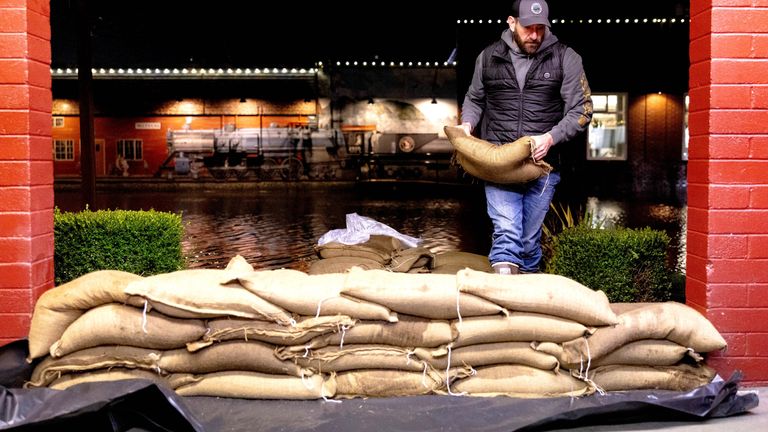
Sandbags are placed at the post office in the city of Sultan. Pic: The Seattle Times/AP
Rainfall reached 3.03in at the Olympia Regional Airport on Monday, breaking the previous record of 2.5in, Sky’s US partner NBC News has reported.
More than 17,000 customers in Washington State had lost electricity by Wednesday night, according to PowerOutage.us.
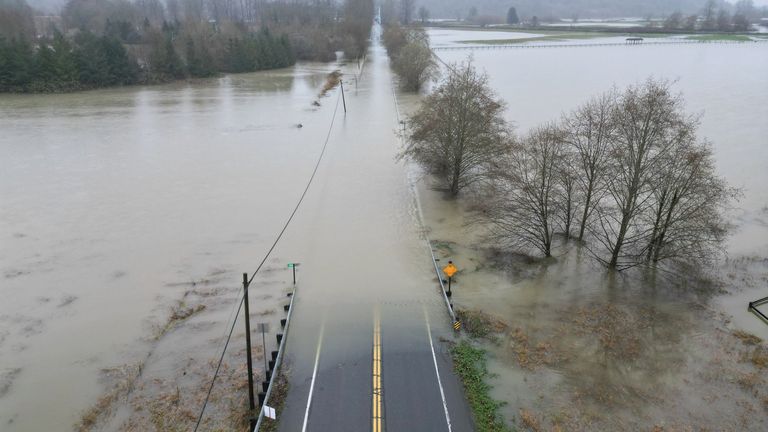
Pic:The Seattle Times/AP
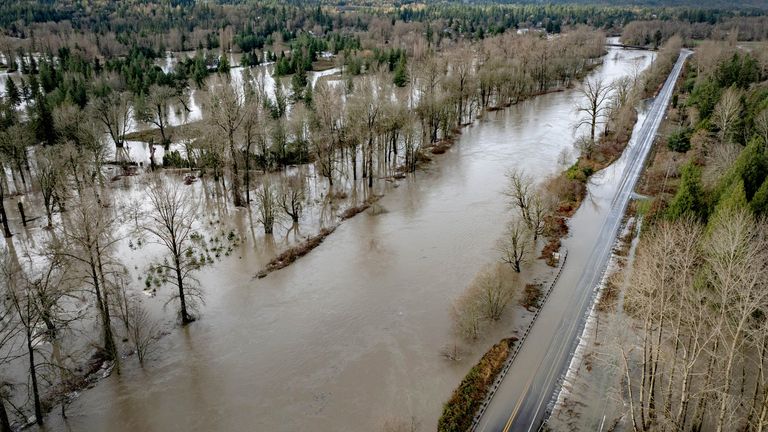
A highway near Fall City, is closed after flooding from the Snoqualmie River. Pic: The Seattle Times/AP
In a valley leading out to the foothills of Mount Rainier southeast of Seattle, Pierce County sheriff’s deputies on Wednesday rescued people from a mobile home park in Orting, including one man who waded through waist-deep water in Santa hat.
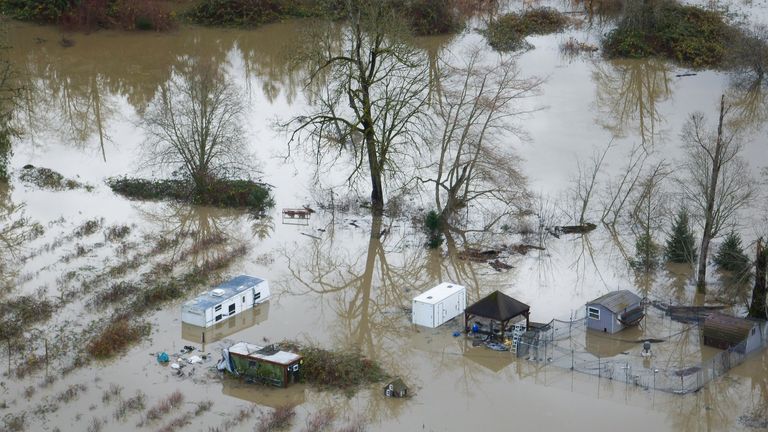
A property with a mobile home is flooded by the Snoqualmie River. Pic: The Seattle Times/AP
Part of the town was ordered to evacuate over concerns about the Puyallup River’s extremely high levels and upstream levees.
An oil tanker seized by the US off the Venezuelan coast on Wednesday spent years trying to sail the seas unnoticed.
Changing names, switching flags, and vanishing from tracking systems.
That all came to an end this week, when American coast guard teams descending from helicopters with guns drawn stormed the ship, named Skipper.
A US official said the helicopters that took the teams to the tanker came from the aircraft carrier USS Gerald R Ford.
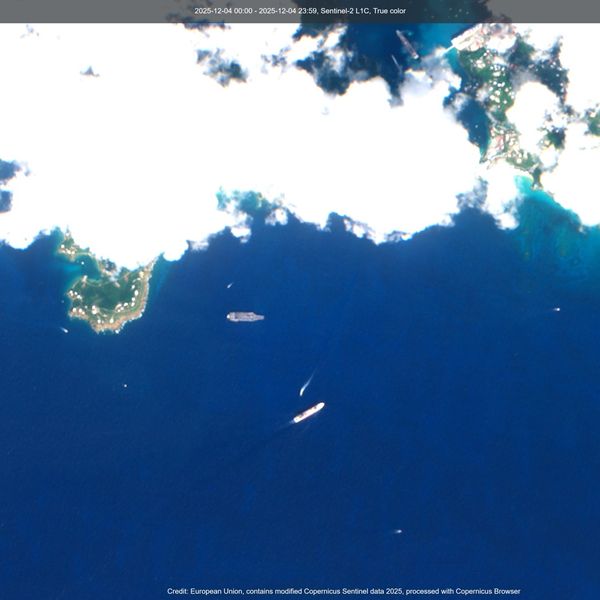
The USS Gerald R Ford (in grey) off the US Virgin Islands on 4 December. Source: Copernicus
The sanctioned tanker
Over the past two years, Skipper has been tracked to countries under US sanctions including Iran.
TankerTrackers.com, which monitors crude oil shipments, estimates Skipper has transported nearly 13 million barrels of Iranian and Venezuelan oil since 2021.
And in 2022, the US Treasury Office of Foreign Assets Control (OFAC) placed Skipper, then known as Adisa, on its sanctions list.
But that did not stop the ship’s activities.
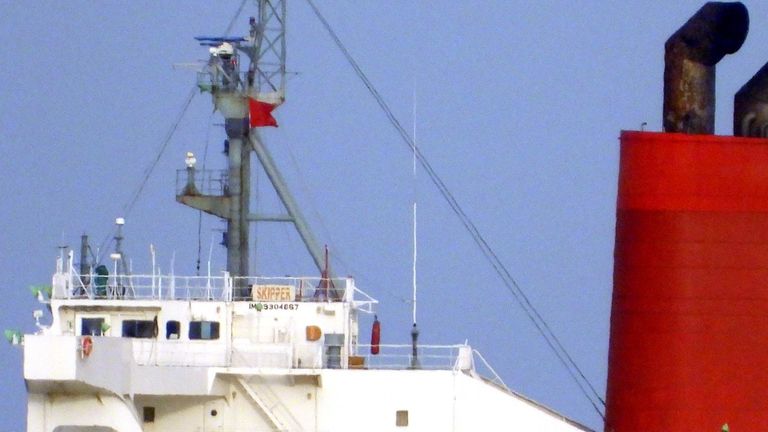
Skipper pictured from the Venezuelan shore. Source: TankerTrackers.com
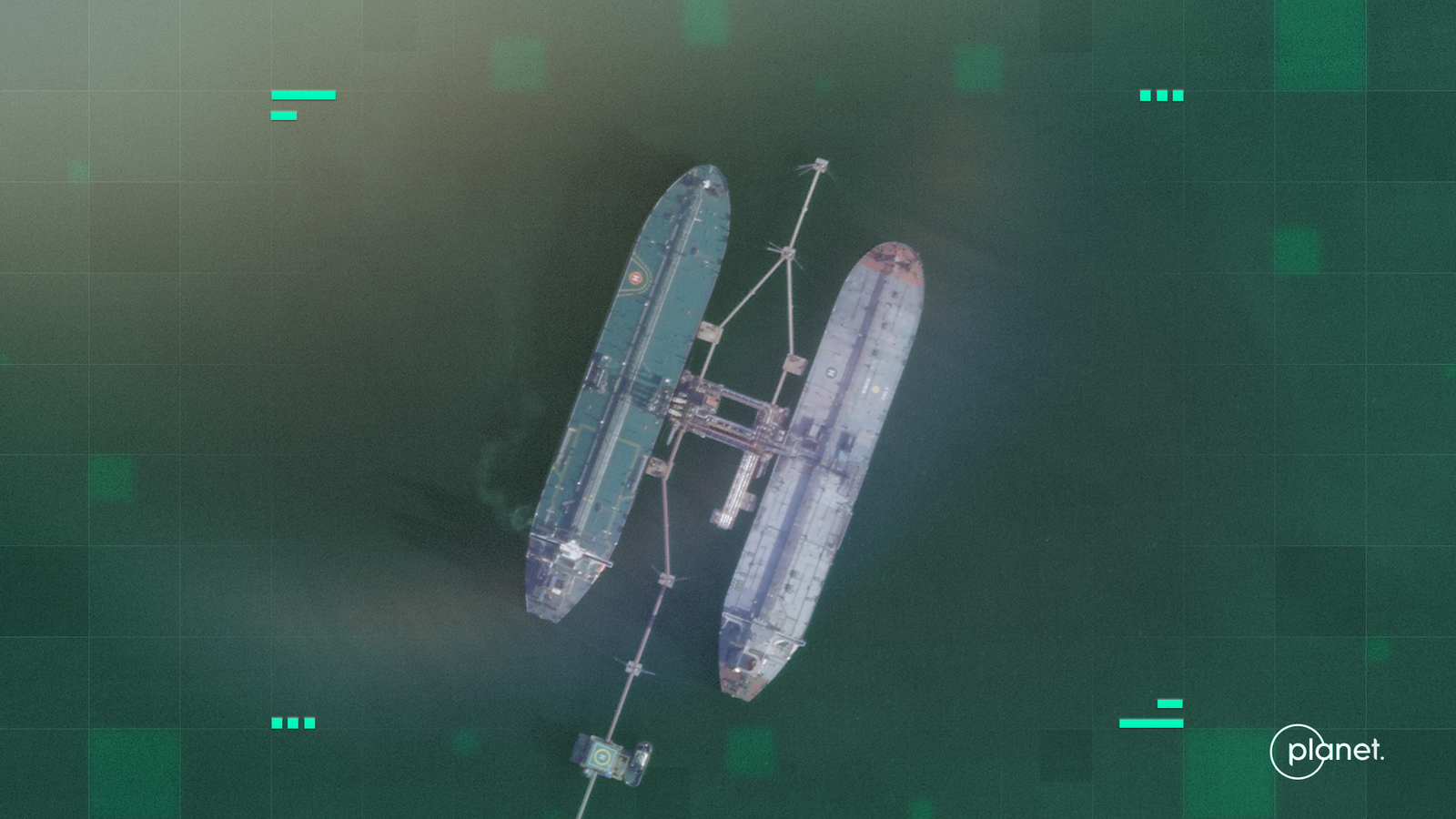
In mid-November 2025, it was pictured at the Jose Oil Export Terminal in Venezuela, where it was loaded with more than one million barrels of crude oil.

Skipper (R) loads up with crude oil at the Jose Oil Export Terminal in Venezuela. Source: Planet
It left Jose Oil Export Terminal between 4 and 5 December, according to TankerTrackers.com.
And on 6 or 7 December, Skipper did a ship-to-ship transfer with another tanker in the Caribbean, the Neptune 6.
Ship-to-ship transfers allow sanctioned vessels to obscure where oil shipments have come from.
The transfer with Neptune 6 took place while Skipper’s tracking system, known as AIS, was turned off.
Read more:
Everything we know about dramatic ship seizure
Is this what the beginning of a war looks like?
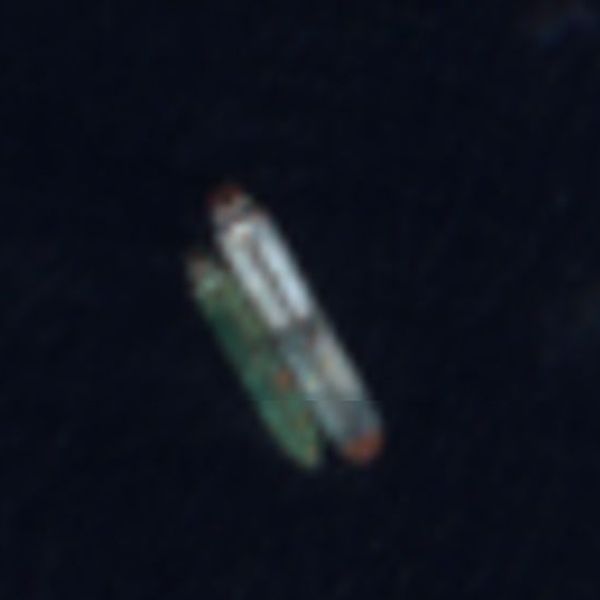
Skipper (R) and Neptune 6 in the Caribbean Sea during an AIS gap. Source: European Union Copernicus Sentinel and Kpler
Dimitris Ampatzidis, senior risk and compliance manager at Kpler, told Sky News: “Vessels, when they are trying to hide the origin of the cargo or a port call or any operation that they are taking, they can just switch off the AIS.”
Matt Smith, head analyst US at Kpler, said they believe the ship’s destination was Cuba.
Around five days after leaving the Venezuelan port, it was seized around 70 miles off the coast.
Moving in the shadows
Skipper has tried to go unnoticed by using a method called ‘spoofing’.
This is where a ship transmits a false location to hide its real movements.
“When we’re talking about spoofing, we’re talking about when the vessel manipulates the AIS data in order to present that she’s in a specific region,” Mr Ampatzidis explained.
“So you declare false AIS data and everyone else in the region, they are not aware about your real location, they are only aware of the false location that you are transmitted.”
When it was intercepted by the US, it was sharing a different location more than 400 miles away from its actual position.
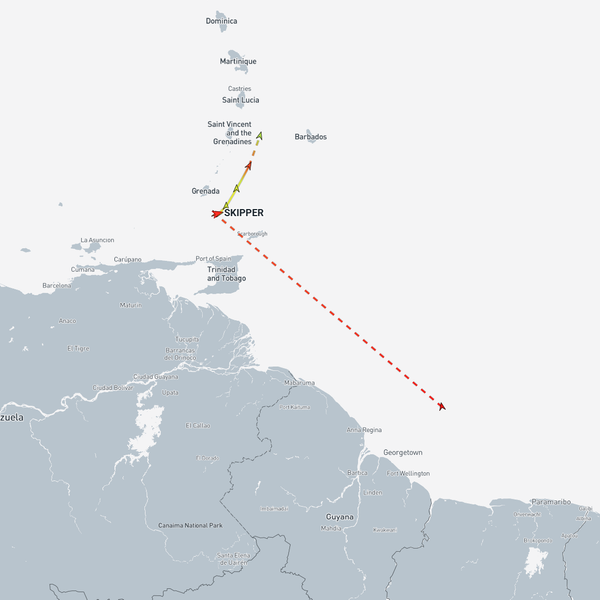
The distance between Skipper’s spoofed position on AIS (towards the bottom right hand corner) and its real position when seized by the US. Source: MarineTraffic
Skipper was manipulating its tracking signals to falsely place itself in Guyanese waters and fraudulently flying the flag of Guyana.
“We have really real concerns about the spoofing events,” Mr Ampatzidis told Sky News.
“It’s about the safety on the seas. As a shipping industry, we have inserted the AIS data, the AIS technology, this GPS tracking technology, more than a decade back, in order to ensure that vessels and crew on board on these vessels are safe when they’re travelling.”
Dozens of sanctioned tankers ‘operating off Venezuela’
Skipper is not the only sanctioned ship off the coast of Venezuela.
According to analysis by Windward, 30 sanctioned tankers were operating in Venezuelan ports and waters as of 11 December.
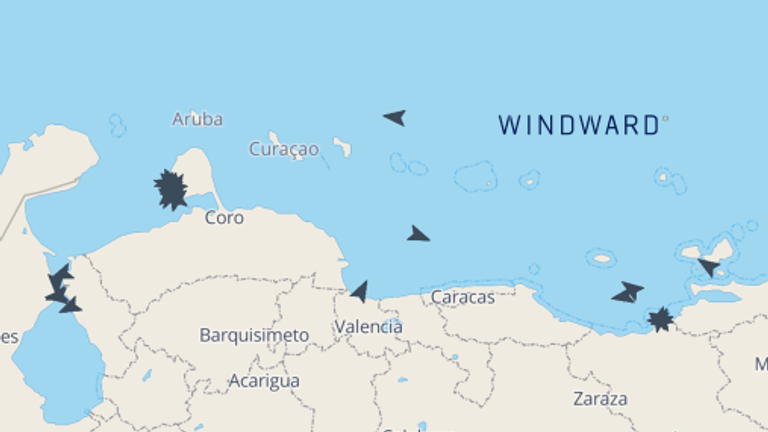
About 30 sanctioned tankers are currently operating in Venezuelan waters. Source: Windward Maritime AI Platform
The tanker seizure is a highly unusual move from the US government and is part of the Trump administration’s increasing pressure on Venezuelan President Nicolas Maduro.
In recent months, the largest US military presence in the region in decades has built up, and a series of deadly strikes has been launched on alleged drug-smuggling boats in the Caribbean Sea and eastern Pacific Ocean.
In the past, Mr Ampatzidis explained, actions like sanctions have had a limited effect on illegally operating tankers.
But the seizure of Skipper will send a signal to other dark fleet ships.
“From today, they will know that if they are doing spoofing, if they are doing dark activities in closer regions of the US, they will be in the spotlight and they will be the key targets from the US Navy.”
The Data X Forensics team is a multi-skilled unit dedicated to providing transparent journalism from Sky News. We gather, analyse and visualise data to tell data-driven stories. We combine traditional reporting skills with advanced analysis of satellite images, social media and other open source information. Through multimedia storytelling we aim to better explain the world while also showing how our journalism is done.
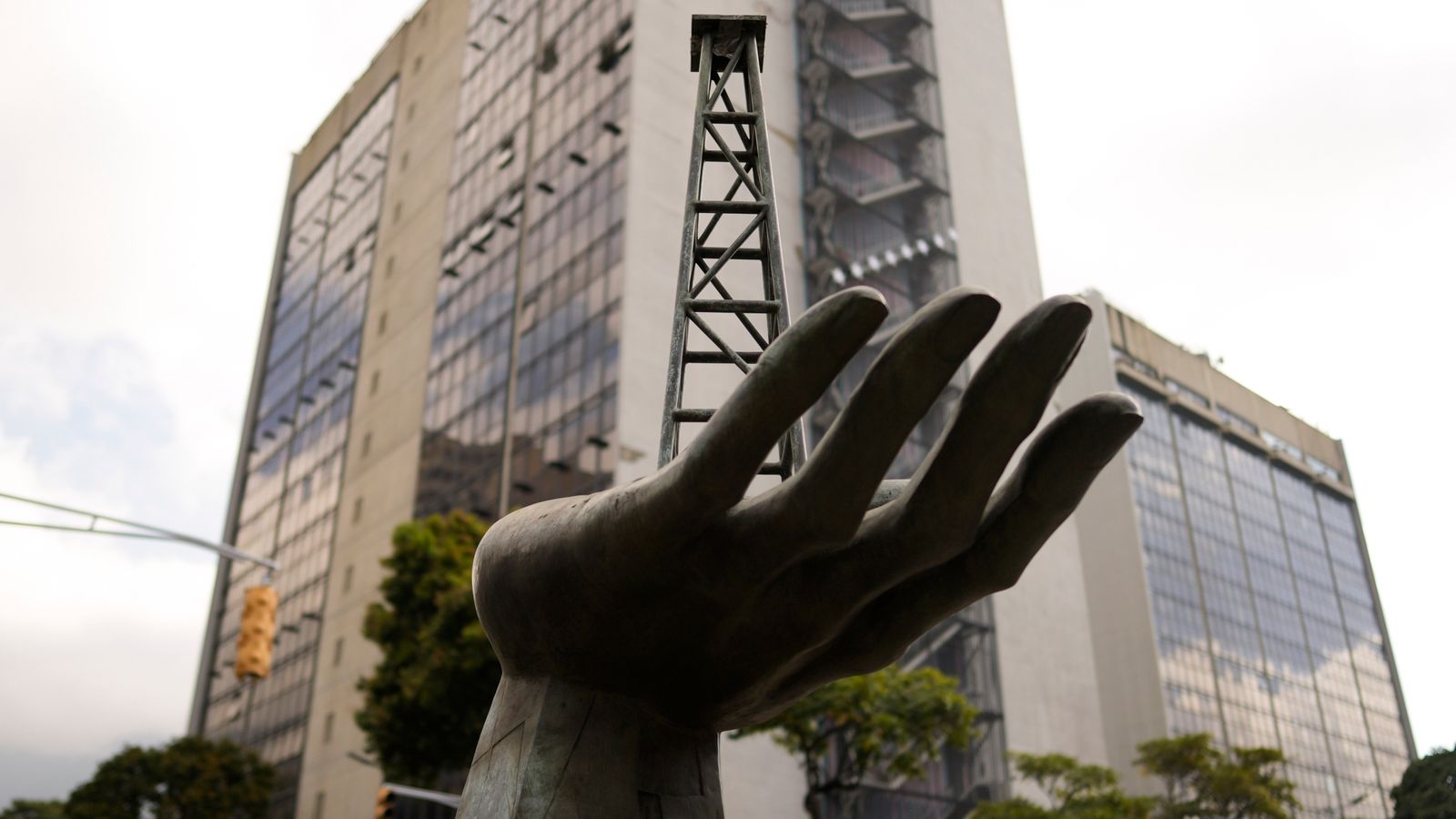

Donald Trump wants you to know that there is one leading reason why he is bearing down militarily on Venezuela: drugs.
It is, he has said repeatedly, that country’s part in the production and smuggling of illegal narcotics into America that lies behind the ratcheting up of forces in the Caribbean in recent weeks. But what if there’s something else going on here too? What if this is really all about oil?
In one respect this is clearly preposterous. After all, the United States is, by a country mile, the world’s biggest oil producer. Venezuela is a comparative minnow these days, the 21st biggest producer in the world, its output having been depressed under the Chavez and then Maduro regimes. Why should America care about Venezuelan oil?
Money latest: Urgent warning over tumble dryers
For the answer, one needs to spend a moment – strange as this will sound – contemplating the chemistry of oil. Crude oil is, as the name suggests, quite crude. It’s an organic compound, the product of ancient organisms that have been compressed and heated up under the earth’s surface for hundreds of millions of years. And as such, crude oil is subtly different depending on the conditions under which those organisms were compressed.
In some parts of the world, crude oil comes out of the ground as clear, flowing liquid. Sometimes it is green. Sometimes it is heavy, thick gloopy stuff. Oil producers have a word for these differing varieties: light, medium and heavy.
Venezuela accuses US of ‘piracy’
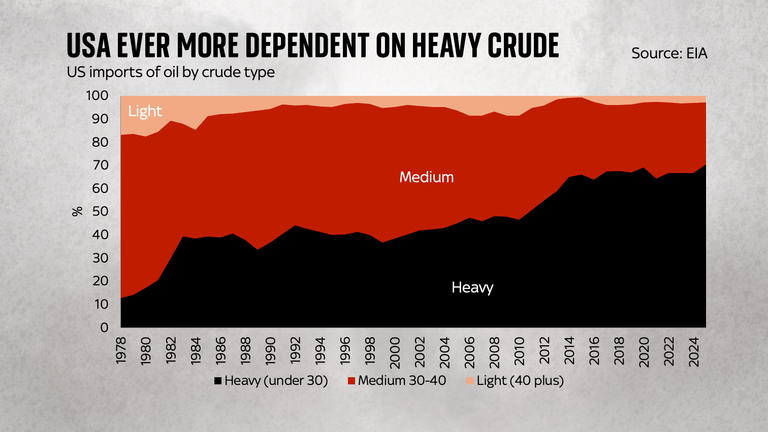
US imports
And here’s the first thing you need to know. Most of America’s refineries are set up to process the heavy stuff. In other words, if America is going to keep its cars fed with gasoline, it needs heavy, gloopy crude. And since it costs many, many billions of dollars to overhaul refineries, no-one particularly wants to do that anytime soon.
Read more:
Why did the US seize tanker off Venezuela?
But the second thing you need to know is the vast majority of that oil produced in America, thanks to the shale revolution, is light crude. In other words, America’s refineries are not compatible with most of the oil America produces.
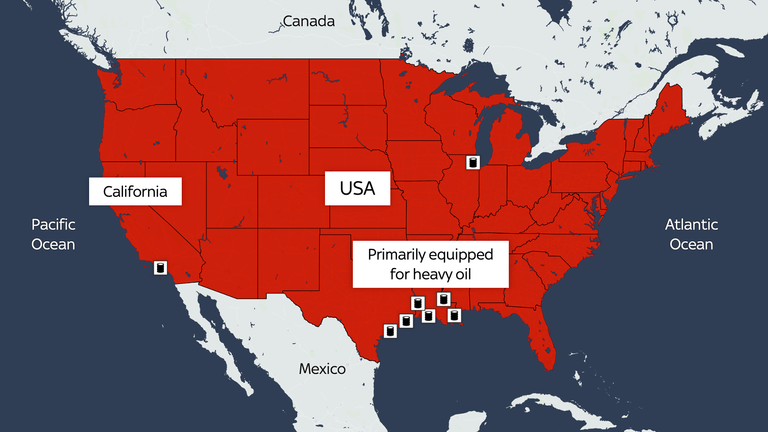
US oil map
The upshot is that for all that America theoretically pumps more crude oil than it would ever need out of its own territories, it is still totally dependent on trade to meet its demands for heavy oil. Most American crude is exported overseas. And America imports well over 6,000 barrels of oil a day to feed its refineries in Texas and Louisiana with the heavy stuff they can digest.
All of which brings us to Venezuela, because it is, alongside Canada and Russia, sitting on the world’s biggest reserves of heavy oil. Right now, most American oil comes from Canada but were Donald Trump keen to wean himself off Canadian crude, he is well aware there is a vast resource of it sitting on the other side of the Caribbean for all those Texas and Louisiana refineries.
World
‘Venezuela has already been invaded’ says Nobel Peace Prize winner Machado when asked about Trump intervention
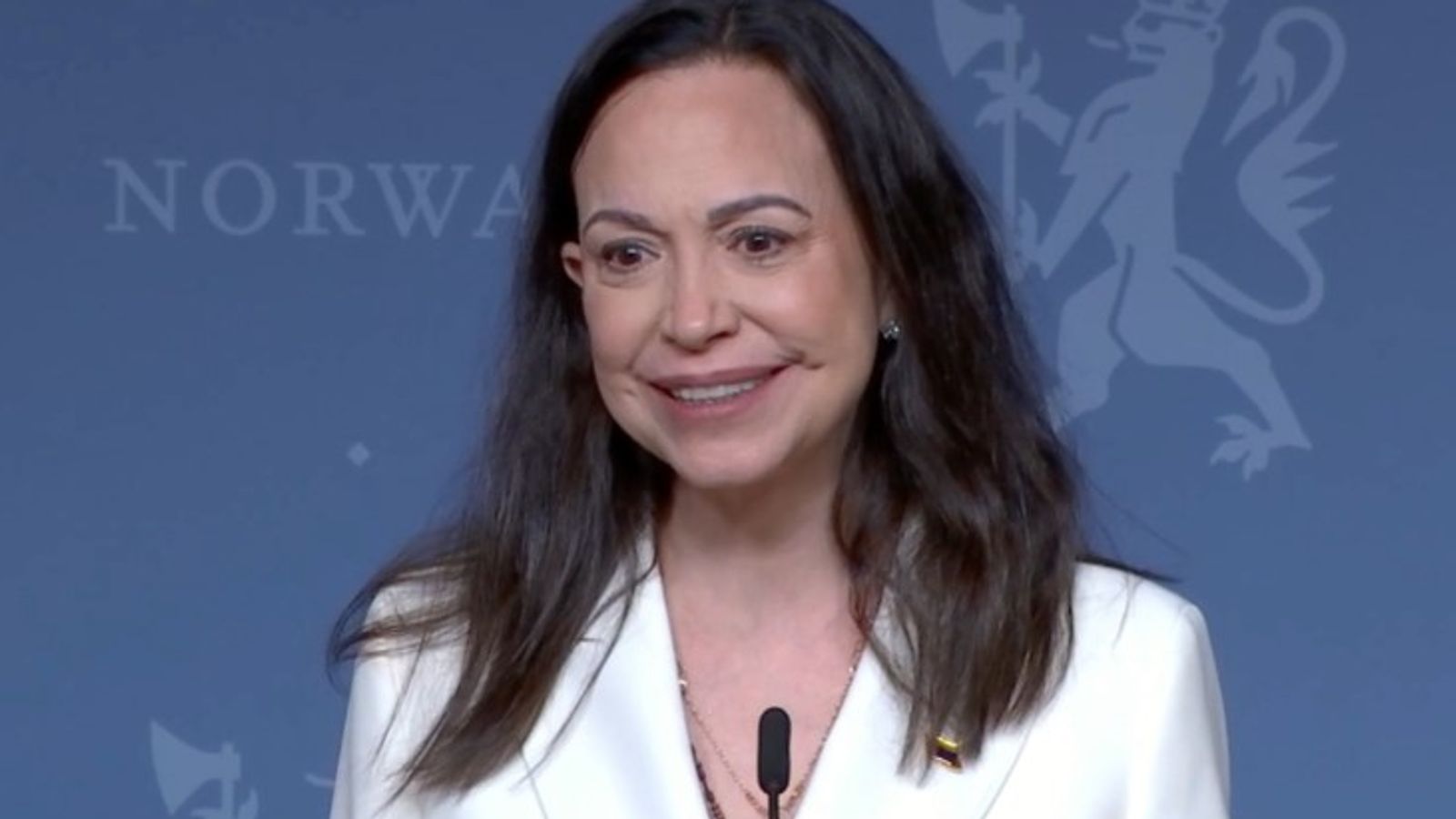
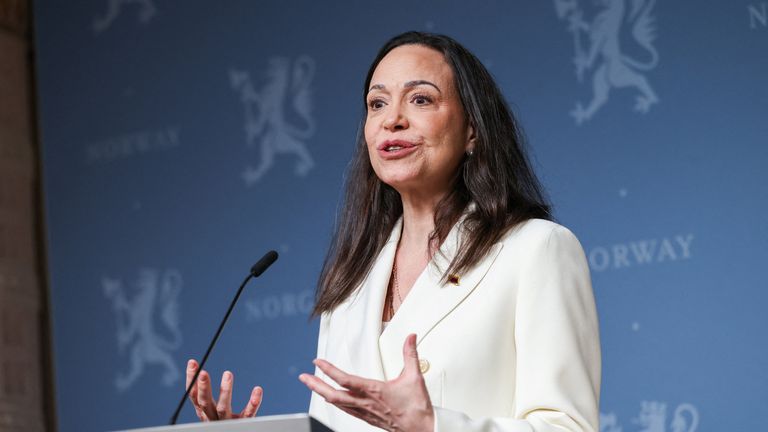
Venezuela’s Nobel Peace Prize winning opposition leader has said her country has “has already been invaded”, when asked whether she would support a US invasion.
Speaking at a news conference in Oslo after being awarded the famous prize, Maria Corina Machado replied: “Look, some people talk about invasion in Venezuela and the threat of an invasion in Venezuela and I answered Venezuela has been already invaded.
“We have the Russian agents, we have the Iranian agents. We have terrorist groups such as Hezbollah, Hamas, operating freely in accordance with the regime.
“We have the Colombian guerrilla, the drug cartels that have taken over 60% of our populations and not only involved in drug trafficking, but in human trafficking in networks of prostitution. This has turned Venezuela into the criminal hub of the Americas.”
The 58-year-old engineer continued: “Where do those funds come from? Well, from drug trafficking, from the black market of oil, from arms trafficking, and from human trafficking. We need to cut those flows.”
Maria Machado speaks in Oslo
Read more:
Peace prize winner makes appearance
Venezuela’s opposition leader greets crowd
It comes after news of the US seizing an oil tanker off the coast of Venezuela, in the latest push by the Trump administration to increase the pressure on the government in Caracas.
America has built up the largest military presence in the region in decades and launched a series of deadly strikes on boats it claims were drug-smuggling in the Caribbean.
Ms Machado made her return to the public eye in the early hours of Wednesday morning from the balcony of the Norwegian capital’s Grand Hotel, after covertly travelling to Oslo to receive the Nobel Peace Prize.
She didn’t make it to Oslo in time to receive the Nobel Peace Prize in person, after an extraordinary day shrouded in uncertainty over her whereabouts.
It was accepted on her behalf by her daughter Ana Corina Sosa.
The opposition leader has dedicated her prize in part to US President Donald Trump, who has said he himself deserved the honour.
Ms Machado has aligned herself with hawks close to Trump who argue that Venezuela’s president Nicolas Maduro has links to criminal gangs that pose a direct threat to US national security, despite doubts raised by the US intelligence community.
-
 Sports2 years ago
Story injured on diving stop, exits Red Sox game
-
 Sports3 years ago
‘Storybook stuff’: Inside the night Bryce Harper sent the Phillies to the World Series
-
 Sports2 years ago
Game 1 of WS least-watched in recorded history
-
 Sports3 years ago
Button battles heat exhaustion in NASCAR debut
-
 Sports3 years ago
MLB Rank 2023: Ranking baseball’s top 100 players
-
Sports4 years ago
Team Europe easily wins 4th straight Laver Cup
-
 Environment3 years ago
Japan and South Korea have a lot at stake in a free and open South China Sea
-
 Environment1 year ago
Here are the best electric bikes you can buy at every price level in October 2024