

Out of a job and on benefits: Why Britain isn’t working


Winter is closing in on the Bidston Rise housing estate in Birkenhead, but there’s one front garden that hasn’t given in yet.
A hydrangea is thriving in a shady spot and the borders are still in bloom. The man inside can give his neighbours advice on everything from ericaceous compost and fertiliser but he can’t earn a living from it.
Mick is a landscape gardener by trade but has been unemployed for almost a decade now because of his health, which deteriorated rapidly after a heart attack in his 30s.
Mick
A few years later, an operation to remove a clot in his right leg resulted in an amputation.
In 2016, he also lost his left leg to vascular disease. Now in his 60s, he still wants to work but the opportunities available to him are slim.

Bidston Rise, Birkenhead

Mick’s garden
Still, he counts himself lucky. “I know I’m getting on a bit now. I’ve lost my legs, but I can still do certain amounts of stuff.
“There are people out there who struggle to get out of bed in the morning, but they’re having their benefits cut because they’re saying they are fit for work. It’s ridiculous.”
Statistics met with ‘surprise and disbelief’
Mick is among the 10.4 million people of working age who report a disability in Britain today – that’s around a quarter of all 16-64 year olds.
It is a statistic that has been met with both surprise and disbelief as policymakers grapple for explanations behind the nation’s declining health, which is apparently so bad that 2.8 million people have dropped out of the labour market altogether, meaning they have stopped looking for work.
In Westminster, alarm has slowly crept in as the government struggles to digest the bill: Disabled people are entitled to benefits that support them with the costs of their disability.
They are also less likely to be in work than the rest of the population. The natural consequence is that Britain’s benefits bill has ballooned.
One-in-10 people now claim either incapacity or disability benefits. At £76.8bn, about 6% of everything the government spends now goes on these benefits and the costs are only forecast to rise.
Health-related benefits: What are they?

People with health conditions in this country can apply for two types of health benefits – incapacity and/or disability benefits.
They are very different.
Incapacity benefits are offered to people whose health limits their ability to work.
These are means-tested and only given to people in low-income families.
Applicants have to undergo a work assessment.
If they are judged to have “a limited capability for work-related activity”, they receive a top-up of £4,994 a year above their standard Universal Credit payment.
These people do not have to continue looking for work to receive the award.
Disability benefits help people cover the additional living costs of their disability.
The main one for working-age adults is the personal independence payment, also known as PIP.
PIP is not means-tested.
You can get it even if you have a job and about one-in-six people who claim it have jobs.
Applicants are tested on their ability to complete a range of tasks and, if they meet the criteria, receive between £1,500 and £9,610 a year.
About 45% of people claiming this benefit report mental or behavioural problems as their main condition.
Mental ill health
So what is actually going on?
There are no clear-cut answers but a few theories have been put forward: Some say the pandemic has had a clear long-term impact on our health, particularly our mental health.
The workforce is also getting older, so more of us are living with chronic conditions. Then there’s the cost of living crisis, which might have pushed more people to claim benefits when they may not have needed to in the past.
In the absence of any concrete explanations, however, the data has also fostered suspicions. Some people believe the system is too soft and that “everyday woes” are being medicalised.
Those “everyday woes” are mental health conditions, like depression and anxiety, which are driving the increase in reported disability.
The vast majority- 86% – of people on health-related benefits now have a mental health condition, even if it is not their primary condition.
After a failed attempt to reform disability benefits, the government has ordered a review into the diagnosis of mental health conditions, as well as autism and attention-deficit hyperactivity disorder (ADHD).
The health secretary has spoken about “overdiagnosis”.
Meanwhile, Conservative leader Kemi Badenoch has proposed a “crackdown on people exploiting the system”, including those with “mild” conditions like anxiety or depression.
But on the streets of Bidston, where NHS figures suggest 27.7% of people experience depression (more than double the national average), and where almost 40% of working-age people aren’t even looking for work, these debates seem to skip over the nuances and, in turn, miss the point.

Bidston Rise
A combination of ailments
For someone like Mick, who is so physically disabled that no one can accuse him of making it up, it isn’t his wheelchair that stops him from looking for work but his periodic bouts of depression. The mental anguish – when it hits – is far more disabling than his physical condition. He would know because he experiences both.

Mick and Gurpreet
“Oh, God. If it wasn’t for my dog, I’ll guarantee you, I probably wouldn’t be here now because I was in such a dark place,” he said.
“So many things were going on in my life at the time, and I was constantly in major pain, but I couldn’t get rid of it, no matter what medication I took or anything.
“I wasn’t coming out of my house, I didn’t open my blinds, I didn’t do hardly anything at all, and that’s not me.”
“Mental health problems have gone through the roof recently,” he said. “A lot of people are struggling mentally. I mean, I’ve gone through it myself.”
The trouble with trying to determine “how sick is too sick?” or “how disabled is too disabled?” is that most people report more than one condition, sometimes a mixture of mental and physical conditions.
Read more:
As GDP shrinks, it’s unclear where the economic jump-start will come from
Sickness bill costs £85bn a year, says report warning of ‘economic crisis’
For those on incapacity benefits, which are given to people deemed unfit to work, the average is about 2.7 conditions per person.
It could be a bad back that flares up with depression. Or, hearing loss that triggers anxiety.
Eventually, one might take over the other as the primary condition.
Then there are the agonies of life – perhaps a divorce during the cost-of-living crisis that caused emotional despair.
The medical perspective and the cost of living
Dr Mark Fraser, a local GP at the Fender Way Medical Centre, has seen it all.
“Demand has gone up considerably. An awful big driver of that probably is mental health, but we’re also seeing a general deterioration in people’s health and well-being,” he said.
“So, more chronic disease, certainly more cancers, more people are coming to us with lifestyle-related problems.”
Across the country, spending on health-related benefits accelerated significantly from 2022, when energy bills started to soar and inflation climbed above 11%.

Dr Mark Fraser
Dr Fraser is seeing more patients than he used to and almost all of them – from pensioners to young people – are in debt.
“It’s more expensive just to stay alive now. The cost of food, the cost of energy, the cost of housing, the cost of clothes, have gone up considerably in price over the last five or 10 years,” he said.
“And if you’re down at the lower end of income, the impact on that is massively disproportionate. Where the bread line used to be. We’re down to the breadcrumbs line.
“There’s no doubt that it’s very difficult for you to contemplate healthy living when you’re awake all night worrying about if you can afford the next bill or if you can afford the next shop.”
Increasingly anxious children
The degradation in young people’s mental health has been striking, with local GPs increasingly prescribing antidepressants to young people.
At the Fender Way Medical Centre, doctors are increasingly dealing with anxious children and young adults, some of whom are struggling to function and hold down jobs even when they get them.

Dr Mark Fraser and Sky’s Gurpreet Narwan
Dr Fraser said children might be growing up less resilient but they also appear to have been deeply affected by lockdowns, the loss of routine and the closure of local clubs and leisure centres.
“They don’t see a bright future for themselves. So they are a little bit resigned… there is despair later,” he said.
That despair is also finding its way into his surgery.
“There are more people in acute mental health crises, more often.
“I think that that used to be kind of unusual in general practice for you to be dealing with someone who you were worried wasn’t going to make it through the night if you let them go… a person at the point of ending their life… deciding that there is no point in carrying on, what’s the point?.. And it’s more frequent than it ever used to be.”
A nationwide issue
This is likely to ring true for GPs across the country.
Across the country, the number of people in contact with NHS mental health services has risen, as has antidepressant use.
Then there are deaths caused by alcohol, drugs or suicide, which have increased substantially among the working-age population since the pandemic.
They were up 24% – 3,700 deaths – in 2023 compared with pre-pandemic levels in England and Wales.
‘Deaths of despair’
It’s a phenomenon more closely associated with the US, where deaths linked to opioid use among middle-aged Americans – largely those without college degrees – led economists to first coin the phrase “deaths of despair” about a decade ago.
In Britain, we don’t have the same issues but among 45 to 54-year-olds, these deaths are now a bigger killer than heart disease.
So, while greater levels of reporting and diagnosis might be playing a part in the explosion of reported mental health conditions, there is clear evidence that our mental well-being has deteriorated over the past few years in very real ways.
The actual health conditions only tell one part of the story.
The austerity impact
Economic decline, wage stagnation and loss of community might tell another.
Changes to our benefit system, going back decades, could also be playing a part.
During the austerity years, the country’s safety net was pared back, with the government cutting housing benefits, raising the state pension age for women and lowering the benefit cap.
But they may have been a false economy. New research by the Institute of Fiscal Studies suggests that they nudged more people onto health-related benefits instead.
David Finch, assistant director at the Health Foundation, which funded the study, said: “Cuts to one part of the welfare system can push people to claim health-related benefits, potentially driven by the cuts worsening health.
“This creates a long-term risk that they spend longer out of the workforce and with lower incomes. Future welfare reform must learn the lessons of the past.”
Those lessons are not always immediately obvious but policymakers will have to reach into all corners of society to find them.
Resolving Britain’s problem with worklessness will take more than just a carrot or a stick.

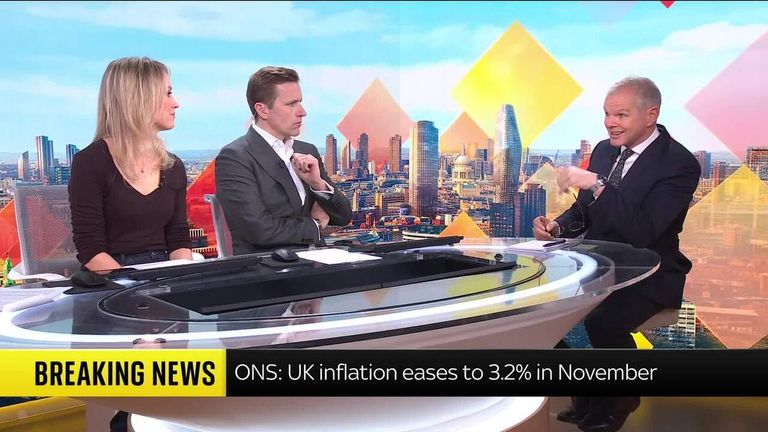
The Bank of England has cut interest rates from 4% to 3.75%, its sixth cut since last summer.
The decision follows a bigger-than-expected fall in the consumer price index rate of inflation in data released this week. While inflation is still above the Bank‘s 2% target, the fall to 3.2% helped swing today’s decision, with five of the Bank’s nine-member monetary policy committee (MPC) voting for a cut.
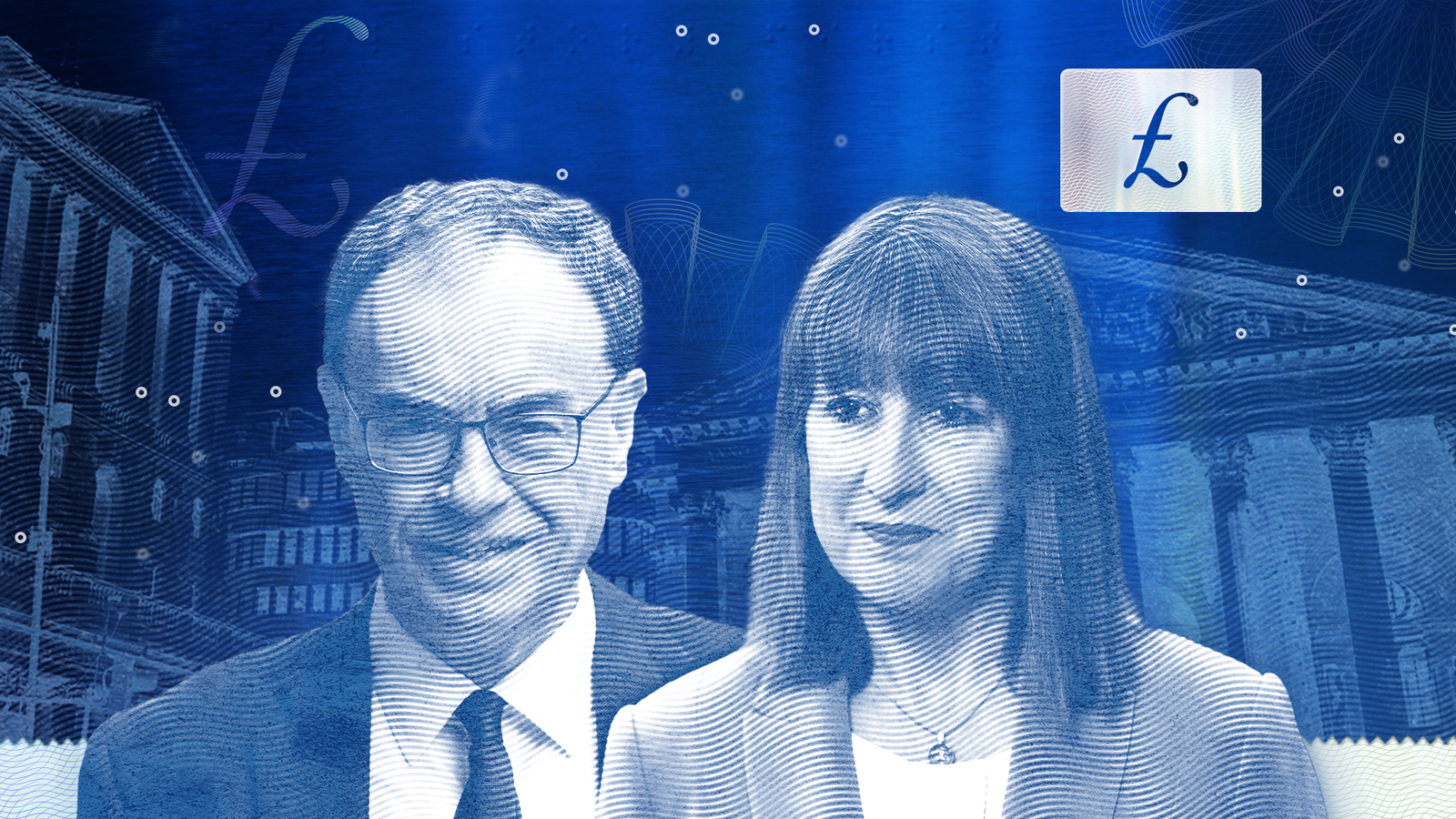
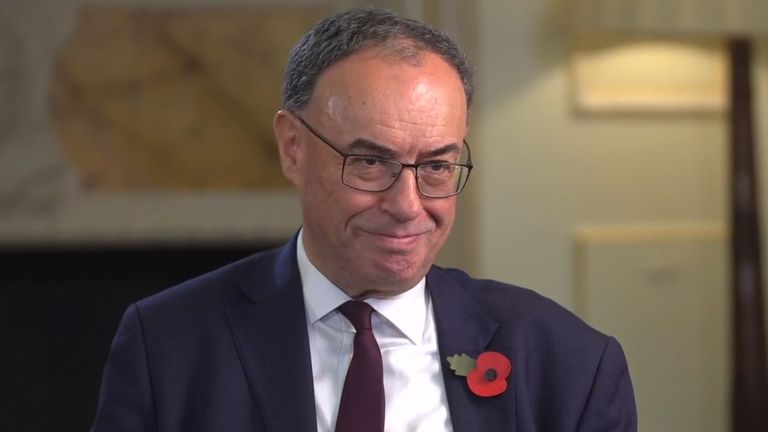
The governor, Andrew Bailey, who had voted to leave rates on hold in November pending more data on inflation, shifted his vote this time around.
Money latest: What interest rate decision means for you
“We’ve passed the recent peak in inflation and it has continued to fall,” he said, “so we have cut interest rates for the sixth time, to 3.75 per cent, today. We still think rates are on a gradual path downward. But with every cut we make, how much further we go becomes a closer call.”
The decision will mean those with floating rate mortgages should immediately see a reduction in their monthly repayments – and some lenders are now reducing fixed-rate deals to 3.5% or below.
The Bank also gave its first full assessment of the economic impact of last month’s budget. It said the budget, which included measures to reduce energy bills and freeze fuel duty, should help push inflation half a percentage point lower next year.
That would mean CPI inflation would drop to close to the Bank’s 2% target as soon as the second quarter of 2026, nearly a year earlier than it originally expected.
However, the Bank also warned that growth remained weak. It said it expected gross domestic product to flatline in the fourth quarter of the year.
Since the decision was a narrow one, with four members of the MPC voting against the cut, some investors might judge that the Bank remains finely balanced on future decisions. Right now investors expect another cut by the end of next spring and, possibly, another one thereafter.
But whether rates eventually settle at 3.5% or 3.25% – or even lower – remains a matter of debate.
The economy may be stuttering, unemployment may be rising, inflation may be above target. But even so, the Bank of England delivered mortgage payers some welcome Christmas cheer on Thursday.
The quarter percentage point cut in interest rates was far from a surprise – the vast majority of economists and investors had expected the Bank to cut rates down from 4% to 3.75%. But even so, for those still struggling with the cost of living, the decision will help lighten the load through the winter months.
And, if the pricing in financial markets is anything to go by, there will be more cuts to come next year with one or maybe two more cuts priced in by investors.
Money latest: What interest rate decision means for you
There was Christmas cheer, too, for the chancellor, as the Bank revealed that it expected the measures in her budget to reduce inflation by half a percentage point next year, thanks largely to her measures to reduce energy bills and freeze fuel duty.
This is a hefty reduction – and means that far from having to wait until 2027 to see inflation come down to its 2% target, the Bank thinks the target will be hit as soon as next year. In short, the Bank has offered its seal of approval to Rachel Reeves, who said repeatedly that she was hoping to craft a non-inflationary budget.
However, deeper questions still remain. To what extent is Britain’s low inflation a good news story – the fruit of clever monetary and fiscal policy – or something else? For there are some who worry that instead it bears all the hallmarks of economic slowdown. The slower the economy is growing, the less people spend and the lower inflation goes. And the Bank said it expected economic growth to drop to zero in the final quarter of the year.
There are also suspicions inside the Bank that one of the consequences of Donald Trump’s trade war is that cheap imports from China, that would previously have flowed into the US, might be diverted to Europe. That would, on the one hand, push down consumer prices. However, it also risks pushing European manufacturers into the red as they struggle to compete.
On the other hand, there’s a deeper worry that, having experienced high inflation for quite a few years, consumers are now so used to it that they might “bake” higher inflation into their personal mental maps. That could, in turn, mean they push for bigger annual wage increases, which in turn pushes inflation even higher. In short, the question as to whether the inflation genie is still out of the bottle remains.
Finally, there’s the question about whether the trade war is a signal of something bigger: the end of the decades-long period of uber-globalisation. If it becomes more expensive to transport goods around the world, that implies that everything could gradually become more expensive.
Still, for the time being, the Bank has delivered its last piece of analysis and policymaking before the end of the year. And, for the most part, it’s a set of measures and analysis that most people will be cheered by.

-
 Sports2 years ago
Story injured on diving stop, exits Red Sox game
-
 Sports3 years ago
‘Storybook stuff’: Inside the night Bryce Harper sent the Phillies to the World Series
-
 Sports2 years ago
Game 1 of WS least-watched in recorded history
-
 Sports3 years ago
Button battles heat exhaustion in NASCAR debut
-
 Sports3 years ago
MLB Rank 2023: Ranking baseball’s top 100 players
-
Sports4 years ago
Team Europe easily wins 4th straight Laver Cup
-
 Environment3 years ago
Japan and South Korea have a lot at stake in a free and open South China Sea
-
 Environment1 year ago
Here are the best electric bikes you can buy at every price level in October 2024