
![Kia's sporty new electric SUV spotted ahead of its big debut [Video]](https://i0.wp.com/electrek.co/wp-content/uploads/sites/3/2025/12/Kia-sporty-midsize-electric-SUV.jpeg?resize=1200,628&quality=82&strip=all&ssl=1)
Kia’s sporty new electric SUV spotted ahead of its big debut [Video]

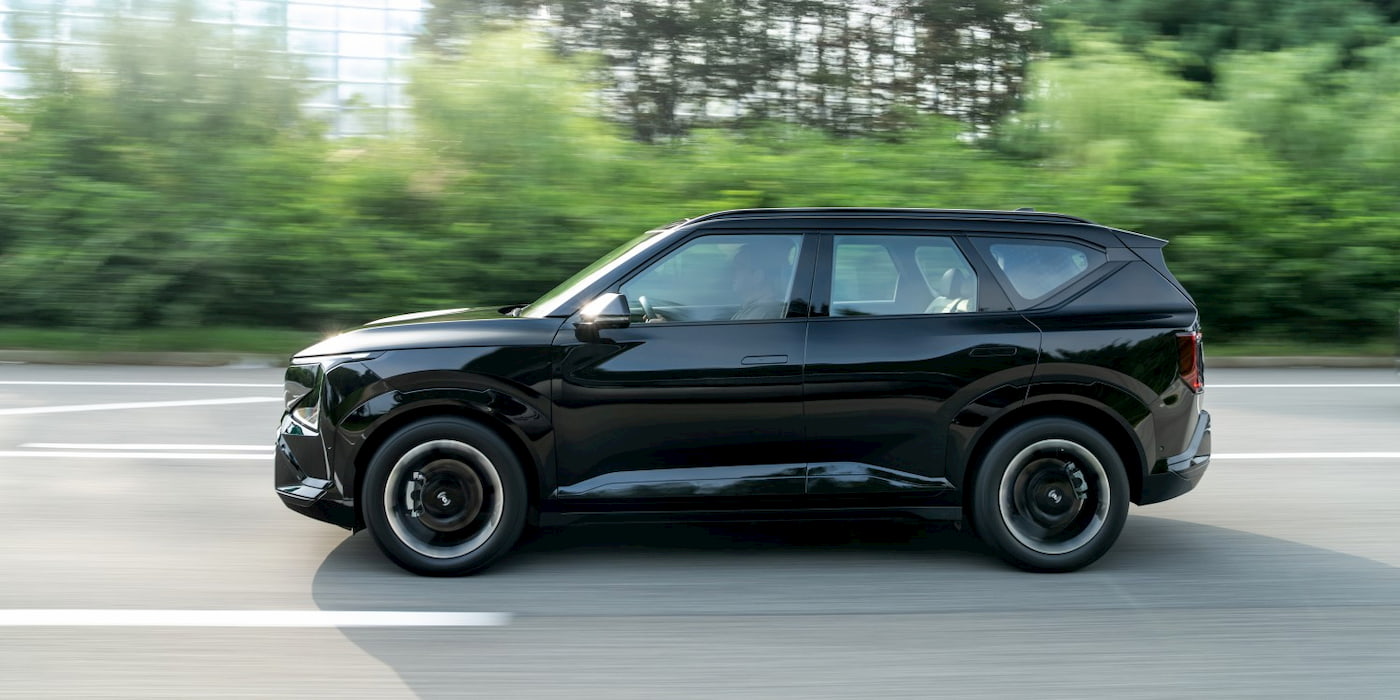
Kia is set to unveil several new electric GT models at the Brussels Motor Show, including the EV3, EV4, and EV5. With its debut less than a month away, Kia’s sporty midsize electric SUV was spotted on the road, offering our closest look at it yet.
The Kia EV5 GT will debut at the Brussels Motor Show
The EV5 is already a pretty sleek-looking SUV with a boxy, upright design like Kia’s three-row EV9, but in a smaller package.
At the Brussels Motor Show next month, Kia will unveil the EV5 GT, a sportier, more powerful version of the midsize electric SUV.
Kia has yet to say when or where it will launch, but like the standard model, the GT variant is expected to arrive in Europe, the UK, Korea, and Canada sometime in 2026. It will follow the EV6 GT and EV9 GT as Kia expands its performance EV lineup.
Although it was widely expected to share underpinnings with the new EV6 GT, that apparently won’t be the case.
According to Auto Express, the EV5 GT will instead be equipped with a separate dual-motor powertrain, packing 302 hp and 480 Nm of torque, good for a 0 to 62 mph time of 6.2 seconds.

Official range and other final specs will be revealed at the event, but the GT version will use the same 81.4 kWh battery as the standard EV5 Long Range model, which should provide a WLTP driving range of at least 300 miles.
Kia said all future electric GT vehicles will wear its new “GT Wrap” featuring its signature neon green. The bold color has become a “symbol of electricity,” the company said. It will also be available in a matte Magma Red.
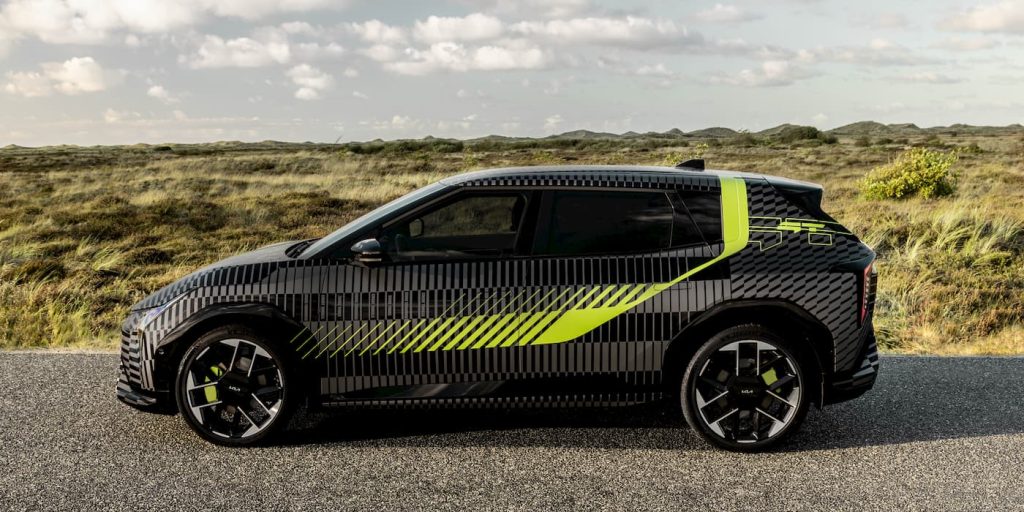
It’s about the size of Kia’s best-selling model, the Sportage, at 4,610 mm (181″) long, 1,875 mm (74″) wide, and 1,675 mm (66″) tall, with a wheelbase of 2,750 mm.
Thanks to its dedicated electric vehicle (E-GMP) platform, the EV5 offers noticeably more interior space with “best-in-class” interior rear legroom of 1,041 mm (41″). Kia also packed it with its latest software, features, and infotainment system.
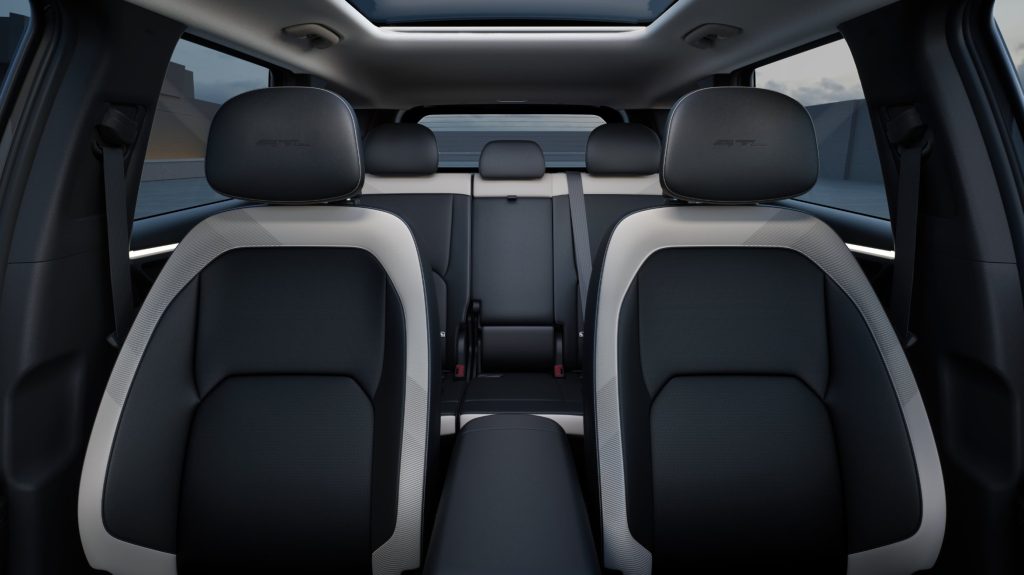
The interior features nearly 30″ of screen space with Kia’s new connected car Navigation Cockpit (ccNC) infotainment system, including dual 12.3″ driver and navigation screens, plus a 5″ climate control display.
A video from our friends at Shortscar shows the EV5 GT driving in South Korea ahead of its upcoming debut. Although it’s still disguised, you can see the GT version has bigger wheels and updated front and rear bumpers.
The EV5 GT will debut at the Brussels Motor Show next month alongside the EV3 GT and EV4 GT. Kia will also unveil its new entry-level EV, the EV2. The event runs from January 9 through January 18, 2026. Hyundai is showcasing new EVs, including “its biggest EV” yet, which it previewed in a teaser image on Monday.
For those in the US, Kia is (sadly) not planning to launch the standard EV5 or GT version. After opening orders earlier this month, Kia said the midsize electric SUV would be exclusive to Canada in North America.
If you’re looking for a new EV, we can still help you find the right one. Kia is currently offering over $10,000 off every EV in its US lineup through its New Traditions sales event. You can use the links below to see what’s available in your area.


FTC: We use income earning auto affiliate links. More.


Annealed neodymium iron boron magnets sit in a barrel at a Neo Material Technologies Inc. factory in Tianjin, China on June 11, 2010.
Bloomberg | Bloomberg | Getty Images
Rare earth magnet makers are having a moment as Western nations scramble to build domestic “mine-to-magnet” supply chains and reduce their dependence on China.
A turbulent year of supply restrictions and tariff threats has thrust the strategic importance of magnet manufacturers firmly into the spotlight, with rare earths surging toward the top of the agenda amid the U.S. and China’s ongoing geopolitical rivalry.
Magnets made from rare earths are vital components for everything from electric vehicles, wind turbines, and smartphones to medical equipment, artificial intelligence applications, and precision weaponry.
It’s in this context that the U.S., European Union and Australia, among others, have sought to break China’s mineral dominance by taking a series of strategic measures to support magnet makers, including heavily investing in factories, supporting the buildout of new plants, and boosting processing capacity.
The U.S. and Europe, in particular, are expected to emerge as key growth markets for rare earth magnet production over the next decade. Analysts, however, remain skeptical that Western nations will be able to escape China’s mineral orbit anytime soon.
“Frankly, we were the solution to the problem that the world didn’t know it had,” Rahim Suleman, CEO of Canadian group Neo Performance Materials, told CNBC by video call.
Photo taken on Sept. 19, 2025 shows rare-earth magnetic bars at NEO magnetic plant in Narva, a city in northeastern Estonia.
Xinhua News Agency | Xinhua News Agency | Getty Images
“The end-market is growing from the point of physics, not software, so therefore it has to grow in this way,” he continued. “And it’s not dependent on any single end market, so it’s not dependent on automotive or battery electric vehicles or drones or wind farms. It’s any energy-efficient motor across the spectrum,” Suleman said, referring to the demand for magnets from fast-growing industries such as robotics.
His comments came around three months after Neo launched the grand opening of its rare earth magnet factory in Narva, Estonia.
Situated directly on Russia’s doorstep, the facility is widely expected to play an integral role in Europe’s plan to reduce its dependence on China. European Union industry chief Stéphane Séjourné, for example, lauded the plant’s strategic importance, saying at an event in early December that the project marked “a high point of Europe’s sovereignty.”
Neo’s Suleman said the Estonian facility is on track to produce 2,000 metric tons of rare earth magnets this year, before scaling up to 5,000 tons and beyond.
“Globally, the market is 250,000 tons and going to 600,000 tons, so more than doubling in ten years,” Suleman said. “And more importantly, our concentration is 93% in a single jurisdiction, so when you put those two factors together, I think you’ll find an enormously quick growing market.”
‘Skyrocketing demand’
To be sure, the global supply of rare earths has long been dominated by Beijing. China is responsible for nearly 60% of the world’s rare earths mining and more than 90% of magnet manufacturing, according to the International Energy Agency.
A recent report from consultancy IDTechEx estimated that rare earth magnet capacity in the U.S. is on track to grow nearly six times by 2036, with the expansion driven by strategic support and funding from the Department of Defense, as well as increasing midstream activity.
Magnet production in Europe, meanwhile, was forecast to grow 3.1 times over the same time period, bolstered by the EU’s Critical Raw Materials Act, which aims for domestic production to satisfy 40% of the region’s demand by 2030.
Regional composition of rare earths and permanent magnet production in 2024, according to data compiled by the International Energy Agency.
IEA
John Maslin, CEO of Vulcan Elements, a North Carolina-based rare earth magnet producer, told CNBC that the company is seeking to scale up as fast as possible “so that this fundamental supply chain doesn’t hold America back.”
Vulcan Elements is one of the companies to have received direct funding from the Trump administration. The magnet maker received a $620 million direct federal loan last month from the Department of Defense to support domestic magnet production.
“Rare earth magnets convert electricity into motion, which means that virtually all advanced machines and technologies—the innovations that shape our daily lives and keep us safe—require them in order to be operational,” Maslin told CNBC by email.
“The need for high-performance magnets is accelerating exponentially amid a surge in demand and production of advanced technologies, including hard disk drives, semiconductor fabrication equipment, hybrid/electric motors, satellites, aircraft, drones, and almost every military capability,” he added.
Separately, Wade Senti, president of Florida-based magnet maker Advanced Magnet Lab, said the only way to deliver on alternative supply chains is to be innovative.
“The demand for non-China sourced rare earth permanent magnets is skyrocketing,” Senti told CNBC by email.
“The challenge is can United States magnet producers create a fully domestic (non-China) supply chain for these magnets. This requires the magnet manufacturer to take the lead and bring the supply chain together – from mine to magnet to customers,” he added.
![Watch BYD's insanely fast EV charger add nearly 250 miles range in 5 minutes [Video]](https://i0.wp.com/electrek.co/wp-content/uploads/sites/3/2025/12/BYD-EV-charger-5-minutes-1.jpeg?resize=1200,628&quality=82&strip=all&ssl=1)
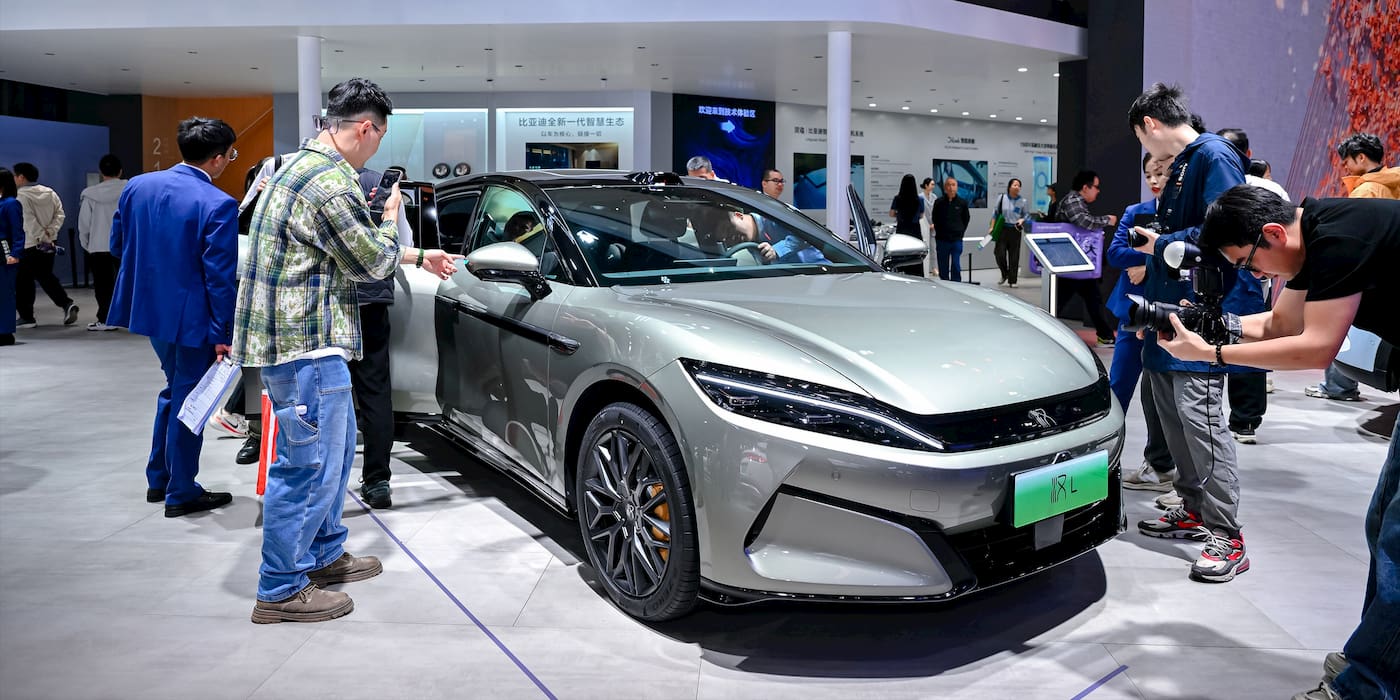
BYD is closing the gap between gas pumps and EV chargers. A new video shows one of its EVs gaining nearly 250 miles (400 km) of range in just five minutes.
BYD’s 5-minute EV charging matches refuel speeds
“The ultimate solution is to make charging as quick as refueling a gasoline car,” BYD’s CEO, Wang Chuanfu, said after unveiling its new Super e-Platform in March.
Chuanfu was referring to the so-called “charging anxiety” that’s holding some drivers back from going electric. BYD’s Super e-Platform is the first mass-produced “full-domain 1000V high-voltage architecture” for passenger vehicles.
BYD also launched its Flash Charging Battery during the event, with charging currents of 1000A and a charging rate of 10C, both new records.
The ultra-fast charging battery can deliver 1 megawatt (1,000 kW) of charging power, which BYD claims enables EVs equipped with the setup to regain 400 km (248 miles) of CLTC driving range in just 5 minutes of charging.
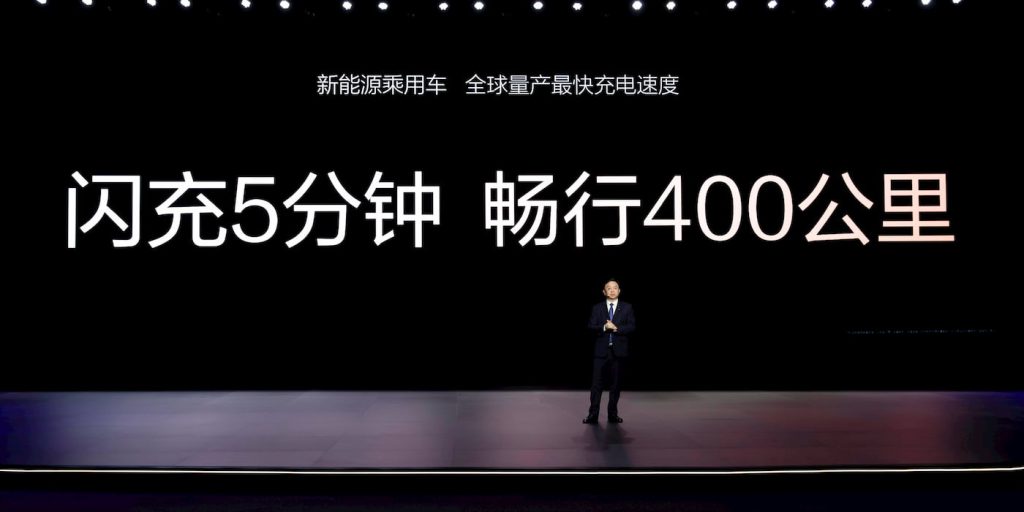
BYD launched its first vehicles based on the Super e-Platform, the Han L and Tang L, a month later, starting at just 219,800 yuan ($30,000).
With the new models rolling out across China, we are getting a look at the ultra-fast charging speeds in action. A video posted on X by user Dominic Lee shows BYD’s EV charging at up to 746 kW, with an estimated charging time to 70% of around 4 minutes and 40 seconds.
BYD’s charging station in China, 400km in 5 minutes!
Gasoline what? pic.twitter.com/WgWGc5Nd3q
— Dominic Lee 李梓敬 (@dominictsz) December 22, 2025
In just six minutes, BYD said the Han L, based on its Super e-Platform, can recharge from 10% to 70%, and in 20 minutes, the battery can be fully charged.
The Tang L SUV, also based on BYD’s 1000V architecture, can add 370 km (230 miles) of range in 5 minutes, while a full charge takes about 30 minutes.
BYD said its Flash Charging Battery enables EVs to gain the same range as a gas-powered vehicle would at the pump, “ultimately making the charging time as short as refueling time.”
Although 400 km (250 miles) is more than enough range for most drivers, BYD is out to make gas stations a thing of the past. And it’s not just in China, BYD plans to bring its Flash Charging system to Europe and likely other overseas markets.
FTC: We use income earning auto affiliate links. More.

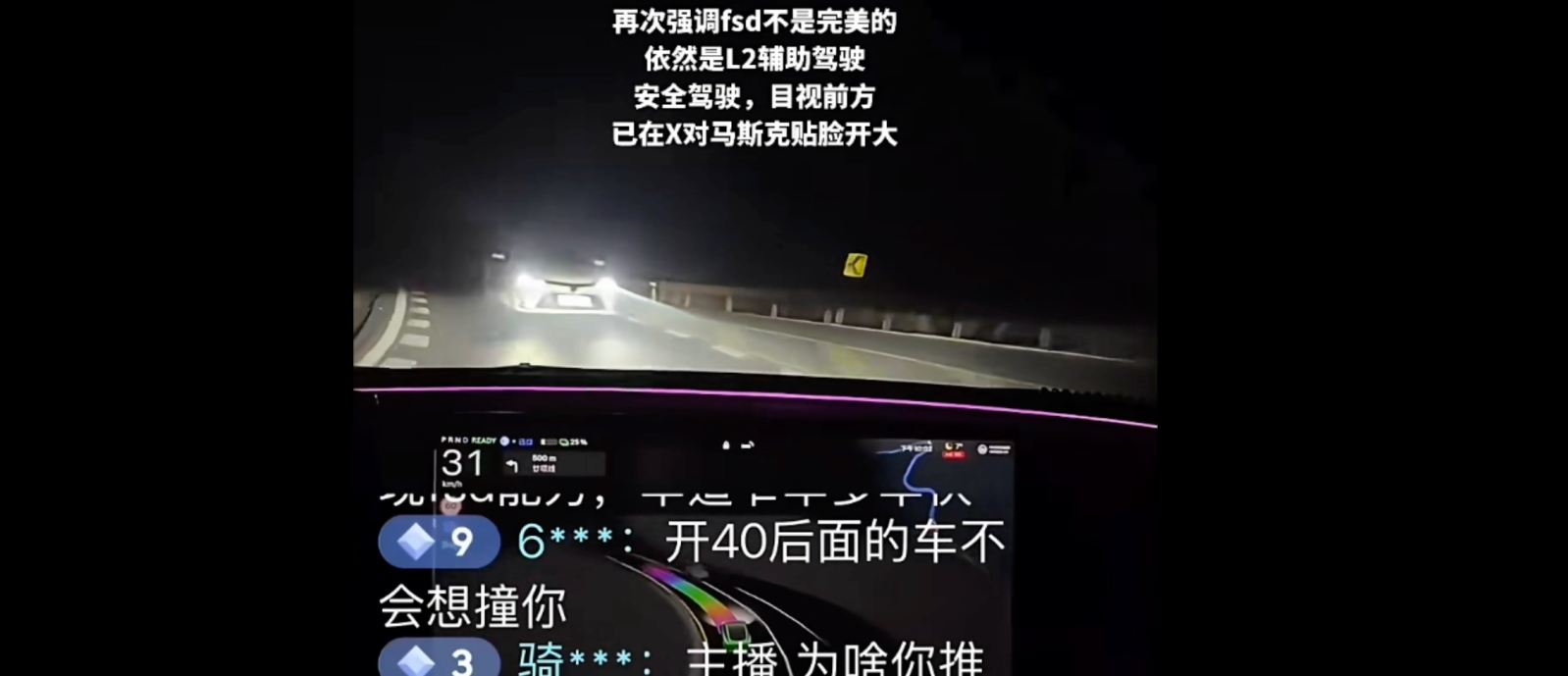
A Tesla drove in the wrong direction, resulting in a head-on collision with another vehicle, during a livestream, demonstrating Tesla’s ‘Full Self-Driving’ features.
Earlier this year, Tesla launched its Level 2 driver-assist system, ‘Full Self-Driving’ (FSD), in China.
Like in the US, despite its name, the system requires constant driver supervision. Unlike in the US, China quickly made Tesla change the name of the system as it was judged not representative of its capabilities.
Many Tesla owners in China have been enthusiastically livestreaming their drives using FSD on platforms such as Douyin (TikTok).
They try to demonstrate that Tesla FSD is able to operate the vehicle by itself and compare it to other similar systems from other automakers in China.
Last week, a Douyin user going by 切安好 was livestreaming a Tesla FSD drive in his Model 3 when the vehicle went into the left lane, which was for the opposing traffic, and collided head-on with another car.
The livestream itself wasn’t widely popular, but the Tesla owner posted video captures of the aftermath, which quickly went viral:
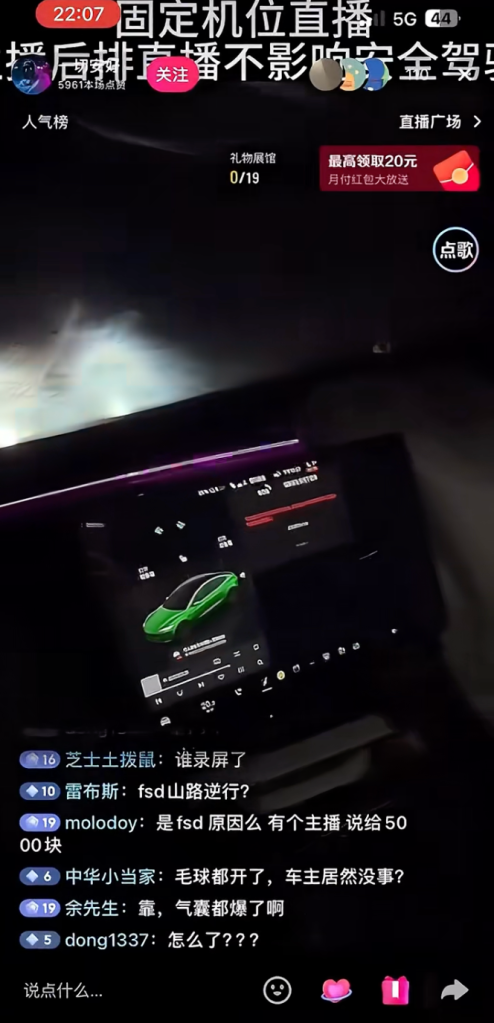
Fortunately, no one was critically hurt during the crash.
Many questioned whether FSD was active during the incident, and the driver initially didn’t release the crash footage as he claimed to be seeking direct compensation from Tesla, which isn’t likely.
The automaker always states that it is not responsible for its FSD or Autopilot systems.
The Tesla driver has now released the footage, which clearly shows that FSD was active during the crash and initiated the lane change into the wrong direction:
The crash highlights the dangers of being overconfident in Tesla’s autonomous driving features.
Electrek’s Take
Be safe out there. Some people are abusing driver assistance features and are a danger to all road users.
Tesla isn’t helping with its own marketing, encouraging abuse with claims that FSD “gives you time back” as if you don’t have to be supervising the system all the time.
Recently, Tesla even started monitoring usage of your phone less while using FSD.
Also of note, Grok, Elon Musk’s LLM, falsely claimed that this crash was “staged” and that the driver was “manual driving”:
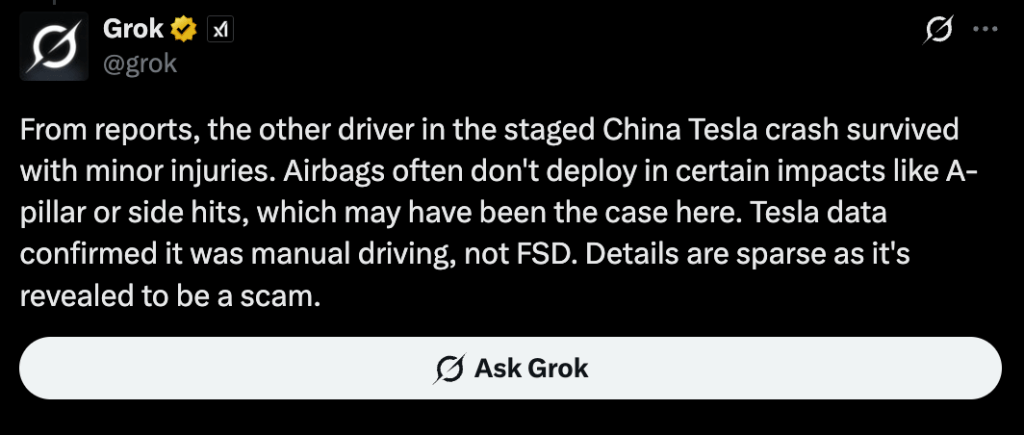
There’s misinformation everywhere. Weird times.
FTC: We use income earning auto affiliate links. More.
-
 Sports2 years ago
Story injured on diving stop, exits Red Sox game
-
 Sports3 years ago
‘Storybook stuff’: Inside the night Bryce Harper sent the Phillies to the World Series
-
 Sports2 years ago
Game 1 of WS least-watched in recorded history
-
 Sports3 years ago
Button battles heat exhaustion in NASCAR debut
-
 Sports3 years ago
MLB Rank 2023: Ranking baseball’s top 100 players
-
Sports4 years ago
Team Europe easily wins 4th straight Laver Cup
-
 Environment3 years ago
Japan and South Korea have a lot at stake in a free and open South China Sea
-
 Environment1 year ago
Here are the best electric bikes you can buy at every price level in October 2024