

Fisker (FSR) dials back its 2023 production targets yet again as it fights to keep going


American EV automaker Fisker Inc. recently shared a business update, outlining several changes in the works, including leadership moves, accelerated deliveries, and potential partnerships with other OEMS. However, one less encouraging update is Fisker’s announcement it is once again lowering its production targets for the year to prioritize liquidity.
2023 continues to sit as a make or break year for Fisker Inc. ($FSR), the EV startup’s second iteration hoping to scale to the global EV stage. We currently sit just over a year since production of Fisker’s flagship model, the Ocean, began at Magna Steyr in Graz, Austria.
While Fisker did nail its initial timeline to commence Ocean production, nearly every target since has been adjusted following early stumbles. For instance, Fisker’s initial production target for 2023 was an ambitious 42,400 units – but the automaker lowered that forecast to between 32,000 and 36,000 EVs in May.
Since then, we’ve seen Fisker lower its targets to between 20,000 and 23,000 EVs… then again to 13,000 to 17,000 units announced last month. During its latest progress update, the American automaker shared several internal changes, including yet another slash to its 2023 production targets. Here’s the latest.

Fisker reduces 2023 production target to 10,000 units
According to a recent business update shared by Fisker Inc., it has put several plans in motion to expedite Ocean deliveries – which includes new showroom footprints, as well as strategic partnerships logistics companies. Furthermore, Canadian deliveries are expected to begin this week.
Fisker says that now that nearly all of the initial launch edition Ocean Ones have been delivered, it will bolster its staff to lock in 2023 orders and keep deliveries going as it segues into 2024. An Ocean lease program is in the works for 2024 as well, while fleet orders to commercial customers are also being considered.
Additionally, Fisker says it is in “advanced discussions” with several automakers about possible strategic partnerships and will update the public in the coming months.
Slipped in between an update on its solar roof technology and its new accounting hires, Fisker once again announced it is slashing its production guidance – now down to (just over) 10,000 EVs for all of 2023. Per the release explaining the decision:
Fisker has made a strategic decision to reduce December production to prioritize
liquidity to unlock over $300 million of working capital, which creates additional business
flexibility.
In September, Fisker said it was on track to begin cranking out 300 Ocean EVs per day and delivered over 100 in a single day last week. As the automaker focuses on deliveries using existing builds, it appears it will also prioritize liquidity at the cost of production targets. According to Fisker’s Q3 financial results, it reported a loss of $91 million and revenue of $71.8 million – both numbers failing to meet previous expectations.
If we thought 2023 was a “do or die” year for Fisker Inc., 2024 appears like it will be even more trying, as the American startup pivots yet again to stay liquid and keep going. We’re rooting for ya!
FTC: We use income earning auto affiliate links. More.
Environment
Sunreef Yachts introduces ‘Double Happiness’ – its first 100-foot solar electric ‘supercat’


Sustainable boatbuilder Sunreef Yachts has unveiled another stunning solar electric catamaran, or “supercat,” which it is calling “Double Happiness.” This fully-electric yacht is 100 feet, Sunreef’s longest to date.
As we’ve pointed out in the past, Sunreef Yachts has been pushing the boundaries of sustainable marine travel since 2002. Over that time, the Polish boatbuilder launched the world’s first 74-foot luxury oceangoing catamaran with a flybridge.
Over twenty years later, hundreds of Sunreef Yachts can be seen traversing waters worldwide, showcasing the company’s lineup of sustainable luxury catamarans, all-electric propulsion, and advanced solar panels it calls “solar skin.”
Over the years, we’ve highlighted some of Sunreef’s solar-electric catamarans, ranging in length from 40 to 100 meters, including the Eco Explorer and the 80 Power Eco. Today, Sunreef has introduced its newest addition to its all-electric lineup: a 100-foot catamaran named “Double Happiness.”
Sunreef’s newest electric yacht boasts length and power
According to Sunreef Yachts, the new Double Happiness is its first all-electric 100-foot yacht to combine cruising and eco-technology. This 100 Sunreef Power Eco supercat is propelled by four 180 kW electric motors and powered by a massive 990 kWh battery pack onboard.
There’s also the option for range extension via two generator sets (350 kW at 622 V DC). Additionally, rooftop solar panels (12 kWp) help power some of the onboard electronics. The result is a 16-passenger super catamaran that can accommodate up to ten guides across five en-suites. Given its size, the all-electric 100 Sunreef Power Eco yacht offers vast and luxurious spaces as well as quiet, secluded areas. Sunreef Yachts Founder and CEO, Francis Lapp, spoke:
The first models of the 100 Sunreef Power were a revolution, they offered unbelievable amounts of space, comfort, proximity with the sea, and seaworthiness. With this 100 Sunreef Power Eco, named Double Happiness, we take the 100 Sunreef Power to the next level. Now, this superyacht is able to navigate in full silence, no vibrations, no fumes, fostering a better connection with the sea and superior energy efficiency.
The 100 Sunreef Power Eco joins the boatbuilder’s growing lineup of quiet, emission-free solar-electric catamarans that are not only sustainable but also ultra-luxurious and well-crafted.


FTC: We use income earning auto affiliate links. More.


GM may have decided to pull the plug on the forward-looking Chevy Brightdrop electric van a few months ago, but don’t let that stop you, but don’t let that fool you. Right now might be the best time ever to get your hands on one.
SKIP THE STORY: jump right to the deals (trusted affiliate link).
It’s hard to overstate how good the deals on Chevy’s Brightdrop got while GM was still trying to build up demand for its fleet-focused van, and now that the company has decided to stop production, the deals have gotten even better, with a newly announced $699 lease for 39 mo. with $2,999 down through January 2nd — and that’s before you factor in an additional $3,000 discount reserved for Costco Executive Members!
Despite that, I’ve heard more than one fleet manager express hesitation at the thought of adding a discontinued product to their fleet, even if it is a killer discount. To them, I offer the following, model-agnostic rebuttal:
Legacy brands support their products

Companies like GM aren’t going anywhere soon, and neither are the customers they’ve spent millions of dollars acquiring over the past several decades. They’ll keep building parts and offering service and maintenance on vehicles like the Brightdrop for at least a decade — not least of which because they have to!
GM sells each Brightdrop with a minimum 8 year/100,000 mile warranty on the battery and other key components, which can be extended either through GM itself or through reputable third-party companies like Xcelerate Auto for seven more.
There are precious few large fleets out there looking at 15 year, 200-plus thousand mile vehicle replacement cycles. For those that are, however, all indications so far are that the vehicle’s battery health and general performance will still be well within usable limits.
So, yes: parts longevity and manufacturer support will be there (something I’d be less confident about with a startup like Rivian or Bollinger, for example), but there’s more.
Section 179 and local incentives

The One Big, Beautiful Bill Act (OBBBA) of 2025 gutted America’s energy independence goals and ensuring its auto industry would fall even further behind the Chinese in the EV race, but the loss of Section 45W wasn’t the only change written into the IRS’ rulebook. Section 179, an immediate expense reduction that business owners can take on depreciable equipment assets, has been made significantly more powerful for 2025.
The section 179 expense deduction is limited to such items as cars, office equipment, business machinery, and computers. This speedy deduction can provide substantial tax relief for business owners who are purchasing startup equipment.
The revised Section 179 tax credit (or, more accurately, expense reduction) allows for a 100% deduction for equipment purchases has doubled to $2.5 million, with a phase-out kicking in at $4 million of capital investments that drops to zero at $6.5 million. That credit and can be applied to new and used vehicles, as well as charging infrastructure, battery energy storage systems, specialized tools, and more (as long as they’re new to you).
What’s more, with regional incentives like the up to $15,000 off a new medium-duty van available from Illinois utility ComEd, the net cost of GM’s $699 promo lease drops to ~$315/mo., and there is still state money out there, as well, depending on where you live.
All of which is to say: don’t let a little thing like GM discontinuing the Brightdrop convince you to skip it. If you do that, the bean counters that killed off the Buick Grand National, GMC Syclone, and Pontiac Fiero win.
SOURCE | IMAGES: GM Envolve.

If you’re considering going solar, it’s always a good idea to get quotes from a few installers. To make sure you find a trusted, reliable solar installer near you that offers competitive pricing, check out EnergySage, a free service that makes it easy for you to go solar. It has hundreds of pre-vetted solar installers competing for your business, ensuring you get high-quality solutions and save 20-30% compared to going it alone. Plus, it’s free to use, and you won’t get sales calls until you select an installer and share your phone number with them.
Your personalized solar quotes are easy to compare online and you’ll get access to unbiased Energy Advisors to help you every step of the way. Get started here.
FTC: We use income earning auto affiliate links. More.

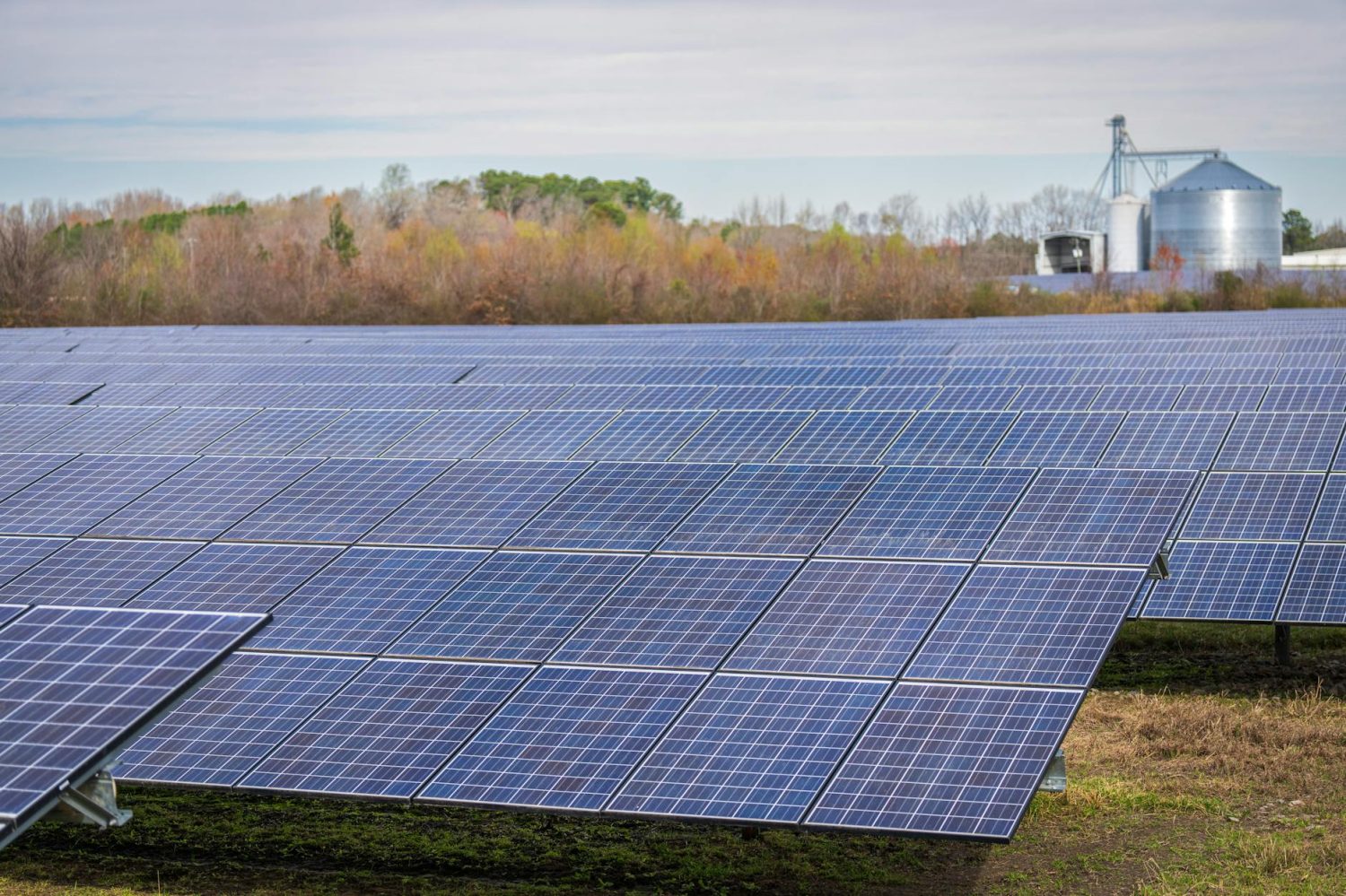
US Energy Information Administration (EIA) data released on November 25 and reviewed by the SUN DAY Campaign reveal that, during the first nine months of 2025 and for the past year, solar and battery storage have dominated growth among competing energy sources, while fossil fuels and nuclear power have stagnated.
Solar set new records in September
EIA’s latest “Electric Power Monthly” report (with data through September 30, 2025), once again confirms that solar is the fastest-growing source of electricity in the US.
In September alone, electrical generation by utility-scale solar (>1 megawatt (MW)) ballooned by well over 36.1% compared to September 2024, while “estimated” small-scale (e.g., rooftop) solar PV increased by 12.7%. Combined, they grew by 29.9% and provided 9.7% of US electrical output during the month, up from 7.6% a year ago.
Moreover, generation from utility-scale solar thermal and photovoltaic systems expanded by 35.8%, while that from small-scale systems rose by 11.2% during the first nine months of 2025 compared to the same period in 2024. The combination of utility-scale and small-scale solar increased by 29.0% and produced a bit over 9.0% (utility-scale: 6.85%; small-scale: 2.16%) of total US electrical generation for January-September, up from 7.2% a year earlier.
And for the third consecutive month, utility-scale solar generated more electricity than US wind farms: by 4% in July, 15% in August, and 9% in September. Including small-scale systems, solar has outproduced wind for five consecutive months and by over 40% in September.
Wind leads among renewables
Wind turbines across the US produced 9.8% of US electricity in the first nine months of 2025 – an increase of 1.3% compared to the same period a year earlier and 79% more than that produced by US hydropower plants.
During the first nine months of 2025, electrical generation from wind plus utility-scale and small-scale solar provided 18.8% of the US total, up from 17.1% during the first three quarters of 2024.
Wind and solar combined provided 15.1% more electricity than did coal during the first nine months of this year, and 9.8% more than the US’s nuclear power plants. In fact, as solar and wind expanded, nuclear-generated electricity dropped by 0.1%.
Renewables are now only second to natural gas
The mix of all renewables (wind, solar, hydropower, biomass, and geothermal) produced 8.7% more electricity in January-September than they did a year ago, providing 25.6% of total US electricity production compared to 24.2% 12 months earlier.
Renewables’ share of electrical generation is now second to only that of natural gas, which saw a 3.8% drop in electrical output during the first nine months of 2025.
Solar + storage have dominated 2025
Between October 1, 2024, and September 30, 2025, utility-scale solar capacity grew by 31,619.5 MW, while an additional 5,923.5 MW was provided by small-scale solar. EIA foresees continued strong solar growth, with an additional 35,210.9 MW of utility–scale solar capacity being added in the next 12 months.
Strong growth was also experienced by battery storage, which grew by 59.4% during the past year, adding 13,808.9 MW of new capacity. EIA also notes that planned battery capacity additions over the next year total 22,052.9 MW.
Wind also made a strong showing during the past 12 months, adding 4,843.2 MW, while planned capacity additions over the next year total 9,630.0 MW (onshore) plus 800.0 MW (offshore).
On the other hand, natural gas capacity increased by only 3,417.1 MW and nuclear power added 46.0 MW. Meanwhile, coal capacity plummeted by 3,926.1 MW and petroleum-based capacity fell by an additional 606.6 MW.
Thus, during the past year, renewable energy capacity, including battery storage, small-scale solar, hydropower, geothermal, and biomass, ballooned by 56,019.7 MW while that of all fossil fuels and nuclear power combined actually declined by 1,095.2 MW.
The EIA expects this trend to continue and accelerate over the next 12 months. Utility-scale renewables plus battery storage are projected to increase by 67,806.1 MW (a forecast for small-scale solar is not provided). Meanwhile, natural gas capacity is expected to increase by only 3,835.8 MW, while coal capacity is projected to decrease by 5,857.0 MW, and oil capacity is anticipated to decrease by 5.8 MW. EIA does not project any new growth for nuclear power in the coming year.
SUN DAY Campaign’s executive director Ken Bossong said:
The Trump Administration’s efforts to jump-start nuclear power and fossil fuels are not succeeding. Capacity additions from solar, wind, and battery storage continue to dramatically outpace those from gas, coal, and nuclear, and by growing margins.
Read more: EIA: Solar + storage dominate, fossil fuels stagnate to August 2025

If you’re looking to replace your old HVAC equipment, it’s always a good idea to get quotes from a few installers. To make sure you’re finding a trusted, reliable HVAC installer near you that offers competitive pricing on heat pumps, check out EnergySage. EnergySage is a free service that makes it easy for you to get a heat pump. They have pre-vetted heat pump installers competing for your business, ensuring you get high quality solutions. Plus, it’s free to use!
Your personalized heat pump quotes are easy to compare online and you’ll get access to unbiased Energy Advisors to help you every step of the way. Get started here. – *ad
FTC: We use income earning auto affiliate links. More.
-
 Sports2 years ago
Story injured on diving stop, exits Red Sox game
-
 Sports3 years ago
‘Storybook stuff’: Inside the night Bryce Harper sent the Phillies to the World Series
-
 Sports2 years ago
Game 1 of WS least-watched in recorded history
-
 Sports3 years ago
Button battles heat exhaustion in NASCAR debut
-
 Sports3 years ago
MLB Rank 2023: Ranking baseball’s top 100 players
-
Sports4 years ago
Team Europe easily wins 4th straight Laver Cup
-
 Environment3 years ago
Japan and South Korea have a lot at stake in a free and open South China Sea
-
 Environment1 year ago
Here are the best electric bikes you can buy at every price level in October 2024