
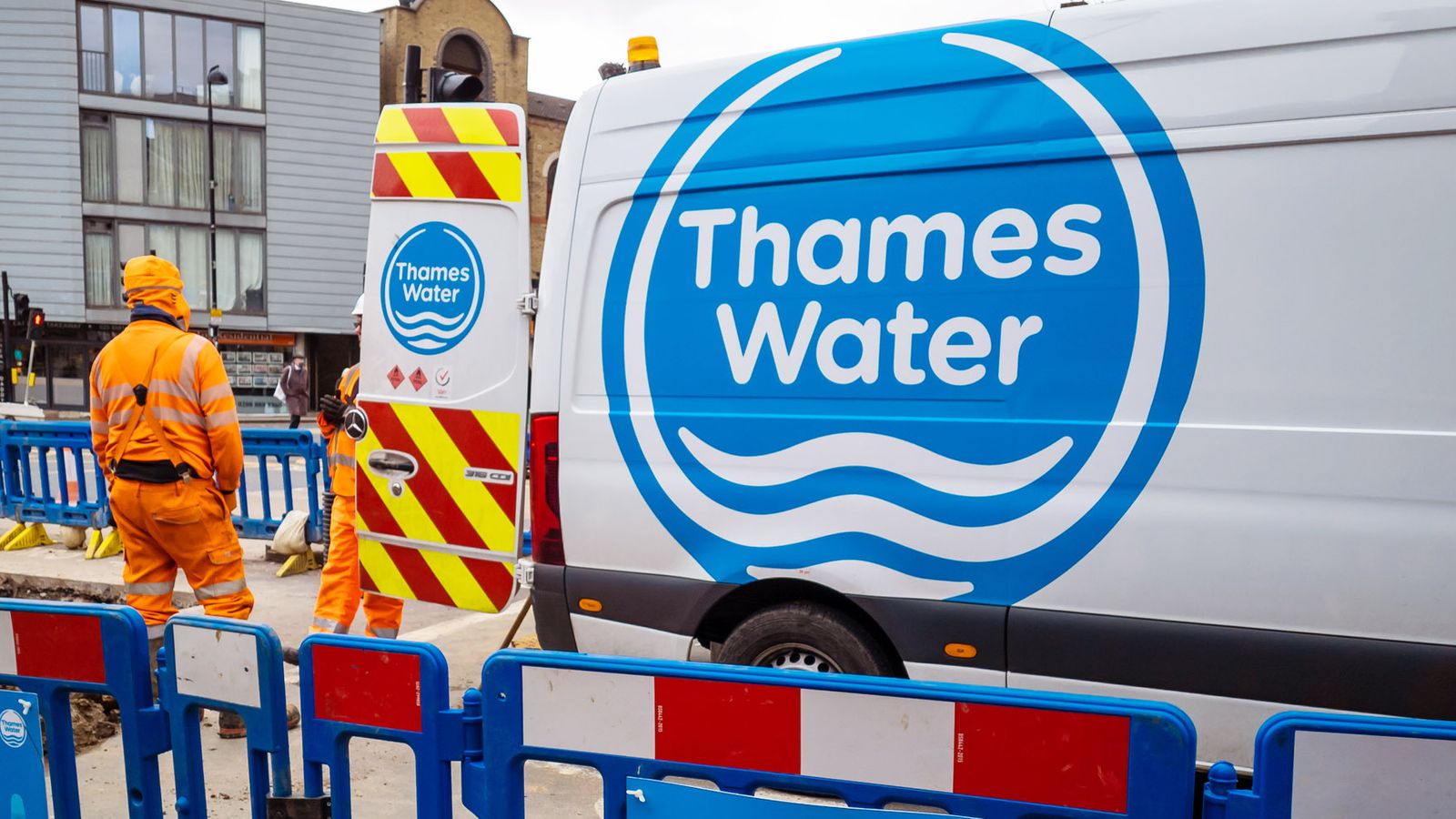
Thames Water pays £37.5m dividend amid debt pile and pollution fines, sparking Ofwat query


Thames Water has been asked to explain a £37.5m dividend payment made to a parent company.
Ofwat, the water regulator, asked the firm to explain how the sum does not break rules designed to protect customers and the environment.
They added they are investigating whether the dividend was in line with company licence requirements.
Ofwat said after receiving notification that the firm paid a dividend to shareholders, they “requested Thames Water provide more information to demonstrate how, specifically, the dividend payment meets the licence requirement to take account of service delivery for customers and the environment, as well as investment needs and financial resilience”.
“We will review any additional information the company provides and decide whether there is a case for further action,” they added.
Ofwat has not yet opened a formal enforcement case against Thames Water.
Thames Water said the money was simply being moved to a parent company in order to help pay its debts.
They added that no dividends have been handed to “external shareholders”.
Thames said it was working with the regulator “to provide further context and clarification”.
In May, rules were introduced ensuring water companies do not pay dividends unless they have delivered for customers and the environment.
Thames Water revealed an 18% rise in pollution incidents during the first half of its financial year today, and shared its debt pile grew by 7% to £14.7bn in the same period.
Alan Smith, a water industry consultant and MD of Water-People, says it’s clear that the sector needs a new model
Ofwat is able to impose penalties of up to 10% of Thames Water’s relevant turnover.
MPs also plan to bring Thames to parliament to answer questions about its finances.
Interim bosses said “immediate and radical action” is needed to improve its environmental and financial performance, but added: “Turning around Thames will take time.”
The UK’s biggest water supplier reported a 54% drop in pre-tax profits to £246.4m in the six months to 30 September.
Revenues rose 12% to £1.3bn in this period – but Thames spent a record £1bn on improving its network.
Former boss Sarah Bentley stepped down abruptly in June amid concerns over the firm’s financial security.
Read more from Sky News:
Top courthouse in Gaza ‘destroyed by IDF’
Junior doctors to strike again in England
Thames fined for pollution and performance
It comes after Thames Water reported 257 category one – the most serious – to category 3 pollutions over the six months to the end of September.
Thames was also fined more than £3m in the summer over an incident that saw human waste flow into rivers for more than six hours.
Earlier this autumn, Ofwat fined the company £51m for failing to reach its performance targets. The fined sum will be paid back through reductions to customer bills.
In June, Sky News reported on how fears Thames could be crushed by its debt prompted the government to ready a rescue plan.
Its investors later agreed a further £750m of investment. Thames said it had the money it needed despite its net debt rising.
Thames has been pushing for Ofwat to allow an increase in bills from 2025 to help fund its investment plans, with the focus on six key areas including tackling leaks, customer complaints, supply interruptions and pollution.

The first-ever Capture case has been delayed at the Court of Appeal as the Post Office asks for an extension to respond, Sky News has learned.
Pat Owen, a former sub postmistress who has since passed away, was convicted of stealing in 1998 based on evidence from computer software.
The system, known as Capture, was used in up to 2,500 branches in the 1990s, before the infamous Horizon system was introduced.
Hundreds of sub-postmasters were wrongfully convicted between 1999 and 2015 as part of the Horizon scandal.
Earlier this year, Sky News unearthed a 1998 report showing the Capture software was also faulty.
That report, commissioned by the solicitors acting for Mrs Owen in 1998, was served on the Post Office and may never have been seen by the jury in her case.
‘All we want is her name cleared’
Ms Owen was given a suspended prison sentence and fought to clear her name subsequently – but died in 2003.
Her case was referred by the Criminal Cases Review Commission (CCRC) to the Court of Appeal in October.
The Post Office had until 5 December to respond to papers put forward by Mrs Owen’s defence team but they have now asked for an extension until 30 January.
Ms Owen’s daughter, Juliet Shardlow, described the family’s suffering at the lengthening wait.
“I need to emphasise the profound impact the ongoing delay is having on our family,” she said.
“The continuous uncertainty only compounds our heartache, stress, and anxiety.
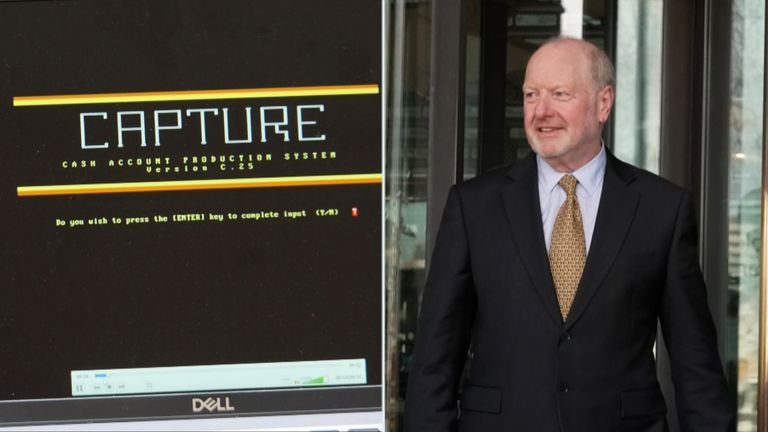
Alan Bates: New redress scheme ‘half-baked’
“It has become the last thing I think about before I go to sleep and the first thing when I wake up.
“We have waited 27 years for justice, and this additional wait feels never-ending.”
Ms Owen’s case is the first time a conviction based on Capture has reached the Court of Appeal since the scandal was exposed.
Read more from Sky News:
Corporate manslaughter charges considered in Post Office scandal
21 ‘Capture’ cases investigated for miscarriages of justice
Lawyers have said that if Ms Owen is exonerated posthumously, it may “speed up” the handling of others.
CCRC chair Dame Vera Baird also told Sky News in the summer it could be a “touchstone case” for other victims.
The CCRC is also continuing to investigate around 30 other “pre-Horizon” convictions.
A Post Office spokesperson said: “We have sought an extension of time to fully consider and respond to the CCRC’s Statement of Reasons in Ms Owen’s case.
“We deeply regret the impact our request for further time will have on Ms Owen’s family.
“We have a duty to carefully consider the evidence presented in the Statement of Reasons submitted by the CCRC and do everything we can to fully assist the Court when it considers this conviction.”
Meanwhile, the first-ever redress scheme for victims of the Post Office Capture IT scandal was launched this autumn.
The Capture Redress Scheme will provide payments of up to £300,000, and more in “exceptional” cases, to former postmasters who suffered financial losses.

-
 Sports2 years ago
Story injured on diving stop, exits Red Sox game
-
 Sports3 years ago
‘Storybook stuff’: Inside the night Bryce Harper sent the Phillies to the World Series
-
 Sports2 years ago
Game 1 of WS least-watched in recorded history
-
 Sports3 years ago
Button battles heat exhaustion in NASCAR debut
-
 Sports3 years ago
MLB Rank 2023: Ranking baseball’s top 100 players
-
Sports4 years ago
Team Europe easily wins 4th straight Laver Cup
-
 Environment3 years ago
Japan and South Korea have a lot at stake in a free and open South China Sea
-
 Environment1 year ago
Here are the best electric bikes you can buy at every price level in October 2024