
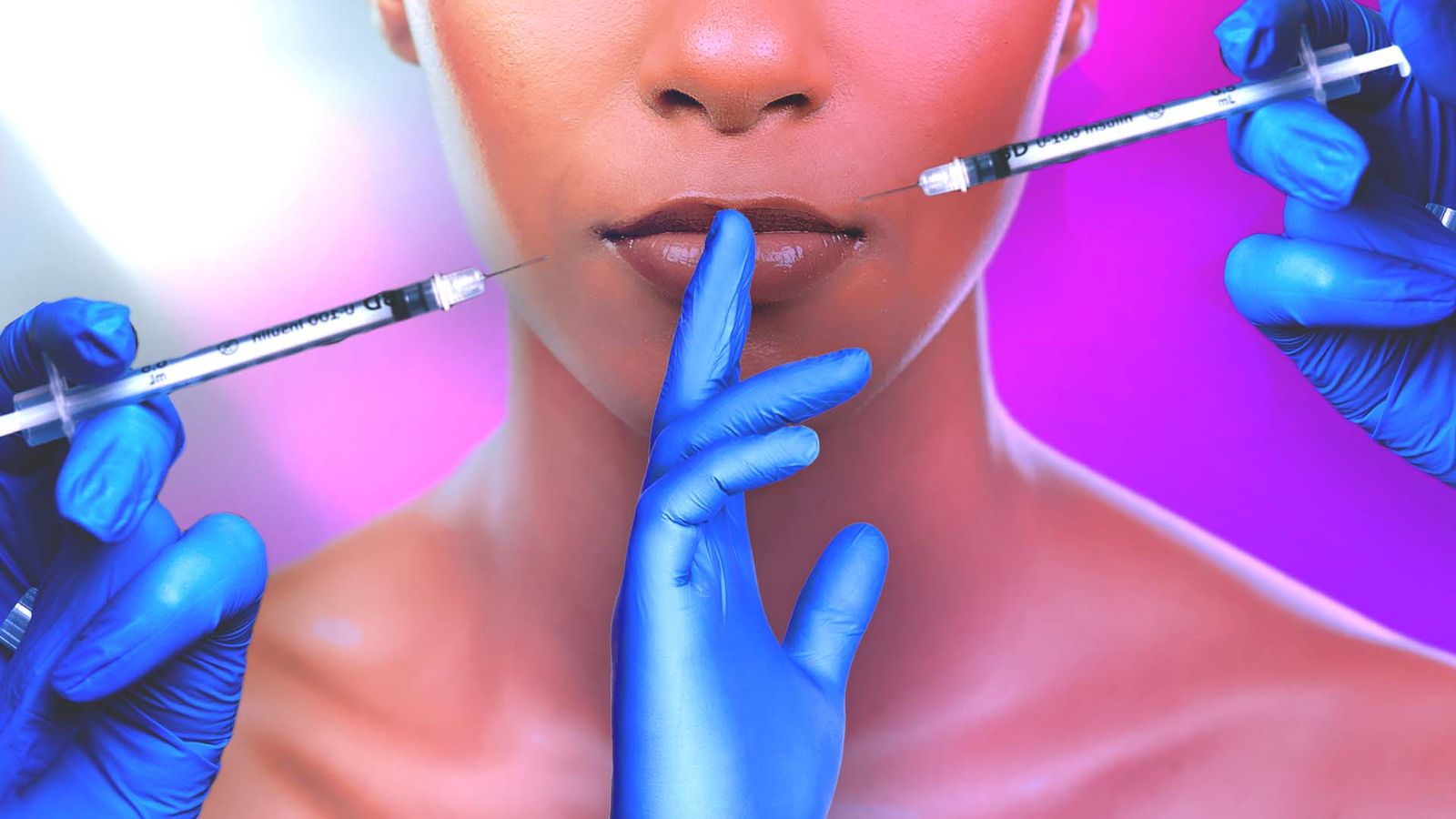
Secret Botox: A betrayal of trust or just a little white lie?


For eight years, Sophia* has been living a double life. She is not cheating on her husband and isn’t doing anything illegal, but her clandestine activities are something she plans with military precision to avoid getting caught.
Sophia, who is in her early 30s and lives in north London, is hiding her secret in plain sight. She is one of the hundreds of thousands of Brits who get non-surgical cosmetic treatments every year and lip filler is her beautifier of choice. But her husband doesn’t know.
Welcome to the world of cosmetic infidelity.
It started with a small amount of filler in her top lip. Then she had to go back to discreetly top it up. Before she knew it, she was hooked. She has a separate bank account, which helps cover her tracks, and she plans appointments around her husband’s football practice. She makes sure they’re first thing in the morning, in the hope the swelling will reduce by the evening. But it’s not always easy to keep it secret.
“It doesn’t matter what time of day you get lip filler, by the evening you look like a baboon’s backside,” she says.
Sophia just needs 24 hours or so for the swelling in her lips to subside, leaving her with a plump but natural-looking pout. But in that tricky transition period? “I get into bed and pretend I have period pains while covering my mouth under the duvet in the dark, with just the TV on.”
Honesty is not an option, she says, as her husband has made it clear he is against cosmetic treatments. “Or so he thinks,” she adds, recalling him telling her how pretty she looked after one procedure. “I think men assume you’ll look over-filled and I can’t be bothered to argue. I’d rather hide it, it’s a lot easier.”
Whether it’s Botox, fillers or other injectables, there are lots of Brits giving their natural beauty a helping hand with “tweakments” – but the majority, according to practitioners, are keeping it secret from their partner or other significant people in their lives. While most people in relationships tell the odd white lie here and there, is hiding the truth about cosmetic work a betrayal of trust – or is it a case of your body, your business?
Justifying the money was one of the reasons given by the secret tweakers we spoke to. Injectables don’t come cheap in a cost of living crisis, with the NHS saying prices vary from about £100 to £350, depending on the clinic and the area being treated.
There’s also societal pressure, especially on women, to look effortlessly wrinkle-free – but do this naturally, please. And so the occasional post-treatment bump or bruise might be blamed on children, pets or cupboard doors – one woman even convinced her husband he had injured her in his sleep.
Once a preserve of the rich and famous, an estimated 900,000 Botox injections are now carried out in the UK each year, according to the government. Skin boosters, which hydrate and add moisture, are also growing in popularity, and a recent report in a British plastic surgery journal predicted the UK injectables market will reach a value of £11.7bn by 2026.
The world is becoming more open about it, with influencers often filming their treatments to show how it all works. Love Island star Zara McDermott and former Made In Chelsea star Millie Mackintosh are among the British influencers who have been open about their injectables.
And yet, for many of those investing in these treatments there is still a stigma attached to it.
Pamela*, a 34-year-old mum from southwest London, has Botox in her forehead and between her eyebrows. For years, she kept it secret from her husband, including when they lived abroad in a country where treatments weren’t always up to scratch.
“Sometimes my husband would look at me like he knew something was different but he couldn’t identify what,” she says. “And these were not good Botox jobs either.” On one occasion, she says she was left looking like Dr Spock. “My eyebrows shot up… it was so bad, an absolute shocker.”
Still, even with vampiric brows, she managed to hide it. Her husband had previously told her she would be wasting money and that she “didn’t need it”. So she always paid cash. “I couldn’t leave a trail,” she explains.
Once after a less successful trip to her injector she was left with bruising so bad that no amount of make-up could cover it up. “I convinced my husband he’d elbowed me in the middle of the night and given me a black eye,” she says. “He felt so bad about it.”
Dr Rina Bajaj, a London-based relationship and counselling psychologist, says honest communication is crucial in any relationship – but individuals also have the right to make choices about their bodies.
“In relationships that value individual freedom and independence, these choices may be seen as personal and not necessarily shared information,” she says. But, in a different kind of relationship, one partner discovering the other has been keeping cosmetic procedures a secret can break trust.”
Understanding the motivations behind the secrecy is important, she adds, as if fear of judgement or negative reactions from a partner is a driving factor, it could be indicative of underlying issues.
But fellow behavioural psychologist and relationship coach Jo Hemmings says keeping small cosmetic procedures secret from a partner is an omission rather than a lie. “It’s not a betrayal of trust because you’re doing it for yourself,” she says. “You’re not deceiving somebody else in the way you would be if you were cheating.”
Even the A-listers are doing it. Oscar-winner Olivia Colman has previously said she tried Botox and “LOVED IT” in an interview with The Times in 2015, but admitted to initially keeping it from her husband. “For about six months he kept saying, ‘Hello, Pretty!’,” she told the newspaper. When she eventually told him, “he found it hilarious”.
Botox and other skin boosters remain a complicated issue for many. For every influencer, beauty journalist or celebrity speaking openly about their cosmetic work, there are more insisting their never-ageing faces are down to the magic formula of drinking lots of water and mindfulness.
Paula*, a 43-year-old mum from Hertfordshire, started getting Botox for her “Gordon Ramsay” frown lines after discovering some friends had been doing it “for years”. After her first treatment, she was nervous her husband would notice, but he didn’t. “I panic every time but he’s not the most observant.”
At the other end of the spectrum, Anna, 40, is open about her Botox and fillers with her husband but doesn’t volunteer the information to friends. “I try not to do the school run for the next couple of days,” she says. “Maybe because I’m a mum, there’s a kind of pressure to dress a certain way and not enhance yourself.”

While practitioners say it is more common for women to keep their treatments hidden, there are a fair few male patients telling white lies about their beauty habits.
Simon*, a 60-year-old man who lives in the home counties, has been with his partner for 24 years. In that time, he has had a cocktail of treatments, including Botox, fillers and BBL (Brazilian Butt Lift), as well as tightening and fat-reducing procedures.
It’s a lot to keep quiet about, but he wants his partner to think his youthful looks are all down to his healthy lifestyle. Is he ever worried about him finding out? “Not at all, blind as a bat.”
But it’s not just his partner he keeps it secret from. “Everyone,” he says. “It all looks so natural and I don’t have giveaway scars round my ears or missing bits of my face. They just think it’s the Peloton and smoothies.”
Euan Mackinnon, a maxillofacial surgeon and aesthetic doctor who treats cosmetic patients at The Lovely Clinic, has been carrying out tweakments for more than 10 years and says about 70% of clients are keeping it secret from someone.
“There’s a lot of people who are worried about being found out by a partner,” he says. It is usually women not wanting their husband or boyfriend discovering their secret, because men will give examples of celebrity horror stories, not realising there are hundreds for whom it has gone well. Men fear their partners looking caricature-like, “with overly inflated lips or frozen foreheads”, he adds. “In reality, that’s not what we do at all.”
Read more:
How to make Botox and other non-surgical cosmetic treatments safer?
Two-thirds of cosmetic surgery injections not carried out by doctors – study
Botulism in patients who had weight loss injections sparks warning
Patients will often tell him excuses they have given for any temporary bruising that might occur immediately after injections. “You do what you’ve got to do to get through those first few days. But most treatments don’t lead to significant bruising.”
On a more serious note, patients are worried about being judged, he says. “Partners might make them feel like they’re being silly or being vain… But you shouldn’t feel shameful if you look in the mirror and you just don’t like something… if there’s a very safe solution to that problem then why not make yourself feel good?”

There are also contradictory societal pressures, he says: age gracefully, but don’t age. “It seems to be a success to look incredibly good and have had nothing done because you’re winning at life, and if you have some help along the way it’s seen by some as cheating or a weakness – which it’s obviously not.”
And there is a difference across generations. Younger millennials have grown up watching influencers filming from their beauty beds as the needles go in, and are more likely to view cosmetic treatments as self-care. Older millennials, Gen X-ers and Boomers are more likely to keep it private.
“But it’s not just a vanity project,” Mr Mackinnon adds. “I’m constantly seeing patients who tell me their confidence has improved – ‘I got this promotion’, ‘I took the plunge with something’ – it can change everything for them.”
Lee Garrett, advanced aesthetic nurse practitioner and prescriber and clinical lead at The Cosmetic Skin Clinic, carries out about 3,000 treatments a year and has more than 20 years’ experience in the field.
He agrees it is common for patients to keep treatments secret from partners, and work colleagues as well – some have even told him that working in a very young environment makes them worry about their looks and being “pushed out by a younger version”.
Secret or no secret, both Mr Mackinnon and Mr Garrett agree the most important thing is to do your research and go to a healthcare professional. “Avoid at all costs people who say they can do it cheap,” says Mr Garrett. “They can, but they are not qualified, not insured and so when it goes badly wrong, you’re on your own.”
And if that happens, the secret definitely will be out.
Meanwhile, Sophia is hoping to get beauty vouchers for Christmas to cover her next lot of secret lip filler. Last time, her husband thought he was gifting her a facial. “He asked me how it went and I responded, ‘really relaxing, thank you!'”
Cosmetic infidelity, it seems, is a hard habit to shake.
*Names have been changed
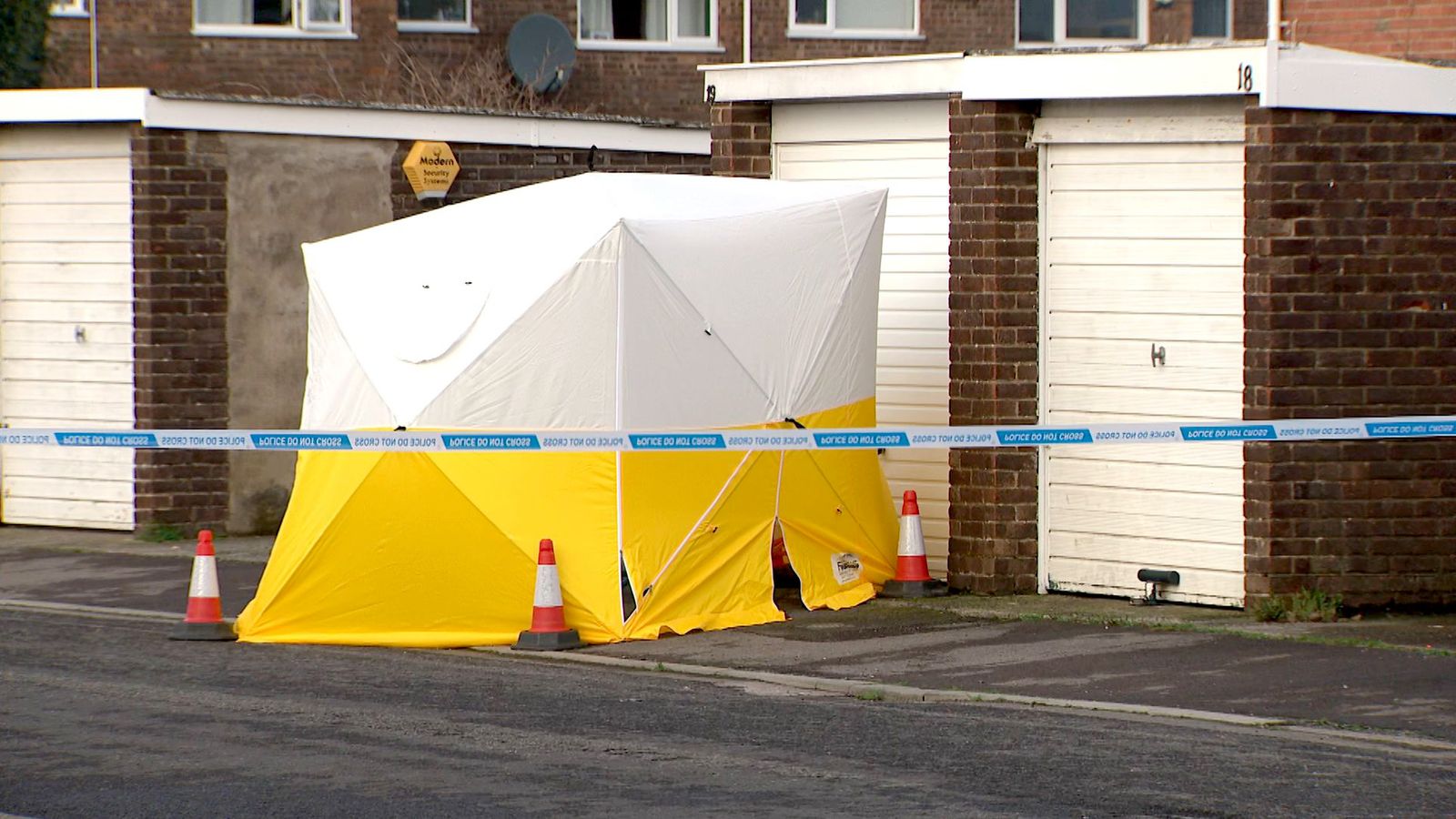

A nine-year-old girl found dead in Weston-super-Mare has been named on the day police revealed a teenager had been charged with her murder.
Emergency services were called to Lime Close in the Somerset town at 6.09pm on Monday but Aria Thorpe was pronounced dead at the scene.
Police said a 15-year-old boy had been charged with her murder and that a preliminary post-mortem found she died from a single stab wound.
The teenage boy – who can’t be named due to his age – will appear at Bristol Magistrates’ Court later today.
A police cordon remains in place as forensics officers continue their work.
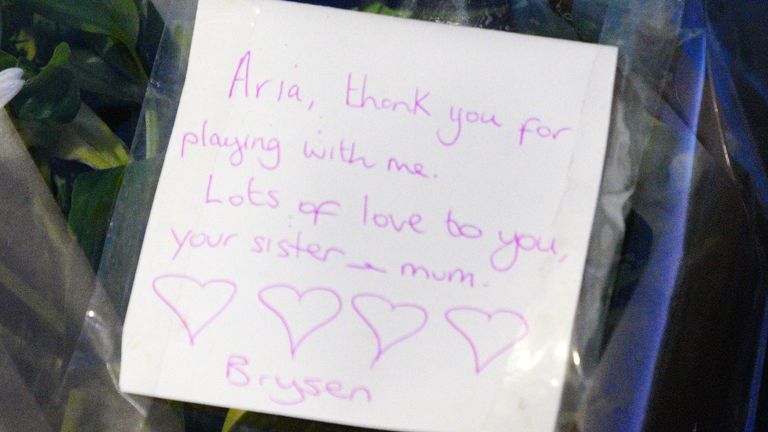
Flowers and tributes have been left at the scene. Pic: PA
Read more from Sky News:
NHS facing ‘worst-case scenario’ as doctors strike
Arrests over plot to steal ‘tonnes’ of charity clothes to fund crime
Superintendent Jen Appleford, from Avon and Somerset Police, said the community was in shock and Aria’s family were being supported by police.
“It is impossible to adequately describe how traumatic the past 36 hours have been for them and we’d like to reiterate in the strongest possible terms their request for privacy,” she said.
Supt Appleford said police were working with local schools and other agencies to make sure support is available.

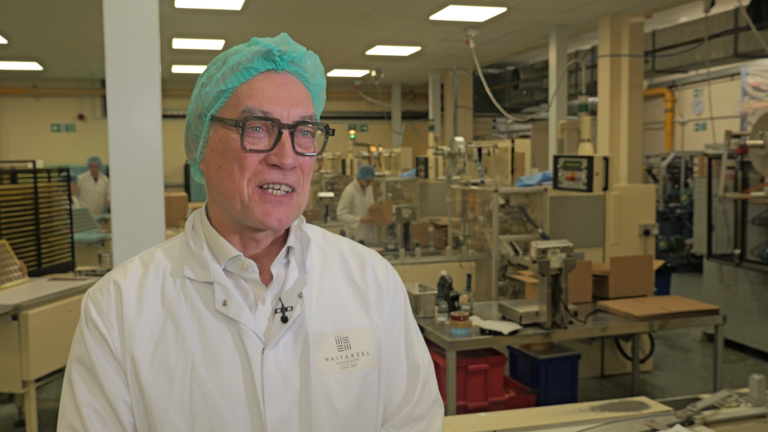
Britain loves chocolate.
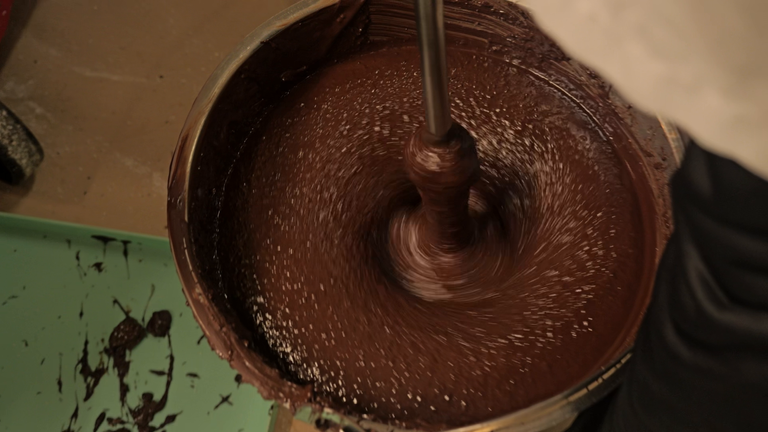
We’re estimated to consume 8.2kg each every year, a good chunk of it at Christmas, but the cost of that everyday luxury habit has been rising fast.
Whitakers have been making chocolate in Skipton in North Yorkshire for 135 years, but they have never experienced price pressures as extreme as those in the last five.
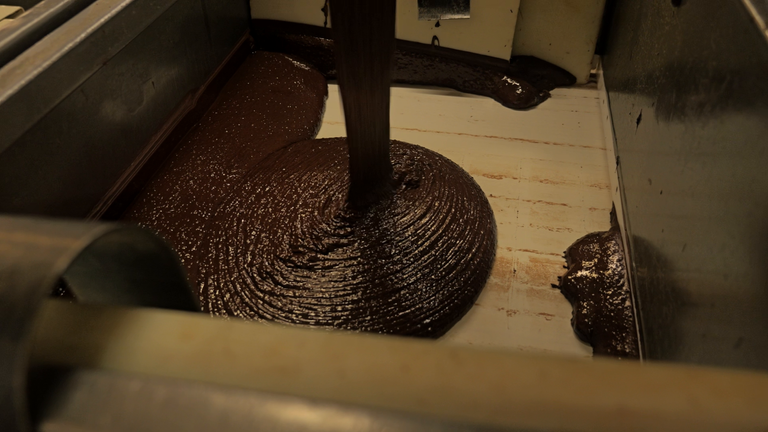
“We buy liquid chocolate and since 2023, the price of our chocolate has doubled,” explains William Whitaker, the real-life Willy Wonka and the fourth generation of the family to run the business.
William Whitaker, managing director of the company
“It could have been worse. If we hadn’t been contracted [with a supplier], it would have trebled.
“That represents a £5,000 per-tonne increase, and we use a thousand tonnes a year. And we only sell £12-£13m of product, so it’s a massive effect.”
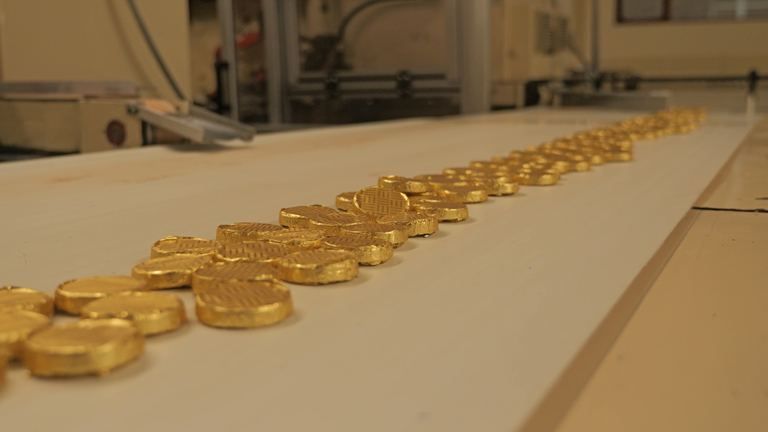
Whitakers makes 10 million pieces of chocolate a week in a factory on the much-expanded site of the original bakery where the business began.
Automated production lines snake through the site moulding, cutting, cooling, coating and wrapping a relentless procession of fondants, cremes, crisps and pure chocolate products for customers, including own-brand retail, supermarkets, and the catering trade.

Steepest inflation in the business
All of them have faced price increases as Whitakers has grappled with some of the steepest inflation in the food business.
Cocoa prices have soared in the last two years, largely because of a succession of poor cocoa harvests in West Africa, where Ghana and the Ivory Coast produce around two-thirds of global supply.
A combination of drought and crop disease cut global output by around 14% last year, pushing consumer prices in the other direction, with chocolate inflation passing 17% in the UK in October.
Skimpflation and shrinkflation
Some major brands have responded by cutting the chocolate content of products – “skimpflation” – or charging more for less – “shrinkflation”.
Household-name brands including Penguin and Club have cut the cocoa and milk solid content so far they can no longer be classified as chocolate, and are marketed instead as “chocolate-flavour”.
Whitakers have stuck to their recipes and product sizes, choosing to pass price increases on to customers while adapting products to the new market conditions.
“Not only are major brands putting up prices over 20%, sometimes 40%, they’ve also reduced the size of their pieces and sometimes the ingredients,” says William Whitaker.
“We haven’t done any of that. We knew that long-term, the market will fall again, and that happier days will return.
“We’ve introduced new products where we’ve used chocolate as a coating rather than a solid chocolate because the centre, which is sugar-based, is cheaper than the chocolate.
“We’ve got a big product range of fondant creams, and others like gingers and Brazil nuts, where we’re using that chocolate as a coating.”
The costs are adding up
A deluge of price rises
Brazil nuts have enjoyed their own spike in price, more than doubling to £15,000 a tonne at one stage.
On top of commodity prices determined by markets beyond their control, Whitakers face the same inflationary pressures as other UK businesses.
“We’ve had the minimum wage increasing every year, we had the national insurance rise last year, and sort of hidden a little bit in this budget is a business rate increase.
“This is a small business, we turn over £12m, but our rates will go up nearly £100,000 next year before any other costs.
“If you add up all the cocoa and all the other cost increases in 2024 and 2025, it’s nearly £3m of cost increases we’ve had to bear. Some of that is returning to a little normality. It does test the relevance of what you do.”
-
 Sports2 years ago
Story injured on diving stop, exits Red Sox game
-
 Sports3 years ago
‘Storybook stuff’: Inside the night Bryce Harper sent the Phillies to the World Series
-
 Sports2 years ago
Game 1 of WS least-watched in recorded history
-
 Sports3 years ago
Button battles heat exhaustion in NASCAR debut
-
 Sports3 years ago
MLB Rank 2023: Ranking baseball’s top 100 players
-
Sports4 years ago
Team Europe easily wins 4th straight Laver Cup
-
 Environment3 years ago
Japan and South Korea have a lot at stake in a free and open South China Sea
-
 Environment1 year ago
Here are the best electric bikes you can buy at every price level in October 2024