

Donald Trump has said the quiet stuff out loud. His Tuesday evening social media post on Venezuela feels like an offload, a dump of thoughts. But it is nonetheless very revealing.
“Venezuela is completely surrounded by the largest Armada ever assembled in the History of South America,” the US president says.
“It will only get bigger, and the shock to them will be like nothing they have ever seen before…”
That’s a reference to the massive US naval and Air Force presence in the Caribbean off Venezuela. It is indeed an armada, and it’s been there for months now.
On the face of it, it’s all part of an anti-drug mission, to counter the drug trade from Venezuela into America. At least that’s the public messaging. And the missile and drone attacks on suspected drug boats in the region are all part of the play.
And that’s why the second part of his post is particularly interesting, because he now appears to be saying out loud what plenty have suspected all along – that this is actually about regime change, and it is about oil far more than it is about drugs.
He says that the military will remain in place “until such time as they [Venezuela] return to the United States of America all of the Oil, Land, and other Assets that they previously stole from us”.
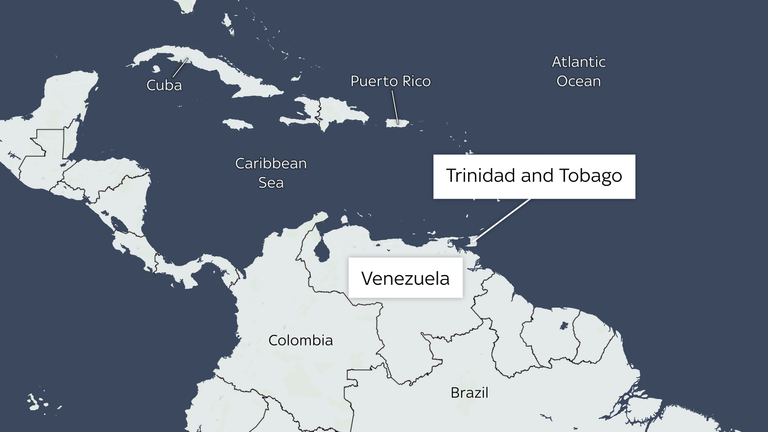
He continues: “The illegitimate Maduro Regime is using Oil from these stolen Oil Fields to finance themselves, Drug Terrorism, Human Trafficking, Murder, and Kidnapping.”
This is a reference to the fact that the US was once a huge importer of Venezuelan oil. American companies based in the country extracted the oil and refineries on the Texan coast processed it. The refineries were adapted over decades to refine the thick, heavy crude that is typical of Venezuela.
The process was big business for American firms until Venezuela, under Hugo Chavez in the 2000s, nationalised the foreign oil assets.
Read more:
The US-Venezuela crisis explained
Trump wants all that back – the oil, the revenue, the influence. So all this, it seems clear now, is about oil, and it is about spheres of influence – hemispheres. Trump is determined to assert American control over the western hemisphere.
The ultimate ambition it seems is threefold:
• To remove the Maduro regime and support a friendly, compliant government;
• To seize control of the oil, through commercial partnerships, not force;
• And to stop any drug and people smuggling into the US.
With this latest social post, Trump has now said all that out loud. Interesting days ahead are certain.
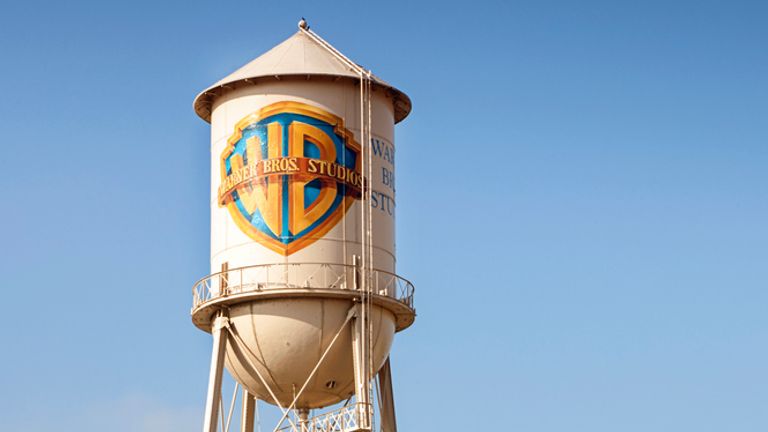
Warner Bros is reportedly set to reject a hostile $108bn (£81bn) takeover bid from Paramount, with one of the prospective buyer’s financing partners confirming it’s pulled out of the offer.
A spokesman for investment firm Affinity, owned by Donald Trump‘s son-in-law Jared Kushner, told Sky News’ US partner network NBC News “the dynamics of investment have changed significantly”.
It had backed Paramount’s bid, along with funds from Saudi Arabia and other Middle Eastern countries.
The Warner Bros Discovery board is set to advise shareholders to reject Paramount‘s bid – paving the way for Netflix, which had struck a $72bn (£54bn) deal.
If the takeover goes through, it would give the streaming giant the rights to hit Warner franchises like Harry Potter, Batman, and Game Of Thrones, as well an extensive back catalogue of classic films.
Money latest: Oil prices fall to lowest level since 2021
Pic: iStock
It is the latest twist in a takeover saga where the winner will acquire a huge advantage in the streaming wars.
In June, Warner announced its plan to split into two companies – one for its TV, film studios and HBO Max streaming services, and one for the Discovery element of the business, which primarily comprises legacy TV channels that show cartoons, news, and sports.
Netflix agreed a $27.75 per-share price with the firm, which equates to the $72bn purchase figure deal to secure its film and TV studios, with the deal giving the assets a total value of $82.7bn.
However, Paramount said its offer would pay $30 (£22.50) cash per share, representing $18bn (£13.5bn) more in cash than its rival offered. The offer was made directly to shareholders, asking them to reject Netflix’s deal, in what is known as a hostile takeover.
The Paramount deal would involve rival US news channels CBS and CNN being brought under the same parent company.
Read more:
Why is Warner Bros for sale and how is Trump involved?
The US government will have a big say on the final deal, with the winning company likely facing the Department of Justice’s (DOJ) Antitrust Division, a federal agency which scrutinises business deals to ensure fair competition.
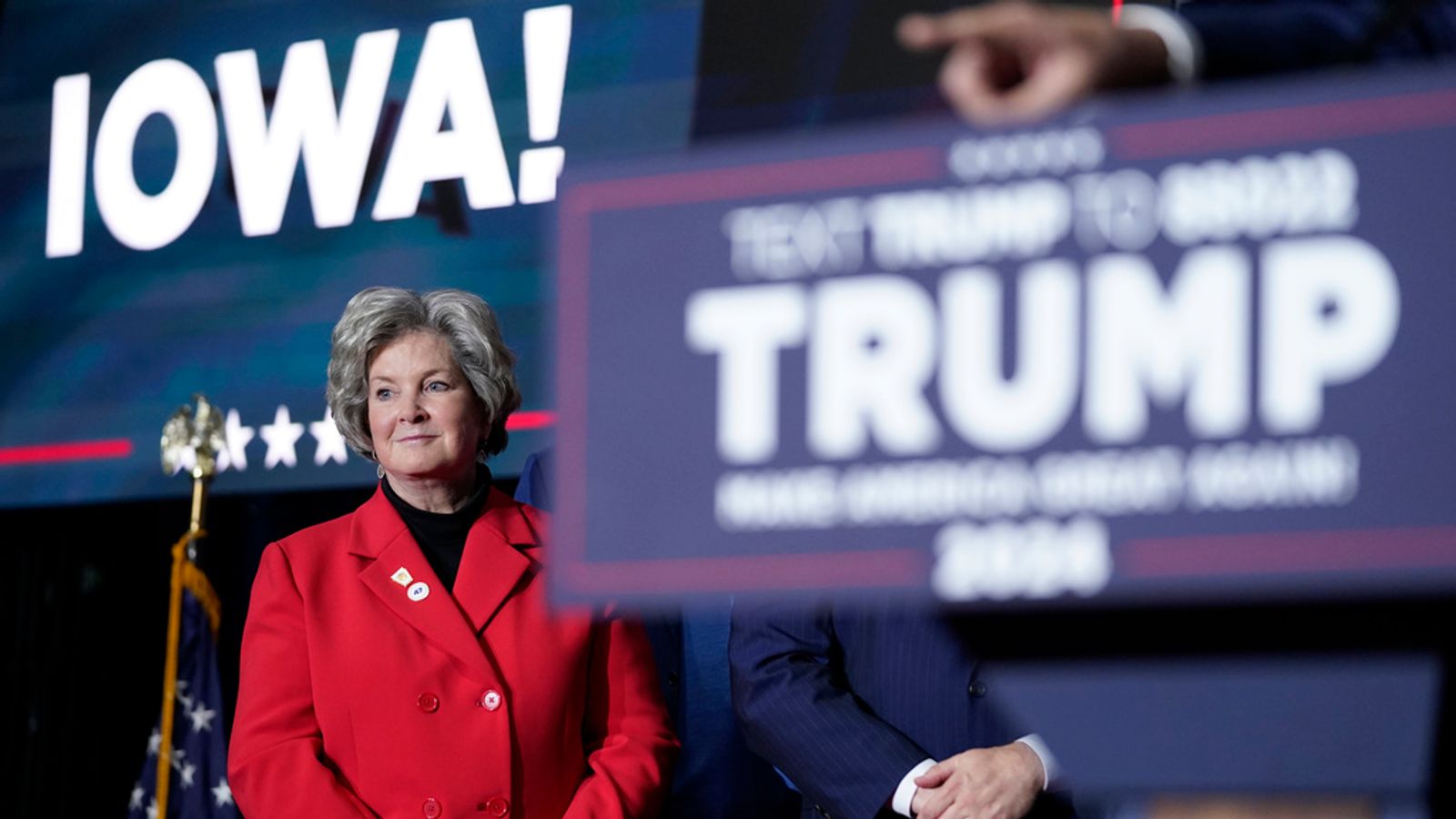
Donald Trump’s chief of staff Susie Wiles has hit out at Vanity Fair for publishing an article in which she was quoted as saying the president had an “alcoholic’s personality”.
The unusually candid interview also included quotes that paint an unflattering picture of vice president JD Vance and Elon Musk, who has heavily contributed to the Trump administration.
Ms Wiles, who is known to keep a low profile, claims her words have been taken out of context by the magazine, but hasn’t denied saying them.
Here are the main talking points from the lengthy interviews, a look at the response from Ms Wiles and Mr Trump – as well as everything you need to know about the chief of staff’s background.
What was revealed in the Vanity Fair interview?
The magazine published two articles on 16 December featuring quotes from 11 interviews Ms Wiles has given over the course of Mr Trump’s presidency.
She was quoted as suggesting Mr Trump has “an alcoholic’s personality”, although the president does not drink.
She made the comparison based on her experience with her late father, American footballer Pat Summerall, who was an alcoholic.
Ms Wiles said: “High-functioning alcoholics or alcoholics in general, their personalities are exaggerated when they drink. And so I’m a little bit of an expert in big personalities.”
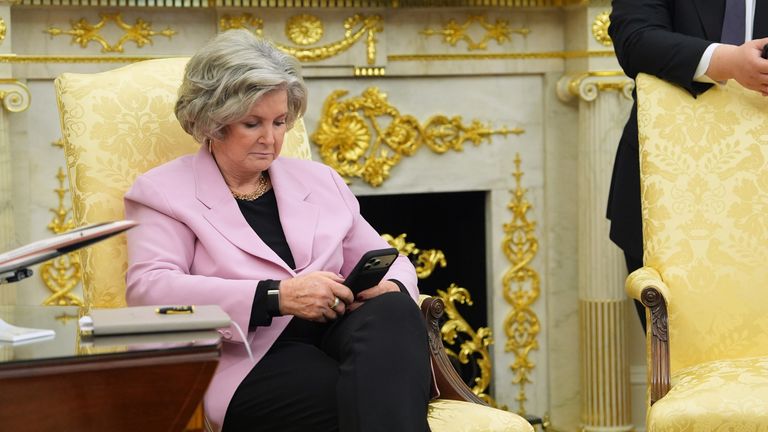
Susie Wiles sits in the Oval Office. Pic: AP
Two quotes reference the idea of Mr Trump seeking retribution.
In March, she suggested she had spoken to Mr Trump about how his presidency was not supposed to be a “retribution tour” against those who he felt had wronged him.
“We have a loose agreement that the score settling will end before the first 90 days are over,” she said.
In August, she denied he was on a retribution tour, but added: “In some cases, it may look like retribution. And there may be an element of that from time to time. Who would blame him? Not me.”
She also appeared to call into question Mr Trump’s long-standing stance that Russian President Vladimir Putin can be persuaded to end the war in Ukraine if Kyiv agrees to cede Ukrainian land in the eastern Donbas region.
“The experts think that if he could get the rest of Donetsk, then he would be happy,” Wiles said, referring to the region that is a key part of Donbas.
“Donald Trump thinks he wants the whole country,” she said.
Critical of Bondi’s handling of Epstein
Ms Wiles appeared to criticise Attorney General Pam Bondi over her handling of the Epstein files, saying she “completely whiffed” aspects of it by failing to manage the expectations of those waiting to see them.
In February, Ms Bondi told reporters that Epstein’s supposed client list was “sitting on my desk right now”, only to later claim there was no list, and that she had been referring to broader files.
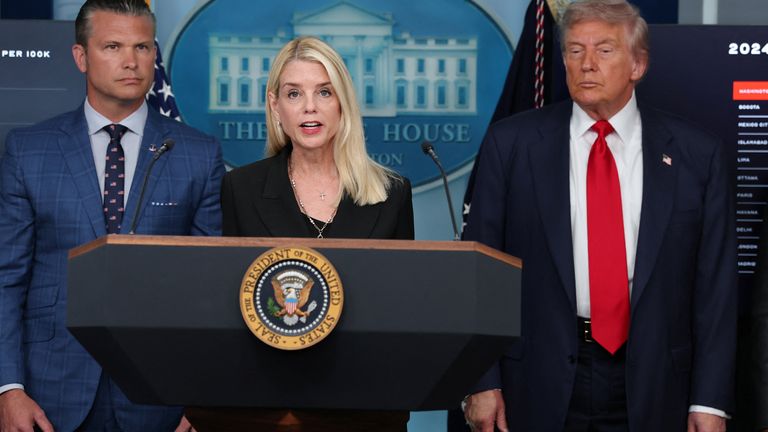
Pam Bondi speaks at news conference. Pic: Reuters
A week later, she released “Phase 1” of the declassified Epstein files, which largely contained information that had already been leaked publicly.
Ms Wiles said she had given the public “binders full of nothingness”.
On Mr Trump’s previous claims that former president Bill Clinton frequented Epstein’s infamous island, Ms Wiles said there was “no evidence” those visits happened, adding: “The president was wrong about that.”
Offhand assessments of Trump’s inner circle
She said vice president JD Vance had been “a conspiracy theorist for a decade” and that his MAGA conversion – after he once compared Trump to Adolf Hitler – was “sort of political.”
She described Elon Musk, whose funding was integral to Mr Trump’s election campaign, as “a complete solo actor… an odd, odd duck” and an “avowed ketamine user”.
The billionaire, who briefly oversaw Mr Trump’s Department of Government Efficiency (DOGE), has admitted to using prescribed ketamine to treat depression in the past.
She also suggested he had overstepped on his DOGE efforts, saying his gutting of USAID left her “initially aghast”.
“Because I think anybody that pays attention to government and has ever paid attention to USAID believed, as I did, that they do very good work,” she said, adding that “no rational person could think the USAID process was a good one. Nobody.”
Read more:
JD Vance: The ‘never Trumper’ who became his VP
Marco Rubio: The secretary of state who said Trump had small hands
Steve Witkoff: The real estate mogul tasked with brokering peace
She recalled having to explain to him that “you can’t just lock people out of their offices” when he was making government workers redundant.
Ms Wiles labelled health secretary Robert F Kennedy Jr, who is known to buy into conspiracies, as “quirky Bobby”, and White House budget chief Russell Vought “a right-wing absolute zealot.”
She later praised Mr Kennedy Jr’s impact, alluding to her view of the administration’s hard-liners overall, saying: “He pushes the envelope – some would say too far. But I say in order to get back to the middle, you have to push it too far.”
What have Wiles and Trump said after the interviews?
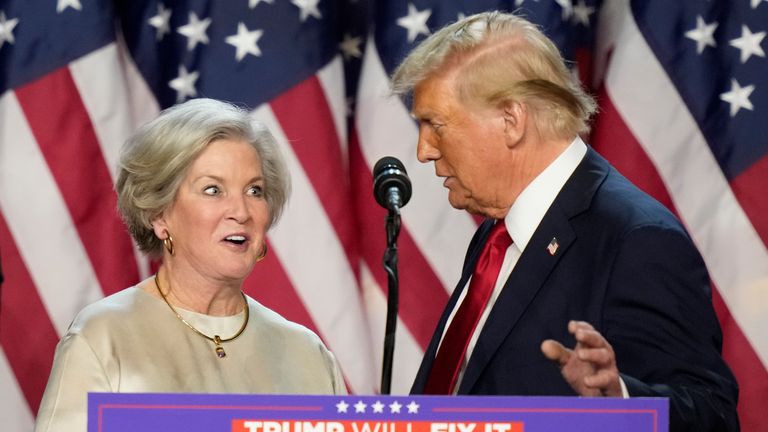
Donald Trump brings Ms Wiles to the podium at an election night watch party. Pic: AP
In a statement on X, Ms Wiles claimed the magazine had published a “disingenuously framed hit piece on me and the finest President, White House staff, and Cabinet in history”.
“Significant context was disregarded and much of what I, and others, said about the team and the president was left out of the story,” she said.
“I assume, after reading it, that this was done to paint an overwhelmingly chaotic and negative narrative about the president and our team.
“The truth is the Trump White House has already accomplished more in eleven months than any other president has accomplished in eight years and that is due to the unmatched leadership and vision of President Trump, for whom I have been honoured to work for the better part of a decade.”
Speaking to the New York Post, Mr Trump defended his chief of staff, saying he has made similar assessments about himself when it comes to having an “alcoholic’s personality”.
“I’ve said that many times about myself. I’m fortunate I’m not a drinker,” he said, adding he had an “addictive type personality”.
He said he hadn’t read the article, but added: “I think from what I hear, the facts were wrong, and it was a very misguided interviewer, purposely misguided.”
He said he thought Ms Wiles had done “a fantastic job” in her role.
What is Susie Wiles’s role?
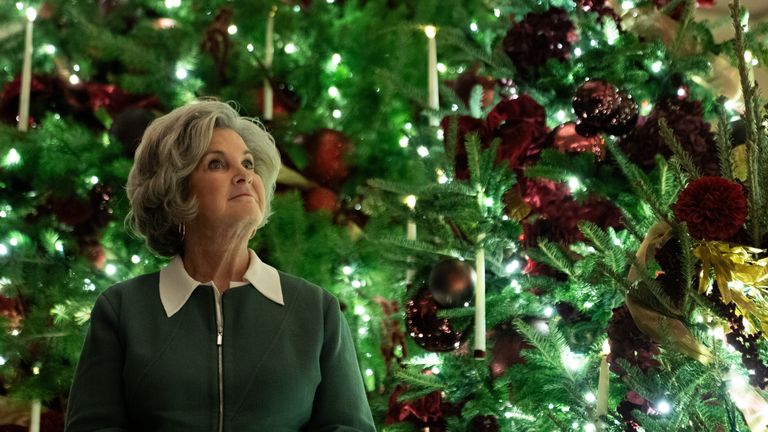
Pic: AP
Susie Wiles was the first major appointment Mr Trump announced after his second election win, making her his White House chief of staff and closest adviser.
She is the first woman in history to take up the role, which is one of the most important non-elected posts in Washington.
She is responsible for directing, managing and overseeing all policy development, daily operations, and staff activities for the president.
In his victory speech, Mr Trump described her as an “ice maiden” and credited her with his “best-run” campaign.
Historically, those in the role have been seen as gatekeepers for the president, but Ms Wiles has pushed back on that, previously saying she wants the president to have “more inputs, not less”.
Speaking to Vanity Fair for its pieces on Ms Wiles, Mr Vance said she broke the mould of previous chiefs of staff by acting as “a facilitator” for Mr Trump, helping to “make his vision come to life”.
Daughter of an American footballer
Ms Wiles grew up in New Jersey. Her father was the late American footballer Pat Summerall.
Before his death in 2013, he credited her with helping him get sober and attend an alcohol rehab programme.
“I hadn’t been there much for my kids,” he wrote in his memoir. “But Susan’s letter made it clear that I’d hurt them even in my absence.”
Ms Wiles’s first job in politics was in the 1970s as an assistant to the late Jack Kemp, who became a Republican representative for New York after playing alongside her father at the New York Giants.
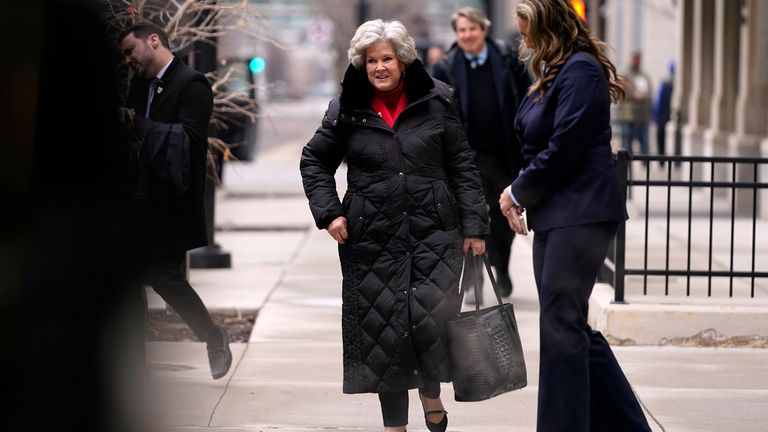
Pic: AP
She was later part of Ronald Reagan’s presidential campaign and subsequently worked as a White House scheduler during his term.
Following the Reagan administration, in 1988 she worked on the vice-presidential campaign for George H W Bush’s deputy Dan Quayle.
Having moved to Florida, she worked as an adviser to two Jacksonville mayors.
Outside politics she has worked in the private sector as a lobbyist, for Ballard Partners, whose clients include Amazon, Google, and the MLB (Major League Baseball), and then Mercury, who works with Elon Musk’s SpaceX and the Embassy of Qatar.
On her appointment to the Trump team, Mercury chief executive Keiran Mahoney said: “This is great news for the country. Susie has been a valued colleague. We are all proud of her and wish her the best.”
From DeSantis to Trump
In recent years, Ms Wiles has worked for some of the Republicans’ more divisive figures.
After helping Rick Scott become governor of Florida in 2010, she worked on Mr Trump’s 2016 campaign there.
With the Sunshine State win credited with helping Mr Trump take the White House, Ms Wiles was brought in to help Ron DeSantis’s ailing campaign to replace Mr Scott as governor in 2018.
The pair are reported to have fallen out after he was elected, which was seemingly confirmed when Ms Wiles was in charge of Mr Trump’s 2024 bid. Mr DeSantis was up against Mr Trump in the primaries, but was widely ridiculed and forced to pull out early on.
It was later claimed that Ms Wiles was behind some of the media stories that made fun of Mr DeSantis.
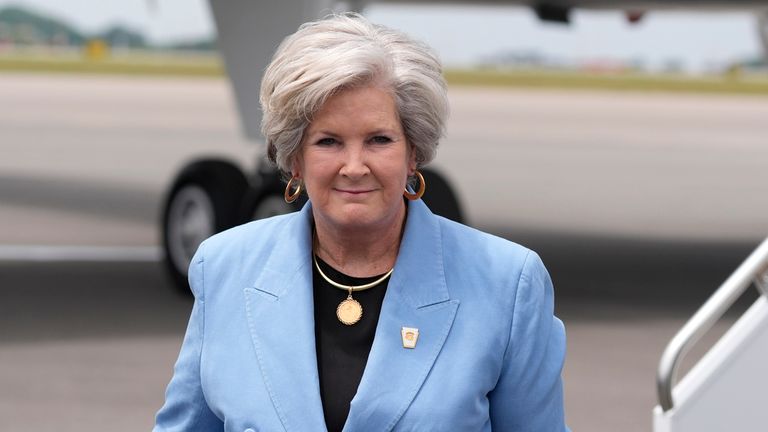
Pic: AP
‘Ice maiden’
Although unsuccessful, Mr Trump credited Ms Wiles with being an “integral” part of his second presidential bid in 2020.
She was co-manager of his effort the third time alongside Chris LaCivita.
After her appointment as chief of staff, he described her as the “perfect pick” with a “master ability to manage multiple things of significance simultaneously”.
During the campaign, she also lobbied for the tobacco company Swisher International.
Throughout her decades-long political career, Ms Wiles has stayed out of the limelight and scarcely engaged with the media.
Speaking to the Tampa Bay Times in 2016, she hit back at criticism of Mr Trump’s inflammatory rhetoric.
“I will tell you this: the Donald Trump that I have come to know does not behave that way, and the lens that I look at him through, I don’t see any of that. I see strengths, I see smarts, I see a work ethic that is unparalleled,” she told the newspaper.
She is believed to have been behind the campaign material that targeted Latino and black voters, who were key in taking votes from the Democrats.
At a rally in Milwaukee in 2024, Mr Trump said: “She’s incredible. Incredible.”
-
 Sports2 years ago
Story injured on diving stop, exits Red Sox game
-
 Sports3 years ago
‘Storybook stuff’: Inside the night Bryce Harper sent the Phillies to the World Series
-
 Sports2 years ago
Game 1 of WS least-watched in recorded history
-
 Sports3 years ago
Button battles heat exhaustion in NASCAR debut
-
 Sports3 years ago
MLB Rank 2023: Ranking baseball’s top 100 players
-
Sports4 years ago
Team Europe easily wins 4th straight Laver Cup
-
 Environment3 years ago
Japan and South Korea have a lot at stake in a free and open South China Sea
-
 Environment1 year ago
Here are the best electric bikes you can buy at every price level in October 2024