
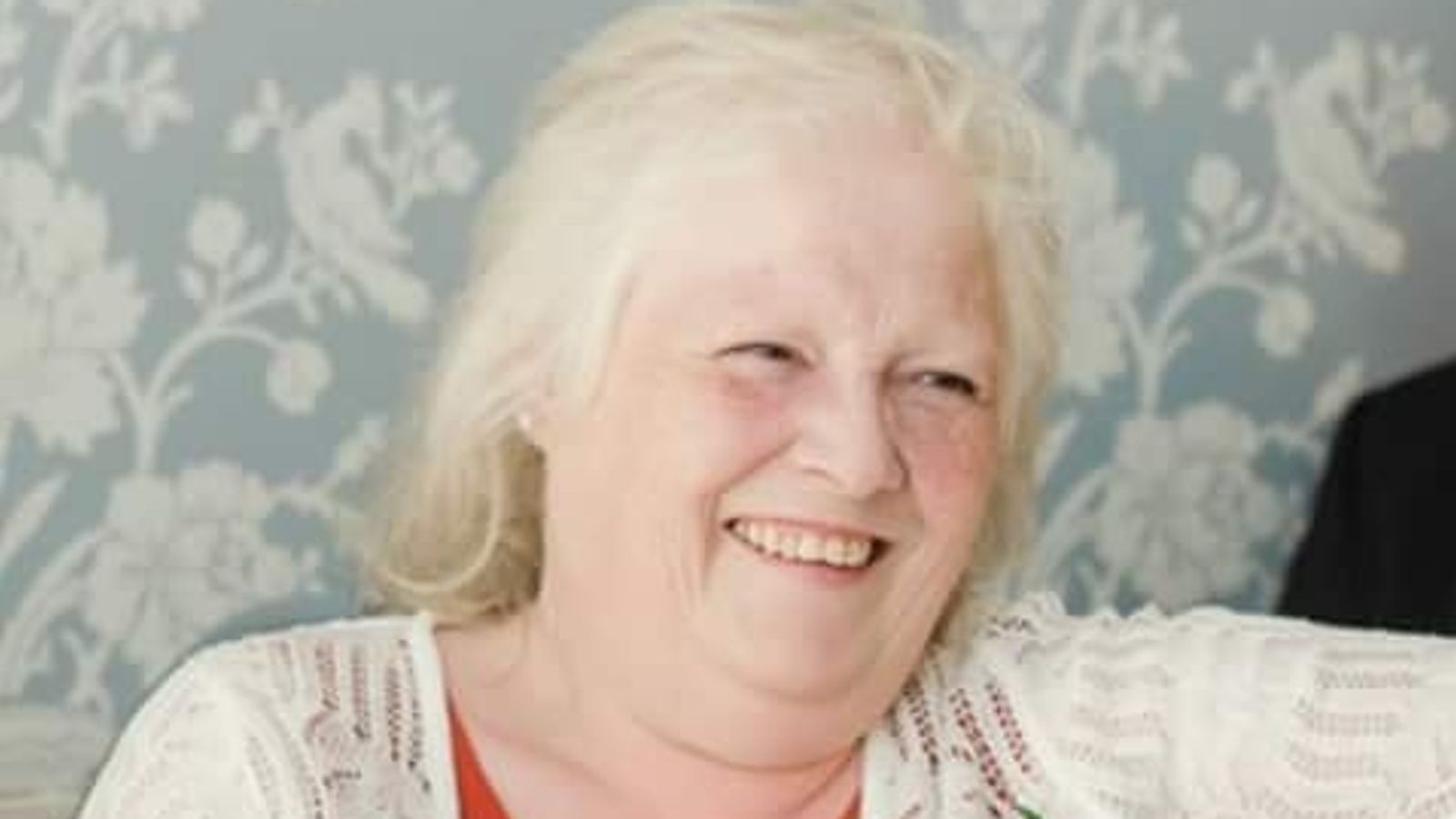
Man bailed after grandmother killed by two dogs


A man has been bailed after a grandmother was killed by two dogs at the weekend.
Esther Martin, 68, was attacked inside a house in Jaywick, Essex, on Saturday afternoon after reportedly trying to break up fighting puppies.
She had been visiting her 11-year-old grandson when the tragedy occurred, with neighbours describing “horrific” screaming.
A 39-year-old man who was arrested on suspicion of dangerous dog offences has been released on conditional bail until 5 March, Essex Police said on Monday.
He was known to the victim.
Ms Martin’s daughter Sonia Martin said the dogs were of the XL bully breed – which was banned at the start of this month – with a total of six puppies and two adult dogs in the property.
However, Acting Detective Superintendent Stuart Truss said investigators are working with experts to confirm the breed of the dogs.
He said: “We’re making good progress in our investigation into Esther’s death.
“It is an investigation with a number of complexities, but we are determined to give Esther’s family the answers they need.
“We are working with experts to confirm the breed of the dogs. This may take some days but it’s really important we get it right.
“I would ask people not to speculate about this element – we will establish the facts and we will keep the community in Jaywick updated.”
The incident is being investigated. Pic: Essex Police
Ms Martin’s daughter told the BBC: “There were adult XL bully dogs in the property, and my mum had raised concerns to the owners about them being dangerous and quite aggressive.”
She said her mother, from Woodford Green in London, had been “getting her life back together” following the death of another daughter two years ago.
“It’s killed our mum and it’s killed our children’s grandmother. I’m getting married in a couple of years and my mum won’t be at that,” she added.
Chief Superintendent Glen Pavelin said both of the animals were “destroyed inside the house” after officers arrived at the scene.
He told reporters on Sunday: “Their unflinching bravery and professionalism ensured that there is no ongoing threat to the people of Essex as a result of this incident.
“I would also like to thank local people who tried to get into the house to help Esther Martin, you should be proud.”
Read more from Sky News:
Snow on the way with yellow warning for large parts of England and Wales
Kate Garraway shares daughter’s final words to Derek Draper before his death
Although the breed involved is yet to be established, the attack comes just days after the ban on XL bully-type dogs came into force after a spate of attacks in recent years.
It means it is now a criminal offence to own one of the animals in England and Wales without an exemption certificate.
Unregistered pets can be seized and owners fined and prosecuted.
People with dangerously out-of-control dogs can be jailed for up to 14 years and banned from owning animals, and their pets can be put down.

The number of flu patients in hospital beds across England is more than 50% higher than the same period in 2024, according to NHS data.
A record average of 1,717 patients were in beds in England each day last week, including 69 in critical care.
This is an increase of 56% for the same week in 2024, where the total was 1,098, with 39 in critical care. The number is also higher than 2023, when there were an average of 243 flu patients, and 2022 with an average of 772.
On 30 November, there were 2,040 flu patients in hospital beds across England, which is a sharp rise of 74% from the same day in 2024 with 1,175, which was already the highest on a single day since 2021.
This year’s flu season started earlier than usual and has yet to reach its peak, meaning pressure on hospitals is likely to grow in the run-up to Christmas, when ballooning flu cases are set to coincide with industrial action, which could see thousands of resident doctors walking out.
National Medical Director for Urgent and Emergency Care, Prof Julian Redhead, warned: “Today’s numbers confirm our deepest concerns: the health service is bracing for an unprecedented flu wave this winter.
“Cases are incredibly high for this time of year and there is no peak in sight yet.
“The NHS has prepared earlier for winter than ever before, but despite that we know that ballooning flu cases coinciding with strikes may stretch our staff close to breaking point in the coming weeks.”
The number of flu jabs administered so far is similar to the years before, with the NHS administering 16.9 million flu vaccinations across England between the start of the NHS’s autumn vaccination campaign and the last week of November. This compares to 16.6 million last year and the year before.
About half, 8.4 million, were administered to adults aged 65 and over, which is comparable to the number of jabs in the last year and the year before at 8.3 million each during the same period.
The NHS is handling a higher volume of 111 calls, receiving 11,338 more calls last week than in the same week in 2024.
Ambulances handed over 99,000 patients at hospitals last week, which is 4,500 more than in the same week last year.
The number of patients waiting at least 30 minutes to be handed over to A&E teams after arriving by ambulance at hospitals in England is slightly lower than last year, at 30% compared to 36% in the equivalent week in 2024.
About 10% of ambulance handovers – corresponding to 9,580 patients – were delayed by more than an hour last week, compared to 16% the year before.
The overall percentage of available hospital beds is on par with previous years, but it is still below the target of having 8% available beds – or a maximum of 92% occupied beds – as set out in the 2023/24 NHS guidance.
Meanwhile, an average of 261 hospital beds in England were filled by patients with diarrhoea and vomiting or norovirus-like symptoms last week – last year, there were 751 at this point.
The figures have been published in the first of this year’s NHS winter situation reports.
UK
Salisbury novichok poisonings: Putin ‘morally responsible’ for woman’s death after authorising botched spy assassination bid
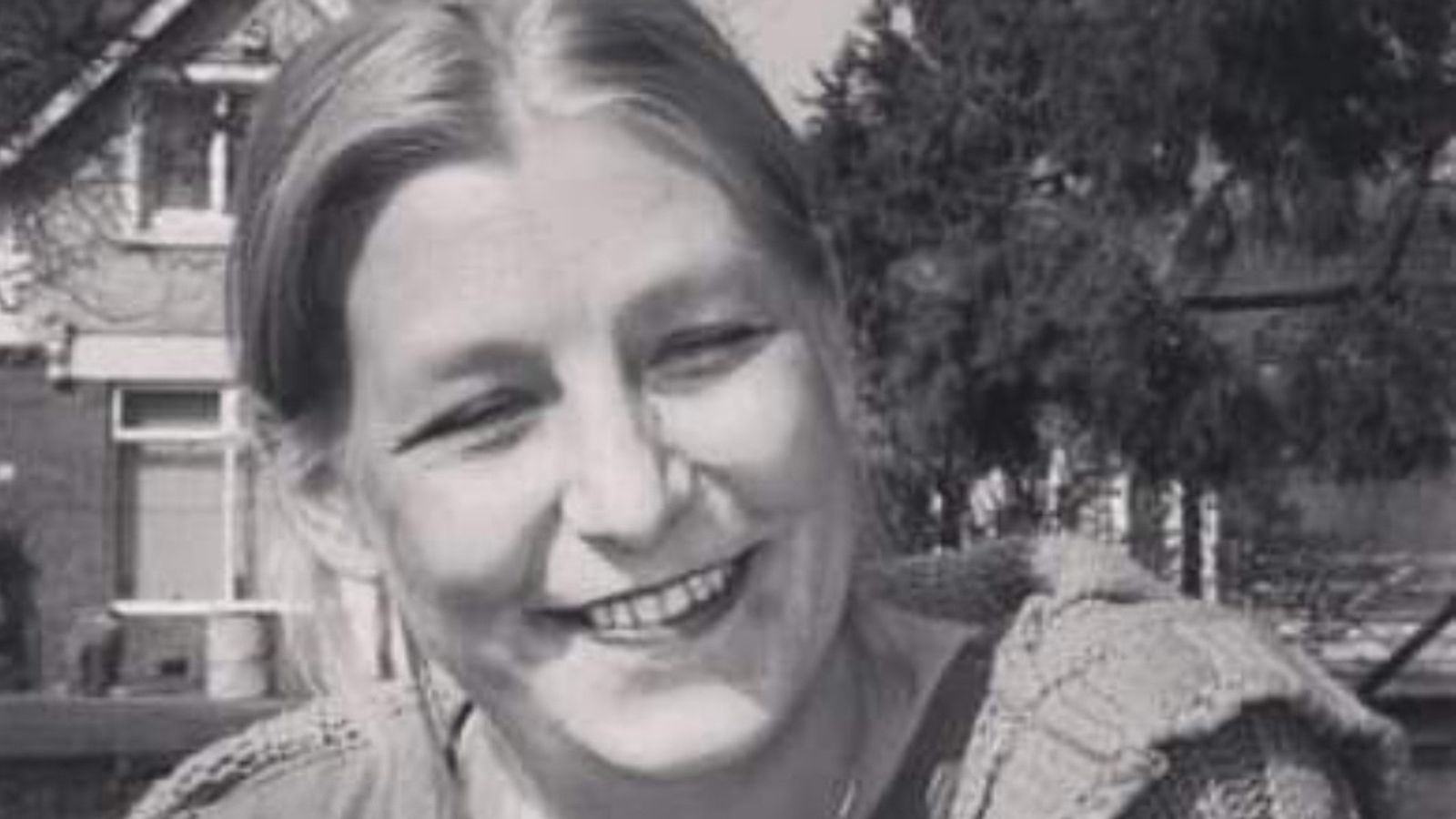
The assassination attempt on a former Russian spy was authorised by Vladimir Putin, who is “morally responsible” for the death of a woman poisoned by the nerve agent used in the attack, a public inquiry has found.
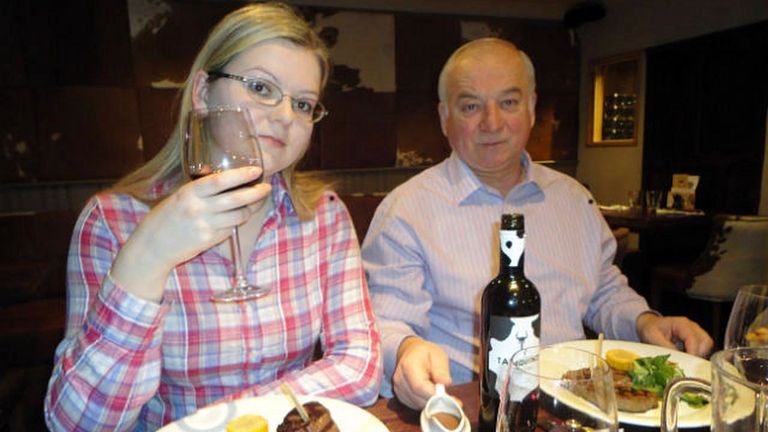
The chairman, Lord Hughes, found there were “failings” in the management of Sergei Skripal, 74, who was a member of Russian military intelligence, the GRU, before coming to the UK in 2010 on a prisoner exchange after being convicted of spying for Britain.
But he found the assessment that he wasn’t at “significant risk” of assassination was not “unreasonable” at the time of the attack in Salisbury on 4 March 2018, which could only have been avoided by hiding him with a completely new identity.
Mr Skripal and his daughter Yulia, 41, who was also poisoned, were left seriously ill, along with then police officer Nick Bailey, who was sent to search their home, but they all survived.
Sergei Skripal and Yulia Skripal.
Pic: Shutterstock
Dawn Sturgess, 44, died on 8 July, just over a week after unwittingly spraying herself with novichok given to her by her partner, Charlie Rowley, 52, in a perfume bottle in nearby Amesbury on 30 June 2018. Mr Rowley was left seriously ill but survived.
In his 174-page report, following last year’s seven-week inquiry, costing more than £8m, former Supreme Court judge Lord Hughes said she received “entirely appropriate” medical care but her condition was “unsurvivable” from a very early stage.
The inquiry found GRU officers using the aliases Alexander Petrov, 46, and Ruslan Boshirov, 47, had brought the Nina Ricci bottle containing the novichok to Salisbury after arriving in London from Moscow with a third agent known as Sergey Fedotov to kill Mr Skripal on 2 March.
The report said it was likely the same bottle Petrov and Boshirov used to apply the military-grade nerve agent to the handle of Mr Skripal’s front door before it was “recklessly discarded”.
“They can have had no regard to the hazard thus created, of the death of, or serious injury to, an uncountable number of innocent people,” it said.
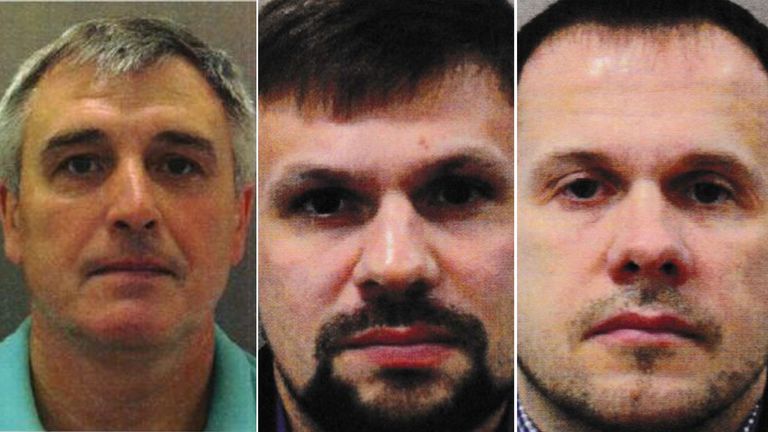
L-R Suspects who used the names of Sergey Fedotov, Ruslan Boshirov and Alexander Petrov. Pics: UK Counter Terrorism Policing
It is “impossible to say” where Mr Rowley found the bottle, but was likely within a few days of it being abandoned on 4 March, meaning there is “clear causative link” with the death of Ms Sturgess.
Lord Hughes said he was sure the three GRU agents “were acting on instructions”, adding: “I have concluded that the operation to assassinate Sergei Skripal must have been authorised at the highest level, by President Putin.
“I therefore conclude that those involved in the assassination attempt (not only Petrov, Boshirov and Fedotov, but also those who sent them, and anyone else giving authorisation or knowing assistance in Russia or elsewhere) were morally responsible for Dawn Sturgess’s death,” he said.
He said deploying the “highly toxic nerve agent in a busy city centre was an astonishingly reckless act” with an “entirely foreseeable” risk that others beyond the intended target would be killed or injured.
The inquiry heard a total of 87 people presented at A&E.
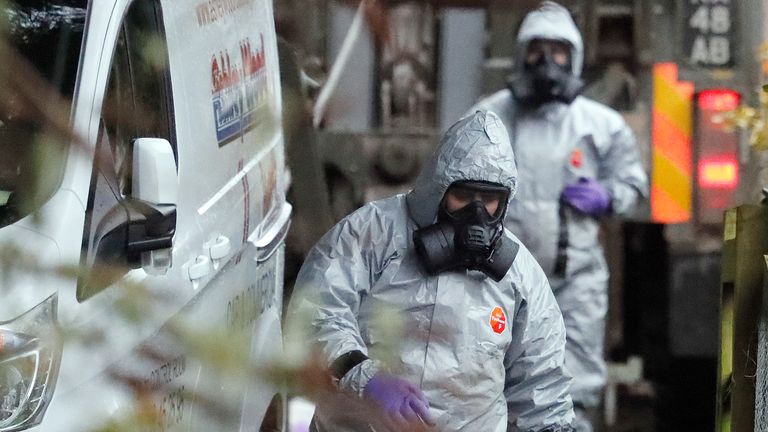
Pic AP
Lord Hughes said there was a decision taken not to issue advice to the public not to pick anything up which they hadn’t dropped, which was a “reasonable conclusion” at the time.
He also said there had been no need for training beyond specialist medics before the “completely unexpected use of a nerve agent in an English city”.
After the initial attack, wider training was “appropriate” and was given but should have been more widely circulated.
The Russian Embassy has firmly denied any connection between Russia and the attack on the Skripals.
But the chairman dismissed Russia’s explanation that the Salisbury and Amesbury poisonings were the result of a scheme devised by the UK authorities to blame Russia, and the claims of Petrov and Borisov in a television interview that they were sightseeing.
He said the evidence of a Russian state attack was “overwhelming” and was designed not only as a revenge attack against Mr Skripal, but amounted to a “public statement” that Russia “will act decisively in its own interests”.
Lord Hughes found “some features of the management” of Mr Skripal “could and should have been improved”, including insufficient regular written risk assessments.
Bu although there was “inevitably” some risk of harm at Russia’s hands the analysis that it was not likely was “reasonable”, he said.
“There is no sufficient basis for concluding that there ought to have been assessed to be an enhanced risk to him of lethal attack on British soil, such as to call for security measures,” such as living under a new identity or at a secret address, the chairman said.
He added that CCTV cameras, alarms or hidden bugs inside Mr Skripal’s house might have been possible but wouldn’t have prevented the “professionally mounted attack with a nerve agent”.
Sky News has approached the Russian Embassy for comment on the report.
This breaking news story is being updated and more details will be published shortly.
Please refresh the page for the latest version.
You can receive breaking news alerts on a smartphone or tablet via the Sky News app. You can also follow us on WhatsApp and subscribe to our YouTube channel to keep up with the latest news.
Hundreds of UK online safety workers at TikTok have already signed agreements to leave the company, whistleblowers have told Sky News, despite the firm stressing to MPs that the cuts were “still proposals only”.
More than 400 online safety workers have agreed to leave the social media company, with only five left in consultation, Sky News understands.
“[The workers have] signed a mutual termination agreement, a legally binding contract,” said John Chadfield, national officer for the Communication Workers’ Union.
“They’ve handed laptops in, they’ve handed passes in, they’ve been told not to come to the office. That’s no longer a proposal, that’s a foregone conclusion. That’s a plan that’s been executed.”
Moderators gathered to protest the redundancies
In August, TikTok announced a round of mass layoffs to its Trust and Safety teams.
“Everyone in Trust and Safety” was emailed, said Lucy, a moderator speaking on condition of anonymity for legal reasons.
After a mandatory 45-day consultation period, the teams were then sent “mutual termination agreements” to sign by 31 October.
Sky News has seen correspondence from TikTok to the employees telling them to sign by that date.
“We had to sign it before the 31st if we wanted the better deal,” said Lucy, who had worked for TikTok for years.
“If we signed it afterwards, that diminished the benefits that we get.”
Three former moderators at TikTok have spoken to Sky News on camera
Despite hundreds of moderators signing the termination contracts by 31 October, Ali Law, TikTok’s director of public policy and government affairs for northern Europe, said to MPs in a letter on 7 November: “It is important to stress the cuts remain proposals only.”
“We continue to engage directly with potentially affected team members,” he said in a letter to Dame Chi Onwurah, chair of the science, innovation and technology committee.
After signing the termination contracts, the employees say they were asked to hand in their laptops and had access to their work systems revoked. They were put on gardening leave until 30 December.
“We really felt like we were doing something good,” said Saskia, a moderator also speaking under anonymity.
“You felt like you had a purpose, and now, you’re the first one to get let go.”
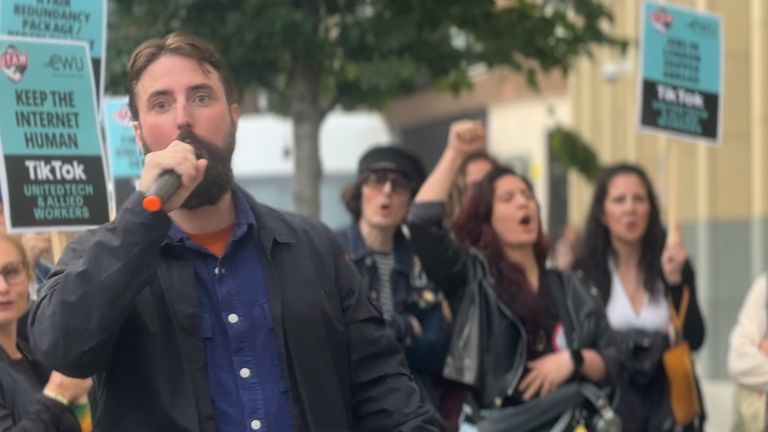
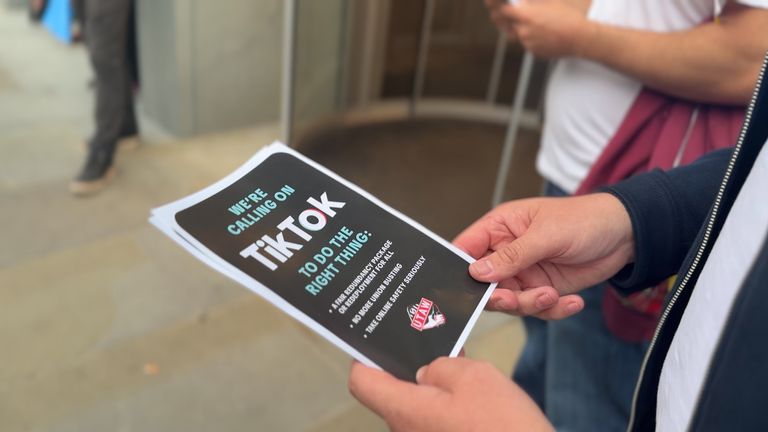
TikTok moderators and union workers protested outside the company’s London headquarters in September
A TikTok worker not affected by the job cuts confirmed to Sky News that all of the affected Trust and Safety employees “are now logged out of the system”.
“Workers and the wider public are rightly concerned about these job cuts that impact safety online,” said the TUC’s general secretary, Paul Nowak.
“But TikTok seem to be obscuring the reality of job cuts to MPs. TikTok need to come clean and clarify how many vital content moderators’ roles have gone.
“The select committee must do everything to get to the bottom of the social media giant’s claims, the wider issues of AI moderation, and ensure that other workers in the UK don’t lose their jobs to untested, unsafe and unregulated AI systems.”
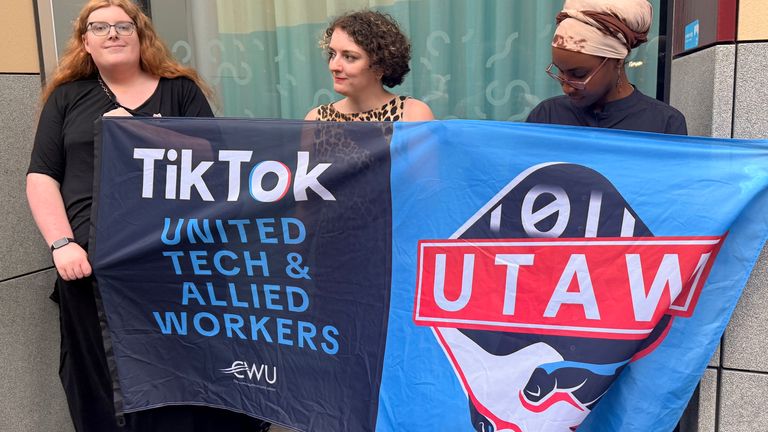
Moderators and union representatives outside TikTok’s offices
What TikTok has said about the job cuts
In an interview with Sky News on 18 November, Mr Law again called the cuts “proposals”.
When asked if the cuts were in fact a plan that had already been executed, Mr Law said there was “limited amounts” he could directly comment on.
TikTok told us: “It is entirely right that we follow UK employment law, including when consultations remained ongoing for some employees and roles were still under proposal for removal.
“We have been open and transparent about the changes that were proposed, including in detailed public letters to the committee, and it is disingenuous to suggest otherwise.”
The three whistleblowers Sky News spoke to said they were concerned TikTok users would be put at risk by the cuts.
The company said it will increase the role of AI in its moderation, while maintaining some human safety workers, but one whistleblower said she didn’t think the AI was “ready”.
“People are getting new ideas and new trends are coming. AI cannot get this,” said Anna, a former moderator.
“Even now, with the things that it’s supposed to be ready to do, I don’t think it’s ready.”
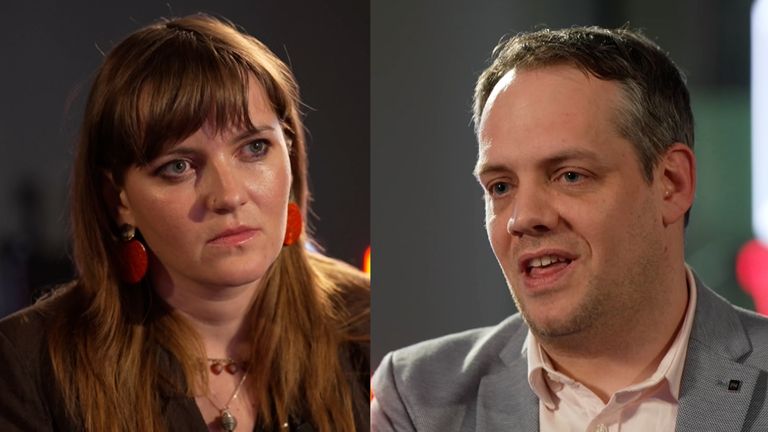
Is TikTok improving safety with AI?
Lucy also said she thought the cuts would put users at risk.
“There are a lot of nuances in the language. AI cannot understand all the nuances,” she said.
“AI cannot differentiate some ironic comment or versus a real threat or bullying or of a lot of things that have to do with user safety, mainly of children and teenagers.”
TikTok has been asked by MPs for evidence that its safety rates – which are currently some of the best in the industry – will not worsen after these cuts.
The select committee says it has not produced that evidence, although TikTok insists safety will improve.
“[In its letter to MPs] TikTok refers to evidence showing that their proposed staffing cuts and changes will improve content moderation and fact-checking – but at no point do they present any credible data on this to us,” said Dame Chi earlier this month.
“It’s alarming that they aren’t offering us transparency over this information. Without it, how can we have any confidence whether these changes will safeguard users?”
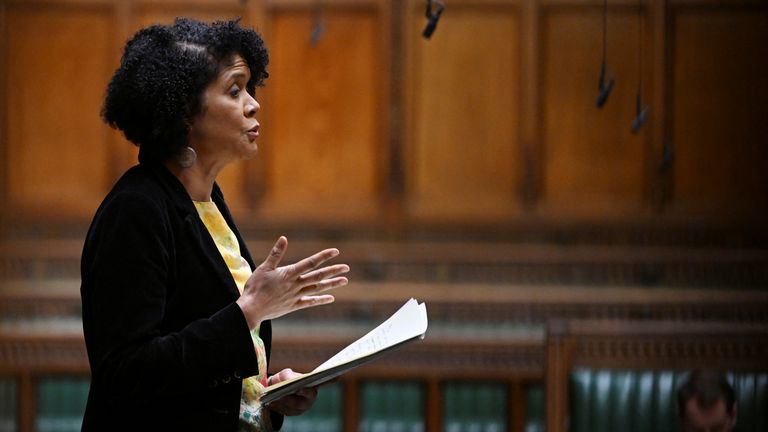
Dame Chi Onwurah speaks at the House of Commons. File pic: Reuters
TikTok’s use of AI in moderation
In an exclusive interview with Sky News earlier this month, Mr Law said the new moderation model would mean TikTok can “approach moderation with a higher level of speed and consistency”.
He said: “Because, when you’re doing this from a human moderation perspective, there are trade-offs.
“If you want something to be as accurate as possible, you need to give the human moderator as much time as possible to make the right decision, and so you’re trading off speed and accuracy in a way that might prove harmful to people in terms of being able to see that content.
“You don’t have that with the deployment of AI.”
As well as increasing the role of AI in moderation, TikTok is reportedly offshoring jobs to agencies in other countries.
Sky News has spoken to multiple workers who confirmed they’d seen their jobs being advertised in other countries through third-party agencies, and has independently seen moderator job adverts in places like Lisbon.
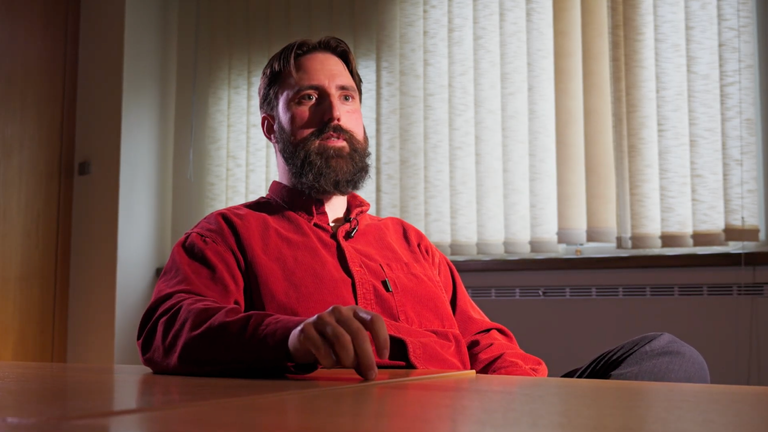
John Chadfield, national officer for technology at the Communication Workers Union
“AI is a fantastic fig leaf. It’s a fig leaf for greed,” said Mr Chadfield. “In TikTok’s case, there’s a fundamental wish to not be an employer of a significant amount of staff.
“As the platform has grown, as it has grown to hundreds of millions of users, they have realised that the overhead to maintain a professional trust and safety division means hundreds of thousands of staff employed by TikTok.
“But they don’t want that. They see themselves as, you know, ‘We want specialists in the roles employed directly by TikTok and we’ll offshore and outsource the rest’.”
Mr Law told Sky News that TikTok is always focused “on outcomes”.
He said: “Our focus is on making sure the platform is as safe as possible.
“And we will make deployments of the most advanced technology in order to achieve that, working with the many thousands of trust and safety professionals that we will have at TikTok around the world on an ongoing basis.”
Asked specifically about the safety concerns raised by the whistleblowers, TikTok said: “As we have laid out in detail, this reorganisation of our global operating model for Trust and Safety will ensure we maximize effectiveness and speed in our moderation processes.
“We will continue to use a combination of technology and human teams to keep our users safe, and today over 85% of the content removed for violating our rules is identified and taken down by automated technologies.”
*All moderator names have been changed for legal reasons.
-
 Sports2 years ago
Story injured on diving stop, exits Red Sox game
-
 Sports3 years ago
‘Storybook stuff’: Inside the night Bryce Harper sent the Phillies to the World Series
-
 Sports2 years ago
Game 1 of WS least-watched in recorded history
-
 Sports3 years ago
Button battles heat exhaustion in NASCAR debut
-
 Sports3 years ago
MLB Rank 2023: Ranking baseball’s top 100 players
-
Sports4 years ago
Team Europe easily wins 4th straight Laver Cup
-
 Environment3 years ago
Japan and South Korea have a lot at stake in a free and open South China Sea
-
 Environment1 year ago
Here are the best electric bikes you can buy at every price level in October 2024