
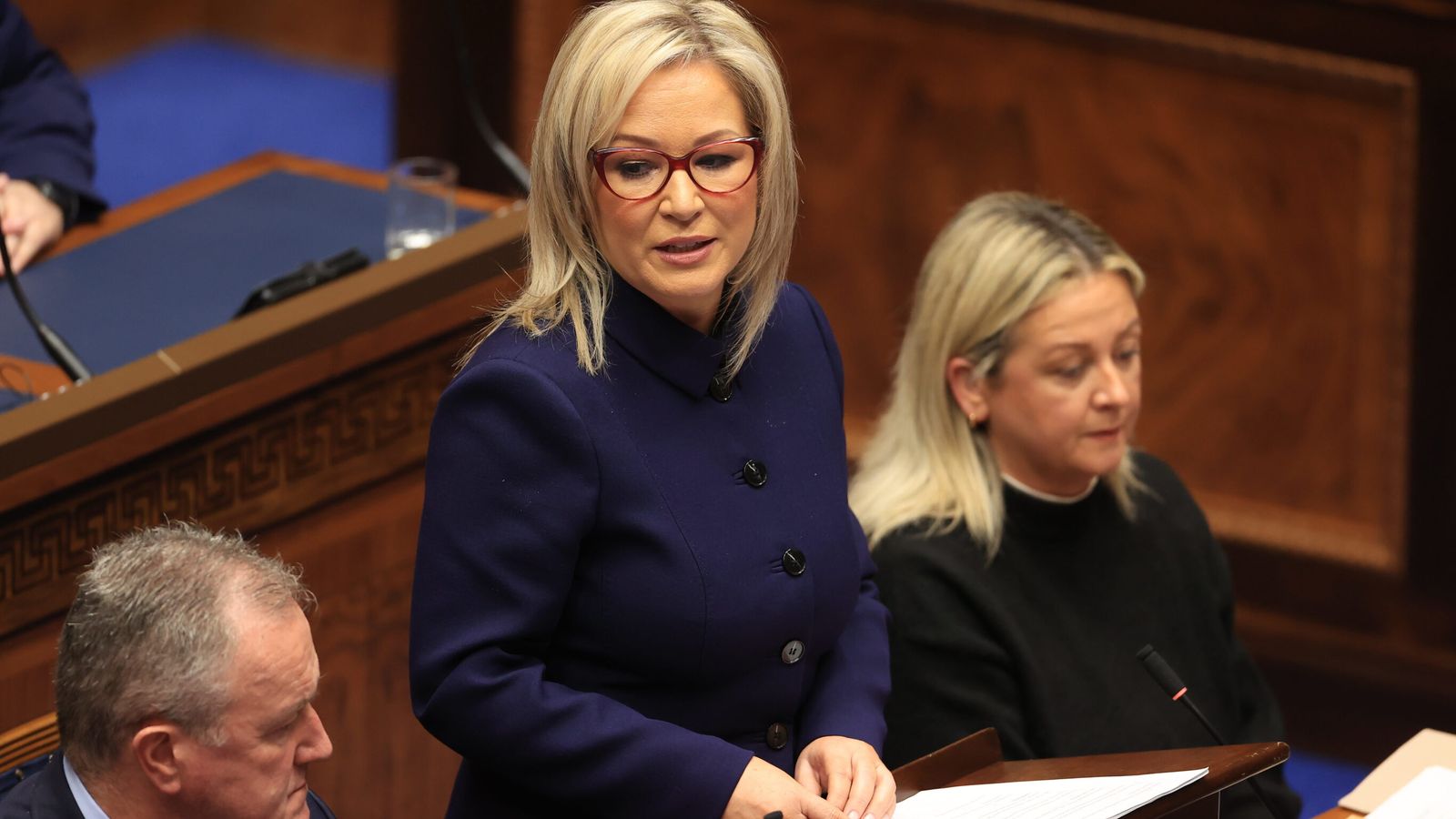
Michelle O’Neill appointed Northern Ireland’s first nationalist first minister in historic moment

Sinn Fein’s Michelle O’Neill has made history by being appointed Northern Ireland’s first nationalist first minister, with US president Joe Biden commending the region’s political leaders.
A power-sharing government has returned as politicians gathered at Stormont to appoint a series of ministers to the devolved executive, two years after it collapsed over the UK government’s deal with the EU.
The Democratic Unionist Party’s (DUP) Emma Little-Pengelly will serve as deputy first minister.
Under the Good Friday Agreement, the deputy has an authority equal to that of the first minister.
In her speech, which began in Irish, Ms O’Neill said: “Today opens the door to the future – a shared future.
“I am honoured to stand here as first minister.”
Ms O’Neill said she was addressing an “assembly for all – Catholic, Protestant and dissenter” and that the public was “relying” on the members of Northern Ireland’s elected assembly.
She added: “We must make power sharing work because collectively, we are charged with leading and delivering for all our people, for every community.”
Ms O’Neill continued: “As an Irish republican I pledge co-operation and genuine honest effort with those colleagues who are British, of a unionist tradition and who cherish the union… Despite our different outlooks and views on the future constitutional position, the public rightly demands that we co-operate, deliver and work together.”
The first minister also acknowledged that the power-sharing coalition will “undoubtedly face great challenges” but vowed to “serve everyone equally”.
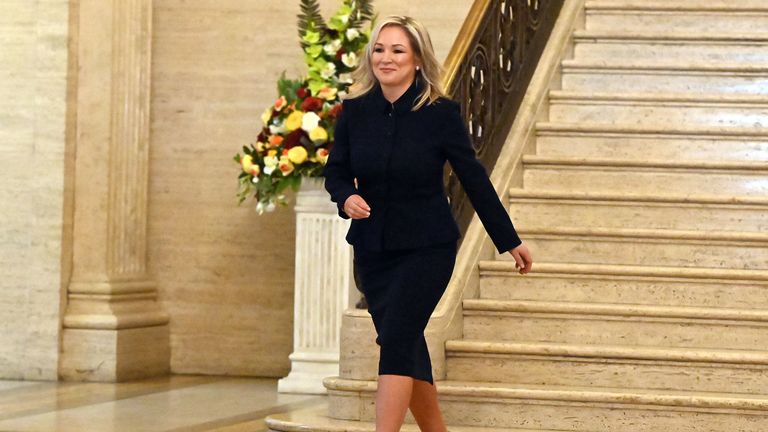
Ms O’Neill in the Great Hall at Stormont before being appointed first minister
Ms O’Neill also reflected on the historic significance of her appointment and said: “For the first time ever, a nationalist takes up the position of first minister.
“That such a day would ever come would have been unimaginable to my parents and grandparents’ generation.”
She added: “This place we call home, this place we love, North of Ireland or Northern Ireland, where you can be British, Irish, both or none is a changing portrait.
“Yesterday is gone. My appointment reflects that change.”
Ms O’Neill also spoke about the impact of the UK government’s austerity measures on Northern Ireland, telling the assembly the country “cannot continue to be hamstrung by Tories in London”.
She added: “Tory austerity has badly damaged our public services. They have presided over more than a decade of shame. They have caused real suffering.
“I wish to lead an executive which has the freedom to make our own policy and spending choices.”
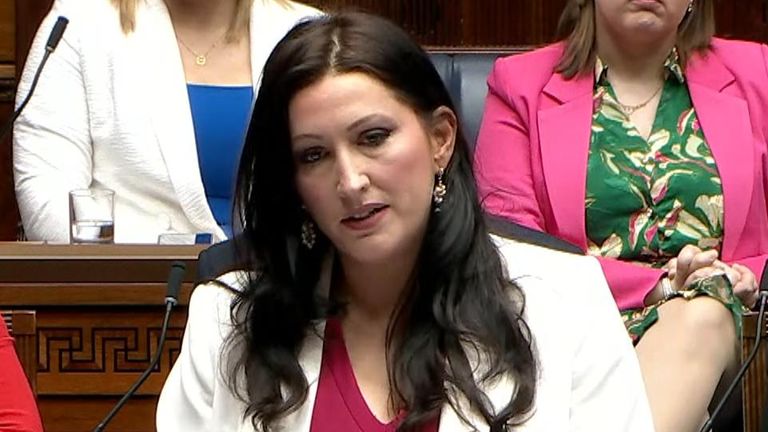
Emma Little-Pengelly gives her first speech as deputy first minister
Ms Little-Pengelly then gave her speech, in which she recalled witnessing the “absolute devastation” from an IRA bomb.
She said: “Michelle O’Neill and I come from very different backgrounds.
“Regardless of that, for my part, I will work tirelessly to ensure that we can deliver for everyone in Northern Ireland.”
She continued: “As a young girl sitting in Markethill High School almost 30 years ago, I could never have imagined that one day I would have the opportunity to serve in such a way.
“This is a responsibility and an honour that I will never take for granted.”
She continued: “Like so many across this chamber and throughout Northern Ireland, I grew up with conflict.
“As a child of just 11, I stepped outside my Markethill home on a warm August afternoon to the absolute devastation from an IRA bomb.
“Seared within my experience is the haunting wail of alarms and our emergency services, the carpet of glass and debris, the shock, the crying and the panic that shook and destroyed the place I called home.
“As a child, I didn’t understand the politics of it – but I will never forget the fear, the hurt, the anger.”
Ms Little-Pengelly also said the “horror” of the Troubles can never be forgotten but said “while we are shaped by the past, we are not defined by it”.
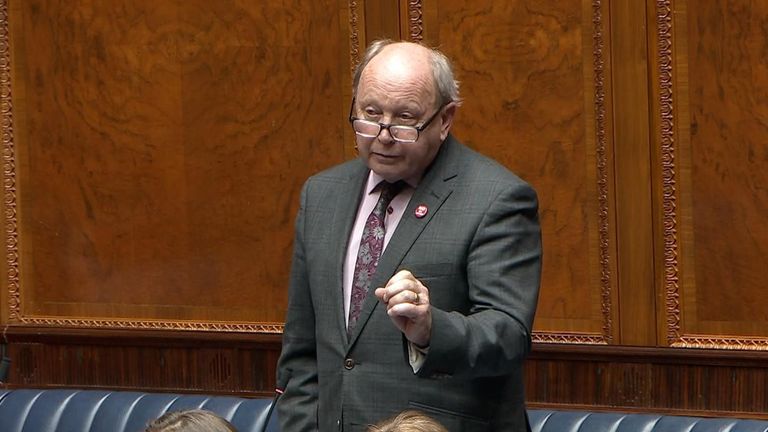
DUP accused of ‘monumental climbdown’
Earlier, former DUP leader Edwin Poots was chosen by members of the assembly as its new speaker.
His party had refused to participate in government at Stormont, arguing that post-Brexit arrangements effectively left a trade border in the Irish Sea between Northern Ireland and the rest of the UK.
An agreement a year ago between the UK and the EU, known as the Windsor Framework, eased customs checks and other hurdles but didn’t go far enough for the DUP, which continued its boycott.
However, the DUP has since forged a deal with the UK government on post-Brexit trade, which party leader Sir Jeffrey Donaldson says has effectively removed the so-called Irish Sea trading border.
Sir Jeffrey’s role as party leader and his resignation from the Northern Ireland Assembly in 2022 means he was ineligible to be deputy first minister.
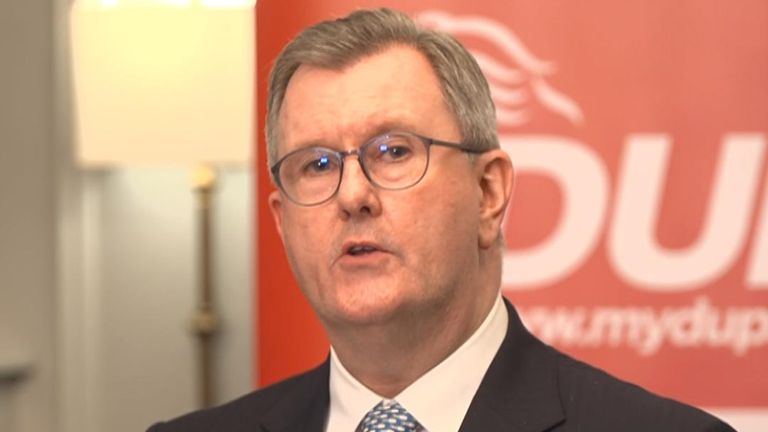
Sir Jeffrey Donaldson, leader of the DUP
Ms O’Neill said in her speech after being appointed first minister: “We will now begin to seize the considerable opportunities created by the Windsor Framework.
“To use dual market access to grow our exports and attract higher-quality FDI.
“The Windsor Framework also protects the thriving all-Ireland economy, and we must fully realise its huge potential.”
Ms O’Neill’s selection as first minister, made possible after she led Sinn Fein to victory in the 2022 Assembly elections, marks the first time the post has been held by a nationalist committed to seeing Northern Ireland and the Republic of Ireland united as one country.
US President Joe Biden said on Saturday evening he strongly supported the Assembly’s restoration and commended Northern Ireland’s political leaders.
“As I said when I visited Belfast last year to mark the 25th anniversary of the Belfast/Good Friday Agreement, the democratic institutions it established remain critical for the future of Northern Ireland, and a government that finds ways through hard problems together will draw even greater opportunity to Northern Ireland,” he said.
“I look forward to seeing the renewed stability of a power-sharing government that strengthens the peace dividend, restores public services, and continues building on the immense progress of the last decades.”
“I am confident that… Stormont’s restoration will facilitate the critical North-South and East-West relations vital to the Belfast/Good Friday Agreement, and ensure that Northern Ireland will continue to be vibrant and dynamic, defined by unlimited opportunity for all who call it home.”
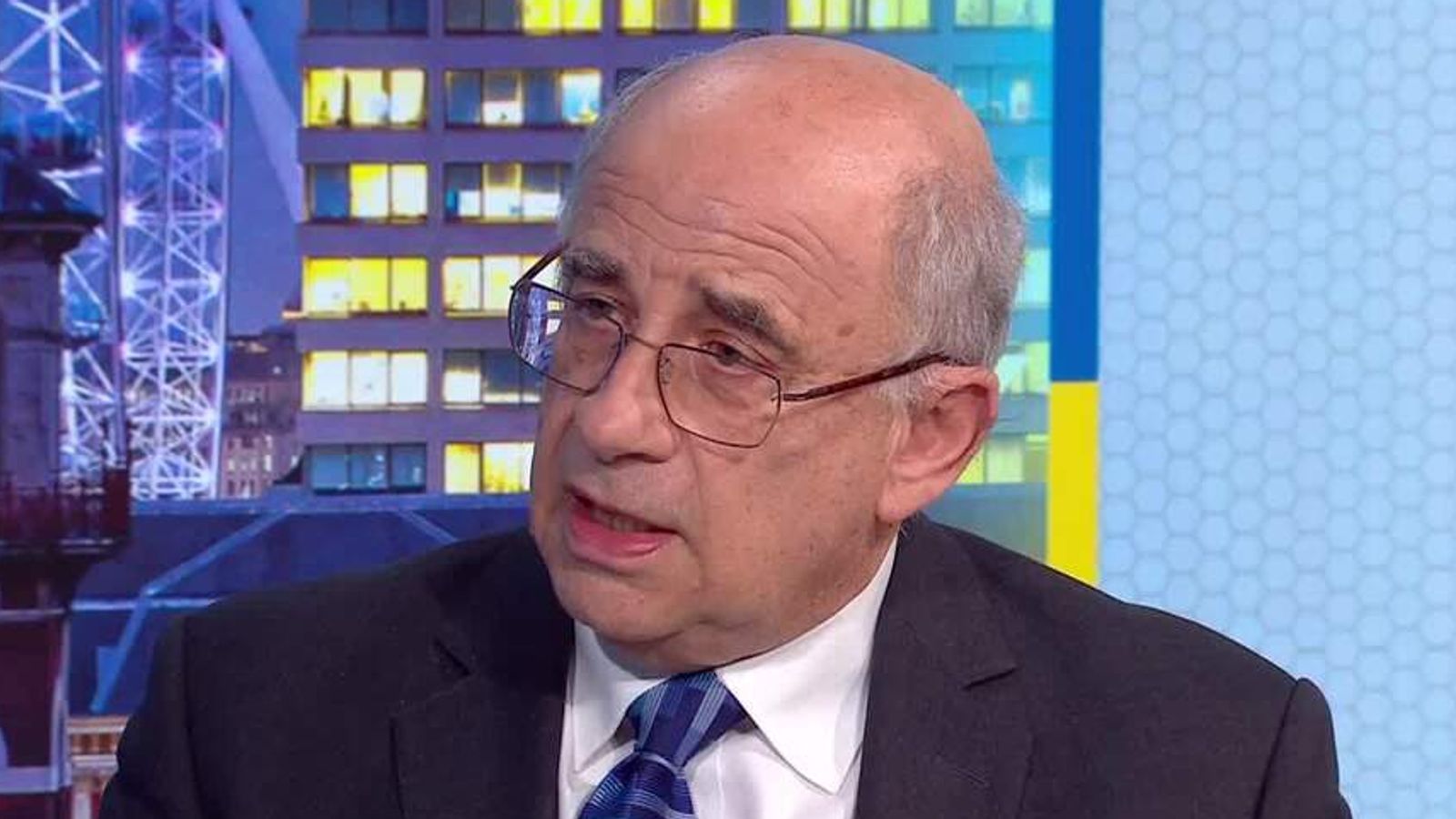
Sir Brian Leveson, who conducted the independent review of the courts system that guided the government’s decision to reduce on jury trials, has suggested there is no alternative.
Speaking to Sky’s Politics Hub programme, the retired judge argued that by restricting jury trials, Justice Secretary David Lammy is “aiming to try to solve the systemic problems” in courts.
He told Sky presenter Ali Fortescue: “I am a great believer in trial by jury, but trials with a jury take very much longer than trials conducted otherwise than with 12 people who are utterly unused to criminal procedure and criminal evidence.
“So my concern is that we need to get through cases quicker.”
He said that it was likely a “20% time saving would result” from the move, although he thinks that “a great deal more” would be saved.
Asked about the criticism today of the decision, Sir Brian said: “I’m gaining no pleasure from it, but what I say to all of them is ‘If not this, then what?’ How do we reduce the backlog so the victims and witnesses get their day in court within a reasonable time?”
He argued that “we should use our resources proportionately to the gravity of the offending”, and “there are some cases which, to my mind, do not merit or require a trial by jury”.
Sir Brian said that some jurors he had spoken to said it was “worthwhile”. But he added: “They’ve given up two weeks of their life, sometimes without any pay except the small remuneration that they receive from the state doing jury service, and they’ve been trying cases which shouldn’t merit their attention”.
Asked if he would want a trial by jury if he had been wrongly accused of theft, Sir Brian said: “If I’d been wrongly accused of theft, I’d be perfectly happy for a judge to decide I’d been wrongly accused of theft.”
Jury trials to be scrapped
More broadly, he said: “I don’t see how you’re going to bring down the backlog without more money, more sitting days, greater efficiency, and speedier trials…
“There aren’t the judges, there aren’t the court staff, more significantly there aren’t the advocates.”
He said that the justice system had never been in such a “calamitous” state.
👉 Listen to Sky News Daily on your podcast app 👈
‘The reforms are about fairness’
Courts minister Sarah Sackman also defended the decision on Tuesday’s Politics Hub. She acknowledged that jury trials were “a success story”, and “a cornerstone of British justice and will remain so after today’s plans”.
But she added: “What’s not such a success story is the fact that we inherited record and rising backlogs in our courts.
“Today the number starts at 80,000 cases, and it’s on the rise – due to hit 100,000 by 2028.”
That leaves victims “waiting for their case to be heard”. She argued that the measures announced on Tuesday were “a set of reforms that will restore confidence in our justice system, get those delays down, and indeed preserve jury trials for the most serious cases”.
Ms Sackman added that “right now in our system, 90% of cases [are] being heard without a jury in our magistrates”, which is “fair, robust justice”.
“Part of fairness is about the swiftness we need to deliver swifter justice for victims,” she said.
“What’s not fair is a victim of crime being told today that she needs to wait until 2029, 2030 for her day in court.”

‘Swifter justice for victims’
The minister gave an example of what will change, saying: “Supposing a defendant is accused of stealing a bottle of whisky.
“Is it right that we allow the defendant to insist on a slower, more expensive jury trial in the same queue as the victim of rape, making her wait and in some cases, justice not being served?
“That’s the choice that we’ve made today.”
But the minister refused to say how much this would reduce the backlog by.
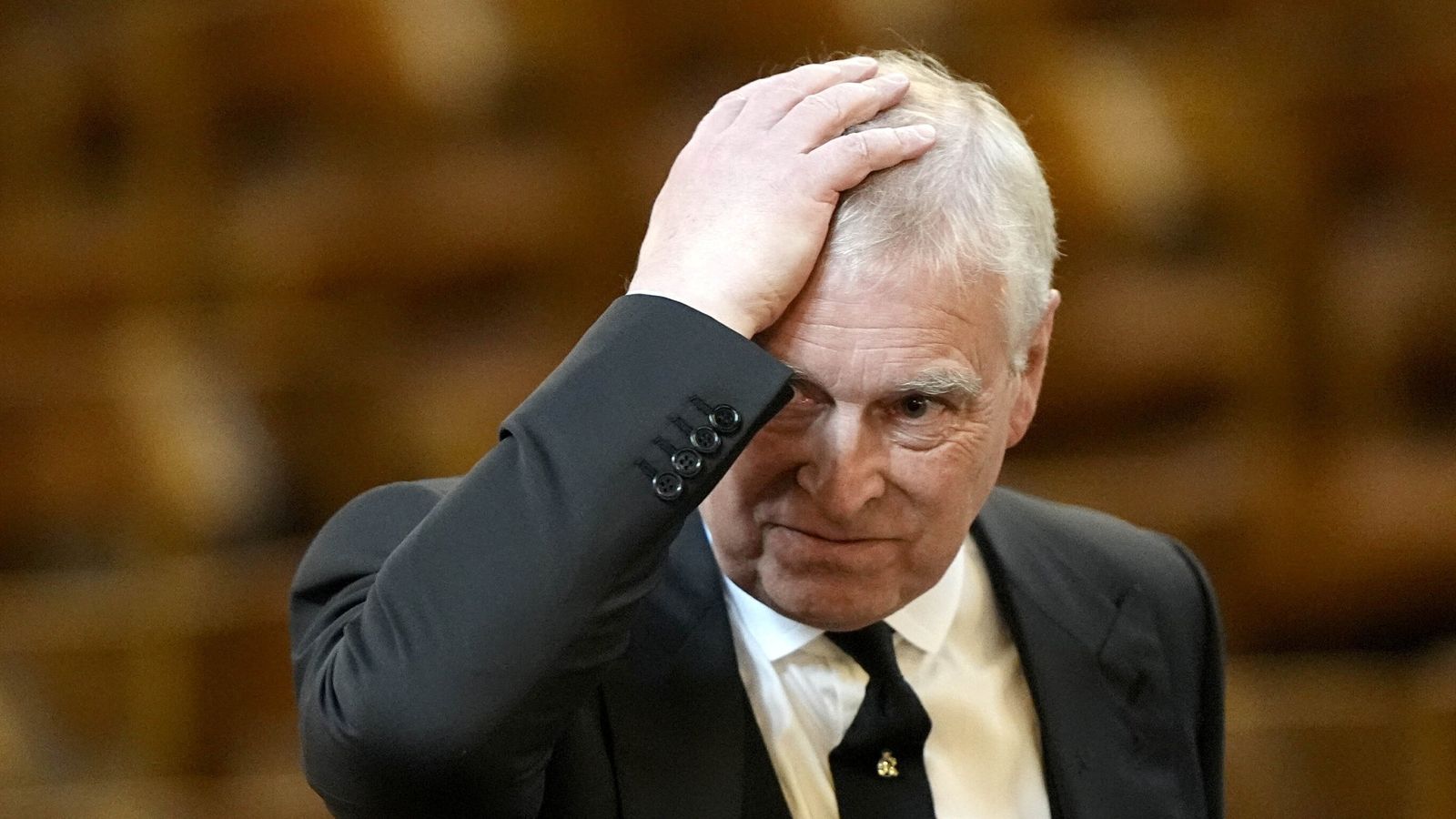
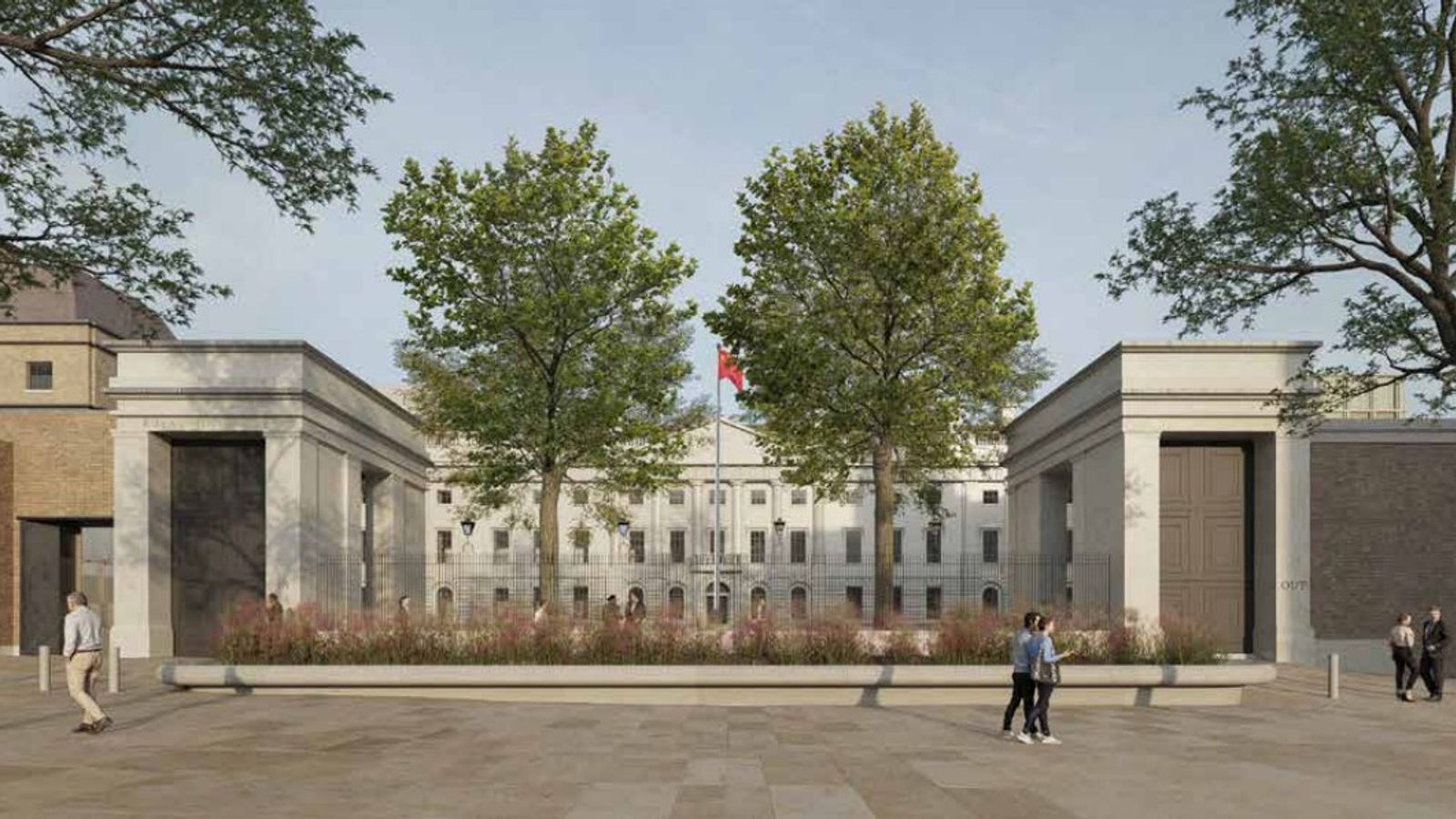
The UK government has again delayed its decision over whether to approve a Chinese “super embassy” in London until January.
A decision over the controversial plan close to the Tower of London will now take place on 20 January, instead of 10 December, a letter from the planning inspectorate seen by Sky News says.
Despite multiple delays, Sky News understands the government is expected to approve the plans for what would be Europe’s largest embassy, with both MI5 and MI6 said to have given their blessing to the decision.
Politics latest: Jury trials to be scrapped for those facing sentences of three years or less
Housing Secretary Steve Reed has said he needs more time to consider new representations from the Foreign Office and Home Office.
A letter from the home and foreign secretaries to the planning inspectorate, published with the latest delay letter, said their national security concerns have been addressed by the Chinese government committing to ensure all its diplomatic premises in London, excluding the ambassador’s house, are consolidated on to the new embassy site.
The new letter sent to ministers and “interested parties”, including the Inter Parliamentary Alliance on China (IPAC) – which has warned against approving the embassy – said the government aims “to issue the decision as quickly as possible” on or before 20 January.
Luke de Pulford, executive director of IPAC, told Sky News: “This is the third delay, and entirely of the government’s own making.
“Residents and dissidents have endured months of dithering as the government tries to choose between UK national security and upsetting Beijing.”
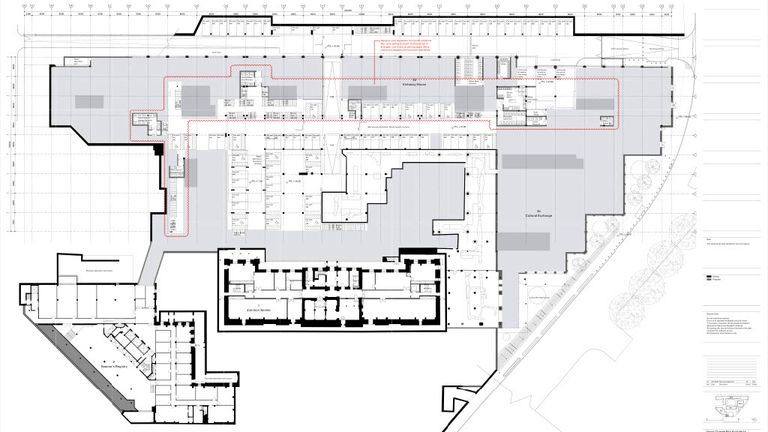
The basements in most of the buildings have been greyed out ‘for security reasons’. Pic: David Chipperfield Architects
Three delays by Labour government
Mr Reed became housing secretary in September and had already delayed the decision once from October, as he said he had not had enough time to look at the details.
A decision had also been delayed earlier this year by the former housing secretary Angela Rayner, months after the Chinese re-submitted their planning application two weeks after Labour won the general election.
That was after Tower Hamlets Council rejected the application in 2022 and the Conservative government said it would not call it in for ministers to decide.
Read more:
Everything we know about China’s new ‘super embassy’
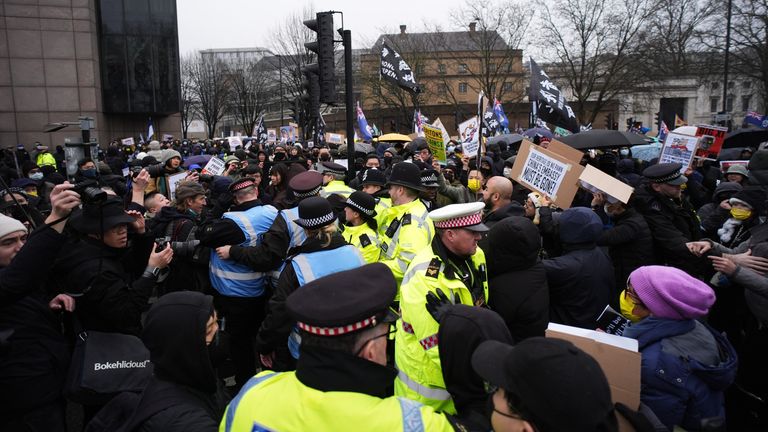
There have been multiple protests against the embassy’s development. Pic: PA
National security concerns
There have been large-scale protests against the embassy – on the site of the former Royal Mint – over concerns it will be used as a Chinese spy hub for Europe.
Hong Kong dissidents who have fled to the UK have expressed fears that rooms redacted “for security reasons” in submitted plans might be used to detain them.
The latest delay comes less than 24 hours after Sir Keir Starmer warned China poses “real national security threats to the United Kingdom” and said being tough on national security will enable the UK to pursue economic opportunities with Beijing.
He said UK government policy towards China cannot continue to blow “hot and cold” and said his government will focus on the relationship with Beijing.
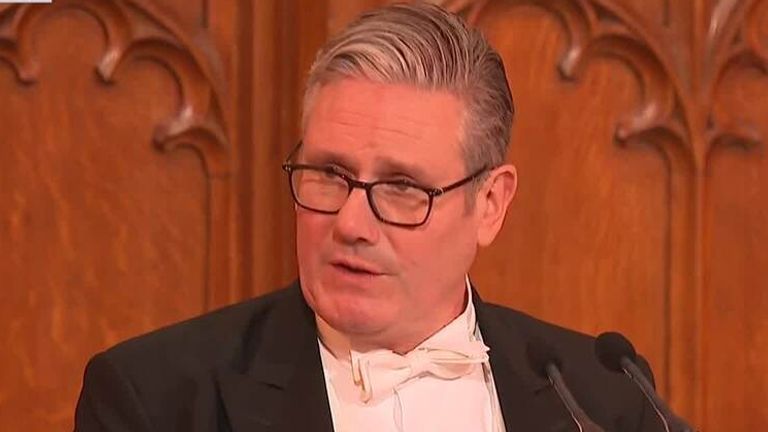
Starmer on China: ‘It’s time for a serious approach’
Chinese embassy says UK interfering in its affairs
A Chinese embassy spokesman in London said China “firmly opposes the erroneous remarks” and accused Sir Keir of making “groundless accusations against China” and interfering in China’s internal affairs.
“Facts have fully demonstrated that China has always been a builder of world peace, a contributor to global development, and a defender of the international order,” he said.
“On issues of peace and security, China has the best track record among major countries. China’s development poses no threat to any country, but instead brings opportunities for common development to all.”
He said the UK should “adjust its mindset, adopt a rational and friendly approach towards China’s development”.
Last month, MI5 warned MPs, peers and parliamentary staff about the risk from Chinese spies after identifying two LinkedIn profiles it said are being used by the Chinese Ministry of State Security to act as “civilian recruitment headhunters”.
-
 Sports2 years ago
Story injured on diving stop, exits Red Sox game
-
 Sports3 years ago
‘Storybook stuff’: Inside the night Bryce Harper sent the Phillies to the World Series
-
 Sports2 years ago
Game 1 of WS least-watched in recorded history
-
 Sports3 years ago
Button battles heat exhaustion in NASCAR debut
-
 Sports3 years ago
MLB Rank 2023: Ranking baseball’s top 100 players
-
Sports4 years ago
Team Europe easily wins 4th straight Laver Cup
-
 Environment3 years ago
Japan and South Korea have a lot at stake in a free and open South China Sea
-
 Environment1 year ago
Here are the best electric bikes you can buy at every price level in October 2024