
Entertainment
Why is Warner Bros for sale, what are the controversial bids – and how is Trump involved?

A huge takeover that would rock the entertainment industry looks imminent, with Netflix and Paramount fighting over Warner Bros Discovery (WBD).
Streaming giant Netflix announced it had agreed a $72bn (£54bn) deal for WBD’s film and TV studios on 5 December, only for Paramount to sweep in with a $108.4bn (£81bn) bid several days later.
The takeover saga isn’t far removed from a Hollywood plot; with multi-billionaires negotiating in boardrooms, politicians on all sides expressing their fears for the public and the US president looming large, expected to play a significant role.
“Whichever way this deal goes, it will certainly be one of the biggest media deals in history. It will shake up the established TV and film norms and will have global implications,” Sky News’ US correspondent Martha Kelner said on the Trump 100 podcast.
So what do we know about the bids, why are they controversial – and how is Donald Trump involved?
Why is Warner Bros up for sale?
WBD’s board first announced it was open to selling or partly selling the company in October after a summer of hushed speculation.
Back in June, WBD announced its plan to split into two companies: one for its TV, film studios, and HBO Max streaming services, and one for the Discovery element of the business, primarily comprising legacy TV channels that air cartoons, news, and sports.
It came amid the cable industry’s continued struggles at the hands of streaming services, and CEO David Zaslav suggested splitting into two companies would give WBD’s brands the “sharper focus and strategic flexibility they need to compete most effectively in today’s evolving media landscape”.
The company’s long-term strategic initiatives have also been stifled by its estimated $35bn of debt. This wasn’t helped by the WarnerMedia and Discovery merger in 2022, which led to it becoming Warner Bros Discovery.
WBD’s announced it was open to selling or partly selling the company in October. Pic: iStock
What we know about the bids
The $72bn bid from Netflix is for the first division of the business, which would give it the rights to worldwide hits like the Harry Potter and Game of Thrones franchises – and Warner Bros’ extensive back catalogue of movies.
If the deal were to happen, it would not be finalised until the split is complete, and Discovery Global, including channels like CNN, will not form part of the merger.
Paramount’s $108.4bn offer is what’s known as a hostile bid. This means it went directly to shareholders with a cash offer for the entirety of the company, asking them to reject the deal with Netflix.
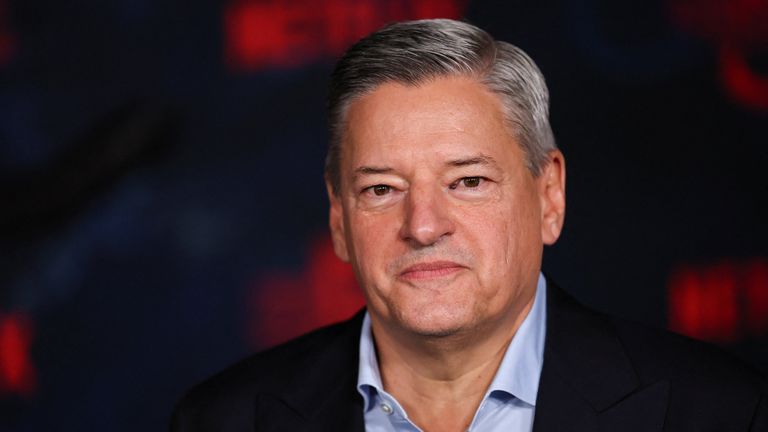
Ted Sarandos, CEO of Netflix. Pic: Reuters
This deal would involve rival US news channels CBS and CNN being brought under the same parent company.
Netflix’s cash and stock deal is valued at $27.75 (£20.80) per Warner share, giving it a total enterprise value of $82.7bn (£62bn), including debt.
But Paramount says its deal will pay $30 (£22.50) cash per share, representing $18bn (£13.5bn) more in cash than its rivals are offering.
Paramount claims to have tried several times to bid for WBD through its board, but said it launched the hostile bid after hearing of Netflix’s offer because the board had “never engaged meaningfully”.
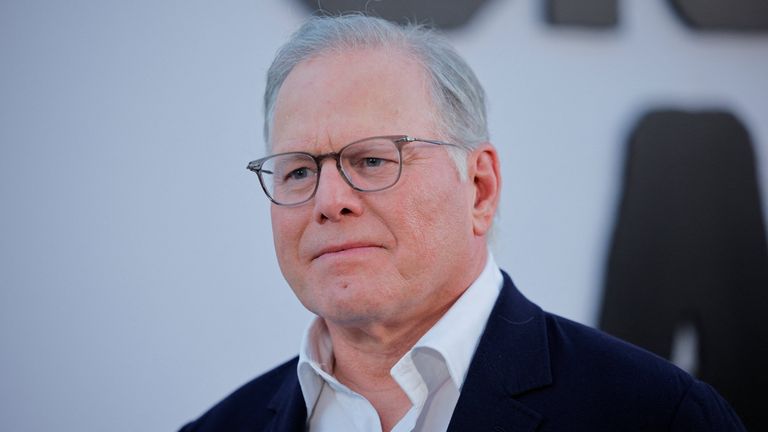
David Zaslav, CEO and president of Warner Bros Discovery. Pic: Reuters
Why are politicians and experts concerned?
The US government will have a big say on who ultimately buys WBD, as Paramount and Netflix will likely face the Department of Justice’s (DOJ) Antitrust Division, a federal agency which scrutinises business deals to ensure fair competition.
Republicans and Democrats have voiced concerns over the potential monopolisation of streaming and the impact it would have on cinemas if Netflix – already the world’s biggest streaming service by market share – were to take over WBD.
Democratic senator Elizabeth Warren said the deal “would create one massive media giant with control of close to half of the streaming market – threatening to force Americans into higher subscription prices and fewer choices over what and how they watch, while putting American workers at risk”.
Similarly, Representative Pramila Jayapal, who co-chairs the House Monopoly Busters Caucus, called the deal a “nightmare,” adding: “It would mean more price hikes, ads, and cookie-cutter content, less creative control for artists, and lower pay for workers.”
Read more:
Netflix could yet get its way in Trump’s America
Netflix’s business model of prioritising streaming over cinemas has caused consternation in Hollywood.
The screen actors union SAG-AFTRA said the merger “raises many serious questions” for actors, while the Directors Guild of America said it also had “concerns”.
Experts suggest there’s less of a concern with the Paramount deal when it comes to a streaming monopoly, because its Paramount+ service is smaller and has less of an international footprint than Netflix.
How is Trump relevant?
After Netflix announced its bid, the president said of its path to regulatory clearance: “I’ll be involved in that decision.”
And while Mr Trump himself will not be directly involved, he appointed those in the DOJ Antitrust Division, and they have the authority to block or challenge takeovers.
However, his potential influence isn’t sitting well with some experts due to his ties with key players on the Paramount side.
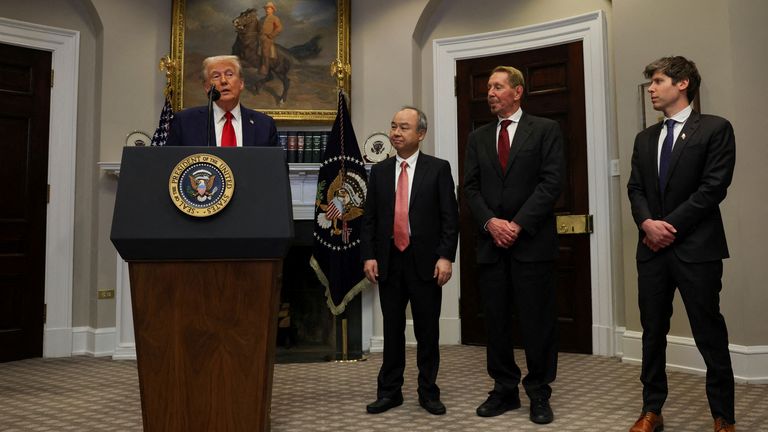
Larry Ellison (centre left) in the White House with Trump. Pic: Reuters
Paramount is run by David Ellison, the son of the Oracle tech billionaire (and world’s second-richest man) Larry Ellison, who is a close ally of Mr Trump.
Additionally, Affinity Partners, an investment firm run by Mr Trump’s son-in-law Jared Kushner, would be investing in the deal.
Also participating would be funds controlled by the governments of three unnamed Persian Gulf countries, widely reported as Saudi Arabia, Abu Dhabi and Qatar – countries the Trump family company has struck deals with this year.

David Ellison, CEO of Paramount Skydance. Pic: Reuters
Critics of the Trump’s administration has accused it of being transactional, with the president known to hold grudges over those who are critical of him, however, Mr Trump told reporters on 8 December that he has not spoken with Mr Kushner about WBD, adding that neither Netflix nor Paramount “are friends of mine”.
John Mayo, an antitrust expert at Georgetown University, suggested the scrutiny by the Antitrust Division would be serious whichever offer is approved by shareholders, and that he thinks experts there will keep partisanship out of their decisions despite the politically charged atmosphere.
What happens next?
WBD must now advise shareholders whether Paramount’s offer constitutes a superior offer by 22 December.
If the company decides that Paramount’s offer is superior, Netflix would have the opportunity to match or beat it.
WBD would have to pay Netflix a termination fee of $2.8bn (£2.10bn) if it decides to scrap the deal.
Shareholders have until 8 January 2026 to vote on Paramount’s offer.

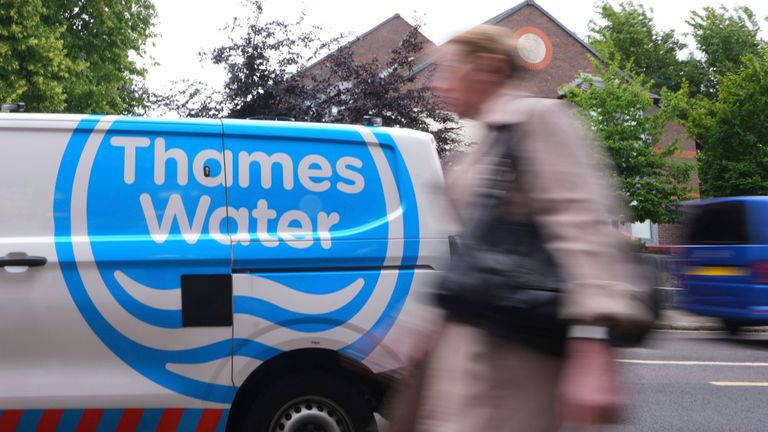
The UK’s biggest water supplier has been dealt another blow as the regulator decided to reduce its income.
Thames Water, which supplies 16 million people in England, has been told by the watchdog Ofwat its revenues will be cut by more than £187m.
It comes as the utility struggles under a £17.6bn debt pile and the government has lined up insolvency practitioners for its potential collapse.
Money blog: Nine-year-old set up Christmas tree business to pay for university
Overall, water firms face a sector-wide revenue reduction of nearly £309m as a result of Ofwat’s determination. Thames Water’s £187.1m cut is the largest revenue reduction.
This will take effect from next year and up to 2030 as part of water companies’ regulator-approved five-year spending and investment plans.
The downward revenue revision has been made as Ofwat believes the companies will perform better than first thought and therefore require less money.
Better financial performance is ultimately good news for customers.
The change published on Wednesday is a technical update; the initial revenue projections published in December 2024 were based on projected financial performance but after financial results were published in the summer and Ofwat was able to apply these figures.
Is Thames Water a step closer to nationalisation?
Thames Water and industry body Water UK have been contacted for comment.
A huge takeover that would rock the entertainment industry looks imminent, with Netflix and Paramount fighting over Warner Bros Discovery (WBD).
Streaming giant Netflix announced it had agreed a $72bn (£54bn) deal for WBD’s film and TV studios on 5 December, only for Paramount to sweep in with a $108.4bn (£81bn) bid several days later.
The takeover saga isn’t far removed from a Hollywood plot; with multi-billionaires negotiating in boardrooms, politicians on all sides expressing their fears for the public and the US president looming large, expected to play a significant role.
“Whichever way this deal goes, it will certainly be one of the biggest media deals in history. It will shake up the established TV and film norms and will have global implications,” Sky News’ US correspondent Martha Kelner said on the Trump 100 podcast.
So what do we know about the bids, why are they controversial – and how is Donald Trump involved?
Why is Warner Bros up for sale?
WBD’s board first announced it was open to selling or partly selling the company in October after a summer of hushed speculation.
Back in June, WBD announced its plan to split into two companies: one for its TV, film studios, and HBO Max streaming services, and one for the Discovery element of the business, primarily comprising legacy TV channels that air cartoons, news, and sports.
It came amid the cable industry’s continued struggles at the hands of streaming services, and CEO David Zaslav suggested splitting into two companies would give WBD’s brands the “sharper focus and strategic flexibility they need to compete most effectively in today’s evolving media landscape”.
The company’s long-term strategic initiatives have also been stifled by its estimated $35bn of debt. This wasn’t helped by the WarnerMedia and Discovery merger in 2022, which led to it becoming Warner Bros Discovery.
WBD’s announced it was open to selling or partly selling the company in October. Pic: iStock
What we know about the bids
The $72bn bid from Netflix is for the first division of the business, which would give it the rights to worldwide hits like the Harry Potter and Game of Thrones franchises – and Warner Bros’ extensive back catalogue of movies.
If the deal were to happen, it would not be finalised until the split is complete, and Discovery Global, including channels like CNN, will not form part of the merger.
Paramount’s $108.4bn offer is what’s known as a hostile bid. This means it went directly to shareholders with a cash offer for the entirety of the company, asking them to reject the deal with Netflix.
Ted Sarandos, CEO of Netflix. Pic: Reuters
This deal would involve rival US news channels CBS and CNN being brought under the same parent company.
Netflix’s cash and stock deal is valued at $27.75 (£20.80) per Warner share, giving it a total enterprise value of $82.7bn (£62bn), including debt.
But Paramount says its deal will pay $30 (£22.50) cash per share, representing $18bn (£13.5bn) more in cash than its rivals are offering.
Paramount claims to have tried several times to bid for WBD through its board, but said it launched the hostile bid after hearing of Netflix’s offer because the board had “never engaged meaningfully”.
David Zaslav, CEO and president of Warner Bros Discovery. Pic: Reuters
Why are politicians and experts concerned?
The US government will have a big say on who ultimately buys WBD, as Paramount and Netflix will likely face the Department of Justice’s (DOJ) Antitrust Division, a federal agency which scrutinises business deals to ensure fair competition.
Republicans and Democrats have voiced concerns over the potential monopolisation of streaming and the impact it would have on cinemas if Netflix – already the world’s biggest streaming service by market share – were to take over WBD.
Democratic senator Elizabeth Warren said the deal “would create one massive media giant with control of close to half of the streaming market – threatening to force Americans into higher subscription prices and fewer choices over what and how they watch, while putting American workers at risk”.
Similarly, Representative Pramila Jayapal, who co-chairs the House Monopoly Busters Caucus, called the deal a “nightmare,” adding: “It would mean more price hikes, ads, and cookie-cutter content, less creative control for artists, and lower pay for workers.”
Read more:
Netflix could yet get its way in Trump’s America
Netflix’s business model of prioritising streaming over cinemas has caused consternation in Hollywood.
The screen actors union SAG-AFTRA said the merger “raises many serious questions” for actors, while the Directors Guild of America said it also had “concerns”.
Experts suggest there’s less of a concern with the Paramount deal when it comes to a streaming monopoly, because its Paramount+ service is smaller and has less of an international footprint than Netflix.
How is Trump relevant?
After Netflix announced its bid, the president said of its path to regulatory clearance: “I’ll be involved in that decision.”
And while Mr Trump himself will not be directly involved, he appointed those in the DOJ Antitrust Division, and they have the authority to block or challenge takeovers.
However, his potential influence isn’t sitting well with some experts due to his ties with key players on the Paramount side.
Larry Ellison (centre left) in the White House with Trump. Pic: Reuters
Paramount is run by David Ellison, the son of the Oracle tech billionaire (and world’s second-richest man) Larry Ellison, who is a close ally of Mr Trump.
Additionally, Affinity Partners, an investment firm run by Mr Trump’s son-in-law Jared Kushner, would be investing in the deal.
Also participating would be funds controlled by the governments of three unnamed Persian Gulf countries, widely reported as Saudi Arabia, Abu Dhabi and Qatar – countries the Trump family company has struck deals with this year.
David Ellison, CEO of Paramount Skydance. Pic: Reuters
Critics of the Trump’s administration has accused it of being transactional, with the president known to hold grudges over those who are critical of him, however, Mr Trump told reporters on 8 December that he has not spoken with Mr Kushner about WBD, adding that neither Netflix nor Paramount “are friends of mine”.
John Mayo, an antitrust expert at Georgetown University, suggested the scrutiny by the Antitrust Division would be serious whichever offer is approved by shareholders, and that he thinks experts there will keep partisanship out of their decisions despite the politically charged atmosphere.
What happens next?
WBD must now advise shareholders whether Paramount’s offer constitutes a superior offer by 22 December.
If the company decides that Paramount’s offer is superior, Netflix would have the opportunity to match or beat it.
WBD would have to pay Netflix a termination fee of $2.8bn (£2.10bn) if it decides to scrap the deal.
Shareholders have until 8 January 2026 to vote on Paramount’s offer.
-
 Sports2 years ago
Story injured on diving stop, exits Red Sox game
-
 Sports3 years ago
‘Storybook stuff’: Inside the night Bryce Harper sent the Phillies to the World Series
-
 Sports2 years ago
Game 1 of WS least-watched in recorded history
-
 Sports3 years ago
Button battles heat exhaustion in NASCAR debut
-
 Sports3 years ago
MLB Rank 2023: Ranking baseball’s top 100 players
-
Sports4 years ago
Team Europe easily wins 4th straight Laver Cup
-
 Environment3 years ago
Japan and South Korea have a lot at stake in a free and open South China Sea
-
 Environment1 year ago
Here are the best electric bikes you can buy at every price level in October 2024