
Technology
AI was behind over 50,000 layoffs in 2025 — here are the top firms to cite it for job cuts




US lawmakers have introduced a discussion draft that would ease the tax burden on everyday crypto users by exempting small stablecoin transactions from capital gains taxes and offering a new deferral option for staking and mining rewards.
The proposal, introduced by Representatives Max Miller of Ohio and Steven Horsford of Nevada, seeks to amend the Internal Revenue Code to reflect the growing use of digital assets in payments. The draft is set “to eliminate low-value gain recognition arising from routine consumer payment use of regulated payment stablecoins,” per the draft.
Under the draft, users would not be required to recognize gains or losses on stablecoin transactions of up to $200, provided the asset is issued by a permitted issuer under the GENIUS Act, pegged to the US dollar and maintains a tight trading range around $1.
The bill includes safeguards to prevent abuse. The exemption would not apply if a stablecoin trades outside a narrow price band, and brokers or dealers would be excluded from the benefit. Treasury would also retain authority to issue anti-abuse rules and reporting requirements.
Related: Crypto Biz: Bank stablecoins get a rulebook; Bitcoin gets a land grab
US bill defers taxes on crypto staking rewards
Beyond payments, the proposal addresses long-standing concerns around “phantom income” from staking and mining. Taxpayers would be allowed to elect to defer income recognition on staking or mining rewards for up to five years, rather than being taxed immediately upon receipt.
“This provision is intended to reflect a necessary compromise between immediate taxation upon dominion & control and full deferral until disposition,” the draft said.
The draft also extends existing securities lending tax treatment to certain digital asset lending arrangements, applies wash sale rules to actively traded crypto assets, and allows traders and dealers to elect mark-to-market accounting for digital assets.
Related: Galaxy predicts stablecoins will overtake ACH transaction volume in 2026
Crypto groups urge Senate to rethink stablecoin rewards ban
Last week, the Blockchain Association sent a letter to the US Senate Banking Committee, signed by more than 125 crypto companies and industry groups, opposing efforts to extend restrictions on stablecoin rewards to third-party platforms.
The group argued that expanding the GENIUS Act’s limits beyond stablecoin issuers would curb innovation and increase market concentration in favor of large incumbents. The letter compared crypto rewards to incentives commonly offered by banks and credit card companies, warning that banning similar features for stablecoins would undermine fair competition.
Magazine: 2026 is the year of pragmatic privacy in crypto — Canton, Zcash and more
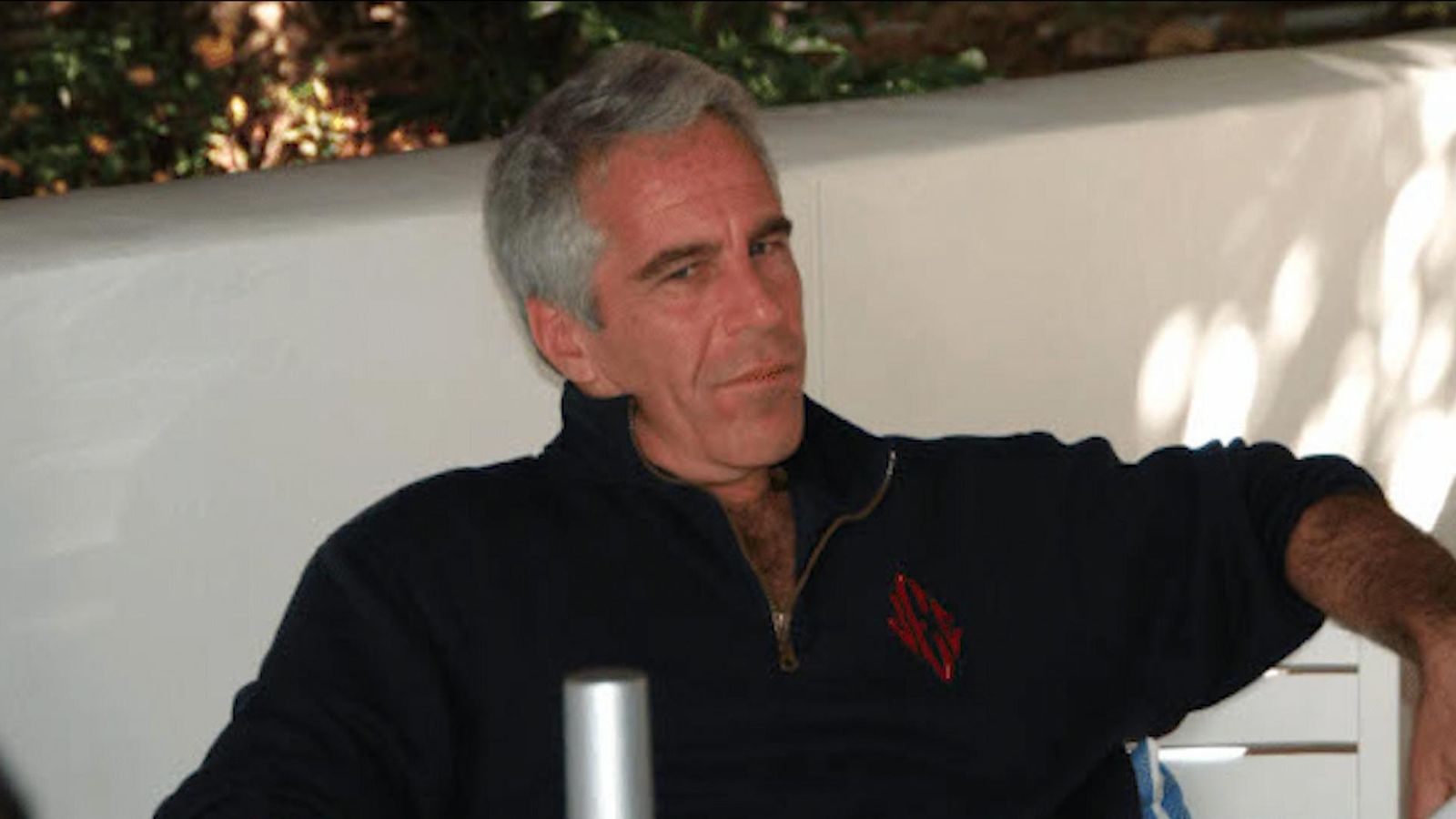
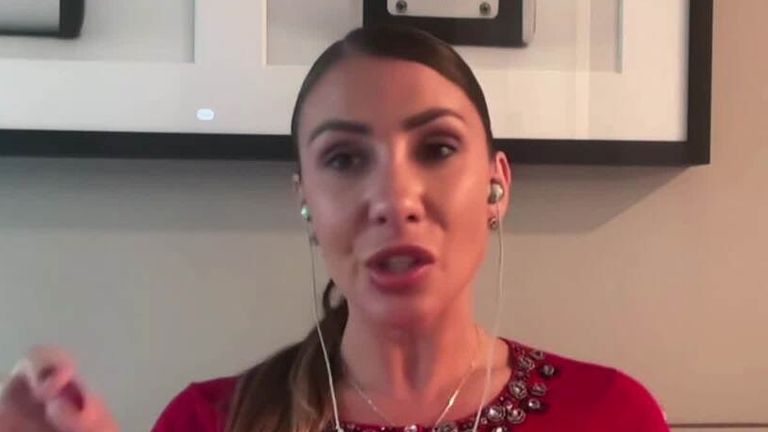
Several victims of Jeffrey Epstein have told Sky News that the incomplete release of the files relating to the dead paedophile financier have left them feeling shocked, outraged and disappointed.
Thousands of files relating to Epstein, who died in prison in 2019 while awaiting trial on sex trafficking charges, were made public late on Friday – but only a fraction of them have been released so far, with many heavily redacted.
‘Nothing transparent about release’
Marina Lacerda, a Brazilian-born survivor who suffered sexual abuse by Epstein as a teenager, expressed her disappointment over the incomplete release, calling it “a slap in our faces”.
“We were all excited yesterday before the files came out,” she told Sky News presenter Anna Botting.
“And when they did come out, we were just in shock, and we see that there is nothing there that is transparent. So it’s very sad, it’s very disappointing.”
Ms Lacera said she had just turned 14 when she met Epstein before “our relationship, our friendship I should say” ended when she was 17.
“At that point, he had made it very clear to me that I was old, that I was no longer fun for him. So, he booted me out, and I was no longer needed for him,” she said.
Epstein files – latest updates
The Department of Justice (DoJ) suggests that 1,200 victims and their families have effectively been shielded from view in the released documents.
Ms Lacera said: “From what I know, [the number of Epstein victims] is over a thousand, but that’s just what the DoJ can collect or the FBI can collect, but I presume there may be more than that.”
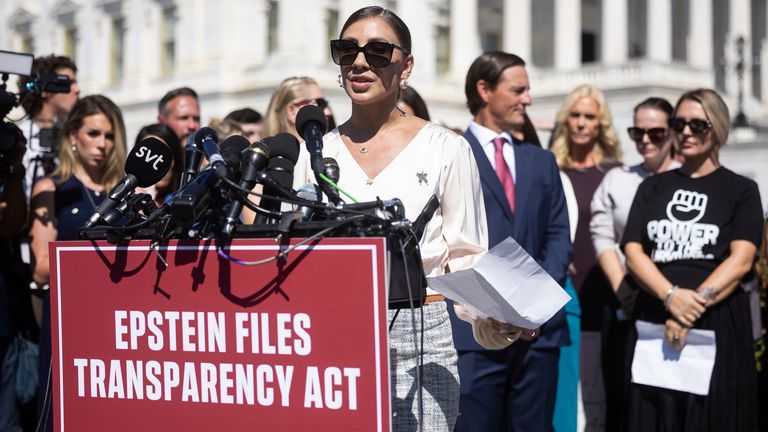
Marina Lacerda spoke outside the US Capitol in favour of the Epstein Files Transparency Act. Pic: AP
‘No way it’s not a cover-up’
Ashley Rubright met the late sex offender when she was just 15 in Palm Beach and was subject to abuse over several years.
Asked about her dissatisfaction with yesterday’s government release and if there was a sense of a cover-up operation, she noted that there had been knowledge of Epstein’s crimes “for so, so long”.
“There’s no way that there’s not a cover-up – what it is, I don’t know,” she told Sky News’ US correspondent James Matthews.
“I just hope that nobody’s allowed to fly under the radar with their involvement.”
Regarding the extent of the redactions, she said: “I’m so not shocked, but let down. Disappointed.
“Seeing […] completely redacted pages, there’s no way that that’s just to protect the victims’ identities, and there better be a good reason. I just don’t know if we’ll ever know what that is.
“We’ve been left behind since day one. That’s why I think we’re all fighting so loud now, because we’re tired of it.”

Ashley Rubright speaks at a rally in support of Epstein victims. Pic: Reuters
‘He wanted to man-handle me’
Another survivor, Alicia Arden, told Sky News that she met Epstein in a California hotel room in 1997 for an audition, when she was a 25-year-old model and actress.
“He let me in and he started looking over my portfolio, which is customary to do in a talent audition, and then he insinuated, ‘oh, you should come closer to me and let me see your body’,” she said.
Epstein then started “taking off my top and my pants and touching my rear end and my breasts”.
“He goes, ‘let me come over here and spin for me and let me man-handle you. Let me man-handle you.’ And I got very nervous and started to cry. I said, ‘I have to go, Jeffrey. I don’t really think this is gonna work out’,” Ms Arden said.
“He got a phone call and I was crying in front of him. And he said, ‘I have this beautiful girl in front of me and she’s very upset’. I said ‘I’m gonna leave’ and he offered me $100 and I said ‘I’m not a prostitute’.”
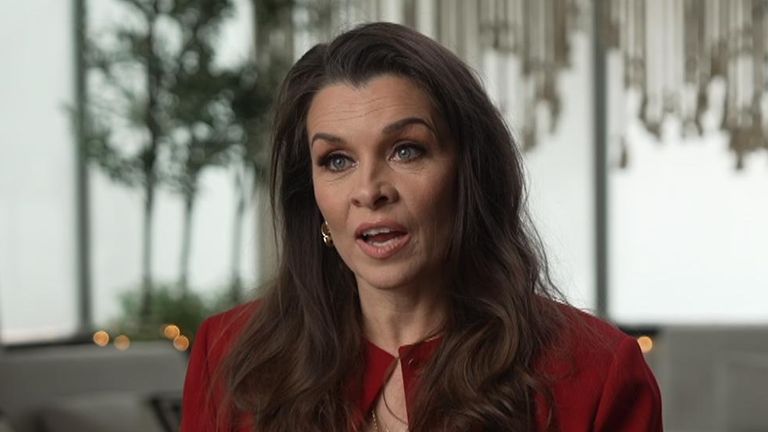
Alicia Arden
She said she went to the Santa Monica Police Department to file a report.
“That was as difficult, and I’m like shaking telling you, but as difficult as being in the hotel room with him because they weren’t supportive at all about it,” she said. Her redacted report was included in previous files.
‘Epstein was a monster’
Asked what she thought about Epstein now, she said: “He’s a monster […] and just horrible. I mean, I’m trembling thinking about him and talking about him.
“If I could do anything, I’m happy I got the police report filed. If they would have pursued him and maybe gone over the hotel [where he was] essentially living, then I could have maybe saved the girls. I’ve always thought that.”
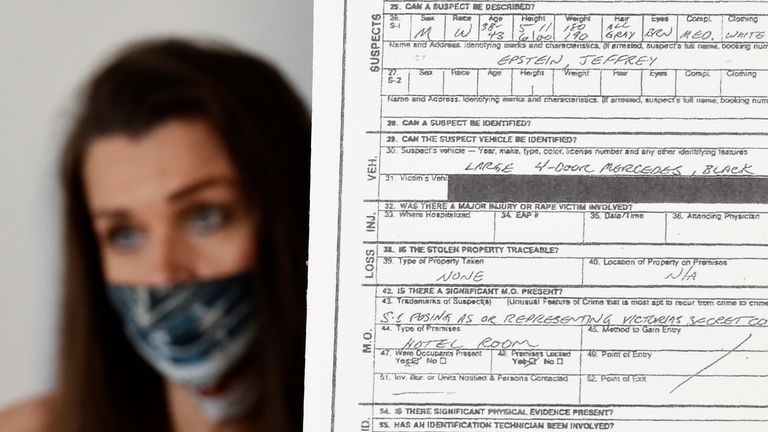
Ms Arden’s redacted police report. Pic: AP
Ms Arden does not believe she has seen justice as one of Epstein’s victims.
“I want to see all of the files come out. I want all of the men in there or women that were trafficking these girls, and they shouldn’t be able to walk around free and not pay for if they did something,” she said.
“They should be actually arrested if they’re in the files and it’s proven that they did horrible things to these girls, and they should lose their jobs, their lives, their homes, their money, and pay for what they did, and it was all supposed to come out, and it hasn’t.”
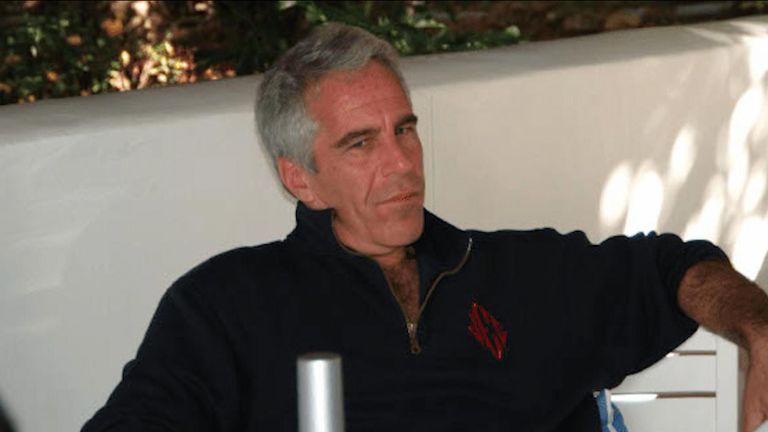
Jeffrey Epstein died in prison in 2019 while awaiting trial on federal sex trafficking charges
‘I feel redeemed’ by file release
Maria Farmer, who made a complaint to the Miami FBI in 1996 in which she alleged that Epstein stole and sold photos she had taken of her 12- and 16-year-old sisters, expressed gratitude for the release of the files.
“This is amazing. Thank you for believing me. I feel redeemed. This is one of the best days of my life,” she said in a statement through her lawyers.
“I’m crying for two reasons. I want everyone to know that I am shedding tears of joy for myself, but also tears of sorrow for all the other victims that the FBI failed.”

Annie Farmer holds a photo of herself and her sister, Maria Farmer, when they were victims of Epstein. Pic: AP
A positive-leaning reaction also came from Dani Bensky, who said she was sexually abused by Epstein when she was 17 years old.
She told Sky News’ US partner network NBC News: “There is part of me that feels a bit validated at this moment, because I think so many of us have been saying, ‘No, this is real, like, we’re not a hoax’.
“There’s so much information, and yet not as much as we may have wanted to see.”
‘It is not over’
Lawyer Gloria Allred, who has represented several Epstein victims, told Sky News about the partial release on Friday: “It’s very disappointing that all of the files were not released yesterday as required and, in fact, mandated by law.
“The law didn’t say they could do this over a period of time, it didn’t say that weeks could go by.”
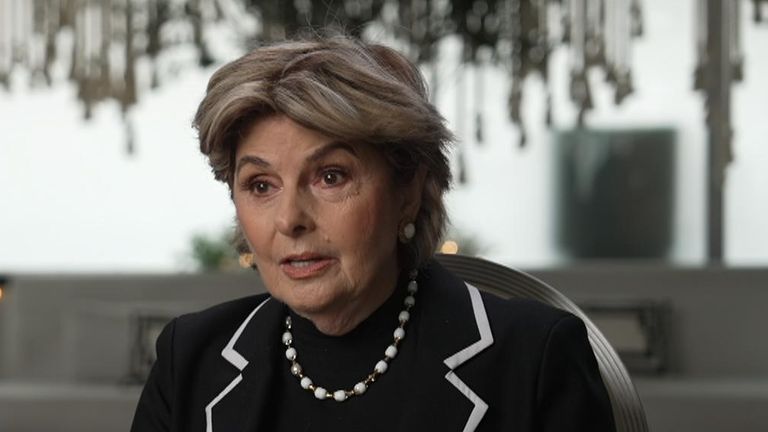
Lawyer Gloria Allred
Deputy attorney general Mr Blanche said additional file disclosures can be expected by the end of the year.
“But that’s not what the law says. So clearly, the law has been violated. And it’s the Department of Justice letting down the survivors once again,” Ms Allred said.
The lawyer labelled the incomplete release of the files a “distraction”, adding: “This is not over, and it won’t be over until we get the truth and transparency for the survivors.”
Read more:
Links between Epstein and UK revealed
Photos of Jeffrey Epstein’s circle among files
Writing on body seen in images released by Democrats
Trump, Clinton, Andrew and others seen in previous release
‘Only redactions required by law’
The tranche of material was released just hours before a legal deadline in the US following the passing of the Epstein Files Transparency Act – and at the same time as a US strike targeting Islamic State fighters in Syria.
The US deputy attorney general, Todd Blanche, said the justice department was continuing to review the remaining files and was withholding some documents under exemptions meant to protect the victims.
But Sky News’ James Matthews said the significance of the files “is undermined by the lack of context”, while some Democrats and Republicans criticised the partial release as failing to “comply with law”.
Meanwhile, the justice department has defended the redactions made in the released files.
“The only redactions being applied to the documents are those required by law – full stop. Consistent with the statute and applicable laws, we are not redacting the names of individuals or politicians unless they are a victim,” it quoted deputy attorney general Mr Blanche in a post on X.
The Trump administration has claimed to be the most transparent in history.
👉 Follow Trump100 on your podcast app 👈
In a statement, the White House claimed the release also demonstrated its commitment to justice for Epstein’s victims, criticising previous Democratic administrations for not doing the same.
But that statement ignored that the disclosures only happened because Congress forced the administration’s hand with a bill demanding the release, after Trump officials declared earlier this year that no more Epstein files would be made public.
-
 Sports2 years ago
Story injured on diving stop, exits Red Sox game
-
 Sports3 years ago
‘Storybook stuff’: Inside the night Bryce Harper sent the Phillies to the World Series
-
 Sports2 years ago
Game 1 of WS least-watched in recorded history
-
 Sports3 years ago
Button battles heat exhaustion in NASCAR debut
-
 Sports3 years ago
MLB Rank 2023: Ranking baseball’s top 100 players
-
Sports4 years ago
Team Europe easily wins 4th straight Laver Cup
-
 Environment3 years ago
Japan and South Korea have a lot at stake in a free and open South China Sea
-
 Environment1 year ago
Here are the best electric bikes you can buy at every price level in October 2024