
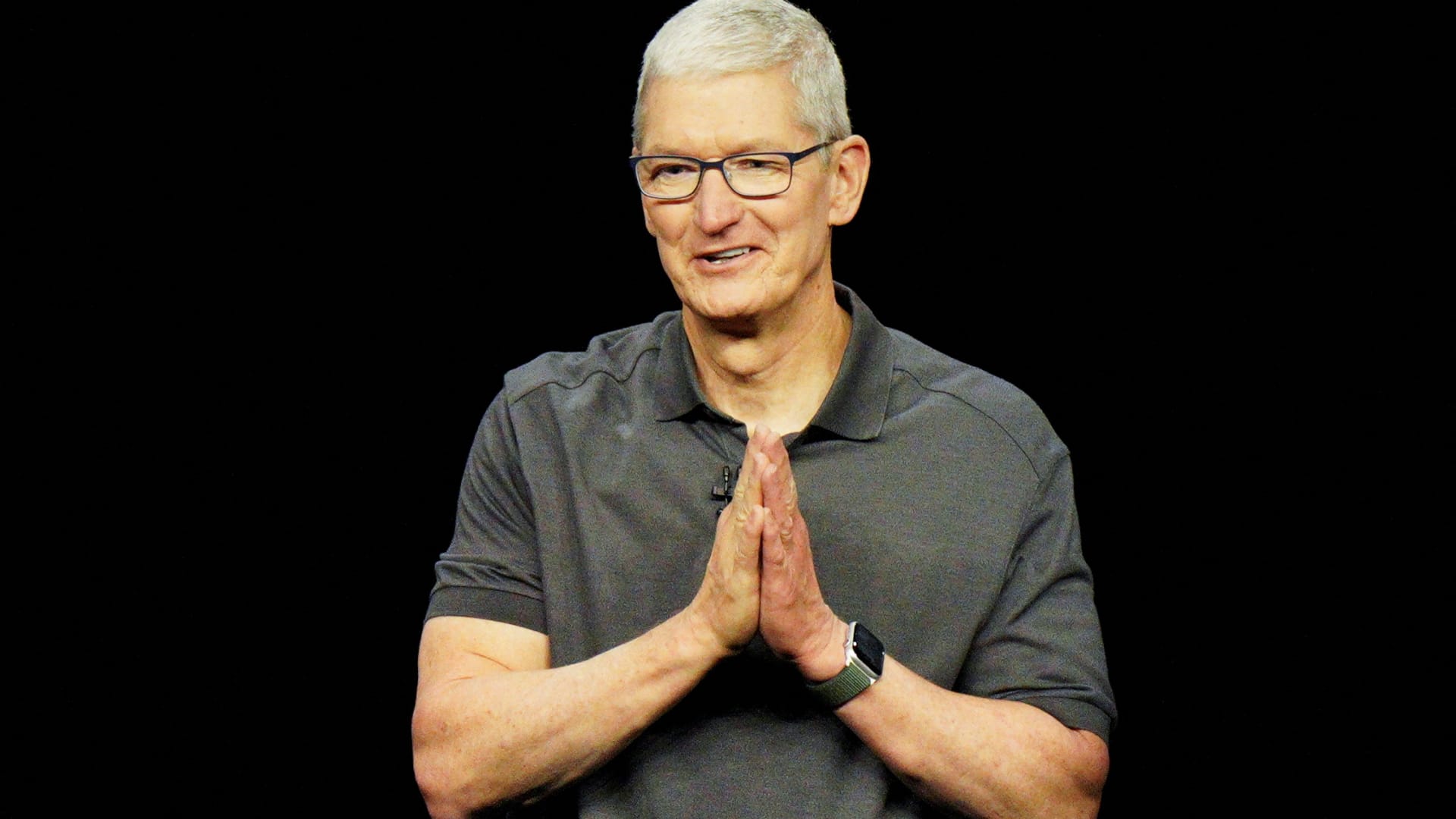
Apple expands self-service repair program to latest M3 Macs


Samuel Boivin | Nurphoto | Getty Images
TikTok CEO Shou Zi Chew told employees on Thursday that the company’s U.S. operations will be housed in a new joint venture.
The entity is named TikTok USDS Joint Venture LLC, according to a memo sent by Chew and obtained by CNBC. As part of the joint venture, Chew said the company has signed agreements with the three managing investors: Oracle, Silver Lake, and Abu Dhabi-based MGX. He said that the deal’s “closing date” is Jan. 22.
Under a national security law, which the Supreme Court upheld in January, China-based ByteDance was required to divest TikTok’s U.S. operations or face an effective ban in the country. In September, President Donald Trump signed an executive order approving a proposed deal that would keep TikTok operational in the U.S. by meeting the requirements of a law originally signed by former President Joe Biden.
Chew noted that the new TikTok joint venture would be “majority owned by American investors, governed by a new seven-member majority-American board of directors, and subject to terms that protect Americans’ data and U.S. national security.”
The U.S. joint venture will be 50% held by a consortium of new investors, including Oracle, Silver Lake and MGX with 15% each. Just over 30% will be held by affiliates of certain existing investors of ByteDance, and 19.9% will be retained by ByteDance, the memo said.
The TikTok chief said the entity will be responsible for protecting U.S. data, ensuring the security of its prized algorithm, content moderation and “software assurance.” He added that the joint venture will “have the exclusive right and authority to provide assurances that content, software, and data for American users is secure.”
In addition to being an investor, Oracle will serve as the “trusted security partner” in charge of auditing and validating that it complies with “agreed upon National Security Terms,” the memo said. Sensitive U.S. data will be stored in Oracle’s U.S.-based cloud computing data centers, Chew wrote.
The new TikTok entity will also be tasked with retraining the video app’s core content recommendation algorithm “on U.S. user data to ensure the content feed is free from outside manipulation,” the memo said.
Chew noted that TikTok global U.S. entities “will manage global product interoperability and certain commercial activities, including e-commerce, advertising, and marketing.”
Under Trump’s executive order in September, the attorney general was blocked from enforcing the national security law for a 120-day period in order to “permit the contemplated divestiture to be completed,” allowing the deal to finalize by Jan 23.
WATCH: TikTok signs deal for sale of U.S. unit to joint venture


The VC arms of Google and Nvidia have invested in Swedish vibe coding startup Lovable’s $330 million Series B at a $6.6 billion valuation, the company announced on Thursday.
The news confirms an earlier story from CNBC, which reported on Tuesday that Lovable had raised at that valuation, trebling its valuation from its previous round in July, and that the investors included U.S. VC firms Accel and Khosla Ventures.
CapitalG, one of Google’s VC divisions, and Menlo Ventures led the round. Alongside Accel and Khosla, Nvidia venture arm NVentures, actor Gwyneth Paltrow’s VC firm Kinship Ventures, Salesforce Ventures, Databricks Ventures, Atlassian Ventures, T.Capital, Hubspot Ventures, DST Global, EQT Global, Creandum and Evantic also participated.
The fresh funds take Lovable’s total raised in 2025 to over $500 million.
“Lovable has done something rare: built a product that enterprises and founders both love,” said Laela Sturdy, managing partner at CapitalG in a statement accompanying the announcement.
“The demand we’re seeing from Fortune 500 companies signals a fundamental shift in how software gets built.”
Lovable’s platform uses AI models from providers like OpenAI and Anthropic to help users build apps and websites using text prompts, without technical knowledge of coding.
The startup reported $200 million in annual recurring revenue (ARR) in November, just under a year after achieving $1 million in ARR for the first time. It was founded in 2023 by Anton Osika and Fabian Hedin.
Vibe coding startups have seen big interest from VCs in recent times, as investors bet on their promise of drastically reducing the time it takes to create software and apps.
In the U.S., Anysphere, which created coding tool Cursor, raised $2.3 billion at a $29.3 billion valuation in November. In September, Replit hit a $3 billion price tag after picking up $250 million and Vercel closed a $300 million round at a $9.3 billion valuation.


The Micron logo is seen displayed at the 8th China International Import Expo.
Sheldon Cooper | Lightrocket | Getty Images
Micron Technology‘s stock jumped 15% after the company signaled robust demand for its memory chips and blew away fiscal first-quarter estimates.
During an earnings call with analysts, Micron, which makes memory storage used for computers and artificial intelligence servers, said data center needs have fueled greater demand for its products.
Micron said it expects the total addressable market for high-bandwidth memory to hit $100 billion by 2028, growing at a 40% compounded annual growth rate. Management also upped its capital expenditures guidance to $20 billion from $18 billion.
“We are more than sold out,” said business chief Sumit Sadana. “We have a significant amount of unmet demand in our models and this is just consistent with an environment where the demand is substantially higher than supply for the foreseeable future.
Micron topped Wall Street estimates for the fiscal first quarter and issued blowout guidance.
The company reported adjusted earnings of $4.78 per share on $13.64 billion in revenue, surpassing LSEG estimates for earnings of $3.95 per share and $12.84 billion in sales.
Revenues in the current quarter are expected to hit about $18.70 billion, blowing past the $14.20 billion expected by LSEG. Adjusted earnings are forecast to reach $8.42, versus expectations of $4.78 per share.
JPMorgan upped its price target on the stock following the results, citing the favorable pricing setup, while Bank of America upgraded shares to a buy rating.
Morgan Stanley called the results the best revenue and net income upside in the “history of the U.S. semis industry” outside of Nvidia.
“If AI keeps growing as we expect, we believe that the next 12 months are going to have broader coat tails to the AI trade than just the processor names and memory would be the biggest beneficiary,” analysts wrote.
WATCH: Micron shares spike on better-than-expected quarterly results

Micron year-to-date stock chart.
-
 Sports2 years ago
Story injured on diving stop, exits Red Sox game
-
 Sports3 years ago
‘Storybook stuff’: Inside the night Bryce Harper sent the Phillies to the World Series
-
 Sports2 years ago
Game 1 of WS least-watched in recorded history
-
 Sports3 years ago
Button battles heat exhaustion in NASCAR debut
-
 Sports3 years ago
MLB Rank 2023: Ranking baseball’s top 100 players
-
Sports4 years ago
Team Europe easily wins 4th straight Laver Cup
-
 Environment3 years ago
Japan and South Korea have a lot at stake in a free and open South China Sea
-
 Environment1 year ago
Here are the best electric bikes you can buy at every price level in October 2024