
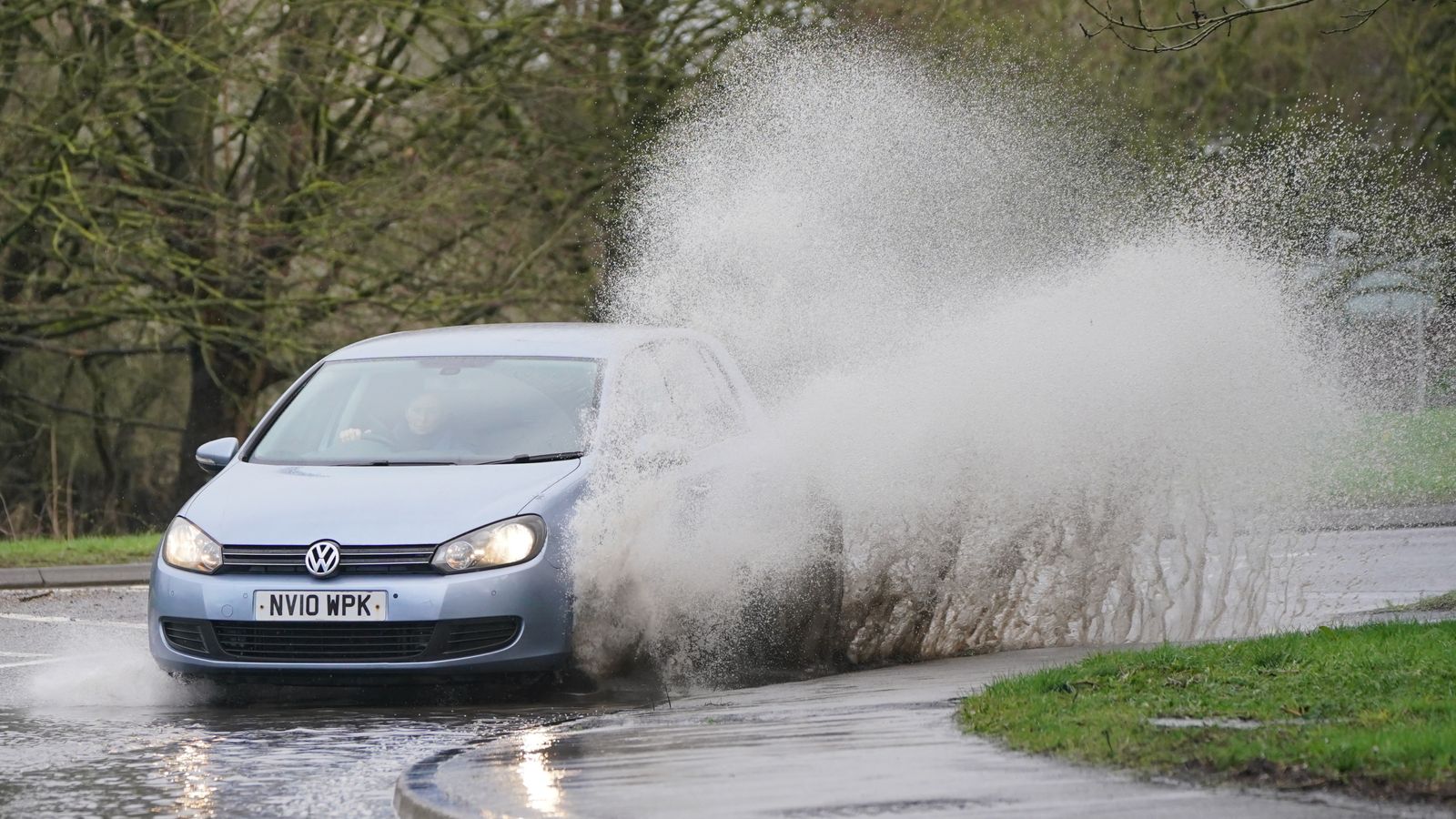
UK weather: February was warmest since records began in England and Wales
Nigel Farage has launched a tirade against the BBC after he was asked about claims he used racist and antisemitic language when he was at school, which he denied.
The Reform UK leader accused the broadcaster of “double standards”, pointing to its past television shows when he claimed the BBC “were very happy to use blackface”.
The outburst comes as he faces continued pressure over allegations he made racist and antisemitic comments while a pupil at top private school Dulwich College nearly 50 years ago.
Mr Farage was asked by the BBC about an interview his deputy, Richard Tice, gave on Thursday, in which he claimed those accusing his boss of racism were engaging in “made-up twaddle”.
The Reform leader said the framing of the question by the BBC interviewer had been “despicable”.
“I think to frame a question around the leader of Reform’s ‘relationship with Hitler’, which is how she framed it, was despicable, disgusting beyond belief,” he said.
“The double standards and hypocrisy of the BBC are absolutely astonishing.
“At the time I was alleged to have made these remarks, one of your most popular weekly shows was ‘The Black and White Minstrels’. The BBC were very happy to use blackface.”
He added: “I cannot put up with the double standards at the BBC about what I’m alleged to have said 49 years ago, and what you were putting out on mainstream content.
“So I want an apology from the BBC for virtually everything you did during the 1970s and 80s.”
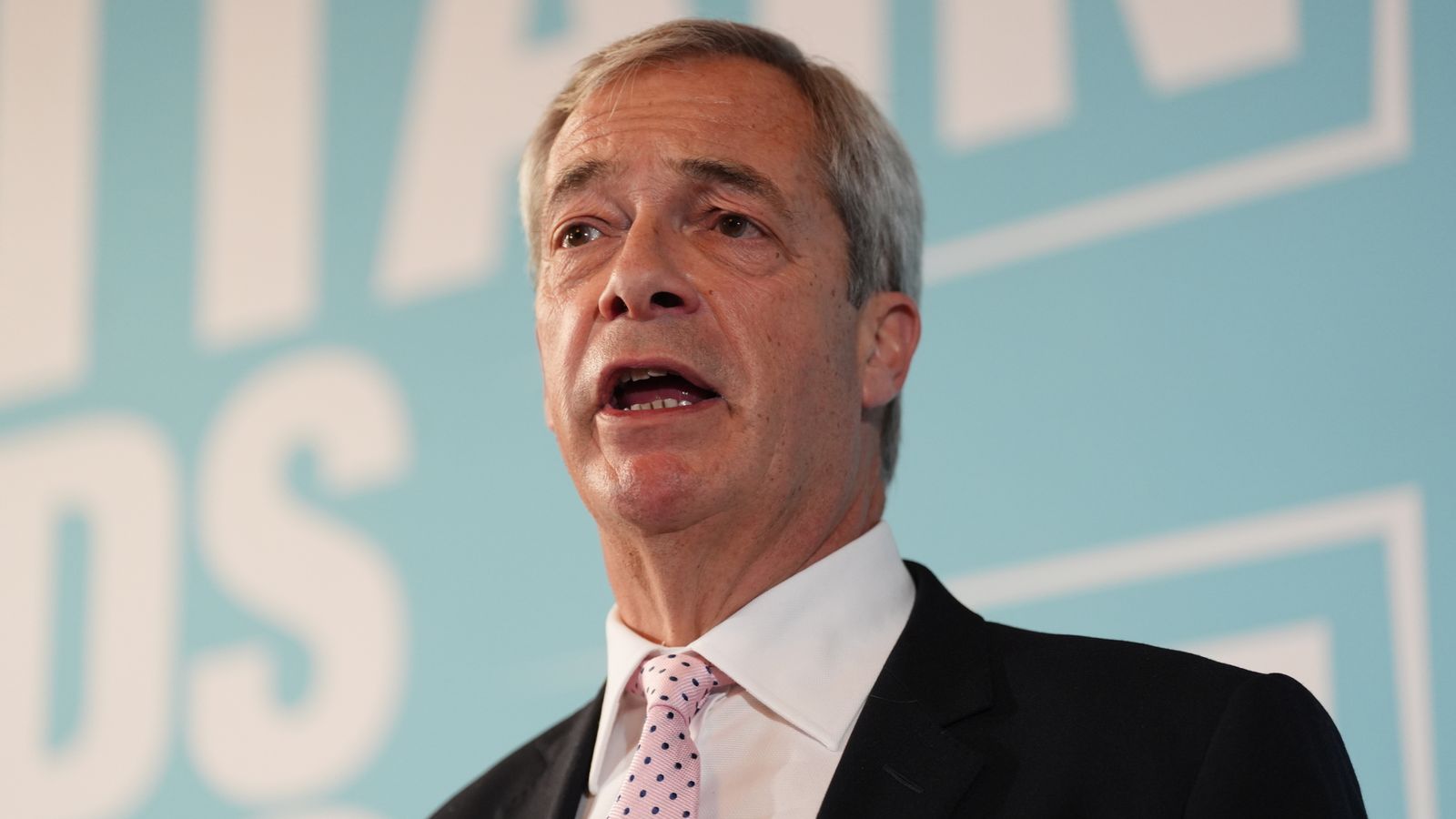
Reform UK leader Nigel Farage. Pic: PA
Turning to the substance of the allegations, Mr Farage read out a letter that he said was from someone who he went to school with.
He quotes the unnamed Jewish pupil as saying: “While there was plenty of macho, tongue-in-cheek schoolboy banter, it was humour. And yes, sometimes it was offensive […] but never with malice.
“I never heard him racially abuse anyone. If he had, he would have been reported and punished. He wasn’t.”
Mr Farage went on to quote the unnamed former school mate as saying claims from former pupils reported by the Guardian and BBC were “without evidence, except for belatedly politically-dubious recollections from nearly half a century ago”.
He said the former pupil who had written to him had described the culture in the 1970s and at Dulwich College as “very different”, and “lots of boys said things they’d regret today”.
Read More:
How record-breaking Reform UK donor Christopher Harborne made his millions
Reform UK gets record £9m donation from ex-Tory donor
Mr Farage has been under pressure since mid-November when reports from former classmates of alleged racist comments surfaced. The Guardian claims it has spoken to 20 former classmates who recall such language.
Challenged in an interview on 24 November if the claims were true, Mr Farage said: “No, this is 49 years ago by the way, 49 years ago. Have I ever tried to take it out on any individual on the basis of where they’re from? No.”
He added: “I would never, ever do it in a hurtful or insulting way. It’s 49 years ago. It’s 49 years ago. I had just entered my teens. Can I remember everything that happened at school? No, I can’t. Have I ever been part of an extremist organisation or engaged in direct, unpleasant, personal abuse, genuine abuse, on that basis? No.”
Challenged again about whether he had racially abused anyone, Farage responded: “No, not with intent.”
A Conservative spokesman said Mr Farage was too busy defending himself to “defend democracy” from election postponements announced by Labour.
“Nigel Farage just called a press conference and used it to rant at journalists over historic allegations of racism and antisemitism – allegations he has just admitted are true.
“Farage is too busy furiously defending himself to defend democracy from the Labour Party’s elections delays.
“Reform’s one-man band is in chaos once again.”
Labour Party chair Anna Turley said: “Nigel Farage can’t get his story straight. It really shouldn’t be this difficult to say whether he racially abused people in the past.
“So far, he’s claimed he can’t remember, that it’s not true, that he never ‘directly’ abused anyone, that he was responsible for ‘offensive banter’, and deflected by saying other people were racist too.
“Instead of shamelessly demanding apologies from others, Nigel Farage should be apologising to the victims of his alleged appalling remarks.”
She added that Reform UK was “simply not fit for high office”.
UK
Salisbury novichok poisonings: Putin ‘morally responsible’ for woman’s death after authorising botched spy assassination bid

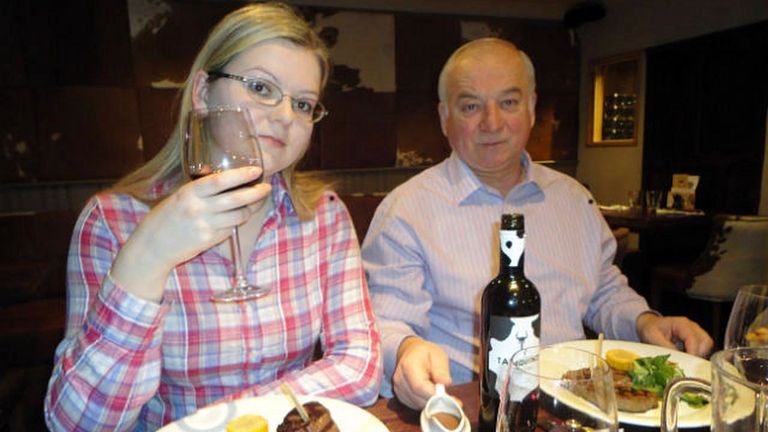
The assassination attempt on a former Russian spy was authorised by Vladimir Putin, who is “morally responsible” for the death of a woman poisoned by the nerve agent used in the attack, a public inquiry has found.
The chairman, Lord Hughes, found there were “failings” in the management of Sergei Skripal, 74, who was a member of Russian military intelligence, the GRU, before coming to the UK in 2010 on a prisoner exchange after being convicted of spying for Britain.
But he found the assessment that he wasn’t at “significant risk” of assassination was not “unreasonable” at the time of the attack in Salisbury on 4 March 2018, which could only have been avoided by hiding him with a completely new identity.
Mr Skripal and his daughter Yulia, 41, who was also poisoned, were left seriously ill, along with then police officer Nick Bailey, who was sent to search their home, but they all survived.
Sergei Skripal and Yulia Skripal.
Pic: Shutterstock
Dawn Sturgess, 44, died on 8 July, just over a week after unwittingly spraying herself with novichok given to her by her partner, Charlie Rowley, 52, in a perfume bottle in nearby Amesbury on 30 June 2018. Mr Rowley was left seriously ill but survived.
In his 174-page report, following last year’s seven-week inquiry, costing more than £8m, former Supreme Court judge Lord Hughes said she received “entirely appropriate” medical care but her condition was “unsurvivable” from a very early stage.
The inquiry found GRU officers using the aliases Alexander Petrov, 46, and Ruslan Boshirov, 47, had brought the Nina Ricci bottle containing the novichok to Salisbury after arriving in London from Moscow with a third agent known as Sergey Fedotov to kill Mr Skripal on 2 March.
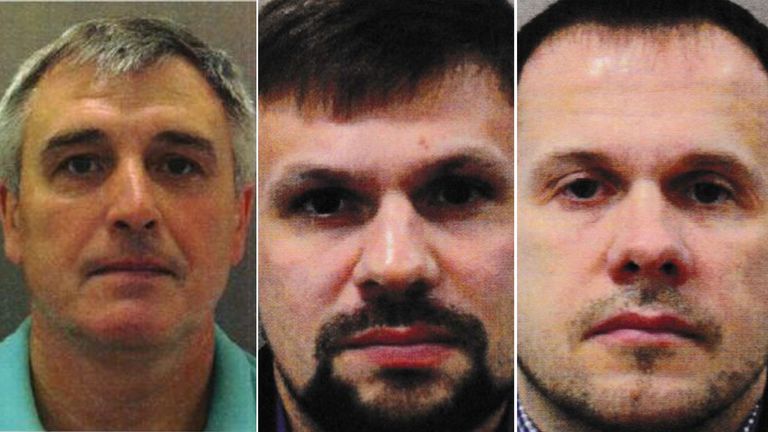
L-R Suspects who used the names of Sergey Fedotov, Ruslan Boshirov and Alexander Petrov. Pics: UK Counter Terrorism Policing
The report said it was likely the same bottle Petrov and Boshirov used to apply the military-grade nerve agent to the handle of Mr Skripal’s front door before it was “recklessly discarded”.
“They can have had no regard to the hazard thus created, of the death of, or serious injury to, an uncountable number of innocent people,” it said.
It is “impossible to say” where Mr Rowley found the bottle, but was likely within a few days of it being abandoned on 4 March, meaning there is “clear causative link” with the death of mother-of-three Ms Sturgess.
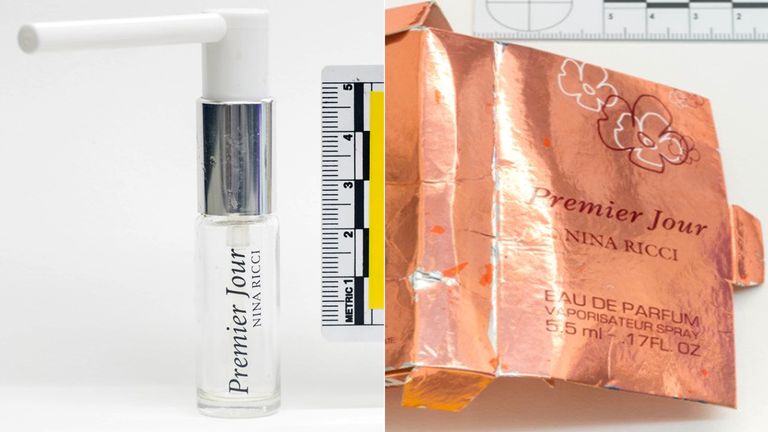
Novichok was in perfume bottle. Pic: Reuters
Lord Hughes said he was sure the three GRU agents “were acting on instructions”, adding: “I have concluded that the operation to assassinate Sergei Skripal must have been authorised at the highest level, by President Putin.
“I therefore conclude that those involved in the assassination attempt (not only Petrov, Boshirov and Fedotov, but also those who sent them, and anyone else giving authorisation or knowing assistance in Russia or elsewhere) were morally responsible for Dawn Sturgess’s death,” he said.
Russian ambassador summonsed
After the publication of the report, the government announced the GRU has been sanctioned in its entirety, and the Russian Ambassador has been summonsed to the Foreign Office to answer for Russia’s ongoing campaign of alleged hostile activity against the UK.
Sir Keir Starmer said the findings “are a grave reminder of the Kremlin’s disregard for innocent lives” and that Ms Sturgess’s “needless” death was a tragedy that “will forever be a reminder of Russia’s reckless aggression”.
“The UK will always stand up to Putin’s brutal regime and call out his murderous machine for what it is,” the prime minister said.
He said deploying the “highly toxic nerve agent in a busy city centre was an astonishingly reckless act” with an “entirely foreseeable” risk that others beyond the intended target would be killed or injured.
The inquiry heard a total of 87 people presented at A&E.
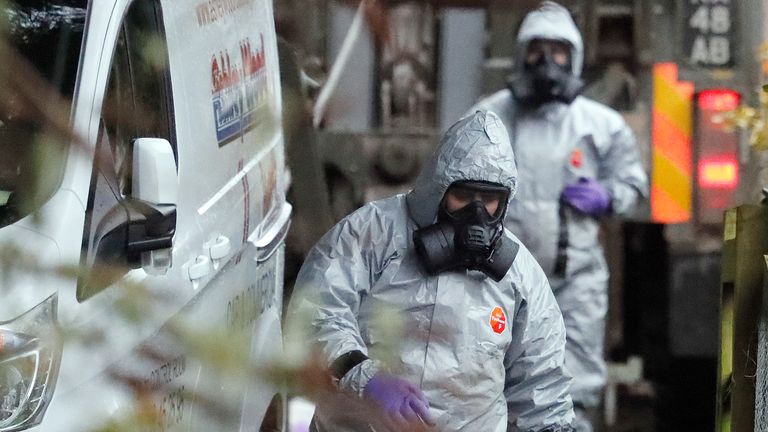
Pic AP
Lord Hughes said there was a decision taken not to issue advice to the public not to pick anything up which they hadn’t dropped, which was a “reasonable conclusion” at the time, so as not to cause “widespread panic”.
He also said there had been no need for training beyond specialist medics before the “completely unexpected use of a nerve agent in an English city”.
After the initial attack, wider training was “appropriate” and was given but should have been more widely circulated.
In a statement following the publication of his report, Lord Hughes said Ms Sturgess’s death was “needless and arbitrary”, while the circumstances are “clear but quite extraordinary”.
“She was the entirely innocent victim of the cruel and cynical acts of others,” he said.
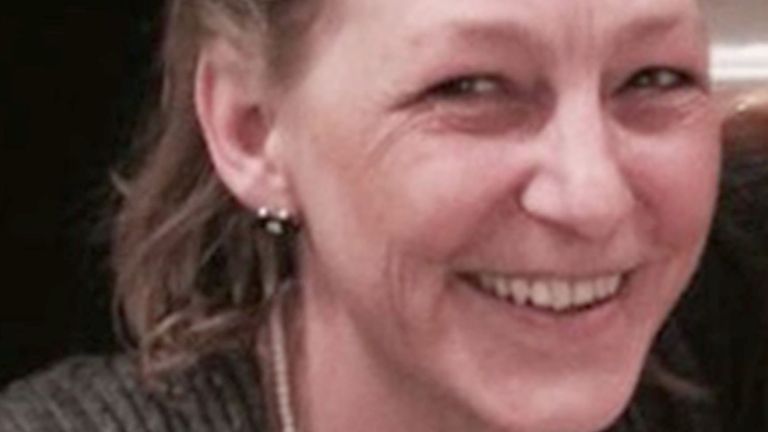
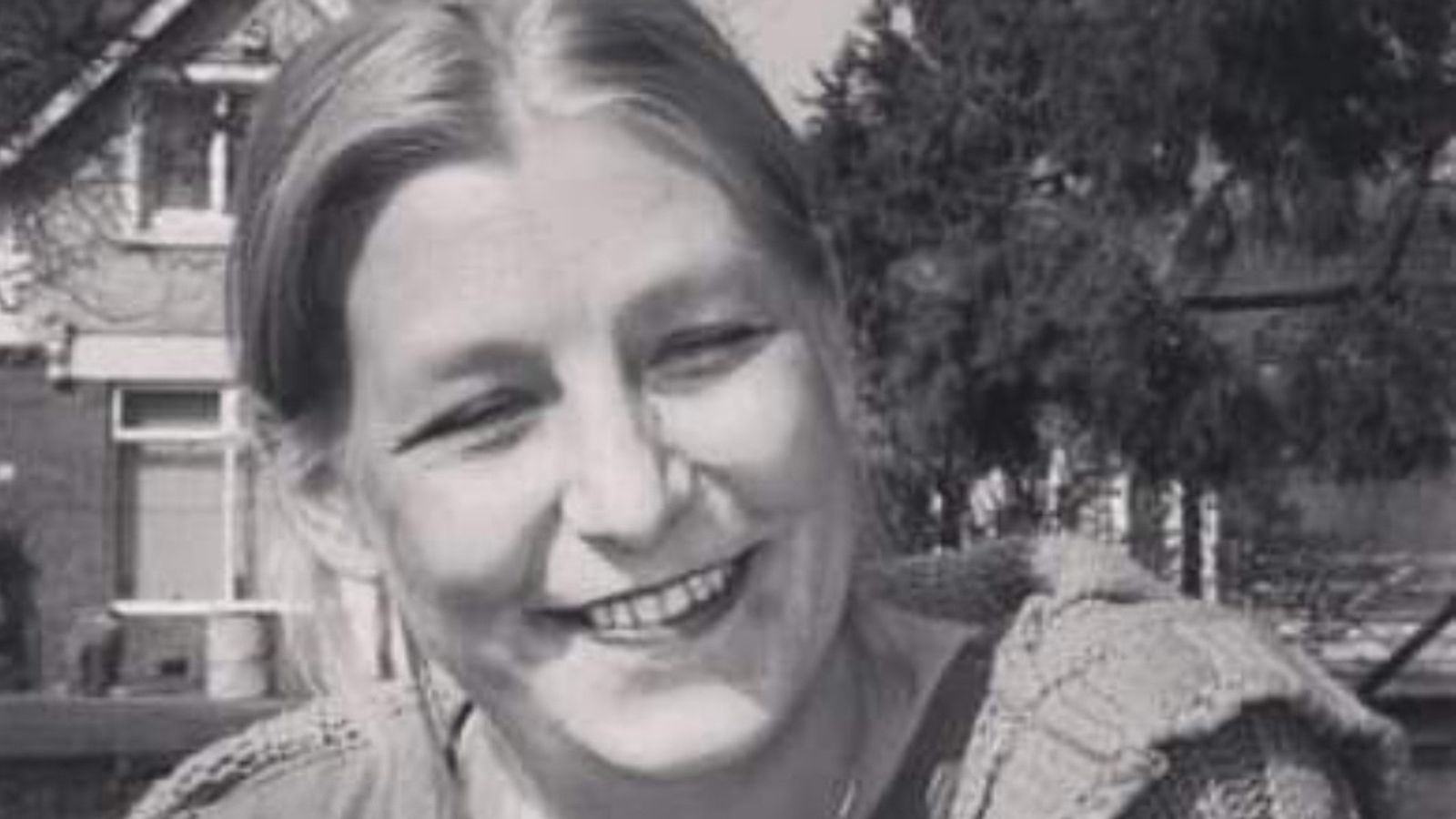
‘We can finally put her to peace’ . Pic: Met Police/PA
‘We can have Dawn back now’
Speaking after the report was published, Ms Sturgess’s father, Stanley Sturgess, said: “We can have Dawn back now. She’s been public for seven years. We can finally put her to peace.”
In a statement, her family said they felt “vindicated” by the report, which recognised how Wiltshire police wrongly characterised Ms Sturgess as a drug user.
But they said: “Today’s report has left us with some answers, but also a number of unanswered questions.
“We have always wanted to ensure that what happened to Dawn will not happen to others; that lessons should be learned and that meaningful changes should be made.
“The report contains no recommendations. That is a matter of real concern. There should, there must, be reflection and real change.”
Wiltshire Police Chief Constable Catherine Roper admitted the pain of Ms Sturgess’s family was “compounded by mistakes made” by the force, adding: “For this, I am truly sorry.”
Russia has denied involvement
The Russian Embassy has firmly denied any connection between Russia and the attack on the Skripals.
But the chairman dismissed Russia’s explanation that the Salisbury and Amesbury poisonings were the result of a scheme devised by the UK authorities to blame Russia, and the claims of Petrov and Borisov in a television interview that they were sightseeing.
The inquiry chairman said the evidence of a Russian state attack was “overwhelming” and was designed not only as a revenge attack against Mr Skripal, but amounted to a “public statement” that Russia “will act decisively in its own interests”.
Lord Hughes found “some features of the management” of Mr Skripal “could and should have been improved”, including insufficient regular written risk assessments.
But although there was “inevitably” some risk of harm at Russia’s hands, the analysis that it was not likely was “reasonable”, he said.
“There is no sufficient basis for concluding that there ought to have been assessed to be an enhanced risk to him of lethal attack on British soil, such as to call for security measures,” such as living under a new identity or at a secret address, the chairman said.
He added that CCTV cameras, alarms or hidden bugs inside Mr Skripal’s house might have been possible but wouldn’t have prevented the “professionally mounted attack with a nerve agent”.
Sky News has approached the Russian Embassy for comment on the report.
-
 Sports2 years ago
Story injured on diving stop, exits Red Sox game
-
 Sports3 years ago
‘Storybook stuff’: Inside the night Bryce Harper sent the Phillies to the World Series
-
 Sports2 years ago
Game 1 of WS least-watched in recorded history
-
 Sports3 years ago
Button battles heat exhaustion in NASCAR debut
-
 Sports3 years ago
MLB Rank 2023: Ranking baseball’s top 100 players
-
Sports4 years ago
Team Europe easily wins 4th straight Laver Cup
-
 Environment3 years ago
Japan and South Korea have a lot at stake in a free and open South China Sea
-
 Environment1 year ago
Here are the best electric bikes you can buy at every price level in October 2024