
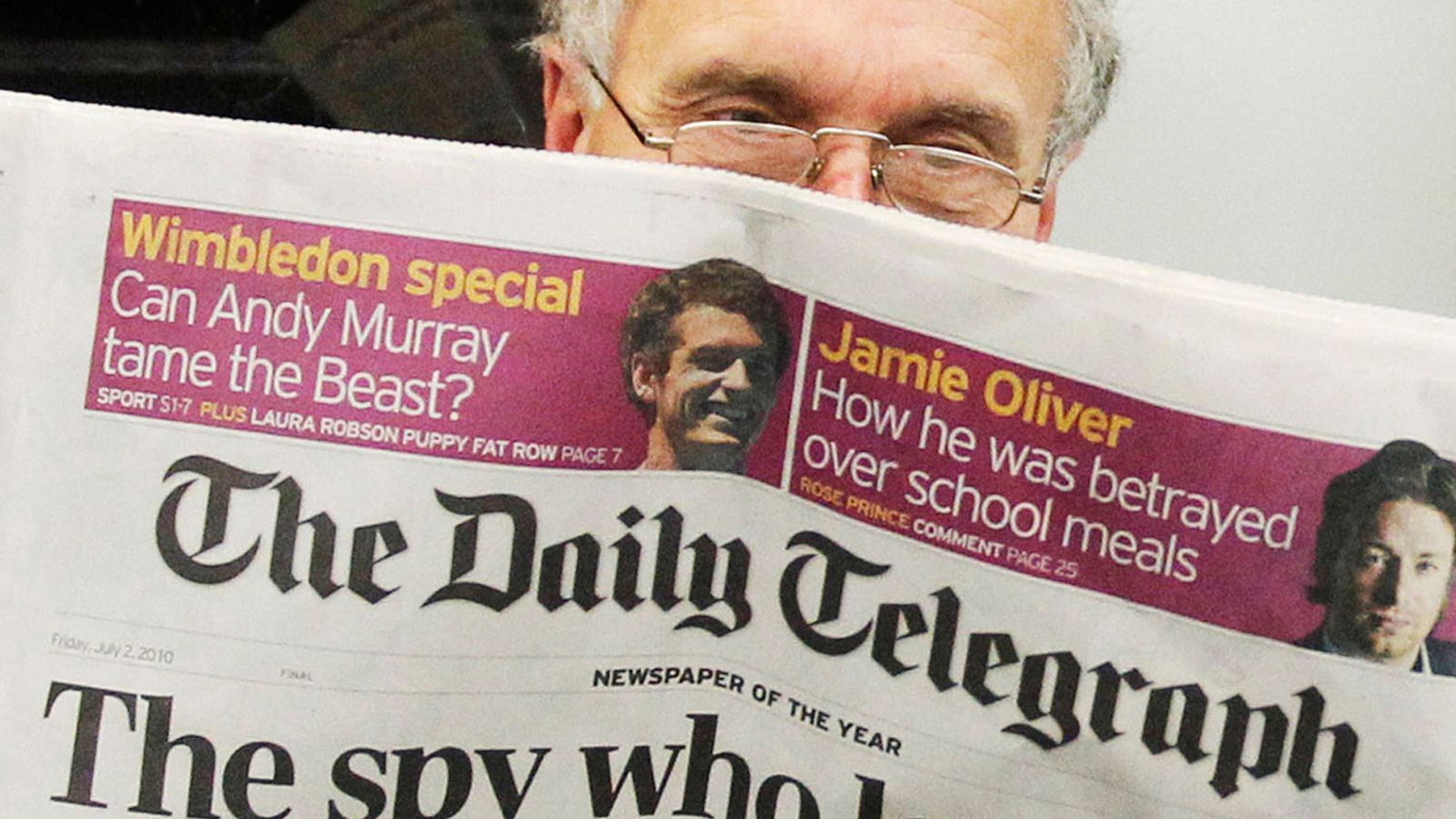
Lucy Frazer rebukes Telegraph directors over removal of newspaper bosses

The independent directors appointed to oversee the sale of The Daily Telegraph have been warned that the removal of the newspaper’s two most senior executives breached a government order – and that any subsequent transgression could result in a multimillion pound fine.
Sky News has learned that the Department for Culture, Media and Sport (DCMS) last week wrote to Goodwin Procter, the law firm acting for the independent board members, to say that Lucy Frazer, the culture secretary, had concluded that recent management changes at the broadsheet publisher had contravened a requirement that she must consent to the removal and appointment of Telegraph bosses.
According to sources familiar with the letter’s contents, DCMS officials said that Ms Frazer had decided not to pursue further action over the breaches, but warned that “any further breaches may lead to enforcement action, including the imposition of a penalty… [which] may be up to 5% of the total worldwide turnover of the enterprises owned or controlled by the person on whom it is imposed”.
Results for the financial year ending 31 December 2022 showed that Telegraph Media Group recorded a turnover of just over £254m – meaning that a maximum fine levied on that basis alone could amount to over £12.5m.
Money latest: What we learned about Wednesday’s budget over the weekend
The letter was sent just over a month after Anna Jones, a former Hearst UK executive, was appointed to replace Nick Hugh as TMG’s CEO.
Cormac O’Shea, the TMG finance chief, left the company just weeks earlier.
Ms Jones’s appointment also constituted a breach of the government’s Pre-Emptive Action Order, imposed last autumn, because the directors had not sought Ms Frazer’s prior approval, the letter is understood to have added.
A source close to the company said they believed that the departures of Mr Hugh and Mr O’Shea were part of the “ordinary course of business”, and were therefore excluded from the original order.
A subsequent order issued by Ms Frazer following the executives’ departures was amended to remove the “ordinary course of business” clause, the source said.
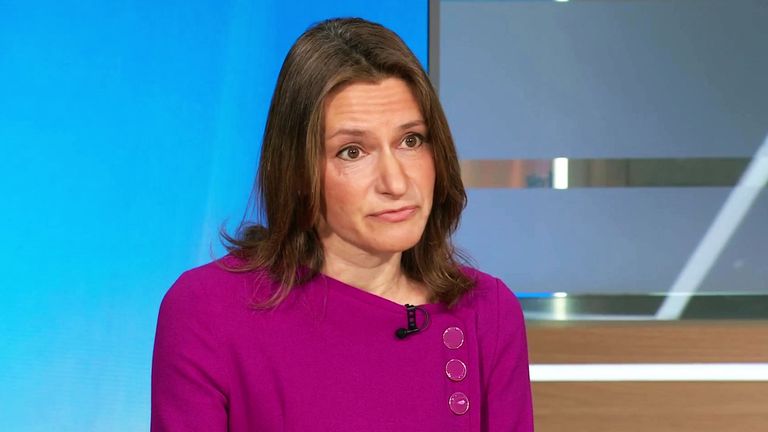
Culture secretary Lucy Frazer MP
The culture secretary’s latest intervention is the latest twist in a convoluted process that will determine the future ownership of two of Britain’s most influential newspapers.
Ofcom and the Competition and Markets Authority have been given a deadline of next Monday by Ms Frazer to report to her on whether they believe a takeover of the Telegraph titles by RedBird IMI, a state-backed Abu Dhabi investment vehicle, would impinge press freedom.
The £600m deal is being vehemently opposed by Telegraph journalists and Conservative politicians from both houses of parliament.
RedBird IMI is minority-owned by RedBird, a US media investor headed by former CNN president Jeff Zucker, and majority-owned by IMI, which is funded by Sheikh Mansour bin Zayed Al Nahyan, the ultimate owner of Manchester City Football Club.
It has sought to defuse controversy over the deal by offering legally binding assurances over editorial freedom, and in January restructured its bid to incorporate a new UK holding company that would own the Telegraph titles and Spectator magazine.
The new entity has the same ownership structure as the earlier vehicle, according to people close to the situation, being 75% owned by IMI and 25%-owned by RedBird.
A spokesperson for RedBird IMI said at the time of its announcement: “This change was made in order to clarify the point that IMI is a passive investor in the company that will own the Telegraph and as such will have no management or editorial involvement whatsoever in the title.”
An initial public interest intervention notice (PIIN) was issued by Ms Frazer late last year which subjected a prospective debt-for-equity swap handing RedBird IMI ownership of the titles to scrutiny by competition and media regulators.
Most observers expect the culture secretary to refer the deal to a Phase 2 investigation by the CMA, which would delay its completion by months – and could lead to it being blocked altogether.
The takeover is viewed as especially sensitive because of its proximity to a UK general election in which the Tories are likely to be at long odds to win an outright majority.
The independent directors of the Telegraph’s holding company were parachuted in by Lloyds Banking Group last year after the lender seized control of the newspapers from their long-standing owners, the Barclay family.
An auction of the titles followed, drawing interest from the Daily Mail proprietor Lord Rothermere and the GB News shareholder Sir Paul Marshall.
However, the sale process was pre-empted by RedBird IMI repaying £1.16bn of loans owed by the Barclays to Lloyds, with £600m used to purchase a call option to buy the newspapers and the remainder as a loan secured against other family assets, including the online retailer Very Group.
A spokesman for the independent directors said: “It is the fiduciary duty of the independent directors to act in the best interests of the Telegraph Media Group and we will continue to do so”.
The independent directors are led by Mike McTighe, a company turnaround veteran, with the others being Stephen Welch and Boudewijn Wentink, who also have experience of corporate restructurings.
Under the terms of the public interest intervention notice (PIIN) issued by Ms Frazer, RedBird IMI is prohibited from exerting any influence over the titles while investigations by the competition and media regulators are ongoing.
The DCMS declined to comment.
UK
Hillsborough families hit out at report into disaster – as it finds 12 police officers would have faced gross misconduct cases
Police were guilty of “deep complacency”, “fundamental failure” and a “concerted effort” to blame fans during and after the Hillsborough disaster, according to a report from the police watchdog.
The Independent Office for Police Conduct has spent 13 years carrying out the largest ever independent investigation into alleged police misconduct and criminality.
Its report identified a dozen officers – including the then-chief constable of South Yorkshire Police – who would have had a case to answer for gross misconduct had they still been serving. A 13th officer would have potentially faced a misconduct case.
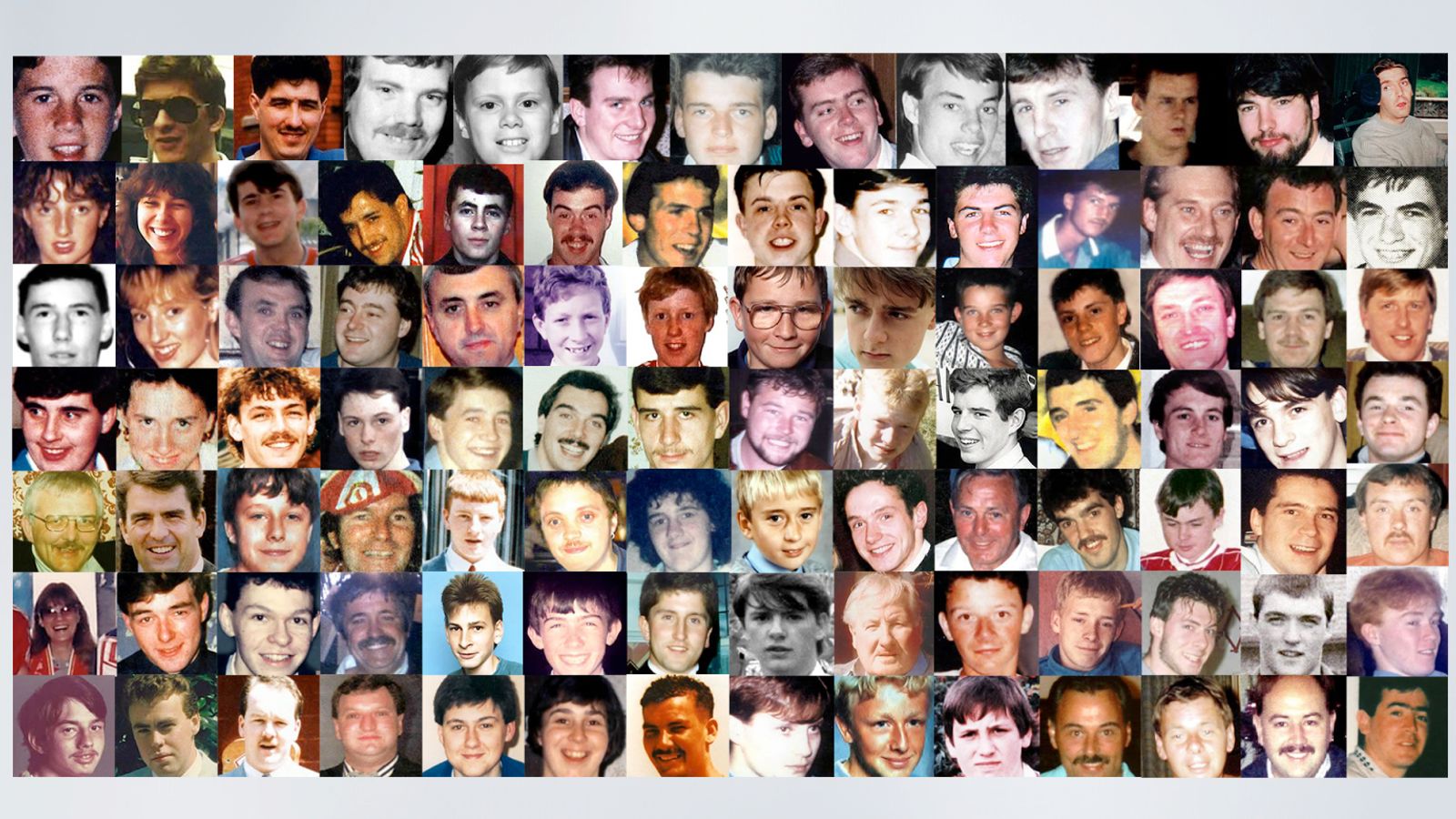
The faces of the 97 victims of the Hillsborough disaster
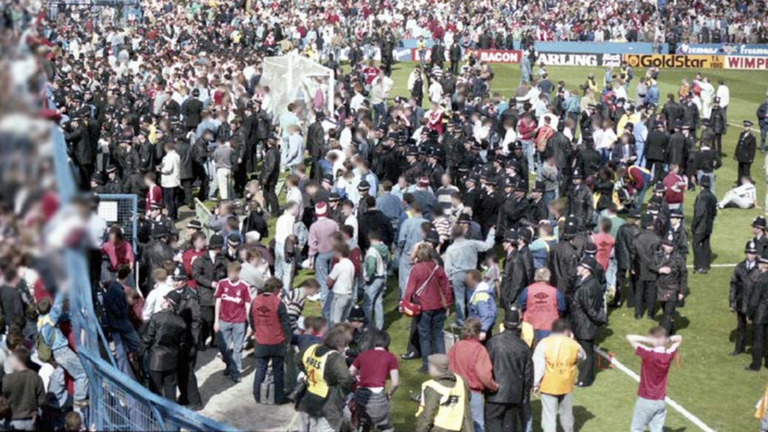
The scene in front of the West Terrace at Hillsborough at 3.11pm on the day of the disaster. Pic: South Yorkshire Police
Hillsborough remains to this day the worst disaster in British sporting history.
A crush on the terraces during the FA Cup semi-final at the stadium in Sheffield resulted in the death of 97 Liverpool fans on April 15 1989.
The men, women and children were aged from 10 to 67.
‘A source of national shame’
What the victims’ families have endured ever since, said IOPC deputy director general Kathie Cashell, was “a source of national shame”.
Ms Cashell said: “The 97 people who were unlawfully killed, their families, survivors of the disaster and all those so deeply affected, have been repeatedly let down – before, during and after the horrific events of that day.
“First by the deep complacency of South Yorkshire Police in its preparation for the match, followed by its fundamental failure to grip the disaster as it unfolded, and then through the force’s concerted efforts to deflect the blame on to the Liverpool supporters, which caused enormous distress to bereaved families and survivors for nearly four decades.”
The IOPC report also found that South Yorkshire Police “fundamentally failed in its planning for the match, in its response as the disaster unfolded and in how it dealt with traumatised supporters and families searching for their loved ones”.
Blaming the victims
The force “attempted to deflect the blame” and “this included allegations about the behaviour of supporters, which have been repeatedly disproven”.
Police initially blamed Liverpool supporters, arriving late, drunk and without tickets, for causing the disaster but, after decades of campaigning by families, that narrative was debunked.
In April 2016, new inquests – held after the original verdicts of accidental death were quashed in 2012 – determined that those who died had been unlawfully killed.
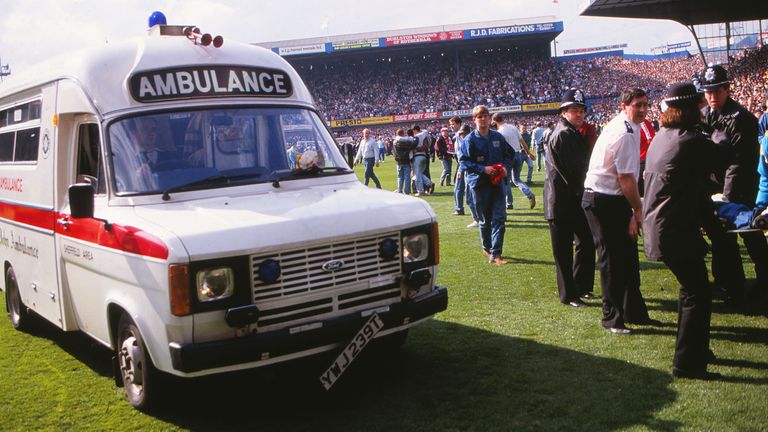
Pic: Colorsport/Shutterstock
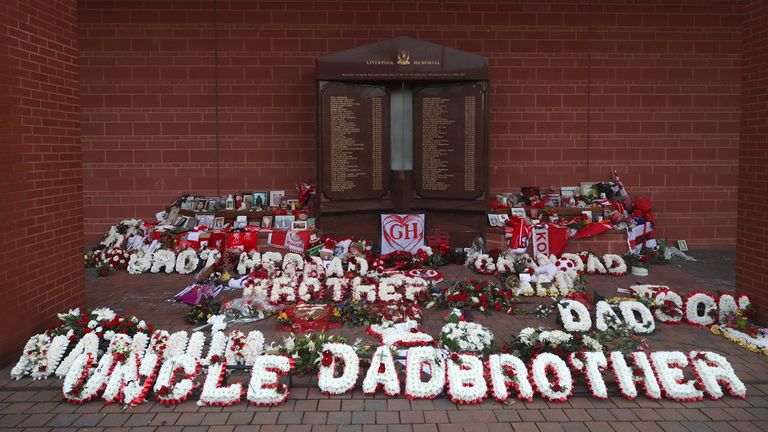
Tributes at Anfield in December 2020 to victims of the 1989 Hillsborough disaster. Pic: PA
The IOPC also examined the actions of West Midlands Police, which investigated the disaster and supported Lord Justice Taylor’s inquiry that followed. It found the force’s investigation was “wholly unsatisfactory and too narrow”.
Gross misconduct
The report names 12 officers who would have had a case to answer for gross misconduct.
They include the then-South Yorkshire chief constable Peter Wright “for his part in attempting to minimise culpability and deflect blame for the disaster away from SYP and towards Liverpool supporters”. Peter Wright died in 2011.
Also named is the match commander on the day, Chief Supt David Duckenfield.
He was cleared by a jury of gross negligence manslaughter at a retrial in November 2019, after the jury in his first trial was unable to reach a verdict.
Dozens of allegations of misconduct against officers have been upheld but none will face disciplinary proceedings because they have all left the police service.
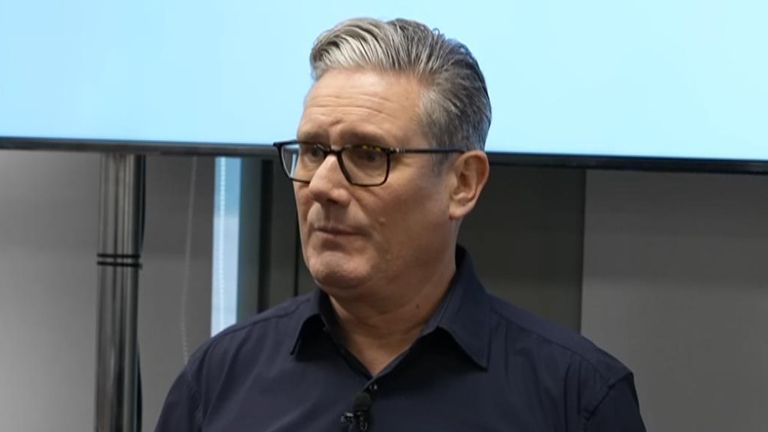
Emotional PM talks about Hillsborough
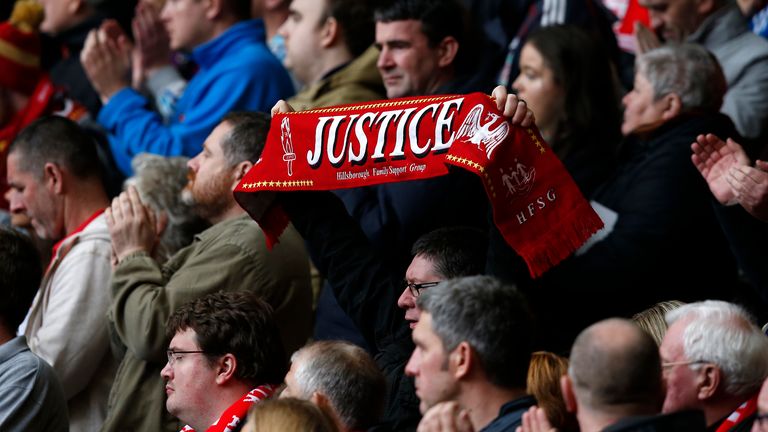
The Hillsborough 27th Anniversary Memorial Service at Anfield, Liverpool in 2016. Pic: PA
Legislation in place at the time did not require the police to have a duty of candour.
But the report has received a lukewarm reception from some of the victims’ families.
Read more on Sky News:
Key findings from police watchdog’s Hillsborough report
Hillsborough families call for ex-police officer to lose knighthood
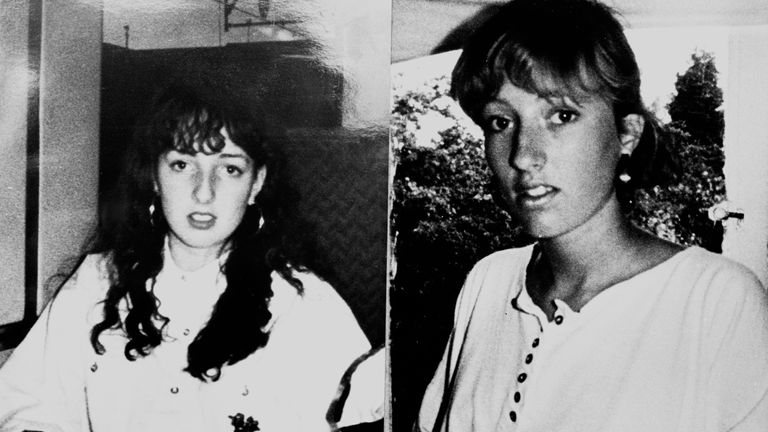
Sisters Victoria and Sarah Hicks died in the tragedy. Pic: PA
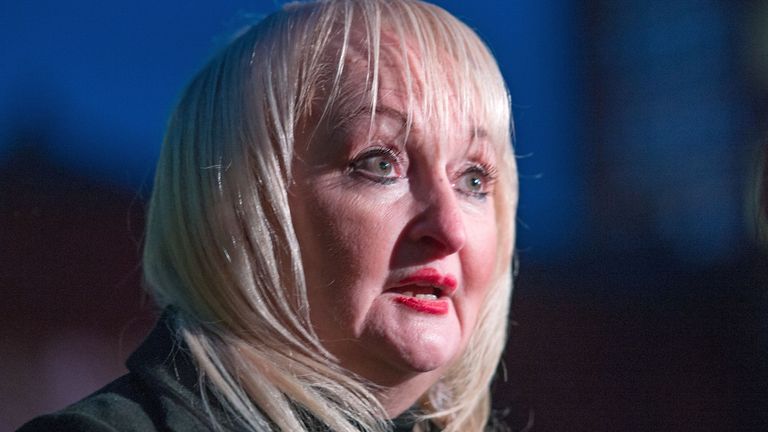
Jenni Hicks. Pic: PA
‘There will be another disaster’
Jenni Hicks, whose teenage daughters Sarah and Vicki died at Hillsborough, questioned why action had not been taken against those officers when police failings were first revealed by the Taylor inquiry just months after the disaster.
She said: “I can’t believe, having seen the 370-odd page report, how on earth it can have taken them 13 years to write. There’s very little in this report that I didn’t know already. It’s not, in my opinion, about telling the families anything.”
In September, the government introduced the so-called Hillsborough Law to the House of Commons. It will include a duty of candour, forcing public officials to act with honesty and integrity at all times or face criminal sanctions.

Andrew Mark Brookes
But Louise Brookes, whose brother Andrew Mark Brookes died at Hillsborough, dismissed both the IOPC report and the new law.
“Nothing will ever change. There will be another cover-up, there will be another disaster, and until things change at the very top, and I include MPs, chief constables, CEOs of organisations, until they’re the ones who stop protecting and covering up for themselves, nothing will ever change.”
‘Bitter injustice’
Nicola Brook, a solicitor at Broudie Jackson Canter acting for several bereaved families, said it was a “bitter injustice” that no one would be held to account.
She said: “This outcome may vindicate the bereaved families and survivors who have fought for decades to expose the truth – but it delivers no justice. Instead, it exposes a system that has allowed officers to simply walk away, retiring without scrutiny, sanction or consequence for failing to meet the standards the public has every right to expect.
“Yes, the law has now changed so this loophole cannot be used in future. But for those affected by this case, that is no consolation.
“They are left with yet another bitter injustice: the truth finally acknowledged, but accountability denied.”
In her statement, published with the IOPC report, Ms Cashell said: “As I have expressed to those closely affected, this process has taken too long – those who campaigned for so many years deserve better.
“If a legal duty of candour had existed in 1989, it could have helped ensure that all relevant evidence was shared fully and promptly. The families of those who were unlawfully killed would have experienced a far less traumatic fight for answers about what happened to their loved ones. Had that duty existed, our investigations may not have been necessary at all.”
What has been the reaction to the report?
Charlotte Hennessy, whose father James was among the 97 killed in the tragedy, said Liverpool fans were “wrongfully blamed by the people who should have protected them” on the day of the disaster.
Steve Kelly, whose brother was killed at Hillsborough, said the Public Office (Accountability) Bill will ensure people will not go unpunished if a similar tragedy occurs.
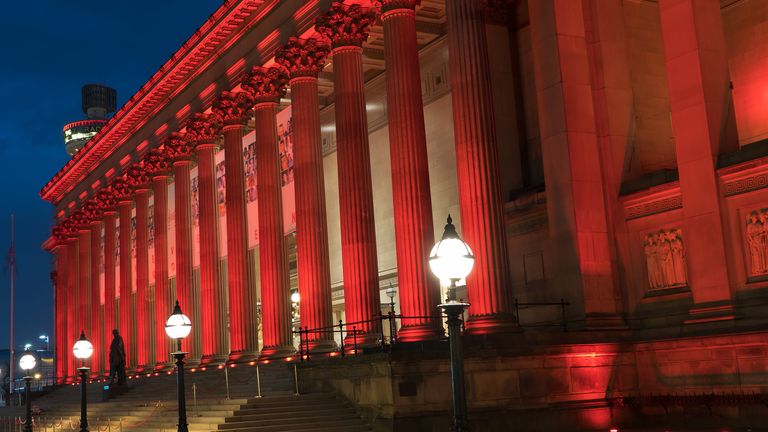
Liverpool’s St George’s Hall lit up in red in 2019 on the 30th anniversary of the disaster. Pic: Shutterstock
Also known as the Hillsborough Law, the bill is intended to make sure authorities will face criminal sanctions if they attempt to cover up the facts behind disasters.
“No one should be beaten by the passage of time,” Mr Kelly said. “We should have truth, justice and accountability within at least in that person’s lifetime. It can’t happen again.”
Sue Roberts, secretary of the Hillsborough Family Support Group, lost her brother in the tragedy.
During a press conference on Tuesday afternoon, she was asked if she was upset that the police officers named in the report would not face any punishment for their roles in the disaster.
“It’s very frustrating,” she said. “But at least they’ve been named now, so their families can feel the shame of what went on.”
‘Deep regret and shame’
Home Secretary Shabana Mahmood has called the Hillsborough disaster a “stain on our nation’s history”.
She said today “serves as a stark reminder of one of the most significant failings in policing the country has ever seen”.
Following the publication of Tuesday’s report, South Yorkshire Police Chief Constable Lauren Poultney said its findings will “always be a point of deep regret and shame” for the force.
She said: “There is nothing I can say today which can take away the years of pain and hurt caused by the force I now lead.
“On behalf of South Yorkshire Police, I fully accept the IOPC report which highlights a litany of failures and am so deeply sorry for the pain and heartache caused.
“The report is clear in that people attended a football match in Sheffield and therefore, they were in our care. The force failed them and also failed their loved ones in the days, months and years after.
“This will always be a point of deep regret and shame for South Yorkshire Police. Those who lost their lives will always be in my thoughts.”
UK
Sarah Everard’s mother ‘tormented’ by her last hours as Angiolini women’s safety report is released
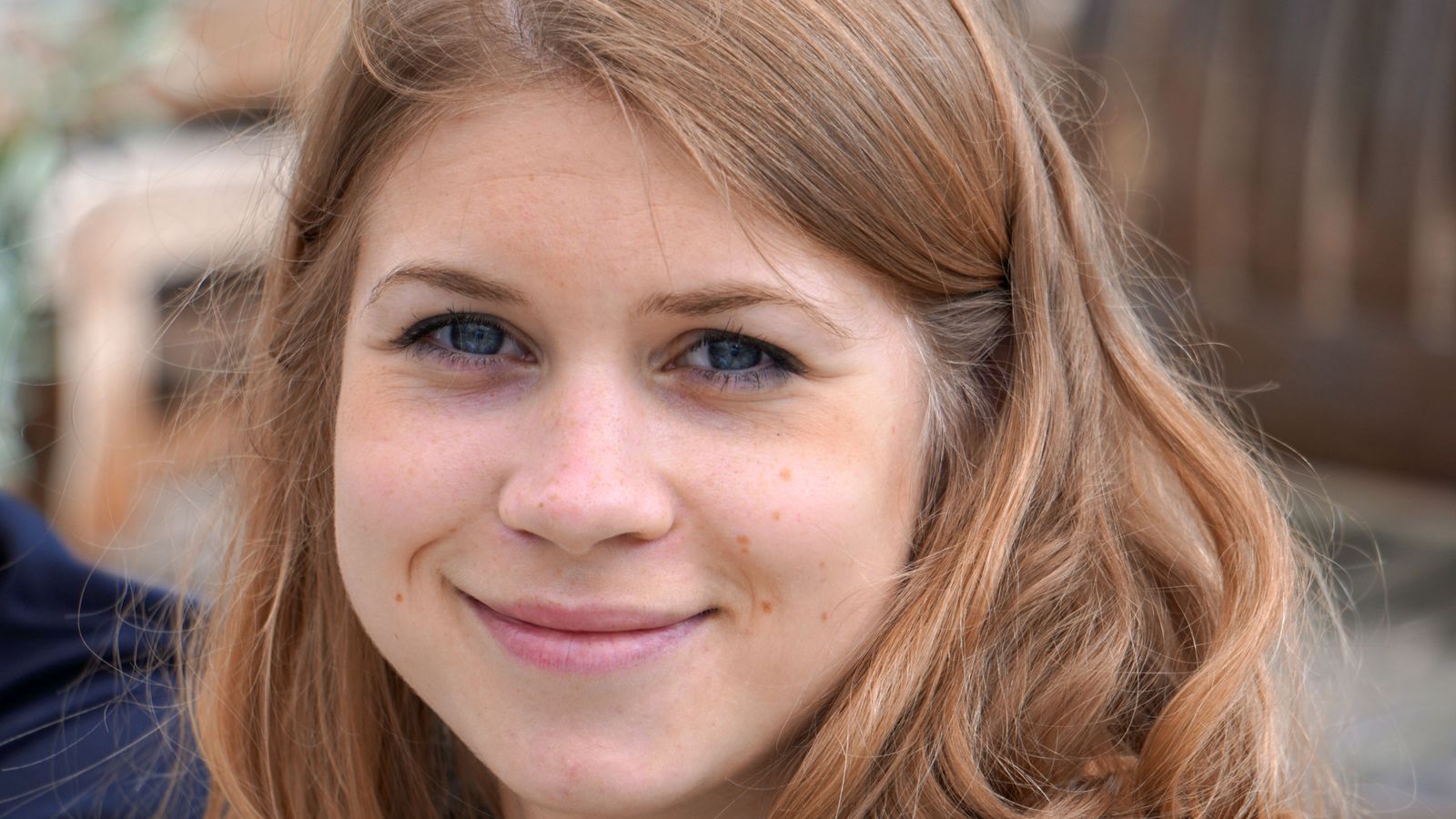
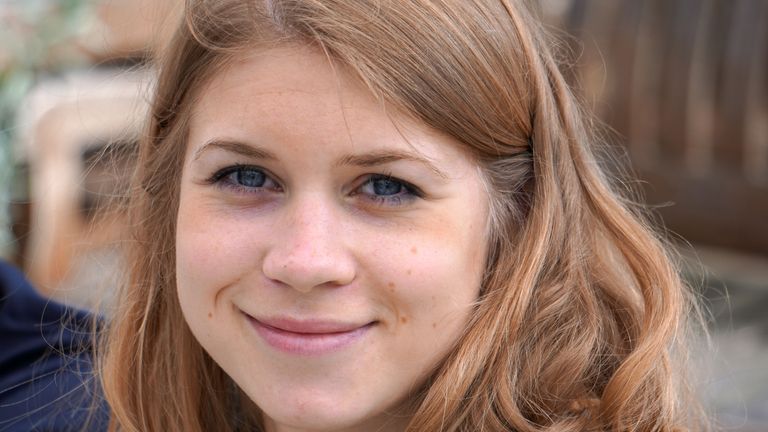
Sexually motivated crimes against women in public do not get the same response as other high-priority crimes, an inquiry into the rape and murder of Sarah Everard by off-duty police officer Wayne Couzens has found.
The inquiry was launched after Ms Everard’s death to investigate how Couzens was able to carry out his crimes, and look at wider issues within policing and women’s safety.
Ms Everard’s mother told the inquiry of her unrelenting grief, saying she was going “through a turmoil of emotions – sadness, rage, panic, guilt and numbness”.
Sarah Everard. Pic: PA
“After four years the shock of Sarah’s death has diminished but we are left with an overwhelming sense of loss and of what might have been,” Susan Everard said.
“All the happy ordinary things of life have been stolen from Sarah and from us – there will be no wedding, no grandchildren, no family celebrations with everyone there.
“Sarah will always be missing and I will always long for her.”
She added: “I am not yet at the point where happy memories of Sarah come to the fore. When I think of her, I can’t get past the horror of her last hours. I am still tormented by the thought of what she endured.”
Ms Everard, a 33-year-old marketing executive, was abducted by Couzens as she walked home from a friend’s house in south London in March 2021.
He had used his status as a police officer to trick Ms Everard into thinking he could arrest her for breaking lockdown rules.
‘No better time to act’
Publishing her findings on Tuesday, Lady Elish Angiolini, a former solicitor general for Scotland, said: “There is no better time to act than now. I want leaders to, quite simply, get a move on. There are lives at stake.”
This second part of the independent inquiry is split into two reports, with the first focusing on the prevention of sexually motivated crimes against women in public spaces.
Despite violence against women and girls being described as a “national threat” by the Home Office in a 2023 policing strategy and it being mentioned as a high priority for the current government, Lady Elish found the “response overall lacks what is afforded to other high-priority crimes”.
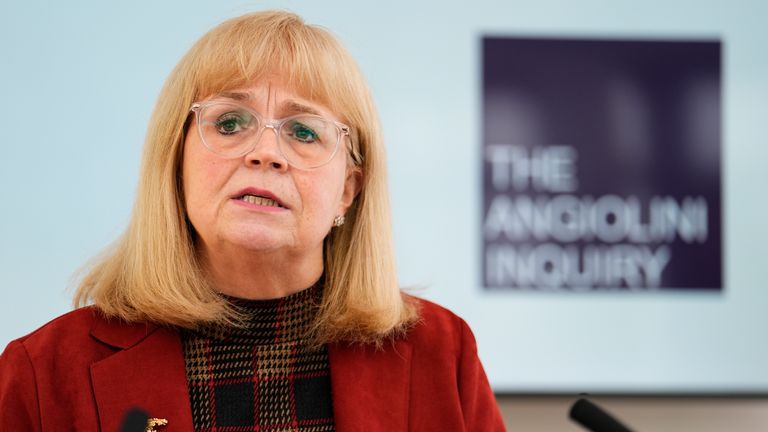
Lady Elish Angiolini announcing her findings. Pic: PA
She said her recommendation in the first part of her inquiry – published last year – that those with convictions and/or cautions for sexual offences should be barred from policing, had not yet been implemented.
Additionally, more than a quarter (26%) of police forces had yet to implement basic policies for investigating sexual offences, including indecent exposure.
Lady Elish said: “Prevention in this space remains just words. Until this disparity is addressed, violence against women and girls cannot credibly be called a ‘national priority’.”
‘Women deserve to feel safer’
The inquiry chair said with a greater spotlight on the safety of women in public, women should feel safer – “but many do not”.
“Women change their travel plans, their routines, and their lives out of fears for their safety in public, while far too many perpetrators continue to roam freely,” Lady Elish said after her report was published.
“Women deserve to feel safer. They deserve to be safer.”
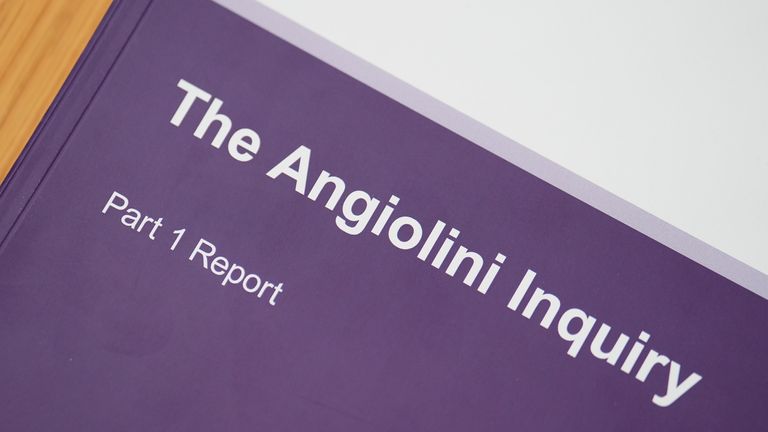
The cover of The Angiolini Inquiry, Part 1 Report, on a desk at the Chartered Institute of Arbitrators.
Pic: PA
The report found that there was a lack of data on sexually motivated crimes against women in public spaces, with Lady Elish calling it a “critical failure” that data on these offences is “difficult to obtain, patchy and incomplete”.
In the inquiry’s public survey of 2,000 people, 76% of women aged 18 to 24 reported feeling unsafe in public because of the actions or behaviour of a man or men.
A similar study for UN Women UK in 2021 found that 71% of women in the UK had experienced some form of sexual harassment in public, with higher rates of 86% for younger women aged 18 to 24.
‘No silver bullet’
She said sexually motivated crimes against women in public spaces were a whole society issue that required a whole society response, involving government, police and other agencies working together to fix an “unacceptable” and “deeply disappointing” level of inconsistency in responses.
Recognising sexually motivated crime against women as a public health matter as well as a criminal matter was crucial, as these crimes were “not inevitable”.
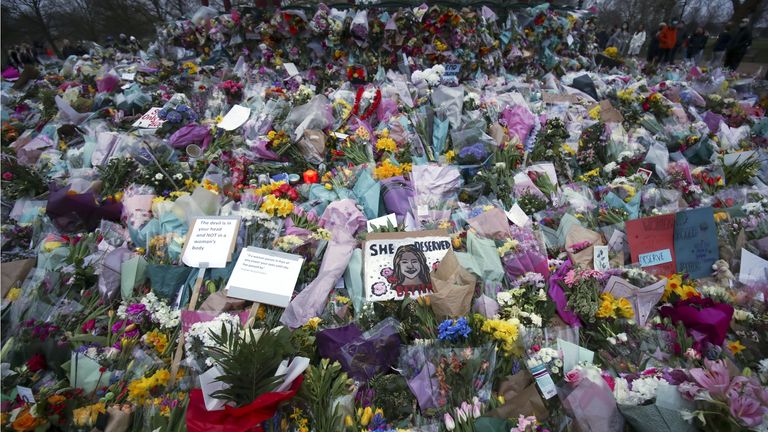
Floral tributes and a drawing of Sarah Everard were left at the Bandstand on Clapham Common, London. Pic: PA
The inquiry considers that “there is not one silver bullet” in tackling these crimes. Instead it calls for a “long-term commitment, cross-party agreement and a steady course in preventing these crimes – through education, thorough investigations and swift arrests – always with an unswerving focus on the perpetrators”.
Lady Elish’s 13 recommendations include:
• Focus on better collection and sharing of data at a national level
• Better and more consistent targeted messaging around the issues, which is to be managed centrally
• An information and intervention programme for men and boys – to be coordinated between the departments of education and social care as well as the Home Office – to create a culture of positive masculinity
• Improving the investigation of sexually motivated crimes against women and girls – recommending that the home secretary mandates police forces to follow particular procedures
‘Justice cannot only respond after harm’
Zara Aleena, a 35-year-old law graduate, was killed as she walked home from a night out in east London.
Her killer, Jordan McSweeney, was freed from prison nine days before he attacked Ms Aleena as she walked home in Ilford on 26 June 2022.
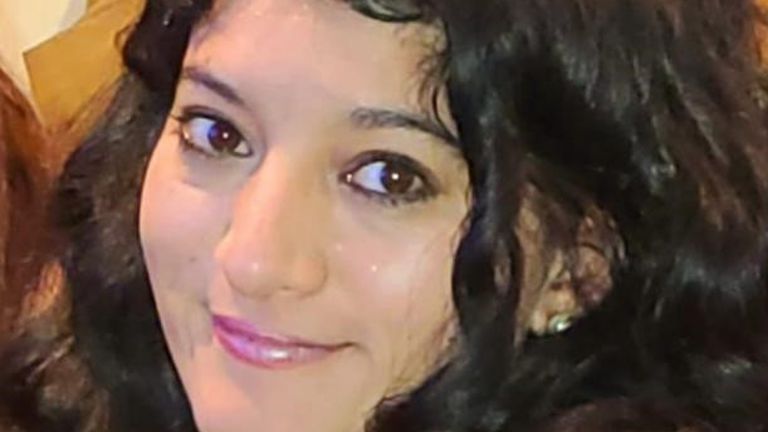
Zara Aleena. Pic: PA
Speaking after Lady Elish’s second report was published, her aunt Farah Naz said: “My niece, Zara Aleena, was walking home. That is all she was doing. Her death, like Sarah’s, was preventable.
“It occurred because warnings were missed, risks were overlooked, and systems intended to safeguard the public did not function as they should. Zara’s case reflects the wider patterns identified so clearly in this report: systemic failure rather than isolated tragedy.”
She added: “Sarah’s death exposed a system compromised from within. Zara’s death shows that the gaps persisted – with fatal consequences.
“Sarah deserved safety. Zara deserved safety. Every woman deserves safety. Justice cannot only respond after harm – it must prevent harm.”
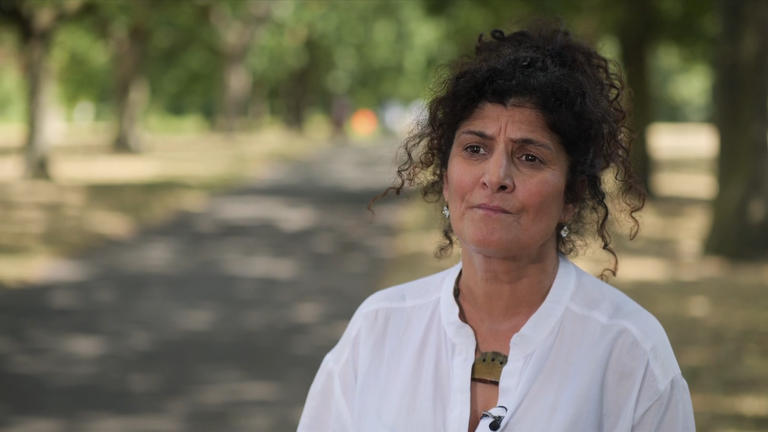
Farah Naz said Sarah Everard and her niece Zara Aleena ‘deserved safety’
‘Women can’t trust a system failing to change’
End Violence Against Women director Andrea Simon: “It is deeply concerning that, nearly two years on, policing has still not implemented basic reforms such as a ban on officers with sexual offence histories.”
“Women cannot be expected to trust a system that resists naming misogyny and racism and continually fails to change,” she added.
Deputy Assistant Commissioner Helen Millichap, director of the National Centre for Violence Against Women and Girls and Public Protection (NCVPP), said that the centre was already working “proactively to recognise, intervene and interrupt predatory behaviour in public spaces”.
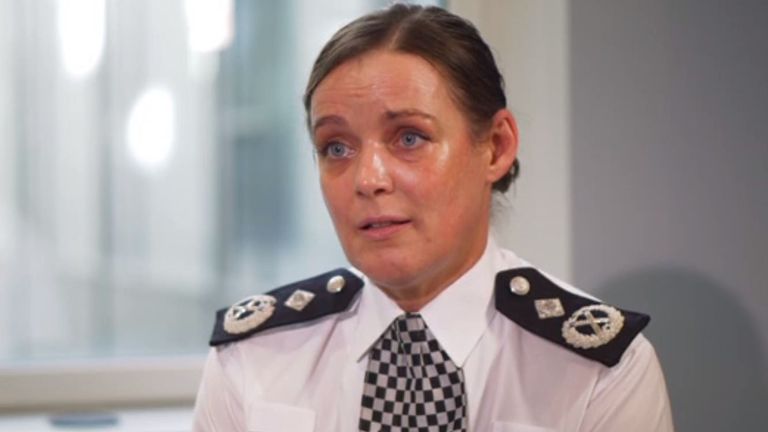
Deputy Assistant Commissioner Helen Millichap
“We should not wait for a crime to be reported to act and we have seen some very effective joint operations with partners that target the right places and work together to make them safer,” she said.
“We want this to feel consistent across policing and we know that sometimes it doesn’t. This report rightly challenges us to create that consistency, implementing what works and the NCVPP will play a critical role in setting national standards.”
Responding to the latest Angiolini Inquiry report, Home Secretary Shabana Mahmood said the report made it clear that women do not feel safe going about their lives today.
“This is utterly unacceptable and must change,” she said. “A new £13.1 million centre will strengthen the police response to these crimes and drive real change, but more needs to be done.”
She said the government would “carefully” the inquiry’s recommendations.
Stop ‘another Couzens’
The first part of the inquiry, published in February 2024, investigated how Couzens was able to abduct, rape and murder Ms Everard.
The report found Couzens should never have been a police officer, stressing there needs to be a “radical overhaul” of police recruitment to stop “another Couzens operating in plain sight”.
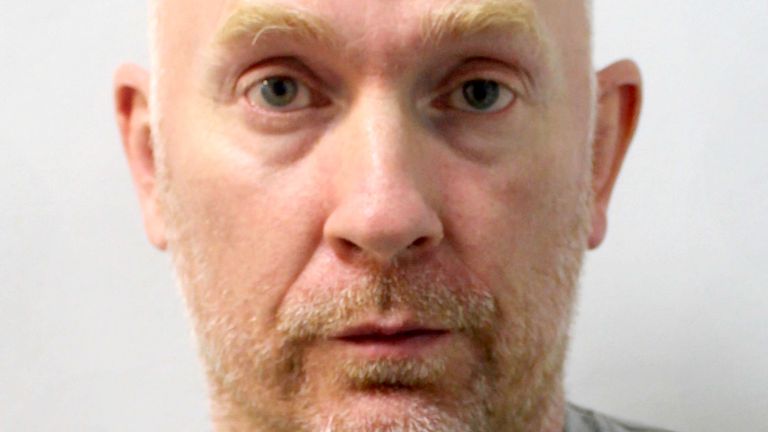
Wayne Couzens. Pic: PA
It examined Couzens’ career and highlighted how major red flags about him were “repeatedly ignored” by police vetting and investigations.
After the publication of the second report, Ms Everard’s family said in a statement that the report “shows how much work there is to do in preventing sexually motivated crimes against women in public spaces”.
They added: “Sarah is always in our thoughts, of course, and we feel the inquiry continues to honour her memory.
“So too does it speak for all women who have been the victim of sexually motivated crimes in a public space and all those at risk.”
Read more:
Women still feel unsafe on Britain’s streets
How Sarah Everard’s killer was caught
Timeline: Wayne Couzen’s behaviour and crimes
The second report of part 2 of the inquiry will investigate police culture in regards to misogynistic and predatory attitudes and behaviours.
Following the sentencing of former Met Police officer David Carrick in February 2023 part 3 of the inquiry was established, to examine Carrick’s career and conduct.
Last month, Carrick was handed his 37th life sentence with a minimum term of 30 years to run concurrently after he was found guilty of molesting a 12-year-old girl and raping a former partner.
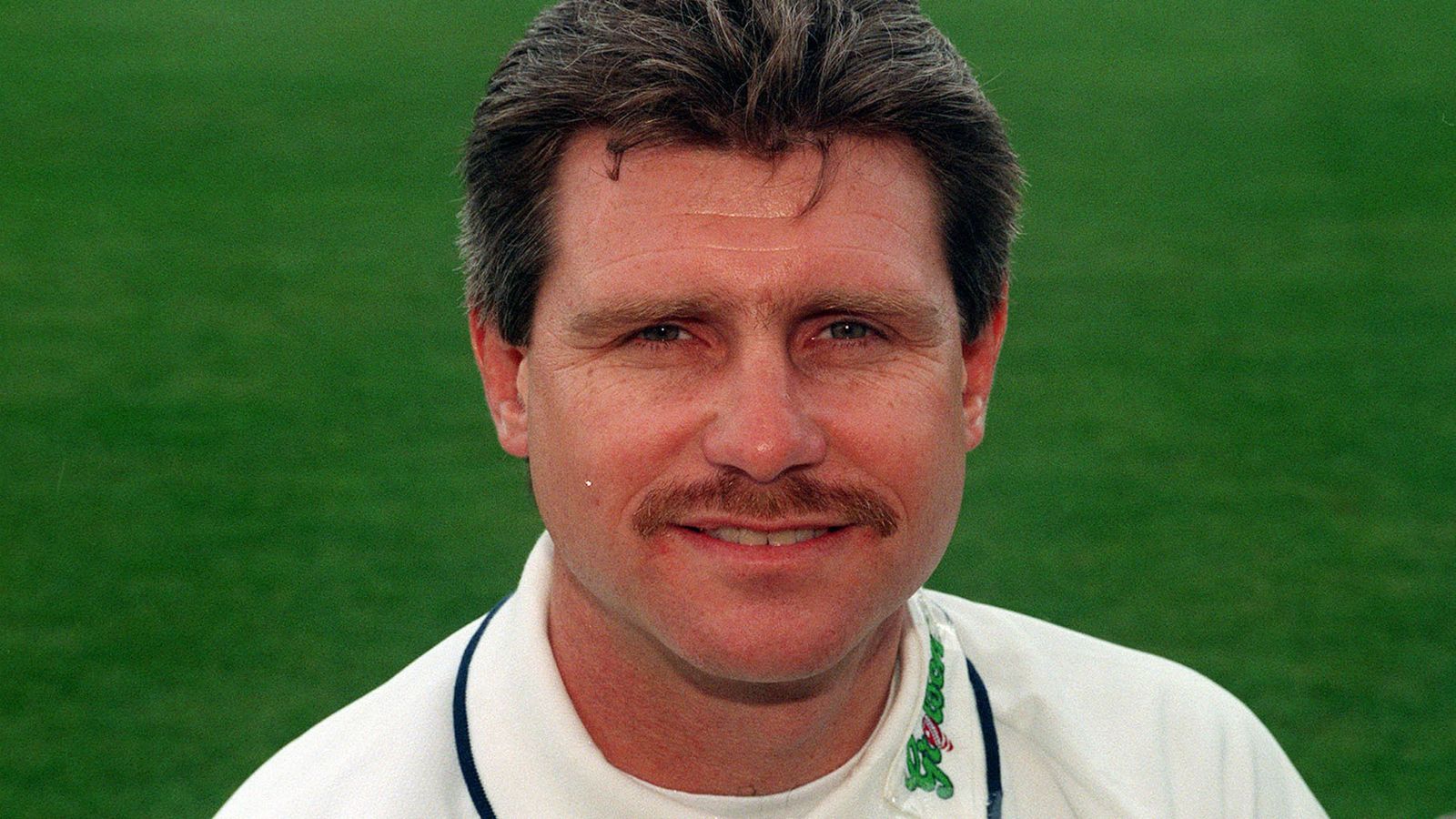
Former England cricketer Robin Smith has died aged 62.
The batter, who was one of England’s most popular cricketers in the 1990s, passed away “unexpectedly at his South Perth apartment” on Monday, his family said in a statement.
The cause of his death is at present unknown, his family added.
Smith played 62 Test matches for England, finishing his international career in 1996.
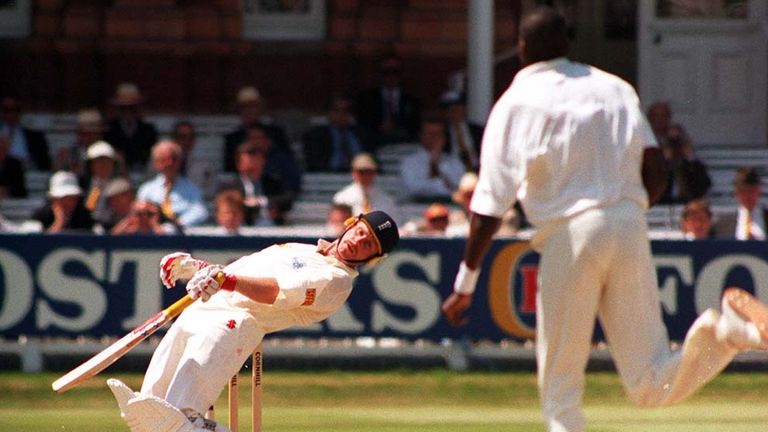
Smith ducks out of the way of a bouncer from West Indian fast bowler Curtly Ambrose at Lord’s. Pic: PA
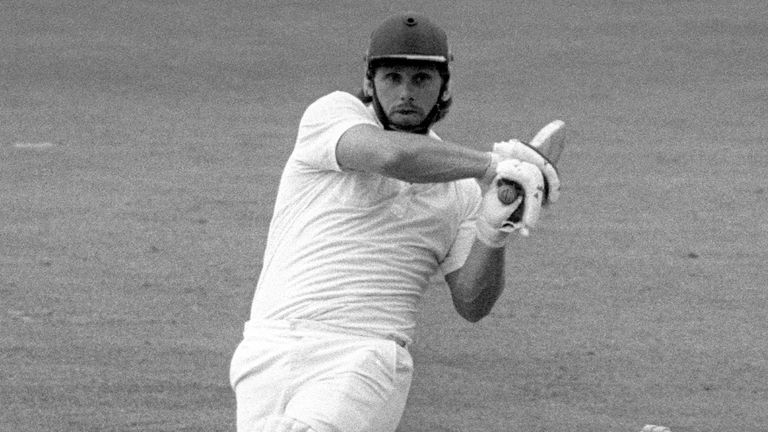
Smith in batting action for Hampshire in 1988. Pic: PA
South African-born Smith was part of the England squad which finished as runners-up at the 1992 Cricket World Cup.
Smith’s family said in a statement: “A brave and dashing batsman, he excelled both for Hampshire and his adopted country, collecting legions of admirers and friends along the way.
“Since his retirement from the game in 2004, his battles with alcohol and mental health have been well documented, but these should not form the basis of speculation about the cause of death, which will be determined at postmortem investigation.
“This is an immensely difficult period for us all whilst we try to come to terms with our bereavement, and we would therefore much appreciate consideration for our privacy by media and cricket followers alike.”
Read more from Sky News:
OBR chief resigns after budget leak investigation
‘I was busking – what a man did to me left me horrified’
Smith, affectionately known as The Judge, played for Hampshire across 21 years between 1982 and 2003, captaining the county between 1998 and 2002.
His one-day international (ODI) top score of 167 not out, against Australia in 1993, stood as an England record for 23 years until Alex Hales scored 171 against Pakistan in 2016.
Smith averaged 43.67 in Test cricket, hitting 28 50s and nine centuries, with his top score of 175 coming in Antigua in 1994 against West Indies and their feared pace attack of that era – a match best remembered for Brian Lara’s then world record score of 375 not out.
Following the news, former England captain and Sky Sports commentator Nasser Hussain told the broadcaster he has “fond memories of a fine player – of all types of bowling – but especially fast bowling”.
He added: “There was no better sight than watching him [Smith] taking on a fast bowler. He had no fear in him at all when facing the quicks. He didn’t wear a grille or a visor, he just wore that helmet, ducking and diving out of the way, swaying.
“I don’t think any batters cut the ball better than Robin Smith. He took them [fast bowlers] on. England fans loved him. All our thoughts are with his family.”
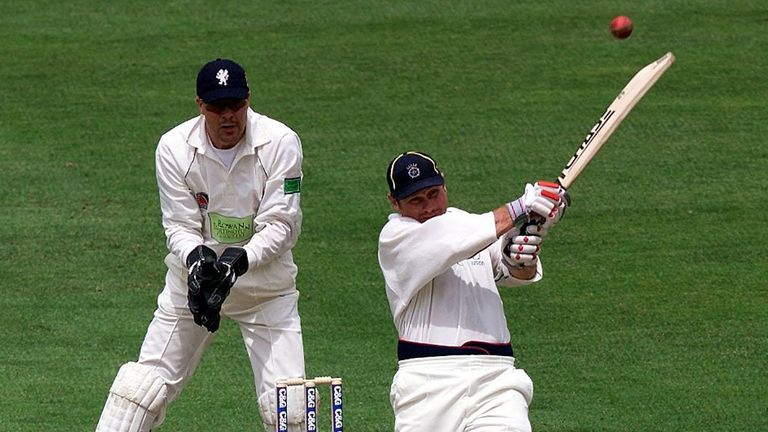
Smith smashes a boundary playing for Hampshire
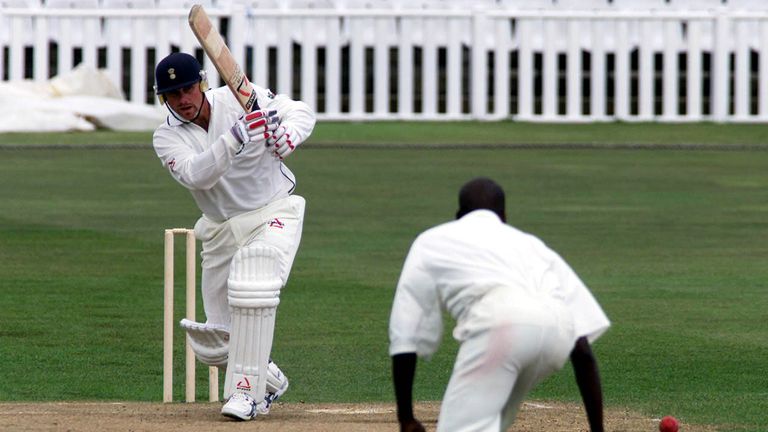
Smith in action for Hampshire against Warwickshire
Mike Atherton, who captained Smith for England, said he was “quite shy” away from the field, but “the life and soul of the party, a very, very popular teammate, someone who would do anything for you”.
Rod Bransgrove, the chairman of Hampshire County Cricket Club, said: “Robin Smith is one of the greatest, if not the greatest, of all time Hampshire Cricket heroes.
“He was a batsman of awesome power and control, and amongst the most courageous players this club has ever seen – especially against bowling of real pace.”
Jack Russell, who played with Smith for England in the 1990s, paid tribute to him on X, saying he was “one of the nicest guys you’ll ever meet”.
Mr Bransgrove went on to say: “More than anything, The Judge connected with everyone he came into contact with.
“He was one of the most popular players ever to play the game we all love, and he will be hugely missed by players, members, staff and supporters – not only in Hampshire, but throughout the country and beyond.”
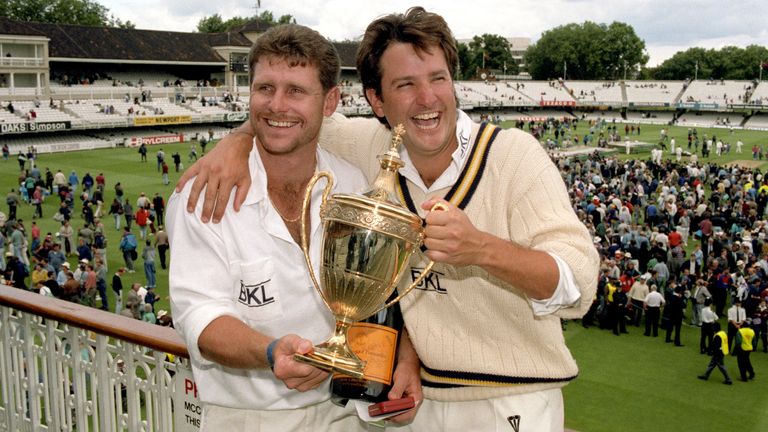
Hampshire captain Mark Nicholas, right, with man of the match Smith after their Benson & Hedges Cup win at Lord’s in 1992. Pic: PA
In the years since his retirement from cricket in 2004, Smith spoke of his struggles with mental health and addiction to alcohol.
England’s cricket administrator reacted to news of Smith’s death, saying: “Everyone at the England & Wales Cricket Board is deeply saddened to hear of the passing of Robin Smith.
“An England and Hampshire legend,” the post on X said.
-
 Sports2 years ago
Story injured on diving stop, exits Red Sox game
-
 Sports3 years ago
‘Storybook stuff’: Inside the night Bryce Harper sent the Phillies to the World Series
-
 Sports2 years ago
Game 1 of WS least-watched in recorded history
-
 Sports3 years ago
Button battles heat exhaustion in NASCAR debut
-
 Sports3 years ago
MLB Rank 2023: Ranking baseball’s top 100 players
-
Sports4 years ago
Team Europe easily wins 4th straight Laver Cup
-
 Environment3 years ago
Japan and South Korea have a lot at stake in a free and open South China Sea
-
 Environment1 year ago
Here are the best electric bikes you can buy at every price level in October 2024