
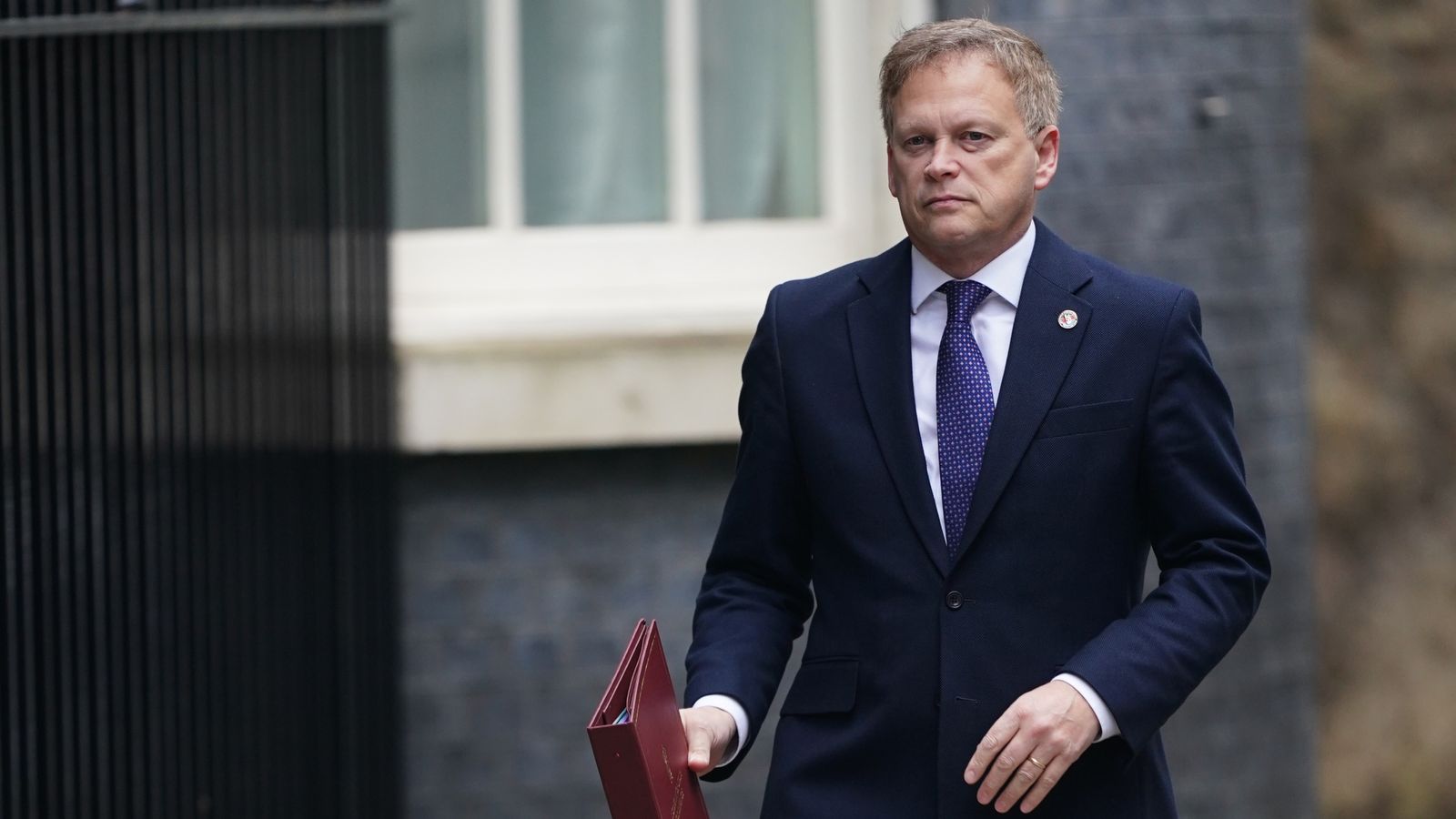
Grant Shapps abandoned Ukraine port visit over Russian missile threat

Trust Wallet, the self-custodial crypto wallet owned by Binance co-founder Changpeng “CZ” Zhao, has partnered with European fintech unicorn and digital banking giant Revolut to introduce a new way to purchase crypto assets on its platform.
Trust Wallet users can now buy Bitcoin (BTC), Ether (ETH) and Solana (SOL) with Revolut through a direct integration, the company announced on Thursday.
With a minimum purchase starting at 10 euros ($12) and capped at 23,000 euros ($26,950) daily and per transaction, Trust Wallet’s new buy option is expected to provide a faster and easier way to access crypto from Europe.
In October, Revolut scored regulatory approval from the Cyprus Securities and Exchange Commission to offer crypto services across 30 European Economic Area markets in compliance with the European Union’s Markets in Crypto-Assets Regulation (MiCA) framework.
Stablecoins like USDC not supported, for now
The integration will initially support only three crypto assets, but the companies said they expect to add stablecoins such as Circle’s USDC (USDC) at a later stage.
The feature enables zero-fee crypto purchases using multiple fiat currencies supported by Revolut, including the euro, the British pound, as well as the Czech koruna, Danish Krone, Polish Złoty and others.

While Revolut–Trust Wallet crypto purchases are offered with zero fees, adding money to a Revolut account is not free of charge in many cases, including via bank transfers, card top-ups and cash deposits. Cash deposits are subject to a 1.5% fee and are limited to $3,000 per calendar month, according to Revolut’s FAQs.
Related: Crypto self-custody is a fundamental right, says SEC’s Hester Peirce
The integration came shortly after Revolut secured a $75 billion company valuation after completing a private share sale in late November. “This makes us Europe’s most valuable private company and in the top 10 of the world’s most valuable private companies,” Revolut said in a post on X.
CZ-backed Trust Wallet has been actively tapping into trending market sectors, including prediction markets and real-world asset tokenization, expanding access to these offerings for self-custody users.
Cointelegraph contacted Revolut and Trust Wallet for comment on the integration, but had not received a response by publication.
Politics
Resident doctors in England consider whether new offer is enough to call off five-day strike in run-up to Christmas



Doctors in England planning to go on strike in the run-up to Christmas are considering a new offer from the government to end the long-running dispute.
Resident doctors, formerly junior doctors, will walk out from 7am on 17 December until 7am on 22 December.
Health Secretary Wes Streeting has appealed to doctors to accept the government’s latest package.
The British Medical Association (BMA) said it will consult members by surveying them online on whether or not the deal from the government is enough to call off next week’s walkout.
The poll will close on Monday – just two days before the five-day strike is set to start.
The number of people in hospital with flu in England is at a record level for this time of year. File pic: PA
The union said the new offer includes new legislation to ensure UK medical graduates are prioritised for speciality training roles.
It also includes an increase in the number of speciality training posts over the next three years – from 1,000 to 4,000 – with more to start in 2026.
Funding for mandatory Royal College examination and membership fees for resident doctors is also part of the deal.
It does not address resident doctors’ demand for a 26% salary rise over the next few years to make up for the erosion in their pay in real terms since 2008 – this is on top of a 28.9% increase they have had over the last three years.
Mr Streeting warned a resident doctors’ strike over Christmas would have a “much different degree of risk” than previous walkouts.
It coincides with pressures facing the NHS, with health chiefs raising concerns over a “tidal wave” of illness and a “very nasty strain of flu”.
A new strain of the flu virus is thought to be much more infectious than previous strains and has already led to a record number of patients needing urgent hospital care.
The union’s mandate to strike is set to expire shortly, but Mr Streeting has offered to extend it to allow the medics to take action later in January if they reject his offer.
He called the union’s decision not to take it up “inexplicable”.
Last week, NHS England chief executive Sir Jim Mackey branded the decision by doctors to strike as “something that feels cruel” and which is “calculated to cause mayhem at a time when the service is really pulling all the stops out to try and avoid that and keep people safe”.
Read more from Sky News:
US accused of ‘piracy’
Flights diverted in Moscow
BMA resident doctors committee chair Dr Jack Fletcher said the latest government offer “is the result of thousands of resident doctors showing that they are prepared to stand up for their profession and its future”.
“It should not have taken strike action, but make no mistake: it was strike action that got us this far,” he said.
“We have forced the government to recognise the scale of the problems and to respond with measures on training numbers and prioritisation.
“However, this offer does not increase the overall number of doctors working in England and does nothing to restore pay for doctors, which remains well within the government’s power to do.”

Polish lawmakers have doubled down on crypto regulation rejected by President Karol Nawrocki, deepening tensions between the president and Prime Minister Donald Tusk.
Polska2050, part of the ruling coalition in the Sejm — Poland’s lower house of parliament — reintroduced the extensive crypto bill on Tuesday, just days after Nawrocki vetoed an identical bill.
The bill’s backers, including Adam Gomoła — a member of Poland2050 — called Bill 2050 an “improved” successor to the vetoed Bill 1424, but government spokesman Adam Szłapka reportedly declared that “not even a comma” had been changed.
The division over Poland’s crypto bill comes amid the rollout of the European Union’s Markets in Crypto-Assets Regulation (MiCA) across member states ahead of a July 2026 compliance deadline for EU crypto businesses.
Critics say Bill 2050 is “exactly same bill”
The new version of Poland’s draft crypto bill provides an 84-page-long document that essentially replicates the original Bill 1424, aiming to designate the Polish Financial Supervision Authority as the country’s primary crypto asset market regulator.
Crypto advocates like Polish politician Tomasz Mentzen previously criticized Bill 1424 as “118 pages of overregulation,” particularly in comparison to shorter versions in other EU member states like Hungary or Romania.
“The government has once again adopted exactly the same bill on cryptoassets,” Mentzen wrote in an X post on Tuesday.

He also mocked Tusk’s claim that the president’s earlier veto was tied to the alleged involvement of the “Russian mafia,” saying: “The bill is perfect, and anyone who thinks otherwise is funded by Putin.”
Government spokesman Szłapka reportedly claimed that Nawrocki will likely not veto the proposed bill this time, following a classified security briefing in parliament last week and “now has full knowledge” of the implications on national security.
The issue with MiCA: Local versus centralized EU oversight
Poland’s debate over its crypto bill sets an important precedent for implementing the EU-wide MiCA regulation, as the proposed legislation would place responsibility for market supervision on the local financial regulator.
The issue is particularly significant amid calls from some member states for more centralized MiCA supervision under the Paris-based European Securities and Markets Authority (ESMA).
In October, the Bank of France urged the EU to give the ESMA direct supervisory powers, warning that a fragmented approach to oversight could undermine the bloc’s financial sovereignty.
Some EU member states have pushed back against centralized oversight under MiCA, with regulators in Malta arguing that it could create additional layers of supervision that might stifle market innovation.
Related: EU plan would boost ESMA powers over crypto and capital markets
Notably, Polish economist Krzysztof Piech — a prominent critic of Poland’s proposed crypto bill — has questioned the need for the local legislation, noting that MiCA protections will take effect in 2026.
While local reports suggest that Nawrocki may not veto the bill this time, there is also speculation that his office has been presented with an “alternative” draft aimed at creating more favorable market conditions. The proposed alternative is reportedly designed to align with the EU-wide MiCA framework and remove direct oversight from the local regulator.
-
 Sports2 years ago
Story injured on diving stop, exits Red Sox game
-
 Sports3 years ago
‘Storybook stuff’: Inside the night Bryce Harper sent the Phillies to the World Series
-
 Sports2 years ago
Game 1 of WS least-watched in recorded history
-
 Sports3 years ago
Button battles heat exhaustion in NASCAR debut
-
 Sports3 years ago
MLB Rank 2023: Ranking baseball’s top 100 players
-
Sports4 years ago
Team Europe easily wins 4th straight Laver Cup
-
 Environment3 years ago
Japan and South Korea have a lot at stake in a free and open South China Sea
-
 Environment1 year ago
Here are the best electric bikes you can buy at every price level in October 2024