
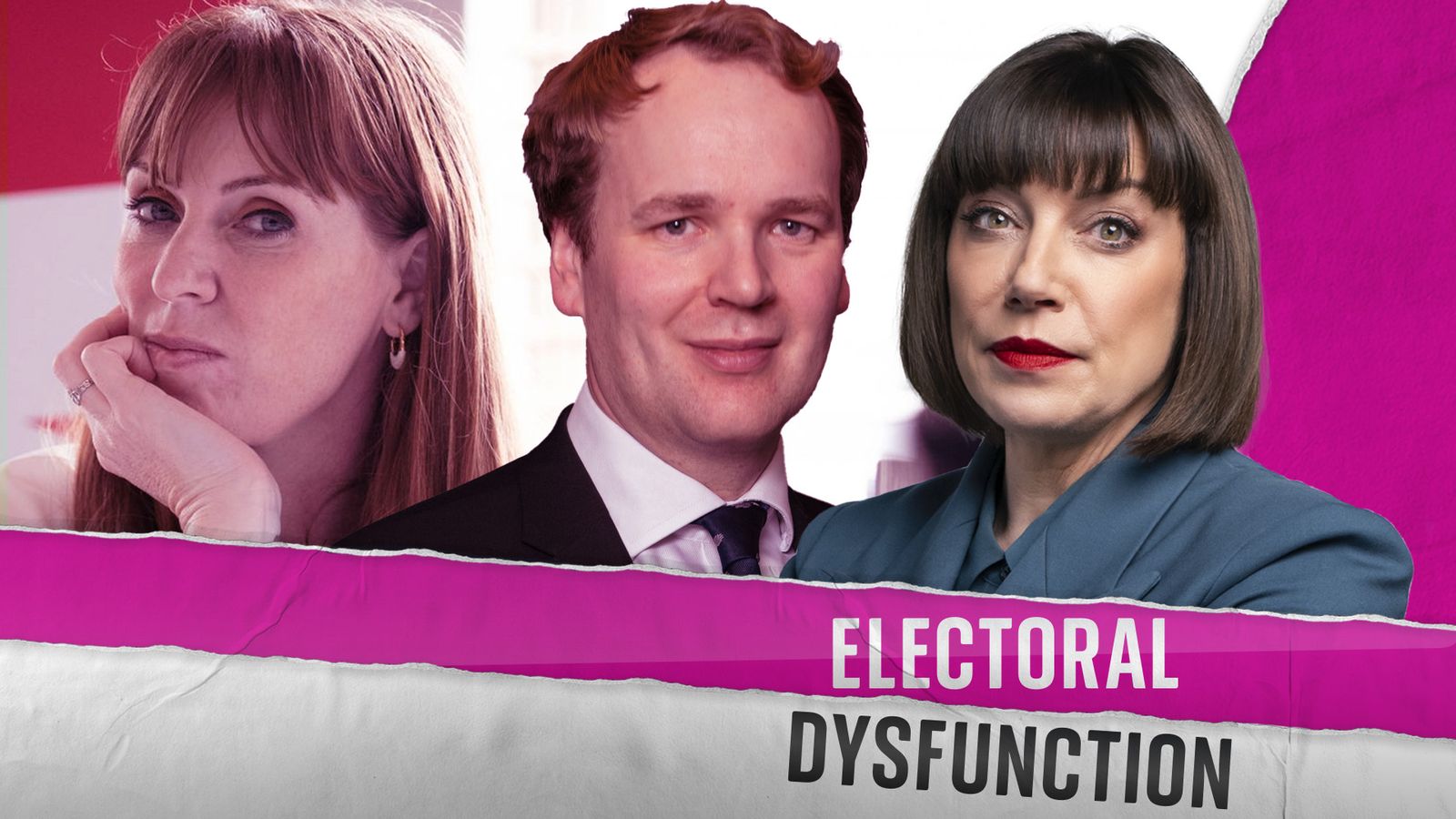
A dysfunctional week for the Tories and Labour amid honeytrap scandal and ‘tax dodging’ claims

We may have been in Easter recess the past couple of weeks, but on both sides of the party divide, there were those who did not get a rest from politics.
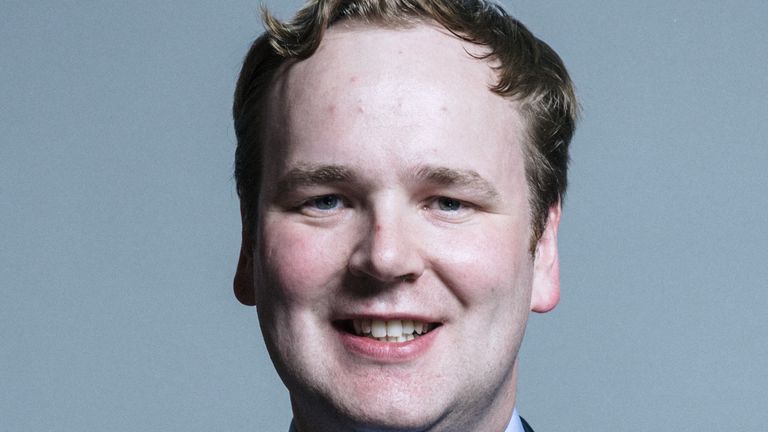
MP William Wragg undoubtedly had a dysfunctional week as the man at the centre of the Westminster honeytrap scandal.
He resigned the Conservative party whip as some colleagues looked on with a mixture of bemusement and anger at Number 10’s handling of the whole sorry affair.
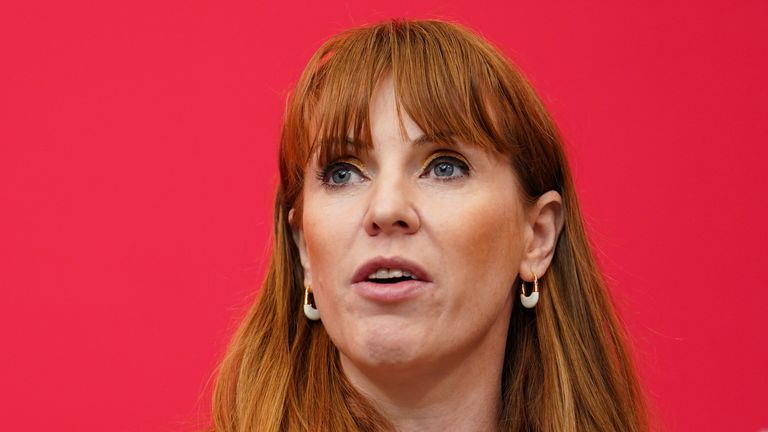
Meanwhile, on the Labour side, deputy leader Angela Rayner can’t seem to shake off or shut down the persistent questions about whether she paid the right amount of tax when she sold her council house nearly a decade ago.
She insists she has done nothing wrong while there are Conservatives looking to weaponise the issue in this election year – with at least one local Tory councillor and other protesters this week hounding her on a visit to Teesside, with banners dubbing her a “tax dodger”‘ in the hope it will stick.
? Listen above then tap here to follow Electoral Dysfunction wherever you get your podcasts ?
This week in Electoral Dysfunction, Jess, Ruth and I chew over both the substance and the politics of these difficult situations and ask whether Number 10 and Labour are making tricky issues better or worse.
When it comes to Mr Wragg, who admitted sharing MPs’ and journalists’ phone numbers with someone he met on Grindr who had “compromising things” on him, there is widespread incredulity that a sitting MP would do such a thing, overlaid with some anger over Number 10’s handling of it – with some arguing that Rishi Sunak failed to move quickly enough to take control of the story, suspend Mr Wragg and look decisive.
Instead, ministers were dispatched to defend the MP as ”courageous”, while it was Mr Wragg himself who decided to give up the Tory whip his week. He is now sitting as an independent MP.
“Madness [to send pictures and give out personal details] and yet our leadership decided to defend him,” one former cabinet minister texted this week. “If it wasn’t so stupid. It would be genuinely funny. The script of the Thick Of It. A few of us messaged centre at weekend to say WTF. His resignation was inevitable.”
Ruth agrees, and says – while she has sympathy for Mr Wragg being in this “horrible situation” – that he is “somebody in an important job who has responsibilities” to the place he works and people with whom he works.
“The idea you throw all of that out of the window for a quick shag or to exchange a pic is so wilfully irresponsible that actually I don’t think [much of] the level of understanding, or acceptance or excuse that the government made on his behalf.
Sexting MP ‘right to quit’
“I think it’s bad judgement and I think this is another one where you look at the judgement of the prime minister and go, you know this, this doesn’t fly.”
But aside from questions about the political handling from the centre – and there are issues around safeguarding a vulnerable MP, which I talk about in the pod – there are also wider questions, again, around MPs’ security in a world where contacts count and phone numbers are currency.
“People give numbers out all the time. Having people’s phone numbers is a massive currency in Westminster,” explains Jess, who points out that MPs are using personal phones in parliament.
“The trouble is that I think people think we have parliamentary phones but it’s just my personal phone, so they don’t own it. I’m way more careful about my parliamentary computer and the iPad they gave me.
“So I imagine what will come out of this is probably that we all have to have parliamentary-issued phones that are locked down by the security services. I imagine that’s where it’s going.”
Starmer: Rayner tax story is ‘smear’
With a sex scandal engulfing the Conservatives once more, on the other side of the political divide, Ms Rayner is struggling to put to bed questions over whether she paid the right amount of tax when she sold her council house nearly a decade ago, before she became an MP.
Ms Rayner has made it clear she took tax advice at the time and has done nothing wrong, while Labour leader Sir Keir Starmer has come out to defend her and accused the Tories of trying to smear her over a story with no substance.
Neither Ruth, Jess nor I think the story is getting much cut through, largely because of the complexity of it all, but that isn’t stopping the Conservatives pursuing Ms Rayner with real ferocity.
Ruth thinks the Tories are going in hard for a number of reasons.
First, she thinks Labour “hasn’t had this level of scrutiny for a long time”, so this is an opportunity for the party machine to “try to flex its muscles”. Second, Ms Rayner has been used as “an attack dog” for the party on these issues so “what’s good for the goose is good for the gander”.
Read more:
Angela Rayner’s tax affairs – a smear or a real trust problem for Labour?
Michelle Donelan: Minister’s legal fees take total cost of libel case to £34,000
She also argues that “there is a purpose to man-mark her off the pitch”, but it won’t change the public’s view of Ms Rayner: “She’ll be a Marmite politician for the whole of her career because of the strength of her character. The people who love her will love her and the people who can’t stand her will turn the TV off when she comes on.”
Jess concedes the issue is hurting Ms Rayner but thinks she will ride it out and believes there’s a risk that “if it starts to look like the Conservatives are picking on her, it has a counter effect”.
Listen to Beth Rigby, Jess Phillips and Ruth Davidson as they unravel the spin in a new weekly podcast from Sky News
But, in a similar way to the Beergate story that hounded Sir Keir and Ms Rayner during 2021 – they were accused, and cleared, of breaking lockdown rules in Durham – the Conservatives show little sign of letting go of Ms Rayner or her tax affairs until they have wrung every single drop out of it.
And if, in an election year, they can try to make “tax dodger” land – or at least disrupt her campaigning – Conservative campaign headquarters will chalk it up as a win.
So while the hope from Ms Rayner’s and Sir Keir’s respective offices is that the story will burn itself out, it may be that Ms Rayner, in the end, has to do more to put it properly to bed: on that, all three of us agree.

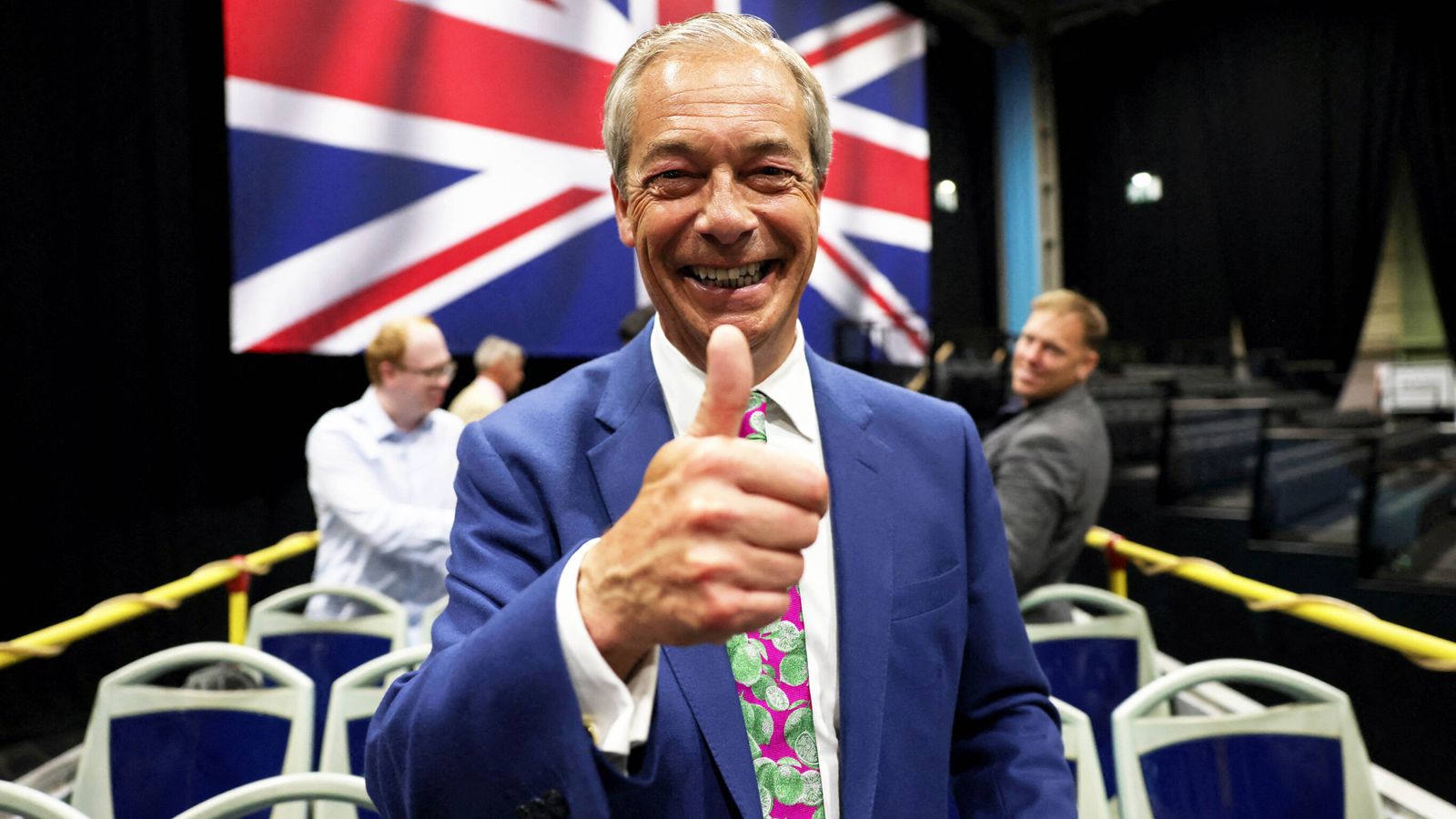
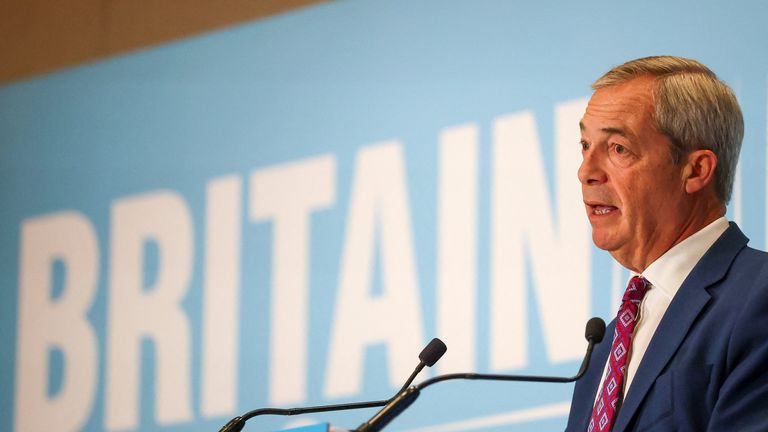
It is too late to investigate whether Nigel Farage broke election law on spending at the general election, Essex Police has said.
The Reform UK leader had been referred to the police following claims by a former member of his campaign team that the campaign to get Mr Farage elected in Clacton last year overspent.
There are tight rules on campaign spending in the UK, including separating what is spent as part of a national campaign and what is spent directly in a constituency.
However, there is a one-year statutory time limit to begin any investigation, which Essex Police said has now elapsed.
The force said: “We have assessed a report relating to an allegation around misreported expenditure by a political candidate in connection with the general election in July 2024.
“Having regard to the Representation of the People Act 1983, which states any prosecution for such an offence must commence within one year, it has been concluded that this report falls outside of the stated statutory time limit, and no investigation can take place.”
Read more:
Farage’s ex-school mate on claims of racist comments
Reform get record £9m donation from ex-Tory donor
The allegations of overspending on Mr Farage’s campaign were first reported at the start of last week, with Richard Everett – also a former Reform councillor – claiming he had passed information to the Metropolitan Police.
Reform was quick to deny the allegations, and accused Mr Everett of being a “disgruntled former councillor” who was expelled from the party “several months ago”.
The overspending reportedly included failing to declare spending on leaflets, banners, utility bills and the refurbishment of a bar in its Clacton campaign office – although Mr Everett said Mr Farage was “blissfully unaware” as others managed the finances.
Labour Party chair Anna Turley had also written to the Electoral Commission about the claims.
Responding yesterday, the elections watchdog said: “We have responded to Anna Turley MP’s correspondence, which raised questions about Reform UK’s spending at the 2024 general election.
“After carefully considering the information presented in the letter, we did not identify any expenditure relating to Mr Farage’s election campaign in Clacton that should have been declared in Reform UK’s national expenditure.”


Bitcoin may have ended its historical four-year cycle, signaling an incoming year of downside, despite widespread analyst expectations for an extended cycle driven by regulatory tailwinds.
Bitcoin’s (BTC) $125,000 all-time high on Oct. 6 may have signaled the top of the current four-year Bitcoin halving cycle, both in terms of “price and time,” according to Jurrien Timmer, the director of global macroeconomic research at asset management firm Fidelity.
“While I remain a secular bull on Bitcoin, my concern is that Bitcoin may well have ended another 4-year cycle halving phase,” wrote Timmer in a Thursday X post. “Bitcoin winters have lasted about a year, so my sense is that 2026 could be a “year off” (or “off year”) for Bitcoin. Support is at $65-75k.”
Related: Bitcoin treasuries stall in Q4, but largest holders keep stacking sats
Crypto market may see more upside on fundamental, regulatory tailwinds
Timmer’s analysis contradicts other crypto analysts, who expect the growing number of regulated crypto investment products to lead to an extended bull market cycle in 2026.
Notably, Tom Shaughnessy, the co-founder of crypto research firm Delphi Digital, expects new all-time highs for Bitcoin in 2026, after investor sentiment recovers from the record $19 billion crypto market crash that occurred at the beginning of October.
“We are working through a one-time disastrous 10/10 liquidation event that broke the market,” wrote Shaughnessy in a Friday X post, adding:
“Once that’s worked through, we hit $BTC ATHs in 2026 as prices rubber band to reflect the progress outside 10/10.”
Shaughnessy said crypto market valuations will be driven by the industry’s “fundamental progress,” including growing Wall Street implementations and regulatory developments.
Related: Bitcoiners push for quantum-resistant BIP-360 upgrade as debate heats up
Policy experts are also predicting a significant year of progress on US cryptocurrency legislation, a development that may bring more institutional investment to the crypto space.
“I do expect 2026 to be another meaningful year for crypto regulation, but it will look different from the last one,” Cathy Yoon, general counsel at crypto research firm Temporal and Solana block-building system Harmonic, told Cointelegraph.
“With stablecoin legislation now passed, the real impact will come from implementation – examinations, disclosures, and how these assets integrate into payments and financial infrastructure,” she said.

However, investors’ social sentiment took a significant hit earlier this week as Bitcoin dipped below $85,000. Bearish commentary has since dominated social media platforms, including X, Reddit and Telegram, according to market intelligence platform Santiment.
Meanwhile, the crypto industry’s best-performing traders by returns, who are tracked as “smart money” traders on Nansen’s blockchain intelligence platform, are also betting on a short-term decline for most leading cryptocurrencies.

While smart money traders were net short on Bitcoin for $123 million, the same cohort was betting on Ether’s (ETH) price increase, with $475 million worth of cumulative net long positions, Nansen data shows.
Magazine: Sharplink exec shocked by level of BTC and ETH ETF hodling — Joseph Chalom
-
 Sports2 years ago
Story injured on diving stop, exits Red Sox game
-
 Sports3 years ago
‘Storybook stuff’: Inside the night Bryce Harper sent the Phillies to the World Series
-
 Sports2 years ago
Game 1 of WS least-watched in recorded history
-
 Sports3 years ago
Button battles heat exhaustion in NASCAR debut
-
 Sports3 years ago
MLB Rank 2023: Ranking baseball’s top 100 players
-
Sports4 years ago
Team Europe easily wins 4th straight Laver Cup
-
 Environment3 years ago
Japan and South Korea have a lot at stake in a free and open South China Sea
-
 Environment1 year ago
Here are the best electric bikes you can buy at every price level in October 2024