
All the Tory MPs who have been suspended since Rishi Sunak became prime minister

Rishi Sunak is facing a fresh headache after a Conservative MP was suspended over allegations he misused campaign funds.
The Times newspaper report into Mark Menzies is the latest sleaze row to rock the Tories since the prime minister entered Downing Street with a promise to bring “integrity and accountability” to government.
Having sought to draw a line under the scandal-hit era of Boris Johnson, problems have continued to mount for Mr Sunak.
Sky News looks at the MPs who have been suspended during his time in office so far.
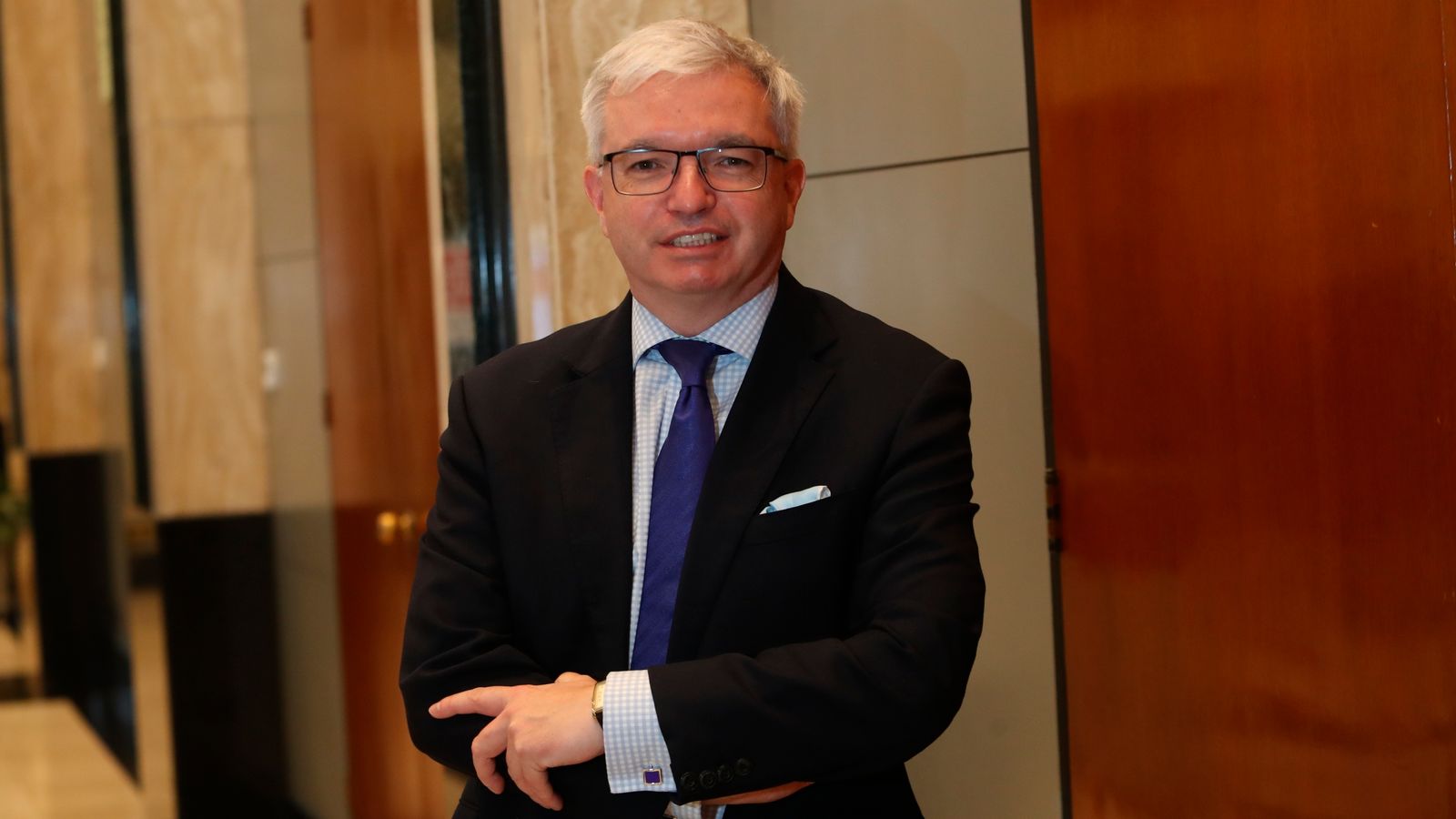
Mark Menzies
Fylde MP Mr Menzies lost the Conservative whip and was suspended as one of Rishi Sunak’s trade envoys after The Times published claims that he had used political donations to cover medical expenses and pay off “bad people” who had locked him in a flat and demanded thousands of pounds for his release.
Mr Menzies, who will now sit as an independent MP, disputes the allegations but “agreed to relinquish the Conservative whip, pending the outcome of an investigation”, Chief Whip Simon Hart said.
Mark Menzies. Pic: AP
Mr Sunak is facing questions over how the claims were handled, with reports suggesting that the party had been aware of the allegations for more than three months.
Sky News understands there had been an ongoing investigation by Conservative Campaign Headquarters into Mr Menzies, but further information came to light following the newspaper’s report and Mr Hart acted immediately.
William Wragg
William Wragg, the MP for Hazel Grove in Greater Manchester, also gave up the whip after he admitted to The Times he had given his colleagues’ phone numbers to someone he met on a dating app.
The senior backbencher apologised and said the person “had compromising things on me. They wouldn’t leave me alone”.
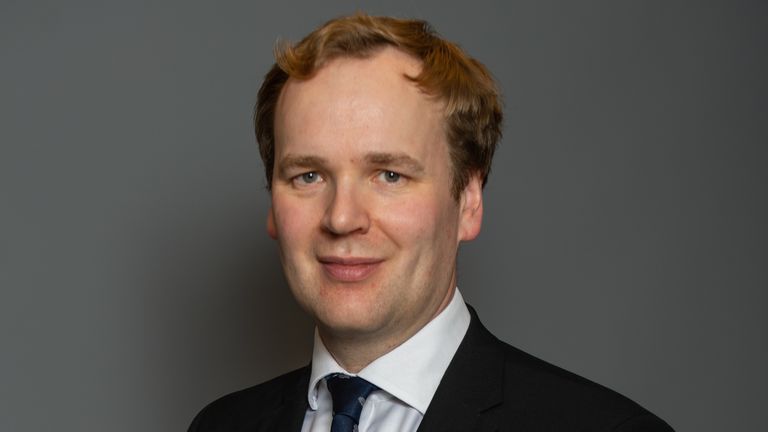
William Wragg. Pic: PA/UK Parliament
Wragg praised for dignity
Scotland Yard later said it is investigating reports of the so-called “honeytrap” scam after it was suggested at least 12 men in political circles received unsolicited messages, raising security concerns.
Mr Wragg’s decision to voluntarily give up the whip led to criticism from within Conservative ranks, with a senior Tory source telling Sky News: “Rishi is so weak Wragg decided he’d have to fire himself instead.”
Lee Anderson
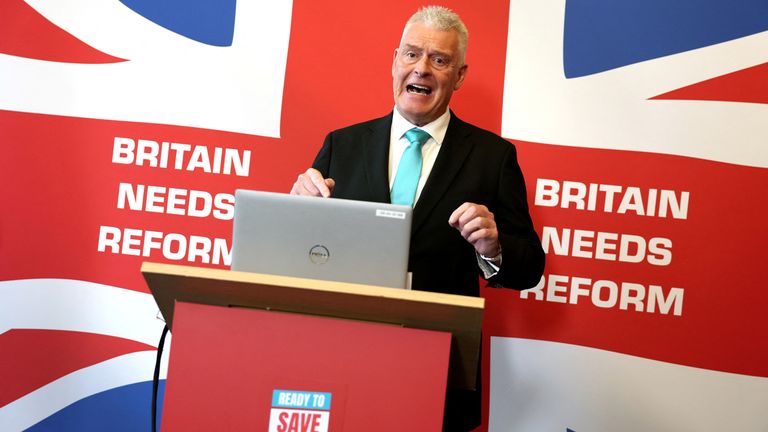
Lee Anderson has since defected to Reform UK. Pic: Reuters
Former deputy party chairman Lee Anderson had the whip suspended over “Islamophobic” comments he made about Sadiq Khan.
The MP for Ashfield, who has since defected to the Reform party, said he believed “Islamists” had “got control” of the Mayor of London, saying: “He’s actually given our capital city away to his mates.”
A day later Mr Khan accused the prime minister of being “complicit” in racism for failing to condemn Mr Anderson‘s comments that “pour fuel on the fire of anti-Muslim hatred”.
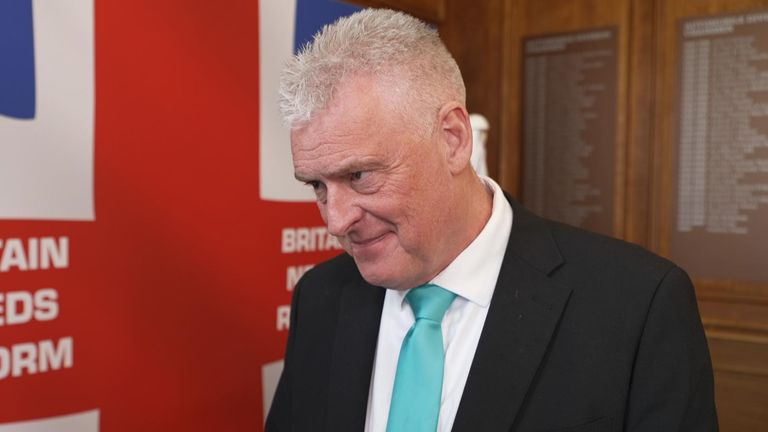
Lee Anderson says Reform Party will be ‘a major force’
Mr Anderson was ultimately suspended, with the chief whip Mr Hart saying this was due to his “failure to apologise”.
Mr Anderson said at the time that he “fully” accepts the party had to suspend him – adding that he “will continue to support the government’s efforts to call out extremism in all its forms – be that antisemitism or Islamophobia”.
Scott Benton
Scott Benton was suspended last April after suggesting to undercover reporters at The Times that he would be willing to break lobbying rules for money.
A subsequent parliamentary investigation found he had committed a “very serious breach” of the rules and recommended he be suspended from the Commons for 35 days, a punishment backed by MPs.
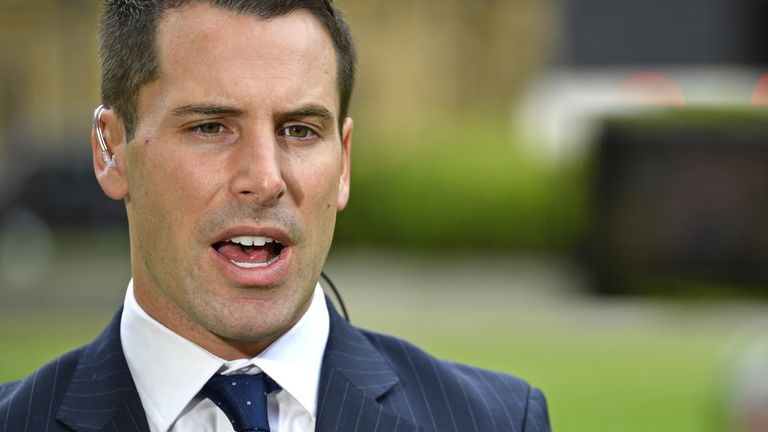
Former Tory MP Scott Benton. Pic: PA
Mr Benton resigned before that could happen, triggering a by-election in his Blackpool South constituency which will coincide with next month’s local elections.
He had denied wrongdoing and appealed the suspension but the ruling was upheld. Had he not resigned, he would have faced being removed from his seat via a re-call petition which would have triggered a by-election if 10% of eligible voters in the area backed it.
Bob Stewart
Bob Stewart, who represents Beckenham in southeast London, surrendered the party whip after he was found guilty of a racially-aggravated public order offence.
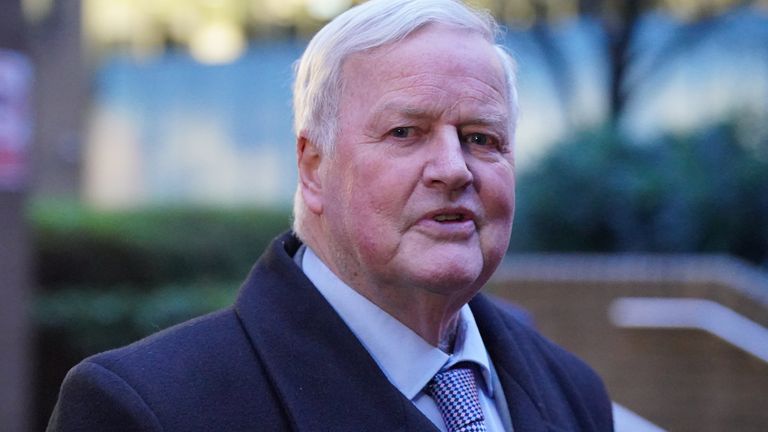
MP Bob Stewart. Pic: PA
The conviction was quashed on appeal in February, but he has not had the whip restored.
Mr Stewart was convicted after telling Bahraini refugee Sayed Ahmed Alwadaei to “go back to Bahrain” during the incident in December 2022.
In overturning the decision, Mr Justice Bennathan said that while the words amounted to abuse, it was not believed that they caused Mr Alwadaei harassment, alarm or distress.
Crispin Blunt
Former minister Crispin Blunt had the whip suspended pending the outcome of the police investigation into allegations of rape and possession of controlled substances, which he denies.
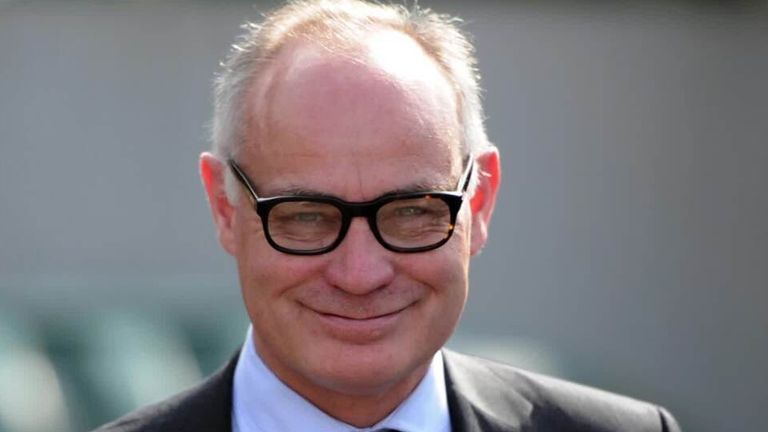
Crispin Blunt identified himself as an MP who was arrested last October
The Reigate MP announced his arrest in October, calling it “unnecessary” but saying he was ready to co-operate and “I am confident will end without charge”.
Mr Blunt has said he does not intend to contest the next election. In January he was re-bailed until April.
Peter Bone
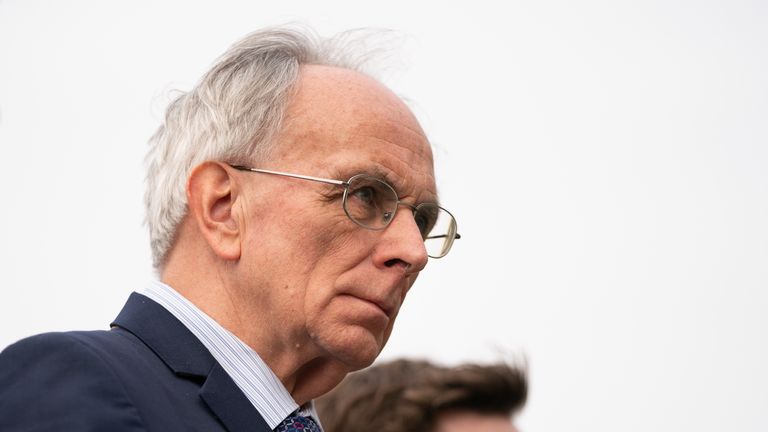
Peter Bone was removed in a recall petition
Disgraced ex-Tory MP Peter Bone lost his seat after being removed by constituents in a recall petition. The move came after he was suspended as an MP over bullying and sexual misconduct claims, which he denies.
Mr Bone’s partner was chosen to run as his replacement in the subsequent Wellingborough by-election. Labour managed to achieve a swing of 28.5% – the largest swing of this parliament at the time.
Chris Pincher
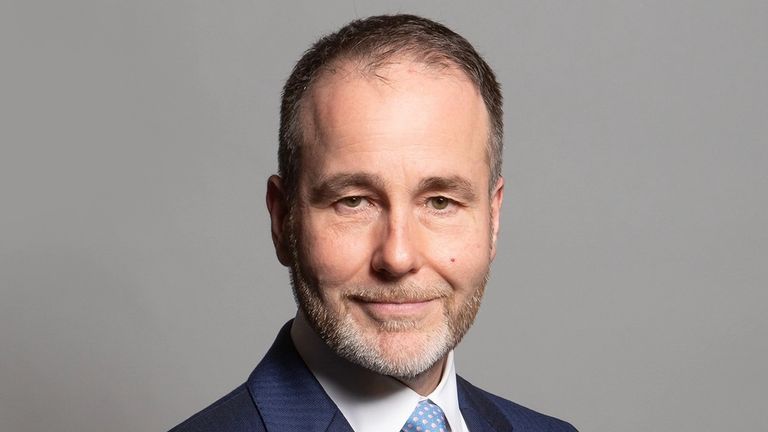
The Chris Pincher allegations led to the downfall of Boris Johnson
Former deputy chief whip Chris Pincher quit parliament in disgrace after losing his appeal against a suspension from the Commons following groping allegations made in June 2022.
The allegations ultimately led to the downfall of Boris Johnson, after it emerged the then prime minister was aware of an investigation into his conduct three years before, yet still appointed him to a role in his government involving MPs’ welfare.
Mr Pincher did not appeal against the rule breach, but argued to the Independent Expert Panel (IEP) that the punishment was disproportionate.
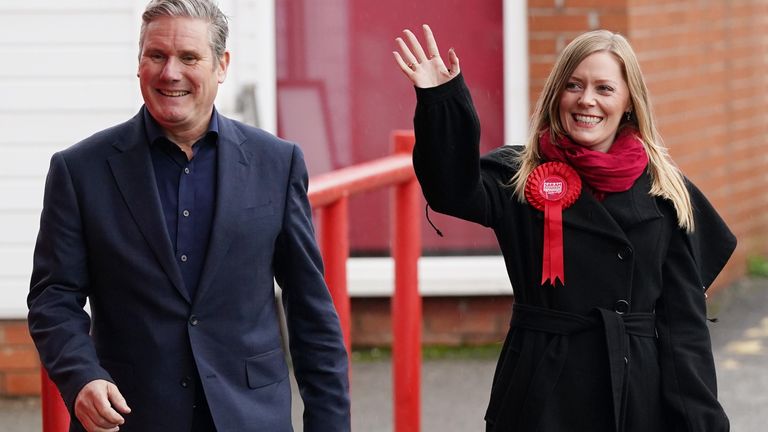
Labour won the Tamworth by-election. Pic: PA
His resignation triggered a by-election in his seat in Tamworth in October, which the Tories lost to Labour.
Keep up with all the latest news from the UK and around the world by following Sky News
David Warburton
David Warburton stood down from his seat in Somerton and Frome last summer while being investigated for claims of sexual misconduct. Mr Warburton, who was suspended over the allegations 14 months earlier, denied making unwanted advances but did admit to drug use.
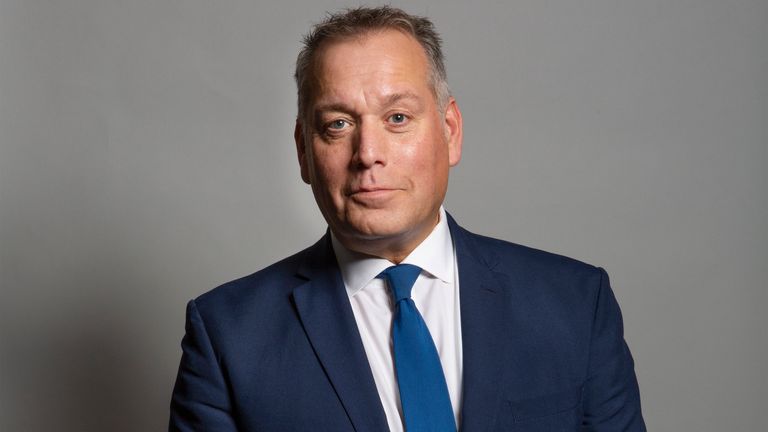
David Warburton, the former MP for Somerton and Frome
In his resignation letter he said he had been denied a fair hearing by the Independent Complaints and Grievance Scheme (ICGS) and prevented from “speaking out” while it investigated the accusations.
An independent panel later found the investigation into claims he sexually harassed someone was “materially flawed“, but said it had made “no findings on the substance of the complaint against the respondent, or the allegation that the complaint was fabricated”.
Julian Knight
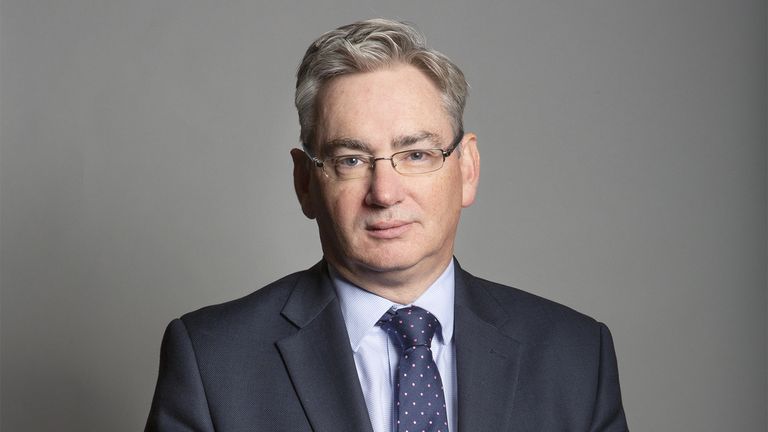
Julian Knight. Pic: PA
Juian Knight was suspended as a Conservative after a serious sexual assault allegation was made against him.
The MP for Solihull has always maintained his innocence and in April last year, the Metropolitan Police dropped the investigation without questioning him.
But he remained suspended from the Tory party as the chief whip said “further complaints” had been made against him.
Mr Knight announced he would be standing down at the next election as a result.
Andrew Bridgen
Mr Bridgen was kicked out of the Conservative Party last year after comparing COVID vaccines to the Holocaust.
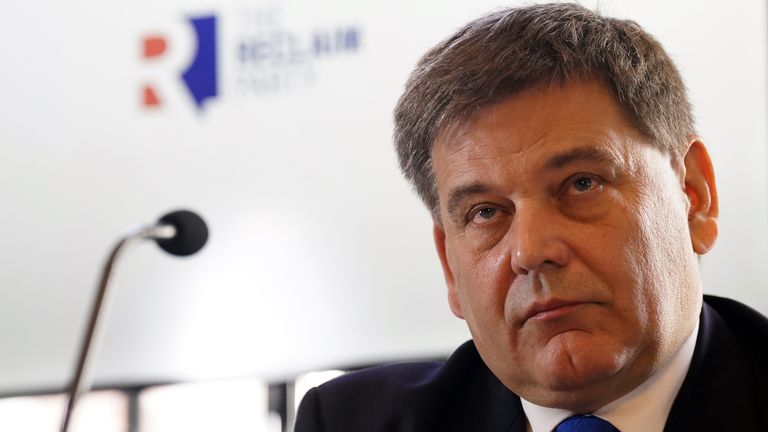
Andrew Bridgen was expelled over COVID vaccine comments
The North West Leicestershire MP claimed a “consultant cardiologist” told him COVID jabs were “causing serious harms”, adding that the vaccine programme was “the biggest crime against humanity since the Holocaust”.
He stood by his comments following his expulsion, saying he would use his “newfound freedom” as an independent MP “to fight for justice for all those harmed, injured and bereaved due to governmental incompetence”.
Matt Hancock
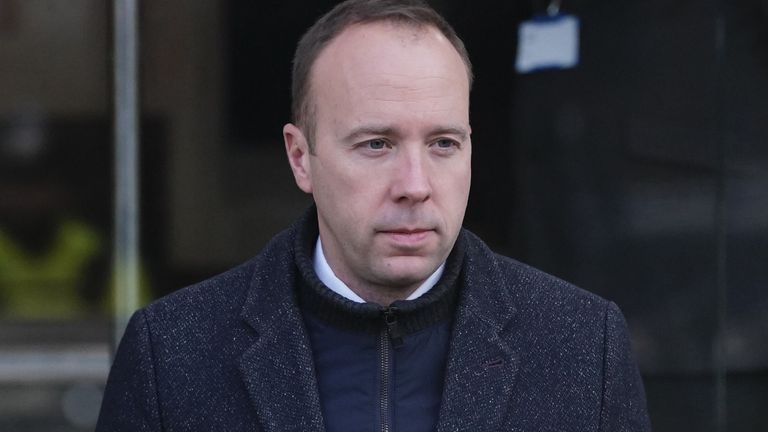
Former health secretary Matt Hancock
Matt Hancock resigned as health secretary in disgrace during the pandemic when he was caught having an affair with his aide and now girlfriend, Gina Coladangelo, in breach of his own social distancing rules.
But it was his appearance on reality TV show I’m a Celebrity… Get Me Out of Here! that caused him to lose the whip.
Mr Hancock was heavily criticised by MPs, including Mr Sunak, who said MPs should spend their time “serving constituents”.
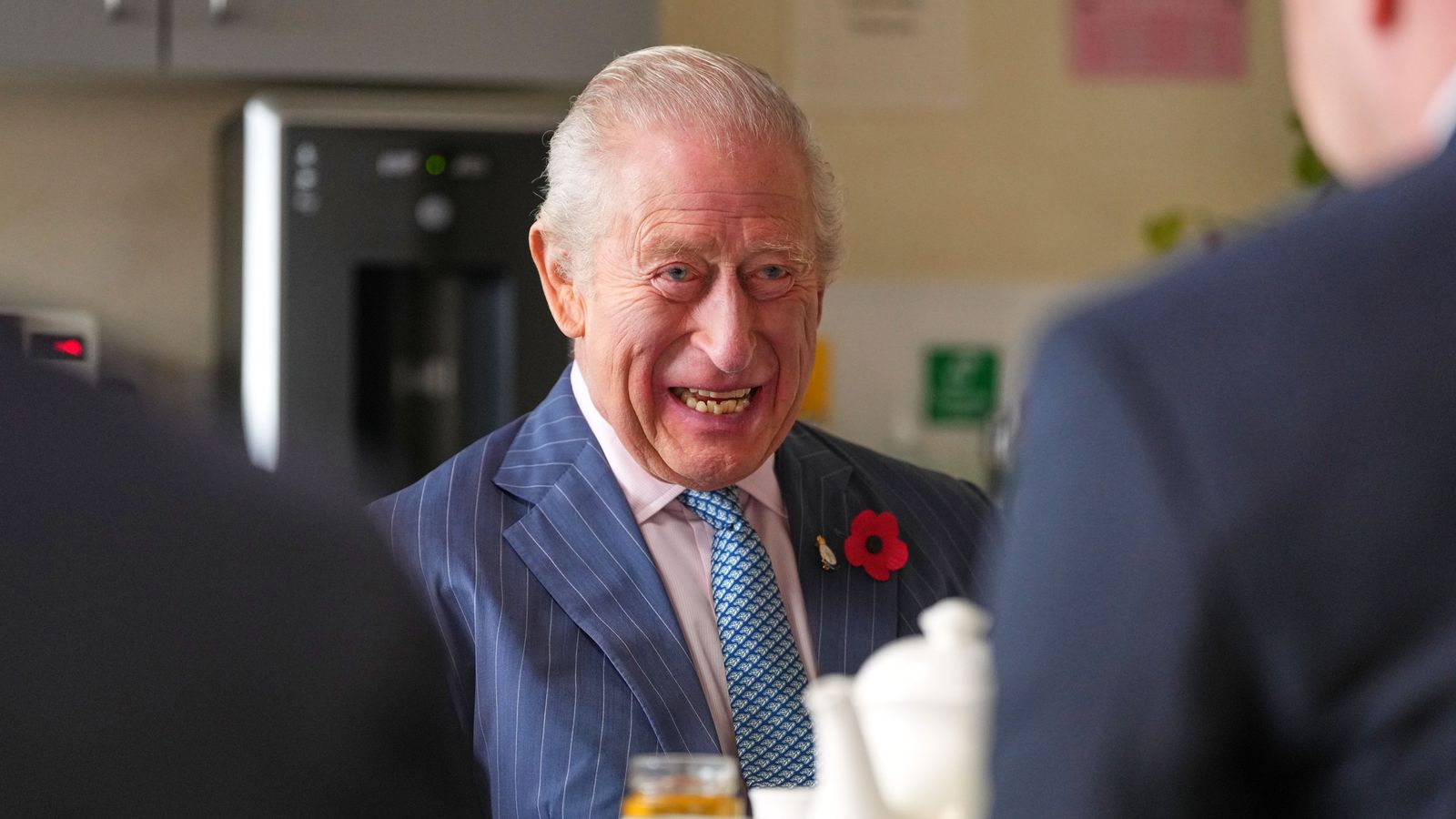
The King has shared in a television address that, thanks to early diagnosis, his cancer treatment can be reduced in the new year.
In a televised address, Charles said his “good news” was “thanks to early diagnosis, effective intervention and adherence to doctors’ orders”.
“This milestone is both a personal blessing and a testimony to the remarkable advances that have been made in cancer care in recent years,” he added.
“Testimony that I hope may give encouragement to the 50% of us who will be diagnosed with the illness at some point in our lives.”
The King announced in February 2024 that he had been diagnosed with cancer and was beginning treatment.
The monarch postponed all public-facing engagements, but continued with his duties as head of state behind palace walls, conducting audiences and Privy Council meetings.
He returned to public duties in April last year and visited University College Hospital Macmillan Cancer Centre in central London with the Queen and discussed his “shock” at being diagnosed when he spoke to a fellow cancer patient.
Sources suggested last December his treatment would continue in 2025 and was “moving in a positive direction”.
The King began returning to public duties in April last year. File pic: PA
The King has chosen not to reveal what kind of cancer he has been treated for. Palace sources have partly put that down to the fact that he doesn’t want one type of cancer to appear more significant or attract more attention than others.
In a statement after the speech aired, a Buckingham Palace spokesperson said: “His Majesty has responded exceptionally well to treatment and his doctors advise that ongoing measures will now move into a precautionary phase.”
Sir Keir Starmer praised the video message as “a powerful message,” and said: “I know I speak for the entire country when I say how glad I am that his cancer treatment will be reduced in the new year.
“Early cancer screening saves lives.”
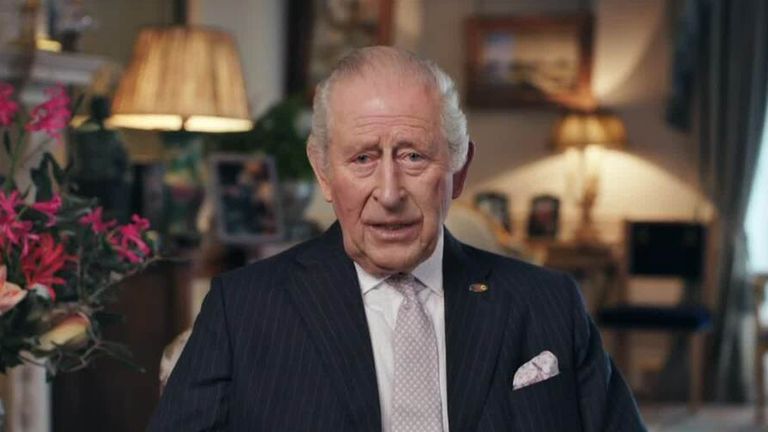
Watch: King Charles gives update on treatment
Early detection can give ‘the precious gift of hope’
His message on Friday was broadcast at 8pm in support of Stand Up To Cancer, a joint campaign by Cancer Research UK and Channel 4.
In an appeal to people to get screened for the disease early, the King said: “I know from my own experience that a cancer diagnosis can feel overwhelming.
“Yet I also know that early detection is the key that can transform treatment journeys, giving invaluable time to medical teams – and, to their patients, the precious gift of hope. These are gifts we can all help deliver.”
Charles noted that “at least nine million people in our country are not up to date with the cancer screenings available to them,” adding: “That is at least nine million opportunities for early diagnosis being missed.
“The statistics speak with stark clarity. To take just one example: When bowel cancer is caught at the earliest stage, around nine in ten people survive for at least five years.
“When diagnosed late, that falls to just one in ten. Early diagnosis quite simply saves lives.”
Minor inconvenience of screening ‘a small price to pay’
The King acknowledged that people often avoid screening “because they imagine it may be frightening, embarrassing or uncomfortable”. But, he added: “If and when they do finally take up their invitation, they are glad they took part.
“A few moments of minor inconvenience are a small price to pay for the reassurance that comes for most people when they are either told either they don’t need further tests, or, for some, are given the chance to enable early detection, with the life-saving intervention that can follow.”
Read more from Sky News:
Christmas tree chopped down hours after lights switch-on
More photos from Epstein’s estate released
Taylor Swift breaks down in tears over Southport attacks
Giving his “most heartfelt thanks” to doctors, nurses, researchers and charity workers, the King added: “As I have observed before, the darkest moments of illness can be illuminated by the greatest compassion. But compassion must be paired with action.
“This December, as we gather to reflect on the year past, I pray that we can each pledge, as part of our resolutions for the year ahead, to play our part in helping to catch cancer early.
“Your life – or the life of someone you love – may depend upon it.”
UK
‘They’re invisible within society’: Whistleblower says asylum seekers disappear ‘daily’ from hotels
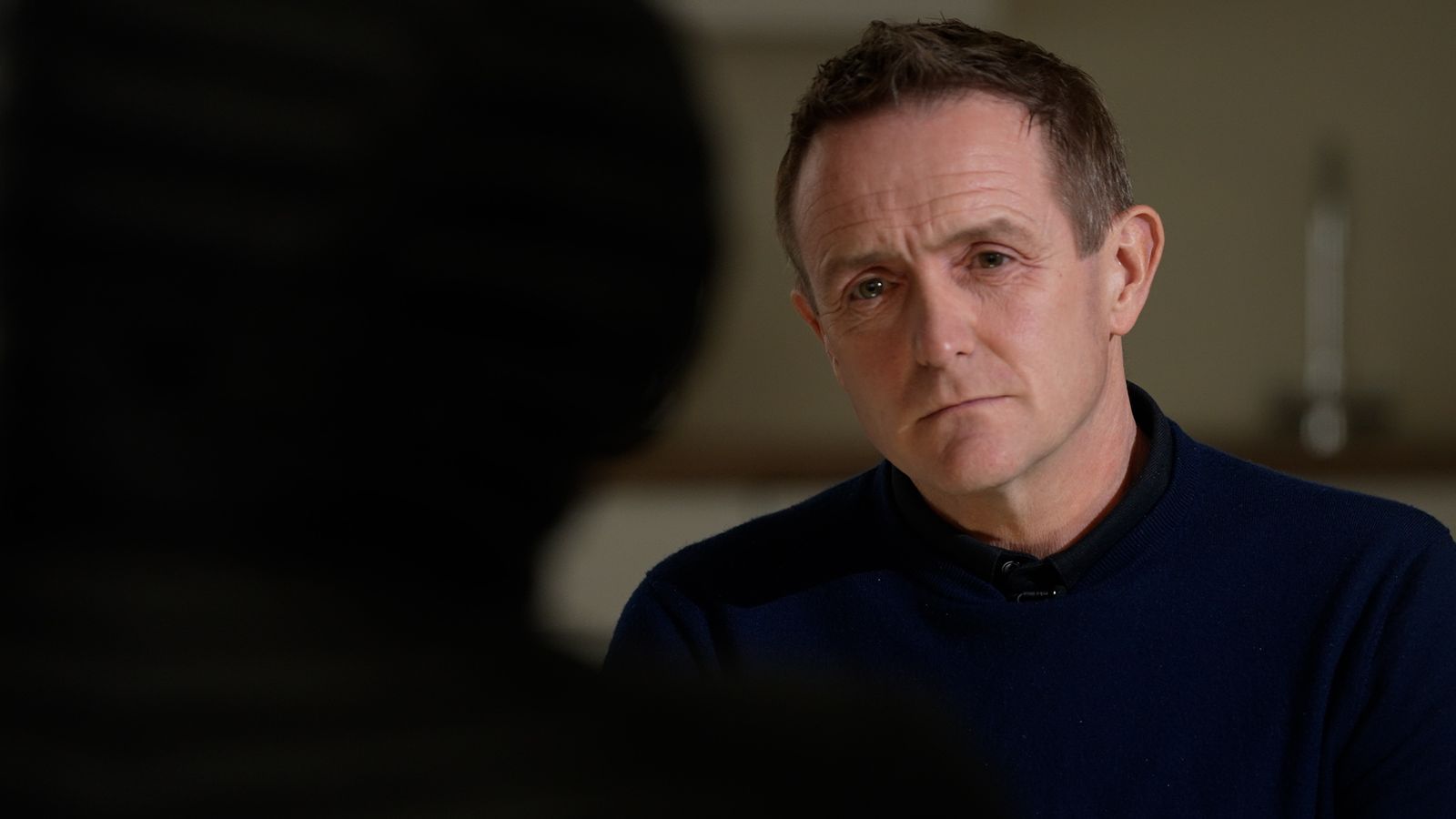
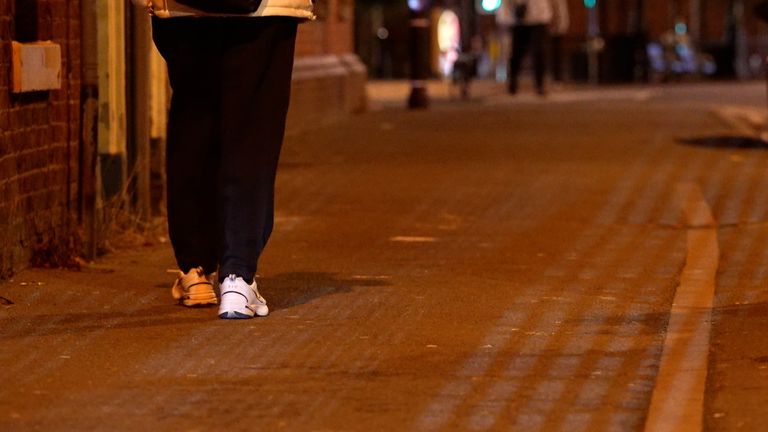
An insider has told Sky News people are still disappearing “daily” from asylum seeker hotels.
In an exclusive interview, the contractor described the chaos he sees within the system as “terrifying” because undocumented people are persistently absconding from hotels.
He spoke to us because he is deeply concerned about the ongoing lack of monitoring at a time when the government has promised to tighten the asylum system.
The man, who we are not naming, works across multiple asylum hotels in one region of England.
“When someone gets to about a week away from the hotel, they’re processed as an absconder,” he said.
“Nothing really happens there. They get marked as ‘left the hotel’ and a notification is sent to the Home Office.
“It’s at least weekly. Most of the time it can be daily.”
The government moved last month to reset its immigration policy by promising to toughen the process for asylum seekers.
The latest figures up to September this year show 36,272 asylum seekers living in hotels.
Failed asylum applicants are given a date to move out by, but they’re not actually picked up by the authorities, the insider says
Overall 110,000 people claimed asylum in the UK between September 2024 and September 2025 – higher than the previous recorded peak of 103,000 in 2002.
The hotel contractor also described to Sky News what he says happens when a resident’s claim for asylum is rejected.
“They get given a date that they need to move out by,” he said.
“You would expect immigration enforcement to go to the hotel to pick these people up. You would expect them to not even be told that they failed their asylum claim.
“You would expect them to just be collected from the hotel… that doesn’t happen.”
He told us that some residents just walk out of the door with no further checks or assistance.
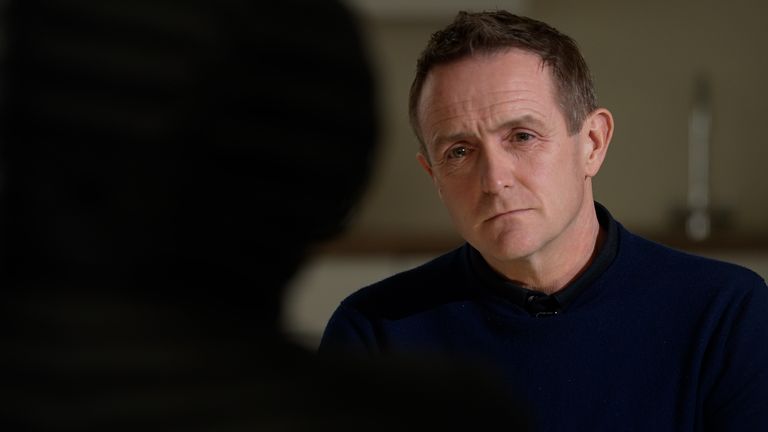
The whistleblower spoke to Sky News’ Tom Parmenter in the exclusive interview
“It must be terrifying for these people as well… ‘what do I do now? I don’t have an address’.
“So what do they do? How do they survive?
“Do they then get forced… to go into an underground world?
“They’re just completely invisible within society.
“For those people to freely be allowed, undetected and unchecked, on the streets of this country is terrifying.”
His account from within the system contrasts with the government’s promises to restore control over the asylum process.
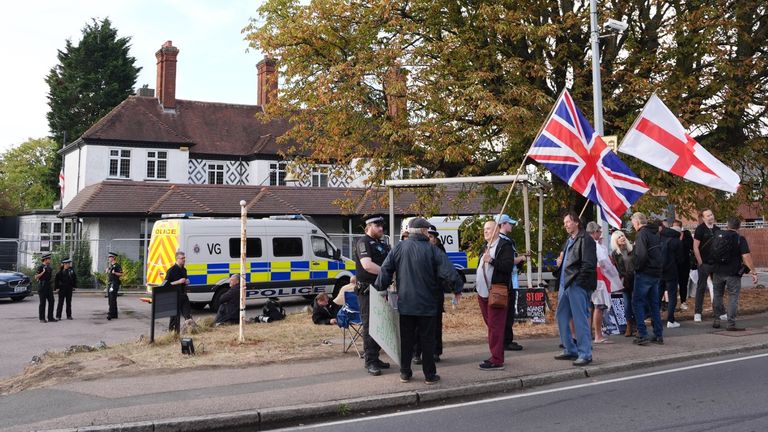
Police and protesters outside the Bell Hotel, Epping, where asylum seekers have been housed. Pic: PA
In response to the interview, a Home Office spokesperson said: “This government will end the use of hotels and have introduced major reforms to the asylum system, to scale up removals of people with no right to be here and address the factors drawing illegal migrants to the UK in the first place.
“Nearly 50,000 people with no right to be in our country have been removed and enforcement arrests to tackle illegal working are at the highest level in recent history.
“A dedicated team in the Home Office works with police, across government and commercial companies to trace absconders. Failure to return to a hotel can also lead to asylum claims and support being withdrawn.”
At a community kitchen in Greater Manchester, organisers told us they regularly see people who are living under the radar – surviving with “cash in hand” jobs.
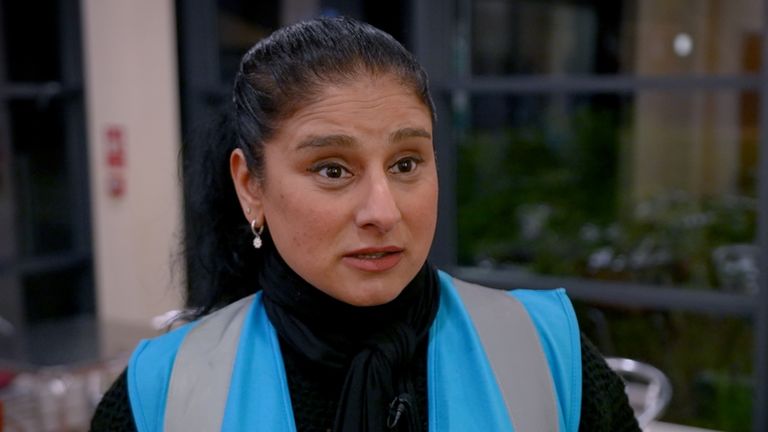
Volunteer Shabana Yunas says the situation is ‘getting worse’ and ‘it is dangerous’
Volunteer Shabana Yunas helps many hungry and desperate people. She also feels the tension it causes in her community.
“People don’t know who they are and I understand a lot of people are afraid… but if there’s those things in place where we can monitor who is around, then everybody can feel a lot safer.
“If people are coming into the UK and we don’t know who they are and they’re just disappearing, crime rates are going to go up, slavery is going to go higher, child exploitation is going to be more exposed.
“They are too afraid to go to the authorities because they are scared of being deported to a country where their lives could be at risk.
“It’s getting worse, it is dangerous and we do need to do something about this where we can support people.”
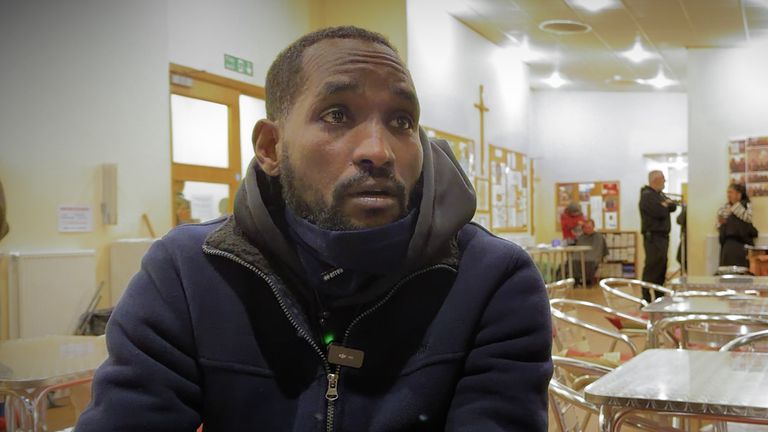
Kitchen volunteer Khalid, from Ethiopia, has had his application for asylum rejected four times
Another volunteer at the kitchen is Khalid.
He arrived in the UK in 2015 having travelled from Ethiopia – he hid on a lorry to get into England.
Read more:
The visa overstayers living under the radar
Stats show rise in asylum seekers being housed in hotels
Britain’s immigration system changes explained
He has applied for asylum and been rejected four times.
He has recently submitted another application and told us political violence at home meant he could not return.
Crucially, he knows plenty of people living off-grid.
“Yeah, they don’t care about what the government thinks, because they already destroyed their life,” he told us.
👉 Listen to Sky News Daily on your podcast app 👈
Although Khalid now has somewhere to stay, he has previously considered turning to crime to give himself the stability of life in prison.
“I was in depression. I was like, I wanna do some criminal and go jail, to stay in a prison.
“Once upon a time, I’d prefer that way.”
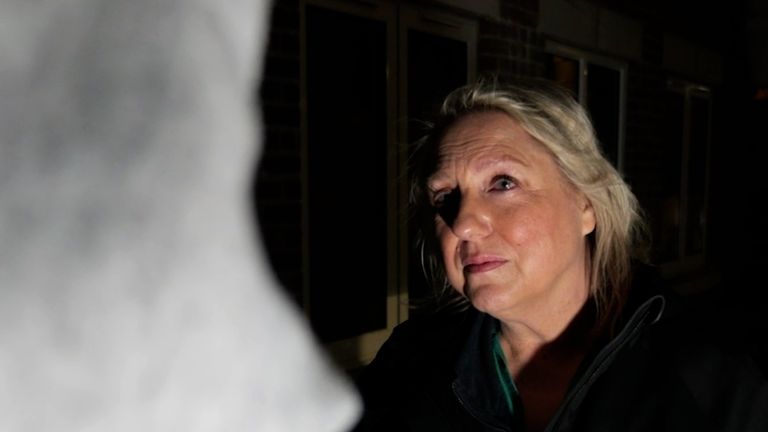
The visa overstayers in ‘soft’ Britain
Khalid is now volunteering to give his life more purpose as he waits for another decision from the Home Office.
He says he doesn’t blame people who think he should be deported back to Ethiopia.
When asked if he should have been, he said: “That is up to Home Office, like up to government.”
Stopping small boats, clearing backlogs, closing hotels, enforcing the rules and restoring faith in the system are all priorities for the Home Office – solving it all is one of the defining challenges for the Starmer government.
-
 Sports2 years ago
Story injured on diving stop, exits Red Sox game
-
 Sports3 years ago
‘Storybook stuff’: Inside the night Bryce Harper sent the Phillies to the World Series
-
 Sports2 years ago
Game 1 of WS least-watched in recorded history
-
 Sports3 years ago
Button battles heat exhaustion in NASCAR debut
-
 Sports3 years ago
MLB Rank 2023: Ranking baseball’s top 100 players
-
Sports4 years ago
Team Europe easily wins 4th straight Laver Cup
-
 Environment3 years ago
Japan and South Korea have a lot at stake in a free and open South China Sea
-
 Environment1 year ago
Here are the best electric bikes you can buy at every price level in October 2024