
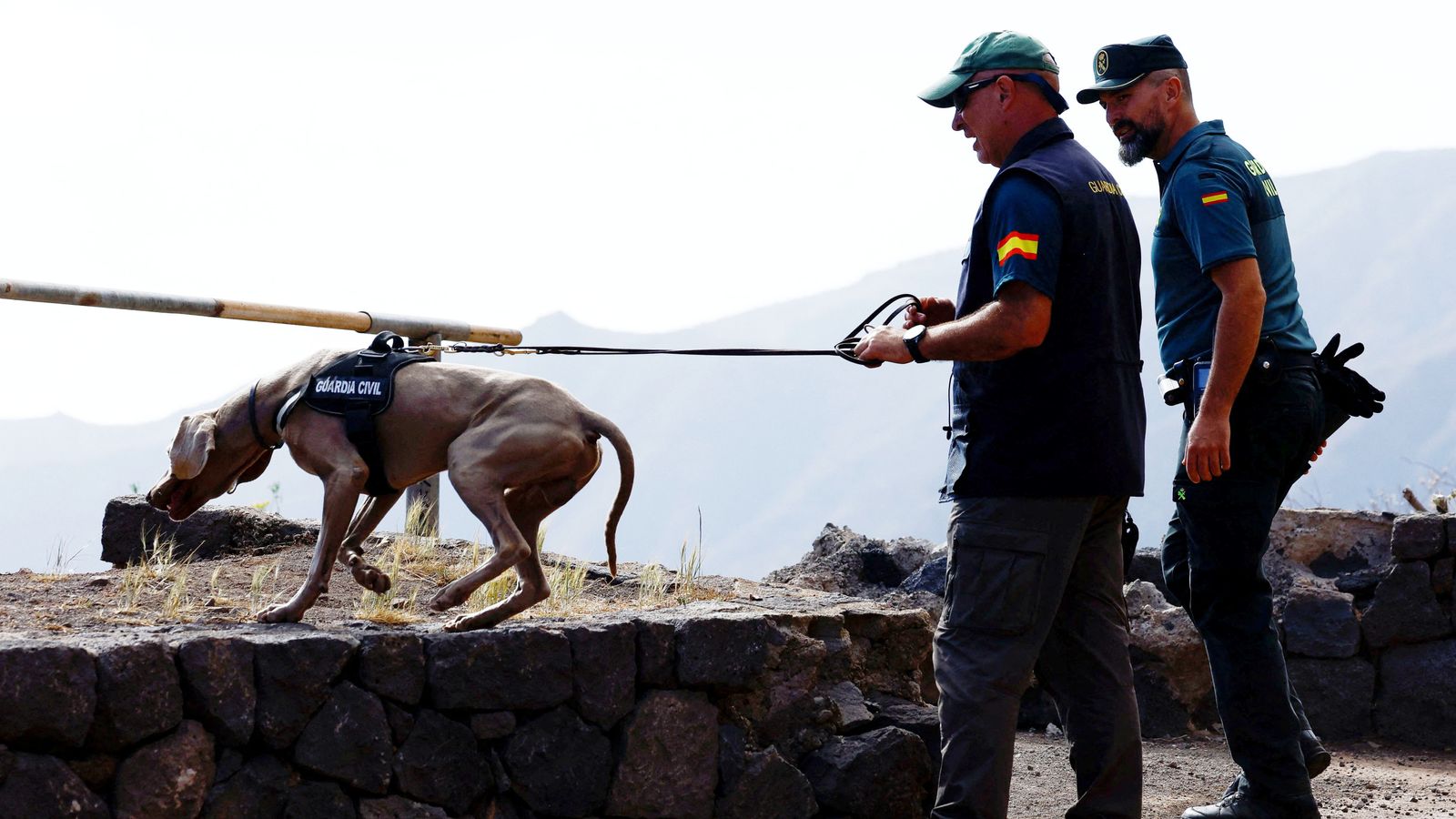
Jay Slater: Specialist search dogs brought in to hunt for missing teenager

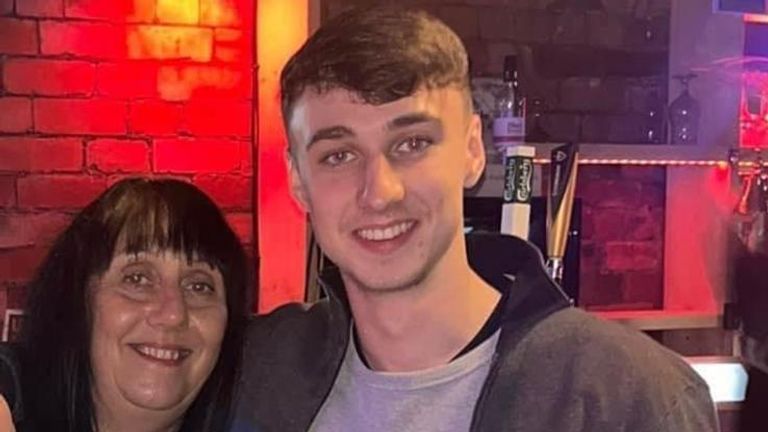
Specialist search dogs have been drafted in from the Spanish capital Madrid to help in the hunt for missing British teenager Jay Slater.
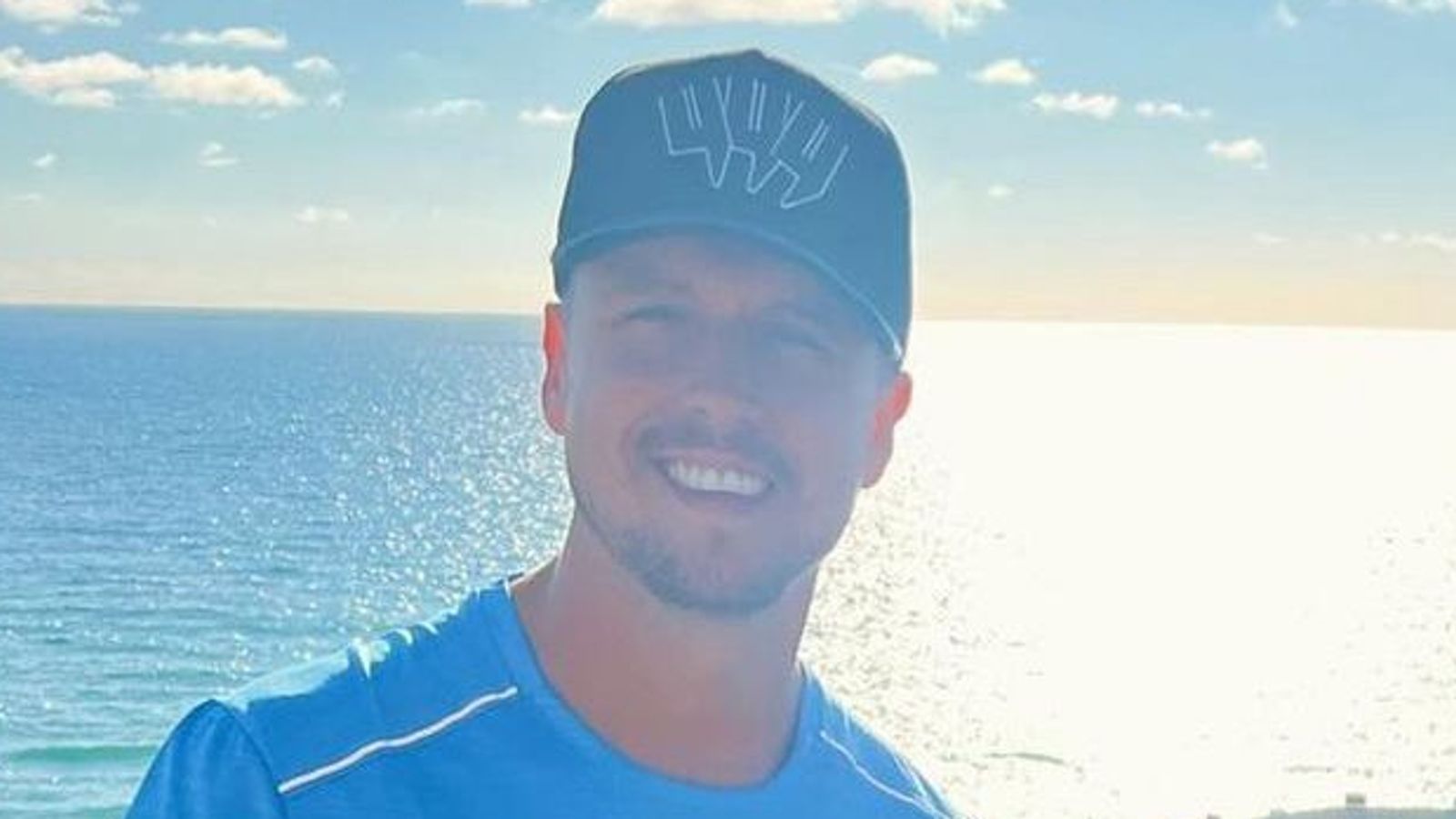
The 19-year-old, from Oswaldtwistle near Blackburn in Lancashire, was last seen in Tenerife in the morning of Monday 17 June.
Mr Slater had travelled to the northwestern mountain village of Masca after attending the NRG musical festival on Sunday night.
The apprentice bricklayer phoned a friend he had been holidaying with around 8.30am the following morning to say he was heading back to his accommodation in the southern town of Los Cristianos after missing a bus.
During the short phone call he said he would walk instead – a journey that would take 11 hours on foot and involve walking through mountainous terrain.
He also said he was lost, in need of water, and only had 1% charge on his phone.
Police, mountain rescuers and Mr Slater’s family are continuing to try to find the British teenager with the search now in its ninth day.
Read more:
Scottish hiker rescued by police searching for Slater
Online sleuths wade into hunt
Slater’s dad says police are keeping family in the dark
Jay Slater and his mother Debbie Duncan. Pic: Lucy Law
Tenerife police confirmed today that several dogs from Madrid would be joining the search and rescue effort.
The force said: “The Civil Guard continues with the search device for the young British man who disappeared in the Masca neighbourhood, belonging to the municipality of Buenavista del Norte (Tenerife), in which different units of the Civil Guard participate.
“In addition, today several Canine Guides of the Civil Guard dispatched from Madrid with their canine agents specialised in the search for people on large areas of land, belonging to the Cynological Service of the Civil Guard.”
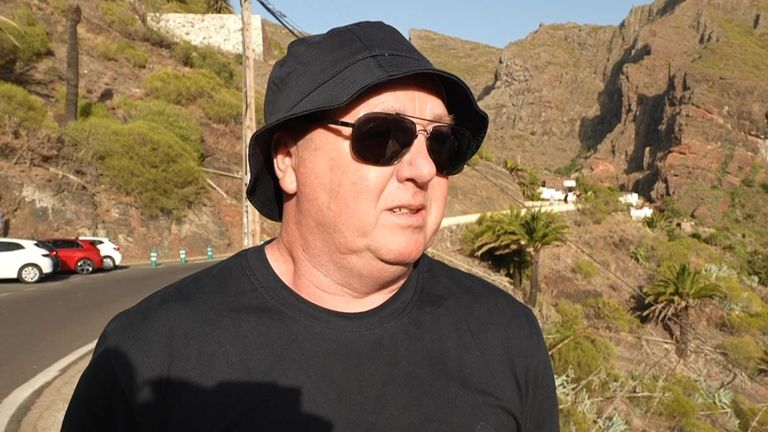
‘I just want him back’
Teen was seen ‘walking fast’ before his disappearance
Mr Slater’s mother, father and brother have all flown to Tenerife to help with the search.
His father Warren Slater said on Monday that while some officers had been “brilliant”, he had been left frustrated at the lack of communication from others.
The family has also shared a blurry CCTV image of what they believe could be the missing teenager in a town near Masca around 10 hours after he was first reported missing.
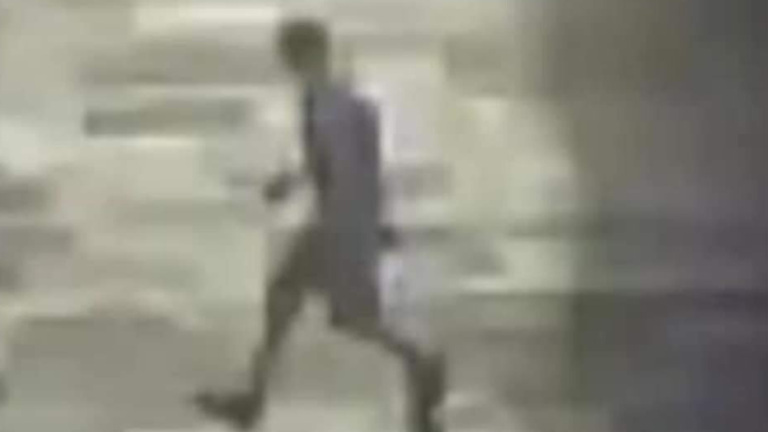
Mr Slater’s family have shared a blurry image of what they believe could be the missing teenager
? Click to subscribe to the Sky News Daily wherever you get your podcasts ?
The last person to see Mr Slater was Masca resident Ofelia Medina Hernandez who spoke to the teenager at 8am on Monday 17 June.
Ms Hernandez said she told him a bus was due at 10am as he seemingly hoped to get back to his accommodation.
However, he set off walking – and she said she later drove past him as he was “walking fast”.
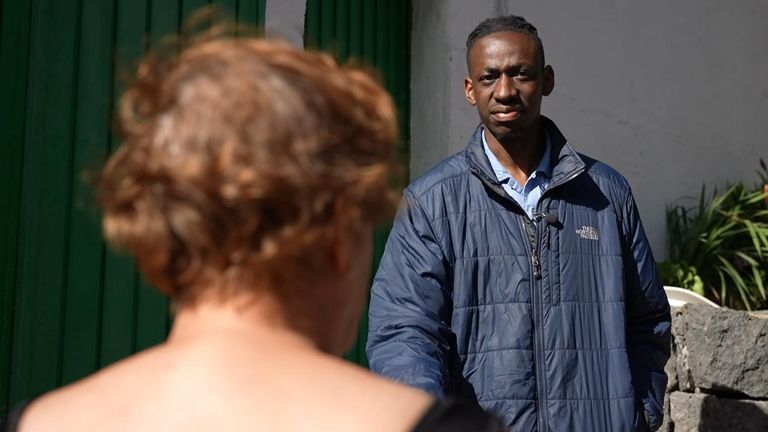
‘Jay Slater asked me for bus times’
Keep up with all the latest news from the UK and around the world by following Sky News
Last week, photographs emerged showing the Tenerife property where Mr Slater had reportedly been before he went missing.
Rumours and conspiracy theories about his disappearance have since circulated online, with social media users speculating on platforms including TikTok and Facebook.
Some online sleuths have even travelled out to Tenerife to try to find Mr Slater.
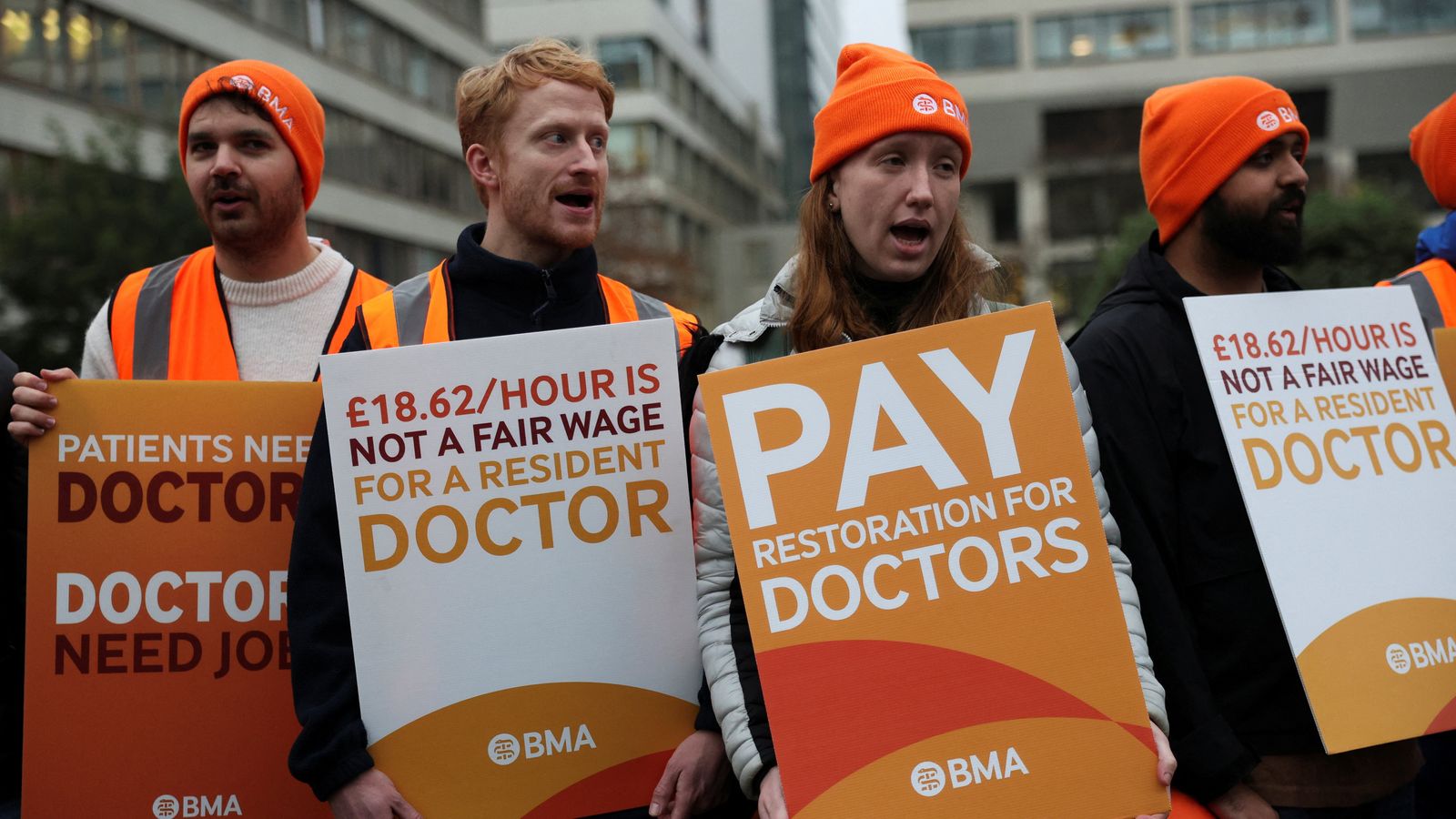
Doctors in England will strike in the run-up to Christmas, the British Medical Association (BMA) has confirmed.
Resident doctors, formerly junior doctors, will walk out from 7am on 17 December until 7am on 22 December.
The latest strike has been blamed on the “continuing failure of the government to make a credible offer on jobs or pay” by the BMA.
Health Secretary Wes Streeting condemned the move as “cynical”, and accused the union of trying to turn medics “into the Grinch who stole Christmas”.
Experts expect pressure on services to be “intense” amid rising flu cases and staff sickness, but medics say they have been left with “no choice”.
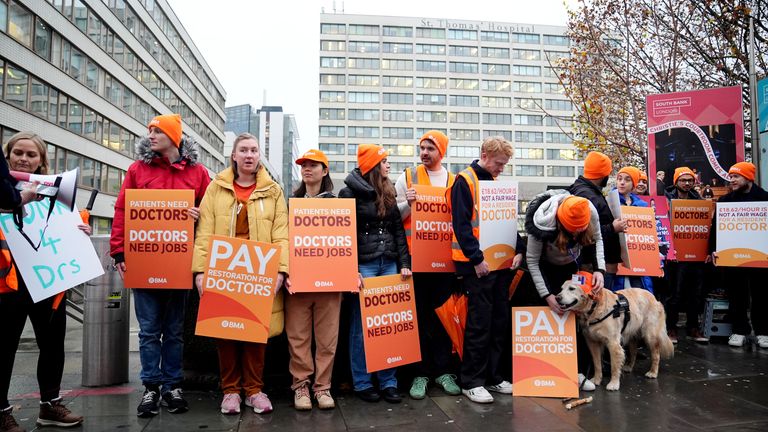
Striking resident doctors pictured outside St Thomas’ Hospital in London on 14 November. File pic: PA
Dr Jack Fletcher, chair of the BMA’s resident doctors committee, said: “With the government failing to put forward a credible plan to fix the jobs crisis for resident doctors at the same time as pushing a real terms pay cut for them, we have no choice but to announce more strike dates.
“However, these do not need to go ahead. Gradually raising pay over a few years, and some common-sense fixes to the job security of our doctors, are well within the reach of this government.”
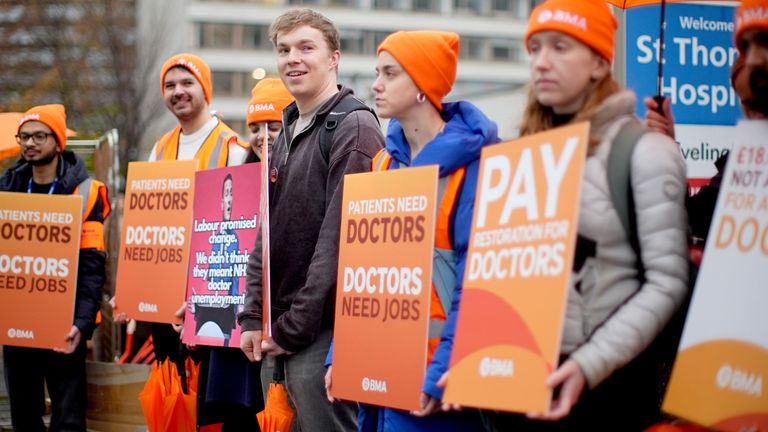
Striking resident doctors pictured outside St Thomas’ Hospital in London on 14 November. File pic: PA
Mr Streeting said the BMA had “clearly chosen to strike when it will cause maximum disruption, causing untold anxiety”.
“Patients and NHS staff deserve better than this cynical attempt to wreck Christmas,” he said.
“After a 28.9% pay rise, the government offered to create more jobs and put money back in resident doctors’ pockets. The BMA rejected it out of hand, refused to put the offer to its members, blocking a better deal for doctors.
“Now, without a single conversation with the government, they’re threatening more strikes at the busiest time of the year.”
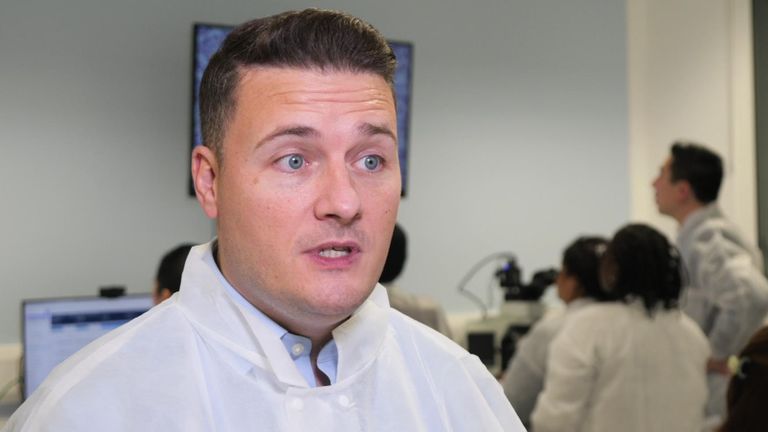
Health Secretary Wes Streeting has criticised the proposed five-day strike.
Mr Streeting added that it was “time for resident doctors to stand up to the BMA and say that enough is enough”.
“These strikes are in no one’s interest and there is no moral justification for them,” he said. “Resident doctors should ignore the BMA’s attempts to turn them into the Grinch who stole Christmas.”
Previous resident doctor strikes took place from 25 to 30 July and 14 to 19 November.
The cost of strike action
November’s industrial action was the 13th strike since March 2023. The summer walkout was estimated to have cost the health service £300m.
“Everyone knows in the run-up to Christmas we need all hands on deck,” said Daniel Elkeles, chief executive of NHS Providers.
“It’s really important to be able to discharge as many patients as possible, so that where appropriate, they can be at home with their loved ones.
“We need to ensure there’s the hospital capacity too to deal with the additional demand that always comes at this time of year. That’s going to be even more challenging now.”
Read more from Sky News:
US and UK agree zero tariffs on pharmaceuticals
Weight loss jabs backed to tackle obesity by WHO
Rory Deighton, acute and community care director at the NHS Confederation, said: “With winter now upon us, flu levels surging, and staff sickness expected to rise, pressure on services will be intense.”
Mr Deighton added that the walkout could lead to “thousands of cancelled appointments and operations”.


Did the chancellor mislead the public, and her own cabinet, before the budget?
It’s a good question, and we’ll come to it in a second, but let’s begin with an even bigger one: is the prime minister continuing to mislead the public over the budget?
The details are a bit complex but ultimately this all comes back to a rather simple question: why did the government raise taxes in last week’s budget? To judge from the prime minister’s responses at a news conference just this morning, you might have judged that the answer is: “because we had to”.
“There was an OBR productivity review,” he explained to one journalist. “The result of that was there was £16bn less than we might otherwise have had. That’s a difficult starting point for any budget.”
Politics latest: OBR boss resigns over budget leak
Beth Rigby asks Keir Starmer if he misled the public
Time and time again throughout the news conference, he repeated the same point: the Office for Budget Responsibility had revised its forecasts for the UK economy and the upshot of that was that the government had a £16bn hole in its accounts. Keep that figure in your head for a bit, because it’s not without significance.
But for the time being, let’s take a step back and recall that budgets are mostly about the difference between two numbers: revenues and expenditure; tax and spending. This government has set itself a fiscal rule – that it needs, within a few years, to ensure that, after netting out investment, the tax bar needs to be higher than the spending bar.
At the time of the last budget, taxes were indeed higher than current spending, once the economic cycle is taken account of or, to put it in economists’ language, there was a surplus in the cyclically adjusted current budget. The chancellor had met her fiscal rule, by £9.9bn.
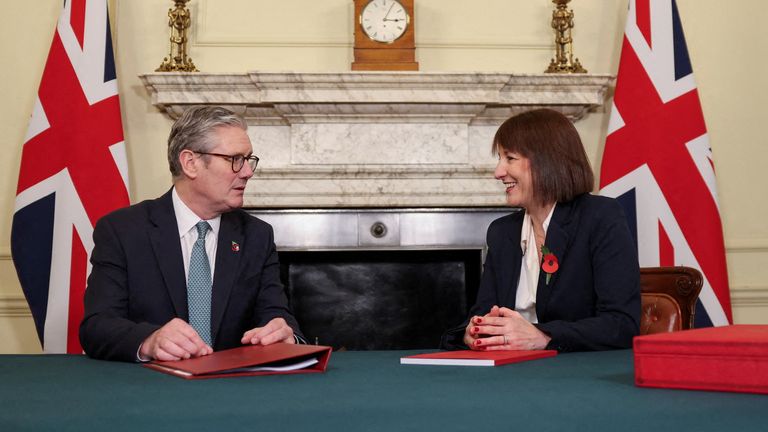
Pic: Reuters
This, it’s worth saying, is not a very large margin by which to meet your fiscal rule. A typical budget can see revisions and changes that would swamp that in one fell swoop. And part of the explanation for why there has been so much speculation about tax rises over the summer is that the chancellor left herself so little “headroom” against the rule. And since everyone could see debt interest costs were going up, it seemed quite plausible that the government would have to raise taxes.
Then, over the summer, the OBR, whose job it is to make the official government forecasts, and to mark its fiscal homework, told the government it was also doing something else: reviewing the state of Britain’s productivity. This set alarm bells ringing in Downing Street – and understandably. The weaker productivity growth is, the less income we’re all earning, and the less income we’re earning, the less tax revenues there are going into the exchequer.
The early signs were that the productivity review would knock tens of billions of pounds off the chancellor’s “headroom” – that it could, in one fell swoop, wipe off that £9.9bn and send it into the red.
Read more:
Main budget announcements – at a glance
Enter your salary to see how the budget affects you
That is why stories began to brew through the summer that the chancellor was considering raising taxes. The Treasury was preparing itself for some grisly news. But here’s the interesting thing: when the bad news (that productivity review) did eventually arrive, it was far less grisly than expected.
True: the one-off productivity “hit” to the public finances was £16bn. But – and this is crucial – that was offset by a lot of other, much better news (at least from the exchequer’s perspective). Higher wage inflation meant higher expected tax revenues, not to mention a host of other impacts. All told, when everything was totted up, the hit to the public finances wasn’t £16bn but somewhere between £5bn and £6bn.
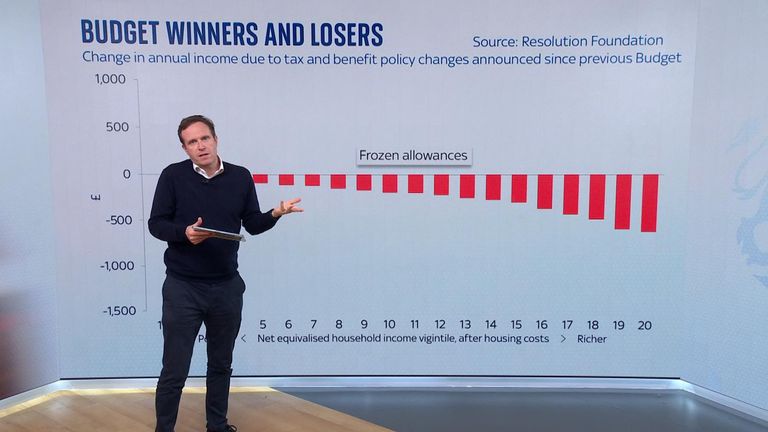
Budget winners and losers
Why is that number significant? Because it’s short of the chancellor’s existing £9.9bn headroom. Or, to put it another way, the OBR’s forecasting exercise was not enough to force her to raise taxes.
The decision to raise taxes, in other words, came down to something else. It came down to the fact that the government U-turned on a number of its welfare reforms over the summer. It came down to the fact that they wanted to axe the two-child benefits cap. And, on top of this, it came down to the fact that they wanted to raise their “headroom” against the fiscal rules from £9.9bn to over £20bn.
These are all perfectly logical reasons to raise tax – though some will disagree on their wisdom. But here’s the key thing: they are the chancellor and prime minister’s decisions. They are not knee-jerk responses to someone else’s bad news.
Yet when the prime minister explained his budget decisions, he focused mostly on that OBR report. In fact, worse, he selectively quoted the £16bn number from the productivity review without acknowledging that it was only one part of the story. That seems pretty misleading to me.
The family of a father-of-four who died on holiday in Benidorm say new evidence has further convinced them that foul play was involved in his death.
Nathan Osman, 30, from Pontypridd in South Wales, was on a long weekend break with friends in Benidorm in September 2024.
Less than 24 hours after he arrived, his body was found by an off-duty police officer at the bottom of a remote 650ft (200m) cliff on the outskirts of the resort.
He died from head and abdominal injuries after falling from height, a post-mortem found.
Local police said it was “a tragic accident” that occurred after Nathan left his friends in Benidorm to walk back to his hotel room alone.
But his family believe the investigation into his death has not been adequate, and that the local authorities have never considered the possibility of a homicide.
Their suspicions of foul play were first provoked by the fact that the remote location where Nathan was found was in the opposite direction to the hotel, and some distance away on foot.
They began doing their own investigating, building a timeline of events drawn from sources including CCTV, witness statements and Nathan’s bank records, which they say showed attempts were made to use his bank cards the day after he died.
After presenting their findings to Spanish prosecutors as evidence that others may have been involved, the case was reopened earlier this year.
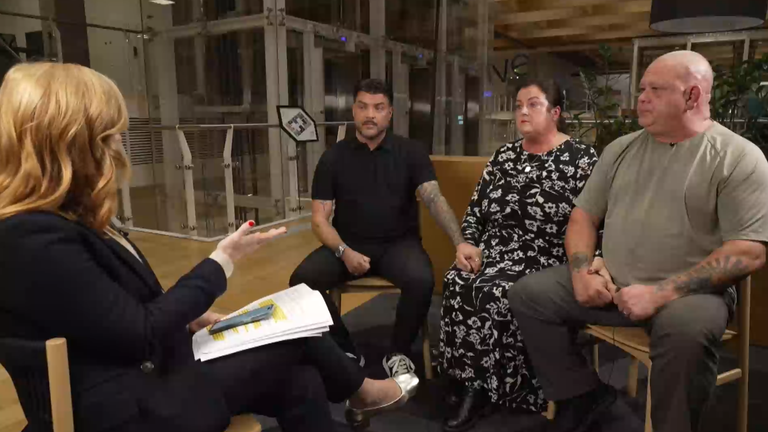
Now, the family have told Sarah-Jane Mee on The UK Tonight that new phone data they have uncovered suggests he couldn’t have reached the spot he was found on foot.
Nathan’s brother Lee, mother Elizabeth and father Jonathan speak to Sarah-Jane Mee
After getting the phone back a couple of months ago, they say they tracked Nathan’s last movements through a health app.
“There’s a breakdown inside the app of every 10 minutes – the distance, pace, measurement of pace… every detail you can think of,” Nathan’s brother, Lee Evans, tells Mee.
“His pace wasn’t consistent with a fast walk or even a sprint.”
He said it was a faster journey, despite being uphill for 40 minutes, which has convinced the family that he was in a vehicle.

Pic: Family handout
The family also went to visit the area where Nathan was found.
“We were a bit upset, but we were very pleased we went up there”, his mother, Elizabeth, says. “We could see… there’s no way he would have looked at that area and thought, ‘I’m going up here.’
“You can see straight off, there’s no clubs, there’s no hotels up there, there’s just the odd house dotted around. It was just out in the wild, there was nothing up there.”
Read more from Sky News:
Teen dies after ‘exiting’ ambulance on motorway
King officially strips Andrew of two more titles
The family says the phone data has helped them determine that he died around half an hour after he was seen on CCTV walking towards his hotel in the early hours of the morning.
“It was really ridiculous to think that my son would’ve walked up there [the remote location where he died] at 4am in the pitch dark.”
After the family were interviewed by Mee in May, South Wales Police opened its own investigation into Nathan’s death.
Nathan’s family speaking to Mee in May
Lee says the Welsh force has been “appalled” by the lack of evidence turned over from the local police’s investigation.
His and Nathan’s father, Jonathan, says: “No procedures were followed. Nothing was cordoned off, it wasn’t a crime scene. There’s loads of things that could’ve been taken. Tyre tracks, foot tracks, nothing. No DNA taken.”
Lee says: “All that we’ve done over the last year, this could’ve been squashed within the first week, two weeks [by local investigators].
“We’ve had to find out and keep delving into every possible outcome and overturn every stone possible. We started off with… a needle in a haystack, we had no direction or any support on which way to go.”
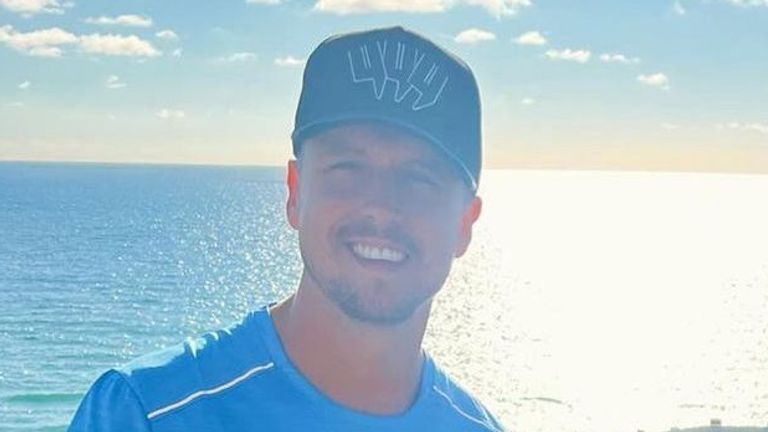
Nathan Osman. Pic: Family handout
What does Nathan’s family hope for now?
Nathan’s family say they have located 27 CCTV cameras which could have picked Nathan up in the area, after local investigators didn’t find any.
Elizabeth says that after alerting Spanish police to the locations, they were told that the CCTV “wouldn’t be working” or that footage would’ve already been erased.
“They just surmised everything,” she adds.
But the family, who found the last known CCTV footage of Nathan earlier this year, are convinced there is still hope.
Lee says: “There’s a number of CCTV footage in that area. We know there’s a way of finding a vehicle of some sort.”
But the family admit they may never find whoever could be responsible for Nathan’s death because so much time has been lost.
Elizabeth concludes: “Nathan walks with us every day. We all believe that,” adding that “all we want” is to find the ones responsible for his death and for him to “have the respect of a decent investigation”.
Sky News contacted Spanish police, which declined to comment, adding the case is under judicial review and it doesn’t want to hinder the course of the investigation.
South Wales Police told Sky News: “South Wales Police is carrying out enquiries on behalf of HM Coroner and a family liaison officer has been appointed to provide support.”
-
 Sports2 years ago
Story injured on diving stop, exits Red Sox game
-
 Sports3 years ago
‘Storybook stuff’: Inside the night Bryce Harper sent the Phillies to the World Series
-
 Sports2 years ago
Game 1 of WS least-watched in recorded history
-
 Sports3 years ago
Button battles heat exhaustion in NASCAR debut
-
 Sports3 years ago
MLB Rank 2023: Ranking baseball’s top 100 players
-
Sports4 years ago
Team Europe easily wins 4th straight Laver Cup
-
 Environment3 years ago
Japan and South Korea have a lot at stake in a free and open South China Sea
-
 Environment1 year ago
Here are the best electric bikes you can buy at every price level in October 2024