

Ugandan Olympian Rebecca Cheptegei in hospital after alleged petrol attack by boyfriend, local reports say


A Ugandan marathon runner has suffered severe burns after an alleged attack by her boyfriend.
Rebecca Cheptegei, who finished 44th in the marathon at the 2024 Paris Olympics, is receiving treatment for 75% burns after being attacked in her house in western Trans Nzoia County, Kenya.
She is said to be in a critical condition, according to the Kenyan The Star newspaper.
Trans Nzoia County Police Commander Jeremiah ole Kosiom said on Monday Cheptegei’s boyfriend, Dickson Ndiema, bought a can of petrol, poured it on her and set her on fire during a disagreement on Sunday.
Ndiema also sustained burn wounds, and the two are being treated at the Moi Teaching and Referral Hospital in Eldoret city.
Read more on Sky News:
Irish teacher in transgender row jailed for third time
Ukraine demands arrest of Putin in Mongolia
Keep up with all the latest news from the UK and around the world by following Sky News
Cheptegei’s parents said their 33-year-old daughter bought land in Trans Nzoia to be near the county’s many athletic training centres.
A report filed by the local chief says the couple were heard fighting over the land where the house was built, before the fire started.
Cheptegei qualified for her Olympic debut in the marathon after setting a personal best of 2.22.47 at the Abu Dhabi Marathon in December 2022, according to the Paris Olympics website.
She also finished 14th in the marathon at the 2023 World Championships.
Read more Olympics and Paralympics news:
Familiar face from Paris Olympics to compete in Paralympics
Everything you need to know about the Paris 2024 Paralympics
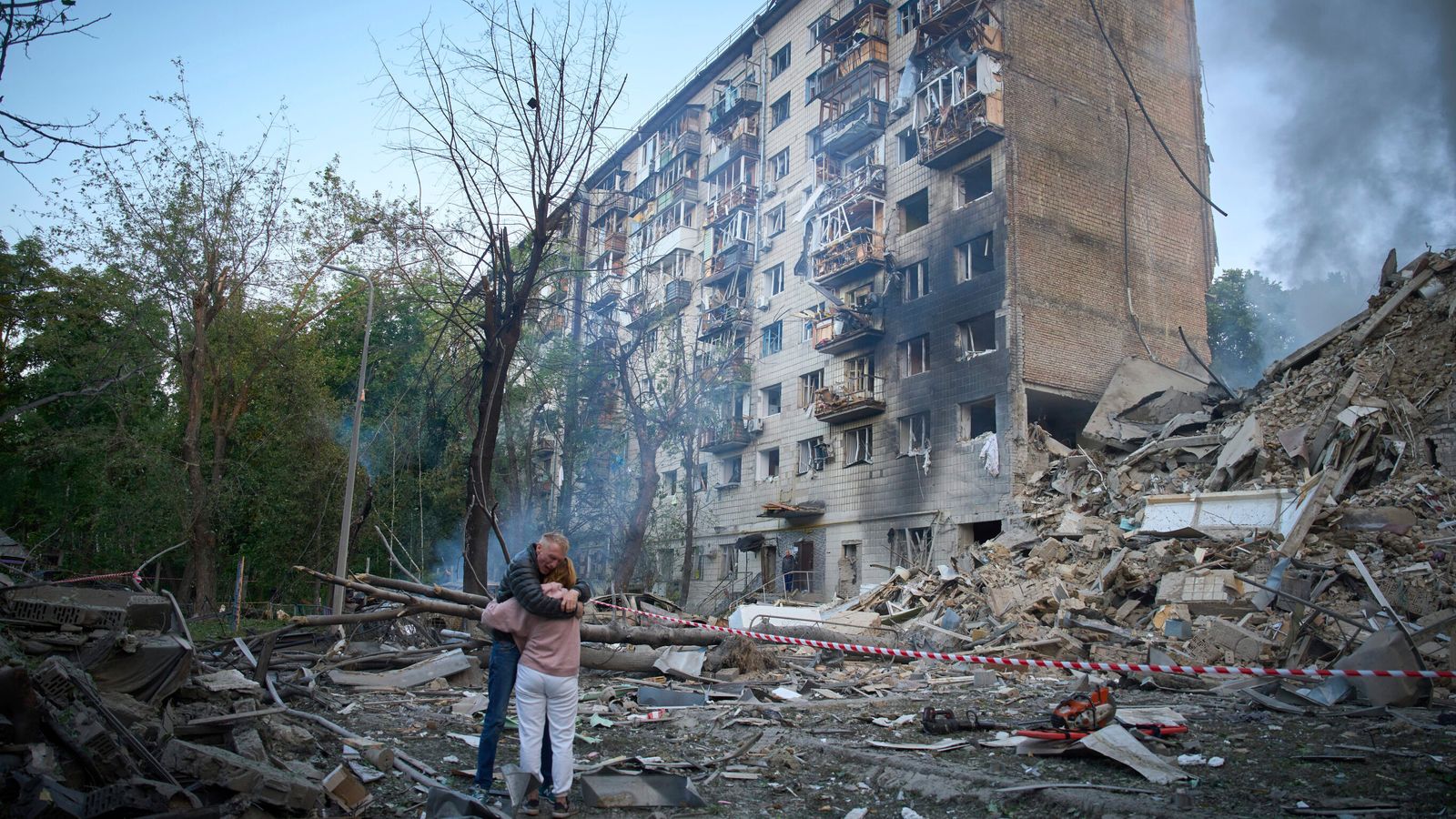
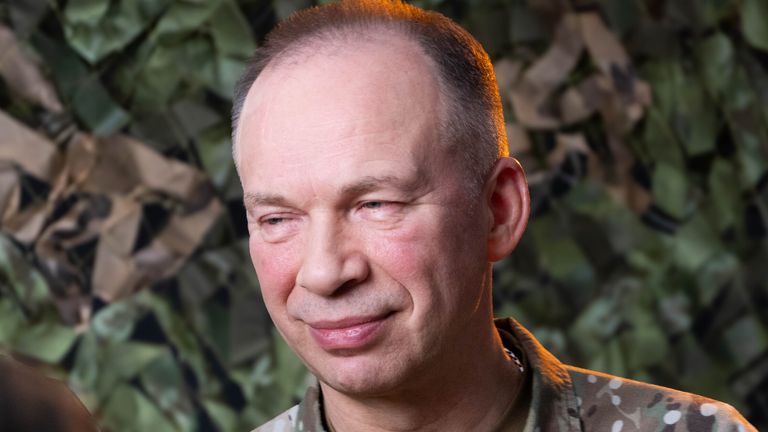
It would be “unacceptable” for Ukraine to “simply give up territory” in any peace deal with Russia, the head of the Ukrainian armed forces has told Sky News.
General Oleksandr Syrskyi said a “just peace” can only be achieved if fighting is halted along current frontlines and then for negotiations to take place.
Signalling a complete lack of trust in claims by the Kremlin that it wants to end its war, he accused Vladimir Putin of using an attempt by Donald Trump to broker peace talks as “cover” while Russian troops try to capture more land by force on the battlefield.
General Oleksandr Syrskyi said Russia is using peace talks as ‘cover’ to grab more Ukrainian territory
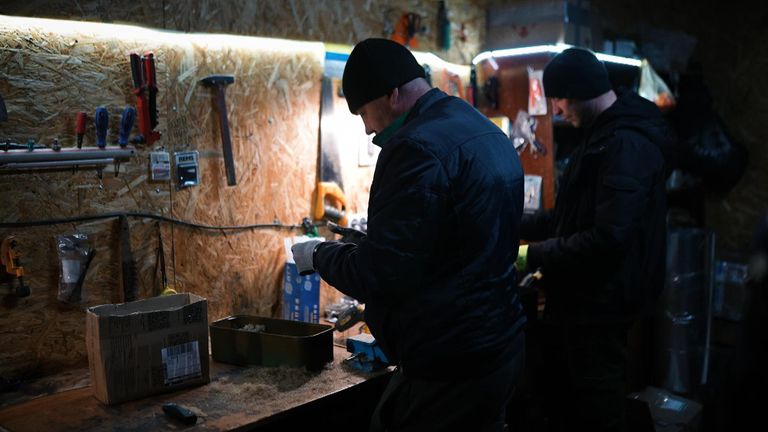
What Ukrainian troops think about giving up Donbas
The rare intervention offers the clearest indication yet of the Ukrainian military’s red lines as Washington tries to negotiate a settlement that – according to an initial draft – would require Kyiv to surrender the whole of the Donbas region in the east of the country to Moscow.
President Volodymyr Zelenskyy, backed by the UK and other European allies, has been trying on the diplomatic front to strengthen Ukraine’s position.
But President Putin has said Russia would either seize the Donbas militarily or Ukrainian troops would have to withdraw.
Europe’s fate at stake
Speaking frankly, General Syrskyi, commander-in-chief of the armed forces of Ukraine, signalled that his country’s soldiers would fight on if diplomacy fails – and he warned that the fate of the whole of Europe is at stake.
In an exclusive interview in the basement of a building in eastern Ukraine – the location of which we are not disclosing for security reasons – he said Ukraine’s main mission “is to defend our land, our country, and our population”.
“Naturally, for us it is unacceptable to simply give up territory. What does it even mean – to hand over our land? This is precisely why we are fighting; so we do not give up our territory.”
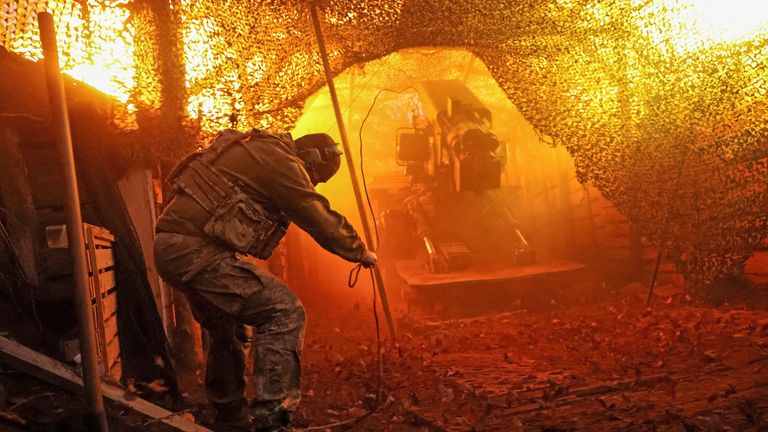
A Ukrainian soldier fires a self-propelled howitzer in Kostiantynivka in Donetsk. Pic: Reuters
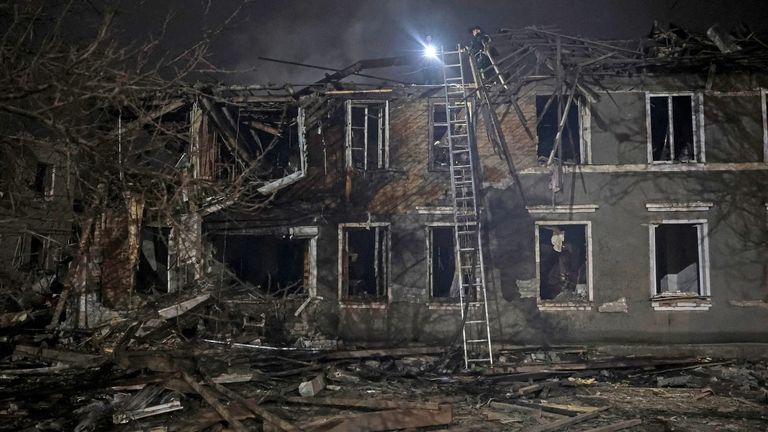
Rescuers work at the site of apartment buildings hit by a Russian airstrike in Sloviansk, Ukraine. Pic: Reuters
Many troops have died fighting for Ukraine since Russia first seized the peninsula of Crimea and attacked the regions of Donetsk and Luhansk, which comprise the Donbas, in 2014.
Hundreds of thousands of Ukrainian civilians were then mobilised to fight alongside professional soldiers following Putin’s full-scale invasion in February 2022.
Russia well short of original goal
Nearly four years on, Russia occupies almost a fifth of Ukraine, including large parts of the Donbas, but well short of an original goal of imposing a pro-Kremlin government in Kyiv.
Asked whether the sacrifice of those people who gave their lives defending their country would be in vain if Ukraine is forced to hand over the land it still controls in the Donbas to Moscow, General Syrskyi, speaking in Ukrainian through a translator, said: “You know, I do not even allow myself to consider such a scenario.
“All wars eventually end, and of course we hope ours will end as well. And when it does, a just peace must be established.
“In my understanding, a just peace is peace without preconditions, without giving up territory. It means stopping along the current line of contact.”

Ukrainians not surprised about lack of progress in peace talks
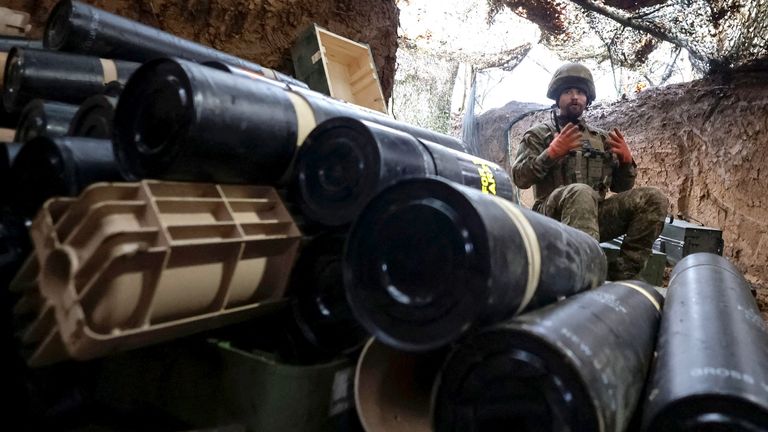
Pic: Reuters
The commander then broke into English to say that this means: “Stop. A ceasefire. And after that negotiations, without any conditions.”
Switching back into Ukrainian, he said: “Any other format would be an unjust peace, and for us it is unacceptable.”
Ukraine’s contingency plans
While Ukraine’s will and ability to fight are key in confronting Russia’s much larger army, so too is the supply of weapons, ammunition and other assistance from Kyiv’s allies, most significantly the US.
But, with the White House under Donald Trump, becoming less predictable, the Ukrainian military appears to be considering contingency plans in case US aid stops.
Asked whether Ukraine would be able to continue fighting if President Trump did halt support, General Syrskyi said: “We are very grateful to our American partners and all our allies who have been supporting us throughout this war with weapons and equipment.
“We hope they will continue providing full support. But we also hope that our European partners and allies, if necessary, will be ready to provide everything required for our just war against the aggressor.
“Because right now we are defending not only ourselves, but all of Europe. And it is crucial for all Europeans that we continue doing so, because if we are not here, others will be forced to fight in Europe.”
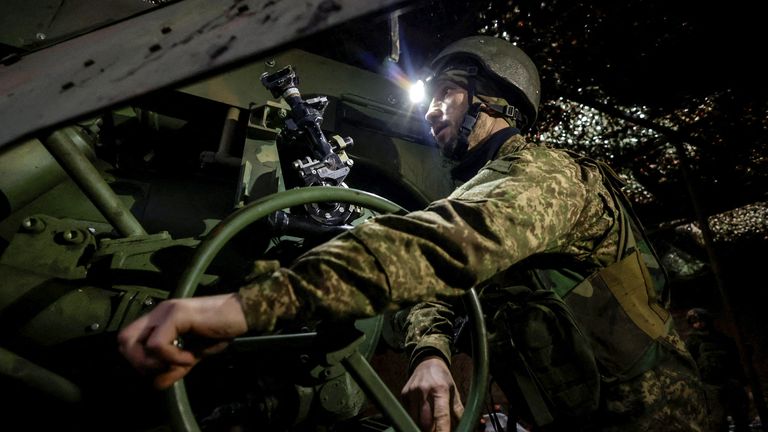
Pic: Reuters
General’s assessment of fighting on ground
A decorated commander, with the call sign “snow leopard”, General Syrskyi has been conducting combat operations against Russia’s invasion for more than a decade.
He was made military chief in February 2024 after President Volodymyr Zelenskyy sacked the previous top commander. General Valerii Zaluzhnyi is now Kyiv’s ambassador to London.
General Syrskyi offered his assessment of the fight on the ground, saying:
• Ukrainian troops still control the northern part of the fortress city of Pokrovsk in the Donbas and will keep battling to retake the rest of it, contrary to Russian claims to have captured what has been a key target for Moscow for the past 16 months.
• Russia is firing between 4,000 to 5,000 one-way attack drones at Ukrainian positions along the frontline every day as well as 1,500 to 2,000 drones that drop bombs. But Ukraine is firing the same volume – and even more – back. “In terms of drones, there is roughly parity. At the moment, we are deploying slightly more FPV [first person view] drones than the Russians.”
• Russia’s armed forces still have double the volume of artillery rounds of Ukraine’s, but the range and lethality of drone warfare mean it is harder to use artillery effectively. Now, 60% of strikes are carried out by drones.
• More than 710,000 Russian soldiers are deployed along a frontline that stretches some 780 miles (1,255km), with the Russian side losing around 1,000 to 1,100 soldiers a day, killed or wounded “and a majority are killed”.
The Russian army is currently “attempting to advance along virtually the entire frontline,” General Syrskyi said.
Where are the harshest battles?
The fiercest battles are around Pokrovsk, as well as the northeastern city of Kupiansk, in Kharkiv region, the Lyman area, also in the Donbas, and near a small city called Huliaipole, in the Zaporizhzhia region of southeastern Ukraine.
“The Ukrainian army is conducting a strategic defensive operation, aiming to contain the enemy’s advance, prevent them from breaking deeper, inflict maximum losses, and carry out counter-offensive actions in those sectors where we see the enemy is vulnerable,” the commander said.
“Our strategy is to exhaust the Russian army as much as possible, prevent its advance, hold our territory, while simultaneously striking the enemy in the near rear, the operational depth, and… into Russia itself, with the aim of undermining its defence capability and industrial capacity.”
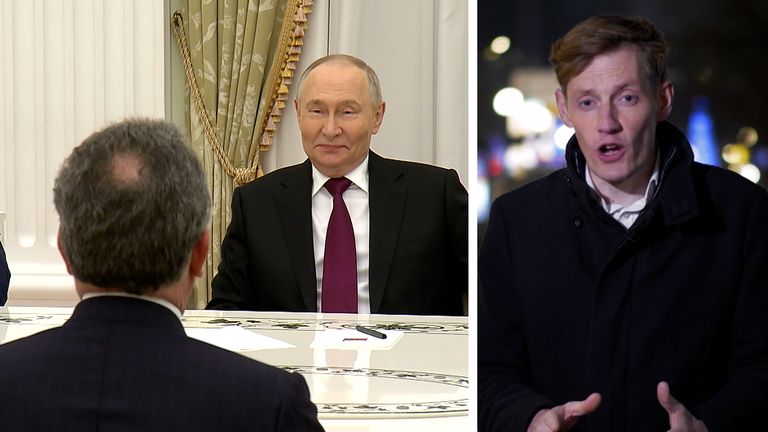
Peace deal: Russia ‘in no mood to compromise’
He is referring to a capability Ukraine has developed to launch long-range drones, laden with explosives, deep into Russia to strike military targets as well as oil refineries.
The operation is aimed at destroying fuel for the tanks, warships and jets that are attacking Ukraine and – crucially – reducing oil revenues that help to fund Russia’s war machine.
Sea drones crash into Russia’s warships
The Ukrainian military is also deploying explosive sea drones that are smashed into Russian warships as well as tankers used to transport sanctioned Russian oil.
Asked if his forces were ready – and had sufficient manpower – to keep fighting if necessary, General Syrskyi said: “We have the resources to continue conducting military operations.”
Yet Ukraine is suffering from a shortage of troops on the frontline.
Soldiers and wider society are also exhausted and facing another winter of war.
No sign of Moscow winding down war effort
President Putin has an advantage when it comes to troop numbers and firepower over time, which makes continued support to Kyiv from its allies more vital than ever.
General Syrskyi cautioned that Moscow showed no sign of winding down its war effort despite the Russian leader telling President Trump he is prepared to negotiate.
Read more on Sky News:
Hugs ahead of India-Russia talks
New Russia sanctions ‘pointless’
“So we do everything so that if the enemy continues the war, and you can see that although we want peace, a fair peace, the enemy continues its offensive, using these peace talks as cover,” he said.
“There are no pauses, no delays in their operations. They keep pushing their troops forward to seize as much of our territory as possible under the cover of negotiations.”
He added: “So we are just forced to wage this war… protecting our people, our cities and towns, and our land.”
The commander said this is what motivates his soldiers.
“If we do not do this, we can see clearly what the Russian army leaves behind, only ruins, only deaths.”
As for whether the UK and other European nations should be preparing their people for the possibility of a wider war with Russia, the general said: “Of course, the armed forces of every country ensure reliable protection of their citizens, their children, and their territory.
“With the existence of aggressive states, above all the Russian Federation and its allies, this issue is extremely urgent.
“Everything must be done to ensure the capability to maintain a level of defence, and armed forces modern enough to repel aggression, both individually and in support of the allies.”
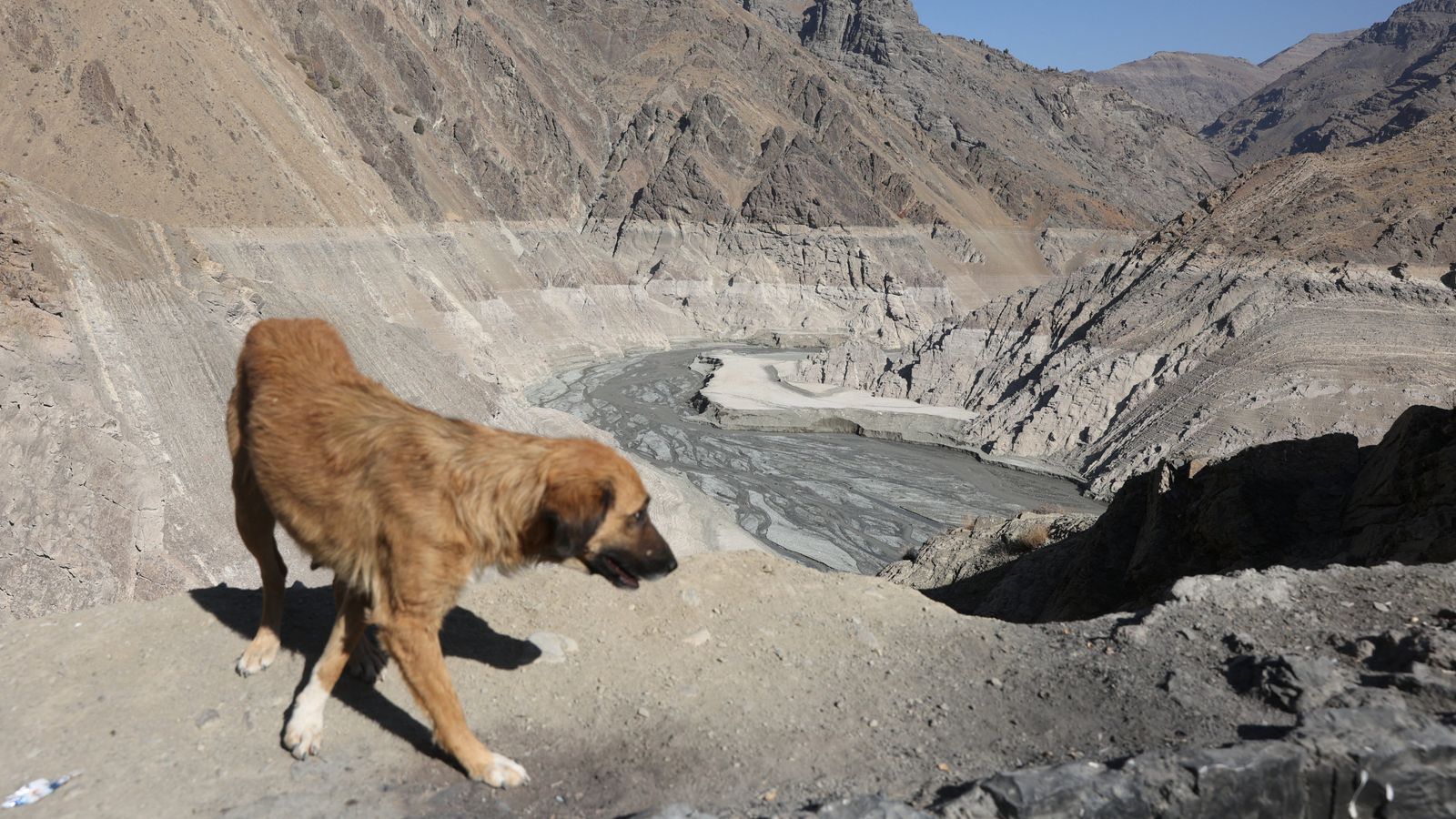
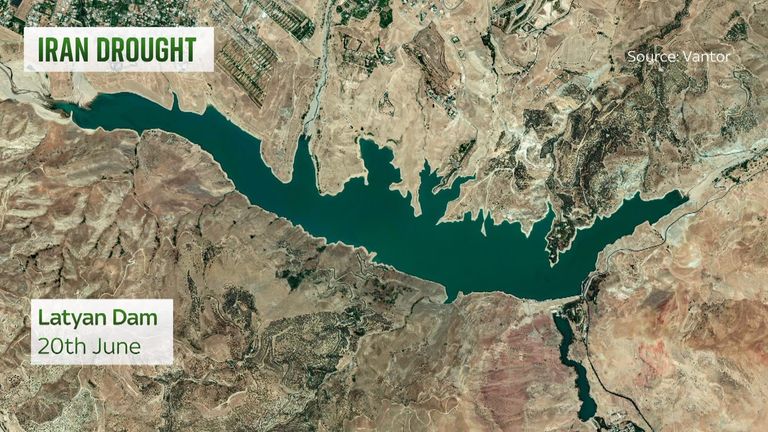
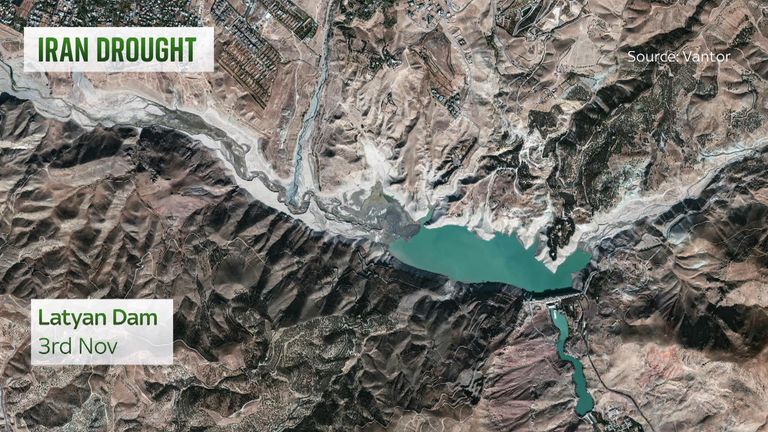
Iran’s capital is counting down to “day zero” – the day the water runs out and the taps run dry.
Reservoirs that supply Tehran’s 15 million residents are almost empty.
The Karaj dam, which supplies a quarter of the city’s drinking water, is just 8% full.
Water rationing has begun in some areas, with the flow from taps reduced or even stopped altogether overnight.
President Masoud Pezeshkian has urged people to use water sparingly – or the city, or at least parts of it, may even have to evacuate.
So what’s going on?
Rain should start falling in the autumn after Iran’s hot dry summer.
But according to the country’s National Weather Forecasting Centre, this has been the driest September to November period in half a century, with rainfall 89% below the long-term average.
The combination of low rainfall and high heat has lasted for more than five years, leaving the country parched.
But the weather – and the shadow of climate change – aren’t the only factors in Tehran’s water crisis.
According to the Centre for Strategic and International Studies, the population of the city has almost doubled from 4.9 million in 1979 to 9.7 million today.
But water consumption has risen even faster, quadrupling from 346 million cubic metres in 1976 to 1.2 billion cubic metres now. Increasing wealth has allowed more people to buy washing machines and dishwashers.
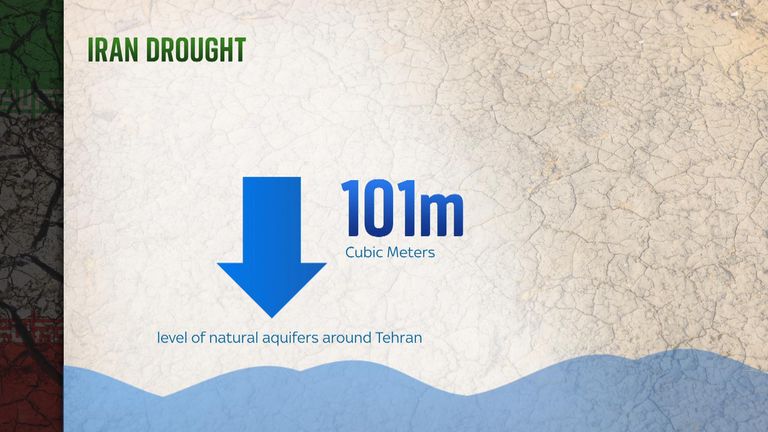
To supplement supplies from reservoirs, Tehran has had to turn to natural aquifers underground, which provide between 30% and 60% of its tap water in recent years.
But that puts the city in direct competition with farmers who draw on the water to irrigate crops.
Levels are falling by 101 million cubic metres a year around Tehran, according to analysis in the journal Science Advances. That’s water that has accumulated from many decades of rain – and will take at least as long to replenish.
Read more from Sky News:
Could a volcanic eruption have spread the Black Death?
The words you have mispronounced all year – and how to say them
Professor Kaveh Madani, the former deputy head of Iran’s environment department and now director of the United Nations University Institute for Water, Environment and Health, said chronic mismanagement of natural resources has led to what he calls water bankruptcy.
He told Sky News: “These things were not created overnight.
“They’re the product of decades of bad management, lack of foresight, overreliance and false confidence in how much infrastructure and engineering projects can do in a country that is relatively water short.”
Government ministers blame the water shortage on climate change, water leaks from pipes and the 12-day war with Israel.
Whatever the reason, it underlines the threat of water scarcity to global cities. Tehran is not alone.

Water crisis: Will Britain’s taps run dry?
Cape Town in South Africa narrowly avoided taps running dry eight years ago after a city-wide effort to save water.
Even London, known for its rain, is at risk. Supplies haven’t kept up with population growth and booming demand.
As Tehran has found, droughts that are being made more likely and more severe with climate change can expose the fragility of water supply.

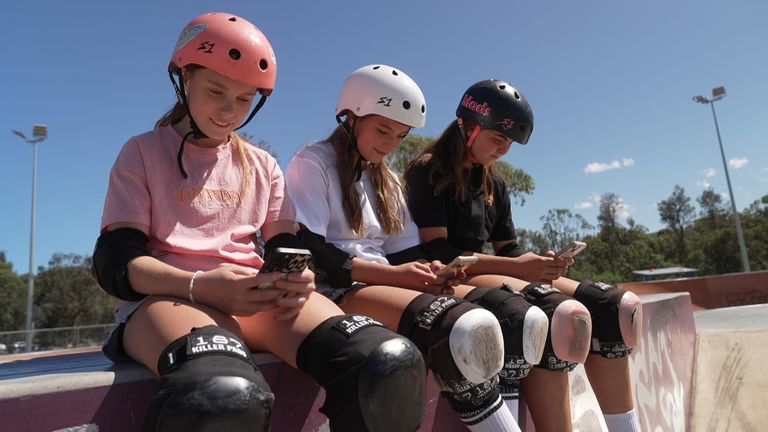
Australia will introduce one of the world’s toughest social media policies for children next week, with a ban that comes into effect on Wednesday.
Technology giant Meta has already started locking children under the age of 16 out of Instagram and Facebook, as it runs age checks on its users.
Other platforms have started contacting underage users – advising them to download their photos and contacts, and offering the choice of deleting their accounts or freezing them until they turn 16.
The age-restricted ban also includes TikTok, Snapchat, YouTube, Reddit, Twitch, Kick, Threads and X.
Skateboarders post photos and videos of their latest tricks
Impact on influencers
In the town of Umina on the New South Wales central coast, 14-year-old skateboarders Vespa Eding and Indy Conwell post photos and videos of their latest tricks in the skate bowl. Their accounts are managed by their mums.
The girls also coach young skaters and have corporate sponsors.
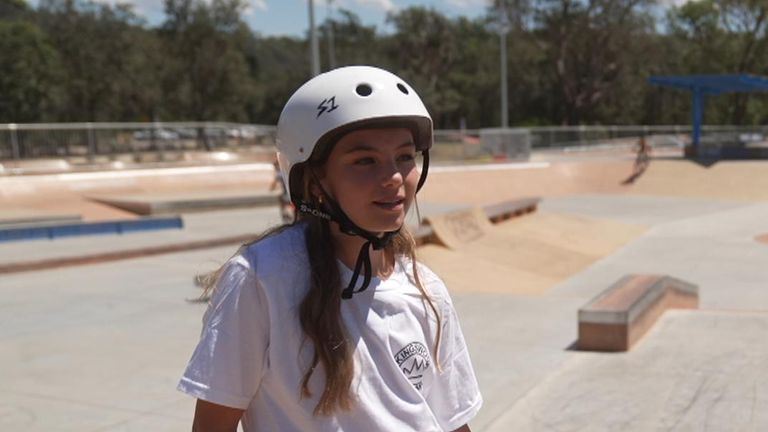
Indy Conwell
“I see both sides to it,” Indy explains. “It’s sad because I’m probably going to lose my account that I use to contact my sponsors and do my business.”
“But I think it’s a good idea [to ban it] for people getting bullied or if they’re getting addicted to it.”
Read more:
Teens launch legal challenge over ban on social media for children
How will ban work and could the UK bring in a similar law?

Emma Mason and her daughter Tilly
Mental health crises
Lawyer and mother Emma Mason knows how damaging social media can be.
Her daughter Matilda Rosewarne, who was called “Tilly”, suffered from years of online abuse as a teenager in the regional city of Bathurst.
Tilly took her own life on 16 February 2022. She was 15 years old.
“When Tilly was about 14, a fake nude was sent around by a friend of hers at school in Bathurst,” Ms Mason said.
“It spread to about 300 children, then it went to about 1,000 kids and by 6pm she had attempted suicide.”
Ms Mason has campaigned for Australia’s social media ban since she lost her daughter, and spoke at an event on the sidelines of the UN General Assembly in New York this year.
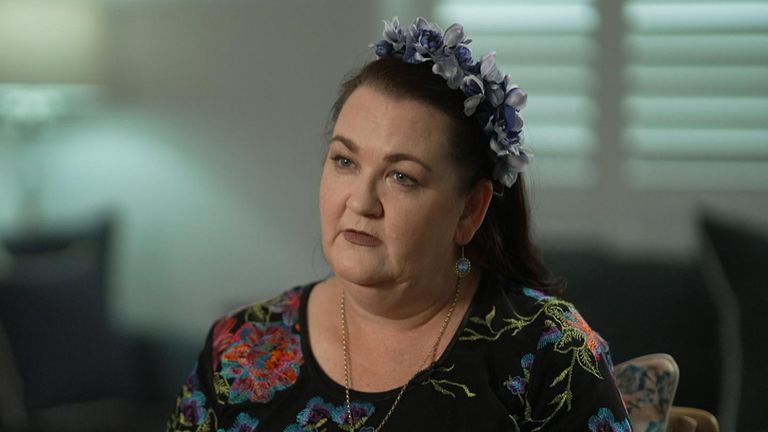
Emma Mason
Psychologist Danielle Einstein, co-author of the book Raising Anxiety, says there is clearly a link between anxiety, uncertainty and social media.
“Now is the time to get contact numbers and to see who your good friends are,” Dr Einstein said. “Who are the people you have fun with and who are the people you talk to when things aren’t going well.”
Under the ban, children will still be able to use messaging services.
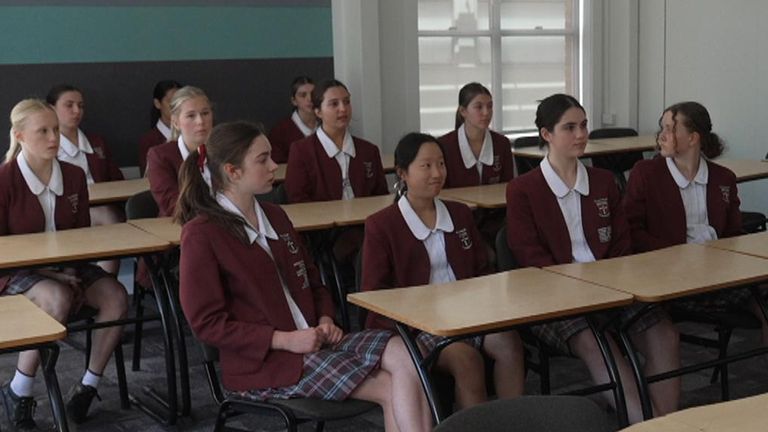
Students at Brigidine College in Sydney
Life off the apps
At Brigidine College in Sydney, students are preparing to get off the apps.
Teenager Sophia Benson says: “I’m on the fence about it. I think it’s good for kids’ mental health. But I also think it encourages the younger generation to find ways around it because obviously if you’re told you can’t do something, you want to do it more.”
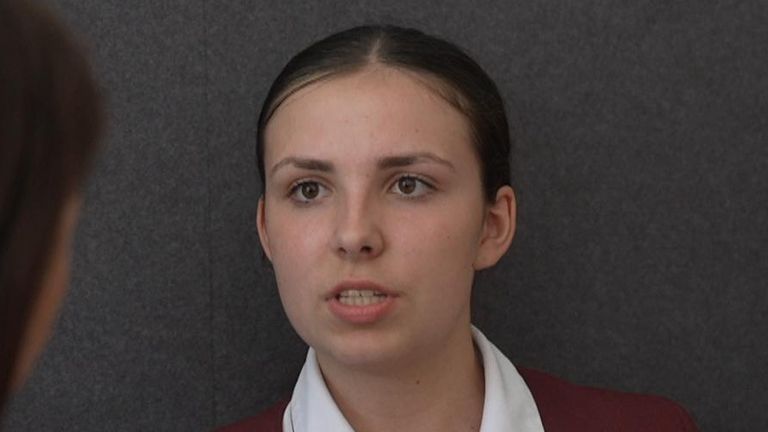
Sophia Benson
Elsie Ord is 15 years old and will spend the next seven months without social media access.
“I signed up at such a young age I was already using fake ages,” Elsie says. “I’m on social media around eight hours a day. I don’t know how I’m going to cope. I’m one of the people thinking how am I going to escape this, but it’s inevitable.”
Some 96% of Australia’s teenagers under 16 have social media accounts, according to Australia’s internet regulator.
The Australian government says the new social media laws are necessary to protect children from addiction and cyberbullying.
However, there is opposition as well.
Social media ‘whack a mole’
John Riddick is a member of the NSW Parliament and the Libertarian Party.
He’s also president of the Digital Freedom Project, which is backing a High Court challenge against the ban.
Mr Riddick says it should be up to parents to decide what is good for their children, not the government.
“Kids are tech savvy. You say ‘you can’t do this, and you can’t do that’ and you’re going to play whack-a-mole, the kids are going to get around it,” he argues.
The government has warned it may expand its list of banned apps.
Anyone feeling emotionally distressed or suicidal can call Samaritans for help on 116 123 or email jo@samaritans.org in the UK.
Alternatively, you can call Mind’s support line on 0300 102 1234, or NHS on 111.
-
 Sports2 years ago
Story injured on diving stop, exits Red Sox game
-
 Sports3 years ago
‘Storybook stuff’: Inside the night Bryce Harper sent the Phillies to the World Series
-
 Sports2 years ago
Game 1 of WS least-watched in recorded history
-
 Sports3 years ago
Button battles heat exhaustion in NASCAR debut
-
 Sports3 years ago
MLB Rank 2023: Ranking baseball’s top 100 players
-
Sports4 years ago
Team Europe easily wins 4th straight Laver Cup
-
 Environment3 years ago
Japan and South Korea have a lot at stake in a free and open South China Sea
-
 Environment1 year ago
Here are the best electric bikes you can buy at every price level in October 2024