

Watch Hyundai’s massive $7.6B Georgia EV plant go up in just 2 years in this video from space


Hyundai’s new EV plant in Georgia is now up and running. The massive $7.6 billion facility was built in just two years as the company preps for new US-made electric models like the upgraded 2025 IONIQ 5 and its new three-row IONIQ 9. A cool new video from space shows just how quickly Hyundai worked to open the facility.
Watch Hyundai’s new EV plant go up from space
Production officially began at the new Hyundai Motor Group Metaplant America (HMGMA) in Bryan County, Georgia last month.
The accomplishment comes after Hyundai broke ground at the site in October 2022. In May 2022, Hyundai announced plans to build its first dedicated EV plant in the US to meet new requirements for the federal EV tax credit, which provides up to $7,500 for clean car purchases.
Hyundai fast-tracked construction at the plant as it looked to gain an edge in the US, its most important market. The company’s initial $5 billion investment turned into a whopping $7.6 billion.
According to a study from the Center for Automotive Research, Hyundai’s EV plant will help create over 58,200 new jobs while attracting over $12.6 billion in investments in Georgia. Last month, the company secured its 18th supplier as it builds out an extensive US network.
A new video from space-based intelligence company BlackSky shows an impressive timelapse of the construction.
You can see the massive facility go up in just two years as Hyundai looks to secure a leadership role in the US auto industry.
Hyundai’s new EV plant will directly employ 8,500 workers to build up to 300,000 EVs per year. The first vehicle that rolled off the assembly line was the refreshed 2025 IONIQ 5.
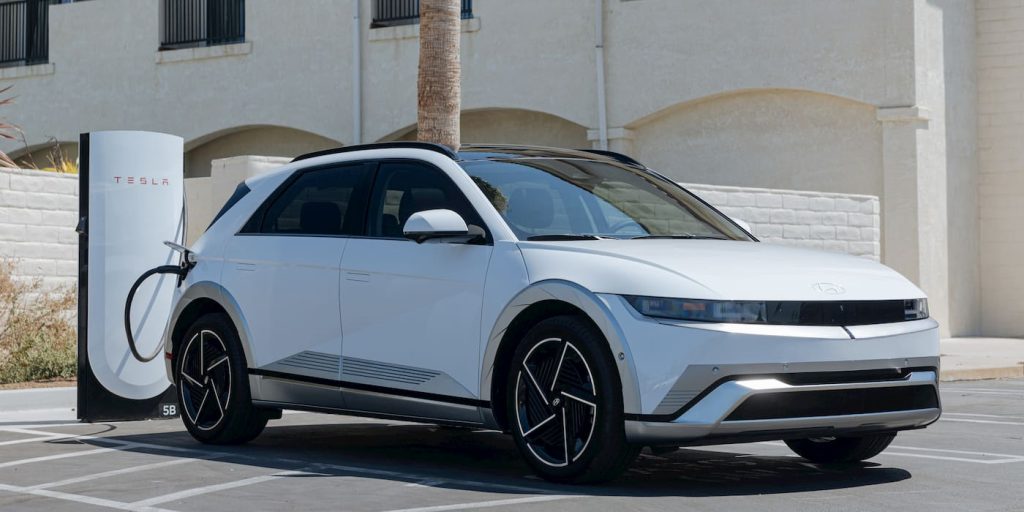
The upgraded 2025 Hyundai IONIQ 5 now features even more range (318 miles), a sleek new style, and it even comes with an NACS plug so you can charge at Tesla superchargers. The base, 2025 IONIQ 5 SE RWD Standard Range model, starts at just $42,500.
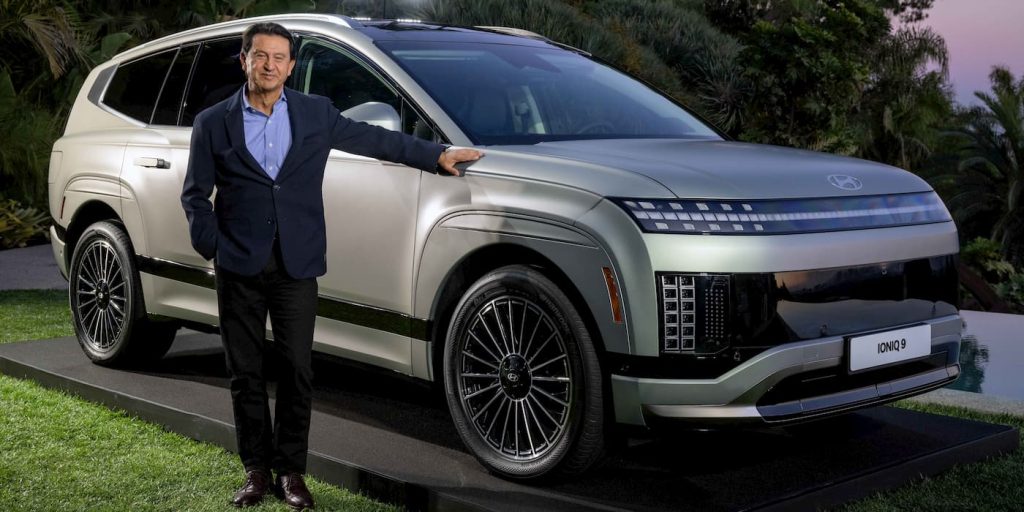
Last week, after unveiling its first three-row electric SUV, the IONIQ 9, Hyundai confirmed it would also be built at its Georgia facility.
Despite President-Elect Trump’s transition team reportedly planning to end the $7,500 EV tax credit, Hyundai is confident in the company’s future.
At the LA Auto Show, the company’s newly electric CEO, Jose Munoz, said in an interview, “Hyundai did not build our investment plan based on incentives; the plan was even made before Trump’s term.” Munoz explained even without the credit now, Hyundai is still gaining market share.
Ready to check out Hyundai’s best-selling electric SUV for yourself? With the new 2025 IONIQ 5 arriving, Hyundai is offering closeout deals on 2024 models. You can use our link to find the best deals on 2024 and 2025 Hyundai IONIQ 5 models at a dealer near you.
FTC: We use income earning auto affiliate links. More.



Geely-backed performance EV brand Polestar has had some troubling times in recent months, but its future is looking a whole lot better after the company secured a $600 million loan facility to help it keep on keepin’ on.
Despite vehicle sales picking up in 2025 on the strengths of the Polestar EV brand’s Swedish sensibilities, cutting-edge Chinese EV tech, and Volvo-aided safety specs, the company’s financial picture has been anything but rosy, with the threat of having its stock delisted from the NASDAQ looming large at several points.
In a vote of broader confidence and better times ahead, Volvo’s parent company Geely Sweden Holdings AB is backing the brand with more than half a billion dollars of fresh funding to extend its operational runway:
Polestar, as borrower, entered into a credit agreement with a wholly owned subsidiary, as lender, of Geely Sweden Holdings AB in relation to a subordinated term loan facility of up to USD 600 million, of which the last USD 300 million would require lender consent based on Polestar’s future liquidity needs. The term loan facility is available to Polestar for general corporate purposes.
The new funds are just the most recent part of a big week for Polestar – one that saw the Polestar 4 recently begin deliveries to its first North American customers, and recent upgrades to the Polestar 3 have made that car a viable V2G/V2x offering in Europe, as well. With that in mind, it’s no wonder that Geely wants to see how this all plays out.
The company has four models in its current line-up on sale in 28 countries, along with additional planned models that include the Polestar 7 SUV (set to be introduced in 2028) and the Polestar 6 coupe/roadster.
Electrek’s Take
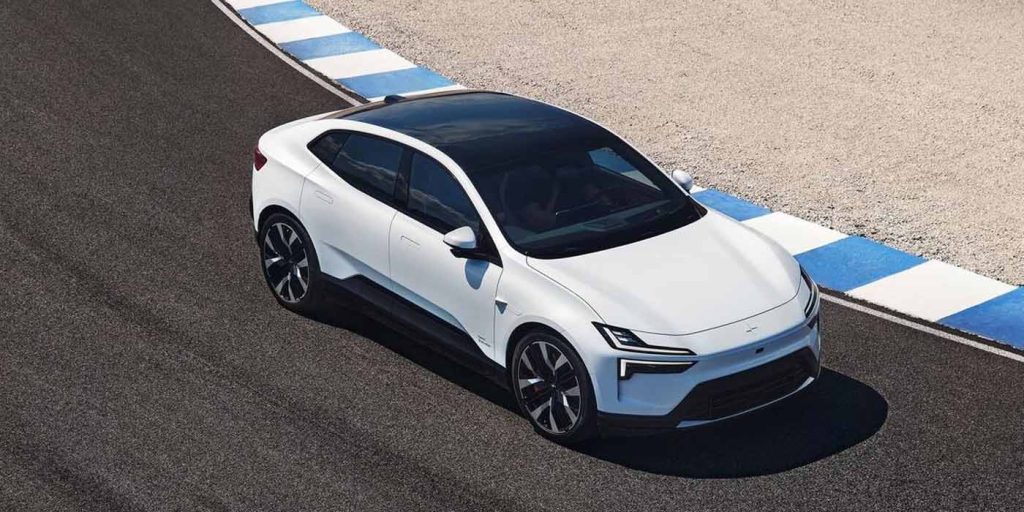
Product-wise, at least, it’s hard to argue that Polestar’s future appears to be anything but bright. The new Polestar 3 crossover is a viable competitor to the industry-leading Tesla Model Y, and the upcoming Polestar 4 and 5 models seem like winners, too. To drive that point home, Polestar is promoting up to $18,000 in incentives to lure in Tesla buyers.
You can find out more about Polestar’s killer EV deals on the full range of Polestar models, from the 2 to the 4, below, then let us know what you think of the three-pointed star’s latest discount dash in the comments section at the bottom of the page.
SOURCE: Polestar.

If you’re considering going solar, it’s always a good idea to get quotes from a few installers. To make sure you find a trusted, reliable solar installer near you that offers competitive pricing, check out EnergySage, a free service that makes it easy for you to go solar. It has hundreds of pre-vetted solar installers competing for your business, ensuring you get high-quality solutions and save 20-30% compared to going it alone. Plus, it’s free to use, and you won’t get sales calls until you select an installer and share your phone number with them.
Your personalized solar quotes are easy to compare online and you’ll get access to unbiased Energy Advisors to help you every step of the way. Get started here.


FTC: We use income earning auto affiliate links. More.


Whether it’s to keep the lights on after a natural disaster or just to avoid peak energy rates, more people than ever are adding battery energy storage to their home solar systems — but li-ion batteries aren’t the only option. The new WATT Fuel Cell uses the natural gas connection your home already has to generate power when you need it.
Technically a solid oxide fuel cell, the WATT unit turns the natural gas in your home into electricity without combustion, relying instead on a chemical reaction between the natural gas and oxygen in the air to create an electric current in a way that’s conceptually similar to a hydrogen fuel cell, but that makes use of a more readily available (and far cheaper) fuel source to generate power while producing far fewer harmful emissions than a conventional generator.
How it works
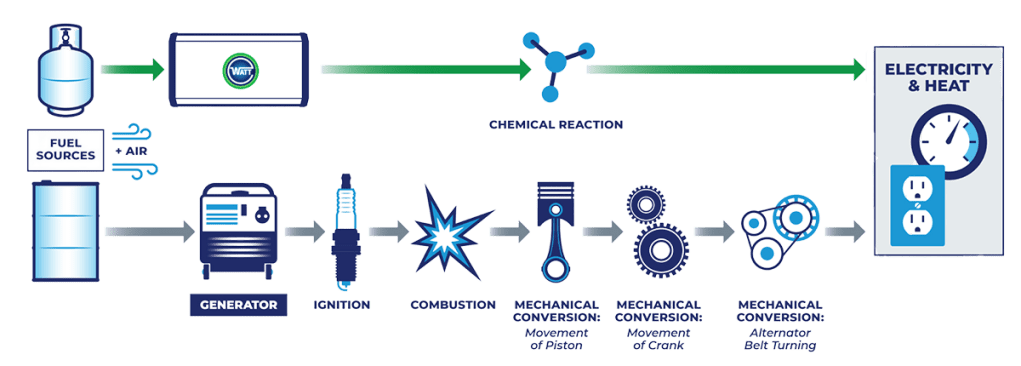
The company’s latest offering, the WATT HOME system, recently achieved certification at a 2 kW power rating, marking an important step on the company’s commercialization roadmap as it races to meet market demands for a natural-gas-powered backup solution to guarantee uptime in outage-prone regions.
This week, the company marked another major milestone by installing the of its first 2 kW WATT HOME solid oxide fuel cells (SOFC) at the Edward M. Smith National Career and Life Skills Development Center, Hope Gas’ new state-of-the-art training facility in Clarksburg, West Virginia – but the news doesn’t end there.
The company plans to take advantage of the new 30% ITC benefit (a federal tax credit that lets homeowners deduct 30% of the cost of qualifying clean energy systems, which now includes natural gas) under the One Big Beautiful Bill Act to help drive sales, with installations beginning in Hope Gas’ utility territory in Q1 of 2026.
“The WATT HOME system’s new 2 kW certification … validates the performance capabilities we’ve engineered for years and strengthens our competitive position as we move into multi-year deployment with Hope Gas,” says Caine Finnerty, WATT’s CEO and Founder. “With the ITC benefit, we anticipate accelerated adoption and substantial value for customers, utilities, and investors.”
The gas fuel cell can send power directly to the home’s panel, keeping the lights on directly, or perform the same function as a solar panel, sending power to a battery where it can be stored for later use.
Keep in mind, though – this isn’t a zero emissions option the way a solar + battery solution is. This is very much a fossil fuel-powered solution that gives off carbon and nitrous emissions, and the only reasons we’re talking about it are:
- the tech is kind of cool
- I didn’t know these existed
- it is objectively cleaner than a conventional ICE generator
That said, while solar is still the better solution in an ideal world, a WATT HOME fuel cell might be a better option in situations where rooftop space is limited (or nonexistent), such as condos or vertically-designed townhomes. In those scenarios, solar panels are unlikely to generate a meaningful amount of electricity, but a fuel cell that can tap into the buildings’ existing natural gas lines to provide reliable backup power if the grid fails.
That makes the fuel cell an attractive option for residents in multi-unit buildings, older historic neighborhoods with strict aesthetic rules, or any building where adding solar panels aren’t feasible, but a low-emission, low-noise backup solution is still needed.
The better question, then, isn’t is it better than solar – it’s is it better than solar for you? If you’re in West Virginia, you might be able to find out in just a few weeks. In the meantime, watch WATT’s own explainer video, below, then let us know what you think of the idea of a natural gas fuel cell in the comments.
Powering your home with a fuel cell
SOURCE | IMAGES: WATT, via PRNewswire.
If you’re considering going solar, it’s always a good idea to get quotes from a few installers. To make sure you find a trusted, reliable solar installer near you that offers competitive pricing, check out EnergySage, a free service that makes it easy for you to go solar. It has hundreds of pre-vetted solar installers competing for your business, ensuring you get high-quality solutions and save 20-30% compared to going it alone. Plus, it’s free to use, and you won’t get sales calls until you select an installer and share your phone number with them.
Your personalized solar quotes are easy to compare online and you’ll get access to unbiased Energy Advisors to help you every step of the way. Get started here.
FTC: We use income earning auto affiliate links. More.


French heavy lift and logistics specialists Mammoet are living up to their name with the addition of a new, mammoth-sized, 60-ton hybrid crane from the electric equipment experts at XCMG.
The 60-ton XCA60 EV crane from Chinese heavy equipment brand XCMG rides on three heavy-duty axles and packs a 48-meter telescopic boom. Add in an optional 16-meter jib, and the big crane’s hoist height tops 60 meters – more than enough to work on urban construction jobs or shipside at port.
“This delivery marks more than just a product handover – it’s a step forward in redefining what’s possible in sustainable lifting operations,” explains Zhen Li, chairman of XCMG Europe. “We’re proud to support Mammoet’s efforts to reduce environmental impact and look forward to seeing the XCA60-EV contribute to a cleaner, more efficient tomorrow.”
Taking delivery
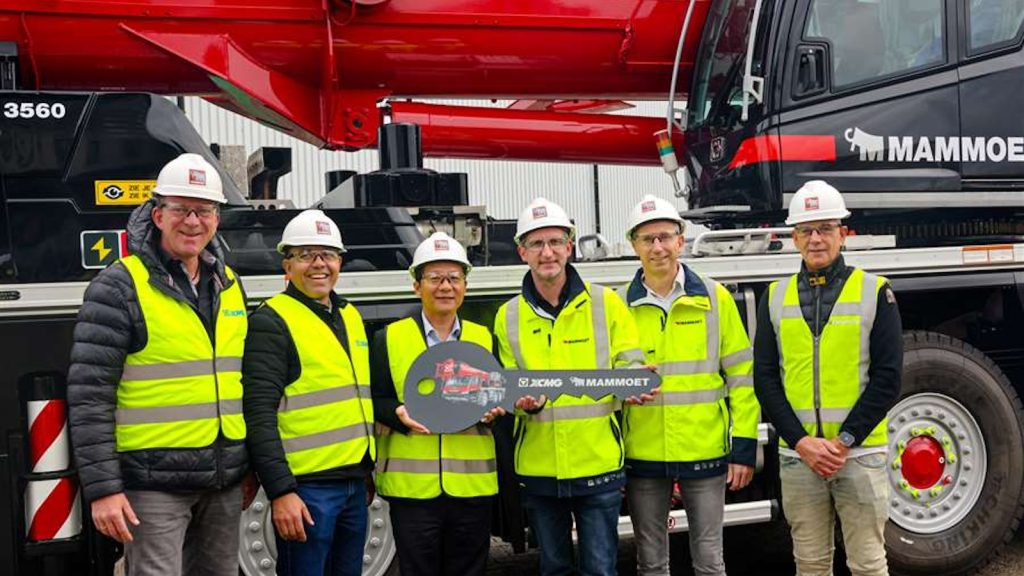
The XCMG XCA60 EV powers its drive and lift motors with a 170 kW (~230 hp) electric motor that’s fed by a 115 kWh li-ion battery pack that’s integrated into the crane’s counterweight system. That means that the crane’s bigger battery, in this case, means more lifting power as well as more operating time on battery power – in this model, the crane’s battery is good for 6-8 hours of continuous operation.
On sites where access to grid power is limited, the onboard diesel generator can kick on and provide additional, extended hours of operation (hence: hybrid) while offering as much as a 40% increase in efficiency compared to a diesel drive unit.
Mammoet’s new XCA60 EV is one of the first production examples of the big electric-drive crane, which was first shown as a concept at Bauma 2022, to reach customers – but it won’t be the last.
“Mammoet is proud to be investing in the XCMG XCA60-EV crane, which is another important step in our ambition to deliver sustainable heavy lifting to the Dutch market, and beyond,” says Peter van Oostrom, director of global assets at Mammoet. “We look forward to seeing it deliver real results for our clients, helping to reduce the carbon impact of projects, while increasing their safety.”
SOURCE | IMAGES: Mammoet, via Crane Briefing; PRNewswire.
If you’re considering going solar, it’s always a good idea to get quotes from a few installers. To make sure you find a trusted, reliable solar installer near you that offers competitive pricing, check out EnergySage, a free service that makes it easy for you to go solar. It has hundreds of pre-vetted solar installers competing for your business, ensuring you get high-quality solutions and save 20-30% compared to going it alone. Plus, it’s free to use, and you won’t get sales calls until you select an installer and share your phone number with them.
Your personalized solar quotes are easy to compare online and you’ll get access to unbiased Energy Advisors to help you every step of the way. Get started here.
FTC: We use income earning auto affiliate links. More.
-
 Sports2 years ago
Story injured on diving stop, exits Red Sox game
-
 Sports3 years ago
‘Storybook stuff’: Inside the night Bryce Harper sent the Phillies to the World Series
-
 Sports2 years ago
Game 1 of WS least-watched in recorded history
-
 Sports3 years ago
Button battles heat exhaustion in NASCAR debut
-
 Sports3 years ago
MLB Rank 2023: Ranking baseball’s top 100 players
-
Sports4 years ago
Team Europe easily wins 4th straight Laver Cup
-
 Environment3 years ago
Japan and South Korea have a lot at stake in a free and open South China Sea
-
 Environment1 year ago
Here are the best electric bikes you can buy at every price level in October 2024