

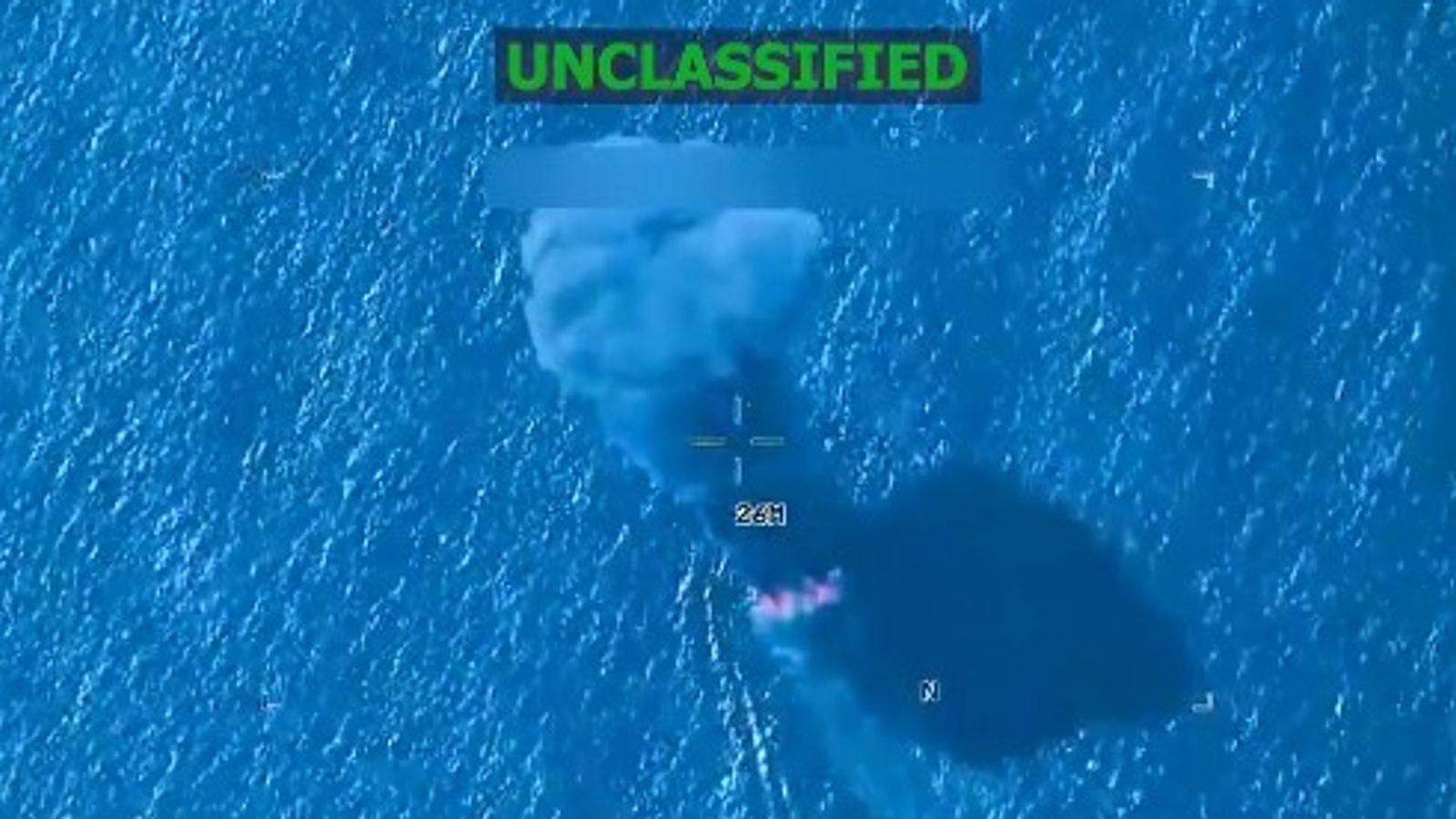
Eight people have been killed in US military strikes on three boats it has accused of smuggling drugs in the Pacific Ocean.
The US military’s Southern Command said the strikes targeted “designated terrorist organisations” killing three “narco-terrorists” in the first vessel, two in the second boat and three in the third.
No evidence the vessels were involved in drug trafficking has been given, but a video showing the strikes on the boats was posted on social media.
Southern Command added that defence secretary Pete Hegseth ordered the strikes, and claimed intelligence confirmed the vessels were using known drug trafficking routes and engaged in drug trafficking.
The US military said it carried out strikes in the Pacific Ocean on three boats it accused of trafficking drugs. Pic: X/@Southcom
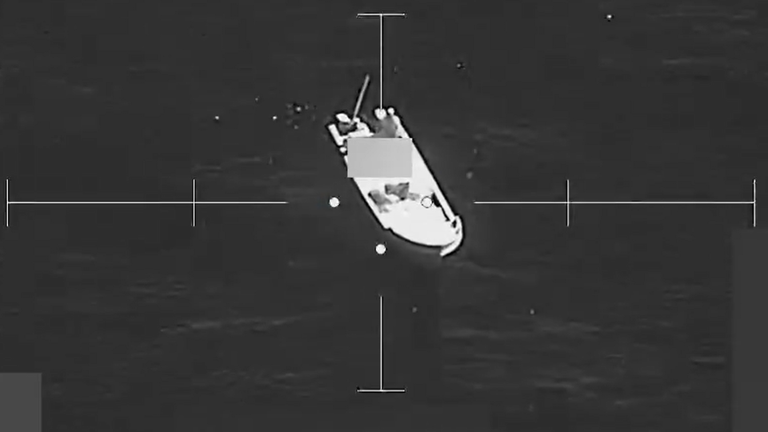
One of the boats targeted during the strikes. Pic: X/@Southcom
It is unclear where the vessels were from, but the strikes mark the latest in Donald Trump‘s “war” with drug cartels, which has also seen vessels targeted in the Caribbean Sea, including near Venezuela.
Over the past several months, the US has been carrying out a large-scale military build-up in the southern Caribbean, with the stated goal of combating drug trafficking.
In its first lethal strike on 2 September, the White House posted on X that it had conducted a strike against “narcoterrorists” shipping fentanyl to the US, without providing evidence of the alleged crime.
Sky’s Data & Forensics unit last week verified that in the four months up to 10 December, 23 boats were targeted in 22 strikes, killing 87 people.
US forces also seized a crude oil tanker, named Skipper, off the coast of Venezuela last week.
The government in Caracas, led by President Nicolas Maduro, who insists the real purpose of the US military operations is to force him out of office, branded the ship’s seizure a “blatant theft” and an “act of international piracy”.
Read more from Sky News:
Musk is winning the space race – and looks unstoppable
Trump wants $10bn in damages over BBC Panorama edit
On Monday, Mr Trump signed an executive order declaring fentanyl a “weapon of mass destruction”.
The order instructs the State and Treasury departments to pursue the financial assets of and sanctions on financial institutions and groups involved in fentanyl trafficking.
It also calls for greater co-operation between the Pentagon and the Justice Department on fentanyl and drug trafficking issues.
The latest strikes on vessels allegedly trafficking drugs come on the eve of briefings on Capitol Hill for all members of Congress as questions mount over the Trump administration’s military actions.
Mr Hegseth, secretary of state Marco Rubio, and other top national security officials are expected to provide closed-door briefings for politicians in the House and Senate.


-
 Sports2 years ago
Story injured on diving stop, exits Red Sox game
-
 Sports3 years ago
‘Storybook stuff’: Inside the night Bryce Harper sent the Phillies to the World Series
-
 Sports2 years ago
Game 1 of WS least-watched in recorded history
-
 Sports3 years ago
Button battles heat exhaustion in NASCAR debut
-
 Sports3 years ago
MLB Rank 2023: Ranking baseball’s top 100 players
-
Sports4 years ago
Team Europe easily wins 4th straight Laver Cup
-
 Environment3 years ago
Japan and South Korea have a lot at stake in a free and open South China Sea
-
 Environment1 year ago
Here are the best electric bikes you can buy at every price level in October 2024