

Connect with us

Published

on

By Dr. Priyom Bose, Ph.D. Reviewed by Danielle Ellis, B.Sc.

What happens after HIV infection?
Evolution of HIV diagnostic assays
Conclusions
References
Further reading

Acquired immunodeficiency syndrome (AIDS) is caused by the human immunodeficiency virus (HIV) that attacks the body’s immune system, making it vulnerable to all infections. One of the major concerns of the early AIDS epidemic that began in 1981 was the lack of proper diagnostic measures to identify infected individuals.1 Since the development of the first HIV diagnostic assay in 1985, scientists have continued to improve diagnostic accuracy, detection speed, and cost.

Image Credit: Hanna Karpiak/Shutterstock.com What happens after HIV infection?

The immune system produces antibodies after encountering harmful foreign substances or antigens. HIV infects the vital cells associated with immunity, such as macrophages, helper T cells, and dendritic cells, and disrupts their function. The three important HIV antigens are p24, gp 41, and gp 120.2

HIV is a slow-replicating retrovirus that is transmitted through sexual intercourse, sharing an infected needle, or by blood transfer.3 After HIV infection, the viral load cannot be measured immediately due to low plasma load. Typically, the viral RNA can be measured within 10 to 12 days after infection.4

Antibodies to p24 and gp 41 are the first serological markers used to detect HIV infection. IgG antibodies appear approximately three weeks after infection. In the majority of HIV-infected individuals, HIV antibodies appear to circulate within 1 to 2 months of the infection. However, in a few cases, it may take up to six months to appear at a detectable level.5 Evolution of HIV diagnostic assays

Over the years, scientists have developed many immunoassays and nucleic acid amplification tests (NAATs) to accurately and high-throughput HIV diagnosis. These tests are broadly divided into two categories, namely, screening and confirmatory tests. Typically, HIV tests are performed on blood, oral fluids, or urine samples.6

HIV screening is performed by various immunoassays that focus on detecting IgG antibodies against HIV-1 antigens in the serum. Techniques such as Western blot, line immunoassay (LIA), and recombinant immunoblot are used as confirmatory tests.7 Some of the important HIV diagnostic assays are discussed below: Serological testing for HIV

In the mid-1980s, simple serological tests for HIV antibodies were developed based on culture-derived viral antigen preparation.7 These tests enabled HIV diagnosis and assessed blood and blood product supplies. Since the early assays, various serological assays have been developed that aided simple/rapid testing, high-throughput screening, confirmatory tests, incidence determination, and epidemiological surveillance. Since its first development, five generations of enzyme immunoassays (EIAs) have emerged based on varied antigen preparations and detection chemistries.8

First-generation assays: The first-generation EIAs detect IgG antibodies from antigens derived from whole viral lysates of HIV-positive cultures. Since crude antigen lysate contains impurities, this method exhibited reduced specificity and high false positivity. In contrast, immunofluorescence assays or Western blotting (WB) have shown higher specificity and lower false positivity.

Second-generation assays: Second-generation assays involve the use of recombinant proteins or synthetic peptides derived from the immunodominant regions (IDR) of HIV-1 proteins and gp36 of HIV-2, which increases sensitivity and decreases false positivity.

Third-generation assays: Third-generation assays, including the Genetic Systems HIV-1/HIV-2 Plus O EIA, use a variety of antigens to detect HIV-1 and -2 antibodies in the serum. A major advantage of third-generation sandwich format assays is their ability to detect HIV-1 IgM antibodies early, enabling quicker HIV diagnosis.

Fourth-generation assays: The fourth-generation EIAs, including the Abbott Architect HIV Ag/Ab Combo assay, utilize fully automated chemiluminescent microparticle technology that can instantaneously identify antibodies to HIV-1 and HIV-2 and HIV-1 p24 antigen. This technique has further allowed early HIV diagnosis. Other advantages of fourth-generation high-throughput assays are their capacity to perform more than 150 tests per hour and their ability to test specimens immediately upon arrival and generate results within 30 minutes.  These assays are suitable for facilities, such as blood banks, that handle high volumes of blood samples.

Fifth-generation assays: Fifth-generation assays, such as the Bio-Rad BioPlex 2200 HIV Ag-Ab assay, use magnetic beads coated with p24 monoclonal antibodies and epitopes specific for HIV-1 and HIV-2. This type of assay has a major advantage in  that it can confirm HIV infection in a single test. Interested in Assay Kits? Explore Equipment Here

Despite the advancements in EIA assays, the challenges associated with the generation of false positive results persist. Therefore, EIA-reactive specimen is typically retested with supplemental tests, such as Western Blot. Rapid diagnostic tests Related StoriesSweden exceeds UNAIDS HIV goals but faces new challengesNutrition's pivotal role in combating tuberculosis: addressing N-AIDS for better outcomes

The first HIV rapid test was available in the early 1990s. It determined an individual's serostatus before surgery, maternal labor/delivery, and organ transplant. Rapid diagnostics is based on immunochromatographic technology that uses blood from finger pricks to assess HIV status. 9 This test can provide results in less than 30 minutes and can be used in point-of-care (POC) settings. Since this test presents both false positive and negative results, it is essential to confirm the findings with laboratory-based HIV assays.

The main advantage of this technique is that any non-laboratory staff can perform it in a primary health care center. Even though decentralization of HIV diagnostic services has increased HIV test service in remote areas, it has been challenged by the lack of national guidelines, waste disposal, inventory management, and quality assurance (QA) monitoring.10

HIV self-testing, based on rapid testing methods, has allowed individuals who would otherwise refrain from testing in fear of discrimination to perform the test privately and start proper intervention. The World Health Organization (WHO) has prequalified several HIV rapid tests for HIV self-testing, including the Insti HIV-1/HIV-2 antibody tests and the Oraquick rapid HIV-1/2 antibody test.10 Nucleic acid test (NAT)

The NAT identifies HIV nucleic acid, i.e., either RNA or proviral DNA, in the blood sample. This test is based on the principles of polymerase chain reaction (PCR), nucleic acid sequence-based amplification, or ligase chain reaction.11 This test has proved to be vital in situations when an antibody against HIV is absent in serum. NAT is also performed in newborns of HIV-infected mothers. Unlike other assays, this test can detect HIV even after recent or possible exposure to the virus. Furthermore, NAT can quantify viral load.

Revolutions in Infectious Disease Testing Conclusions

The advancements in HIV diagnostic assays have played a vital role in identifying, staging, and monitoring infected individuals, even when they are under antiretroviral therapy. These assays have played an important role in surveillance and identification of transmission hot spots. Extraordinary progress in HIV testing methodologies has not only reduced false positives but decreased assessment time as well. References Sharp PM, Hahn BH. Origins of HIV and the AIDS pandemic. Cold Spring Harb Perspect Med. 2011;1(1):a006841. doi: 10.1101/cshperspect.a006841. Foster JE., et al. Viruses as Pathogens: Animal Viruses, With Emphasis on Human Viruses. Viruses. 2018; 157-187. doi.org/10.1016/B978-0-12-811257-1.00007-3 Dasgupta A, Wahed. Human immunodeficiency virus (HIV) and hepatitis testing. Clinical Chemistry, Immunology and Laboratory Quality Control (Second Edition). 2021; 513-533. doi.org/10.1016/B978-0-12-815960-6.00015-7 Konrad BP, et al. On the duration of the period between exposure to HIV and detectable infection. Epidemics. 2017; 20, 73-83. doi.org/10.1016/j.epidem.2017.03.002 Davis LE. Acute viral meningitis and encephalitis. Infections of the Nervous System, 1987; 156-176. doi.org/10.1016/B978-0-407-02293-5.50014-3 Pant PN. Oral fluid-based rapid HIV testing: issues, challenges and research directions. Expert Review of Molecular Diagnostics. 2007; 7 (4), 325-328, DOI: 10.1586/14737159.7.4.325 Abdullah DM, et al. The contemporary immunoassays for HIV diagnosis: a concise overview. Asian Biomed (Res Rev News). 2023;17(1):3-12. doi: 10.2478/abm-2023-0038. Alexander TS. Human Immunodeficiency Virus Diagnostic Testing: 30 Years of Evolution. Clin Vaccine Immunol. 2016;23(4):249-53. doi: 10.1128/CVI.00053-16. Aidoo S, et al. Suitability of a rapid immunochromatographic test for detection of antibodies to human immunodeficiency virus in Ghana, West Africa. J Clin Microbiol. 2001;39(7):2572-5. doi: 10.1128/JCM.39.7.2572-2575.2001. Parekh BS, et al. Diagnosis of Human Immunodeficiency Virus Infection. Clin Microbiol Rev. 2018;32(1):e00064-18. doi: 10.1128/CMR.00064-18. Garrett, P. E. Quality control for nucleic acid tests: Common ground and special issues. Journal of Clinical Virology. 2001; 20(1-2), 15-21. doi.org/10.1016/S1386-6532(00)00150-5

Further ReadingAll HIV ContentThe Economic Impacts of AIDSRecent Advancements in Treating HIV

Last Updated: Nov 29, 2024

Continue Reading

Business

Strawberry fields forever? The West Sussex farm growing berries in December

Published

on

By

Strawberry fields forever? The West Sussex farm growing berries in December

Acres of sweet, red strawberries are ripening in West Sussex this winter ready to be sold in UK supermarkets.

LED lighting in vast glasshouses is enabling berries to be grown all year on a commercial scale for the first time ever.

It means less reliance on fruit flown in from countries like Egypt.

Bartosz Pinkosz
Image:
Bartosz Pinkosz

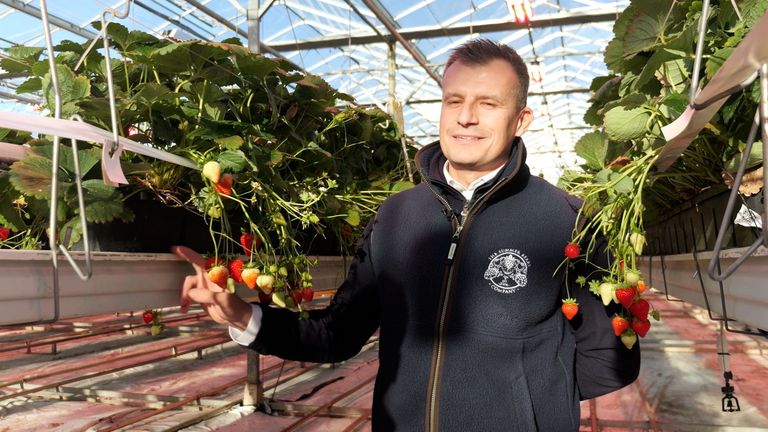
“The LED lighting is the prime reason for successful growing,” said Bartosz Pinkosz, operations director of The Summer Berry.

“If it was not a sunny day, the LED lighting would create enough energy for leaves to absorb that energy, take it in and deliver the energy to the berries.

“We are able to have the right sweetness in the berries and the right shape, right size.”

There are 36,000 square metres of the greenhouses at the site in Chichester, partially powered by renewable energy and buzzing with bees as pollinators.

Acres of strawberries ripening in West Sussex
Image:
Acres of strawberries ripening in West Sussex

And the new strand to the business means year-round work for 50 people.

But while it might cut the food miles dramatically, there’s still an inevitable environmental impact when a colossal space is created warm enough for pickers to wear short sleeves in winter.

Dr Tara Garnett, director of food systems platform TABLE, said: “You’re going to need a lot of heat and you’re going to need a lot of light in order to reproduce those summer growing conditions so everything hinges on the energy source you’re going to be using.

“And when we look at the UK self sufficiency levels in fruit and vegetables they are appalling – 16% of the fruit we consume is UK-grown, so the vast majority is imported, and when it comes to vegetables we’re looking more at 50% or so, so there’s a lot more we can do to build up, and should be doing.”

Around 1.5 million punnets of strawberries are expected to be picked on the site over the full stretch of winter, allowing British strawberries to be eaten this Christmas.

But for some, it’s simple – strawberries should be saved for summer, even if it is a much shorter journey from plant to plate.

Continue Reading

US

The shock of a shooting will cut deeply – but if anywhere can find hope in the face of despair, Providence can

Published

on

By

The shock of a shooting will cut deeply - but if anywhere can find hope in the face of despair, Providence can

“Most of us live off hope” – the text of a colourful mural, painted on a wall on Hope Street, Providence.

On most days, the neighbourhood around Brown University feels like a place of quiet optimism, swimming against the negative tide.

Hope Street's mural
Image:
Hope Street’s mural

The shock of a shooting, that has claimed two lives and left eight others critically wounded, will cut deeply here.

Violence feels not just intrusive but incompatible with the spirit of a place that is governed by thought, not threat.

When the university president said “this is a day we hoped would never come”, she spoke for the whole town.
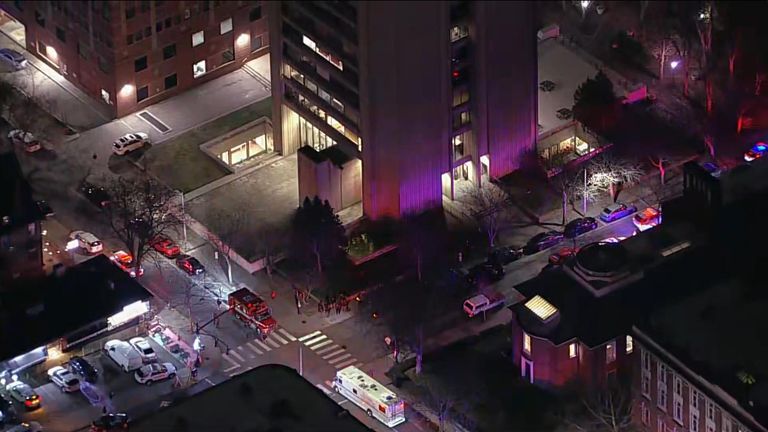
Two students were killed in the attack
Image:
Two students were killed in the attack

Providence, Rhode Island, is a place I know well. My daughter, her husband and their two little girls live there.

It is a college town with a college vibe, the compact campus priding itself on openness – architecturally, intellectually and emotionally.

They rehearse “shelter-in-place” scenarios, as every university does, but they are not experienced at living behind locked doors.
Please use Chrome browser for a more accessible video player

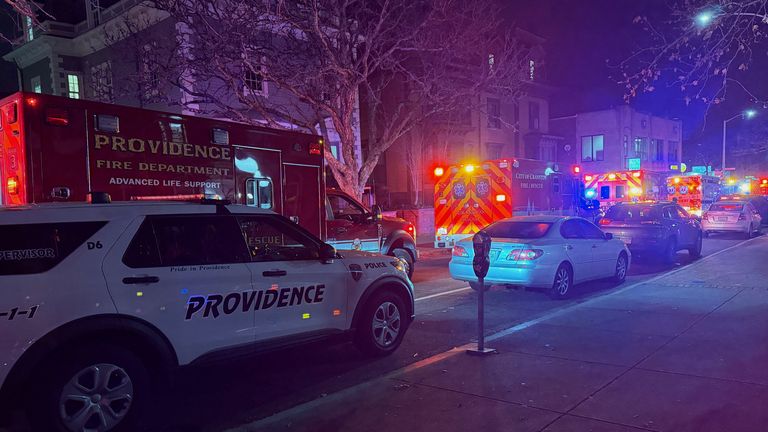
‘Stay inside,’ mayor warns as suspect still at large

Rhode Island, the smallest state, has one of the lowest gun-death rates in America, zero mass shooting events in 2024.

Earlier this year, the state banned the sale and manufacture of assault weapons, but it didn’t include those already owned.

Even in a Democratic, liberal state like Rhode Island, they are struggling to find a solution to America’s gun problem.
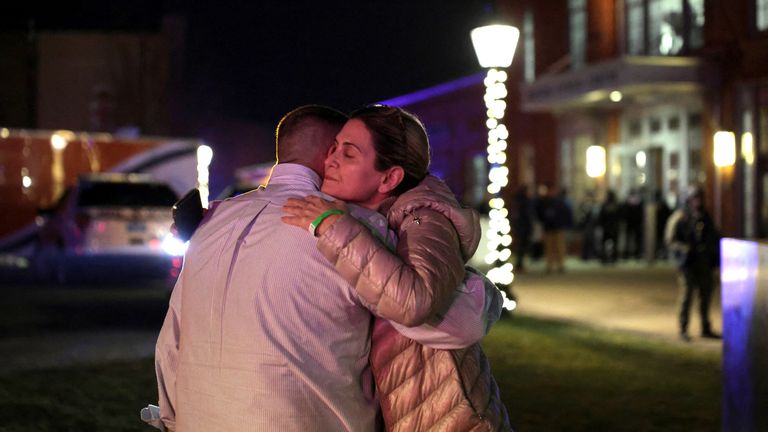
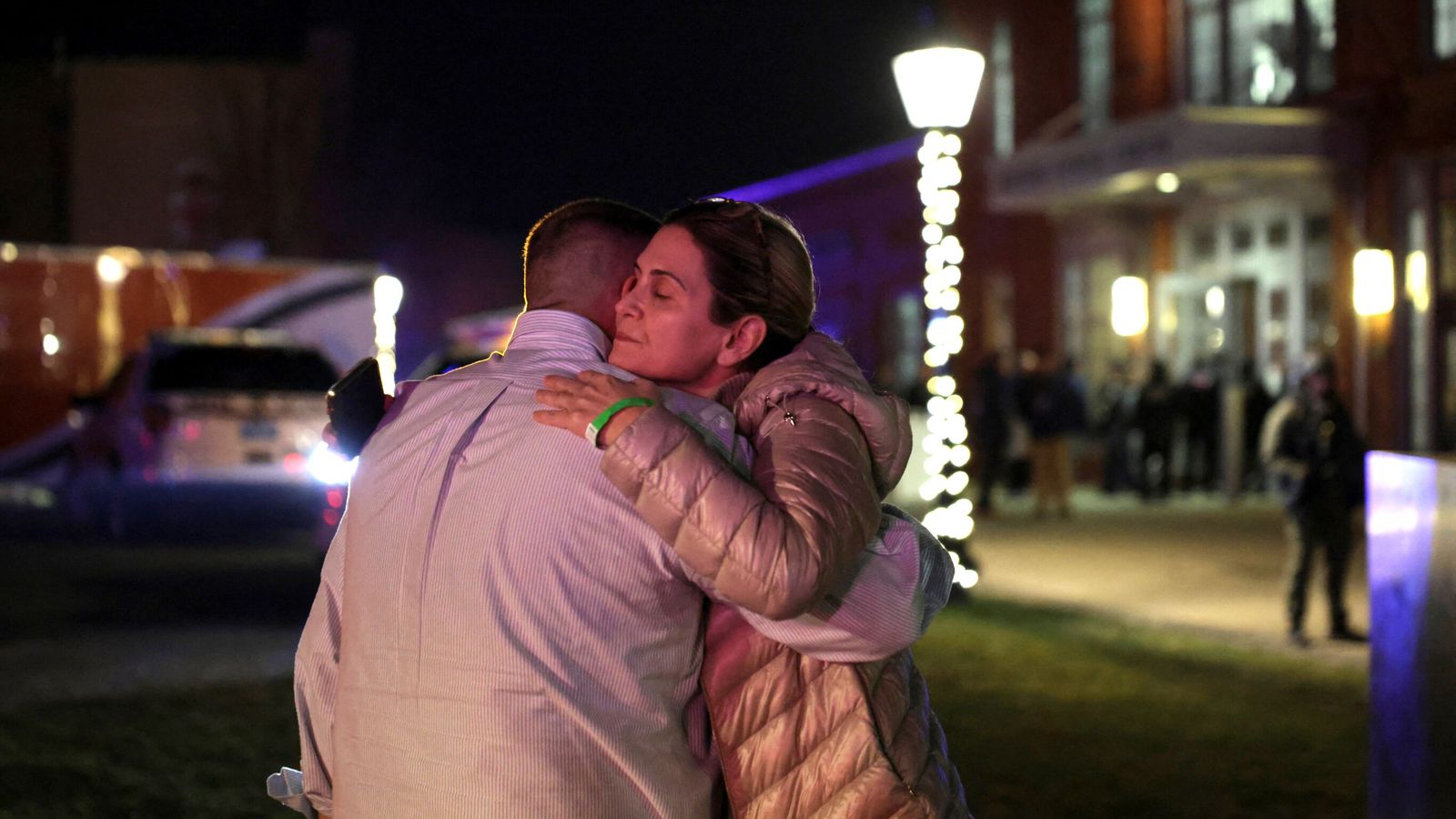
People hug each other outside Brown University in Providence after the shooting. Pic: Reuters
Image:
People hug each other outside Brown University in Providence after the shooting. Pic: Reuters

The age-old constitutional right to bear arms continues to trump the most human of all rights – the right to life.

This is a community that assumes safety, not because it is naïve, but because it has grown accustomed to trust.

College Hill rises in gentle brick and ivy, its narrow streets winding past houses with verandas designed for long conversations.
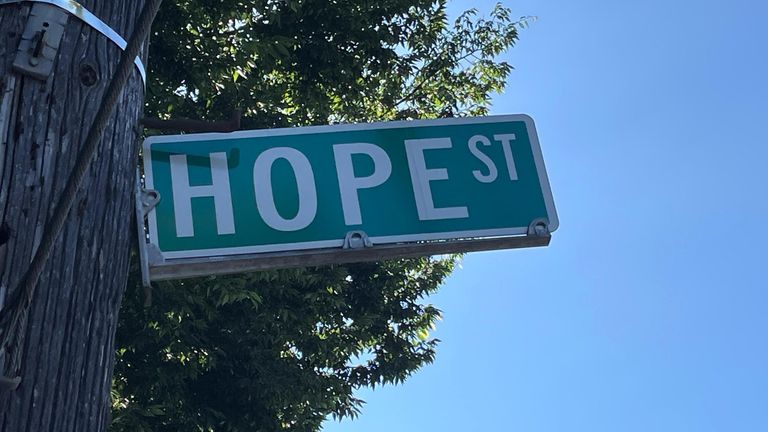
They take place in hushed tones right now, but if anywhere can find its way out of despair, Providence can.

On the historic street along its east side and in the college on the corner, most people live off hope.


Continue Reading

US

US director and actor Rob Reiner and wife found dead ‘with stab wounds’ at his LA home

Published

on

By

US director and actor Rob Reiner and wife found dead 'with stab wounds' at his LA home

US director and actor Rob Reiner and his wife have been found dead at their home in Los Angeles, Sky News’s US partner NBC News has reported.

A source close to Reiner told the outlet he and his wife, Michele Singer Reiner, apparently died of stab wounds.

A family member is being questioned by investigators, a law enforcement official told the AP news agency.

A 78-year-old man and a 68-year-old woman were found dead inside the property, a Los Angeles Fire Department official said. Reiner turned 78 in March.

Detectives from the LAPD Robbery Homicide Division have been assigned to the case, the force said in a statement.

‘Apparent homicide’

LAPD Captain Mike Bland said they were investigating an “apparent homicide”.

Reports said there was a large police presence at the house.

Reiner starred in Sleepless In Seattle and The Wolf Of Wall Street and directed This Is Spinal Tap, The Princess Bride, When Harry Met Sally and A Few Good Men.

Los Angeles mayor Karen Bass said Reiner’s death was a devastating loss for the city.

“Rob Reiner’s contributions reverberate throughout American culture and society, and he has improved countless lives through his creative work and advocacy fighting for social and economic justice,” she said.

“An acclaimed actor, director, producer, writer, and engaged political activist, he always used his gifts in service of others.”

‘Creative, funny, and beloved’

Former House speaker Nancy Pelosi said: “It’s hard to think of anyone more remarkable and excellent in every field and endeavour they pursued. Rob was creative, funny, and beloved. And in all of their endeavours, Michelle was his indispensable partner, intellectual resource, and loving wife.

“Personally, Rob cared deeply about people and demonstrated that in his civic activities – whether by supporting the First 5 initiative or fighting against Prop 8 in California. Civically, he was a champion for the First Amendment and the creative rights of artists. And professionally, he was an iconic figure in film who made us laugh, cry and think with the movies he created.”

Reiner and his wife Michele Singer Reiner. Pic: AP
Image:
Reiner and his wife Michele Singer Reiner. Pic: AP

Actress Kathy Bates told NBC News: “I’m horrified hearing this terrible news. Absolutely devastated. I loved Rob. He was brilliant and kind, a man who made films of every genre to challenge himself as an artist. He also fought courageously for his political beliefs. He changed the course of my life. Michelle was a gifted photographer. She shot my beautiful photos for the Misery campaign. My heart breaks for them both. My thoughts are with their family.”

Reiner was married to Michele Singer Reiner since 1989, after they met while he was directing When Harry Met Sally. They have three children together.

Michele used to work as a photographer and took the photo of Donald Trump that appears on the cover of his book Trump: The Art Of The Deal.

This breaking news story is being updated and more details will be published shortly.

Please refresh the page for the latest version.

You can receive breaking news alerts on a smartphone or tablet via the Sky News app. You can also follow us on WhatsApp and subscribe to our YouTube channel to keep up with the latest news.

Continue Reading

Trending





