
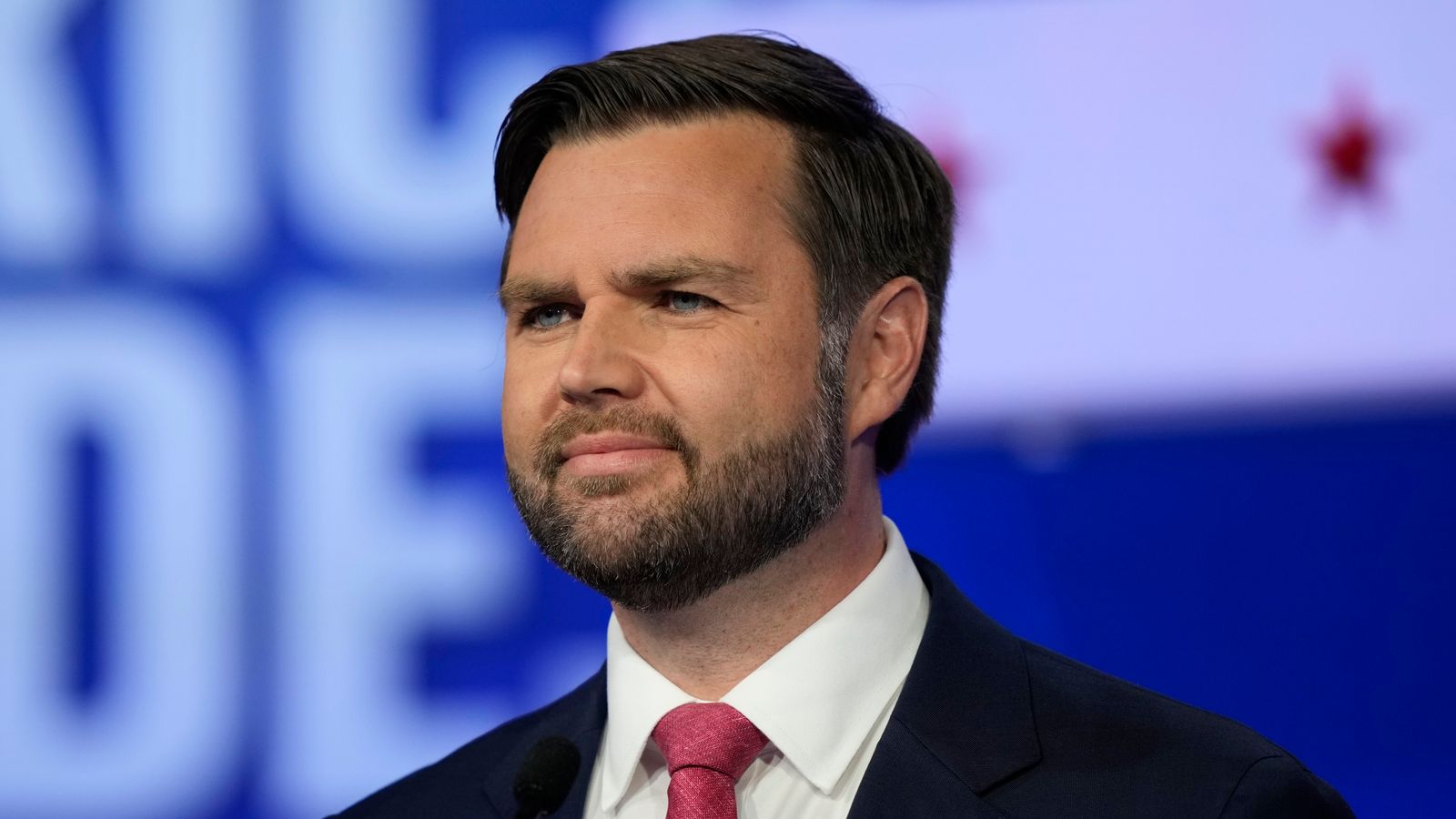
JD Vance denies insulting British troops over ‘random country’ jibe

JD Vance has hit back at criticism after saying a potential peacekeeping force in Ukraine would be “20,000 troops from some random country that hasn’t fought a war in 30 or 40 years”.
The US vice president was accused of “disrespecting” British forces who served alongside the US in Iraq and Afghanistan, with a former veterans minister branding him a “clown” who needs to “check his privilege”.
Politics latest: Trump stopping aid to Ukraine is ‘profoundly worrying’
Although the UK and France are the only countries to have pledged troops to a potential peacekeeping force, Mr Vance said the suggestion he was referring to those two allies is “absurdly dishonest”.
“I don’t even mention the UK or France in the clip, both of whom have fought bravely alongside the US over the last 20 years, and beyond,” he said in a post on X.
“There are many countries who are volunteering (privately or publicly) support who have neither the battlefield experience nor the military equipment to do anything meaningful.”
Mr Vance made the initial comments to Fox News on Tuesday, saying the only security guarantee Donald Trump will provide for Ukraine is a minerals deal.
He said: “The president knows that if you want real US security guarantees, if you want to actually ensure that Vladimir Putin does not invade Ukraine again, the very best security guarantee is to give Americans economic upside in the future of Ukraine.
“That is a way better security guarantee than 20,000 troops from some random country that hasn’t fought a war in 30 or 40 years.”
Several British politicians interpreted this as a dig at the UK and France, who have led the idea of a “coalition of the willing” to provide boots on the ground in Ukraine in the event of a ceasefire.
James Cartlidge, the shadow defence secretary, accused Mr Vance of “ignoring the service and sacrifice” of personnel from the two countries that fought in Afghanistan after 9/11.
He said that is the only time NATO’s Article 5 has been invoked, which holds that members of the alliance will come to the defence of an ally under attack.
He added: “Britain and France came to their aid deploying 1,000s of personnel to Afghanistan, including numerous parliamentary colleagues, past & present. It’s deeply disrespectful to ignore such service & sacrifice.”
Trump pauses military aid to Ukraine – what now?
Former Tory veterans minister Johnny Mercer called Mr Vance a “clown” who “needs to check his privilege”.
Helen Maguire, the Lib Dem’s defence spokesperson who also served in the army before her career in politics, accused Mr Trump’s deputy of “erasing the hundreds of British troops who gave their lives in Iraq and Afghanistan from history”.
She said: “Six of my own regiment, the Royal Military Police, didn’t return home from Iraq. This is a sinister attempt to deny that reality. Vance has demeaned his office.”
Speaking after Mr Vance clarified his remarks, a Downing Street spokesperson said the US vice president was “talking about other countries” when asked if he should apologise.
They added Prime Minister Sir Keir Starmer “is full of admiration for British troops who fought alongside the US and others in wars and their courage and bravery”.
Read more:
Trump pauses US military aid to Ukraine
Trump confirms Mexico and Canada tariffs
Tory leader Kemi Badenoch told GB News “a lot of people are getting carried away”.
“They’re saying loads of things and getting quite animated, let’s keep cool heads,” she said.
“I believe President Trump and JD Vance want peace, they’re looking after their national interest, we need to do so as well.”
It is not the first time Mr Vance has riled the UK, after previously attacking it over free speech and saying the UK is “Islamist under Labour”.
The row comes after the Trump administration paused military aid to Ukraine following an extraordinary showdown between the US President and Ukrainian President Volodymyr Zelenskyy.
The falling out has thrown into jeopardy the prospect of a minerals deal, which would give the US access to Ukraine’s deposits of rare earth minerals.
Mr Trump has suggested this would deter Russia from invading Ukraine again if a peace deal is struck – but Sir Keir said yesterday that it would not be enough on its own.
The prime minister told MPs on Monday that Britain must “lead from the front” on supporting Ukraine and Europe must “do the heavy lifting to support peace on our continent”.
However, he said “to succeed, this effort must also have strong US backing”.
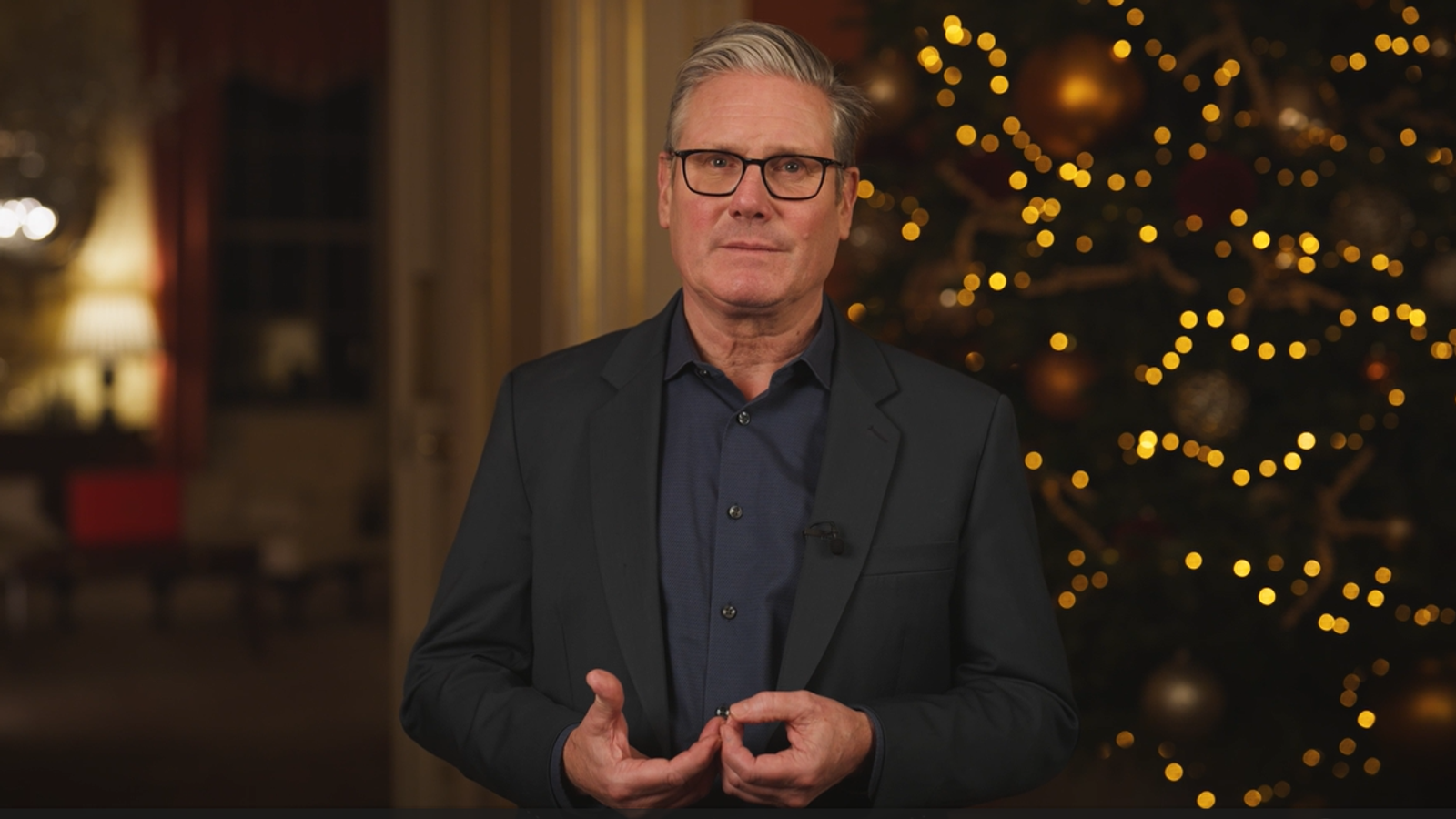
The prime minister has acknowledged Britons’ cost-of-living struggles in his Christmas message – and vowed that helping with the issue is his “priority”.
Sir Keir Starmer also urged members of the public to “each do our bit” and “reach out” to friends, relatives and neighbours during the festive period.
His message comes at the end of a difficult year for his government, with economic growth stuttering and Chancellor Rachel Reeves facing criticism over tax rises in the budget.
In a message recorded inside 10 Downing Street, Sir Keir said: “I know many across Britain are still struggling with the cost of living. Helping with that is my priority.
“But at this time of the year, which celebrates love and abundance, loss or hardship can feel even more acute.
“So call around to a neighbour. Check in on a friend or a relative who you haven’t heard from for a while. Reach out. It can make a huge difference.
“That is what Christmas is about.”
Sir Keir Starmer delivers his Christmas message from inside Downing Street. Pic: Downing Street
The prime minister thanked NHS workers along with members of the military and the emergency services who will be on duty on Christmas Day.
“Just as so many put their feet up, some truly special people will be pulling on their uniforms and heading out to work,” he said.
“Our NHS staff emergency services and the brave men and women of our armed forces, all playing their part, doing their bit to care for the nation and to keep us safe.
“Many volunteers will be out there as well. Serving food. Reaching out to help those lonely or in need.
“So on behalf of the whole country, I want to say a big thank you.
“As a nation, we should raise a glass to you this Christmas. But more than that, we should each do our bit as well.”
Read more from Sky News:
How does your Christmas compare to rest of UK? Take our quiz
The famous faces we said goodbye to this year
Conservative leader Kemi Badenoch used her Christmas message to talk about “Christian values” and thanked “everyone who has supported me during my first year as leader of the opposition”.
“It’s been the biggest challenge of my life,” she said. “But it’s also been a wonderful year. I can’t wait to get back to work next year to create a better United Kingdom.”
Liberal Democrat leader Sir Ed Davey spoke about the Christmas tree in London’s Trafalgar Square – an annual gift from Norway to thank the UK for its support during the Second World War – in his message.
While saying the tree may “look a little underwhelming” on first glance, the Liberal Democrat leader said it was a reminder of “friendship and loyalty”.
He added: “It makes me think about people standing together in tough times – whether against the Nazis in the 1940s, or right now in Ukraine.
“And yeah, it might not be perfect, but this tree in Trafalgar Square makes me think about families and friends looking out for one another right here at home.
“I can’t think of a better symbol of the Christmas spirit of generosity, love and hope. Of light in the darkness.”


The International Monetary Fund’s mission chief for El Salvador issued a statement confirming that government authorities were proceeding with negotiations for the sale of the country’s Chivo Bitcoin wallet.
In a Monday statement, the IMF said El Salvador’s government was continuing to discuss its Bitcoin (BTC) project with the fund’s officials, and “negotiations for the sale of the government e-wallet Chivo are well advanced.” The announcement signaled that the government may be preparing to sell some or all of its crypto holdings in the Chivo wallet.
The statement followed a May deal with El Salvador in which the IMF would pay $120 million as part of a 2024 loan agreement for $1.4 billion. As part of the deal, the government would stop acquiring Bitcoin.
It’s unclear whether El Salvador is abiding by the terms of the deal. Though the IMF reported in July that the country’s government had not purchased any BTC since December 2024, El Salvador’s Bitcoin Office continues to announce crypto buys, including 1,090 Bitcoin worth about $100 million in November.
Related: CFTC changes guard as Selig takes reins, Pham departs
According to the terms of the IMF-El Salvador deal made public, the government would make public sector engagement of BTC-related economic activity “confined,” the private sector’s acceptance of Bitcoin would be voluntary, and it would wind down involvement in the Chivo wallet. Cointelegraph reached out to the IMF for comment but had not received a response at the time of publication.
El Salvador recognized Bitcoin as legal tender in 2021 and began acquiring the cryptocurrency as part of a strategy largely pushed by President Nayib Bukele. According to data provided by the country’s Bitcoin Office, the government held 7,509 Bitcoin as of Monday, worth about $659 million at the time of publication.
‘It’s not stopping,’ says Bukele on Bitcoin buys
Despite the reported deal between the IMF and El Salvador, Bukele said in March that the government would continue its Bitcoin investment strategy, purchasing at least one BTC daily. It’s unclear how the president’s statement could affect the IMF agreement.
Magazine: When privacy and AML laws conflict: Crypto projects’ impossible choice
-
 Sports2 years ago
Story injured on diving stop, exits Red Sox game
-
 Sports3 years ago
‘Storybook stuff’: Inside the night Bryce Harper sent the Phillies to the World Series
-
 Sports2 years ago
Game 1 of WS least-watched in recorded history
-
 Sports3 years ago
Button battles heat exhaustion in NASCAR debut
-
 Sports3 years ago
MLB Rank 2023: Ranking baseball’s top 100 players
-
Sports4 years ago
Team Europe easily wins 4th straight Laver Cup
-
 Environment3 years ago
Japan and South Korea have a lot at stake in a free and open South China Sea
-
 Environment1 year ago
Here are the best electric bikes you can buy at every price level in October 2024